Agoraphobic Writing

By James Wallace Harris, Monday, October 17, 2016

Recent essays written for other sites:

In many ways I prefer writing for this blog, Auxiliary Memory, than writing for other sites. I’m somewhat agoraphobic, so I spend most of my time at home. And the older I get, the stronger that tendency becomes. Now those feelings are carrying over to my writing. I’m inclined to become a writing hermit, and just write for this blog. I like having all my thoughts in one cozy familiar place.

fish-leaving-bowl

However, it’s mentally healthier for me to get out of my house and my blog. Sticking to my comfort zone can be debilitating.

Writing for Book Riot is interesting because I’m way out of my element. Most of their readers and writers are young, diverse, and I’m guessing, female. It’s a challenge to create something they will want to read – and I’m not sure I am. But I like the challenge. Trying to resonate with readers from other generations is educational, enlightening, and good for my literary agoraphobia.

Writing for the Classics of Science Fiction or Worlds Without End doesn’t take me far from home. I’m out of the house, but I’m only standing in my front yard next to the street. I created the Classics site with my friend Mike. And WWEnd is about science fiction and lists, matching my own quirkiness. Their readers I assume are SF/F/H bookworms and book collectors. Some are like me, old white guys remembering the science fiction we read growing up, but others are young, reading books and authors that are unknown to me.

I’ve always said blogging is piano practice for writing. But blogging tends to be cozy and comfortable. The more I remove myself from the story, struggling to write something objective and journalistic, the more I have to mentally push myself. I can actually sense a barrier. Age and ability has it’s limitations, and I often feel like I’m a fish in an aquarium scoping out the edges of an invisible force-field that holds me in.

Even though I want to push myself into new writing territory, I have to admit that I’m most comfortable writing about science fiction. It’s what I know. Whenever I write about something else, I have to do significant research – and that’s time consuming, requiring much mental effort, and psychic straining. It’s like weightlifting. I have to build up my muscles to handle the new load.

Whenever I read a magnificent work of nonfiction, I’m always impressed by the bibliography. That tells me how much work they did. Even when I write about other subjects I’ve been interested in all my life, I feel like I’m leaving the comforts of home. I assume everyone has a touch of agoraphobia about doing new things, but that might not be true. Are there people that are always willing to dive into unfamiliar waters?

Before my mother died, I got annoyed at her when she refused to leave her home, and it was obvious she couldn’t take care of herself. We tried to get her to live with us, but she refused. Nor would she consider assisted living. Now that I’m getting older I understand. I worry that I’m getting so attached to this house that I’ll never move again. I also think about just writing for my blog.

I figure I have another ten years to try new things, until I’m about 75. Because by then the urge to stay home will be too overwhelming – if it isn’t already.

JWH


Writing for BookRiot and Worlds Without End

By James Wallace Harris, Wednesday, May 18, 2016

A couple months ago, Book Riot invited writers to submit two essays as part of an annual process for finding new contributors. I did. Then a few weeks ago I was told my essays were accepted in the next stage of that process. Since then, both have been published, and I’ve been invited to be a regular contributor. That’s very exciting because it’s validation for my retirement project.

Before I retired, I dreamed of writing science fiction because I’d finally have all the free time I needed. But after I retired I never got into the routine of writing fiction. Blogging has kept me busy for many years now, and I’ve learned to love writing essays. During my second year of retirement, I decided to switch goals from novelist to essayist. Since then, I’ve worked towards writing better essays. Blogging is self-publishing, and easy. I figured I needed to write for other sites, and assumed if other folks published my work, it would be proof my writing was improving. When John DeNardo invited me to write for SF Signal, it felt like I had taken a big step forward. Sadly, SF Signal closed its doors May 5th, after thirteen years of award winning work.

Fate brought the Book Riot opportunity just as SF Signal died. And then Dave Post at Worlds Without End asked me to write for them. I feel like I’ve taken a couple more big steps, and hope this means my work is still improving. Acceptance certainly pushes me to work harder. Maybe I need to start reading all those writing books I’ve bought years ago.

Here’s what I’ve written so far:

Writing essays is a great hobby for retirement. It keeps my mind fit, gives me a goal for the future, and reason to make each day count.

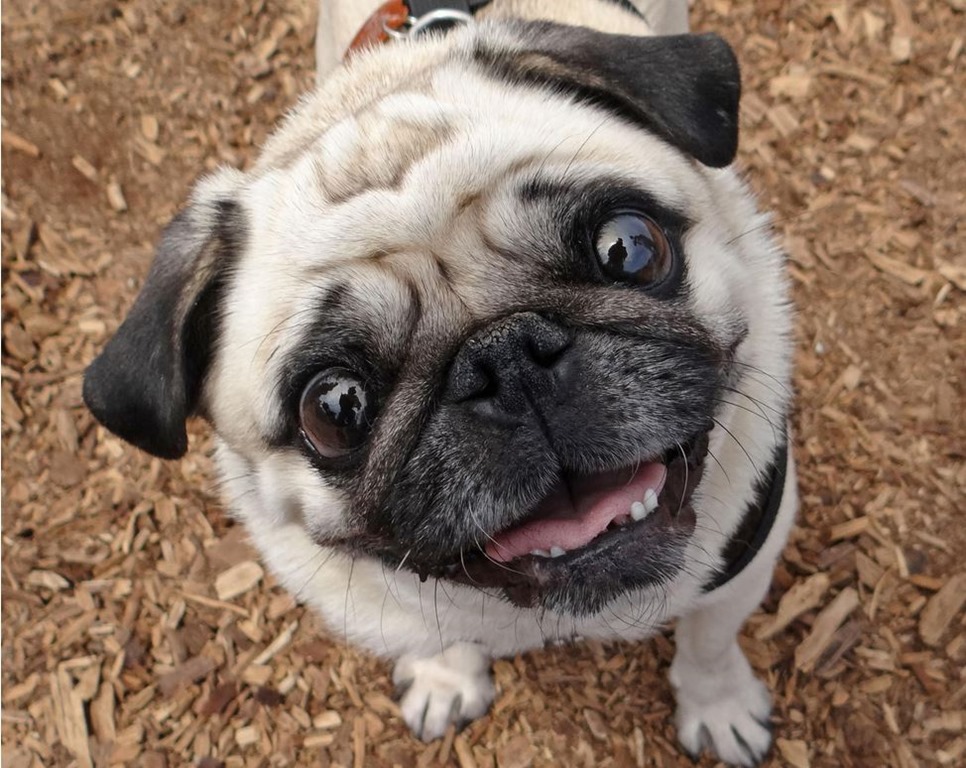
Pug9

JWH

Writing For Other Sites and My Health

James Wallace Harris, Thursday, April 28, 2016

I’m publishing less here because I’m publishing more elsewhere. That doesn’t mean I want to give up writing for my blog, but I do need to develop a plan for what’s best to post here. When I write about science fiction its obvious to give those essays to SF Signal, because science fiction is what they’re all about. Plus, they get more readers. And I’ve been accepted at a general book site, so now I can write about all the other books I’m reading for them. I’ll let you know what site that is when they publish my first essay and I have a link. They’ve accepted two essays so far. That leaves non-book subjects for me to write about here at Auxiliary Memory. I just need to find the time. My plan is to publish one blog post here each week. All told, that’s committing myself to writing eight essays a month. The ones I write here might be short, like this one.

I’ve been retired two-and-half years now, and writing essays has turned into my retirement hobby. That’s worked out very well because writing counteracts brain rust. I’ve noticed the longer I go without writing, the more trouble I have remembering words and pronouncing them. I’ve always called blogging piano practice for writing essays, well now I know it’s exercise for the mind too. I highly recommend blogging as a hobby, for the young or old. Writing over a 1,000 blog posts has really paid off.

Essay writing is turning out to be preventative medicine for dementia. Writing is showing me my physical and mental limitations. Because the newer essays require so much research, I’m having to push myself much harder, causing me to hit a wall each day. That’s an effective barometer of my mental and physical health. Each day takes more psychic management, and it’s all too obvious each birthday I pass leaves less creative energy. I doubt I’ll be able to do a fraction of what I’m doing now in my seventies. Getting old sucks, but that’s not news to anyone already old. It might be news to my friends who have yet to retired. Before I retired I thought all I needed was time. Well, at least I’m still learning new things.

I’m learning what it takes to do research, and that’s given me much greater respect for serious writers. It’s one thing to write an opinion piece, it takes several magnitudes more effort to include useful facts. Especially if you order them in some kind of coherent fashion.

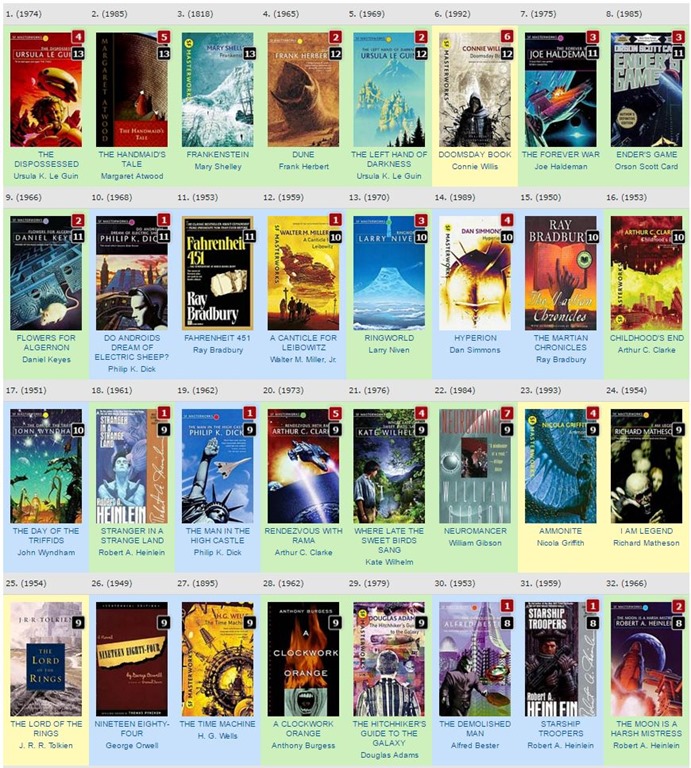
I’ve had  two essays published at SF Signal in April. The first, “The Biographies of Philip K. Dick” is about the many books written about PKD. Duh! Titles are important. The second, “How Well-Read Are You in Science Fiction?” serves two purposes. First, it asks how many classic science fiction books do you have to read to feel like an expert. Second, it describes how to use the Worlds Without End’s database to catalog the science fiction books you’ve read, which then allows you to see how you stack up on more than fifty “Best SF/F/H Books” lists. Read the article if you want to learn how, it’s a lot of fun to use the WWEnd database. Here’s an illustration of how well I did with their “WWEnd Top Listed” list. It’s color coded. Blue and green are books read, with blue being favorites, yellow means the book is on my to-be-read list. Orange means I’m reading that book currently. Yeah, I’m embarrassed to let people know I’ve never read I Am Legend by Richard Matheson or Doomsday Book by Connie Willis – but I own both.

top-listed

I don’t think I mentioned another article I wrote for SF Signal. Damn, I forget them as fast as I write them. But I do like plugging this Great Course. See “How Great Science Fiction Works – A Great Course in SF by Gary K. Wolfe.” If you love the history of science fiction, this is an excellent overview of the genre, and is only one credit at Audible.

JWH

Dear Noah Berlatsky;

By James Wallace Harris, Tuesday, April 5, 2016

Noah, I wanted to drop you a line for writing an essay about one of my essays. I think this is the first time someone has ever written an essay about me. Unfortunately, it’s about the tempest in the teacup I caused over at SF Signal. I’ve found it quite educational to be publicly shamed by that incident, especially when it leaves readers believing things about me I don’t think are true. I am impressed with your essay because you come closer to attacking my thesis and not the false impression everyone got, although you do get caught up in that too.

Most people read the title, “The Cutting Edge of Science Fiction” and then looked at the list of books and assumed they were books I claimed were top science fiction books. They weren’t. You at least read the essay, though you put a narrow spin on it that I really didn’t intend. First off, my essay was saying the cutting edge of science fiction are those science fiction stories written after a scientific discovery that speculated on that discovery and before additional scientific discoveries would close down that speculation. It was never meant to be specific books. And the list of books I gave were never meant to be a list of great books, but only science fiction books that covered my sample subject: emerging AI.
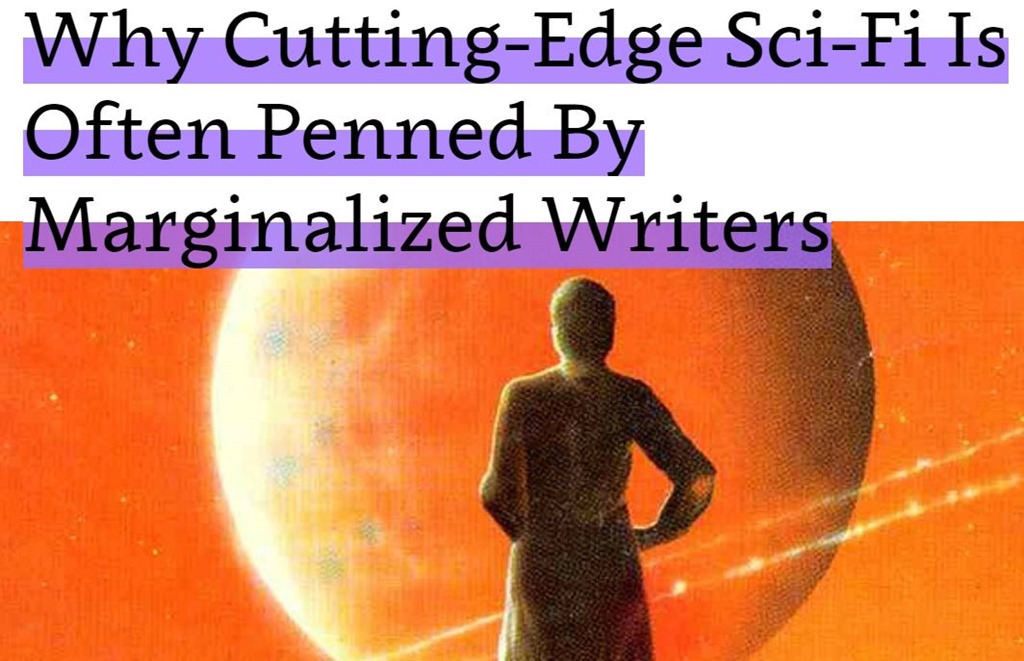
marginalized

Anyone familiar with science fiction should have known that list contained some awful books. They’d Rather Be Right is considered the worst novel to ever win the Hugo award, and no one reads it today. Vulcan’s Hammer is bottom of the barrel PKD. What I assumed is readers would know enough about AI to match real history with science fiction history. They’d Rather Be Right came out the same decade the discipline of artificial intelligence emerged as an academic subject.  The authors learned about AI, and speculated a very large computer could create artificial consciousness. That turned out to be wrong. In the sixties, after we started networking computers, Heinlein suggested network computers would lead to AI. All the books in that list reflected a writer using current ideas about computers to imagine how a self-aware artificial intelligence could emerge. Later on Robert Sawyer suggested the world wide web might spin off one. Or the movie Her, suggests the AI in smartphones will grow into an intelligent being. Actually, if you think about, very little of what I’m calling cutting edge science fiction does any big thinking. Only Richard Powers and David Gerrold actually tried to explore what it takes to program an AI, and their books are hardly read today.

Noah, your essay assumes I meant only gadget oriented stories could be science fiction. I didn’t mean that, but I can understand why you’d assume it. My sample was about computers, and you assumed all my samples would be about machines. You also assume I think science fiction is only about progress. I didn’t mean to imply that either. Science fiction can be about anything, but I do think SF is generally speculation coming between two time points. The first time point is when a new concept emerges. The second is when another concept comes around that squashes speculation that arose between the two points. One of your specialties is the history of Wonder Woman. I bet you have seen ideas emerged about her through the years that were later dismissed. My essay was only meant to suggest there is a cutting edge of speculation that moves through public awareness as ideas change. The “cutting edge of science fiction” was never meant to be specific books, or even specific kinds of ideas, just a time when science fiction speculates about specific ideas. I was also suggesting that writers had to keep up with such speculations because quite often they’re eventually shot down.

Noah, you suggest I should read more novels like those by Ursula K. Le Guin and Samuel R. Delany. And I have—for over fifty years. Delany was my favorite writer back in the 1960s, and I often write about him here at my web site. Delany is still one of my top 3 SF writers.

Most of the attacks on essay claimed I didn’t know about women science fiction writers. This hurt because I’ve been paying attention to women writers in science fiction since I started reading the Judith Merrill annual anthologies of best SF back in the mid-1960s. This topic is not new. I’ve bought nearly every annual best of the year anthology for SF since 1965, so I’ve watched how the field has changed. I’m also a long time reader of fanzines, and I’ve read Locus Magazine off and on since it was published in New York City on plain white paper. The topic of women writing science fiction is not new, and I’ve read lots of science fiction written by women. Sad to say, I often like male writers more often than female writers , at least in science fiction. But in general literature, especially, literary works, I’m more partial to women writers. My current all-time favorite novel is The Signature of All Things by Elizabeth Gilbert. But I hold absolutely no store in the fact that it was written by a women. I love books, not writers.

But this brings up another problem. Even though my list wasn’t a list of great SF novels, I have to question the assertion that my attackers made that lists of books should contain a percentage of women writers. You mention the intrusion of the Sad Puppies into Hugo awards. I felt my attackers were demanding a political stance just like the Sad Puppies. If I ever make up a list of my favorite science fiction books I’m not going to consider the writer. I’ll only consider the books. Too many of my favorite books have been written by folks I wouldn’t have liked, so if I considered various aspects of who wrote the book it might cause all kinds of problems. I only love books. I really don’t care about the author. But there’s more at issue than that. I’m a bookworm and consider the books I love the most defining aspects about my personality. To be told I what my favorites should be is incredibly insulting. To me, that’s far more offensive than the Sad Puppies pushing their political agenda at the Hugos. It’s also embarrassing that people would think the list of books I used were my favorites. Some were very bad.

The thing about the reaction to my article that was so upsetting is everyone assumes I’m an old conservative. I consider myself an ultra-liberal and have been since the sixties, and hate the idea of being lumped in with conservatives. Basically, you and the commenters at SF Signal used a false characterization of me to promote your beliefs. No one took the time to even read the other essays I have at SF Signal. In an earlier essay, “64 Classic Science Fiction Books I Want To Hear” I begged audiobook producers to publish editions of books I loved so I could hear them. Ironically, that list included a book by one of the women writers who was attacking me in the comments for excluding women. Sure, even that list didn’t have 50-50 ratio of men to women writers, but it had a number of women writers. But even here, it was a personal list, and I think it’s unethical to tell people what to read based on political correctness.

Back to your essay Noah. I agree that science fiction is about more than technological progress. If I wrote my essay knowing what I know now, it would be very different. First off, I’m not going to include book lists in the future. The internet is full of people that make snap judgments about lists. Not every list of books is a list of great books. I also need to explain myself more explicitly, and clarify my statements better.

My editor said 11,000 people came to the article that afternoon. I don’t know how many read the essay the way the comments implied, or how many read it based on my intended assumptions. I don’t know if I can ever write any essay that will be read perfectly as I intend, but I obviously need to do better. I’ve taken up essay writing as my retirement hobby, and I know I need to improve, so this experience was a great writing lesson.

I’ve learned a lot from my public shaming, but not quite what my shamers expected. One thing I’ve learned is don’t write about people I don’t know, especially drawing conclusions about them from one essay. I don’t want do to any writer what I felt was done to me. I feel most of what people assumed about me is not true, and it’s disturbing to think that’s how some people do think of me.

Overall, I liked your essay “Why Cutting-Edge Sci-Fi Is Often Penned by Marginalized Writers.” It would have been better if it hadn’t been based on an attack on me, but just on your own thesis about writing and reading in general. By the way, I’m not a sci-fi writer—I wish. I’m only a blogger. I still stand by my statement: “Great science fiction explores the philosophical possibilities of science’s impact on reality.” Don’t you think that’s what Le Guin and Delany were doing in their books? I believe The Left Hand of Darkness does that perfectly. By the way, I’m currently rereading Dhalgren by listening to it, since it just came out on audio, and it meets my requirements too. Dhalgren is extremely cutting edge by my thesis, because it went way beyond the territory of traditional science fiction. You see Noah, I think the knowledge we gain from science covers more than just gadgets, and you and I might not be that far apart on what we want to label as the best of science fiction, by any label.

JWH

Fascinating Documentary About A Woman I Didn’t Know

By James Wallace Harris, Sunday, March 27, 2016

My wife called and said she wanted me to watch a documentary with her. My wife hates documentaries. I love documentaries, and always beg my wife, and lady friends, to watch them with me. They won’t. They always say, “Let’s watch TV!” but they never mean documentaries. Or westerns. Anyway, I said sure. At least it wouldn’t be a romantic comedy. I’m still glad I agreed.

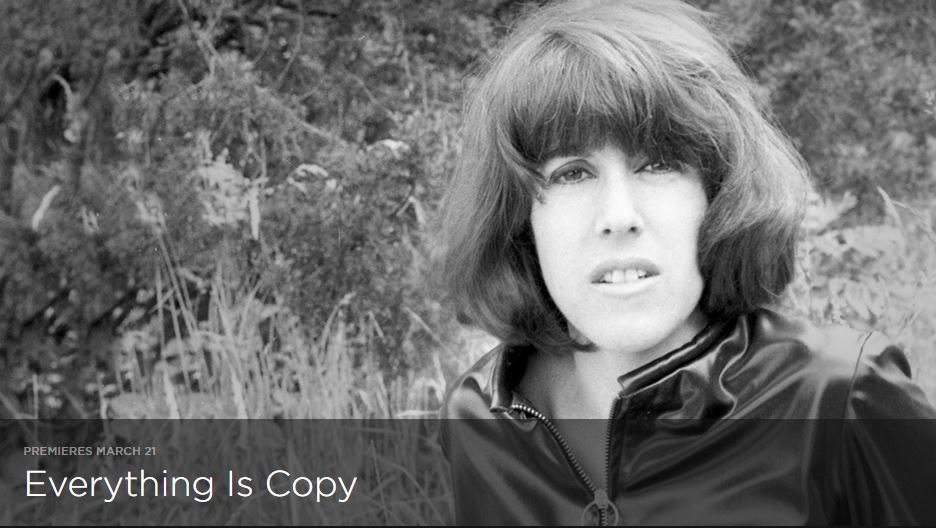
Do you know who Nora Ephron is? I didn’t. The name was oddly familiar, but I couldn’t put a face to the name, or a list of accomplishments. “Oh, you know, she did When Harry Met Sally, and Sleepless in Seattle,” why wife prompted. Uh-oh. Yeah, there’s a reason why I love documentaries. Anyway, I watched Everything is Copy, the new documentary on HBO about Nora Ephron. I was glad I did. Even though Ephron is famous for writing the kind of movies my wife watches over and over again while I do something else, her story was compelling. It turns out, Nora Ephron was an exceedingly fascinating a person. She was a writer, and one much loved by writers I love, and I love documentaries about writers, even ones I don’t read.

Nora Ephron HBO - Everything is Copy

I went to the library the next day and got two Nora Ephron books, I Remember Nothing and other Reflections and I Feel Bad About My Neck. I’ve read four essays so far, and I’m impressed. I was hoping for some of meanness that her friends talked about in the documentary. Unfortunately, no stealth barbs have shown up yet. I think I need to track down her magazine work from the 1970s, because she seems to have mellowed before she died. The show did say that.

Ephron had a long career, and for a while in the 1960s she was a journalist for the New York Post, learning the newspaper business. She was at the airport when The Beatles arrived in 1964, and broke the story about Bob Dylan getting married in 1966. Then wrote for Esquire and New York, mastering magazine writing during the legendary times in the 1970s that Tom Wolfe and Gail Sheehy wrote for them. Evidently, Ephron knew all the famous feminists back then, and wrote a column about women. Although Esquire is behind a pay wall, it does offer an audio version of “A Few Words About Breasts” from May, 1972—scroll down to see it. (I may have to subscribe to Esquire so I can read it’s back issues.)

Everything Is Copy covers Ephron’s early life, her Hollywood screenwriting parents, all her marriages, including the marriage to Carl Bernstein, her careers in New York City, her careers in Hollywood, and how she kept her fatal illness from all her many friends. Ephron’s story is mostly told by her older famous friends, or by younger famous friends reading her work, which only illustrates just how amazingly rich her life was. I’m sorry I wasn’t a fan from way back. Maybe I’ll even watch her movies, now that I have some background to understand them. (No promises, Susan.)

I don’t know if I should admit this, but I sometimes find biographies of successful women more fascinating than their work. I read three biographies of Louisa May Alcott before I read Little Women. And I’d rather read about Virginia Woolf than read her novels, even though I do admire her novels. Now that I think about it, there are male authors I’d rather read about than read. Aldous Huxley is one. Ephron was one of those writers whose life was far more exciting than her own stories, at least to me.

Anyway, this woman is going to always be famous for romantic movies that my wife loves, but I don’t. She actually deserves to be remembered for doing so much more. I’m sure most people know that. I didn’t. Sorry. I’m not knocking her movies, I’m just not her target audience. So, if you don’t like Ephron’s movies, I still highly recommend seeing Everything is Copy, especially if you’re the fan of documentaries like those on American Masters, the PBS series. And as documentaries go, it was very well written and filmed, the kind that’s intriguing even if you’re not interested in the subject itself.

JWH