The Most Addictive TV Shows of 2015

By James Wallace Harris, Monday, December 28, 2015

How is it possible that we’ll watch four one-hour episodes of the same TV show in one evening? Has streaming technology changed us? Has television become insidiously addictive? Or, do we just feel a deep desire to escape ordinary life? If we’d had Netflix back in the 1950s, would we have binge-watched Gunsmoke? I actually feel that television is constantly getting better, that the art of telling a story on the small screen is evolving. One reason shows are binge-watched is because they tell one story, like a novel, over a season. So I wouldn’t have binge-watched TV in the past, because those shows were complete in one episode. When the stories are compelling and extended, we want to keep watching, even well past our bedtime.

The Boob Tube has always been addictive, but it used to be just habit forming like marijuana, but now it’s painful-withdrawal addictive like heroin. In 2015 there were 409 scripted television shows. The competition to create binge-worthy shows is fierce. A study could be made as to what story elements are required to make a compelling fiction. I just finished season 2 of Fargo, where I completed it’s ten episodes in four days by watching 2-3 episodes an evening. It’s gruesome body count seemed inappropriate compared to the wholesome Christmas movies my wife wanted to watch. But, Susan is much more of a TV binge watcher than I am. She can watch 10-12 episodes of a favorite show in a weekend. Of course, people binge-read too, like my brother-in-law Cayce who is reading the 14-volume Wheel of Time by Robert Jordan, where each book is a giant volume by itself. Why have we gotten so addicted to make-believe?

Humans

I prefer to watch television with friends, which often means watching two episodes a week on a Friday night. Janis, Mike, Betsy and I just finished The Man in the High Castle. It was so great we had to finish up the last two episodes early, on a Sunday night. There are downsides to watching binge-worth TV with friends: the urge is to cheat. Watching on our own is convenient, but ruins the social fun. But when this happens, and I do it, I end up watching some episodes twice. Or I’ll watch shows twice because I want to see them with different people. I watched Humans and Mr. Robot with two sets of friends, and I enjoyed those shows so much that seeing each episode twice was not boring in the least. Television shows have evolved so much that they are complex enough to rewatch and still discover new insights.

Mr Robot

I now worry about being too addicted to binge-worthy TV. Broadcast TV is still catching up to premium TV. I often have to buy my shows because I don’t have cable. The best of the best TV is so good, that I’m becoming a junky craving ever more powerful TV highs. I can’t imagine how good television can get, but shows in the 2020s might become paralyzing. My TV buddy Janis and I are always edgy when we don’t have a binge-worth TV show to watch. Last night we tried several shows hoping to find one that would hook us. I watched Fargo without her, and she’s a little miffed. But she does the same thing to me—finding shows to view alone without me. It takes discipline to wait and watch shows with friends because it’s always problematic to schedule TV viewing with a friend, and especially difficult coordinating three or more people.

For me, the best experience is to share a great TV show. If you have no one to get excited over a show, somehow the show doesn’t seem as great. And discovering what kinds of shows your friends love is so revealing. It’s bonding. It’s resonating. All my friends binge-watch now. My main bond with some people are through discussing TV.

Here are the shows that came out during the year that I loved the most in 2015.

I watched many more shows during the year that came out before 2015, like Mozart in the Jungle season 1, The Knick season 1, The 100 season 2 and Fargo season 1. There were other shows I loved the first or second season, but they petered out this year like Orange is the New Black, Vikings and House of Cards. Novelty is everything with binge-watching.

the man in  the high castle

Since I could never watch everything that came out in 2015, you should read these lists below. You’ll notice that several shows, many of of which I watched, were listed over and over again.

Essay #991 – Table of Contents

Postscript – written later that night:

This essay really didn’t do what I wanted. There is a certain quality to fiction that I crave, that I find in books, movies and television shows. I was just washing some dishes and for a fleeting moment I wondered if fiction isn’t the way we seek to live differently. But it’s more than just wanting to exchange our boring lives for exciting ones. Fiction has a pacing and logic that improves on normal life.

When I was watching the new Star Wars film today I felt its creators were trying to find their way home, which in this case was the first Star Wars movie. Could it be that Star Wars creates a high that its fans seek to live? I wish life felt like my favorite songs, which explains soundtracks, because most people would feel life is better with a backing score. When I was a kid, one reason I liked smoking grass was it gave life a tinge of drama. Fiction vibes are much different from real life vibes.

After watching The Man in the High Castle miniseries I reread the book for the third time by listening to it. The ending of the book is much different from the movie. Juliana Crane has an insight to the book within the book, The Grasshopper Lies Heavy. She feels its fictional revelations, inspired by the mystical ancient text, I Ching, understands life. Philip K. Dick, a notorious paranoid, playing around with alternate history and the many world hypothesis, suggests that life is like a book. Poor PKD so desperately wanted “The Answer.” As the omniscient narrator he could give his creations the logic we seek.

I’m thinking different kinds of books give different kinds of highs, and what we crave from fiction is life with the kind of high we get from our favorite books.

Of course that opens up a whole can of Freudian worms when I wonder about me loving shows like Fargo and Breaking Bad. I imagine the high folks get from Star Wars is like those they get from comic books and video games, which is very youthful. The highs I like from fiction come from getting old.

JWH
Rethinking Book Buying and Collecting

By James Wallace Harris, Wednesday, July 8, 2015

Marie Kondo in her book the life-changing magic of tidying up: the Japanese art of decluttering and organizing has me rethinking my feelings about buying and collecting books. Her chapter on tidying up bookshelves is more than just about culling books, but how we think about them. Most bookworms love owning thousands of books. I’ve own as many as ten thousand in my lifetime—although I never read that many.

Kondo challenges us to think about why we keep books. Which leads me to wonder why I buy books. I was just at the bookstore with a gift card in hand. With each book I picked up I asked myself, “Will I read this book right away? If read it right away will I keep it? If I don’t read it right away how long will I wait to read it? And if I never read it, how long before I  give it away?”

A year ago I wouldn’t have left the bookstore empty handed, but today I did. There are a number of ways I’ve changed. First, in tidying up my books I’ve given away hundreds of them. Many of those were not read, but had been sitting on my shelves for years or decades. Tidying up has made me aware of the hundreds of books I still own waiting to be read. I’ve been keeping a books read log since 1983, and in recent times I’ve also noted in what format I read the book. Most were digital audiobooks, but of the ones I read with my eyes, ebooks are starting to overtake print books. Finally, I’ve also subscribed to Scribd.com which is a rental library for ebooks, audiobooks and digital graphic novels. For $8.99 a month I have access to thousands of books and audiobooks. Scribd tends to have older titles, exactly the kind I find when shopping for used book bargains.

I was spending $50-100 a month on used books and Kindle/Bookbub ebook specials. That $8.99 deal gets me more books by renting than I was by buying. So why should I buy? I’ve mostly stopped buying movies since I became a Netflix subscriber, so I think the same thing will happen with books now that I’ve become a Scribd member. Marie Kondo would be so happy.

Yet there’s more to owning books than the urge to collect. We keep books for sentimental reasons, because we feel we might reread them, or they will be reference books. I’ve always kept books because I have a crappy memory and feel I need the book as external memory. In contemplating my feelings for tidying up my bookshelves I realized its very rare for me to go back to a book. I cling to my favorite books because its an emotional way of believing those books are a part of me. One revelation is my favorite stories will always be a part of me as long as I remember those stories, and it doesn’t matter if I own the delivery mechanism in which I read their words.

I also realized that any book I want to read again is a week away via ABE Books for a few dollars, or instantly available by ebook. And it gives me a good feeling to think other people could be reading my favorite books if I let them go. So I did.

What scares me now is I might let all my books go. I’ve always loved to have people see my library. It’s my only impressive visual quality. Can I imagine being the bookworm I am without a wall of books to prove it? There is another revelation that Marie Kondo has accidently led me to comprehend. I am not the books I’ve read, but the book I’m reading.

I think our species is leaving a phase where we defined ourselves by what we own and now see ourselves by what we do.

JWH

My Weird Facebook Personality

By James Wallace Harris, Wednesday, July 8, 2015

When I browse Facebook to see what my family and friends are doing I feel that I’m the odd man out. Most people post about their social activities – going places and doing things with other people. I’m retired and seldom get out of the house. I like it that way. But I get the feeling my posts on Facebook are atypical. Instead of going somewhere physically, I pick an idea and write about it for my blog. So when I do make an entry on Facebook I just link to my essay. The ideas I explore are the interesting places I visit.

I suppose I could have checked-in when I was at the dentist’s yesterday, and uploaded a selfie with Dr. Brawner and Caroline, the lady who cleaned my teeth. Last night I went over to Janis’ house to fix her vacuum cleaner, I could have snapped pictures of her disassembled Hoover and her dogs Zoe and Jolie getting in the way. Instead I posted a link to my blog about getting a general education after we leave school. I wonder which would have been more interesting to my Facebook followers?

Facebook is a fascinating phenomenon. It seems to be the perfect tool for keeping up with relations. In the old days you’d see your relatives on Christmas and Thanksgiving. Facebook lets you see what they are doing year round. Since Susan and I have no children it lets us keep up with nephews and nieces. But I must appear to be a rather eccentric uncle.

I don’t think my blogging is very interesting to my Facebook family. I get the most likes when I do something normal, like go to a movie or a concert. Which makes me think I should do more normal things to have something to put on Facebook. Now, it’s different with my Facebook friends. Most of the people I know on Facebook that are like me, post about ideas rather than activities. Usually, it’s about inspirational sayings, politics, liberal and conservative causes, news, technology and funny videos.

This makes me think that there could be interesting psychological studies done on what people post about on Facebook. I wonder if they could classify Myers Briggs personality types by Facebook posts or likes? Would other INTJ people makes introverted posts like mine? Could an artificial intelligence program analyze Facebook and classify people in new way? If I had the patience and time I could probably study Facebook regularly and come up with some classifications on my own.

Myers-Briggs and Social Media Report” does classify M-B types by social medial usage. However, if you look at this Google search, you’ll see that lots of people are exploring this idea. “Private traits and attributes are predictable from digital records of human behavior” is one scientific paper (warning it’s hard to read).

But do I need to read scientific studies to know I’m an fringe type on Facebook? Not really. What I really think is interesting is how people reveal more about themselves on Facebook than they do at casual social events. Which makes me wonder, how many people create public faces for their social media that’s not their true selves? Remember high school and worrying about popularity? I never did. I was a dorky geek. But for those people who did worry about popularity, I’d think they’d carefully curate their Facebook personality.

JWH

Is Science Fiction Wrong About Space Travel?

By James Wallace Harris, Sunday, May 24, 2015

A good case could be made that science fiction inspired space travel. Few people contemplate space travel without exposure to science fiction. Science fiction is so embedded in our culture that it would be very rare to find a young child that doesn’t know about science fictional ideas. Traveling to other worlds is science fiction’s most successful concept, and believing humanity’s future involves exploring the final frontier is practically wired in our genes.

What if science fiction is wrong about space travel? What if manned space travel to the planets and other star systems is just impractical? What if the final frontier is just a big fantasy? After one big leap we’ve chosen not to go anywhere for over forty years. What does that say? The more we learn about how dangerous it is for humans living off Earth, and how long they’d have to travel to get anywhere, it seems more and more practical to stay home and send machines.

When I was growing up in the 1950s and 1960s science fiction was all about space travel. Kids today embrace dystopian stories set on Earth. Has there already been a psychic shift by the young? Do the kids growing up today no longer see space travel in their future? Have young people decided that space travel is only appealing to geologists and robots?

I saw Interstellar for the second time last night, and although I really loved the film, it was all too obvious that it’s a fantasy on the same order as those offered by religion and children’s stories. This made me wonder if science fiction can envision humans living millions of years on Earth without going anywhere. I think it’s possible to send people into space, even to the stars, but will we?

Humans aren’t very farsighted, otherwise we wouldn’t be destroying the Earth. We’re big on fantasies, and small on reality. Is The Game of Thrones a better oracle about future humanity than Star Trek? Is science fiction wrong about space travel?

What if we don’t go to Heaven or Alpha Centauri? What if Earth is our final destination? The faithful give meaning to their lives by believing in Heaven, and many humanists found meaning in the final frontier. If we never leave Earth, can we find meaning staying home?

JWH

Should I Buy An iMac?

By James Wallace Harris, Saturday, May 23, 2015

I regularly use the following computer applications: Chrome, Outlook, Windows Live Writer, Word, Spotify, Photoshop, Xmind and Excel – pretty much in that order. The application I spend most of my writing time in is Windows Live Writer, a tool for writing blogs. Microsoft has not updated Live Writer since 2012, and it looks like it will be abandoned when Windows 10 rolls out.

I’ve been using a personal computer since 1979. My life since then has been one long history of learning new programs, getting attached to them, and then having them ripped away from me. This pisses me off. Windows Live Writer is considered by most reviewers as the best blog editor by far. I now need to decide if I want to cling to Windows 7, or upgrade to Windows 10. Windows 10 will be a free upgrade for its first year, that’s a huge enticement to switch.

iMac

The obvious solution is to start using the web based editor built into the WordPress. I’ve spent years using Live Writer, so that’s going to be a painful. I’ve been looking at reviews of other standalone applications for blog editing, and nothing comes close to the web application WordPress offers.

Is the lesson here to give up on local applications altogether and switch to web applications? I just bought a Chromebook and that’s also forcing me to work in the cloud. But if I do switch to all web apps, then it won’t matter what computing platform I use – Windows, Mac, Linux or Chrome. Does that also tell us something about the future? These changes could portend big changes down the road.

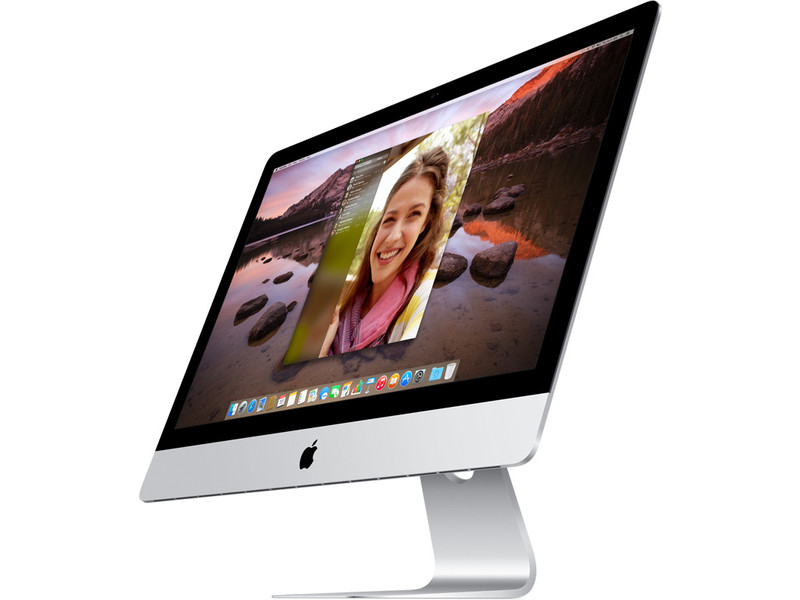
I decided to stick with Windows because of Windows Live Writer. For years I’ve thought about buying an iMac. That urge became a craving when that beautiful 27″ 5k iMac came out. But I’d always think, “What about Windows Live Writer?” Nothing is stopping me now.

Yet, I have to wonder, “Why buy a Mac?” If I do everything inside Chrome, why care about an OS? Won’t it be overkill? Does the OS x or Windows 10 even matter? If I buy an iMac, won’t it just become a very expensive Chromebook?

Will we stop buying computer programs like we’ve stopped by music CDs? I already subscribe to Office 365. I mainly do it for Word and Outlook, both of which are free if you use the web versions. The free version also includes Excel. Google Docs has me covered too, for those programs. And I’m sure I could find web applications for the other programs I use.

The two programs I’d miss the most are Live Writer and Outlook. I’m writing this post in the WordPress web app, and it’s not bad. I could adjust to it if I had to. Is this the future of personal computing? Are computers just going to become different sized screens with the operating system becoming invisible? I understand why Microsoft is pushing so hard to get market share with its phone and tablet. Since I have an iPhone and iPad, why shouldn’t my next computer be an iMac? Microsoft really should have kept supporting Windows Live Writer.

Hold on though. If the need for Windows and OS X is disappearing, why do we need iOS and Android? Is it possible to have a future where we buy phones, tablets and desktops without reference to the operating system? When we buy a television we don’t think about how it does its magic.

JWH