Does Science Fiction Hurt Science?

Science is under attack in America today.  There are more anti-science people than scientists.  And by scientists I mean anyone who accepts science as the best method for understanding reality, not just working Ph.D. scientists.  I just finished a book Merchants of Doubt by Naomi Oreskes and Erik Conway and they carefully chronicle how fraud science is being used in politics to attack real science.

Most people have no idea how real science is conducted and communicated, thus it’s very easy to corrupt the general public about scientific knowledge.  Real science is done in peer reviewed journals and is rather plodding.  Popular science writing takes real science and tries to explain it.  This is the first level where unscientific noise enters the equation.  Most people do not read peer reviewed science journals so they must depend on textbook and popular science writers to explain science to them.

The third level down are writers (like me) who take what they’ve read in popular science writing and further spread the ideas or use the ideas in some applied political or practical fashion.  This is were a lot of imprecise and unscientific noise gets spread to readers in general.

I’m a life-long science fiction reader.  I spend a lot of time writing about science fiction and its history.  I grew up thinking science fiction promoted the study of science.  Now I’m not so sure.

Anyone can introduce a meme into the social network.  And they can claim the meme is scientific.   99% of Ph.D. climate scientists say global warming is happening, and it’s caused by humans, but if one non-science person who is good at communicating can convince a large group of people that global warming is a fraud, it will be believed, even more so than by the Ph.D. scientists.  The scientists have billions of dollars of the latest technology systematically researching the problem on a worldwide scale, and one person, with no expertise and equipment, but with good communications skills can destroy all their effort.  Ideas are more powerful than science.

We live in a world of seven billion gullible people who’d rather believe what they want than the truth.  People are self-delusional.

Science fiction is a powerful art form that generates non-scientific memes.  Is that good or bad?  Should we worry.

angels

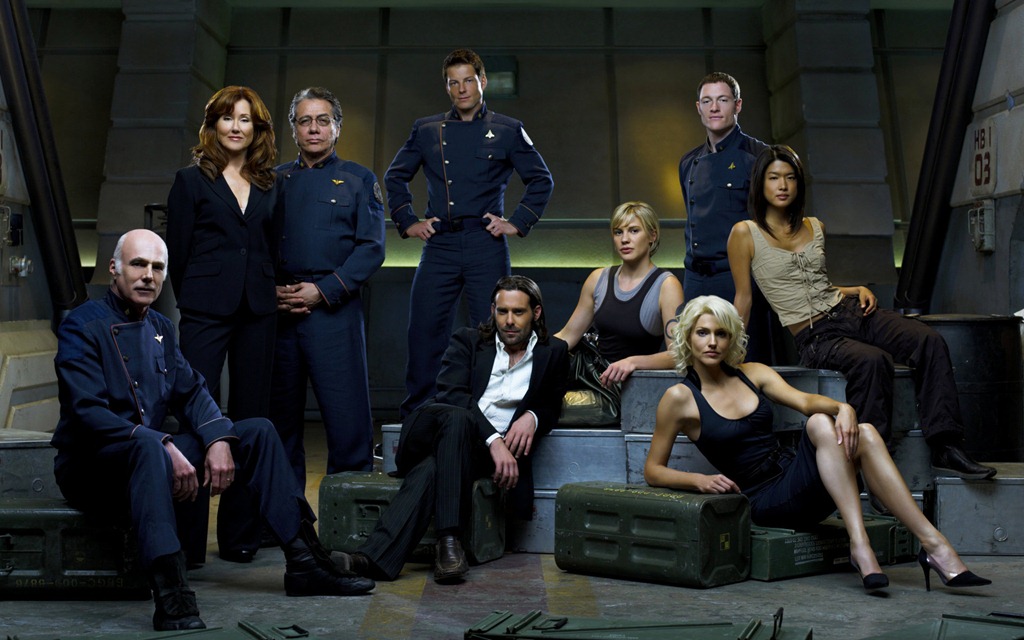
Thousands of years ago some human came up with the idea of angels and the meme has existed ever since.  In more recent times science fiction promoted the idea of faster-the-light traveling spaceships.  Is a warp drive any more real than an angel?  Battlestar Galactica had warp drives and angels.  I thought the show was a lot of fun, but I don’t believe in either, but many people do.  Create an idea and the believers will come.

battlestar-galactica-backgr

The innocence of science fiction corrupting minds with junk science depends on fans knowing that science fiction is just for fun.  I’ve argued this point before and some of my friends exclaim that it’s obvious that people know that science fiction books and movies are just for fun.  I don’t agree.  I think some people want to believe that their favorite science fiction can come true.  That the future of mankind includes galactic civilizations, time travel, downloading minds into clones and computers, and so on.

I think great science fiction takes real science and dramatizes it in ways that make readers speculate about the future.  The Time Machine by H. G. Wells is a good example.  Wells used the idea of evolution to speculate about descendants of Homo Sapiens and the extinction of our race and the Earth.  The time machine was merely a gimmick to let the reader visit these speculations, but it’s that gimmick that’s stuck with the popular mind.

Other science fiction throws out far out ideas just to see what people will say.  There’s nothing wrong with fun speculation, unless people consider it science.  Take for instance the current film Prometheus which I’ve already written about.  What’s dangerous is if some people actual start believing that aliens visited the Earth and helped humans develop civilization.  Prometheus is only a continuation of 2001: A Space Odyssey back in 1968 and that led to Chariots of the Gods type thinking.

Now this kind of fun pretending is fine as long as you don’t think it’s science.  Science has a huge problem in America.  Few want to study it, fewer still want to accept it, and many want to corrupt it.  I have to ask if my favorite art form is contributing to undermining scientific thinking?

According to this recent Gallop Poll, 46% of Americans believe God created man in the last 10,000 years, according to Bible history.  Science is competing with that kind of thinking.  Does it help science to have science fiction generating all kinds of nonsense ideas too?  If you understand science, science fiction is fun, but if you don’t, how can you tell if the ideas are real or crazy?

Follow the link to the Gallop Poll and read the statistics about Americans and their beliefs.  They’re closer to fantasy and science fiction than science.  In fact, people who pursue scientific thinking makes up only a tiny fraction of the population.  We all depend on science for medicine, cars, airplanes, computers, weather prediction, etc., but few of us study how it works.  Scientists are the magicians of our times, and few understand how their magic works.

I’ve read popular books and magazines about science all my life.  I think of myself as an advocate for scientific thinking, but I’m far from a disciplined scientific thinker.  Science is a very misused word.  Our society is full of junk science, fraud science, pseudo science, fake science, and an emerging category I’m calling zombie science.

Some computer viruses take over personal computers and turn them into zombie computers to attack other computers and create massive denial of service attacks.  Conservatives waging a war on science and environmentalism have developed fake and fraud science to inject into people’s minds to spread zombie science.  They are taking over people’s minds to create a denial of science attack with their anti-science science.  This is very diabolical, but impressive.  Read Merchants of Doubt for the details.

What I’m asking is in this war on science, is science fiction helping or hurting?

Don’t just toss this idea off.  Think about it for awhile.  Everybody has a map of reality in their heads.  How functional or accurate that map is depends on how well it corresponds to actual reality.  That’s what science is about, validating the input of our senses.  It’s extremely easy to program humans to believe anything.  Not only can we be brainwashed but we all actively promote self-delusion.  Scientific thinking is an extremely hard discipline to pursue, much harder than Zen.

Remember Cypher in the film The Matrix, when he sells out to Agent Smith?  Cypher is willing to accept a delusional world because it gives him what he wants.  Most humans do that.  I wonder if our love of science fiction is like steak to Cypher?

People will dismiss this idea.  They will say only an idiot will believe the stuff in science fiction, that science fiction is only books you read for fun.  Well, how many people believe in the Bible?  It’s only a book too.  Don’t get infected by zombie science.

JWH – 6/23/12

Surviving the Collapse of Civilization – The Day of the Triffids by John Wyndham

This month, my book club is reading The Day of the Triffids, the 1951 novel by John Wyndham and the response is overwhelmingly enthusiastic.  We seldom agree so much.  Many people consider it one of their all-time favorite novels and relate memories of first discovering the book as a kid.  I’m not sure I read The Day of the Triffids before, but I have vague memories that I might, but nothing distinctive.  I used to read SF paperbacks like eating popcorn, and I remember reading a stupid book about plants killing off people.  The Day of the Triffids is not stupid, and the mature me loves it, but how many SF novels have been about killer plants?  Memory is so unreliable. 

The Day of the Triffids is a classic that has been filmed once, made into two television mini-series, been adapted to radio twice, and has another movie version in the planning.  The Day of the Triffids is a popular novel because the subject has wide appeal:  What if you wake up and everyone else is dead?  My favorite of this sub-category of science fiction is Earth Abides by George R. Stewart from 1949.  John Wyndham adds a couple of twists that make The Day of the Triffids more dramatic.  First, our hero Bill Masen wakes up in the hospital with his eyes bandaged recovering from surgery, but no one comes to help him that morning and he hears all kinds of weird noises that worry him.  Eventually he takes off his bandages and he can see, but he discovers most everyone else is blind.  Civilization quickly collapses, people die, diseases run rampant, and a weird walking plant starts attacking people and eating them.

day-of-the-triffids

Yeah, the last is a bit much.  That’s what I remember from reading this book as a kid, the triffids.  I thought them silly, but as an adult reader, I think Wyndham skillfully weaves them into the story in a realistic manner.  The triffids make life hell for the survivors who already have a bleak existence.  Personally, I’d have been perfectly pleased with the novel without the damn triffids, but the story is so riveting that I can accept them.

This book is about surviving the collapse of civilization.  I love that theme.  Earth Abides is one of my all time favorite novels, and I enjoyed the heck out of The Day of the Triffids, as well as other top books exploring this theme, The Road by Cormac McCarthy, The Postman by David Brin and A Canticle for Leibowitz by Walter M. Miller, Jr.   I’m also watching the 1975 BBC series Survivors and re-watching the 2008 remake – so this month I’m obsessed with being the last man on Earth (okay, among the last).

The Collapse of Civilization

To get you into the mood of these books watch Life After People, a documentary from The History Channel about how civilization would slowly decay if people suddenly disappeared.  Or the National Geographic’s Aftermath: Population Zero.  Or read The World Without Us by Alan Weisman.

These documentaries and book show us what life on Earth would be like if everyone suddenly disappeared.  The Day of the Triffids, Earth Abides, The Road, and the like, show what life on Earth would be like if only a few people survive.  It takes a lot of people to maintain civilization, and these stories show us just how dependent we are on each other.  In these novels, the survivors are the carrion eaters who dine of the body of civilization.

Every reader will fantasize what they would do in such a situation.  That’s why these books are so appealing.  There is no easy solution.  You can live off of canned food for so long.  Could you grow food, hunt, herd animals?  Can you make candles and clothes?  How?  What if someone else takes all the candle making books from the library before you do?

Then there’s the problem of other people.  You’d think for each million people being reduced to 100, everyone would care more about each other, but that’s not so.  Everybody has a different idea of how to run things – just watch the reality TV show Survivor.  It’s very hard to get along with other people when you have to work together under apocalyptic conditions.  There’s a reason why hippie communes failed.  And how do women feel when all men see them as baby factories?  Being Eve is a burden.  And if you have children, can you protect them from disease and danger, and feed and cloth them?

We have very cushy lives.  We have lots of free time.  We have lots of luxuries.  What if all of that went away?  Would you want to keep living?

These stories are usually based on the idea of a plague killing most people.  If AIDS had been an airborne virus, or if a strain of Ebola started spreading like the common cold, this kind of scenario could happen.  The Black Plague killed 30-60 percent of Europe between 1348 to 1350.  So the idea of most of the population suddenly dying off isn’t an unrealistic fantasy.  Mary Shelley probably started this genre in 1826 with The Last Man, and its been expanding ever since with post-apocalyptic fiction.  See this list of pandemic stories.  During the cold war in the 1950s two classics, Alas, Babylon by Pat Frank and On the Beach by Nevil Shute, became huge world-wide bestsellers.  Being a survivor strikes a very deep chord.

Earth Abides and The Day of the Triffids were from 1949 and 1951.  Earth Abides deals with a natural pandemic, but The Day of the Triffids ultimately suggests our own bioengineering and nuclear weapons will be the cause of our destruction.  But the core message of each of these novels is civilization can come to an end, and even the human race.  The challenge to both the characters and readers is to imagine how civilization can be rekindled and preserved.   The Day of the Triffids brings up many philosophical and practical questions:

  • If everyone is dying, should the strong help the weak?
  • What if protecting the weak threatens the survival of the strong?
  • Is it stealing when stay alive means looting?
  • Does your survival justify killing other people?
  • Should women become baby factories?
  • Who deserves to be leaders?
  • How are group decisions made?
  • Does democracy still count?
  • How do you punish wrong doers in your group?
  • How do you raise the next generation?
  • Should you make kids go to school and learn what kids have to learn today?
  • What foods can you produce that can feed people 365 days a year?
  • What are the appropriate technologies for the new times?
  • What do you preserve from before the collapse?
  • How do you find other people?
  • How do you communicate over a distance?
  • How do you get news?

The fascinating facts of Life After People and Aftermath: Population Zero is how long various products of civilization will last.  In 1951 power plants in London were probably coal fired, and as soon as the people stopped feeding the boilers, the city would have gone dark.  In modern America, automation would keep power plants going for awhile, maybe even weeks for sites like Hoover Dam.  But it’s very surprising how fast things break down and decay. 

Decaying cities is nicely reflected in The Day of the Triffids.  Wyndham did a lot of thinking about the idea.  He gives us several examples of how people would organize and disagree, and how various groups would attempt to rebuild civilization, including Christians hanging onto their old beliefs, and military men planning for the return of war.  That’s depressing because it suggests we won’t learn from the collapse.  I’d like to think that people would universally think, “Let’s not make the old mistakes again” and try something new.  But Wyndham, and Stewart, brilliantly suggest not.  They wisely see people as people, and people don’t change, but they do survive.

In all these stories, diverse characters push on through hardships for a myriad of reasons.  Some think about saving mankind, but many just think about getting what they want.  And they all go through different psychological stages, like the Five Stages of Grief by Elisabeth Kübler-Ross (denial, anger, bargaining, depression and acceptance), survivors have their own stages.

One of the first stages is denying that the collapse is universal and hoping they will be rescued, and in the case of The Day of the Triffids, the assumption is the Yanks will come to the rescue.  That’s a kind of denial.  Even when the characters realize the collapse is universal many keep asking “When things get back to normal?”  Another kind of denial.

It takes a while for each character to realize that things will never be back the same.  That their old lives are finished, and whatever their new lives will be is yet to be established.  Reaching this level of acceptance often takes them through the same stages as coming to grips with death.  Then they start working on rebirth and life after the collapse.

It is at this stage where Earth Abides outshines The Day of the Triffids.  Wyndham only goes so far with his story, but Stewart takes us into the second and third generation, and makes some brilliant observations.  I really wished that Wyndham had written a much longer book so we could see what happens for another fifty or hundred years.

I highly recommend reading The Day of the Triffids, even with the stupid plants.

JWH – 6/9/12

Forgotten Science Fiction: The Year of the Quiet Sun by Wilson Tucker

One thing I like to do is dig up long forgotten Hugo and Nebula award novel nominees that didn’t win, and read them to see if they should have.  Most Hugo and Nebula award winners in the novel category are remembered, often in print, or at least frequently reprinted.  In 1971, the winner for both awards was Ringworld by Larry Niven.  Everybody remembers that one, but what about the others?

Here are the other nominees:

I’ve linked each of these books to the ISFDB publication record so you can see how often they’ve been reprinted.  Three of the books, And Chaos Died, Fourth Mansions and The Steel Crocodile seemed to have been forgotten by the 1980s.  The Year of the Quiet Sun was last printed in America as an anthology of three time travel novels in 1997.  It was also nominated for the Locus Poll Award, coming in 2nd place, and actually won a retrospective John W. Campbell award in 1976 for a “… a truly outstanding original novel that was not adequately recognized in the year of its publication.”

I remember when The Year of the Quiet Sun came out, but I didn’t read it.  I got on the trail of it again last year when it was nominated for our science fiction book club, but it didn’t get enough votes to be read by the group.  I read some reviews and ordered a copy.  I finally got around to reading it a couple weeks ago.

the-year-of-the-quiet-sun

The Review

The Year of the Quiet Sun is one of the most realistic time travel stories I’ve ever read, and our chrononauts don’t travel in a time machine, but a TDV (time displacement vehicle).  I really liked that.  A secret American governmental agency builds a TDV back in the 1970s, but travel in it is limited to the location of the building where it’s housed and to a timeline that always includes a functioning nuclear power plant attached to the building.  Time travel takes a lot of power, but maybe not as much as the 1.21 gigawatts produced by the flux capacitor in the Back to the Future movies.

Another appealing aspect of this time travel novel is how timid the time travelers are with their itineraries.

The Year of the Quiet Sun is about Brian Chaney, an arrogant futurist and famous Biblical scholar, one of three men conscripted to be time travelers.  The other two are military men, Air Force Major William Moresby and Navy Lieutenant Commander Arthur Saltus.  The military men don’t think Chaney has the right stuff, and Chaney seems to have made a bad initial impression with them.  Eventually, they work out a truce.  All three fall for their beautiful young handler, Kathryn van Hise, competing for attention while they train.

The Year of the Quiet Sun has a simple beauty in its constrained ambitions.  Wilson, writing near future science fiction, uses the story to make social and political projections that didn’t pan out, but I’m not sure that ruins the story.  Science fiction that creeps past its projection date often is dated, so it’s the story that counts in the long run.

The Year of the Quiet Sun was one of the first books that were part of the legendary Ace Science Fiction Specials started in 1968 by editor Terry Carr.  Many of them were paperback originals.  And Chaos Died, Fourth Mansions and The Steel Crocodile were also Ace Science Fiction Specials.

The Analysis with Spoilers

Read no further if you plan to go out and read The Year of the Quiet Sun, because I’m going to tell everything that happens and ask why.

There’s two real tests for a science fiction book, the impact it makes when it comes out, and the impact it makes once it becomes an old science fiction book.  Science fiction goes stale easily and spoils.  For a futuristic literature, science fiction is usually about the present, and seldom becomes timeless.  And it’s usually very hard for a time travel novel to become timeless.  My favorite example of a timeless time travel novel is Replay by Ken Grimwood.

The Year of the Quiet Sun is far from timeless.  It’s a quick read at 252 paperback pages.   It’s too quiet for lovers of loud adventure fiction, and it’s too active for literary quiet.  Wilson Tucker works up a very nice time travel machine, and some reasonable characters that are somewhat interesting, especially Chaney, but where Wilson blows it, is when our time travelers travel to – a library down the street a couple years in the future. Logical, but not exciting.  But I liked that kind of realism.

The first assignment is for the President to see if he’ll be reelected.  Cautiously they move further into the future where they find a second civil war, this time its blacks against whites.  The Year of the Quiet Sun was written just after Martin Luther King, Jr. was assassinated, during a decade of many battles for civil rights.  Wilson Tucker essentially imagines us failing, which shows little faith in the future.  If he had been right, this would have been a prophetic novel, as it is, it’s a big dud at prophecy.  Tucker just couldn’t imagine the positive changes we’ve made.

Tucker redeems himself by his trick ending.  It turns out Brian Chaney is black, which we learn slowly.  In the future of this book, but actually our past, the U.S. collapses under a new civil war, and a black time traveler showing up in territory held by whites is not welcomed.  But Chaney doesn’t know why until the very end of the story when he meets an old Kathryn van Hise.  This is an amazing coincidence that nicely ties up the novel, and it feels good for a storybook ending, but now, over forty years later, doesn’t feel right with all our hindsight.

This is why its very dangerous for a science fiction writer to explore the near future.  But this plot also doesn’t work because there is no integration with the book’s present and the future it discovers.  Wilson Tucker holds Chaney’s ethnic background for a surprise ending, but I think he would have had a much more successful novel if the reader was told immediately Chaney was black, so the theme of the story would have been constant.  Some reviewers claim its there for us to guess if we picked up the hints, but I didn’t.  The Year of the Quiet Sun was published in 1970, but set in 1978 at the beginning, with Tucker making several predictions about the future that was just eight years away.  He predicts things will be worse socially and economically, and that we elect a weak president, and about the most modern thing he predicts is some women going topless.  No MTV, PCs or Internet.

I believe if the time displacement device had been invented to solve the current problems of America before they happened, focusing on race relations by intentionally having a black time travel agent on the team, the story would have been more meaningful.  Brian Chaney constantly pines for Kathryn but always holds back while the two military men make their play.  We understand why at the end, because he’s black.  But wouldn’t knowing that fact make the story more interesting from the beginning?  Would it allow him to deal with race issues throughout the book?

Instead of using the time machine to ward off the collapse of the United States, the time travelers get stuck in the future they cannot change.  Now this is very realistic, and I admire it, and I think it makes the story much more likable.  I don’t think every science fiction story needs to save the world, but the failure here is so damn passive that it seems pitiful.  Now I both admire this restraint and feel disappointed by it too.

The Year of the Quiet Sun is about little people doing something very big in a little way, and failing in a little way.  In a way it reminds me of Timescape by Gregory Benford, another very realistic time travel story that’s not full of action.

I admire The Year of the Quiet Sun because it’s so realistic, but I’m conditioned by science fiction to want more, even knowing most action oriented time travel stories come off contrived and silly.  I guess I don’t believe people with a time machine would be so timid.  Most time travel novels are about going into the past to make a different present.  Here we have a story about traveling into the future that should have taught our characters to change the present.  Of course, what could they do?  Come back and have a press conference that’s shown on the CBS Evening News:  “Scientists report the United States will collapse in 20 years after visit to the future.”

Has anyone written a time travel story where present travelers go into the future, find out the bad stuff, return home, fix the problems and then go back to the future to check their work, and to find out what next needs to be fixed?

I think The Year of the Quiet Sun is still a fun quick read, especially for SF fans who like to read old SF, but it fails as a timeless novel.   Read Earth Abides by George R. Stewart to see what I mean by a timeless classic.  The Year of the Quiet Sun had the potential to be that good.  And maybe that’s why it was up for all those awards – readers admired it’s potential.

JWH – 5/29/12

Forgotten Science Fiction: The Last Starship From Earth by John Boyd

Every year thousands of SF and fantasy books get published, but few are reviewed, not many more become popular, and damn few get remembered.  Ten years out, most books are out-of-print and forgotten.  How many books can you remember from 2002?  And if we’re talking fifty years down the timeline, well it’s almost a miracle for a book that old to still be read, much less remembered and loved.

I discovered science fiction in the 1960s, in my teens, and like most people reading their first hundred SF titles, they all seemed so damn far out!  Now decades later, I doubt my memories of those first impressions.  So, when I have a little extra reading time, I order a book from ABE Books based on those dying memories and reread it.  I’ve now reread many of my teenage classics and a majority of them don’t hold up.

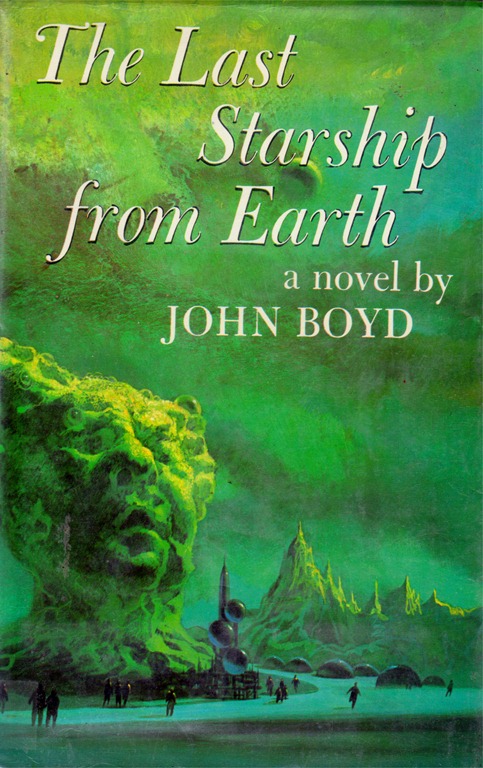
Most memories are fleeting, and my memory of The Last Starship From Earth was next to nothing.  All I remembered was a favorable impact.  Just a lingering sense of it being a standout read for 1968 or 1969.  To test that memory I recently bought and reread The Last Starship From Earth.  Sad to say, it was a discard from the Columbus Public Library, a common practice for books that don’t get checked out.  Not a good sign.  The last English reprint of this novel was in 1978.  It’s last edition was in French, in 1995.

The-Last-Starship-From-Earth-by-John-Boyd

The Review

The Last Starship From Earth is a dystopian novel set in 1968 and 1969, but not the 1968 and 1969 that I remember, or lived through.  In the world of this story, Jesus did not die on the cross, but was killed leading an assault on Rome.  He was the Messiah that people expected.  The government of John Boyd’s world is a global government run by Christians along “scientific” lines, where psychologists and sociologists in conjunction with the Church and an AI Pope rule the world.  People marry and mate because of their genes, sort of like the film Gattaca, and the hero of our story is Haldane IV, M-5, 138270, 3/10/46, a math student of great promise, being the fourth in line of great mathematicians.  Unfortunately Haldane gets the hots for Helix, a mere poet.  By law and social custom Haldane is expected to have nothing to do with her, but as you’d expect he falls in love with her.

Haldane concocts a ruse to justify more meetings with Helix by studying Fairweather I, a 19th century mathematician who also wrote poetry.  Much of the first half of the book deals with pseudo-academic studies from this alternate history.  Boyd is creative in his steady flow of ideas and concepts, but there’s little emotion in the story.  It’s somewhat Heinlein-esque, in it’s attitude and world building, but lacks the charm of Heinlein’s best prose.

Now, this quick summary is enticing, and I would like to report that The Last Starship From Earth is a forgotten classic, unfortunately, that’s probably not true.  I enjoyed the book, but only as a quick read.

Surfing the web I’ve found few other reviews of this novel, and although I’ve found people who claim it’s their favorite book, I also found people that thought it ho-hum.  Now, I’ve got to admit it has a humdinger of an ending, almost as startling as the film The Sixth Sense, but I’m not sure this last minute thrill pays for the reading the whole book.

I found the love affair of Haldane and Helix no more believable than Romeo and Juliet and far less exciting.  John Boyd does write well, but the plot is mostly intellectual, about the dystopian society, and its complications.  The book is only 182 pages, and the whole tale feels rushed.  Boyd staked out a solid gold claim but never mined it.

Analysis with Spoilers

The trouble with many SF novels, especially those written back in the 1950s and 1960s, was they were written very fast, and they were about ideas and not characters.  John Boyd has actually written a very ambitious novel by creating an alternative history of Jesus, but he never fleshes it out, and most of the story is a setup for the surprised ending.  The scope of the book is epic, the line by line writing reasonably entertaining, but the overall feel of the book is thin.

Haldane and Helix are discovered, and the middle part of the book is a trial that allows Boyd to work out the politics and legal system of this alternative reality, however, like the rest of this book, it’s rushed.  It’s padding.  That’s its downfall.  He has a big ending but it’s way bigger than the story.  To pad the story even more Haldane is sentence to exile on Pluto, which is called Hell.  There he meets Fairweather I and is reunited with Helix, who happens to be Fairweather’s granddaughter.  Fairweather needed a mathematician for his time machine, and Helix was sent to Earth to engineer the exile of a mathematician to pilot an experimental time machine.  In a very short time Fairweather makes Haldane immortal, tells him his new name is Judas Iscariot, and his mission is to go back in time to kill Christ.

Now if Boyd had spent a couple hundred pages recreating the Biblical world and shown how Haldane tracks down Jesus, we would have had a much better story.  But all of this was summed up in a short epilogue.  We are told Haldane captures Jesus and puts him in the time machine and sends him back, and the rest of the epilogue is about how he has relived the two thousand years to return to his own time and meet a girl that’s an awful lot like Helix, living in a future that’s much more like ours.  But did Haldane let Jesus die on the cross, or does he just disappear him from history?  Unless Haldane at least engineers a dying on the cross scene for history, we should not expect this timeline to be ours.

How do you plot a riveting novel with great characters based on the idea that Jesus didn’t die on the cross and the world became very different?  How do you tell the story twice?  Boyd really grabs a tiger by the tail and yells, “Look at me!”  And I think, “Cool!  Far out man!  But what are you going to do with him?”  He’s got to do more than just swing it around.  I’ll give Boyd a solid C for his world building, but they are only tantalizing sketches.

I really like this ending, but is it good enough to make The Last Starship From Earth a classic SF novel worth reading today?  I’ve linked several references to this book on the net and even though I can find fans of the book, I can find more people who think it sucks.  You’d think  Boyd Bradfield Upchurch, John Boyd’s real name, if he’s still alive, would arrange for his books to be reprinted as ebooks.  That certainly would make it easier for more readers to decide if The Last Starship From Earth is worth reading.

I’m afraid Boyd falls far short of classic standing.  The Last Starship from Earth is a good novel for science fiction historians to read, but it needed to be four or five times longer, more the size of Dune, to get the job done that Boyd outlined.  However, I’m not sure how he could have pulled off this big ambitious idea.

And is Boyd saying our history is the better timeline?  Why is his first timeline all that evil?  Is the freedom to fuck whoever you want the perfect ideal worth rewriting all of history?  Isn’t the more interesting story about a world where the promise of salvation and eternal life never happened?  Isn’t Boyd’s surprise ending really a cheat?

Time travel machines often ruins more stories than they’ve ever help.

Boyd has a three part story.  Life on Earth in an alternate timeline, life on Pluto, life on Earth in another timeline.  The story really isn’t about genetic breeding of humans like we see in Gattaca, or in Heinlein’s Beyond This Horizon or Huxley’s Brave New World.  It’s about an oppressive government.  But does it deserve to be wiped out by time travel?

Here’s the thing, our 1968 was a horrible time for America, but should we send a man back in time to wipe it out?  Boyd wasn’t writing a protest novel like Nineteen Eighty-Four.  Nor did he write a novel that truly explored a timeline with a different Christ, which would have been ambitious enough.

Would The Last Starship From Earth been a better novel is it hadn’t used the time machine gimmick?  Not as it stands, but it potentially could have been.  I believe it’s a grave mistake for any alternate history novel is have a do-over.  Time travel is really a very dangerous concept to use in fiction.  Time travel is very hard to pull off.  The beauty of an alternative history novel is the alternative history.  Don’t add time travel.  This would take away Boyd’s surprise ending, but it would have meant he would have been forced to write a better novel.

I felt cheated when Helix shows up so easily on Pluto, in what at first appears to be a happy romantic ending, but then we’re thrown for another loop.  Haldane loses her again, only to find her again 2,000 years later.  Oh come on man, this horny-at-first-sight love isn’t believable.  Weren’t there no math babes for Haldane?  This really is a case of what you can’t have makes the heart grow fonder.  And neither Haldane nor Helix are all that interesting – if you want a great love story you have to have great lovers.

The powerful driving motive in Gattaca is that Vincent wants to go into space.  He wants to prove that he’s as good any genetically selected human.  The driving force of The Last Starship from Earth is Haldane wants to screw Helix.  Boyd doesn’t make it believable why his world outlaws sex, nor does he make it believable that Haldane and Helix are in big time love.  Hell, even the prosecutors of the story wink at him, and say why didn’t you use a condom and just screw her, implying this world does overlooks recreational sex, just not casual genetic mixing.  But then Boyd never explains why his world requires genetic  fidelity to specialties like mathematics and poetry.   In Gattaca we have the justification that their world doesn’t want naturals to pass on bad traits, but in Boyd’s world there is no reason to breed pure bred mathematicians.  Also, how many math geniuses does one world need?

John Boyd wrote just enough alternate history world-building to set up his surprise ending.  In essence The Last Starship From Earth is a O’Henry type story, and we now use those type stories as examples as how not to write a story.  However, The Last Starship From Earth suggests two possible storylines I’d love to read.  First, I’d love to read an alternate history where Christ was the Messiah that everyone was expecting.  Second, I’d love to read a time travel story about people having to learn what it takes to live in ancient Israel and track down Jesus.  Both would require a tremendous knowledge of real history.

JWH –5/28/12

The Origins of Higher Intelligence in Science Fiction

In the physical realm of reality, we humans have always believed we were the crown of creation, the smartest beings in a long chain of animal and plant creatures.  Yet, as far back into history that we have memories, we have speculated about metaphysical beings that were far smarter than us, who had amazing abilities.  God and gods, angels and devils, and a whole zoology of spiritual beings.  Over the centuries of progress and the development of science, we have come to doubt the existence of such metaphysical beings.  We’ve even asked ourselves, are we alone in the universe, and wondered if there are beings elsewhere in the vast multiverse that are as smart as we are, or even conscious of living in the multiverse.

Ancient Greeks speculated about life on distant worlds.  They even imagined the universe composed of atoms and concluded our world must not be unique.  Ever since then there have been people who thought about life on other worlds, or even the creation of better humans, or even the wilder ideas of the creation of smart machines and artificial life.  We just don’t want to accept that we’re alone.

For most of history, most of humanity has assumed we’re not alone, that spiritual beings existed and they were superior to us.  After the Renaissance and the Enlightenment, religious thinking decline and scientific thinking rose.  Among the population, a growing number of us has come to accept that physical reality is the only reality.  Instead of waiting for God to give us higher powers after we died, we started speculating on how we could give ourselves immortality, greater wisdom, and control over space and time, and we wondered more and more if there are other intelligent, self-aware creatures living in the universe with us.  Slowly, a form of literature developed to support this speculation and it’s generally called science fiction.

mary_shelley

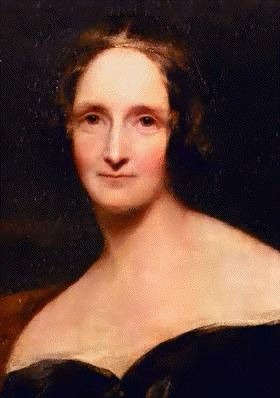
In 1818 Mary Shelley spread the idea in her book Frankenstein; or, The Modern Prometheus that we could find the force that animated life and overcome death.  That’s a very apt subtitle because Prometheus was a god that uplifted mankind.  Mary Shelley also promoted another great science fictional concept in her 1826 book The Last Man, which speculated that our species could go extinct.  If there is no God we must protect ourselves from extinction, and fight against death.  But actually, we wanted more.

HG-Wells 

Then in 1895 H. G. Wells suggested to the world in his novel The Time Machine, that humanity could even devolve, as well as go extinct.  Not only that, he showed how the Earth could die.  This was all inspired from On the Origin of Species by Means of Natural Selection by Charles Darwin, which first appeared in 1859.  In The Time Machine Wells imagined life in 802,701 A.D.  Instead of picturing the obvious, a superior race of humans evolving, he envisions two species that had branched off from ours, and neither of which were superior.  He hints that there were greater versions of humanity in between the times, but now we had devolved.  At the end of the book, he suggests that humans devolve even further into mere creatures without any intelligence.  This powerful speculative fiction defined the scope of humanity for us.  We can become greater, lesser or ceased to exist.

Then in 1898 Wells gets the world to think about another brilliant science fictional idea, what if there are superior alien beings that can visit Earth and conquer us.  In The War of the Worlds, intelligent beings come to exterminate humans.  We don’t know how much more intelligent they are, but the Martians can build great machines and travel across space.  There had been other books about alien invaders and time travel, but H. G. Wells made these ideas common speculation.

John_Davys_Beresford 

In 1911, J. D. Beresford published The Hampdenshire Wonder, a book about deformed child with a super powerful brain, a prodigy or wunderkind of amazing abilities.  Beresford, his novel and ideas, were never as famous as his contemporary H. G. Wells, but The Wonder was an idea whose time had come.  How much smarter could a human become?  Readers of science fiction, and some people in the world at large were now wondering about the powers of the mind, as well as speculating about how powerful could alien minds be.  Stories about robots had existed before now, as well as Frankenstein and Golem like creatures, but the public had not fixated on the idea of superior machine intelligence or artificial life.   But we were on our way to imagining a superior man, a superman.

Prodigies were well known and speculated about, like musical prodigies and math geniuses, but Beresford suggests the human mind had a lot more potential in it.  He also zooms in on the resentment factor.
Gladiator_(novel)

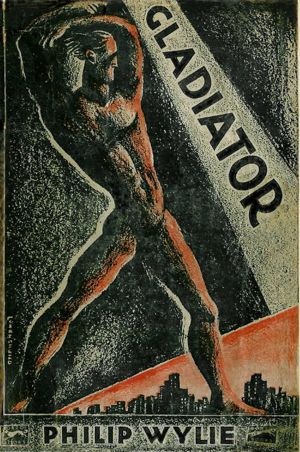
The 1930 novel Gladiator by Philip Wylie suggests it’s possible to enhance humans with a serum to improve their physical strength.  There is no scientific reasoning behind this, other than to suggest we could have the equivalent weight lifting power of an ant, and the jumping power of a grasshopper.  All of this merely foreshadows Superman comics (1932).  The theory behind Superman is he’s an alien with advanced powers and not an enhanced humans.

Action_Comics

Comic books embraced the idea of super-heroes speculating about an endless variety of ways to get humans with more features and powers.  Comics have never been very scientific, and instead copied the ideas and themes from ancient gods and goddesses.  It’s all wish-fulfillment fantasies.  People are exposed to radiation and lightening all the time and don’t mutate.  However, all of this led to speculation about what humans could become, and how evolution might produce Homo Sapiens 2.0.
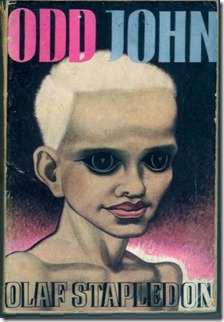
Odd_John_first_edition_cover

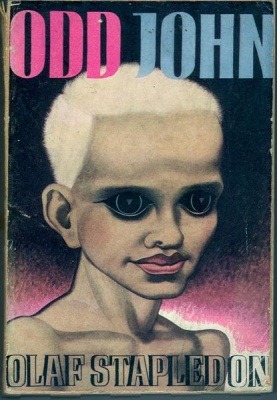
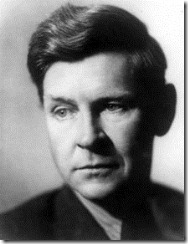
In 1935 Olaf Stapledon published Odd John: A Story Between Jest and Earnest.  Stapledon went far beyond comics in his speculation about what a superman might be, how they would act, and how society would react.  Science fiction is now seriously philosophizing about the future and potential of the human race.
Olaf_Stapledon

Olaf Stapledon was a far reaching thinker and a serious science fiction writer.  Last and First Men (1930) describes eighteen species of humans, while Star Maker (1937) tried to write a history of life in the universe.  These books are not typical novels, but more like fictional narratives.  The scope of Stapledon’s speculation was tremendous, and few science fiction writers have tempted to best him.

Gray_lensman

1930s science fiction was full of stories about accelerated evolution, such as “The Man Who Evolved” by Edmond Hamilton, and this culminated in the super-science stories of E. E. Smith and his Lensmen stories (1934-1948).   Science fiction fans ate this stuff up, and many people consider the ideas in the Lensmen series as inspiration for the Star Wars series.  The stories involve two super alien races fighting a galactic war over vast time scales using client races that they uplifted with knowledge and superior technology.

Smith ideas weren’t completely new, but he put them together in an exciting series that really jump-started the science fiction genre of the 1940s and 1950s.  Smith presented the idea that aliens could be godlike or devilish in their abilities, wisdom and knowledge, and they could bestow great powers on those who follow them.  The science behind all of this is hogwash.  It’s pandering to ancient religious beliefs by presenting the same ideas in pseudo-science costumes.

Star Wars has the same exact appeal.  Humans, especially adolescent boys, and now liberated girls, want power and adventure.  These powers and adventures are no different from what Greek, Roman, Hindu and Norse gods experienced.  The excitement of Golden Age Science Fiction from the pulp magazines of the 1940s and into the psycho-social science fiction of the 1950s represents the unleashing of great desires.  Desires for immortality, of ruling the heavens, telepathy, telekinesis, teleportation, flying faster than light, becoming as all-knowing as God.

Starting in the 1950s, especially with movies, and expanding in the 1960s with television shows like Star Trek, these ideas became widely popular, almost universal, and during the next 50 years, they came to dominate the most popular films.  There is a huge pent-up desire here for the fantastic and the transcendental through the powers of science.

Science fiction writers have often faced the challenge of presenting a super-advanced being, either a very evolved human, a powerful alien, or an AI being with vast intelligence as a character in their stories.  Generally, the assumption is super-intelligence equals ESP like powers.  How often in Outer Limits, Star Trek, Star Wars, or in written science fiction, have you seen a highly evolved human read minds, or move matter with thought, such as Valentine Michael Smith in Stranger in a Strange Land?  This goes way back in science fiction.  The same thing is true when aliens come down to visit in their flying saucers.  If they are presented as from an ancient civilization, they might not even have bodies, but they can manipulated space and time at will.

Isn’t that all silly? How does higher IQ equal overcoming the physical laws of reality?

stranger_in_a_strange_land_cover

Back in 1961 Robert Heinlein suggests that a very ancient race of Martians had conquered space and time with their minds, and they taught their techniques to a normal human, as if it was no more difficult than learning yoga.  Really?  Is that believable?  Well, science fiction fans ate this up too.  And then in 1977 Star Wars suggested similar powers for the Jedi.  Why do people want to believe thinking can be that powerful?  Well obviously, they hoped to have such power.

Valentine Michael Smith could make objects move or disappear.  He could kill people at will by sending them into another dimension.  He also had fakir like control over his body that allowed him to hibernate and appear dead.  He could also talk with ghosts.  Heinlein gives us no reason how these wild talents developed, or how they could function within the rules of physics.

Like Luke Skywalker learning to use The Force, people hope to transcend their old way of being through will power.  So far we haven’t had much luck with that concept.  The next step is to invent machines that could enhance us.

lthesixthfinger

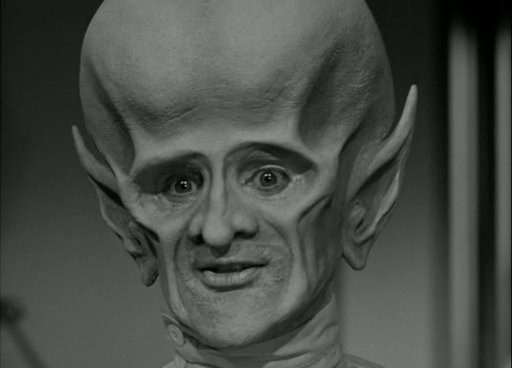
In 1963, one of the classic episodes of the original Outer Limits has David McCallum, an ordinary miner, put into a mad scientist’s chamber and his body evolved with speeded up evolution.  McCallum’s brain gets huge, he grows a sixth finger on each hand and his mental powers become enormous.  This superman moves beyond love and hate and sees normal humans beneath his consideration.

This is a step beyond Heinlein.  It suggests that evolution will eventually produce a smarter human.  It gives us no reason why we should believe this.  One real theory about why humans actually evolved was to adapt to climate change so we could survive in many different environments and climates.  Humanity  has faced all kinds of challenges and we’ve yet to morph into anything new yet.
more-than-human

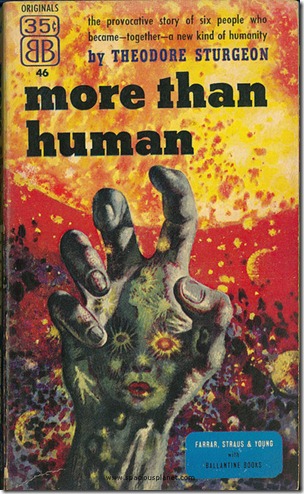
Back in 1953, Theodore Sturgeon proposed that mutations might exist in the population, in the case of More Than Human, suggested that six such individuals getting together to blend their talents into a gestalt consciousness.  The first part of the story is called “The Fabulous Idiot” and reminds us we’ve long known about idiot savants that have wild talents.  We have to give Sturgeon credit for sticking close to reality and not just making up some science fiction mumbo-jumbo, except that he suggests that misfits have ESP or telepathy, that darling concept of 1950s science fiction writers.  Without telepathy we can’t create the gestalt. 

There are humans with magnificent mental abilities, with photographic minds, wizards with numbers and math, but most of them have other weaknesses that keep them from being fully functional as social beings.  There seems to be a problem with the human mind focusing to closely on any one talent at the expense of general abilities.

Chocky

John Wyndham comes up with a solution of having an alien intelligence inhabit a boy.  This is sort of a cheat don’t you think?  Without explaining  how an alien mind can occupy our mind and why it’s mind is superior, this is no more than waving a wand and saying, let it be so.

Gary_Mitchell_After

Star Trek explores accidently accelerated evolution when the Enterprise hits a magnetic storm on the edge of the galaxy and crewman Gary Mitchell develops godlike psionic powers.  Like many stories about evolved beings, Gary becomes a threat to the normal people and feels no moral restraint about killing people.  Heinlein presented Valentine Michael Smith as being just with his use of powers to disappear people, but Captain Kirk and Mr. Spock see Gary Mitchell as evil and must be destroyed. 

This show was a second pilot for the original Star Trek series and Mr. Spock is very aggressive, brandishing a rather large and powerful phaser rifle.  Later on Mr. Spock becomes the ideal of mental self-control and evolved being, but then he’s a Vulcan.  The implication is control over feelings will lead to greater mental powers.
heinleinra-themoonisaharshmistress-berkley-001-500

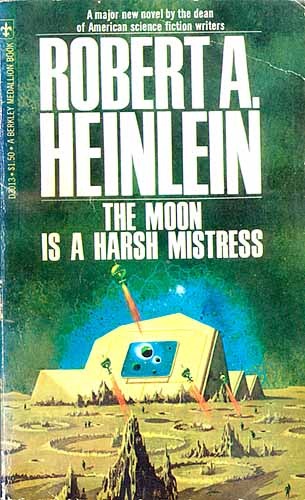
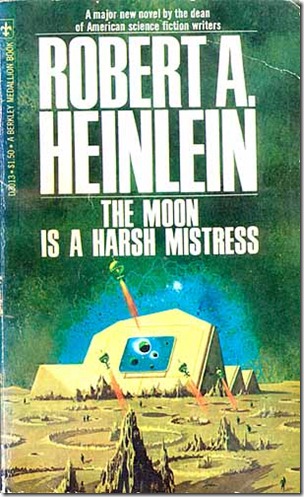
In 1965 Heinlein returns with a newer version of Mike from Stranger in a Strange Land.  Once again, this Mike is an innocent, but a machine coming into consciousness.  Once again he has to learn about how the world works and to develop his own talents.  Being a machine he has new abilities that humans don’t and can’t have.  Now we’re onto something.  If we can’t evolve our brains, why not use our brains to build a better brain.  Mike is a friendly computer, but many people fear this idea.

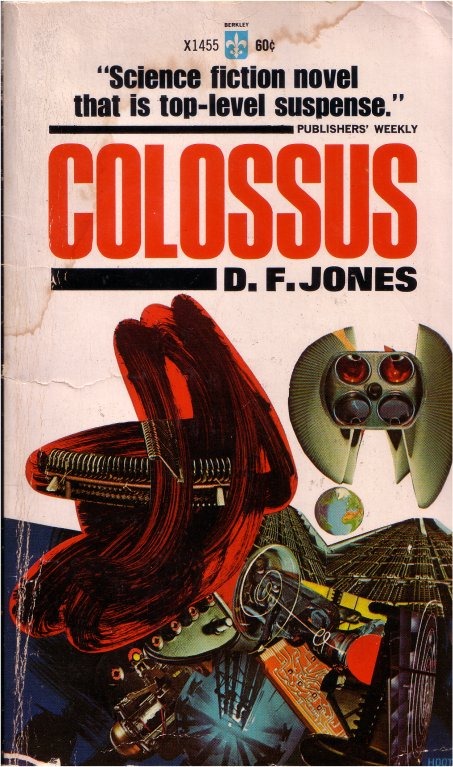
colossus

Just a year later, in 1966, D. J. Jones images the world controlled by two giant military computers.  Of course, in 1983 the film War Games imagines another dangerous military computer with consciousness.  This happens quite often in science fiction, uppity computers that must be outwitted by slower minded humans.  We seldom get to explore the potential of a smart computer.
when-harlie-was-one

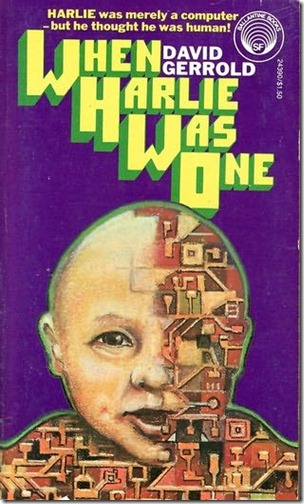
David Gerrold actually writes a science fiction novel that thoughtfully explores the idea of an emerging machine intelligence in 1972, and even speculates on many interesting ideas that eventually become part of the computer age, including computer viruses.  Gerrold builds on what Heinlein started with The Moon is a Harsh Mistress.
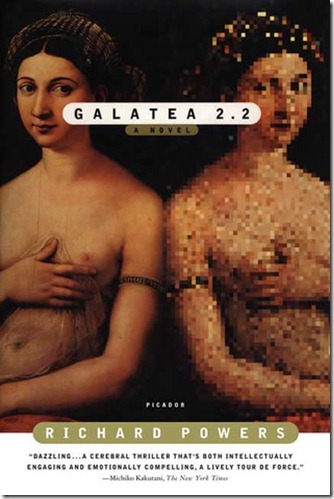
galatea-2.2

In 1995, literary writer Richard Powers explores the idea of machine intelligence with Galatea 2.2, where scientists build a computer named Helen to understand English literature.
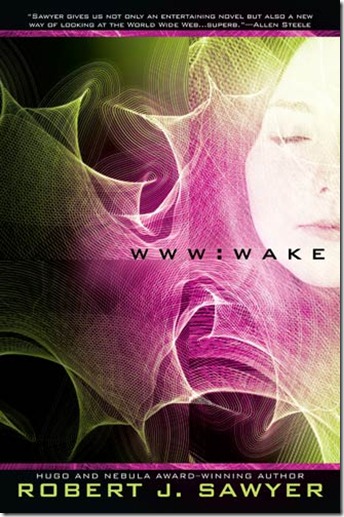
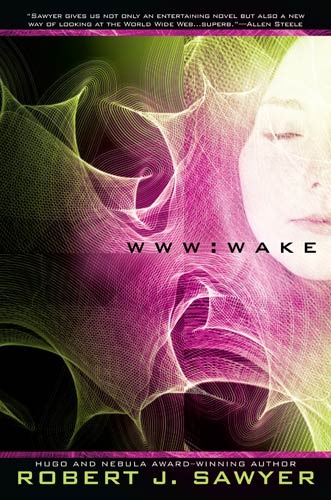
wake

Then in 2009, Robert J. Sawyer began a trilogy about an emerging AI that evolves out of the Internet.  Webmind, as it names itself.  Webmind works hard not to be threatening and wants to help humanity.

Let’s imagine a Homo Sapiens 2.0, or BEM, or AI with an IQ of 1,000.  I don’t know if that’s appropriate for the actual scale, but the highest IQ recorded are just over 200, so lets use 1,000 as a theoretical marker.  Let’s imagine IBM’s Watson that had all that brainpower and more, so he/she was like a human with computer thinking speed and memory.

What would it mean to have an IQ of 1,000.  It would mean the AI, Alien or Homo Sapiens 2.0 would think very very fast, remember incredibly well, and solve brain teasers faster than anyone on Earth.  It wouldn’t mean it could read minds or move matter at will, although I’d expect it to deduce information about people like Sherlock Holmes.

Probably all math and physics would be a snap to such a being.  In fact, it would think so fast and know so much that it might not find much of interest in reality.  It wouldn’t know everything, but lets imagine it could consciously imagine calculations like those made in supercomputers to predict the weather, solve subatomic particle experiments or run the Wall Street Stock exchange.

What would such a being feel?  How would it occupy its mind with creative pursuits?

We feel as humans at the crown of creation, that intelligence is the grand purpose of the universe, but when you start studying the multiverse, that might not be so.  We’re just one of an infinity of creations.  There might be limits to intelligence, like physical limits in the universe, like the speed of light.

Science fiction hasn’t begun to explore the possibilities of higher intelligence, but I do think there are limits of awareness, limits of thought and limits of intelligence.  All too often science fiction has taken the easy way out and assumed higher intelligence equals godlike powers.  What does it truly mean to know about every sparrow that falls from a tree?  Is that possible?

Computers are teaching us a lot about intelligence.  Up till now they show that brilliance is possible without awareness.

Science fiction has explored the nature of alien minds, machine minds and evolved human minds over and over, yet these explorations have come up with very little of substance.  I often wonder if the universe doesn’t appear simple with only a moderate amount of intelligence, education and self-awareness.  If we could couple the mind of a human with IBM’s Watson, the resulting mind might be smart enough to fully comprehend reality and build almost anything that needs to be built or invented.  Such a being would know if it’s worth the effort to travel to the stars, or just sit and watch existence as it is.

JWH – 5/15/12