The Chinese Should Be Writing Some Great Science Fiction About Now!

The Chinese have big plans to explore space, and they are sending manned missions into orbit like the United States and Russia did  in the mid-1960s.  The Chinese even say they are going to the Moon.  I think that’s great, and I imagine it’s a very exciting time to be Chinese.  Not only are they going to become a leading space exploration nation, but in the last few decades their economy has gone from poverty to an economic miracle.  All of this should have inspired their science fiction writers to write some amazing science fiction.
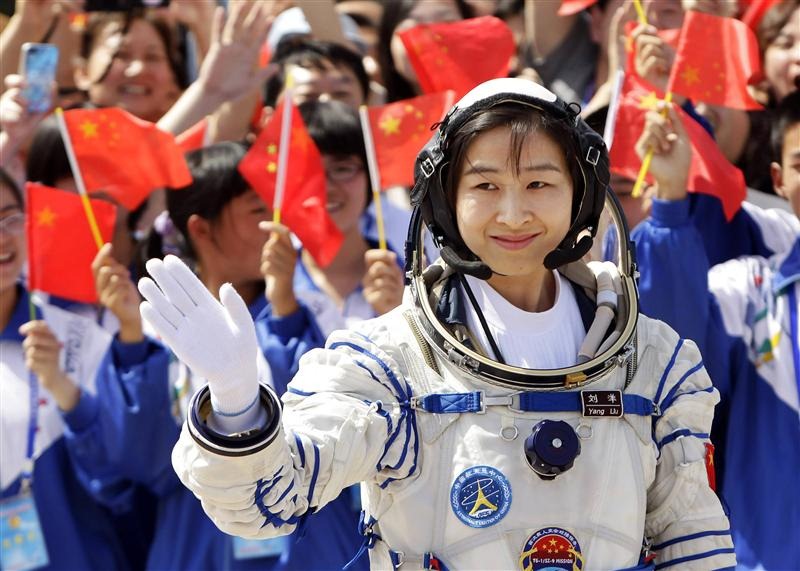
chinese-astronuat

The 1950s and 1960s were very exciting times for America as we went into space, and those decades were my favorite for science fiction.  At the time, the sky was no longer the limit until we succeeded.  1969, we went to the Moon and everyone thought we’d keep going, by 1972, we stopped going anywhere but low Earth orbit.  Will it be different this time for the Chinese?  Will it be to infinity and beyond?  Will they go to the Moon, and then keep going like we dreamed back in the 1960s?

I would imagine China is living through its version of our 1960s.  Culturally and artistically they should be blasting off in all areas of life.

How are Chinese science fiction writers picturing their future in science fiction novels, television shows and movies?  Who are their big three like Heinlein-Clarke-Asimov were in the 1950s and 1960s?  Do the Chinese have a Gene Roddenberry?  Do they have an old guard and young upstarts like our 1960s Samuel R. Delany, Roger Zelazny and Harlan Ellison?

We get very little news from China.  It’s on the other side of the world, and they speak a very different language.  Taking the pulse of Chinese science fiction is rather difficult.  There is The World SF Blog that covers the entire world, and from there I found World Chinese-language Science Fiction Research Workshop.  From there I found a link to “But Some of Us are Looking at the Stars” by Kun Kun, which profiled  Liu Cixin, who has a handful of novellas and short stories at Amazon for the Kindle.  I found more about Liu Cixin and a history of Chinese science fiction at “Utopia, Dystopia, Heterotopias: From Lu Xun to Liu Cixin.”

China Daily did a profile on Liu Cixin and an overview of his books.  I’d like to read the books they describe, but other than the character names, their plots don’t seem uniquely Chinese.  Are science fiction and fantasy themes just universal?  Like English writers, Liu Cixin writes about threats to the Earth, either from natural forces or alien forces.  I was hoping for stories about China exploring the solar system and building colonies.  Maybe the Chinese people have already learned from us that few people want to colonize the Moon and Mars.

I bought Liu Cixin’s “The Wandering Earth” but it reminds me more of England’s contemporary New Space Opera movement.  It’s about the Sun going red giant much earlier than expected and how Earthmen cope.  But it also reminded me of something that shatters my illusions about the SF of the 1950s and 1960s.  Most SF is about catastrophes, or war, or warnings about self-destruction.  SF needs conflict, and all too often it’s bleak.

For some reason my nostalgia for 1950s and 1960s is confused in my memories of the excitement for the 1960s manned space programs like Mercury, Gemini and Apollo, as well as the Mariner missions to Mars.  Back then, as a teen, I equated science fiction as the cheerleading squad for the space program, and it never really was that.

I do wonder if a boom in science fiction correlates with an expanding space program?  Does going into space inspire the average citizen into thinking about their descendants living in space?  I think the American experience has shown that there is a disconnect between now and a Star Trek future.  People want space travel to be luxury class, not pioneering in covered wagons.  There’s damn little science fiction about actually doing the hard work of colonizing the solar system.  We loved Star Trek because all the dirty work had been done.

Very few 1950s and 1960s science fiction books were about the joys of pioneering space travel.  And the ones I remember best, were all Heinlein juveniles like The Rolling Stones, Time for the Stars, Starman Jones, and Farmer in the SkyHave Space Suit-Will Travel had a lot of sense of wonder space travel in it, but it was mostly about interstellar conflict and judging species on their aggression.  Many other classic science fiction stories at the time had space travel in them, but space travel wasn’t the main theme of the story.

The Foundation stories by Asimov had lots of space travel, but it was about the rise and fall of a galactic empire, and space travel was about as important as airplanes are to stories in The New Yorker today.  I’ve always had this false assumption that science fiction was about promoting the colonization of the final frontier.  But if I look at the popular books of the time that isn’t reflected.  Here are the 1960s books from The Classics of Science Fiction List.  [The number states the number of citations that recommended the book.]

1960 Canticle for Leibowitz, A Miller, Walter M. 24
1960 Deathworld Harrison, Harry 7
1960 Rogue Moon Budrys, Algis 11
1961 Big Time, The Leiber, Fritz 10
1961 Dark Universe Galouye, Daniel F. 7
1961 Lovers, The Farmer, Philip Jose 9
1961 Stranger in a Strange Land Heinlein, Robert A. 19
1962 Clockwork Orange, A Burgess, Anthony 16
1962 Drowned World, The Ballard, J. G. 8
1962 Long Afternoon of Earth, The (Hothouse) Aldiss, Brian 17
1962 Man in the High Castle, The Dick, Philip K. 20
1963 Way Station Simak, Clifford 16
1964 Davy Pangborn, Edgar 11
1964 Greybeard Aldiss, Brian 8
1964 Wanderer, The Leiber, Fritz 9
1965 Dune Herbert, Frank 25
1966 Babel-17 Delany, Samuel R. 10
1966 Crystal World, The Ballard, J. G. 10
1966 Dream Master, The Zelazny, Roger 7
1966 Flowers for Algernon Keyes, Daniel 17
1966 Make Room! Make Room! Harrison, Harry 7
1966 Moon is a Harsh Mistress, The Heinlein, Robert A. 17
1966 The Witches of Karres Schmitz, James H. 7
1966 This Immortal Zelazny, Roger 8
1967 Dangerous Visions Ellison, Harlan 12
1967 Einstein Intersection, The Delany, Samuel R. 10
1967 Lord of Light Zelazny, Roger 15
1967 Past Through Tomorrow, The Heinlein, Robert A. 9
1968 Camp Concentration Disch, Thomas 16
1968 Do Androids Dream of Electric Sheep? Dick, Philip K. 14
1968 Nova Delany, Samuel R. 7
1968 Pavane Roberts, Keith 10
1968 Rite of Passage Panshin, Alexei 12
1968 Stand on Zanzibar Brunner, John 24
1969 Behold The Man Moorcock, Michael 7
1969 Bug Jack Barron Spinrad, Norman 10
1969 Left Hand of Darkness, The Le Guin, Ursula K. 24
1969 Slaughterhouse Five Vonnegut, Kurt 13
1969 Ubik Dick, Philip K. 13

It seems social unrest in very inspiring for science fiction too, maybe more so than success in space travel.  If you look at the breadth and variety of subjects covered in the books above, can you imagine what the Chinese writers must be writing about now?  In some ways I feel China is as far away as alien life in another stellar system.  I could physically fly there to visit, but without knowing the language I’d never actually get there. 

I felt the same way about Russia back in the 1960s.  The Soviets were our competition and enemies back then, but I figured it had to be exciting times living there, at least for the men and women who built their space program.  We eventually got a trickle of Soviet SF but never enough to really feel what their science fiction world was like.

We never saw a Dune, Canticle for Leibowitz, The Left Hand of Darkness or Stand on Zanzibar come out of Russia.  Will we ever read such great stories translated from the Chinese?  Hell, for all I know, Russia could have produced a library of great SF that blows our classics away, but because of the language barrier we’ll never know.  If any Russian or Chinese readers read this, please post a comment below to lets all know about the state of science fiction in your country.

JWH – 7/29/12

The Reincarnation Theory of Science Fiction?

Let’s imagine you die and are resurrected in front of a powerful being that offers to let you live any novel you’ve read as your next life.

Science fiction is known for escapist fun but would you want to actually live through a specific SF novel?  Fiction is based on conflict, so our heroes must go through great adversity to get to the end of the story.  How much pain and suffering would you put up with to have a far out science fictional lifetime?  And which of your favorite books would you want to experience?  Why, in twenty-five words or more….

Now for the rules of this little fantasy game.  Do we pretend we must live the exact life as written, or do we live the life the character would have lived if he or she was real, including all the sleeping, eating, bathroom visits, etc., that wasn’t written in?  I think we should twist the knob to 11, and make this a high stakes game!  Any novel we pick, we must live the entire life of the character, even if the book is only about a few days of their life.  Living the life of character of a different gender, race, sexual orientation or species is perfectly a-okay.

Do we read fiction to vicariously live a different life?  Is it really escapism when most novels are about people going through tough times?  Maybe we read just to avoid thinking about our own life.  Are our lives so bad that we must spend hours ever day reading books, watching TV shows, going to the movies, playing video games, just to get away?  Or do books represent a life we’d love to live?  Are novels a kind of wish fulfillment?

If you play my little game you’ll quickly see books in a different light.  I find it hard to remember books I’d want to live in.  Are most books really like car wrecks that we can’t stop from staring at?  Playing this reincarnate into fiction game makes me realize the value of world building in science fiction.  Science fiction writers actual do create alternate worlds, and some of them are quite fleshed out.  But are those worlds appealing destinations?  Sure we all might want more romance, adventure, sex, love and excitement in our lives, and that might be the real appeal of fiction – a substitute for things we don’t get enough of in our own reality.

If that is the case, what’s missing from your life that you want more of, and which of your favorite novels would provide the best form of what you miss?

Adventure – Space Travel 

My favorite SF novel of all time is Have Space Suit-Will Travel by Robert A. Heinlein, which I first read it in 1964.  I’ve probably read it at least eight times since then, maybe more.  Kip Russell, almost dies from being frozen on Pluto, and that sounds very unpleasant, but he’s totally resurrected by advanced alien technology on a planet near Vega.  Kip wins a space-suit on Earth, gets kidnapped and taken to the Moon in a flying saucer, from there goes to Pluto, is rescued and taken to Vega and finally goes out to the Lesser Magellanic Cloud.  The down side?  Well, he doesn’t get laid, no sex in this story, he gets frozen like I mentioned before, and he’s imprisoned at least three times, so a lot waiting happens.

Despite the pain, torture and damage Kip experiences, this is a tremendously upbeat novel.  Kip is very determined, works hard, and focuses on his ambitions, something I’ve never been good at.  And when given an opportunity makes the most of it.  Kip doesn’t waste time reading novels or watching TV, he keeps busy.   But if I reincarnated into Have Space Suit-Will Travel, would I become a lazy Kip that never wins the space suit, and thus goes to the stars?  Isn’t part of our love of fiction dreaming of being people we’re not?

I’ve always wanted to travel in space, and this book offers a lot of space travel.  Few science fiction stories ever leave the galaxy.  So Have Space Suit-Will Travel is pretty far out, and it ends just as Kip is about to begin his adult life.  It’s a life of wonderful promise.

have-space-suit---will-travel


Adventure – Last Man on Earth

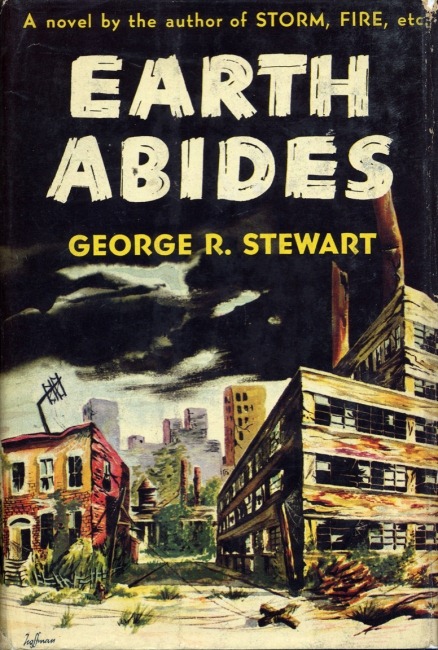
Earth Abides is a grim novel because its hero Isherwood Williams must survive the total collapse of civilization and the death of most of humanity.  But I’ve always found stories about lone survivors fascinating and challenging.   Ish, lives a long life and sees the third generation of survivors as they begin the process of rebuilding civilization.   Now this fantasy of being thrown into a book brings up another interesting question.  Would you live the book the same way as the written protagonist?  On one hand, I’d say part of the game of picking the books is to pick ones that you’d be willing to live out exactly, that might be boring.  What if you think you could do better than the original hero?

Isherwood faces major challenges.  How do you convince people to rebuild civilization?  And how do you quickly rebuild civilization from scratch?  Plus, is your vision really better than the other people’s idea of how to get the job done?  If you’ve ever watched the reality TV show Survivor, then you’ll know how hard it is to get a group of people working toward the same goal, much less avoid all the petty disagreements.

Most novels like Earth Abides, have survivors living off of canned food and living in old houses.  What happens when feasting off the carrion of a dead civilization ends?

Earth_Abides_1949_small


Adventure – Mars

When I was growing up I wanted to go to Mars.  As a teen I’d have sold my soul to get to the Red Planet.  Back then, I pictured Mars like Heinlein and Edgar Rice Burroughs imagined it before Mariner 4.  Now I’m tempted to live on Mars as John Carter, but I don’t know if I’d enjoy that much fighting.  I’d love to have a lot of sex with Dejah Thoris, but ERD wasn’t that explicit in his sex scenes, so it would probably be a fictional life of frustration.  Of course, we have to assume that if I lived John Carter’s life 24×7 I’d get plenty of action with the Princess of Mars.  But if I really want to experience the reality of Mars I don’t think there’s any book better than Red Mars and it’s two sequels.

Is that the real virtue of a great science fiction novel, that it presents a reality to us that we can never experience?  Right now I want the most realistic Mars I can find, but maybe on another day I’d want a romantic adventure via Edgar Rice Burroughs.  But Red Mars is the closest to any book I’ve read to describing a life I wished I had lived.

I’ve been a big fan of the robots Spirit and Opportunity, and following the adventures of those little bots on Mars is very revealing.  Mars is very bleak.  It’s beautiful is you love rocks.  It’s similar to trying to live Earth Abides, where the goal is to build civilization, but this time it’s really from scratch.  Maybe that reveals something psychological about myself.  I want to redesign civilization.  With Mars you design everything.  This is reflected in many of my favorite novels, for instance Tunnel in the Sky by Robert A. Heinlein, where high school and college students are sent to another planet for a survival exam.

red mars


Adventure – Time Travel

Replay by Ken Grimwood is about a man, Jeff Winston who lives his life over and over again.  It’s like Groundhog Day, except that cycle is an adult lifetime, 18 to 43.  Now Replay is a strange novel to want to actually live – it could come very close to hell – but what an epic learning experience!  Replay is a deeply philosophical novel that if lived would be a grueling road to wisdom.  I doubt I have the guts to pick Replay as my first choice if our imaginary God asked me what book I’d want to live, but if I died several times and kept getting the same offer I’d eventually pick it.

And again, I’m seeing a trend here.  Replay is like Earth Abides, but on a personal level, another story of starting over from scratch.  Jeff Winston ultimately gets to relive his life several times, and there’s a lesson in that.  It’s not about getting it right, but about experiencing the moment.  Jeff tries  spends lifetimes pursuing riches, debauchery, charity and scholarship, but he always returns to start over again.  Eventually, he wants just one life, the one where he dies, and not because he wants to die, but because it’s the one that matters for keeps.  And isn’t that the life we all live now?

kengrimwood_replay


Romance and Love

Now here’s a problem with science fiction, it doesn’t have any great love stories.  Lous McMaster Bujold, Catherine Asaro, and others, write romantic science fiction novels, but I haven’t been partial to them.  As far as I can recall, I don’t remember any lovers like Levin and Kitty from Anna Karenina, in all of science fiction.  There are zillions of love affairs in science fiction, but none that I can remember were lasting.  It would be nice to live a nice long romantic life with children, grand children and great grand children.

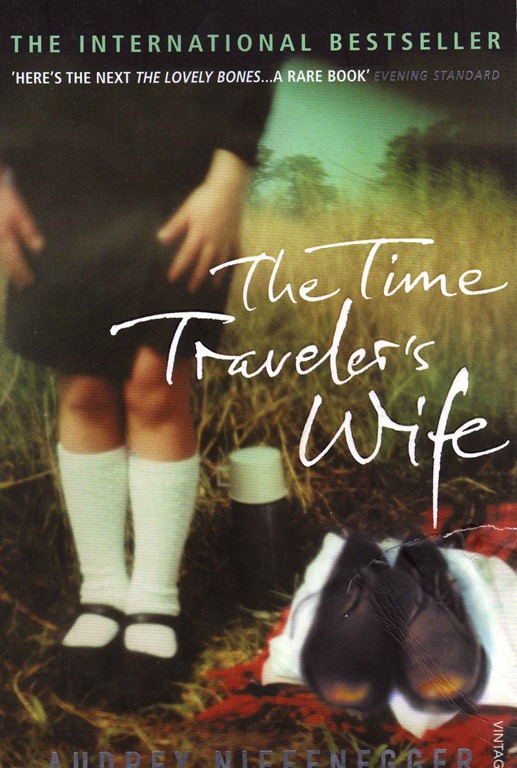
Now, the one love story I remember that does last a lifetime is painfully tragic, The Time Traveler’s Wife by Audrey Niffenegger, but it’s much to painful to want to reincarnate into.  There are fantasies like The Princess Bride by William Goldman, but it’s too silly to desire.   I think Riders of the Purple Sage is a great love story, but Lassiter has to live a hard, brutal life before he finds Jane.  I admire the little people who struggle to get by in Philip K. Dick stories, but I can’t imagine wanting to live through Do Android Dream of Electric Sheep?  And there’s a major problem with wanting to live fictional love stories – they are usually about longing and lost, and very little time about being together.

If we include movies I’d be tempted to say Blade Runner has a great love story between Deckard and Rachel.  Ridley Scott, the director claims Deckard is a replicant, and if that’s true, there’s would be no love story.  It’s Romeo and Juliet if a human falls in love with a robot, but it’s not if a machine designed to kill robots falls in love with another machine.

The-Time-Traveler's-Wife-Co

Now there are some non-SF literary novels that would lead to very educational romantic lives.  Dorothea Brooke in Middlemarch by George Elliot might teach me a lot about being a woman.  Being Becky Sharp from Vanity Fair or Tolstoy’s Anna Karenina would be enlightening, but hard and tragic.  It might be a good deal more fun to be Lady Brett Ashley  from The Sun Also Rises by Hemingway.  I assume if I became a famous female character I’d learn to like men, otherwise I’d turn these women into lesbians.   Why aren’t there any epic women characters in science fiction?  Am I missing the obvious?

To be honest, I don’t have much interest in living a life as a woman, although if I got to reincarnate endlessly, it would spice things up to try all the genders and sexual orientations.   However, I’m still troubled by finding a male romantic role to reincarnate into.  Mr. Darcy from Pride and Prejudice is an obvious choice, and Elizabeth Bennett might be wonderful to spend a lifetime with, but being rich and stuck up isn’t all that appealing.

Maybe romance just isn’t that appealing to me, and that’s very revealing too.  Nor does a lifetime of sexual delights seem all that appealing.  I guess if I found sex or romance while on a space adventure, that would be enough of each for me.  I think Heinlein had this trouble in his later old man fantasies where people would find true love but they were long lived.  The ending of Glory Road was very revealing – Scar leaves Star.

Exotic travel and Alien Life

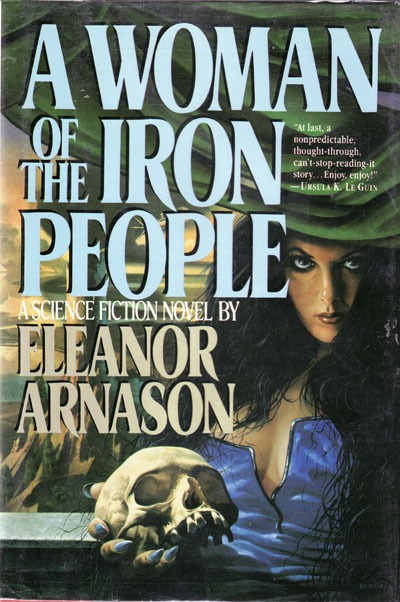
Science fiction seldom presents alien life as alien, but if I got a chance to live a life based on a book that conveys an exotic alien I would pick Nia in The Woman of the Iron People by Eleanor Arnason.  All too often aliens are our adversaries in fiction.  How many books can you think of where you’d want to be the alien and live out a life on their home world?  And please don’t tell me you want to be a Wookie.

Over the years I’ve had strange dreams where I wasn’t human.  I can only remember snippets of them.  Among the Hindus there are famous stories about reincarnation.  One is about a master who had almost completed his growth to enlightened, but he admired a stag while he was dying, and returned as one.  Can you imagine a life as a dolphin or bonobo or polar bear?  Eleanor Arnason imagines anthropologists visiting a world where the aliens were more like animals, and they led lives more like primitive men, but they had a strange beauty.

a-woman-of-the-iron-people

I don’t think science fiction has given us enough aliens, and stories about their lives and worlds.  Has any Hindu ever imagined reincarnating on another world as an intelligent creature there?  Is it so sad that we only get one life as one kind of being?  Luckily, we got to live as a being that can imagine all kinds of other lives, even lives without self-awareness.  I don’t personally believe in God, but I’ve always like the idea that God breaking itself up into all the beings in the reality so it could see itself from every angle.  Could you imagine being a redwood living for thousands of years?

I like to think the purpose of science fiction is to imagine all the realities we won’t ever live.

JWH – 7/23/12

Survivors (BBC 1975-1977)

Ever since I gave up cable TV years ago I’ve discovered I really love finding a TV series and watching it from the first to last episode.  Preferably from Netflix streaming, but DVDs are an okay second choice.  Watching a complete TV series is like enjoying a very long novel.  I listen to novels all the time, so I’m used to their length in hours.  Average novels are 10-20 hours.  Recently I listened to Anna Karenina and it was 42 hours.  I’ve just finished 38 episodes of Survivors which ran on the BBC for three seasons (series as they say) from 1975 till 1977.  Each episode was slightly less than an hour, so the entire run was equal to one long novel.  It’s a shame actual novels aren’t filmed this way.

Survivors is a post-apocalyptic story set in England about a handful of people who survive a world-wide plague.  In the course of the story we hear that only 1 person in 5,000 survived, another time they guessed 1 in 10,000.  This plague is far more virulent than the famous Black Plague of the middle ages.  Viewers assume the plague was engineered as a bio-weapon from the opening credits.

survivors 

In the first season Greg, Jenny and Abby each find themselves alone among the dead.  They strike out on their own with very different plans but they eventually meet up and work to survive together.  Most of the episodes deal with finding food, encountering other bands of survivors with different agendas for surviving, wild dogs and rats, and much talk about how to start civilization all over again.  The driving plot of the first season is Abby’s desperate need to find her son who was away at boarding school when the death came.  Greg and Jenny agree to help her enthusiastically at first, but as the season progresses and chances dim, become reluctant to keep traveling.

In the second season, Jenny and Greg have settled with others on a farm and the season is about rebuilding civilization at the rural level.  Charles, a new main character replaces Abby.  Each episode deals with various post-apocalyptic issues, like having babies, finding medicine, fighting roving bands of thugs, producing methane for tractor fuel, handling dysfunctional people, how to decide who does what jobs, making alliances with other settlements, developing trade, and so on.  Many fans didn’t like this season because the action slows.  Stories are about raising sheep and cabbages.  I actually like the second season quite a lot.  Each episode dealt with true post-apocalyptic problems.

For the last season, Jenny, Greg and Charles travel most of the season seeing other settlements, promoting trade, and hoping to get electricity going again.  Our characters do a lot of horseback riding around rural England and Scotland.  Fans felt the action picked up in the third season. 

It’s too bad this show is 1970s television technology because the bucolic scenery, old manor houses, and rustic farms would have been beautiful in modern high definition.  There was a 2008 remake of Survivors that only ran for two short seasons that gives us a taste of what could have been.  The original series never had big production values but that never bothered me because after-the-collapse stories are among my favorite fictional themes, and living is inherently low tech in such a scenario.

Overall, I really enjoyed Survivors, which is only available on DVD through Netflix, so I had to wait patiently for each new disc.  Sadly, the discs are old and scratched so I don’t know how much longer they will be available.  There is a 6-disc set of the entire three seasons at Amazon that came out in 2010, but I wonder how long they will stay in print.  Plus the set is on 5 double-sided “flippy” DVDs and 1 single sided DVD.  In England and Australia the set was on 11 single sided discs.  I consider it bad form, lack of respect and cheapness to put shows on double-sided DVDs, which keeps me from buying it.  I enjoyed the series enough that I know I’ll want to watch them again in the future, but I don’t want to buy it with flippy discs. 

Evidently this show still has lots of fans in England, but it’s little known in America.  That’s too bad because it’s a intriguing show.  It’s not fantastic, but it is thought provoking and I liked the characters.  I was sad they fired Carolyn Seymour who played Abby at the end of the first season.  And many appealing secondary characters get killed – but hey, that’s what life would be like after the collapse.  Survivors introduced many secondary characters over the course of the three seasons, several of which I really got to like before they disappeared or were killed off.

The show had lots of room to grow because of all these additional characters, and I’m sorry the producers and writers didn’t explore their lives more.  Instead of 13 episode seasons the concept could easily have supported 26 episode per year, and the entire show could have run five or six years without running out of interesting topics to pursue.  But then I like technical stuff.  I’d gladly would have watched several episodes about getting the steam trains running again, or getting tractors to run off of methane.  The 1970s was a big back to nature era and this show would have been perfect for the Mother Earth News crowd.

To me, the Gold Standard of post-apocalyptic novels is Earth Abides by George R. Stewart.  In England I assume it’s The Day of the Triffids.  Only Earth Abides takes its story into the third generation after the collapse.  When they remade Survivors in 2008, they should have started with the second or third generation after the original 1975-1977 series.  The actors who play Abby, Jenny and Greg are still alive, so it would be interesting to see them reprise their roles as grandparents.  Instead they modernize the original series and brought in a ridiculous secret government program.

Since Mary Shelley’s The Last Man, every generation has imagined what life would be like if civilization collapsed.  The list of novels is long, and there have been many movies dealing with the theme, but there have been few television shows covering the topic. Survivors, both 1975 and 2008, are the standouts, along with Jericho from 2006-2008.

JWH – 7/8/12

The Age of Miracles by Karen Thompson Walker–A Powerful Literary Science Fiction Novel

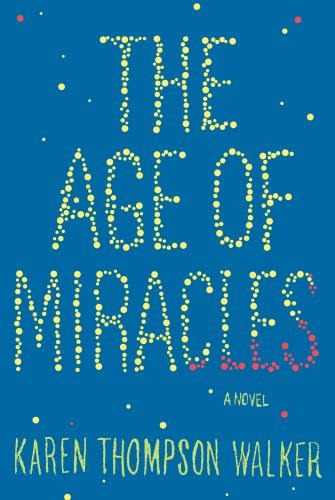
The Age of Miracles by Karen Thompson Walker came out June 26th and it’s already getting tremendous press.


I listened to the audio edition with pitch-perfect narration by Emily Janice Card.  The Age of Miracles is a science fiction novel told in first person by eleven-year-old Julia, so it feels like another science fiction YA novel, but it’s not marketed as either as SF or YA, and it’s far from another hit young adult novel for adults.  It’s a literary novel about a young girl witnessing the Earth undergoing a catastrophic change called “the slowing.”  Earth begins to slow its spin.  Before the novel is over the Earth’s day is over twice as long.

Karen_Thompson_Walker_Age_of_Miracles

As soon as I saw the announcement for this book I knew I had to read it.  If you loved The Lovely Bones or The Secret Life of Bees, there’s a good chance you’ll love The Age of Miracles.  However, if you loved Earth Abides, The Day of the Triffids, Alas, Babylon, there’s also a good chance you’ll love this novel.  If you ever wished Catcher in the Rye had been science fiction, then this book is for you.  When The Age of Miracles is pitched to movie producers I’m sure they’ll summarize it like this:  coming of age in the apocalypse.

The editorial reviews collected at Amazon.com rave about this book.  The customer reviews are a bit mixed, with most people loving it, and a few people complaining, some rather bitterly.  A few complainers weren’t expecting a YA novel.  Other complainers object to the science.  I too had trouble with some of the science, but I think Karen Thompson Walker is right in that we’d weigh more if the Earth’s spin slowed.  For those people objecting to her science, just read “If the Earth Stood Still” and you’ll realize Thompson is up on the details.

But I’m not sure the details of the science are important to this story – science fiction has often been wrong about science.  The Age of Miracles is an allegory about how nature turns against us and how we respond.

The Age of Miracles is more literary than YA – there are no teenagers fighting to the death on television.  It’s more literary than science fiction, it’s not about heroic astronauts trying to save the world.  The narrator is telling her story from years later, after the events, so we know she survives.  The Age of Miracles is a very simple tale, a coming of age story set against our world falling apart.

The defining issue with any end-of-the-world novel is how people react.  I can’t help believe that the slowing is a metaphor for global warming, but don’t let that stop you from reading The Age of Miracles if you’re on the wrong side of that political question. The Age of Miracles is science fiction at its best because it’s all about sense of wonder.  I’ve always found tremendous sense of wonder in end of the world novels.  These novels aren’t predicting gloom and doom, but exploring how people face the immensity of reality.

Julia is just an eleven-year-old kid that has a mother and father, a few friends, a music teacher, and a sheltered life where’s she shy and timid, but like most kids her age, wants to fit in.  Half of The Age of Miracles is about Julie coping with normal life.  The other half is about coping with a world going through a lot of scary changes.  The people in this story decide to fight their fears by leading ordinary lives.  This is not a post-apocalyptic novel with Mad Max type warriors.  This is the end of the world coming to suburbia, soccer moms and mini-vans.

Most of the classic end of the world SF novels came from the cold war era.  The Age of Miracles is maybe what J. G. Ballard would have written about the Internet Age facing the apocalypse if he was channeling Harper Lee.

End of the world novels usually draw the reader in by getting them to imagine what they would do in the same situation.  The Age of Miracles is different.  I’m 60, and I’m being asked to imagine how an 11 year-old would see things.  It’s a powerful motif.  I can’t help but wonder how young people feel today growing up and imagining what global warming will bring.

In the past decade there have been a number of literary novels that used science fictional plots and they have been very successful.  In fact, they have generally kicked genre butt.  Stories like The Road, The Time Traveler’s Wife, Cloud Atlas, Never Let Me Go, The Sparrow brought deep characterization and a sense of realism to very far out ideas.  I can’t help but wonder if would-be literary writers haven’t noticed that pairing literary style with the fantastic sells, especially if it also appeals to both the YA and adult readers.

I can only speculate why Karen Thompson Walker wrote The Age of Miracles, but whether intentionally or by accident, she’s hit on a perfect combination of literary and science fiction styles.  Is Ms. Walker a science fiction reader trained in a MFA program?  Or is she a literary writer influenced by all the science fiction in our society.  There’s a good chance that the science fiction genre played no part in influencing the writing of her story.  Did George Orwell need to read SF before writing Nineteen Eighty-Four?  We could assume Karen Thompson Walker is like Michael Chabon and attempts to live in both the literary and SF genre worlds.

Maybe Ms. Thompson is even more savvy than that.  Maybe she wanted to write about global warming and knew the topic would turn off many readers, so she developed the slowing as a stand-in.  If she did, it will be just as effective for making people think about our future.

I bet there will be a lot of literary and science fiction writers wishing they had written The Age of Miracles.  I’m sure it’s going to spawn a lot of imitators.

JWH – 7/5/12

Forgotten Science Fiction: A For Andromeda by Fred Hoyle and John Elliot

In 1960, astronomer Frank Drake pioneered the concept of SETI (Search for Extraterrestrial Intelligence) with Project Ozma.

In 1961, the BBC ran a seven-part TV show called A for Andromeda about a SETI success story, later made into a book by Fred Hoyle and John Elliot.

Sometimes forgotten science fiction is worth pursuing when it is first to explore a new idea.

I’m reviewing the novelization, and my edition is the 1964 Crest paperback.  Only one complete episode and fragments of other episodes exist for the original television series, which featured Julie Christie in an early role.  According to Wikipedia the idea was developed by Fed Hoyle, an astronomer and author of The Black Cloud, and expanded with characters and dialog by television producer John Elliot, who wrote most of the script, and probably the novelization, but Fred Hoyle is given top billing.  Hoyle was a noted astronomer and I’m sure his name sold the book. 

I wish the original television serial was available, because the clips on Youtube make it look pretty good for a 1961 science fictional TV show.  The show was remade in 2006, but is not available on Netflix yet.  Youtube does have the complete “Face of the Tiger” episode in 8 video parts – this will give you an idea of what it was like.


However, we do have the whole book if you’re willing to track down a used copy, because it’s been out of print since 2002, and never widely circulated.


A for Andromeda 001

As far back as 1896 Nikola Tesla suggested using radio to contact ETs, and in 1924 radio audiences had to endure 5 minute blocks of radio silence hoping astronomers could hear broadcasts from Mars, so the idea has been around for awhile, but it was never used all that much in science fiction.

The basic plot of the story is scientists discover a signal from space with instructions to build a computer, which then decodes further instructions for building life forms.  Two other movies, along with A for Andromeda have covered this topic in film, first the 1955 This Island Earth, and more recently with the 1997 Contact.  In all three,  the early part of the story is about making SETI contact, and the rest of the story is about following the alien instructions.  This Island Earth was based on a book by Raymond F. Jones, a long forgotten minor SF writer who had some moderate successes in the 1950s and 1960s.  Contact, of course was based on Carl Sagan’s novel, and it’s probably the most famous SETI story.

James Gunn took a more realistic look at the idea in The Listeners from 1972, by having the story span a hundred years.  Any real SETI conversation will take centuries if not thousands of years.  Jack McDevitt tackled the subject in 1986 in The Hercules Text.  Less well known, is His Master’s Voice by Stanislaw Lem, first published in 1968 in Poland, but with English translations still in print.

All of these stories deal with common themes and issues surrounding the impact of SETI contact.  A for Andromeda was written during the early days of the cold war, so in that story, the message from the stars was mostly kept secret from the public.  I don’t want to tell you much about A for Andromeda in this section because there’s not a whole lot of dramatic plot develop, so why give away what little there is.  I read A for Andromeda just after reading The Day of the Triffids, and unfortunately Andromeda pales in comparison, because Triffids is a gripping classic page turner.  A for Andromeda is an interesting read, especially if you like to read stories about messages from space, which I’ve discovered that I do.

Strangely, science fiction has seldom used SETI as a theme, even though it’s probably the most realistic of all alien contact methods.  There are thousands of alien invasion stories, which says so much about our paranoia and lack of knowledge of physics and the reality of space travel.  If we’re to make first contact with alien intelligences who live on planets orbiting nearby stars, the odds are almost 100% it will be through SETI contact.

I thought it interesting in A for Andromeda that the story was less about aliens and more about getting technology to uplift Great Britain’s falling status as a world power.  It was also about computers and scientists working for secret government projects, and how the government has to spy on their own people because of national and industrial espionage.   I got the feeling while reading A for Andromeda that  the writers might have been influenced by Ian Fleming.

A for Andromeda is not a bad read, but it’s not a great one either – I’d mostly recommend it for the science fiction historian.

Analysis with Spoilers

Don’t read beyond this point if you haven’t read the novel and still plan to read it.

The aliens who send the message in A for Andromeda are very smart.  They give instructions to build a computer that queries the Earthmen about what they know and then customizes the message and results for them.  When the computer is finished it queries about the biological life on Earth, and then gives instructions for building a DNA sequencer.  Then it produces a strange Cyclops creature that has a symbiotic relationship with the computer.  From this experiment the computer learns more about Earth biology and then builds a beautiful young woman that the scientists call Andromeda.  Part of the book is about her education.  The novel doesn’t deal with artificial intelligence, but it gets very close.

As usual in these stories, some scientists are gangbusters to move forward as fast as possible hoping for a big technological payoff, while other scientists contemplate the horrors of what the aliens might be planning.  In This Island Earth, A for Andromeda and Content, the message has instructions to build something.  This is great for developing a novel plot, but I’m not sure if it’s realistic.  Would we ever follow such instructions without many back and forth messages of getting to know the folks at the other end of the SETI phone line?

All these novels have another common problem – how to present alien intelligence that’s greater than our own?  In This Island Earth the message turns out to be local, and the instructions to build a machine, a test to prove the scientists worthy of further contact and a flying saucer ride.  The moviegoers are taken to a distant planet.  In Contact, Jodi Foster is sent on a fantastic worm-hole jaunt to meet some rather god-like aliens, but upon her return her story is disbelieved.  Most alien contact stories are about invading Earth, or weird comedies like Men in BlackStar Trek and Star Wars are both famous for developing alien diversity, but how serious have they ever been?  Vulcan and Klingons aren’t very realistic aliens.

Science fiction seldom deals with the actual problems of SETI, making first contact and the dynamics of languages.  A for Andromeda handles the later problem by having the human form Andromeda commune telepathically with the computer.  Most real scientists believe our initial conversations will be about math, which will lead to physics, chemistry and eventually biology.  It will take a long time before we get to religion, philosophy and technology.

In the end, Andromeda is accidently killed before she can communicate what she might know about distant worlds.  The computer is destroyed before it’s real mission is revealed.  In other words, Hoyle and Elliot chicken out rather than speculate about what the aliens might really want.  There is a sequel, The Andromeda Breakthrough, but I haven’t read it or seen the TV show.  It is available as a special DVD edition along with the remaining fragments of A for Andromeda, but it’s not available in the U.S.  The Andromeda Breakthrough is available for digital rental and sale through Amazon, but I haven’t been tempted, it more about espionage.

Like I said in the first section, A for Andromeda is pleasant but mild read, mostly likely to appeal to readers who study SF literature.

JWH – 7/1/12