Models for Writing the Great American Science Fiction Novel

Decades ago ambitious young writers hoping to take the literary world by storm would attempt to write The Great American Novel.  The phrase “writing the great American novel” has fallen out of fashion.  Well, I’ve retired and want to write a novel, but I want to write a science fiction novel.  Science fiction has fallen out of fashion too.  Oh sure, there’s a healthy little genre for hardcore science fiction readers, but they aren’t many compared to the legions of bookworms at large.  Science fiction might be an extremely popular movie genre, but for some strange reason its success does not translate into frequently seeing science fiction books on the New York Times best sellers lists.
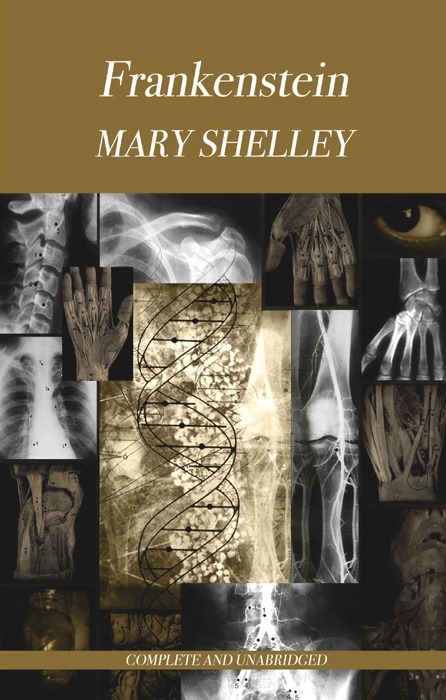
Frankenstein

If I’m going to delude myself into thinking I can be a late bloomer in the novel writing business, I might as well be ambitious about it, so I’ve gotten the idea of trying to write the great American science fiction novel.  I picture my would-be novel being a literary novel set 40-50 years in the future, thus making it science fiction.  The goal for writing the great American novel was to capture an essential defining moment in America life.  Examples are such books as Adventures of Huckleberry Finn, Little Women, The Great Gatsby, The Grapes of Wrath, The Catcher in the Rye, Invisible Man, On the Road, To Kill a Mockingbird – novels that defined an era and place.
HG-Wells-The-Time-Machine

Because science fiction is generally about the future and is often set in space or other exotic locales, it almost never attempts to be The Great American Novel.  There are a damn few exceptions, most notably Stranger in a Strange Land by Robert A. Heinlein.  Some people think of it as the counter-culture novel of the 1960s because when they think of the 1960s they think of all the weirdness and Stranger in a Strange Land is one weird-ass novel.  The trouble is Stranger captures a late 1940s to somewhat mid-1950s weirdo mentality about America, and not the hippie weirdness of the 1960s.  If I wrote a SF novel set in the 2050s it’s going to be damn hard for it not to feel like the 2010s.  That would be like F. Scott Fitzgerald imagining the 1960s.  I’m not sure if that will work, but it won’t keep me from trying.
the-war-of-the-worlds

For my novel writing ambition I feel the need to find models to study, from both American literature and science fiction.  Now I don’t want to start a flame war about what are the absolute best science fiction novels, but I’ve decided to pick those that are most remembered and read by non-SF fans.  I wrote a whole essay on this topic:  The Greatest Science Fiction Novels of the 20th Century.  It’s been the most popular essay I’ve written – at least in terms of hits, but not with what it says.  Few science fiction books are well known with the literary world at large, and most of them were written by writers not from the genre.

  1. Frankenstein by Mary Shelley
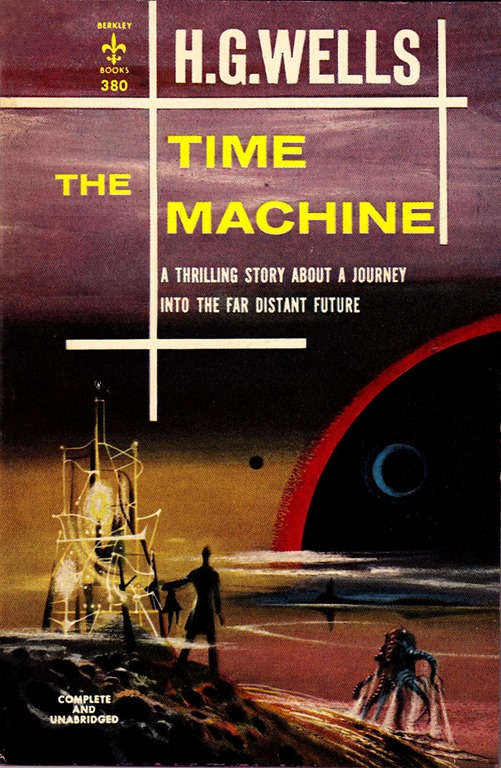
  2. The Time Machine by H. G. Wells
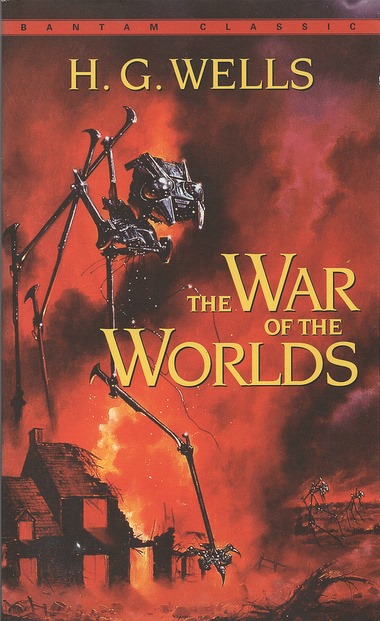
  3. The War of the Worlds by H. G. Wells
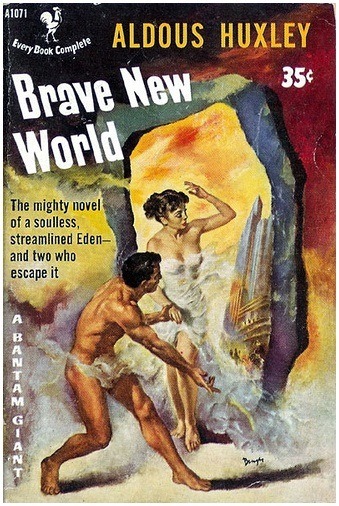
  4. Brave New World (1932) by Aldous Huxley
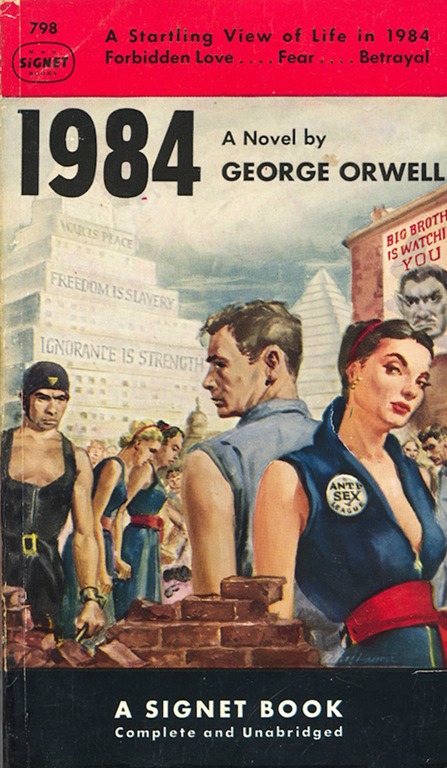
  5. Nineteen Eighty-Four (1949) by George Orwell
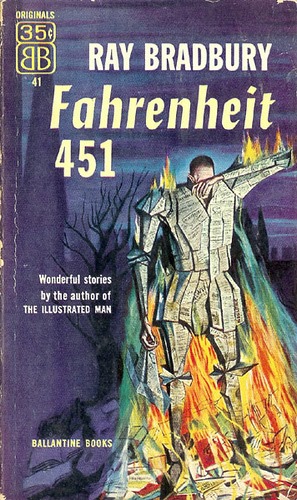
  6. Fahrenheit 451 (1953) by Ray Bradbury
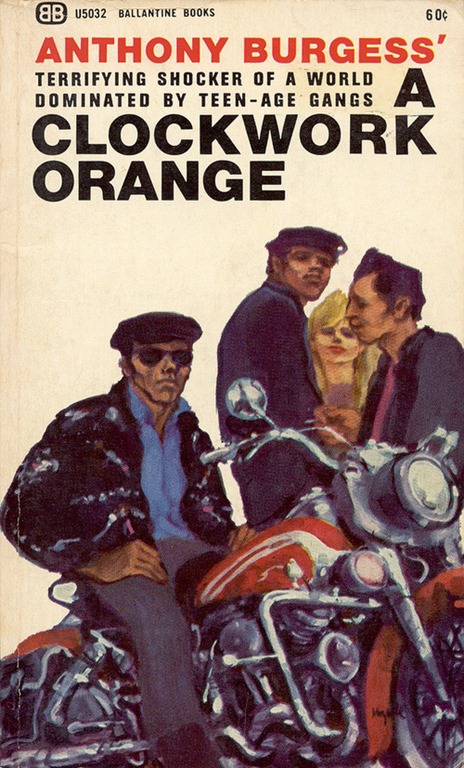
  7. A Clockwork Orange (1962) by Anthony Burgess
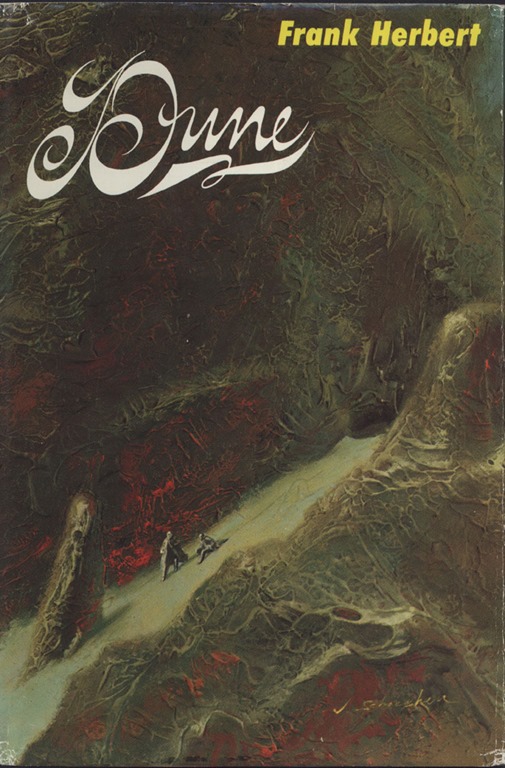
  8. Dune (1965) by Frank Herbert
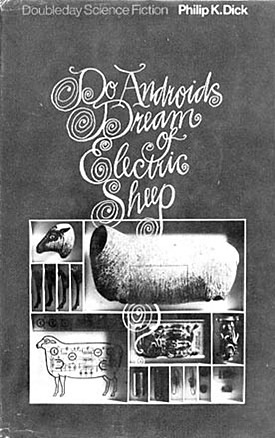
  9. Do Androids Dream of Electric Sheep? (1968) by Philip K. Dick
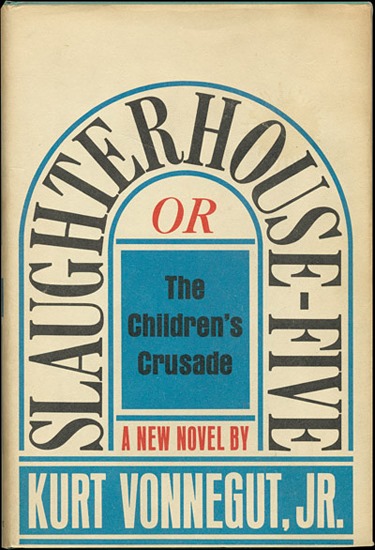
  10. Slaughterhouse-Five (1969) by Kurt Vonnegut
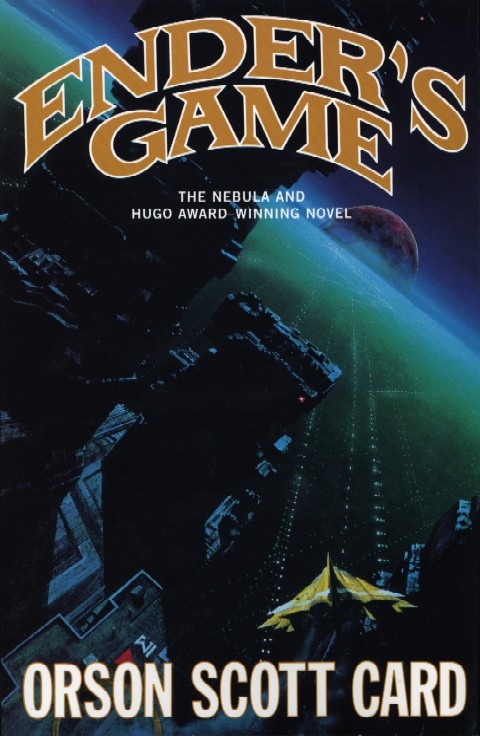
  11. Ender’s Game (1985) by Orson Scott Card
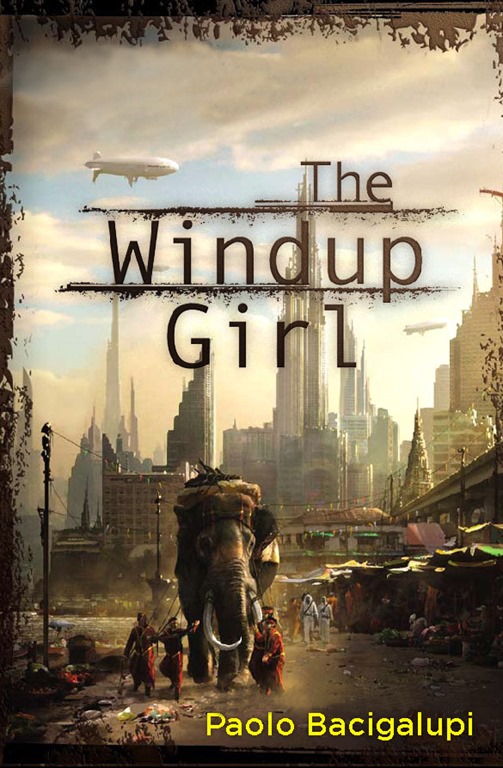
  12. The Windup Girl (2009) by Paolo Bacigalupi
brave-new-world1

Now I know that regular science fiction readers are going to be outraged by this list, but the huge world outside of their little genre seldom thinks about science fiction, and the books that do pop into their collective memory are the ones they were made to read in school.  I wanted to include Stranger in a Strange Land, not because I admire it, but because it was once a cult classic, however I think it’s mostly forgotten now.  If a book isn’t taught in school or gets the movie treatment every generation, they are usually forgotten by the following generations.
1984_pulp3

Do Androids Dream of Electric Sheep? wasn’t PKD’s best novel, not by a long shot, but because of Blade Runner, it’s remembered, but even Blade Runner is fading from collective memory.  I keep Androids on the list because there’s talk of making a new version of it.  The controversial Ender’s Game is on the list because it is often taught in schools, often loved by teachers, and was recently made into a movie.
fahrenheit-451

There are many science fiction books that have legions of fans that love them, but most never have enough fans to make them well known in pop culture at large.  Notice that I didn’t include Jules Verne, Robert A. Heinlein, Isaac Asimov and Arthur C. Clarke, authors who are known for writing great classic novels within the SF genre.  Their books are very big fish in a very little pond.  The twelve above titles aren’t even the biggest fish in the big literary ocean, but they are big enough.
clockwork-orange

In terms of memorable novels, science fiction seldom gets remembered.  So why have an ambition to write science fiction?  Well, it’s what I like to read.  However, if an ambitious science fiction writer wanted to get remembered, studying the above novels for clues is a start.  But also studying mainstream popular novels for why they are remembered is another lesson of study.
dune

I watch a lot of old movies and I’m always surprised to see films based on hit novels of their day that are now completely forgotten.  Dune has attracted a lot of cinematic attention, but so far I don’t think moviemakers have captured the novel.   However, their attempts have made the novel very famous.  There is a weird symbiotic relationship between books and movies.  So far, none of the model SF books I’ve listed has been created into a cinematic masterpiece except Do Androids Dream of Electric Sheep?  None of them have achieved that immense status of being routinely made into new film versions every generation like A Christmas Carol, Little Women, Pride and Prejudice, or Great Expectations.
DoAndroidsDreamOfElectricSheep1stEd

Evidently, the real key to writing a great science fiction book is having something startling or profound to say.  Now regular science fiction fans will claim all their favorite SF books have something startling or profound to say.  I think that’s the general appeal of science fiction – the ideas.  However, the public at large seems to embrace some science fictional ideas as iconic pop culture concepts, and ignores the rest.  The public at large seems to care little for reading about space travel, time travel, robots, galactic civilizations, and so on.  In fact, the most popular science fictional concepts that appeal to the public appear to be on the morbid side of things – they love a good dystopian tale.  Evidently, if you can imagine a scary future that will scare the bejesus out of them then you’ve struck gold. 
slaughterhousefive

If I’m going to write the great American science fiction novel it will need to capture an era and place in America where dystopian feelings are strongest.  You’d think bookworms would embrace upbeat views of the future, ones that promise scientific successes and thrilling times.  But I’ve got to admit, that these books listed here, with all their bleakness, were powerful stories, with impressive memorable concepts.  When you read them they feel heavy-duty.
enders-game-novel-cover

I don’t think any of these books are particularly well-written, not in the literary sense.  Their narrative style gets the job done, but I’m not sure how often their writing is quoted for being beautiful.  Today I started collecting copies of these novels to study.  I’m using my retirement to be like Henry David Thoreau at Walden Pond, to contemplate life carefully.  However, I have no interest in going outside to study plants and animals.  Instead I’m observing my reactions to fiction.  Thoreau really wanted to get to know his deepest self, his most real self, and he felt getting away from it all and observing nature would reveal his true self to is contemplative mind.  I’m hoping my true self will be revealed by studying fiction.
the-windup-girl-shopped

I’m selecting ambitious novels, in particularly, science fiction, to see what they reveal about me, and how I tick.  Why do we respond to their ideas, characters, plots and settings?  Many people claim to love science fiction, but they are generally referring to science fiction in the movies and on television – fluff Sci-Fi.  That kind of science fiction is very different from book science fiction.  And a lot of modern science fiction book fans love particular authors because of their series – they love the setting and characters because they’re fun and even within the SF book genre, serious SF is avoided.  I’m not sure many SF readers have a deep understanding of what draws them into science fiction, and the type of stories their minds resonate with.

Other than winning awards and being selected by Time Magazine as being one of the best novels of 2009, The Windup Girl doesn’t have much validation as the kind of SF classic that the rest of these novels represent.  But The Windup Girl feels like them, and I responded to it in the same way.  I admired its sheer intellectual speculation about the future.  It’s also a novel that I’ve recommend to my bookworm friends who don’t read science fiction and they’ve liked it very well.

Ender’s Game seems like an oddball on this list because on the surface it seems like just another alien invasion adventure story, but down deep it has a disturbing core.  In fact, to some people it’s as disturbing as A Clockwork Orange.  Strangely, many readers see it as a fun romp, like it was a video game.  But like video games, we need to question our thirst for violence, and our constant justification of violence.

None of these science fiction books represent my sentimental favorites, books hardcore science fiction fans would pick as their favorites.  There’s no need to list such books, we all know have our own classics of science fiction lists.  The twelve books I list here are the science fiction titles that go up against literary classics read by people who normally never read science fiction.  They’re the books taught in school, the ones teachers torture kids with test questions because they supposedly deal with important themes.

It’s sad that the literary world chooses to ignore fun science fiction.  Evidently they feel sense-of-wonder is for adolescents.  Sometimes there’s a crossover, like The Hunger Games series, that fans love for the adventure, but still have the dystopian seriousness to evaluate.  Another good example is The Giver by Lois Lowry.  If I included YA novels, my list would be much longer.  Science fiction is taken seriously at the YA level by teachers.  And that might be why so many ambitious young writers are working the YA field.  Winning the Newberry Award will keep your book around a lot longer than the Hugo Award.  Take for instance 50 years ago, 1963, A Wrinkle in Time by Madeleine L’Engle has had far more success with the public at large than The Man in the High Castle by Philip K. Dick, even though I much prefer PKD’s novel.

I guess another way to express what I’m saying is to talk about your targeted audience.  To create a hit of the year in the science fiction sub-culture of books, you need to make just a few thousand people happy.  To create a hit in the YA world, you’ll need to make tens of thousands of readers happy.  To write a standout best seller of the year, you’ll need to write a book that maybe a hundred thousand or more people will choose to love.  But to get into Nineteen Eighty-Four’s territory, you’ll need to impress millions of people, even tens of millions.  That’s not easy!

Now it’s extremely presumptuous of me to even think of trying to write such a novel.  At this stage, I’m just trying to understand how such novels work.  Now that I have the contemplative time to explore such issues I think I need to do it.  If you move to Walden Pond and just goof off, isn’t that just tragic?  Or pathetic?  Like the philosopher said, an unexamined life is not worth living.  Well, I want to examine my fictional life.  And then I want to play the game by writing my own novel from what I’ve learned.  

JWH – 11/5/13  
Gravity–Riveting Story Set In Space

[Don’t read this review if you haven’t seen Gravity.  But when you have, because you should, come back here and let’s talk.]

Television watchers are experiencing a renaissance in storytelling.  Shows like Breaking Bad, Downton Abbey, Shameless, Friday Night Lights, Dexter, The Newsroom, have taken the art of storytelling to new heights.  By carefully focusing on character, writers have developed new techniques to create highly addictive forms of fiction.  This has revolutionized television.  Character driven storytelling has always been preeminent in novels, and prominent in movies, but television was always seen as a vast wasteland of lowbrow entertainment.  Now I like television better than movies, or even books.

So what is television doing that movies aren’t?  Movies often seem like a vast wasteland of teenage schlock.  CGI unreality, over the top action, Three Stooges type violence, and silly premises that should insult grade school kids.   But most of all, the characters are unbelievable.  Movies aren’t about things I could actually experience.  I don’t relate to their stories.  Maybe kids can love superhero characters because they haven’t yet learned there aren’t any superheroes.

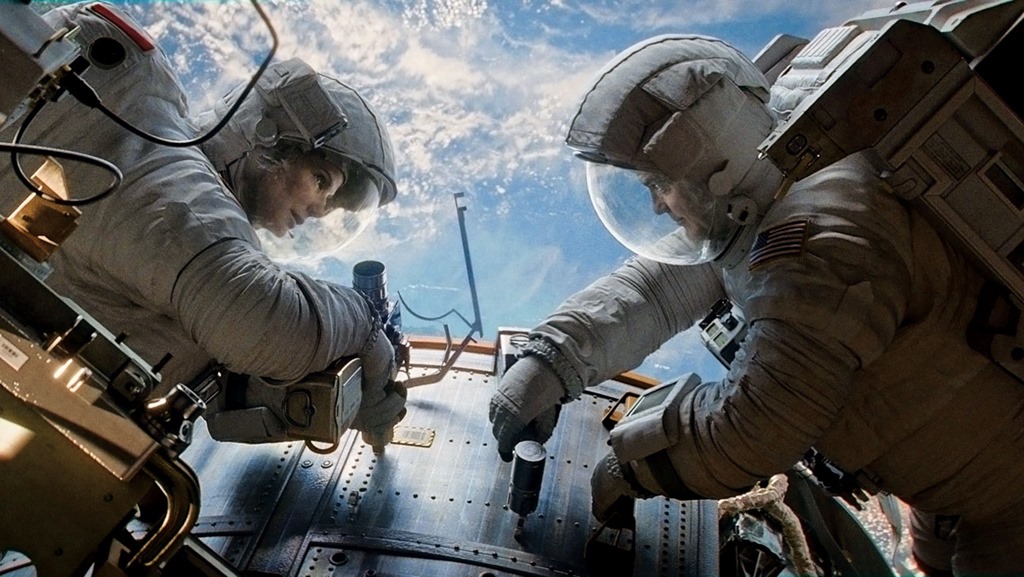
A week ago when watching the final episode of Breaking Bad I wondered what I would have to watch next Sunday.  I remember mentally wishing I could find something that surpassed Breaking Bad in storytelling intensity.  Well, I got my wish, because on Sunday night I saw Gravity, the new film starring Sandra Bullock and George Clooney, and directed by Alfonso Cuarón.   The previews brought me to the theater with great expectations, but I wasn’t prepared by how blown away I would be by the film.  While the credits were rolling I thought how Gravity set a new standard for science fiction movies.

This space story seem real.  The characters felt like they could be real people.  The special effects were wonderful, but not the story.  This movie had the attributes of what make the current great television so much better than the movies.  But what are those attributes? For one thing, there’s not a superhero in sight.  Nobody is saving the world.  Even though the characters are involved with extraordinary situations, they are ordinary people.  Maybe we aren’t rooting for the little guy, but we are resonating with characters that are closer to ourselves.

GRAVITY

Don’t get me wrong, Gravity isn’t literary or deep.  And although Bullock and Clooney give amazing performances, their characters were almost clichés.  How Gravity amazes is through simply gripping storytelling.  It is a story of survival, beating tremendous odds in a harsh environment.  And although Gravity wasn’t very scientific, Gravity felt very realistic.  Gravity was brilliantly science fiction in the same way Gattaca had been years ago, it was about a individual overcoming tremendous adversity in a science related setting.

Although in the last couple of decades we have had more and more female action heroes, I felt while watching Sandra Bullock that Gravity represented a paradigm shift, transforming story hero from male to female.  It didn’t feel like a gimmick that Ryan was a woman.

For the first hundred years of of filmmaking Ryan Stone would have been played by a male actor.  Ripley set the precedent, but when Ryan pulls herself out of the muck and stands, with the camera angle from the ground looking up at her towering figure, it felt that women had finally surpassed men at their own game.    It was much like Vincent beating the genetically enhanced humans when he took off into space at the end of Gattaca.

George Clooney plays the ultra-cocky space jock to a tee.  Matt Kowalski is perfectly at home in a vacuum.  Kowalski has the science down cold.  But more than that, he is mature way beyond his boyish antics.  He is an alpha male passing the baton to a female saying with total confidence, you can do this.  I know most viewers won’t see this film as a feminist statement.  Most girls won’t think twice about Sandra Bullock being the lead character.  But in real life and in movie life, things have changed a lot in my lifetime, but not nearly enough.

The message is clear, women can fly the fighters, drive the tanks, pilot the spacecraft, command the ships, shoot the M-16s, control the telescopes, construct the skyscrapers, etc., but it’s sad that so many women have MTV ambitions, like Miley Cyrus, to wear skimpy outfits and twerk.  Movies and television, the most heavy-duty of pop cultural social programming, sends the message that women can now do anything.  But will they?  And will we accept it?

If you think I’m making a pointless issue, then think about this.  What if our two actors were cast against type.  Would you have liked Sandra Bullock as the veteran space jock, and George Clooney as the mission specialist rookie?  We’re still brainwashed to think George Clooney should have played Matt.

Yes, we have made women into action heroes that can shoot and kill, but action heroes aren’t believable characters, they are cartoon characters.  How often are complex male roles given to female actors?  Would you have believed Sandra Bullock as Matt Kowalski?

Let’s put it another way.  I work at a university and the majority of the engineering and computer science students are male, and the majority of the teacher education and nursing students are female.

The role of Ryan Stone calls for a rookie, and most rookie astronauts are still male.  Picking a female to play Ryan is an intentional decision to make the character to appear more helpless because we’re still conditioned to think of women as helpless, or of needing help.  Gravity shows us we’re wrong. But being helpless is good in this movie, because good storytelling is about getting the audience to identify with the main character, and we’d all be essentially helpless in space.

Picking the name Ryan is an intentional choice too – Sandra Bullock is to stand in for a man.  I think that was a perfect choice by the writers of Gravity.  We’re cheering the stand-in for everyman who also happens to be everywoman.  Not only that, we’re all identifying with her, guys and gals.  While watching the movie I totally identified with Ryan Stone and not Matt Kowalski.  I never had the Right Stuff, but I might could have been Ryan Stone.

Maybe next time when they make a film like Gravity, the veteran space jock will be a woman, and it will be as natural as our need for air, but for now Sandra Bullock was perfect in this role.  Whatever is the magic formula for modern storytelling, Breaking Bad and Gravity have it down as well as Walter White cooks meth.

– – –

By the way, many people are nitpicking Gravity for scientific issues.  That’s cool.  But don’t let it keep you from seeing and enjoying an amazing film.  I was really disappointed with Neil DeGrasse Tyson because his complaints were rather lame compared to the problem of orbital mechanics.  Here are some things to read, but don’t get too hung up about them.  Gravity is a triumph of storytelling.  Like preconceived gender roles, we still want fiction with far more excitement than actual reality.  It’s hard to embrace perfect realism.

I expect gender roles to continue to evolve, and I expect incorporating realism into popular fiction to evolve too.  Breaking Bad was far more realistic than such a show would have been ten years ago, but in ten years, writers who will surpass the talents of the Breaking Bad team, will create a series about cooking meth that is far more realistic.  Gravity could have been just as exciting if it had been 100% scientifically accurate.  And I’m not dinging it for its scientific faults.  I’m just pointing out that we’re moving towards a kind of absolute realism in fiction, and that includes gender roles too.

Fact Checking Gravity

JWH  – 10/11/13

Faith in Science Fiction

When we read science fiction do we only expect great stories, or do we read science fiction for great expectations?

For many, I think science fiction is just another genre to escape into, but for some, especially us older fans, science fiction inspired us about the future.  Science fiction was a belief system, and science fiction sold us a philosophy about the future.

Reading Rich Horton’s introduction to his latest The Year’s Best Science Fiction & Fantasy 2013 Edition led me to read Paul Kincaid’s review of last years best of the year anthologies in the  Los Angeles Review of Books.  Kincaid’s key paragraph:

The problem may be, I think, that science fiction has lost confidence in the future. Or perhaps it would be more accurate to say that it has lost confidence that the future can be comprehended. At its historical best, science fiction presented alien worlds and distant futures that, however weird they might seem, were always fundamentally understandable. The basic plot structure often involved the achievement of understanding. But somewhere amidst the ruins of cyberpunk in the 1980s, we began to feel that the present was changing too rapidly for us to keep up with. And if we didn’t understand the present, what hope did we have for the future? The accelerating rate of change has inevitably affected the futures that appear in our fictions. Things happen as if by magic (one thinks, for example, of Matter by Iain M. Banks, in which a character has casually assumed the appearance of a bush), or else things are so different that there is no connection with the experiences and perceptions of our present.

Kincaid says a number of things about the state of our genre by reviewing the three best of the year anthologies:

  • “…the genres of the fantastic themselves have reached a state of exhaustion”
  • “In the main, there is no sense that the writers have any real conviction about what they are doing. Rather, the genre has become a set of tropes to be repeated and repeated until all meaning has been drained from them.”
  • “but it is almost anti-SF in its affect: the future has run its course and come to an end; what was one of the most exciting aspirations of science fiction—the promise of life on another world—is here made available only to those looking backward to a former time. It is a story that makes manifest the exhaustion that is immanent throughout these three collections.”
  • “And yet the stories would all have a feel of the past about them, the sense of a genre treading water, picking up shiny relics from its own long history as though they were bright new ideas.”
  • “This one story illuminates the exhaustion that seems to have overtaken SF and fantasy, the sense that the future is something to be approached wearily because we have already imagined it and rubbed away anything that was bright and new. Judging by these three books, the genre is now afraid to engage with what once made it novel, instead turning back to what was there before. We might tinker with the details, but it seems that no-one has much interest in making it (a)new.”

I find Kincaid’s criticisms fascinating, and I often agree with him, but I’m not sure if it’s not just science fiction writers that are exhausted and have lost faith in the future.  Readers too, don’t see the same future as they did in the 1950s and 1960s.  Part of this is due to manned space flight going nowhere for forty years after such a promising start.  We’re also getting older and realizing the futures we expected as teens won’t be coming true.  And let’s face it, after reading science fiction for fifty years we’ve also wised up about its bullshit.  Then there’s the problem of readers becoming jaded – the more stories you read, the more good ones you find, and the average becomes mediocre, and eventually even the exceptional becomes tarnished by reading real masterpieces of literature.

I’ve yet to become an atheist to my science fictional beliefs, but I have become more skeptical and agnostic.

But some of this criticism for science fiction story writing should really be applied to our personal beliefs in science fictional concepts.  When we were young it was easy to be gosh-wowed into a sense of wonder.  But if we look back on those concepts we loved back then, we might find our past futures weren’t all they were cracked up to be.  Adolescent dreamtime isn’t very discerning.

Kincaid criticizes contemporary science fiction writers for not being as original as those writers back in the 1950s and 1960s because modern writers no longer seem to comprehend the future, but I think the shift in story construction is not because we can no long comprehend the future, but because we’re lost faith in futures we grew up hoping to find.

Strangely enough, I just read, “Close Encounters” by Andy Duncan in The Year’s Top Ten Tales of Science Fiction 5 edited by Allan Kaster that emotionally resonates with what I’m saying, and maybe with what Kincaid is saying too.  Sorry, “Close Encounters” is not available online to link to, but if you click on “Click to LOOK INSIDE!” at the Amazon site I linked to above, you can read most of the story there.  It’s very well written, with a wonderful voice, and yes, it looks backwards, nostalgic for the good ole days of science fiction.

The story is about a Mr. Buck Nelson, of Mountain View, Missouri, who in 1956 during the peak of the flying saucer craze had a close encounter with a visiting alien and his dog.  The story takes place in the late 1970s, when a young lady reporter tracks down Mr. Nelson to follow up on all the close encounter folk from the 1950s.  Andy Duncan gives us a sentimental account of science fictional faith struggling to survive with skeptical science.  I loved this story even though I think flying saucer people are a bunch of nuts.  Yet, as a kid back in the 1950s, I remember flying saucers being pretty damn far out.  By the later 1960s and early 1970s we pretty much knew those close encounter people were crazy even though Steven Spielberg gave their kind new lease on life with his famous movie.

Paul Kincaid suggests that older science fiction was more creative because the writers back then believed in powerful shiny futures of hope.  That newer writers often don’t see shiny futures and have retreated to past visions of the future to find their hope by writing retro-SF.

This makes me ask:  Was the science fiction back then really that great at understanding the future?  Kincaid clarified himself by saying about modern science fiction, “… perhaps it would be more accurate to say that it has lost confidence that the future can be comprehended.”

Anyone who has read the books of Nassim Nicholas Taleb, especially the brilliant The Black Swan, knows the future can not be predicted.  Nor would any sane science fiction writer claim they are predicting the future in their stories.  Quite often science fiction writers present futures we want to avoid, but for the general run of science fiction fans, we like stories that we can vicariously imagine living in via exciting adventures.  We don’t expect cushy, or even nice futures to inhabit, but we do prefer them thrilling.  Few science fiction books then or now try to comprehend our actual future.

Although it is impossible to predict the future, that doesn’t mean science fiction writers don’t want to promote the future.  Most of us want interplanetary and interstellar travel, and many of would like a future that includes intelligent robots, life extension, human clones and contact with aliens that hotrod around the galaxy.

Like me, I imagine many kindred spirits who want to write the next great American science fiction novel.  What kind of future do you want to imagine?  Are you going to play futurist, and extrapolate on current trends, or will you riff off from some classic science fictional future that already exists?  Or can you imagine a wholly unreal future, like The Hunger Games or Ready Player One, and pile up that bestseller money in the bank.

I just read The Next 100 Years by George Friedman, and it makes me wonder about what the future means to science fiction writers.   Friedman’s book came out in 2009, and it’s already suffering the fate of all predictors of the future – the future is everything we never imagined.  Friedman expects more of the same based on the past, and it’s all rather boringly mundane.  If you read Kincaid’s essay, and I recommend that you do, I think he’s suggesting that reality of the last several decades has confused current SF writers about the possibility of getting the futures we wanted.  He suggests that science fiction has become recursive, with new stories being born out of past visions of the future, rather than being inspired by wholly new visions of the future.

EB7

Like I’ve said many times, only a nut would claim they can predict the future.  But the meat and potato of science fiction writer is the future.  I grew up in the 1960s with a serious science fiction habit that addicted me to the future, ones that have never come true.  There are real futures, and then there are fictional futures, and they have seldom overlapped.

But what great past SF novels clarified any future?  The Foundation TrilogyChildhood’s EndDuneMore than Human?  The only science fiction stories that I wanted to become my future were the Heinlein juveniles.  But didn’t Heinlein give up on those futures with Strangers in a Strange Land, and all the other weird-ass books he wrote after that?

Kincaid claims we’ve given up on science fiction futures, and science fiction writers have turned to fantasy.  I think this is well illustrated if you ask:  when and where is The Game of Thrones set?  Kincaid thinks that SF/F writers have given up on real futures, and gone for straight fantasy, or quasi-science fictional fantasies.

Robert A. Heinlein’s most famous novel, Stranger in a Strange Land is set in a future that’s already past, and one I don’t remember living through.  Heinlein is also famous for writing his Future History series of stories, where he set many of his 1940s tales in a common imagined future that has already become our past.  How did this old science fiction help us comprehend our futures?  Did it ever mention anything you see on the Nightly News?

Because Heinlein was a major success as a science fiction writer, I don’t think writing failed extrapolations of near futures was a bad career move.  However, George R. R. Martin’s success at creating a totally fantasy non-future suggests that it’s a much better career move.  However, like Kincaid, I feel that giving up on science fiction for fantasy, or even writing science fictional fantasies is giving up on the future.  Has our faith in the future died?  Or has our faith in science fiction died?

Some SF books like The Windup Girl by Paolo Bacigalupi, are still diamond sharp visions an extrapolated futures.  Few SF writers are ambitious enough to paint a detailed picture of a near future like Bacigalupi’s.   The only comparison that comes to mind is 1968’s Stand on Zanzibar by John Brunner, about an imagined 2010, which I would propose as science fiction’s best novel of extrapolation.  Brunner got most of his crystal balling wrong, but of all the science fiction novels I grew up reading in the 1960s, it’s the only one I felt like I lived through.  The Windup Girl reminds me of the gritty post-colonial novels the British wrote in mid-20th century to understand their fading empire.

But that’s not what Kincaid was talking about when he claims we’re losing our faith in the future.

Some futures are more appealing to science fiction writers than others.  Take Military SF.  Most military SF stories are set in a future that reminds me of Heinlein’s Starship Troopers.  This is actually a fantasy future, but it’s so real feeling that science fiction writers turn to it again and again.  Some fans just can’t get enough grunts in space.  Other fans can’t get enough post-human super-science space operas.  Then there are legions of fans for romantic aristocracies set in galactic empires.

Star Wars reminds me of Asimov’s galactic empire, as do the stories of Lois McMaster Bujold, but were any of them about realistically possible futures?

francisco-alonso-medina

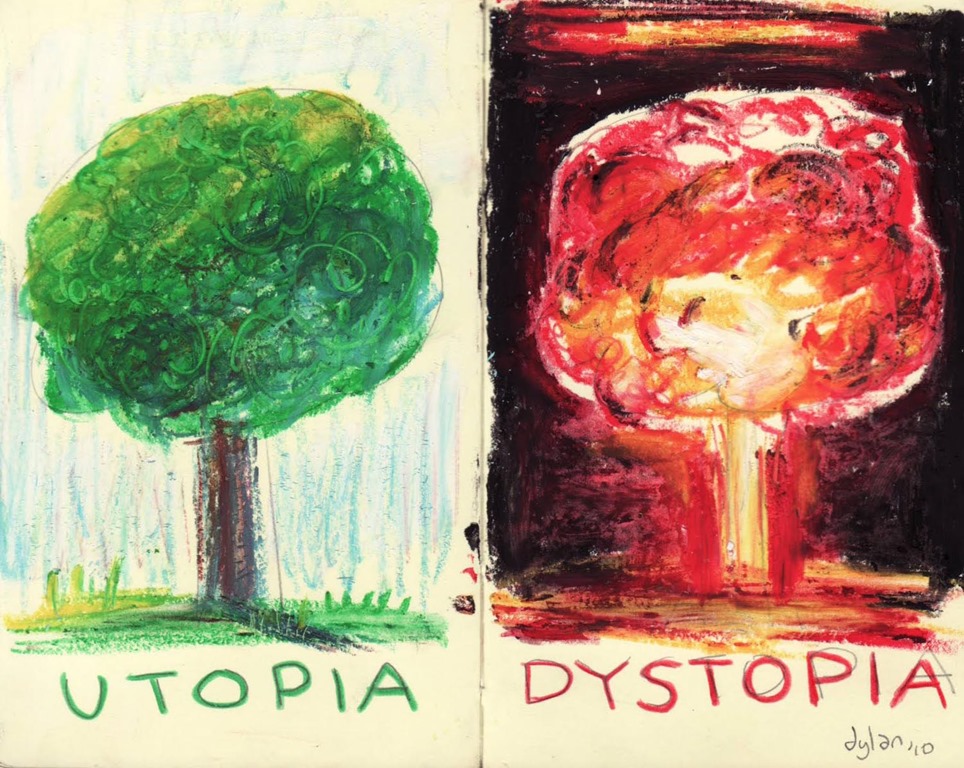
Dystopian futures are quite popular for young adult science fiction novels right now, but what if you wanted a different kind of future for the setting of your novel?  Although I do think the word dystopian is overused, and maybe even misused.  Common definitions for dystopia included “An imaginary place or state in which the condition of life is extremely bad, as from deprivation, oppression, or terror” – American Heritage, and “an imaginary place where everything is as bad as it can be” – Collins, to “an imaginary place where people lead dehumanized and often fearful lives” – Merriam-Webster.  Wouldn’t those definitions describe Westeros, the world of A Song of Ice and Fire?  Or most horror novels, and probably war novels, as well as Who’s Afraid of Virginia Woolf? and most Shakespearean tragedies?

utopiadystopia

Then we have PKDickian futures.  PKD often imagined the little man trapped in an insane world.  Jack Bohlen, the repairman in The Martian Time-Slip is not your typical action hero.  How many SF readers expect to read about unions on Mars?   And Rick Deckard is not the Harrison Ford in Do Androids Dream of Electric Sheep?, the book Blade Runner is based on.  I think Dick imagined a fucked-up 1959 future where animals were gone and we had robots that could pass for humans and animals.  Other than that his future seemed a lot like 1959, as did most of Dick’s 1960s novels.  It was the movie makers that colored Dick’s future so fantastically that I believe many readers now use those visuals to color in his novels.

blade-runner-1982-36-g

But how do you see the future?  When you write your science fiction novel, will it be inspired by the real life world you live in, or from a favorite fiction world you read about, or one you loved in the movies?   I think late 1950s Marin County California inspired many of the fictional worlds that Philip K. Dick created.  I think 1920s and 1930s America shaped Heinlein’s sense of the future.  Like it’s commonly expressed, science fiction is often about the present.  But more than that, it’s about the person who writes it.  My view of a lunar colony will be shaped by my personality and life, and will be different from Heinlein’s.  And even if I try to extrapolate hard science like crazy, will anything I write really help readers comprehend their future?  I don’t think so.

Probably living on Earth with our big screen TVs, computers and smartphones is more exciting than the reality of living on Mars.  But where does this leave science fiction?  Is turning to fantasy stories the right path after all?  What we all have is a fiction habit.  Science fiction used to be the fictional drug of choice, but it doesn’t give us the high we used to get.  Watching Breaking Bad, blows away every science fiction novel I ever read.  The reason why George R. R. Martin has legions of fans is because storytelling itself has gotten better.  It’s not comprehending the future that will rekindle excitement in science fiction, but convincing writers with storytelling abilities like J. K. Rowling and George R. R. Martin to write science fiction.

When Kincaid criticizes the SF/F best of anthologies it shouldn’t be because of the state of the genre or the writers’ ability to comprehend the future, but just lack of story telling skills.  When I gorge myself on short stories from the best of anthologies, I’m always exhausted by long info dumps, techno babble yakking, and characters that feel like they are puppets on a string trying to mime out some ridiculous idea the author has.  Too many SF stories try much too hard to rationalize razzle-dazzling concepts, and don’t spend enough time on standard storytelling techniques or realistic emotional character building.

That’s why I loved “Close Encounters” by Andy Duncan so much.  It was just a well told story.  It has real emotions.  But is that what we really want, nice nostalgia about our old dreams?  But then science has taught us that old science fiction only offered us Santa Claus futures.  I think Kincaid was onto something, but I haven’t worked out the exact nature of the problem.  I had faith in science fiction back when, and I have nostalgia for those memories now, but I’m not sure what science fiction should become next.

JWH – 8/22/13

A Feminine View of an Apocalypse

I hope I’m not being too sexist here, when I review Life as We Knew It by Susan Beth Pfeffer.  The books seems to be a feminine take on the end of the world.  But I have read many end of the world stories, and I think they’ve always have been written by males.  Books about the collapse of civilization are a special favorite of mine since I was a little kid, and now they are becoming very popular with young adult readers.  It’s rather fascinating to read a woman’s take on the genre.

First off, this isn’t going to be a regular review, because it’s going to contain spoilers to all the essential events in the story.  Let’s just say that I found Life as We Knew It to be extremely readable and likeable, but I want to dissect it because it was such a different view on the end of the world as I know it.  It was a rather nice and civilized view, and I’m essentially asking if that’s because the author was female.  Of course, this is a YA novel, so maybe it was pulling its punches, but then I’m not sure if YA readers want to be handled with care.  Kids loved The Hunger Games, which made them sort of like Romans at the Coliseum.

Surviving a brutal world at the collapse of civilization is the core appeal of reading end of the world stories.  Like I said, I really liked Life as We Knew It, and felt it was a compelling read.  I’d recommend it to any adult or kid who loves to read YA novels, but I’m now going to pick it apart for psychological reasons.  If you haven’t read it, don’t read beyond the cover photo.

lifeasweknewit

When civilization collapses all rules disappear.  Survival is the number one driving force.  And in most post-apocalyptic novels of this type, the key conflict is kill or be killed.  Susan Beth Pfeffer completely side steps this issue.  An asteroid hits the moon and brings about catastrophic changes to life on Earth.  The story takes place from May to March, beginning slowly, but ending with a brutal “nuclear winter” like winter.  The story is told by Miranda, a sixteen-year-old girl in diary form, and is about how her single mother Laura keeps Miranda, and brothers Matt and Jon alive when civilization falls apart.

One reason I love these after-the-collapse stories is they present a perfect fantasy puzzle of “What would you do?” in the same situation.  If you were sitting in your suburban home watching the news and knew that civilization was about to come to an end, what would you do?  Laura withdraws a lot of cash out of her bank and pulls her kids out of school.  She also gets an old lady neighbor and they all go on a frantic shopping spree for food and necessities.  Now this is practical, but Pfeffer presents this chaotic moment as too civilized.  Sure it’s a madhouse at the grocery story, but not crazier than Walmart at 4am on Black Friday.  And it’s a bargain, all shopping baskets can be stuffed with as much stuff as possible for just $100, so each person gets several loads.  That’s just unbelievable.

And here’s the thing, that one shopping spree lasts the family eleven months.  Even though they live near a pond, there is no mention of fishing.  Even though they live in the outskirts of town with lots of trees to cut down for firewood, there’s no mention of hunting squirrel, rabbits, raccoons, possums, groundhogs, frogs, turtles, dogs, cats, birds or anything else.  Everyone begins to starve, but they take dead bodies to the hospital.  If these people are that hungry and think they won’t make it through the winter, why aren’t they eating the dead?  I’ve been a vegetarian since 16, but hey, every real life story I’ve ever read about starving finally comes down to cannibalism.  By the time Mrs. Nesbitt died, Miranda and family should have been hungry enough to eat her.

Pfeffer evidently doesn’t believe in killing animals for food even though the family eats a lot of canned meats.  It’s strange that the boys chop wood seven days a week to get ready for winter, but never go hunting and fishing.  Nor do they go scavenging.  In Pfeffer’s world, the rule is people leave each other alone, and only plunder each other’s houses if the family dies or moves south.  But Matt, Jon and Miranda never routine scavenge homes on their own.  That’s way too civilized.  And dare I say too girly?  Life as We Knew It is way too civilized view of no civilization.  America is full of gun owners, but we don’t see guns in this story except for a couple tiny mentions.

Liberals often ask NRA members why do they need assault rifles.  Well, they are for the end of the world.  When civilization goes down the toilet, it’s a dog eat dog wild west world.  In Susan Beth Pfeffer’s apocalypse it’s a please-and-thank-you end of the world scenario.  Only nature kills, not people.

Like I said, Life as We Knew It is a gripping, well told story, even though it doesn’t fit the standard after-the-collapse model.  Is that because Pfeffer is a woman and expects the end of the world to be different?  Or does she believe young adult readers shouldn’t imagine such a brutal existence, even though they’ve been assigned Lord of the Flies for decades?   Or is her novel just a cozy story of how she thinks things should be if civilization should collapse?  Sort of a politically correct Mad Max?

Even the ending was too nice.  Miranda has decided to leave home to die in hopes of leaving more food for her younger brother who everyone thinks should be the ultimate survivor.  But at the last minute she finds a flyer from a newly set up government office that’s giving away food.  They are saved.  Civilization hasn’t completely collapse and its making a comeback.  Survival has merely been one of waiting, hoarding food, and rationing.  No one in this story fights to survive.  They struggle, they endure, they work hard, but they don’t fight.

The thing I’ve always loved about after the collapse stories is the pioneering spirit of starting over.  Of reinventing old ways of doing things to replace modern technology.  There is no invention in this story, no learning to make bows and arrows, no Gilligan’s Island professor inventing new tools out of old parts, no reading old books to figure out how to make animal traps and cure hides.  Most of all, these people don’t scavenge, steal or kill.  Nor are they preyed upon by armed hoards of starving survivalists.  Every family holes up in their own house and waits.  Ultimately, waits for the government to help them.

Hey, I’m about as liberal as they come, but I know better than wait on the government after civilization goes down the drain.   I don’t know if the collapse of civilization would be as brutal as The Road by Cormac McCarthy, but it should be as brutal as Survivors (BBC 1975-1977), a favorite TV show of mine.   My all-time favorite after the collapse story is Earth Abides by George R. Stewart.  That’s because it’s about the intellectual rebuilding of society.  Stewart shows that once civilization collapses it will be very hard to rebuild.  I’m afraid Susan Beth Pfeffer doesn’t really understand what a collapse of modern society means, or she didn’t want her story to be all about realistic brutality.  I have to give Suzanne Collins a lot of credit for having her sixteen-year-old Katniss facing realistic brutality in a honestly violent way.

Even if Pfeffer didn’t want Miranda and her family shooting guns at other people, she should have at least included a local militia protecting the neighborhoods and setting up the power behind the rule that you don’t loot your neighbor’s house unless they are dead or moved.  Pfeffer makes no suggestion that strangers would organize or work together.  Family is the only bond.  That’s odd, don’t you think?  After every natural disaster I see endless news stories about strangers helping each other.

Also I was disappointed that Miranda and her family totally depended on the phone, radio, TV and the Internet for their news, and once those systems died, they just did without.  Why didn’t they communicate more with other people?  Why wasn’t their some kind of gossip grapevine, or bulleting board news system?  Pfeffer’s characters aren’t inventors, but I think necessity really is the mother of invention, and they faced a whole lot of necessity.

I believe we all write end-of-the-world stories that reflect our own psychological make-up.  And this could be a little like taking your clothes off in public.

I’m calling Life as We Knew It a feminine apocalypse because her nonviolent view of the end of the world is so very different from all similar books I’ve read which have always been written by males.  Is that sexist or political incorrect of me?  Who says end of the world stories have to play by masculine rules?  But why didn’t Miranda try to catch fish at the pond, or the boys try to kill squirrels when they were chopping wood?

Now don’t get me wrong, I do believe most women would be fighters in real life, and probably if they wrote fictional accounts of surviving, their characters would be fighters too.  I’m just wondering why Pfeffer wrote such a polite story about a brutal time?  Is this her naked honesty of how she thinks people would behave?

In this story food only comes from the grocery store, and help only comes from the government, and desperate people never resort to using guns.  Where’s the 4th of July spirit?  I grew up watching westerns, so I guess I might be indoctrinated differently.

Maybe I shouldn’t write such a story as this, because my naked views might be loathsome.  But now that I’m old, and in declining health, it would be much different from one I would have written at 25.  I should write an after-the-collapse story about a gimpy old fart trying to survive the end of the world.  It would have a hilarious scene of a life long vegetarian killing and eating a squirrel.

JWH – 7/4/13

The Defining Science Fiction Books of the 1990s

1950s 1960s 1970s 1980s 1990s
We've added a new feature that allows you to create your own lists from our database of recognized novels and short stories. You can set your own date ranges. Change the citation numbers to focus on more popular titles.

The 1990s was the last decade of the century and the millennium, and although science fiction has been around for centuries, it feels like the genre blossomed in the second half of the 20th century.  By the last decade it feels fantasy flavored SF had overtaken hard science fiction in popular appeal, but many of the most successful science fiction books of the 1990s were about space travel.  Vernor Vinge, Iain M. Banks, Dan Simmons, and Peter F. Hamilton began paving the way for the New Space Opera of the 2000s.  Ben Bova, Greg Bear and Kim Stanley Robinson used NASA’s recent knowledge of the solar system to build new visions of interplanetary colonization.  And more than ever, science fiction is concerned with the post-human future.

SF writers of 1990s represents the centennial descendants of H. G. Wells, and his genre originating novels The Time Machine (1895) and War of the Worlds (1898).  Where Wells explored the impact of Darwinism, 1990s science fiction writers were inspired by NASA interplanetary probes, the Hubble Space Telescope, and the many breakthroughs in contemporary cosmology.  It’s quite amazing, but in the 1990s, both the scientific universe and science fictional universes are tremendously bigger than the objective reality of the 1950s and its science fictional universes.  Heinlein, Asimov and Clarke loom large in our history, but modern science fiction writers stand on their shoulders and see much further than they ever imagined.

Yet, I would claim by the 1990s that it was obvious that science fiction had forked in its evolution.  On one hand, we still have a branch of science fiction inspired by science, but on the other hand, it’s all too obvious that the larger branch of science fiction is inspired by older science fiction.  New sub-genres like Military SF, seemed descended from 1959’s Starship Troopers by Heinlein, and isn’t the sub-genre of galactic empire romances descended from Asimov’s Foundation stories?  NASA will never be able to send a probe to either of these universes.  Whereas, Kim Stanley Robinson and Michael Flynn are practically begging NASA to use their books as blueprints for its future budgets.

A handful of writers dominated the decade with their series books.  Lois McMaster Bujold, Connie Willis, Kim Stanley Robinson and Vernor Vinge, all won multiple Hugo and Nebula awards as well as getting many nominations, and winning other genre awards.

Kim Stanley Robinson set the standard for hard science fiction with his decade spanning Mars trilogy.  He won two Hugos and one Nebula by writing about a realistic colonization of the Red planet.

mars-trilogy

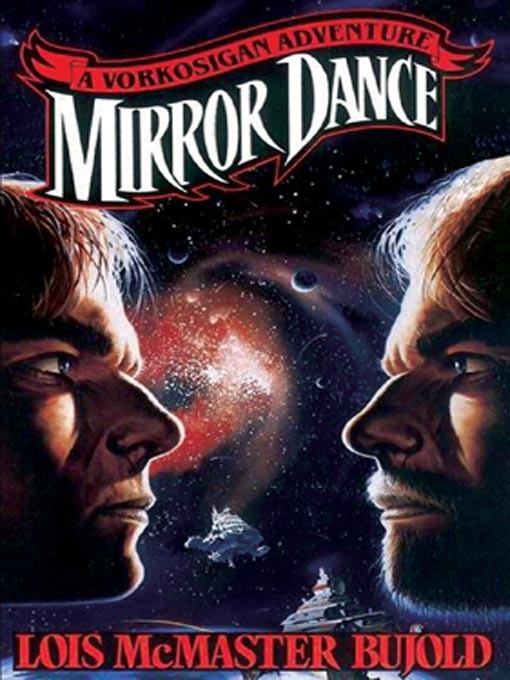
Lois McMaster Bujold had so many award winning books in the 1990s that picking the best is impossible.  The Vor Game, Barrayar, Mirror Dance, Cetaganda, Memory, Komarr and A Civil Campaign are probably getting even more readers today than in the 1990s.  The Vorkosigan Saga just keeps on growing.  And fans debate whether new readers should follow publication order or internal chronological order.

mirror-dance

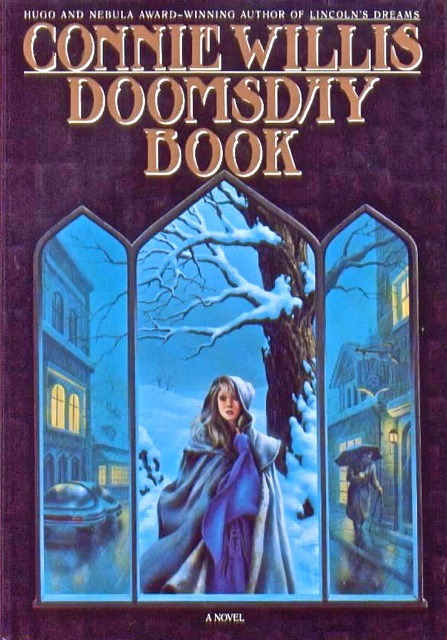
Connie Willis won five Hugos and three Nebulas in the 1990s, with The Doomsday Book winning both.  Willis has carved out a much loved series based on time travel and history, blending two genres together, and like Bujold, Willis keeps expanding her series today.

the-doomsday-book

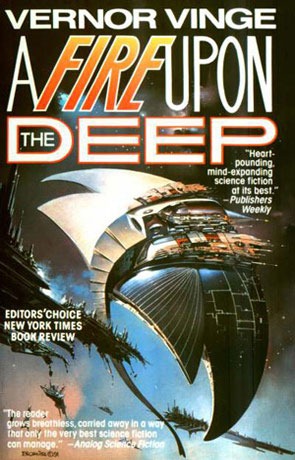
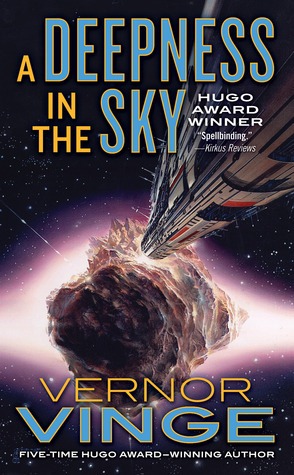
Vernor Vinge picked up two Hugos and two Nebula nominations for A Fire Upon the Deep and A Deepness in the Sky, proving that fans still love a good space opera.

a-fire-upon-the-deep

Some people have asked me how I make up these lists of memorable science fiction books.  The first one, about the 1950s, was more from personal memory, but eventually I discovered various resources I used for the later decades.  I start with Internet Speculative Fiction Database.  I use its advanced search and look up novels, language and type.   I only worry about books in English.  I go down their listings looking for books I remember reading or reading about.  I can right click on any title to bring up it’s bibliographic record which includes how often it was reprinted and whether or not it won any awards.  Most valuable is whether the book made the Locus Poll that year.  That’s the first indicator how popular a book was with the fans during the year it came out.

I also study various best of lists to discern long term popularity.  I look for books that get picked time and again.  This is how I create the short list called the Best Remembered books.  The longer Defining Books list are those books which got particular notice during the year they came out.  Most of these have been frequently reprinted and are often on some of the best SF of all time lists.  I avoided fantasy novels unless they won or were nominated for the Hugo, Nebula, or other SF award.

Best of Book Lists

The Best Remembered Science Fiction Books of the 1990s

The Defining Science Fiction Books of the 1990s

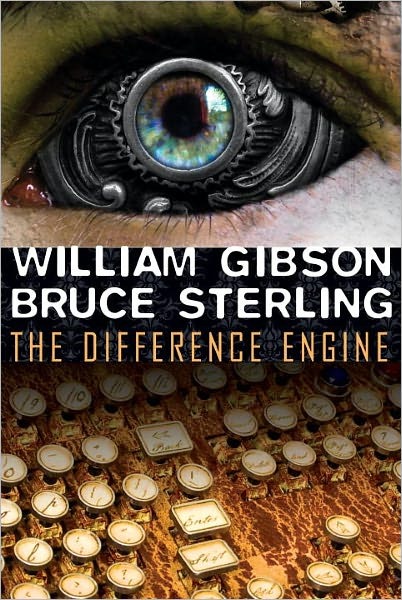
1990

the-difference-engine
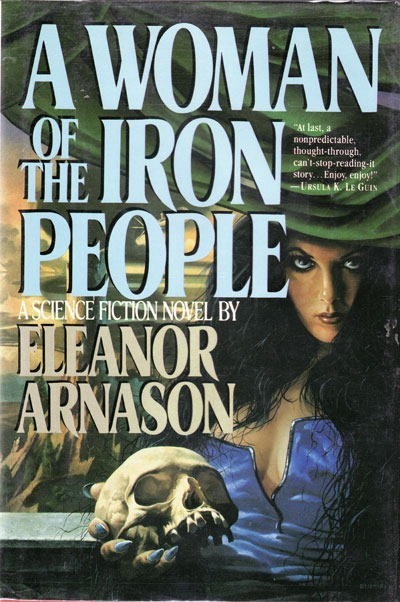
1991

a-woman-of-the-iron-people
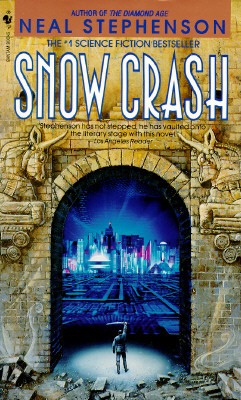
1992

snow-crash
1993

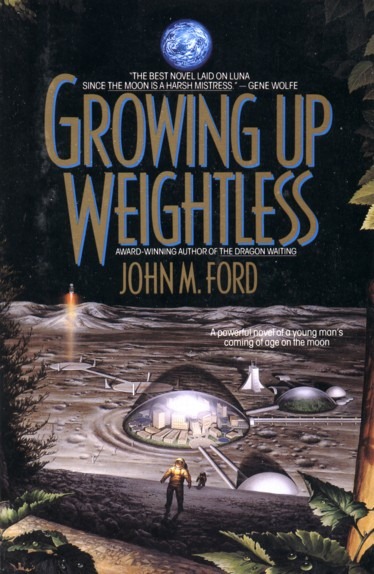
john-m-ford-growing-up-weightless
1994

permutation-city
1995

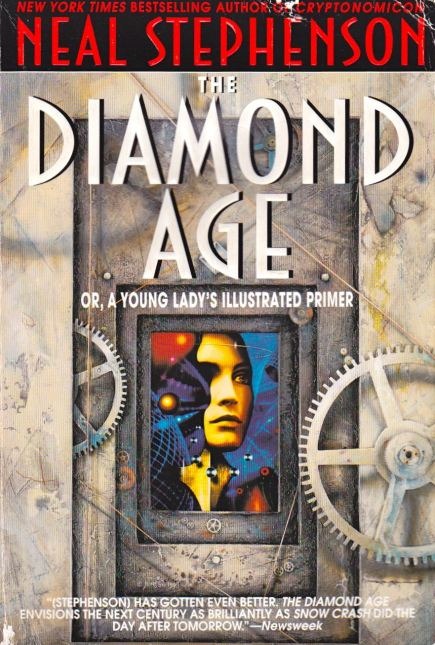
the-diamond-age
1996

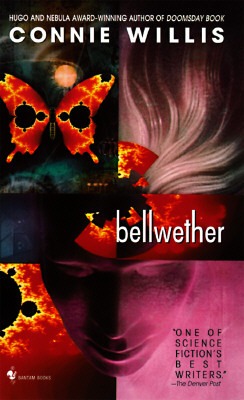
bellwether
1997
Fools War Zettel
1998

1999

a-deepness-in-the-sky
1950s 1960s 1970s 1980s 1990s

Table of Contents