A Different Flavor of Science Fiction–The Signature of All Things by Elizabeth Gilbert

By James Wallace Harris, Tuesday, February 3, 2015

The Signature of All Things by Elizabeth Gilbert is fiction about the heart of science. Alma Whittaker, the protagonist represents the empirical ideal, while Ambrose Pike stands in for the mystical and metaphysical. The Signature of All Things is another kind of science fiction, a story about scientific thinking, set in the 19th century, the century where the scientist came into being, the century where we turned from reading the word of God to reading all things natural, the century where evolution was revealed as the driving force of creation.

I love The Signature of All Things by Elizabeth Gilbert so much that I hunger to know how it was written. This book is such a perfect mixture of historical detail, psychological realism and imagined characterization that it becomes deeply philosophical, going well beyond just a great story. I can’t help but believe it’s Gilbert’s personal statement about the nature of reality. I don’t know if Alma Whittaker is Elizabeth Gilbert, but she’s probably the woman Gilbert would want to be if she lived in the 19th century. Don’t let any prejudice about Gilbert’s earlier books keep you from reading this one.

If you love stories of the 19th century, especially ones about natural philosophers becoming scientists, then you should read The Signature of All Things. Gilbert’s sprawling tale covers two lifetimes beginning in the 18th century and ending in the 19th, and includes sea voyages, botany, biology, lithography, Tahiti, Captain Cook, Joseph Banks, Charles Darwin and Alfred Russell Wallace. This time around, we get to live an alternate history where there is a woman scientist, Alma Whittaker, who made some very great discoveries on her own. Alma Whittaker is the person you’d want to be if you could reincarnate backwards in time.

If you’ve ever fantasized about living in the 19th century and becoming an amateur scientist yourself, The Signature of All Things is among the more detailed of such fantasies. Science fiction has always looked to the future, but the future hasn’t turned out to be everything it was cracked up to be, so many science fiction fans have turned to fantasy, and many of them love steampunk, a retro look at the Victorian era. This book isn’t steampunk, but it wears the same appealing fashions. I think there are many deep rooted psychological reasons why us futurists have turned to look backwards to Darwin and Dickens. This book is historical, but not quite historical fiction. It has intense sense of wonder, but it’s not science fiction, not in the traditional sense, but it should appeal to the science minded person.

Science fiction itself evolved out of Victorian era sense of wonders, and we grew up believing in lone inventors who could master the magical incantations of science. We love all those butterfly collections, scientific sea voyages and dinosaur hunters.

Orchid lithograph

The Signature of All Things is a love letter to those who embrace the natural world over the metaphysical.

The entire time I read The Signature of All Things I kept wondering how Gilbert imagined her novel. I’d gladly buy The Making of The Signature of All Things if Gilbert would write it. The book is an amazing feat of imagination, research, inspiration and psychology. In one sense it’s a feminist fantasy, and on the other hand, it’s a fantasy for anyone who reveres the 19th century. I got on the Internet hoping to find clues as to how and why Gilbert wrote this novel, and I luckily discovered that Gilbert had a Pinterest page devoted to The Signature of All Things. The financial success of Eat, Pray, Love let Gilbert spend three years researching The Signature of All Things. Few writers get such an opportunity, and her hard work paid off in a big way.

The first fifty pages of the book is about Henry Whittaker, a fascinating character that could have easily overshadowed the main character, his daughter Alma. Alma Whittaker is the ultimate free-range child educated by her stern Dutch mother, Beatrix. Alma was born January 5, 1800, so she ages with the century. Alma grows up on a huge estate outside of Philadelphia, and her father invited the most interesting men in the world to visit. Even as a child, Alma was expected to carry on an adult conversation at the dinner table. She mastered many living and dead languages, read everything in her father’s large library, and taught herself to become a botanist, specializing in mosses.

I can’t begin to chronicle all the ideas in this novel. Gilbert distilled her three years research into five hundred pages of fiction, and on almost every page, I wondered about her choice of detail to reveal. The book is tightly plotted, with an abundance of vivid characters, and the reader travels around the world three times. And it’s not until the end, that everything finally comes together. It’s a very satisfying ending, yet I wanted to know more. I wanted to know how and why Gilbert made her writing decisions.  I found some of the answers I sought in this interview:

Victorian scientists were big on developing classification systems, mapping every scrap of land and sea, inventing coordinate grids and measurement systems, taxonomies, and most of all, collecting. Science in the time of Dickens was small enough in scope, that most intelligent individuals could be well-versed generalists. There is a special kind of appeal to science before relativity and quantum mechanics. A gentleman or gentlewoman with a microscope and telescope could confirm most of what they read, and it was still possible to keep up with the reading in most fields.

Alma Whittaker, is a woman that wants to understand, and through almost endless hardships, becomes enlightened.

JWH
When Does Science Fiction Go Stale?

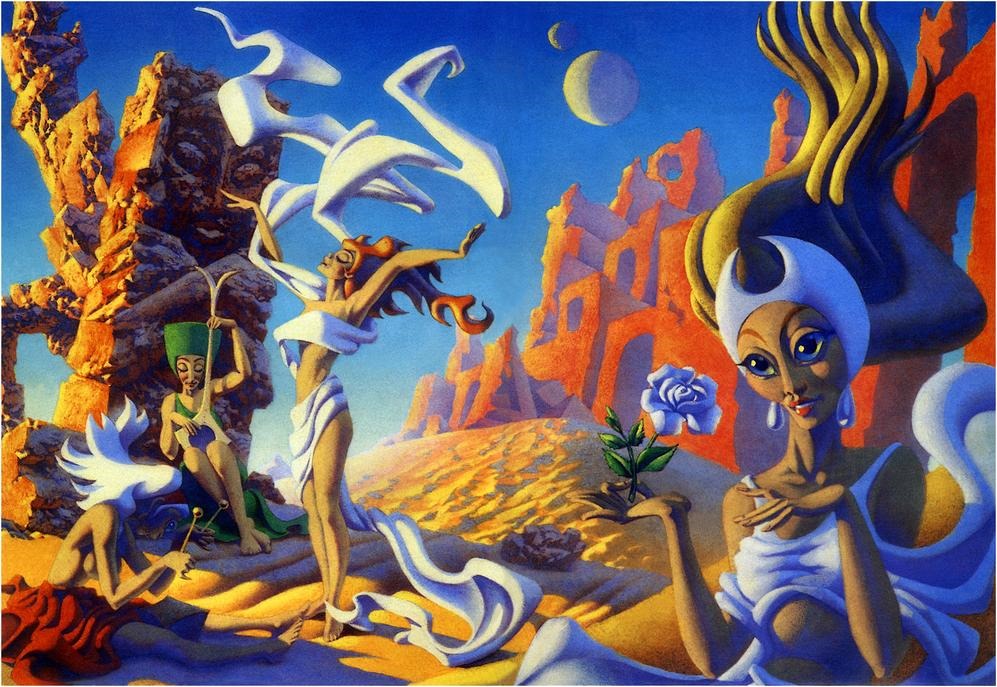
Right off the bat, I should say dated science has no affect on the expiration date of science fiction. I’m still passionately in love with “A Rose for Ecclesiastes” by Roger Zelazny.  Stories about Mars and Venus having inhabitants, or humans being able to breathe their atmospheres, do not detract from their freshness – if the writing was wonderful.

bok_fsf

I do know that science fiction can go stale – just look at the books by E. E. “Doc” Smith, who was the brightest star among the science fiction writers of the 1930s. If Smith had been a better writer, more savvy about race and gender, he might be remembered along with H. G. Wells and Jules Verne. There were legions of science fiction writers between Wells and Heinlein, but how many of their books are fresh today? It seems like science fiction goes stale pretty fast. Why?

And the taste of staleness isn’t universal from reader to reader. Some people enjoy eating two-day-old pizza, and E. E. Smith is still read by a limited number of fans, especially those who acquired the pulp fiction habit. On the other hand, how many young science fiction readers today fall in reading love with Jack Williamson, Edmund Hamilton, Murray Leinster, John W. Campbell, Ray Cummings,  E. E. Smith, Eric Temple Bell, George O. Smith or Eric Frank Russell?

Smith-Skylark

When I was growing up in the 1960s, fans talked about The Big Three of Science Fiction – Heinlein/Clarke/Asimov.  Fifty years on, I’m rereading their books and I realize they are starting to go stale like some SF books I read when I was a kid. Me and my buddies found E. E. Smith and Jack Williamson thrilling but also laughable. And like I said, it’s not the science, or the fact that we’re now living a future that’s overwritten those science fiction writer’s dreams of things to come.

I loved the Heinlein juveniles and assumed they were such obvious classics that kids would be reading them for centuries, like Treasure Island, Little Women and Alice in Wonderland. I still love them because of nostalgia, but I’m not sure they are as fresh today as they were to me in the 1960s.

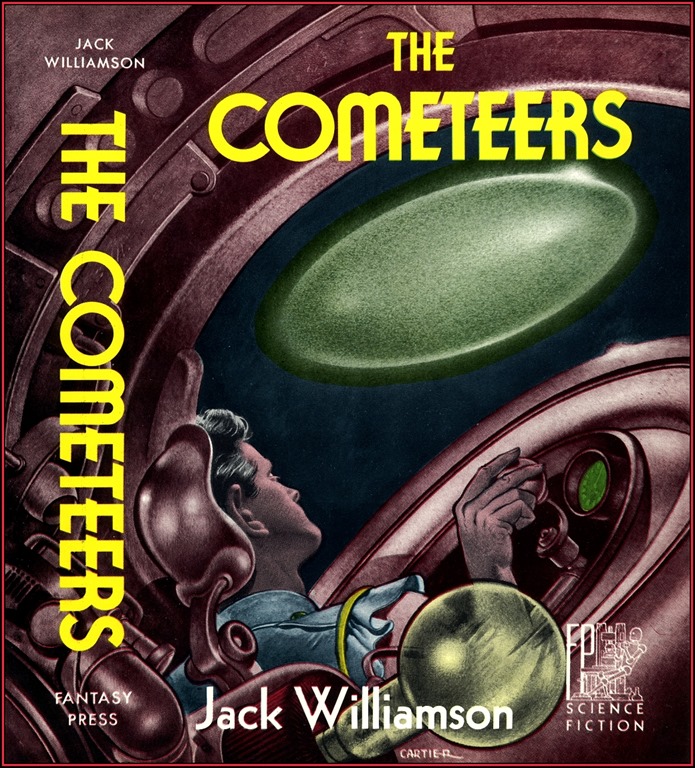
cartier_cometeers

What exactly goes stale? When you read an old science fiction story that’s as flat as a Coke without its fizz, what went wrong? I talked about this with members of the Classic Science Fiction Book Club and the Defining 1950s Science Fiction Reading Challenge. The consensus is writing style and political correctness.  Readers don’t mind antiquated stories as long as they are well told, or even antiquated point of views, if they are part of the story. Good storytelling stays fresh. Good storytelling can override decaying style. But it’s very hard to maintain a story if the characters are very out of touch modern sensibilities of right and wrong.

Sadly, a lot of old science fiction wasn’t that well written. It impressed young people at the time with far out ideas, rather than with good writing and characterization.  It’s funny how much a science fiction writer can get things wrong, and yet the story will stay fresh because of the storytelling, and not the idea.

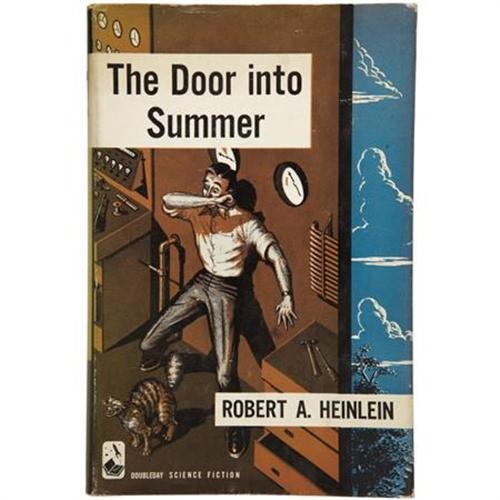
the door into summer

I still love reading The Door Into Summer by Robert A. Heinlein, even though the story was written in 1957, about a robot inventor living in the year 1970, who buys suspended animation time so he can sleep till the year 2000 to get away from his cheating girlfriend. We didn’t have household robots in 1970, and Heinlein’s year 2000 was nothing like our year 2000. Yet, the story is still readable!  Why? Heinlein had an engaging writing style, a sympathetic character, facing interesting problems, and who comes up with emotionally solid solutions, although the ending is becoming a little questionable.

The writing, characters and motivations are still functional. Yet, if we try to read something like E. E. “Doc” Smith Lensman books today, they feel archaic in their writing style, and the plot and character motivations seem simplistic – too much like an ancient comic book. Yet, a book like Out of a Silent Planet by C. S. Lewis written during the same decade as the Smith stories, still works. Lewis gets everything wrong about Mars, has a weird Christian take on space travel, and yet the story still works. And how did John Wyndham get away with writing a story about walking killer plants? Because the characters are very realistic and react in a realistic way, and we the readers care about them, plus we love to imagine what we would have done in their place.

out of the silent planet

Dime novels are seldom read today. Nor do people still read the popular girls and boys books of the early 20th century, like those by Roy Rockwood, who wrote the Great Marvel series (1906-1935). Many of these old books are so filled with racism and sexism that we cringe to read them today, but at one time they offered kids a thrilling sense of wonder. It’s a shame that those old authors weren’t better writers, because their stories captured their times in a unique way – their view of the future. Even the racism and sexism is historical. So I think that it’s the quality of writing that most makes a book go stale.

through space to mars

We still read H. G. Wells stories written in the 1890s. Why does Wells survive while so many other SF&F books from the same time faded from our reading awareness? Is it merely bad writing? I tend to think so. Books that become classics, like Pride and Prejudice or Great Expectations, have something more that good storytelling though. They tap into the core of human nature, and most science fiction never aims for such psychological depths. Wells was no Dickens, but he did have great intellectual ambitions. I think that’s why he’s stayed fresh while Jules Verne trails Wells in popularity. Verne still can engage people with his storytelling, but Wells was a scientific prophet of his age.

Bad science won’t ruin a story, if the story is wonderful, but does cause a kind of staleness. 1930s and 1940s space operas just seem silly today, often hokey, or even campy and kitschy.  One reason Nineteen Eighty-Four is still so damn fresh, it’s it’s about politics and human nature, and not galactic empires and robots. If you’re a science fiction writer who hopes to enchant readers next century then it’s wise to write about common denominators that people now and in the future will have. But if you really want to dazzle the people of today, you want to write about things they never imagined. Which is what E. E. “Doc” Smith and Jack Williamson did in the 1930s. What will awe people in the 2010s will probably feel silly and stale by the 2040s, but maybe that’s just part of the science fiction game.

JWH

The Definitive 1950s Science Fiction Reading Challenge

By James Wallace Harris, Tuesday, January 13, 2015

Over at Worlds Without End, they routinely offer reading challenges for people who use their science fiction book database. My post “The Defining Science Fiction Books of the 1950s” inspired their page, “The Defining Science Fiction Books of the 1950s” which displays the books from the list in their database format, nicely illustrated by book covers. You can join and tag books you own, want to read, have read, or want to buy and read. You’ll need to sign up and set a password, but that’s no big deal.

World Without End has collected many award list and best-of book lists, so it’s a great way to find outstanding science fiction books to read.

If you click on “Roll-Your-Own” image, you’ll be taken to a list of Reading Challenges.

2015 Reading Challenge

Then look for this icon.

1950s challenge

After you sign up, you can always go directly here, where you can see a list of members in the challenge, and which books they are reading or have read. The challenge is to read one book from each year 1950-1959 from the Defining List of 1950s SF. Look through the years to select each book you want. Clicking on the cover will allow you to mark the book read, reading or unread, and you can check to use it for the challenge.

The books go in the list 10, 9, 8, 7, 6, 5, 4, 3, 2, 1. So if you want the books to read 1950-1959, left to right, you’ll need to enter all 10 starting with the 1959 first, and go reverse order years. Otherwise, if you add them one year at a time, the final list will read 1959-1950. Since I don’t want to commit what book I’ll read for each year until I read them, I’m entering in reverse order.

This is a fun reading challenge for those people who love classic science fiction. The 1950s were when science fiction book publication ramped up, and many of the classic stories from the 1920s, 1930s and 1940s were reprinted in hardcover and paperback. I started 1950 by rereading The Martian Chronicles, which were short stories Bradbury wrote in the late 1940s, but collected together to create a fix-up novel of related tales. I listened to an audiobook edition read by Stephen Hoye, and it was excellent. The characters sound like I’m listening to a 1940s movie.

There is also a forum at the WWE site for discussing the books in the challenge.

If you love old SF, and want to see what other people are reading and saying about these old books, give it a try.  After the 1950s are finished, DrNefario, the creator of the challenge, plans to create one for the 1960s.

JWH

The Insulting Parts of Interstellar

By James Wallace Harris, Tuesday, November 11, 2014

This is not a review of Interstellar. The film is thrilling, emotional and big fun. Go see it. It has some astounding special effects and amazing sense of wonder concepts.

No, what I want to write about is the philosophical implications of the science fiction as presented in Interstellar. The film makes a great touchstone to contemplate the nature of science fiction. Science fiction reflects our collective ambitions about exploring reality and the future of mankind. At the deepest level of desire, science fiction fans want to travel into space, especially to the stars and other worlds. Interstellar even travels to other galaxies, something seldom seen even in the most ambitious science fiction stories.

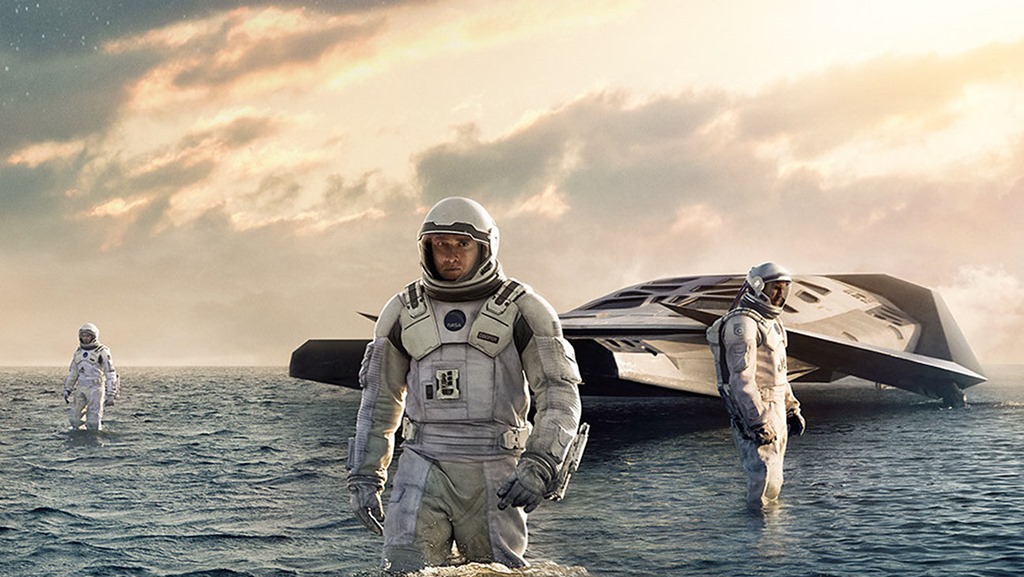
interstellar_poster_0

Science fiction also reflects our desire to control reality, and sees us as the master of our own fate. Science fiction is a rejection of the metaphysical, which believes humans are the minions of divine beings. Science fiction is hubris at its best (or worse, depending on your belief in God). Science fiction is the ultimate expression of human powered evolution.

The trouble with science fiction is most of humanity doesn’t buy into the dream, they prefer metaphysical fantasies. In Interstellar, NASA is a forgotten aspect of the government, and schools teach that the Moon landings were faked. The movie suggests that the human race gave up on the idea of the final frontier, and that it’s not until humanity is about to become extinct that we finally discover our next stage of evolution is to travel to the stars.

I thoroughly enjoyed Interstellar as an entertaining movie, but some of its philosophical implications rankled me. It suggests that humans are destined to use up the Earth, and when we do, abandon it like an old computer sent to the landfill. The movie makers suggest the savior for our species is to travel to the stars with the help of higher dimensional beings. That smacks of guardian angels to me.

I want humans to travel the stars, but not because we selfishly used up our planet. Besides, I want to colonize space now, and we need to find real reasons to do so. Positive reasons.

In the film, no one campaigns to save the Earth. The conflict is between our descendants who endure our legacy, and those who want to run away. That idea sucks big time. I’m sure the movie makers thought it was just an easy justification for the plot, but I find it offensive. Yet, their attitude is not uncommon. Republicans pretend our sins of self-destruction aren’t ours, while the Democrats are perfectly willing to accept we’re to blame, yet do nothing to stop us from destroying ourselves.

Interstellar sees Earthly humanity expiring and says, “Let’s go to the stars” to start over. Now, here is where I get into spoilers by explaining how we’re saved. One part of the solution involves New Age mumbo-jumbo, and the other part involves 1930s style super-science mumbo-jumbo, the kind found in books by E. E. “Doc” Smith. Neither solution will save us, nor are they philosophically appealing. They each say we need the help of higher powers. Bullshit.

We already know the science to save our planet – we choose not to. Abandoning Earth for the lifeboats is not an ethical solution. It’s about as noble as the Republican’s head in the sand plea of denial, or the Democrats mea culpa “The buck stops here but I ain’t going to do anything about it because the Republicans won’t play fair” whine.

I also find it offensive that the story in Interstellar suggests we need the help of super-beings. That’s one reason I don’t like religion – it shirks responsibility. We don’t need some divine daddy or fifth dimension super being to save us. If we can’t save ourselves then we deserve to go extinct. The movie cops out on its cop out, but I don’t like it’s philosophical solution either.

To me, the science fiction in Interstellar wimps out. Real, hard-core, science fiction is about humanity pulling itself up by its own bootstraps, using real science we discovered. To a degree the movie does that, and that’s exciting, but the ending of Interstellar is much like the ending of 2001: A Space Odyssey, which I also found philosophical insulting. Arthur C. Clarke in his two most famous stories, 2001 and Childhood’s End suggests we need outside help getting to the next stage of existence, and that help involves superpowers that are damn close to metaphysical. I find that really distasteful.

I’m a believer in evolution, which doesn’t allow for outside helping hands. You either climb up out of the slime on your own, or you go extinct.

Colonizing space or traveling to the stars is a great ambition, but we need to go on under our own steam, and after we become good caretakers of the Earth. I think if we’re going to destroy everything we touch I imagine our alien neighbors, higher dimensional beings and the gods would prefer we just stay home.

JWH

Can Science Fiction Change Republican Minds About Climate Change?

By James Wallace Harris, Sunday, November 8, 2014

The other day I was talking with my science fiction reading friends about whether or not science fiction can change public policy or opinion about the future. On one side of the argument, we had the belief that science fiction is only entertainment, on the other, some believed science fiction can enlighten people. I was on the side of science fictional enlightenment, but when asked to produce a list of books that actually changed public thinking, I was stumped. My only example was Orwell’s Nineteen Eighty-Four. I think Orwell produced a number of memes about life in a totalitarian state that it has shaped political thought ever since. Just think how often his book was referenced during the recent NSA scandal.

Wind_Up_Girl_by_Raphael_Lacoste-600px

Back in the 1950s and 1960s, two science fiction novels were bestsellers that warned people against the atomic war apocalypse – Alas, Babylon by Pat Frank, and On the Beach by Neville Shute. Neither are much remembered today, but then again, few people today worry about WWIII anymore. Did reading about Armageddon help us avoid it?

Despite the success of some of the new climate fiction (cli-fi) novels, I’m not sure they’re making an impact. Nineteen Eighty-Four is something Republicans can understand and embrace because it resonates with their political thinking, but how many conservatives have read Forty Signs of Rain by Kim Stanley Robinson, or the brilliant The Windup Girl by  Paolo Bacigalupi? There’s a good chance that most people don’t read books that don’t match their current thinking.

After the mid-term elections it’s pretty obvious that the majority of Americans want Republican leaders, even if Republicans are against their personal interests. For example, Obamacare is proving most successful in red states. Republicans are extremely united in their opposition to climate change politics. Their denial of reality is amazing. And they’re absolutely consistent by siding for profit over environment. Nor do we see conservatives showing any signs of moving in new directions. Is there any book or movie that could make red state voters change their minds?

This is where I wonder about the power of science fiction, or just the power of art. Can any novel or movie actually change people’s minds if they already believe differently? Over my lifetime I feel I’ve constantly evolved because of my empathy with fictional characters. My own life is not as diverse as the life I see on TV, the big screen or in the pages of books, so I honestly feel I know more about people from art, than from just knowing them. I feel art expands my view on reality and changes me. But that could be an delusion.

Do I read liberal books because I’m already liberal, or because previous read liberal books made me liberal? Do conservatives read conservative books because they are conservative, or have conservative books made them conservative? If I read conservative books and conservatives read liberal books, would we change our views? I don’t know. Maybe genes override outside input.

Personally, I think the United States is making a fatal mistake by ignoring climate change and by choosing to destroy the environment. I could be wrong, and I’ve been wrong plenty of times, but on this issue, I think I’m right. Is there any way I could present my views in a novel that would convince people who don’t think like me to change their minds? Can anyone write a Nineteen Eighty-Four type story that would inspire millions to change their votes and avoid the future we’re racing to meet?

JWH