2013 Year in Reading

The older I get, the more I feel my reading life is fading away.  I was born to read.  Reading has shaped and defined my existence.  So it’s scary to think that I’m running out of reading time.  Even if I live another 20 years, that’s only 1,040 books at this year’s pace.  That seems like a lot, but it’s a finite number.  Picture an hour-glass, but instead of grains of sand, imagine tiny little books falling through the narrow waist of the time.
confessions-of-a-crap-artist-5

I retired this year on October 22nd, and assumed I’d start reading books like crazy.  When I worked, I read about one book a week.  I hoped after retiring, to read two books a week – instead it’s one book every two weeks.  Damn.  That’s not what I planned at all!  I’ve only been able to catch up to my yearly average by quickly finishing off several half-read books.

As 2013 closes out, I contemplate the power of less, both having less time, but also wanting and owning less, so I can focus clearly on my goals, and I realize I need to change my attitude toward reading.  More than ever, I want to make every book count.  This might sound contradictory, but I’m thinking I need to read less too.  Instead of consuming books in great numbers, I should savor and study them.  But what if that means I have 300 books left?

In 2012 I read 49 books and I wrote in my 2012 Year in Reading that I wanted to read 12 novels, 12 science books, 12 history/other non-fiction books in 2013, and hopefully 12 of those would be published during 2013.  Well, I didn’t do so good, especially with science books – I didn’t read any science books at all!   I did read one math book.  Plus, I only read just seven 2013 books (I did read eleven 2012 books, so I’m close).  I read 24 fiction books, twice what I wanted.

When I look at the list below I realize that some books were definitely worth my reading time, but others, even ones I really enjoyed, weren’t.  I’ll rate the books I felt added much to my life with up to 5 pluses (+), but any book I didn’t rate means I could have skipped without impact.  Some of these were lots of fun, but I need more than just fun.

Books Read in 2013

Favorite Fiction

  1. Nineteen Eighty-Four by George Orwell
  2. The Short Stories Volume 1 by Ernest Hemingway
  3. Confessions of a Crap Artist by Philip K. Dick
  4. The Fault in Our Stars by John Green
  5. The Long Tomorrow  by Leigh Brackett

Favorite Nonfiction

  1. Half-the-Sky: Turning Oppression into Opportunity for Women Worldwide by Nicholas Kristof and Sheryl WuDunn
  2. The World Until Yesterday by Jared Diamond
  3. The Unwinding by George Packer
  4. The Voice is All by Joyce Johnson
  5. Other Powers: The Age of Suffrage, Spiritualism, and the Scandalous Victoria Woodhull by Barbara Goldsmith

Order of Reading

  1. Confessions of a Crap Artist (1959) – Philip K. Dick (+++++)
  2. Half-the-Sky: Turning Oppression into Opportunity for Women Worldwide (2009) – Nicholas Kristof and Sheryl WuDunn (+++++)
  3. Beautiful Ruins (2012) – Jess Walters (+++)
  4. The World Until Yesterday (2012) – Jared Diamond (+++++)
  5. At Home (2010) – Bill Bryson (+++)
  6. Redshirts (2012) – John Scalzi 
  7. The Wrecking Crew (2012) – Kent Hartman (+++)
  8. The Sheltering Sky  (1949) – Paul Bowles (+++)
  9. Hull Zero Three (2010) – Greg Bear
  10. Wishin’ and Hopin’(2009) – Wally Lamb
  11. Quiet: The Power of Introverts in a World That Can’t Stop Talking (2012) – Susan Cain (++++)
  12. Other Powers: The Age of Suffrage, Spiritualism, and the Scandalous Victoria Woodhull (1999) – Barbara Goldsmith (++++)
  13. The Searchers (2013) – Glenn Frankel (+++)
  14. Heaven is for Real (2010) – Todd Burpo
  15. Darwinia (1999) – Robert Charles Wilson
  16. Society’s Child (2008) – Janis Ian
  17. We Can Build You (1972) – Philip K. Dick
  18. Oz Reimagined (2013) – edited by John Joseph Adams
  19. Drive: The Surprising Truth About What Motivates Us (2009) – Daniel Pink (+)
  20. Word Freak: Heartbreak, Triump, Genius and Obsession in the World of Competitive SCRABBLE Players (2001) – Stefan Fatsis (++)
  21. The End of the Affair (1951) – Graham Greene (++)
  22. Mrs. Dalloway (1925) – Virginia Woolf (+)
  23. The Fault in Our Stars (2012) – John Green (++++)
  24. The Sense of an Ending (2011) – Julian Barnes (++)
  25. Why Are You Atheists So Angry: 99 Things That Piss Off the Godless (2012) – Greta Christina
  26. The Next 100 Years:  A Forecast for the 21st Century (2009) – George Friedman
  27. The Heart of Darkness (1899) – Joseph Conrad (+)
  28. Life As We Knew It (2006) – Susan Beth Pfeffer (+)
  29. The Ballad of Bob Dylan (2011) – Daniel Mark Epstein (+++)
  30. 2312 (2012) – Kim Stanley Robinson
  31. The Cuckoo’s Calling (2013) – Robert Galbraith (J. K. Rowling)
  32. Let’s Explore Diabetes with Owls (2013) – David Sedaris
  33. Door Wide Open (2001) – Joyce Johnson
  34. The Unwinding – (2013) George Packer (+++++)
  35. The Year’s Top-Ten Tales of Science Fiction 5 (2013) – edited by Allan Kaster
  36. Euclid’s Window (2001) – Leonard Mlodinow (++)
  37. The World Jones Made (1956) – Philip K.  Dick
  38. The Long Tomorrow (1955) – Leigh Brackett (++)
  39. Lightspeed Year One (2011) – edited by John Joseph Adams
  40. One and Only (2011) – Gerald Nicosia and Anne Marie Santos
  41. Po-boy Contraband (2012) – Patrice Melnick
  42. The Voice is All: The Lonely Victory of Jack Kerouac (2012) – by Joyce Johnson (++++)
  43. The Year of Magical Thinking (2005) – Joan Didion (++++)
  44. Boys Adrift (2005) – Dr. Leonard Sax (++++)
  45. One Summer: America 1927 (2013) – Bill Bryson (++++)
  46. The Power of Less (2008) – Leo Babauta (+)
  47. Wheat Belly (2011) – William Davis MD (+++)
  48. The Short Stories Volume 1 (2002) – Ernest Hemingway (+++++)
  49. Distrust That Particular Flavor (2012) – William Gibson (++)
  50. Pulphead (2011) – John Jeremiah Sullivan (+++)
  51. Leviathan Wakes (2011) – James S. A. Corey
  52. Nineteen Eighty-Four (1949) – George Orwell (+++++)

Reading Plans for 2014

Once again I want to read less science fiction and more science, fewer fiction titles and more nonfiction.  Of course I’d like to read all +++++ books, even if I only read half as many books total.  I find it tragic that I forget what I read so quickly.  What a crying shame it is to take in so many fascinating facts that flee my mind in just minutes and hours.  Shouldn’t I be doing more rereading than reading, studying, rather than rushing by all those scenic words?

Going through my bulging bookcases, here’s what I’m pulling down to pile beside my reading chair, hoping to read in 2014.

  • On Looking: Eleven Walks with Expert Eyes (2013) – Alexandra Horowitz
  • Grain Brain (2013) – David Perlmutter, MD
  • Time Reborn (2013) – Lee Smolin
  • The Goldfinch (2013) – Donna Tartt
  • Thinking, Fast and Slow (2011) – Daniel Kahneman
  • The Beginning of Infinity (2011) – David Deutsch
  • Darwin’s Armada (2009) – Iain McCalman
  • The Best Writing on Mathematics (2013) – Mircea Pitici, Editor
  • The Fallacy of Fine-Tuning: Why the Universe is Not Designed for Us (2011) – Victor J. Stenger
  • Waging Heavy Peace (2012) – Neil Young
  • Your Inner Fish by Neil Shubin
  • Mathematics: The Loss of Certainty by Morris Kline
  • Touching the Rock: An Experience of Blindness by John M. Hull
  • The Social Conquest of Earth by Edward O. Wilson
  • Darwin’s Dangerous Idea: Evolution and the Meaning of Life by Daniel C. Dennett
  • Euclid in the Rainforest: Discovering Universal Truth in Logic and Mathematics by Joseph Mazur

JWH – 12/27/13
2012 Year in Reading

By the way, just to be upfront about things, when I say “read” I often mean “listen” – but I consider consuming books with eyes, ears or fingertips to be reading.

This is the 5th year I’ve done these annual reading summaries.  Writing about reading is turning into an enlightening subject because over time I can see my reading habits evolving and showing trends.  I’ve been logging what I’ve read since 1983, and I’ve often wish I had started recording which books I read right from my very first book.  (Just some advice to any bookworm tykes reading this.)

I kept a reading log once before, in the early 1970s when I was in college and had a lot more free time, and I read 452 books in 18 months.  I hate that I lost that list.  That epic reading period was mostly short science fiction paperbacks.  I’ve always read mostly science fiction, a smattering of science, a handful of history books, and a few odds and ends.  Since I’ve started these yearly summaries I always end up wishing I’d try more variety.  I slowly have.

In 2012 I read 49 books.

I again read too much science fiction this year, but then I’m in the Classic Science Fiction Book Club.  I’m also addicted to audiobooks and love to listen to all the old science fiction novels I first discovered back in the 1960s.  I ended up reading to 22 science fiction books, way more than I should because I only read three actual science books.  I’d be a lot more impressed with myself if I had read 22 science books and only 3 science fiction titles.  Resolutions for next year:  read only one SF book a month and read at least one science book a month.

Of course that brings up the whole fiction versus nonfiction guilt that I have.  For me fiction is more fun, but nonfiction is more rewarding.  Fiction can be deeply philosophical and observant of reality, but usually it’s just escapism.  Science fiction is known for its sense of wonder, but none of the SF books I read this year could touch A Universe From Nothing, From Eternity to Here and The Mind’s Eye for their overwhelming sense of wonder.

Regarding the quality of fiction, the most thought provoking novels I read in 2012 were:  Anna Karenina, A Portrait of an Artist as a Young Man, Freeman, On the Beach, The English Patient, The Age of MiraclesFrankenstein, Ready Player One and The Windup Girl.   If I was honest with myself, I’d stop reading so much old science fiction because it’s just not that worthwhile.  However, nostalgia often overwhelms my to read impulses.  Science fiction imprinted on me at that impressionable age of 12 and I’ve never been able to give it up the habit.

I did read eight history books this year and they were so rewarding that I feel I need to up their number next year.  My yearly averages for books read usually runs around four a month.  See my past years 2011 (58), 2010 (53), 2009 (40), and 2008 (45).

For 2013 I’d like to aim for a monthly mix of:

  • 1 novel
  • 1 science book
  • 1 history/other nonfiction book
  • 1 new (2012/2013) title per month.

I’d also like to read one big classic novel during the year.  This year was Anna Karenina.  I’m thinking about Les Misérables for 2013.

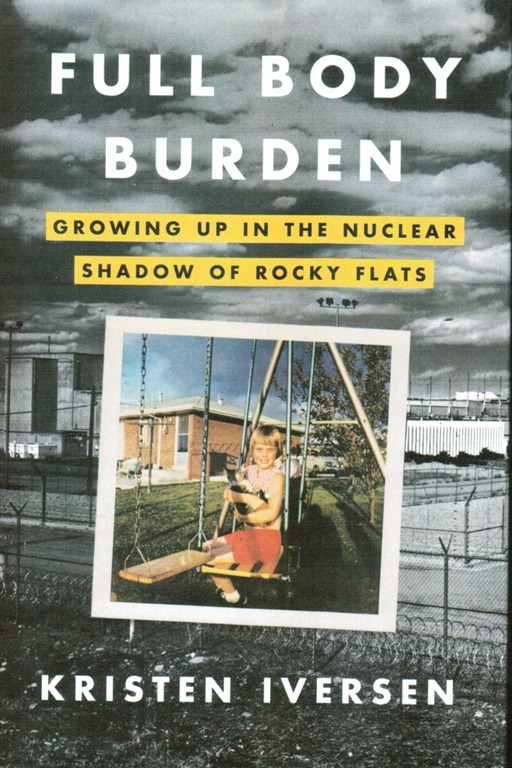
Besides loving audiobooks, I love reading new books that just came out. It’s great fun to discover books published during the year and promote them with your friends and then have those books validated at the end of the year by showing up on Best Books of the Year lists. This year’s discoveries was Full Body Burden by Kristen Iverson and The Age of Miracles by Karen Thompson Walker, but sadly they were only on a couple best of lists. I didn’t read Behind the Beautiful Forevers by Katherine Boo until after I saw it on a zillion lists this month, so it doesn’t count.

FullBodyBurdenthe-age-of-miracles

Every year when I write this summary of books read, I also think about which books I want to read for the next year.  Since I have over 500 unread books sitting on my physical bookshelf, and over a 100 unread audiobooks sitting in my digital bookshelf, I should be concentrating on clearing out my backlog, but that doesn’t happen.  Many of the books on my list below were bought just before I read them.  I’m in three online and one local book club that discusses 5 books a month.  That’s dictating too many of my reads – 19 this year.  Obviously I didn’t read all 60 discussed books.

I would like to participate more in the book clubs, read more books off my to be read pile, as well as read as many new books as possible.  That’s only possible if I read more books.  I could give up television, but I’m not sure I can digest more than a book a week anyway.

In a perfect world, every book I read should be thought about for hours, researched, studied, discussed in a book club, and reviewed for my blog.  To do all that would require 10-30 hours each week depending on the size of the book.  Most books are 10-20 hours of listening time.  Anna Karenina was 42 hours long, and it took me three weeks to finish.  As a hobby I’m pushing my limits as a bookworm.  I know bloggers who read 100+, 200+ and even 300+ books a year and write reviews.  There are some real super-bookworms out there.  I’m just not one of them.  I can accept my smallish total if I read 52 great books each year.  My goal is not to read more books, but better books.

Most of the books I “read” every year are books I listened too.  I just don’t have much time for eyeball reading anymore.  Theoretically, I might average two books a week, one listening and one reading, but I’d need to find more La-Z-Boy reading time, and that’s hard.  I do watch a lot of TV and listen to a lot of music, so I suppose I could sacrifice some of that time.  But do I want to be more of a bookworm?  Sometimes I think I should be less of a bookworm, and do more active things.  Or instead of reading books I should be writing them.  I’m happy with the book a week pace.  It would be nice to actually hit 52 books a year though.

Here are my favorite books I’ve read this year.  Only the first was actually published in 2012.

Novel of the Year

   The Age of Miracles by Karen Thompson Walker

Nonfiction Book of the Year

   Eden’s Outcasts by John Matteson

Classic Science Fiction Book of the Year

   The Day of the Triffids by John Wyndham

Modern Science Fiction Book of the Year

   Ready Player One by Ernest Cline

Most Recommended Book This Year

   The Merchants of Doubt by Naomi Orekes and Erik Conway

Books Read in 2012

  1. The Gnostic Gospels (1979) – Elaine Pagels
  2. Tunnel in the Sky (1955) – Robert A. Heinlein
  3. Ready Player One (2011) – Ernest Cline
  4. 1959 (2009) – Fred Kaplan
  5. The Ecstasy of Influence (2011) – Jonathan Lethem
  6. Midnight Rising (2011) – Tony Horowitz
  7. The Forge of God (1987) – Greg Bear
  8. A Universe from Nothing (2012) – Lawrence M. Krauss
  9. Life (2010) – Keith Richards
  10. The Swerve (2011) – Stephen Greenblatt
  11. Pushing Ice (2005) – Alastair Reynolds
  12. Anna Karenina (1877) – Leo Tolstoy
  13. The Year of the Quiet Sun (1970) – Wilson Tucker
  14. Embassytown (2011) – China Miéville
  15. Let’s Pretend This Never Happened (2012) – Jenny Lawson
  16. The Last Starship From Earth (1968) – John Boyd
  17. Little Women (1868) – Louisa May Alcott
  18. Beyond This Horizon (1948) – Robert A. Heinlein
  19. The Day of the Triffids (1951) – John Wyndham
  20. Glory Road (1963) – Robert A. Heinlein
  21. Assignment in Eternity (1953) – Robert A. Heinlein
  22. Merchants of Doubt (2010) – Naomi Orekes and Erik Conway
  23. A For Andromeda (1962) – Fred Hoyle and John Elliot
  24. Imagine (2012) – Jonah Lehrer
  25. The Age of Miracles (2012) – Karen Thompson Walker
  26. The Listeners (1972) – James E. Gunn
  27. The Year’s Top Ten Tales of Science Fiction (2009) – edited by Allan Kaster
  28. Full Body Burden (2012) – Kristen Iversen
  29. The Black Cloud (1957) – Fred Hoyle
  30. Freeman (2012) – Leonard Pitts, Jr.
  31. The Mind’s Eye (2010) – Oliver Sacks
  32. Horseman, Pass By (1961) – Larry McMurtry
  33. From Eternity to Here (2010) – Sean Carroll
  34. Ubik (1969) – Philip K. Dick
  35. A Portrait of an Artist as a Young Man (1916) – James Joyce
  36. The Dog Stars (2012) – Peter Heller
  37. Eden’s Outcasts (2007) – John Matteson
  38. Aftershock (2010) – Robert B. Reich
  39. Frankenstein (1818) – Mary Shelley
  40. Mrs. Robinson’s Disgrace (2012) – Kate Summerscale
  41. The Windup Girl (2009) – Paolo Bacigalupi
  42. The English Patient (1992) – Michael Ondaatje
  43. Space Cadet (1948) – Robert A. Heinlein
  44. The Worst Hard Times (2006) – Timothy Egan
  45. On the Beach (1957) – Nevil Shute
  46. Jumper (1992) – Steven Gould
  47. Behind The Beautiful Forevers (2012) – Katherine Boo
  48. Revelations  (2012) – Elaine Pagels
  49. The Wizard of Oz (1900) – L. Brank Baum

I’ve annotated this list with links to my reviews.

The last book I read in 2012 was The Wizard of Oz in anticipation of Oz the Great and Powerful that comes out in Spring 2013.

JWH – 12/19/12

Why Do I Read Science Fiction?

My friend Laurie called me today to ask, “Why do you read science fiction?”  Laurie is a professor of reading education at the university where I work and she’s writing an article on book clubs and reading.  She told me about an essay she read on why women read romance novels and she thought about me and my love of science fiction.

american-science-fiction2

That’s a good question I told her.  Why do any of us do the things we do?  If you’re a college football fanatic can you explain why?  If you’re a CPA, can you tell us about the path you took to get into that profession?

I am a lifelong science fiction fan.  I don’t like mysteries.  I don’t like thrillers.  I don’t like romance novels.  I love movie westerns but seldom read western novels.  I like science fiction movies, but they aren’t my favorite movies.  I think literary novels are the most rewarding books to read, yet I still spend most of my reading time consuming science fiction novels.  Why?

Discovering the Science Fiction Genre

I assume, as a professor that specializes in reading, Laurie wants to know how to get kids and adults involved with reading.  Maybe she assumes if she knew why bookworms want to read she could help non-readers find the books they will like.  There is some truth to this.  When I was in the third grade my teacher and parents sent me to summer school because they claimed I couldn’t read well.  My problem wasn’t reading, but what to read.

I remember going to my first summer school reading class.  It was cramped wedge shaped room, that was really a storage closet for books.  There were few places to sit.  The teacher told me to pick out a book from a twirling rack of paperbacks.  I took my time and carefully selected Up Periscope that, if I remember right, was a Scholastic paperback for kids, meaning it was probably abridged.  I started reading it.  I got into it.  As far as I can remember, the summer school teacher never gave me any lessons in reading – he just provided fun books to read.  Hell, I knew how to read.  Up till then I didn’t have anything worth reading.

up-periscope

So, starting in the fourth grade I began prowling the school library at Lake Forest Elementary in Hollywood, Florida for interesting books.  Then we moved to Homestead Air Force Base in 1961, while I was in middle of 5th grade, and my dad took me to the base library.  That’s where I discovered proto science fiction books.  During these years Alan Shepard and John Glenn made their historic flights into space.

At this time I didn’t know there was a category of books called science fiction.  As a kid growing up with television in the 1950s I saw a lot of science fiction movies and television shows.  I’d watch The Wizard of Oz every year on television.  I watched Topper and other fantasy and SF shows.  They weren’t a special genre yet.  I also loved cartoons, westerns, sitcoms and everything on TV pretty much.

patchwork girl of oz

The first books I remember discovering at the Air Force Base Library were the Oz books, and one of my favorites was The Patchwork Girl of Oz.  I read all the Baum titles, but didn’t like the Thompson books that were written after Baum died.  I then switched to Danny Dunn, Tom Swift, Tom Swift, Jr. and Hardy Boys books.  I still didn’t know there was a genre called science fiction.  My reading was unguided, but it was shaped by the books in the library.  I guess access to books is a big factor.

dannydunn

In the sixth grade, my teacher Mrs. Saunders read us books after lunch, and she got me hooked on A Wrinkle in Time by Madeleine L’Engle.  I think that got me to realize that there were far out books that weren’t part of a children’s book series.  I remember going up and down the shelves at school looking for books that had space ships on the cover.  There weren’t that many.  I found Jules Verne and H. G. Wells this way though, but still didn’t realize there was a category of books called science fiction.

I suppose if Laurie knew exactly what book to give a potential reader she could capture them for life.  But how does she know what book?  Maybe that’s what her article will be about.

a-wrinkle-in-time

When I wasn’t reading I was watching TV shows like The Twilight Zone.  It was wonderful.  Beginning in the fall of 1963, when I was starting the 7th grade, and still only 12, The Outer Limits came on.  I was addicted to it right from the start.  We moved temporarily back to Hollywood, Florida, right around the time JFK was killed, and then to rural South Carolina, where we lived out in the country and I had a 35 mile school bus trip twice a day.  During this time I got out of the reading habit.  Playing in the woods every day was more exciting, but I still discovered Journey to the Center of the Earth, The Time Machine and Dolphin Island by Arthur C. Clarke that year.

This is another clue.  I’ve always read less when I had more exciting things to do.  If you want to hook people on books, get them to read when there’s not much to do.

Then in the second half of 1964 we returned to Florida, and I started 8th grade at Homestead Junior High where I had a very special English teacher.  I wish I could remember her name, but she had one teaching technique that changed my life.  She offered to raise any student’s grade one letter if they’d read 6 books, 6 magazine articles and 6 newspaper articles each 6 week period and write a report on them.  And she provided a list of approved authors.  On that list was Robert A. Heinlein, so I read The Red Planet for the first of many times.  I wanted more Heinlein and rode my bicycle over to the Air Base Library and asked the librarian about Heinlein.  The airman took me to the adult side of the library and showed me the science fiction section, which contained dozens of Heinlein novels.

This is when it all fell into place and I finally discovered a category of novels called science fiction.  I had finally found my genre.  Some people will read anything, and other people like to stick to what they like.  How can you interview a person and quickly determine their genre?

The Importance of Teachers and Libraries

You will notice in the above narrative that three teachers played a very important role in helping me to discover science fiction.  First, the summer school reading teacher, second Mrs. Saunders my 6th grade English teacher, and finally my name forgotten 8th grade English teacher.  Later on my 12th grade English would turn me onto literary books like A Portrait of an Artist as a Young Man, The Stranger, Catcher in the Rye,  etc.  None of these teachers told me to read science fiction.  They just presented a selection of great books and I responded to the ones that resonated with my soul.

Another factor in this narrative is libraries.  I have very fond memories of libraries, especially the Homestead Air Force Base Library – it’s legendary in my memories.  I needed libraries until I could earn my own money and go to bookstores.  When I got my first punch the clock job at 16, I bought the 12 Heinlein juveniles directly from the publishers with my first paycheck.  I was so hooked on reading at a young age that books were my primary form of entertainment.  I’m not sure that can be quickly instilled in a grown person.

But Does This Answer Laurie’s Question?

My history so far explains how I discovered certain books, but it doesn’t explain why I wanted to read them in the first place.  I loved my childhood, and I’m very nostalgic about growing up, but I had alcoholic parents and we moved around an awful lot.  I went to a lot of different schools.  If we play the home shrink self-examination game I have to figure I read books to escape a stressful environment.   So why science fiction?

I was born in 1951, and Sputnik was launched when I was in 1st grade.  We landed on the Moon the summer I finished the 12th grade.  Alan Shepard took his 15 minute flight into history when I was in the 4th grade.  I grew up with NASA and my formative school years covered Project Mercury, Gemini and Apollo.  I was influenced by NASA, rock and roll, television and movies.  The undercurrent of the 1960s was all about the future and revolutionary social change.  How science fiction is that?

As a little kid I couldn’t buy into religion.  I didn’t believe in heaven, but wished to go to outer space.  I didn’t believe in God, but thought wise aliens might come down from the skies.  I didn’t believe in life after death, but life extension might be possible.  Science fiction promised a future reality that seemed far more real than the religion of the older generations.

Making Friends with Other Science Fiction Fans

Because my family moved around so much I got good at making friends, and I always found a best friend quickly.  The quality I looked for most in a friend was the love of science fiction.  I told Laurie if she wanted to understand this aspect of becoming a science fiction bookworm then all she needed to do was read Among Others by Jo Walton.  There’s a reason why Among Others has won all the science fiction and fantasy awards – it speaks to my kind.  Laurie, maybe you can hook people on books if you can find what books friends will read together?

among others

Why Do I Continue to Read Science Fiction?

To be honest, I can easily find books I like better than science fiction, but I often stick to the genre because growing up programmed me to love science fiction.  I keep reading science fiction hoping to find books that have the same sense of wonder I discovered in childhood.  I don’t often find it, but sometimes I do, like with Ready Player One by Ernest Cline or Spin by Robert Charles Wilson.

Laurie, among science fiction fans we talk about a quality that makes science fiction great:  sense of wonder.  I grew up in an age of wonders, and science fiction just happened to have more wonder than any other form of literature.  But I think science fiction represents a deeper desire.  At least for me, science fiction promised travel to far out places, to greener pastures.  It hasn’t delivered though.

To understand this very deep driving force Laurie, you’ll have to read a novella, “The Star Pit” by Samuel R. Delany.  Follow the link to my review.  It’s a story about people facing limitations.  We’re all fish in an aquarium, poking our heads into a glass wall hoping to swim further.   It was written by a young black gay man in the middle of the 1960s and he knew about limitations and used science fiction as a metaphor to explain the crush of living with barriers.

I think “The Star Pit” is the key to understanding how to find books that people will love – it requires finding stories people will identify with at a deep emotional level.  “The Star Pit” is about a father who lost contact with his children due to alcoholism and wild living.  Years of regret later, the man hires an older teenager who is wild and unmanageable, and tries to be his mentor.  That kid is envious of an even younger teenager who is wilder still.  All three characters are tortured by what they can’t have in life.  I read this story when I was 16 and wanted far more from life than I could ever have, and “The Star Pit” made a lasting impression.

“The Star Pit” meant so much to me because I had an alcoholic father who couldn’t communicate with me, and I was a teenager who did drugs to go to far out places.  I imagined my dad as a boy wanting to be a pilot, and I was a son that wanted to go into space, and neither one of us could ever get off the ground.

What readers want is emotional, intellectual and psychological resonance.

Starting with my earliest books I picked out stories about characters going on amazing fantastic adventures.  Oz and Outer Space are otherworldly destinations that I can never reach.  The reason why I loved “The Star Pit” at 16 is it helped me realize I’ll never get where I want to go and I have to learn to accept that.  I knew my father, because of his drinking, failed to learn that.

Science fiction is a substitute for all the places I’ll never reach in this life.

JWH – 11/13/12

Reading in the Second Half of Life

I started reading Anna Karenina this week.  I’ve never read Tolstoy before, I guess I wasn’t old enough.  Last year my favorite novels were The Way We Live Now by Anthony Trollope and Middlemarch by George Elliot.  Those stories are a far cry from the science fiction I grew up reading.  My story tastes have changed as I’ve gotten older.  I still read science fiction, I just finished Pushing Ice by Alastair Reynolds, but characters seldom seem real in science fiction, not like those in the classic and literary novels.  The same is true of movies and television, where I once thought The Matrix brilliant, now I find the sublime in Downton Abbey.

AnnaKarenina

At sixty I can look back and see my reading life changed around fifty.  Starting at twelve until my college years my reading life had been shaped by the science fiction of Robert A. Heinlein, but even before that, I can remember hazy days of grade school, and the earliest novels I remember reading on my own were the Oz books by L. Frank Baum and the Danny Dunn and Tom Swift, Jr. series.  My early life of reading was inspired by escapism, fantasy and science fiction.  But then, isn’t the youthful literary work of humankind about myths, fantastic creatures, gods, epic voyages,  magic and faraway places?

Don’t we all come down to Earth when we get old?  More and more I prefer nonfiction and history to fiction, but when I read fiction I crave literary works whose authors were careful observers of the realistic details of living.

Getting old for me means paying more attention to the real world and less to the fantasy worlds.  All fiction is fantasy, but I grew up reading fiction inspired by fantasy worlds, and now that I’m getting old I prefer books inspired by this world.  I wonder if this trend continues as I age, will I give up fiction altogether and just read the here and now?

I’ve often compared my reading habit to a drug addiction, and my belief in science fiction to religion, but then Marx said religion is the opiate of the people, so the two overlap.  When we are young we want reality to be more fantastic than it is.  We want to fly.  We want super powers.  We want to be protected by powerful beings.  Comic book super-heroes are no different from the gods of mythology.

As the years pile up the fantastic fails us like our fleshy passions.  As our bodies decay, we are forced to face reality.

Why after fifty, is James Joyce’s Ulysses so much more an adventure than Homer’s?

Konstantin Levin becomes more fascinating than Valentine Michael Smith.

When I was young I wanted to be John Carter, now I rather be John Bates, the valet in Downton Abbey.

Who knew Earth would become more far out than Mars.

JWH – 3/27/12

2011 Year in Reading

2011 was an above normal reading year for me where I read 58 books, more than I did in 2008 (45), 2009 (40), and 2010 (53).  I’m in three book clubs.  One for science fiction where I read two books a month:  one classic and one modern.  But I don’t always read both.  I’m also in an online club for reading non-fiction, and a local supper club that also reads nonfiction.  If I kept up with the clubs I’m committed to 48 books a year.  I try.  It’s fun reading books that I can discuss with other people.

My reading goal every year is to read at least 10-12 books published during the year and I read 11 this year.  I like reading new books because it’s exciting to discover something great as it comes out and then help spread the word about them.

I’m able to read so many books because I listen to audio books.

Outstanding Non-Fiction Books Read This Year

  • The Information (2011) – James Gleick
  • The Warmth of Other Suns (2010) – Isabel Wilkerson
  • The Immortal Life of Henrietta Lacks (2010) – Rebecca Skloot
  • The Blank Slate (2002) – Steven Pinker
  • Empire of the Summer Moon (2010) – S. C. Gwynne
  • Cheap (2009) – Ellen Ruppel Shell
  • The Greater Journey (2011) – David McCullough
  • The Last Gunfight (2011) – Jeff Guinn

Outstanding Fiction Books Read This Year

  • The Way We Live Now (1875) – Anthony Trollope
  • Doc (2011) – Mary Doria Russell
  • Among Others (2011) – Jo Walton
  • Middlemarch (1874) – George Elliot
  • The Absolutely True Diary of a Part-Time Indian (2007) – Sherman Alexie
  • True Grit (1968) – Charles Portis
  • Wonder (2011) – Robert J. Sawyer

This is more titles than I normally list as my favorites of the year, but I was really impressed with all of these books, and they really are outstanding.  I’ve never read Trollope before, but I just loved The Way We Live Now.  I’m already anxious to read it again.  Mary Doria Russell did a fabulous job of historical research to flesh out Doc Holliday and the Earps in her new novel Doc.  It’s interesting to contrast this with the The Last Gunfight which was nonfiction, and also excellently researched.  Russell’s next book will be set in Tombstone, so I’m anxious to see what she does with that legend.  At the science fiction book club we were all blown away by Among Others by Jo Walton, since it’s love letter to science fiction fans.

All the nonfiction titles I list above are heavy duty books in their own way.  The Information is just huge in scope and like the old Connections TV show with James Burke covering territory over centuries.   The Warmth of Other Suns and The Immortal Life of Henrietta Lacks are both tremendously enlightening books about African-American history, but they also say volumes about 20th century American history.  Empire of the Summer Moon, The Greater Journey and The Last Gunfight all expanded my knowledge of 19th century history.  I thought Cheap was just going to be a fun throw-away book that we read for my local book club, but it’s turned out to be very useful in understanding our current economic problems.  The Blank Slate is an intense look at human nature that I wish I could memorize.

Books Read in 2011

  1. True Grit (1968) – Charles Portis
  2. The Man Who Folded Himself (1973) – David Gerrold
  3. The Immortal Life of Henrietta Lacks (2010) – Rebecca Skloot
  4. Among Others (2011) – Jo Walton
  5. I, Robot (1950) – Isaac Asimov (2nd time)
  6. Time for the Stars (1956) – Robert A. Heinlein (5th time)
  7. Flashforward (1999) – Robert J. Sawyer
  8. The Blank Slate (2002) – Steven Pinker
  9. Cheap (2009) – Ellen Ruppel Shell
  10. The Currents of Space (1952) – Isaac Asimov
  11. Brain Wave (1954) – Poul Anderson
  12. Middlemarch (1874) – George Elliot
  13. The Absolutely True Diary of a Part-Time Indian (2007) – Sherman Alexie
  14. The Good Book (2009) – David Plotz
  15. Do Gentlemen Really Prefer Blondes? (2008) – Jena Pincott
  16. A Million Miles in a Thousand Years (2009) – Donald Miller
  17. The Moral Landscape (2010) – Sam Harris
  18. Forged (2011) – Bart D. Ehrman
  19. The Man Who Loved Books Too Much (2009) – Allison Hoover Bartlett
  20. Wonder (2011) – Robert J. Sawyer
  21. The Way We Live Now (1875) – Anthony Trollope
  22. Rite of Passage (1968) – Alexei Panshin (3rd time)
  23. The History of the World in Six Glasses (2005) – Tom Standage
  24. The Warmth of Other Suns (2010) – Isabel Wilkerson
  25. Mildred Pierce (1941) – James M. Cain
  26. Radio Free Albemuth (1985) – Philip K. Dick
  27. The Life and Times of the Thunderbolt Kid (2006) – Bill Bryson (2nd time)
  28. When HARLIE Was One (1972) – David Gerrold (2nd time)
  29. The Mote in God’s Eye (1974) – Niven/Pournelle
  30. A Tale of Two Cities (1859) – Charles Dickens
  31. The Ten-Cent Plague (2008) – David Hajdu
  32. A World Out of Time (1976) – Larry Niven
  33. Second Variety and Other Stories (2010) – Philip K. Dick
  34. Calculating God (2000) – Robert J. Sawyer
  35. Destiny Disrupted (2009) – Tamim Ansary
  36. Feed (2010) – Mira Grant
  37. Letter to a Christian Nation (2006) – Sam Harris
  38. 1959 (2009) – Fred Kaplan
  39. The Life of Pi (2001) – Yann Martin (2nd time)
  40. Empire of the Summer Moon (2010) – S. C. Gwynne
  41. Alas, Babylon (1959) – Pat Frank
  42. The Clockwork Universe (2011) – Edward Dolnick
  43. Earthlight (1955) – Arthur C. Clarke
  44. A Canticle for Liebowitz (1959) – Walter M. Miller, Jr (2nd time)
  45. The Information (2011) – James Gleick
  46. The Zookeeper’s Wife (2007) – Diane Ackerman
  47. Soulless (2009) – Gail Carriger
  48. Stand on Zanzibar (1968) – John Brunner (2nd time)
  49. Aegean Dream (2011) – Dario Ciriello
  50. SuperFreakonomics (2009) – Steven Levitt and Stephen Dubner
  51. In Other Worlds (2011) – Margaret Atwood
  52. Galactic Patrol (1950) – E. E. Smith
  53. In the Garden of Beast (2011) – Erik Lawson
  54. Bossypants (2011) – Tina Fey
  55. Empire Star (1966) – Samuel R. Delany
  56. The Greater Journey (2011) – David McCullough
  57. The Last Gunfight (2011) – Jeff Guinn
  58. Doc (2011) – Mary Doria Russell

Reading Goals for 2012

Every year I want to read more new books and hopefully explore new reading territory, but after chronicling my reading habits for four years I definitely see trends.  I hate to say it, but I need to ditch some science fiction books to read more science books.  And I’d like to read more novels written by people from other parts of the world.  Eva at A Striped Armchair inspires me with her wide-ranging reading habits.

Happy New Year to All – let’s hope all the unemployed find jobs in 2012.

JWH – 12/31/11