Where Did You Get Your Cherished Beliefs?

If we had a time machine and went back to the birth of a current Fox News conservative and stolen that baby Tea Partier from the hospital and given it to a very liberal family to raise, would that Republican from our time line grow up to be a Democrat in the altered time line?

In other words, are such basic personality traits as conservative and liberal come from being taught, or are they in the genes?

We know things like racism is learned.  David McCullough in this new book The Greater Journey talks about Charles Sumner who was studying in Paris in 1838 and encountered some black students.  He was surprised that they were treated no differently for their color and they acted and dressed no differently.  This made him realize that how Americans treated blacks in America and how they acted were due to the education of each.

We know that religion is learned.  It’s amazing that so many people stake so much importance on something they received from the randomness of birth.  Any child moved from one culture to another will grow up believing whatever religion they are taught.  In fact, nearly everything one believes comes from what one is taught.  And few people challenge the beliefs of their childhood.

You would think that people would grow up, go off to college, examine all the beliefs from around the world and then pick out the ones they like best.  That usually doesn’t happen.

Then we have biology.  What aspects of our personality come hardwired?  A large part of sexuality for one thing, but not all of it.  It’s rather amusing that some people believe that homosexuality is something taught and when they assume their religion is immutable.  Training a gay guy to be sexually attracted to women is as likely training a horny male heterosexual teen not to think of naked women.  Most sexual beliefs are hard wired.  Sure, certain kinks in the drive can be trained by society, but if you’re a guy obsessed with T&A or a gal who falls for alpha males, you’re pretty much born with it.

Interesting enough, your attitudes about sexual morality can be trained.  We know this several ways.  Adults change their attitudes all the time with training, but we also know people raised in different parts of the world have different attitudes about sex.  We also know if we transplant children from one culture to another their attitudes will change.  Attitudes towards gays have significantly changed in recent decades because of social education.

Once you realize that the beliefs you hold most dear are taught to you then you can free yourself of cultural programming and start to reprogram yourself.

When I was a teen I realized I ate what I ate because that’s how I was raised.  As an experiment I became a vegetarian.  When I was very young, before I was a teen, my mother tried hard to make me religious, and my Air Force dad tried hard to make me a pro-military Republican.  I tried to be what they wanted, but then I read too many books and realized I could be what I wanted.

If you hate blacks and gays, it’s because you were trained to hate them.  If you see all kinds of sins in the world, it’s because you were trained to see them.  Anyone who wants to be truly free must examine where their beliefs come from.

I recently read Empire of the Summer Moon by S. C. Gwynne, about the Comanche Indians.  The Comanches like to take captives.  They would torture and kill adult male enemies, and they would rape and enslave grown women, but they would raise captive children like their own, even if they were white, black, from another Indian tribe or any other race.  Captive children who grew up with the Comanches often loved their new way of life and would do anything not to be recaptured.  The most famous of these was Cynthia Ann Parker.  This really illustrates just how much of our beliefs are taught to us.  And it showed how smart the Comanches were because they knew they couldn’t retrain adults.

Religion, eating habits, philosophical beliefs, sexual morality, passions, hatreds, xenophobia – all are not relevant to the facts of reality.  They are clothes you can dress up in and change just as easily.  What’s important are to learn what’s real – aspects of reality that doesn’t change.

Too many people are looking at the 2012 political campaigns not because of what’s real, but because of things they were taught to believe.

Just remember, if you were taught to believe something, you could have been taught to believe something else.  If you are a Christian, you could have just as easily been a Muslim if you were born in a different location on our globe.  What’s truly valuable is what’s true no matter when or where you are born, and the same truth applies to all people.

JWH – 9/5/11

The Challenges of Living in a Meaningless Reality

We live in a meaningless reality.  By that I mean we have no prescribed purpose.  There is no God telling us what to be, nor does the universe expect anything from us.  Our awareness of the universe is an accidental byproduct of evolution, and when we die that awareness will cease to exist.  I know religious people will strongly object to the assertion that our lives are without purpose and there is no God that’s personally involved with each of us.  But religion is a psychological response to not understanding reality by a developing consciousness.  Once a critical level knowledge of reality is attained it becomes obvious that God and religion is all in our heads and not part of the external reality.

Beliefs in gods are universal in the human condition because psychologically we do not like living without a sense of purpose, but with enough education it become abundantly clear that we’re living in a universe in which our species has no special purpose or protector.  Once we accept that it becomes obvious that we face a number of challenges.  People can live perfectly happy lives knowing there is no meaning in the universe but the very first challenge we deal with is wanting to define our own meaning.  We have a deeply seated need for meaning.

Challenge #1 – Existentialism

Existentialism is the philosophy of living in a meaningless universe.  It’s mostly an atheistic philosophy, but there is a theistic branch, which says God created the universe and then walked away, but in ether flavor, existentialism is about existing in a universe with no prescribed purpose.  Existentialism basically says everyone has to invent their own purpose.  This is both good and bad because people can choose very selfish pursuits, or even amoral pursuits.  Counter to what religious believers think, atheists tend to be more moral and ethical when we work at creating our own rules about living rather than accepting them from imaginary beings.

The universe does not demand that we don’t kill – if you look at nature, the rule would seem to be:  thou shalt kill or be eaten.  We have decided that we shouldn’t kill – and that’s deeper than religion. Even atheists believe murder is wrong.  Even without a God defining right and wrong we can instinctively develop morality.  The faithful fear a meaningless universe because they fear absolute chaos, but even without God we can find order.

Existentialism succeeds for the individual but not for the human race.  There is no universal system of belief that all people accept.  If we want law and order it must be created by consensus that’s not tainted by any belief system.  As a species we all want order, justice, security and civil rights in society, and they require a consensus to achieve.  We could collectively pursue a delusion.  If everyone was a pure Muslim or Mormon we could create a clean orderly society where most people were happy, but we’d be living a delusion.  Thus the first challenge is to create a society that allows all its citizens freedom to pursue their own created purpose, but still protects the rights of all other citizens.

Challenge #2 – Delusional Imperialism

We all have a psychological defense mechanism to impose meaning onto reality.  If we are poorly educated about reality, we will make up an explanation that makes sense to us and then share our delusion with others as a way to rationalize we’re right.  This is an extremely common neurotic behavior.  This is not a problem when populations of shared delusions stays small, but when they grow very big like the over billion Christians clashing with the over billion Muslim it becomes quite a danger.  Historically it has always been a danger when one delusional group tries to rule the entire population.  No mass delusion has ever achieved 100% penetration because the desire for personal freedom is always stronger, and the fact that no delusional system has ever explained reality correctly.  True details of external reality always brings inner and outer criticisms to a delusion.

Challenge #3 – A Delusion Free Government

Whether it’s Christian, Muslim, Confucius, Capitalism or Communism, most governments are tainted by a philosophical system that doesn’t actually explain reality.  They always fail.  The challenge is to create a government that is not tainted by ideology.  Some of the founding fathers of the United States may have attempted this but time and again their plans have been thwarted by delusional groups.  Any religious group that can’t understand the concept of the separation of church and state is a threat to a purely free government.  There are no exceptions to this.

Throughout the world all governments fail because they are under attack by special interest groups.  Our challenge as humans living in a meaningless universe is to create governments that are equally meaningless but offer the maximum freedom and protection to its citizens.

Challenge #4 – Achieving a Consensus about Reality

Because our lives have no prescribed purpose means we can prescribe any meaning we want to ourselves.  We become self-programming entities.  Ethically there is nothing wrong with believing that Jesus will bring about personal immortality, even if it’s 100% inconsistent with reality.  Ethics are the way we define right and wrong, or morality, if you will, in a meaningless universe.   The universe has no ethical intent, nor does it care what ethics we create, it’s 100% indifferent.  But because we are a social species we’ve invented ethics as a way to create fair play between individuals and groups.  However, there are no 100% consensus on any ethical idea.  Probably the one ethical ideal that is the most universally held is the golden rule.

In the entire history of the world there has only been one system that seeks to understand reality in a consistent way and that’s science.  Science is a system of exploring reality and not a philosophy or belief system.  Science is the study of reality by consensus.  People study an aspect of reality, create a hypothesis, create more experiments, collect data, and finally propose a theory that is shared around the world, where other scientists will test that theory.  If everyone creates experiments that validates the theory, the theory is considered true for everyone.  Religious people have trouble with the word theory – they think it means a hypothetical idea.  No, it means a proposed explanation about how reality works to be tested.  Theories become true after years of consistent testing.  The theory of gravity or the theory of evolution or the theory of relativity are now considered facts about reality because they’ve maintain decades or centuries of consistent experimental validation.  We keep the name “theory of whatever” as just a label and to give credit to the person who first proposed it.

Through science we know a gigantic amount of information about reality.  Yes, we don’t know everything, but we know a whole lot.  Most humans have never taken the time to study science so they are suspicious of it, or even consider science arrogant for thinking it has achieved so much knowledge.  But science is consistent, and it’s the only system that has explained reality in a consistent manner.

The reason why there is such a tremendous conflict between science and religion is because they explain reality differently.  Actually, science explains reality in one way, and religion explains reality in an infinite number of way, all inconsistent.  Of course religion is thwarted by other thought systems such as logic, philosophy and mathematics.  Any person with a good education in science and psychology will understand that gods and religion are a mental coping mechanism inside people’s heads.  The unpleasant reality is the scientific minded must live with the mass of delusional people.  The delusional people have inconsistent views about reality and try to impose them onto other delusional believers and non-believers.  This means it’s very hard to have a consistent view of reality by all humans living in it.

Challenge #5 – Living with Delusional People

To the faithful, they see reality composed of believers and nonbelievers.  To the scientific, we see reality inhabited by clear thinkers and people possessed by delusions.  I know that sounds arrogant.  However, a really good education just clears away the delusions so it doesn’t feel arrogant, it just feels like the freedom to see clearly.  Don’t get me wrong, no matter how smart you are, there are always delusional traps of various kinds.  Our minds are not computers.  Our thoughts are overwhelmed by biological impulses, and it’s very easy to forget what we’ve learned.  It’s like that movie Charly based on the book Flowers for Algernon, about a mentally retarded man who is given an experimental cure and he becomes a genius for a short while, but in the end, it wears off.  I can imagine losing my clarity of thinking as I get old and de-evolving into delusional thinking.  It’s not arrogance, just fleeting clarity.   It would be fantastic if society as a whole was delusional free so I wouldn’t be tempted by delusional thoughts as my mind ages.

The delusional in recent years have sensed that science is a powerful tool for understanding reality but without understanding how science works.  They have even created fake science in attempt to justify their delusions not understanding that their theories have to be tested scientifically and they always fail.  I have even heard of faithful people getting Ph.D.s so they can claim to be scientific in their attacks on science.  The sad fact is delusions are extremely hard to escape.  It is very hard to accept that reality has no meaning, that we are mortal, and our lives are subjected to the whims of chance.

Challenge #6 – The Meaningless of Life

If you’ve seen many Woody Allen films then you’ve seen many stories about characters trying to deal with the meaningless of life.  Living with the truth can be hard, but it can also be empowering.  It’s like giving up childhood and living on your own.  The universe becomes more magnificent when you get beyond religion.  Reality is incredibly far out, and there seems to be no end to discovering more about reality.  Once you get past the idea that there is a God telling you how to act and believe it’s very freeing to feel the responsibility of thinking for oneself.  Sure, it’s bummer that we’re going to die, but it’s a real miracle that we’re here at all and it’s awe inspiring to contemplate that.  Trust me on this, religion has very small ideas about reality, it’s very limiting and tiny compare to the real reality.  When a religious person is inspired by the miracle of life they are just  seeing the tiniest of the surface of things.  It’s a shame they hate evolution because evolution is only an explanation about how the miracle of life works.

If you read a hundred books on evolution and then compare it to the phrase in the Bible “and God created life” you will see there is no comparison.  If you want to believe in God, read one hundred books on evolution and think this is how God created life.  The theory of evolution is the Bible written with a billion more details, that’s all.  Rejecting evolution is the refusal to look at reality directly and in detail.  The ironic thing is probably the people who wrote Genesis were more aware of the workings of reality than the true believers in the Bible today who live so far away from nature.  Early religions are always nature worshipers.  Science is the ultimate form of nature worship.

Challenge #7 – The Evolution of Man

Humans can’t evolve as long as a majority of humans are mired in their religious delusions.  Those who are free of delusions are being held back by the people who are possessed by ancient superstitions.  Even though reality is without meaning doesn’t mean that humanity can’t decide its own purpose or purposes, but that can’t happen as long as most people cling to their religious delusions.  I’d like to think that given enough time we’ll spread stable governments throughout the world and develop ever improving educational systems that will one day lead to a delusional free population, but I have grave doubts.  Religions destabilizes governments.  However, that might be part of our evolutionary progress.  Without chaos in our lives we never would have evolved into such powerful thinkers.  Neanderthals lived for hundreds of thousands of years without changing.  It’s weird, but religious strife might be the generator of free thinking.

But still I worry that there’s a barrier to total freedom that humanity is incapable of passing.

Conclusion

For us people who want to live in a society where everyone sees reality with a scientific rationality our only choice is to support stable governments that strongly support the separation of church and state, and spends lots of money on education.  The Christian and Muslim fundamentalists instinctively know that liberal education is bad for their view of reality.  This is why I believe many Americans hate paying for public schools – they see them as attacking their beliefs.  It’s also why fundamentalists want to influence the content of school textbooks.  And I can’t help but wonder if the conservatives who want a smaller government isn’t because they see a big government spreading scientific knowledge.

Liberals tend to be less religious and assign a purpose to government to uplift all people, whereas conservatives tend to be religious and dislike government being in the purpose business or making what they consider moral decisions that belong to their churches.  Essentially, non-religious people see government as the highest form of social organization and purpose, where religious people see their particular religious group being the supreme authority.  This is quite a conflict, but it does define the battle lines between the two groups.  Atheists want big government and big education.  Theists want small government, controlled education and a big universal religion.

Right now most people have to evolve through many delusions stages in childhood before they get enough education to see clearly.  I wonder what society would be like if we taught our children right from the start to see reality clearly and never allow them to be confused by the many delusional systems that exist.

I sometimes wonder if fiction is a danger to our development.  I love fiction, and we pursue a lot of fiction through novels, movies, TV shows, video games, comics, etc.  If we read more non-fiction and watched more documentaries, would that help to free us sooner?  I also worry that fiction is the escapism that people pursue when they have given up on faith but do not want to work to understand science.  You can reject religion and still find many other sources of delusion.  If you want to know how reality works you have to study science, and that’s not very popular.

There are many ways of living in our meaningless universe.  Most people cope by believing in various delusions.  Others ignore reality by chasing after hedonistic pursuits.  Art has always been a major alternative for some.  A few can’t take the lack of meaning and kill themselves, which is very tragic.  The real challenge is to accept the realities of the reality and find your own purpose that reflects the best knowledge we gained through science.

JWH – 7/29/11

The Tree of Life (2011)–Grace versus Nature

Terrence Malick’s new film, The Tree of Life is quite polarizing for its audiences.  NPR is even reporting that a small percentage of viewers walk out on the film and some of those ask for their money back.  Now I’ve walked out on a number of films over the decades and I can understand many reasons for not wanting to finish a movie.  There is no way to know why people leave before The Tree of Life is over, but I wonder if any do for philosophical reasons.  This is a philosophical movie, but I also found it immensely entertaining, beautiful to watch, and never boring.  This is one of the most ambitious films I’ve ever seen.  It makes me think of Erich von Stroheim’s Greed.  Another film about naturalism.

The Tree of Life attempts to answer one of the most difficult spiritual questions in philosophy:  Why do bad things happen to good people.  The film begins by telling us that life is a battle between grace and nature.  Throughout the film we hear the character pray to God asking for guidance, forgiveness,  understanding and meaning, and when a son and brother dies, his parents and siblings suffer greatly, partly at the loss, but mostly for not understanding why.

The film quotes The Book of Job, and has a scene where a pastor gives a excellent sermon on Job.  Job is one of the most complex stories in the Bible.  Many of the faithful have given up belief in God trying to understand “Why do the righteous suffer?”

I do not live by faith, but I like the word grace.  Terrence Malick shows the history of the universe in this film, making a good case for evolution is part of reality.  The faithful believe we are here by the grace of God, but I believe we are here by the grace of evolution.  Our universe is immense in size and ancient in age, and our lives are a miracle of unintentional consequences.  I think the word grace applies to that too.  I also believe the most sophisticated of spiritual philosophers accept evolution and incorporate it into their philosophy.

The difference between the faithful and those who accept evolution is life after death.  The faithful want to believe that no matter how much suffering we experience in this life, it will be soothed by the life we get after this one.  And Malick shows that in The Tree of Life.  I’ve wondered if some of the people who have walked out on this picture was because they thought Malick was selling evolution.  If they did, they should have stayed.  Malick sticks with faith all the way through, although it’s subtle, leaving room for some atheists to interpret the film differently.  All great fiction is ambiguous, so it’s unfair to suggest my views as the only views of this story.

Here’s the thing, for most of the faithful, suffering can only be made sensible if there is life after death, either through rewards or punishment.  To those who side with nature, suffering is just part of life.  There is no philosophical problem for atheists, because we don’t believe God is making us suffer.  The hardest thing for the faithful to endure is to believe that God is making them suffer.  Thus the story of Job.

The evolution of liberal thought is one that fights suffering directly by trying to make living in this life better for all.  Malick doesn’t go there at all.  This is a deeply spiritual movie in the sense that it is totally metaphysical.  Striving to do better is shown to cause suffering as illustrated by the role of the father played by Brad Pitt.

This movie is not for people who want escapism.  I’m not sure this movie is even for young people.  Terrence Malick was born in 1943, he’s not a baby boomer, but like Bob Dylan, The Beatles and The Rolling Stones, he’s of the generation that speaks to the baby boomers.  I’d say anyone who grew up in the 1950s America should watch this film if they have a philosophical bent, it’s a film about and for us.

This trailer will give a hint at what The Tree of Life is like, but only the slightest of one.

This rather enigmatic web site gives more scenes from the movie, but you need a lot of patience to try out all the rather short clips.  Go see the film for the full cinematic rollercoaster ride.

JWH – 7/4/11

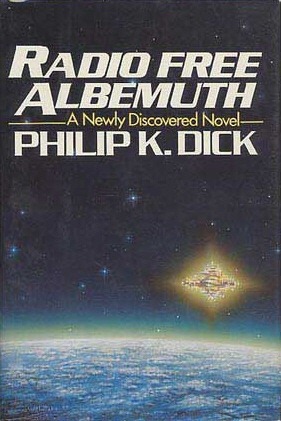
Radio Free Albemuth by Philip K. Dick

I’ve always asked two questions when reading science fiction books.  First, why did the author write it?  Second, why do I want to read it?  The easy answers are usually the author wanted to tell an entertaining story and make some money, and I want to be blown away by an exciting new science fictional idea.  Now that might be true for Neuromancer and Dune, but not for books like Stranger in a Stranger Land or, in this case Radio Free Albemuth.  When science fiction writers write about about religion I can’t help but wonder if they believe their own fiction, or want us to.

Radio_free_albemuth

I actually prefer science fiction with an agenda.  Fun fictional adventures are great for being entertaining, but I love science fiction novels with vision.  During the 1950s I think Heinlein had an agenda for his juvenile books – he wanted to jump start manned space exploration.  Heinlein’s books after 1960 have another intent which I never cared for.  I think Philip K. Dick spent his entire career exploring the same ideas – he wanted to understand what is man and why are we here.

Throughout Radio Free Albemuth, Philip K. Dick defends himself against his reputation as a drug writer, which he blames Harlan Ellison for starting in Dangerous Visions.  But he doesn’t defend himself from his reputation for paranoia and imagining endless crazed explanations for the reality around him.  PKD couldn’t let epistemology and ontology alone – it was two bones he would gnaw at his whole life.  So when I read something like Radio Free Albemuth I must ask:  Did PKD believe in the Gnostic ideas discussed in the book?  If Gnosticism had been the theme of only one book I would have said no, because it does lend itself well to a weird entertaining science fiction plot.  But Dick spent too many books exploring the idea.

If you haven’t read anything biographical about Philip K. Dick and read Radio Free Albemuth it would be easy to dismiss it as a wild idea for a science fiction novel, but Dick had experienced many visions in February and March of 1974 which he could never stop trying to explain, so he wrote several novels about them, and a journal called The Exegesis.  Now people with mental problems will fixate on such ideas, and explore them endlessly trying to make some kind of sense of the confusion they live in.  I can’t help but feel that PKD was mentally ill, but he had the outlet of writing to explore his obsessions, so do we just ignore his ideas as wild science fictional stories, or explore them along with Phil?  Or do we consider his books meta fiction and consider them a study in madness?

John C. Lilly, noted scientist who studied dolphins, went off the deep in when he began using sensory deprivation tanks and hallucinogenic drugs, and wrote a book, Programming and Metaprogramming in the Human Biocomputer, which led to experiences like those found in a Philip K. Dick novel.  If you push the mind, either through physical defect of the brain, stress, deprivation or with drugs, you get to some very far out places.  To me it’s easy enough to write those places off as hallucinations, but I think we should psychoanalyze these communiqués from the deepest part of our minds.  Philip K. Dick was exploring the same territory as saints, mystics, yogis and madmen.

Gnosticism tells us this universe is crazy, but there’s a hidden reality that does make sense.  In Christian Gnosticism Christ was the teacher of this hidden knowledge.  I think PKD really wanted to believe in the hidden knowledge.  I think this world tormented him, and he was desperate to find a rational truth.  This is no different from many religious teachings.  People have a hard time accepting this reality – in fact most are ready to reject it.

Radio Free Albemuth is about two men living in an alternative America ruled by a police state.  They are Nicholas Brady and Philip K. Dick.  Radio Free Albemuth was written before VALIS, but published after Dick’s death.  In VALIS, Phil is the narrator, but the other character is Horselover Fat, which is a weird translation of his own name.  Both books were inspired by the same real world experiences.  Both books deal with hidden knowledge, and Dick’s particular view of Gnosticism.  To me, Radio Free Albemuth has a more traditional story structure, and it’s the book that was made into a movie, which seems to confirm it had the better story structure.  But most people consider VALIS the masterpiece version, and it’s the version collected in the Library of America edition.

I can’t explore the ultimate details of the story without giving away the plot, but let’s just say it’s very hard to tell the science fiction from Christianity in this novel.  Imagine if God talked to you with technology, would you think it’s God or an alien?  Philip K. Dick felt his mystical experiences were real, and wanted to believe they were clues to hidden knowledge, or did he?  In the end, we have to ask, does Phil believe his own far out ideas?  But isn’t that like asking if Christians really believe in Heaven and salvation?  I’d like to think Phil was always just examining these ideas, like the blind figure of justice holding the scales, weighing the issues, but what I like and what really happened is probably unknowable.

Up to now I’ve been exploring how and why PKD wrote Radio Free Albemuth, but I haven’t asked we we should read it.  Should we just be amused by the wild craziness?  I worry that crazy people will find satisfying proof in this book for their own mad ideas, but we can do nothing about that.  How is Radio Free Albemuth any different than Harold Camping predicting the arrival of the rapture on May 21, 2011?  If you call the book just entertainment, it’s not the same thing at all.  But if we accept the idea that Philip K. Dick considered it a legitimate philosophical exploration, we have to wonder if Phil was a crazy prophet too.

I’m afraid that any exploration on metaphysics has to be analyzed as a kind of madness.  And I think most people will just chuckle and say ideas like those PKD explores is just crazy stuff.  Something to be laughed at.  Sadly though, a large percentage of our population will say no, metaphysics is real.  But I say, hey, we need to study people who believe in hidden knowledge and see how such beliefs affect our world and history.  Maybe PKD was saying, I’m mad, and here’s how my madness works, you better study me, but I tend to doubt that.  I tend to think poor Phil worried some of his hallucinations were real.  I say that because I know too many people people who believe their hallucinations are real too.

I’m not sure PKD is a sci-fi writer, but a psy-fi writer.

JWH – 6/22/11

The Moral Landscape by Sam Harris

If we accept that God does not exist, who or what has the authority to define morality?  Sam Harris believes science can take on that job and makes a case for it in his new book The Moral Landscape.

The-Moral-Landscape

The concept is quite ambitious – treat morality like gravity, so its force is universal and applies equally to all.  Morality has always been relative, varying from culture to culture, and from religion to religion.  We are all too aware of this because of the conflict between Christianity and Islam, or even between the Old Testament and the New Testament.  What is right and wrong depends on the number of people backing the moral system.

Harris points out that moral relativism is the politically correct stance in our modern world.  If we discover a primitive culture that practices cannibalism, moral relativists do not want to condemn these different people for a practice we find horrifyingly immoral, and allows that cannibalism is morally right within its social concept.  Sam Harris believes that’s a load of crap, and I agree.

I’m reading The Moral Landscape in a non-fiction book club and the consensus is Sam Harris writing is too abstract and vague to make his case clearly and decisively.  How can moral issues be weighed and measured like chemical reactions?  Harris bases his hypothesis on contrasting the lives of intelligent self-aware beings.  If scientific studies can show that one course of behavior leads to a better life for the individual that can be considered scientific proof of morality.

Harris believes it’s obvious that morality should strive to create the best lives possible.  He goes on to muddle the issue, rightly by the way, that it’s very hard to determine what’s the best for any individual.  But throughout the book he tries to tie in many scientific studies that illuminate human nature.  I do recommend the book, it’s not a hard read, and has many fascinating concepts to consider, just don’t expect it to be conclusive proof of the concept.

I’m not sure science can define morality.  For me there’s always been three areas that define right and wrong:  morality, ethics and law.  Morality requires an authority, and for most of history God or gods decided morality.  Ethics is a consensus by philosophers, and laws are decided by governments.  Each system has its own problems.  Science is a system for exploring reality.  It’s impartial and indifferent.  Good and evil, or right and wrong might not exist in reality to be measured.  Ethics and laws might have to substitute for secular morality.

Looking at physics and chemistry, there is no right and wrong.  If we use biology as the basis for morality, survival of the fittest  is a cold form of morality.  If a lion eats an antelope we can’t call it murder.  As Sam Harris points out, morality can only come into play when we’re dealing with self-aware individuals.  Strangely, our species has created morality, and now tries to expand the concept to other species with the idea of animal rights.  Morality has always been an invention of mankind, he’s just used the concept of God to promote it.

Any scientific discussion of morality will be in the social sciences, an area that hard scientists sneer at for being soft.  In other words, imprecise.

Sam Harris uses female genital mutilation (FGM) as a moral issue to consider.  In some parts of the world female circumcision is a very moral practice, but in the west, we find it outrageously immoral.  Anthropology and sociology can defend the practice, so is such moral relativism an example of scientific morality?  Sam Harris says no.  If something is immoral in one part of the world, it should be equally immoral in another part of the world, and science should be able to prove it.

What Sam Harris shows is morality is tied to religion and people do not want to attack religions.  Religious morality always protects the religion rather than the individual.  He wants a morality that protects the individual.  And if you look at a secular society, it tries to protects the individual.  I don’t know if you can make a science out of that, but look at it this way, if the whole world gives up religion and its customs, will not the word morality mutate into what Sam Harris wants anyway, even without the endorsement of science?

Look at the revolution in Egypt.  Its people seem to want democracy.  Of course, the Muslim Brotherhood wants a theocracy, but what if all these revolutions in Islamic countries is a desire for personal freedoms?  Seeking a political solution is asking the legal system to make a moral decision.  In other words, we’ve been moving towards secular morality for thousands of years.  There’s been a shift in power from gods to humans.  Sam Harris wants science now to provide an impartial stamp of approval, but I’m not sure that’s needed.

JWH – 4/13/11