Leave It to Beaver (1957-1963)

by James Wallace Harris, 7/17/24

Susan and I are watching the entire run of Leave It to Beaver. We’re currently in the sixth and final season, about to finish all 234 episodes. We watch two episodes a night, so that means we’ll complete six years of the original broadcast in 117 days. Back then they had thirty-nine episodes per season.

We’ve watched Jerry Mathers (Beaver) and Tony Dow (Wally) grow up. When the series begun in 1957, Beaver was seven and in second grade. Wally was thirteen in the eighth grade. Six years apart, but six years later, Beaver was in the eighth, but Wally was in the twelfth, four years apart. Evidently, the producers didn’t want Wally going off to college. Mathers and Dow were only three years apart in age in real life. Dow was born in 1945, and Mathers in 1948.

Leave It to Beaver premiered on October 4, 1957, the same day that Sputnik I went into orbit. I had just entered first grade and was five. I don’t remember seeing Leave It to Beaver as a kid in the 1950s. It wasn’t until sometime in the 1960s that I saw an episode, and I didn’t see it often. Susan didn’t watch it as a kid either.

In other words, we’re not watching Leave It to Beaver for nostalgic reasons. I’m not sure why we got hooked on it. We were just looking around for something to watch, and I suggested the show as something pleasant we both might like. Susan doesn’t like shows with violence (although I’ve got her to watch the Fargo series recently). I think I picked Beaver because Susan loved watching Andy Griffith so much.

I do have nostalgic memories of family shows like Make Room for Daddy, Father Knows Best, The Donna Reed Show, The Adventures of Ozzie and Harriet, and My Three Sons from the late 1950s and early 1960s, so it’s odd we picked Leave It to Beaver. We even signed up for Peacock with no ads so we could watch it without ads.

I can’t promise that Leave It to Beaver is one of the greatest TV shows ever. It’s pleasant. We like the actors and characters. The stories are quite simple, very pro-family, very didactic. The stories are also repetitive. For example, there are several episodes about Beaver getting a pet he can’t keep, including an alligator, rat, donkey, and a very ugly monkey. There were many shows where Beaver friends convince him they should all go to school wearing something weird, like a sweatshirt with a horrible monster on it, or show up for a special event not wearing a coat and tie, and Beaver shows up as the gang planned but the others don’t, making him look stupid. Another common plot was for Beaver’s friends to talk him into doing something he shouldn’t.

Most of the episodes had a message. Often it was: When your parents tell you something it is for your own good. But fairly frequently, there were shows about how parents should listen to their kids sometimes, because sometimes their kids knew better.

I remember Leave It to Beaver being about only the kids, sort of like Peanuts. But half the show is about Ward and June. I guess as a kid I just didn’t pay attention to adults, either in real life or on TV.

One of my favorite episodes has Beaver getting in an argument with a bigger kid and uses a cuss word. Of course, the school bell rings when Beaver says the word, but his teacher, Miss Landers, heard what he said. Miss Landers is shocked and sternly informs Beaver he’s in big trouble. Miss Landers tells Beaver to bring a guardian to school to meet with her. Ward is off on a business trip, and Beaver can’t bring himself to tell June what he said, so he convinces Wally to come to school as his guardian. Miss Landers accepts Wally because she doesn’t want Beaver to tell June what he said either.

Even though we time travel back to the 1950s and early 1960s when we watch Leave It to Beaver, it doesn’t feel nostalgic. It feels more archeological. The show just reminds me of how things were so different back then.

I thought I’d find episodes I would remember but I haven’t. The closest any episode felt like I had seen it before was the one when Beaver and Wally play the stock market. I do remember as a kid watching a TV show where the kids learn about the stock market, but I can’t swear it was on Leave It to Beaver. Maybe it was, maybe it wasn’t.

Quite often while watching other old TV shows I’ll tell Susan, “Oh, I’ve seen this one.” But that’s never happened with Beaver. But the intros and closing credit scenes to all six seasons seem burned into my memory, but not the stories themselves. I guess I remember the visuals and not the plots.

It’s weird to watch a show from the first to the last episode. I’ve done that several times now. It’s also kind of painful. Older TV shows depended on every episode being entirely self-contained. This approach leant itself to formulaic scripts, which was true with Leave It to Beaver. I’ve read that Beaver was the first show to have a finale, which was a unique episode. But for the most part, there was a commonality to every other episode.

As far as I can remember every episode featured the staircase. Most featured front or back door meetings, breakfast table meetings, dinner table meetings, doing the dishes together, sitting around the bedroom, living room, or den. For most seasons we saw Ward and June kiss in each episode. That seemed to fall off in the last couple of seasons. All four of the main actors had standard facial expressions and used specific body language in every show.

One thing I remembered wrong was the Eddie Haskell (Ken Osmond) character. I remember him as a juvenile delinquent, the bad boy. But the show portrays him as a sympathetic loser, on the pathetic side, one who tries too hard, has too much ego, and probably has bad parents.

Beaver had very few guest stars, which was what I enjoyed when watching the entire nine years of Perry Mason. However, a few of the actors, like Miss Landers (Sue Randall) I’ve seen on other shows. I saw her on Perry Mason. Of course, Fred Rutherford (Richard Deacon) went on to be Mel on The Dick Van Dyke Show.

Watching old TV shows from the 1950s and 1960s reveals an alternate reality that we all observed back then. The Beaver often mentioned the TV shows that were on when Leave It to Beaver was on the air, even making inside jokes about the competition. And to a degree it makes fun of other pop culture of the 1950s and 1960s. But it was very gentle. I even saw a science fiction magazine a couple of times. I’ve often wondered when science fiction was first mentioned in pop culture.

The show covered the phases of childhood and adolescence that kids were going through back in the 1950s and early 1960s. Leave It to Beaver went off the air in 1963, before the famous Sixties began. This photo meme on Facebook conveys that stark change perfectly.

Watching Leave It to Beaver explores the times before that cultural shift.

JWH
Growing Old with Television

by James Wallace Harris

Don’t you think it rather absurd that we’re conscious beings who have emerged into this fantastic reality for no reason that we can confirm and yet spend so much of our lives watching television and computer screens, which are essentially fake realities? Or look at it another way. They say when you die your whole life flashes in front of you in an instant. How will we feel when we see that a large fraction of our life was staring at a screen?

I’m not saying we shouldn’t watch TV or play on a computer, but I’m just asking if it isn’t weird when the universe around us is so far out that we should? Or maybe television is the most far-out thing this reality has produced?

I belong to the first generation brought up on television, and now we’re the generation that will spend our waning years going out watching TV. I’m 72 and can remember 69 years of screen addiction. Was it worth it? Or was it a lifetime devoted to a false idol?

When I was young, television shows were probably the most common topic of discussion I had with other people, and now that I’m old, that’s become true again. Whenever I get together with people, or talk with them on the phone, we generally always compare what television shows we’ve been watching, and which ones we recommend. Is that true for you and your friends?

Over the years I have found several ways to mark, rule, and remember time. Who was I living with, where was I living (state, city, street, house), what grade or job was I in, who was president, what songs were popular, what books I read, where I went to school or work, and of course, what was popular on TV.

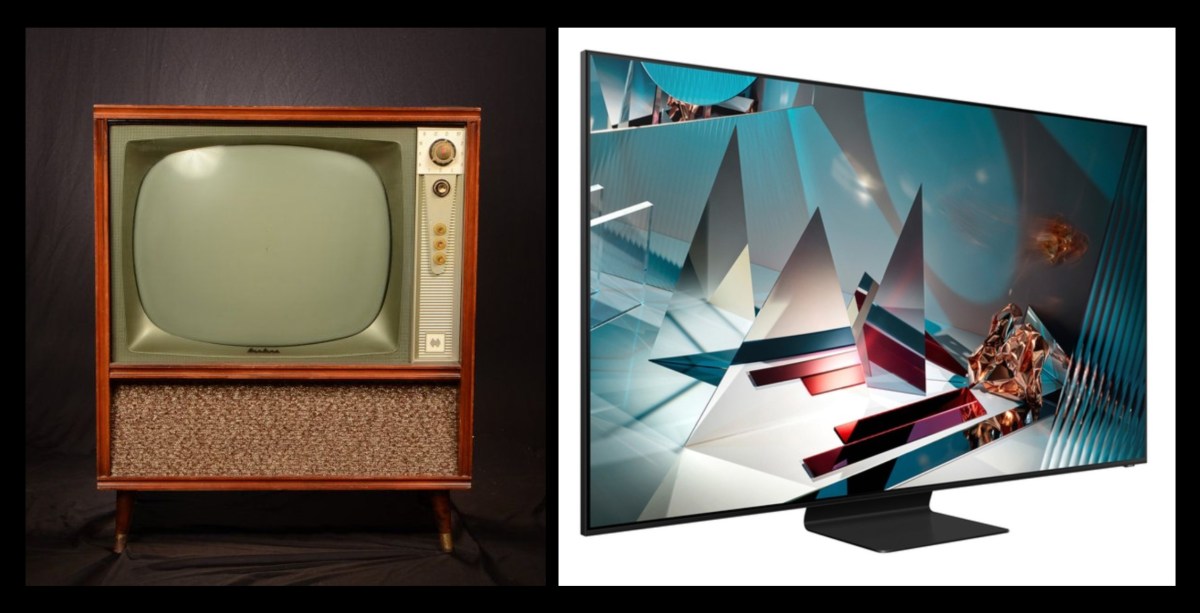
Television has become a time machine because we can now watch shows from any period of our lives. The same is true with music and books, but television has more details that connect us with our past. If I watch an old show from the 1950s it reminds me of what the clothes, cars, houses, furniture, and people looked like back then.

Television is also transgenerational. The other night on Survivor, a few of the young contestants talked about how they loved to watch The Andy Griffith Show. I must wonder if that’s where they get their mental conception of the 1960s. I know I’m getting a mental image of the Nazi occupation of Paris from The New Look on Apple+ TV.

This makes me realize that I have several modes for evaluating reality. I assume the best mode is direct experience. Just above my monitor is a picture window, and outside that window is a tree. Books and magazines give me another view of nature via words. I’ve learned a lot about trees from them. But then, I’ve seen the most variety of trees and landscapes with trees on television. I’ve lived in many states, north, south, east, and west. But I’ve seen more places on TV.

TV is like our sixth sense. However, it can be a sense that looks out on reality like we do with our eyes, or it looks at make believe fantasies, like we do with our inner vision and daydreams.

I probably spend 4-5 hours a day watching TV. During my working years, I believe that number was less. In my childhood I think it was more. I’ve always wondered what life would have been like if I never watched television. I think it would have been more real but duller. I try to imagine what life was like in the 19th century, say as a farmer or factory worker. News about the world at large would come through newspapers and magazines, and it would be much delayed in time.

Now that I’m getting old and wanting to do less, I thought I would be watching more television. We think of television as a babysitter for children, but isn’t that also true for us old folks? However, I’m losing my ability to watch TV for some reason. I can only watch TV series and movies if I’m watching them with other people. Watching them by myself makes me restless. I can watch short things like YouTube videos by myself, but I’m even getting restless watching that stuff too.

I had planned to catch up on a lot of television shows and movies in retirement, but that’s not working out. I’m wondering if this is happening to other people. Does the novelty of television ever wear off?

JWH

Remembering the Sixties in Two Bad Movies

by James Wallace Harris, 10/4/23

I’m always shocked by how much American society has changed since the 1960s when watching movies and television shows from that decade. I graduated high school in 1969.

I’m curious how people born after the 1960s picture it in their mind’s eye. I grew up in the 1960s and remember two versions of that decade. I mostly recall the pop culture 1960s that everyone learns about in history and from the media, but if I think about it, I remember another 1960s, one far more mundane, and quieter. The difference you might say between The Beach Boys in 1963, and The Beatles in 1969.

Over the last two nights, Susan and I watched two movies from the 1960s that reminded me of the less famous version of that decade: Boy, Did I Get a Wrong Number (1966) and Doctor, You’ve Got to Be Kidding (1967). Neither film was particularly good, but I found them both to be fascinating time capsules of that other 1960s.

Someone growing up in the 21st century would probably find both films stupid and even offensive. They would probably wonder where the smartphones, tablets, computers, and social media were, and why no one used certain now universal four-letter words routinely as adjectives, adverbs, and nouns. I’m sure they would think the acting stilted and why people fit into roles, especially gender roles. Those thinking a little deeper would wonder why all the famous 1960s pop culture was missing. But I think the thing that would standout the most, was the attitude both movies presented regarding sex. You’d think people living in the 1960s were Victorians.

Both Boy, Did I Get a Wrong Number and Doctor, You’ve Got to Be Kidding were about sex, but neither showed actual nudity or anyone having sex. Doctor is about Sandra Dee getting pregnant and three boyfriends wanting to marry her. None of the three had had sex with her. And the only reason we know Sandra Dee had sex with her boss, George Hamilton, was because the movie showed fireworks.

Boy is about Bob Hope, a late middle-aged real estate agent getting accidently involved with sexy movie star Elke Sommer, but not really. Elke Sommer plays a French actress famous for making movies where she takes bubble baths. She really wants to do dramatic roles and free herself from tub casting. Ironically, we see her taking several foamed covered baths in this film. 1966 is before they started having nudity in films, but it tries hard to show as much of Elke Sommer as possible. Boy, Did I Get a Wrong Number advocates good old fashion puritanical values while promoting itself with the allusion of sex.

I thought both films were accurate with the clothes, houses, furniture, and cars. The look of the other sixties does come across in these films. Even the lame jokes and goofy dialog gave off the right vibes for the times.

Both films were aimed at the silent majority but tried to appeal to the emerging youth culture. It’s strange how we see counterculture slowly take over Hollywood by watching old movies and television shows from the late 1960s and 1970s. Very few movies in the middle 1960s showed what was happening in the rock world, or counterculture. If they had rock music, it was generic instrumental shit. Hollywood lagged for several years recognizing the social impact of rock.

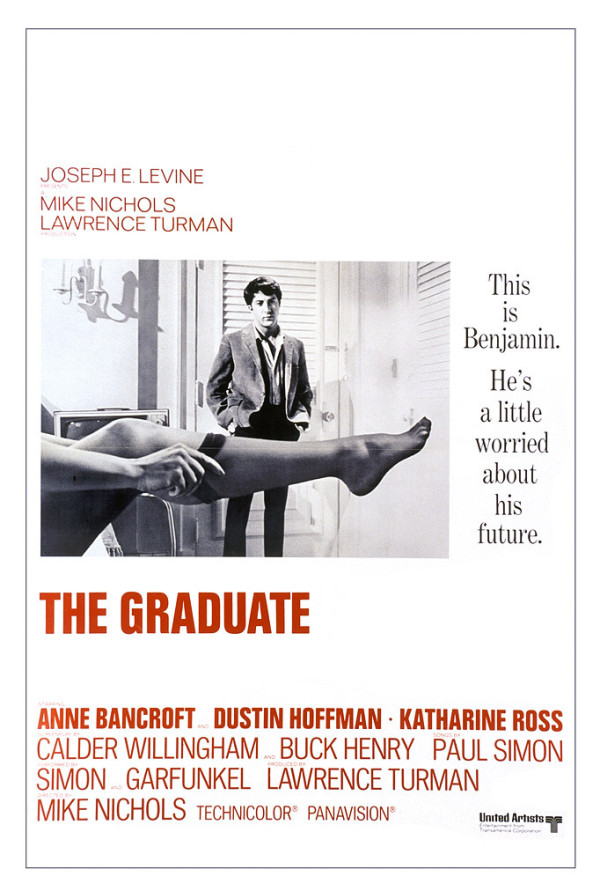
I remember seeing The Graduate in late 1967 and thinking how radical it was. The soundtrack used Simon and Garfunkel. That was tremendously exciting at the time because it felt like my generation was finally being recognized. However, seeing it recently was another shock. It wasn’t that radical at all, not how I remembered feeling it in December 1967. The Graduate was still much closer to that quiet version of the sixties than the infamous loud sixties. I see it now as a transitional film.

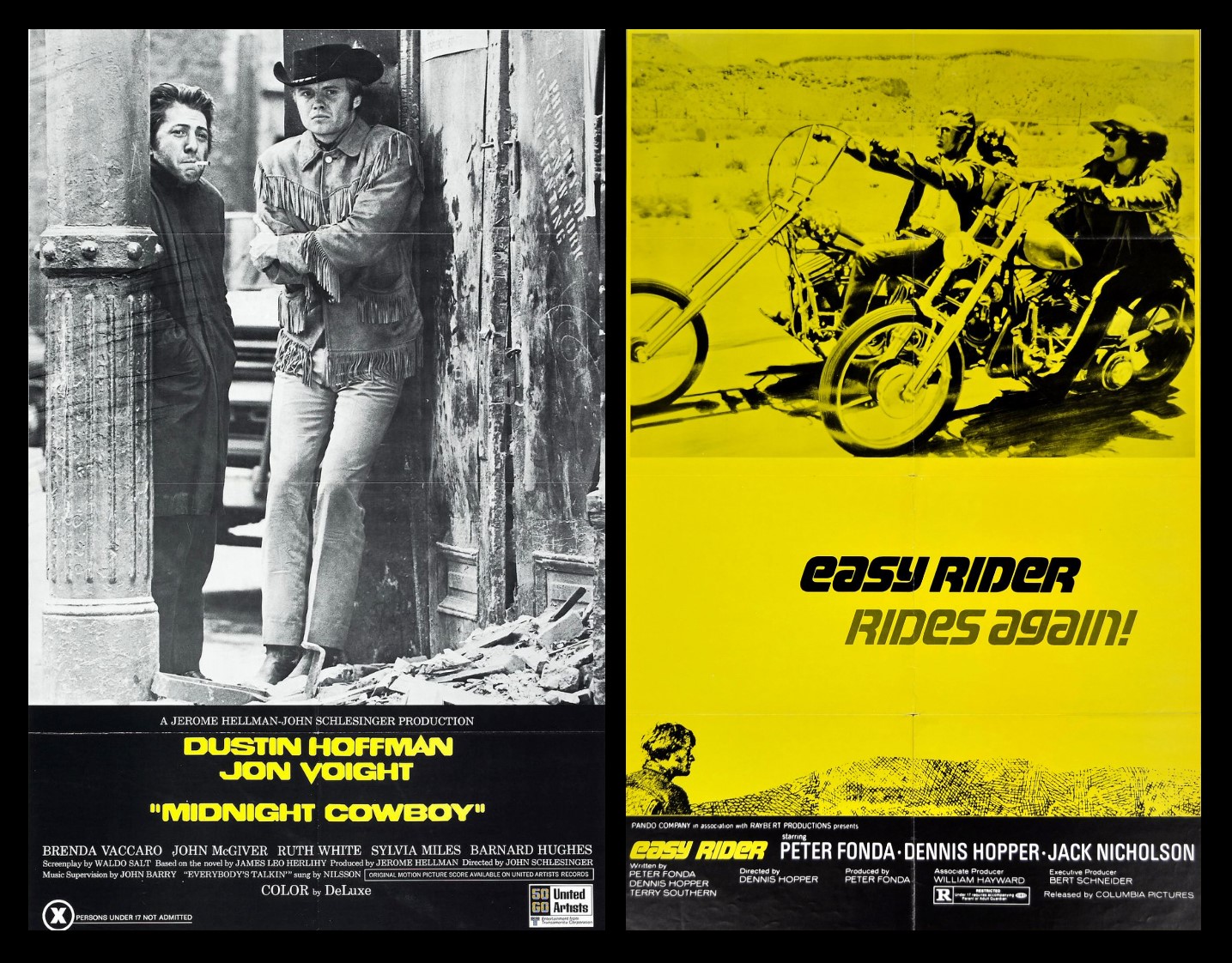
It wasn’t until 1969, with Midnight Cowboy and Easy Rider, that we began to see that notorious version of the 1960s. I remember how shocking both films were when I saw them at the theater. But by then, my personal sixties were closer to those films. But in 1966 and 1967, my life was still like the Bob Hope and Sandra Dee flicks.

Another way to look at it was Hollywood was censored for showing real life for many decades, and finally in the late 1960s changes in the laws allowed it to portray a more real America.

I’m not sure any film captures the times in which they were made. They all create a mythic view. But I need to think about that. Are there any films from the 1960s that come close to how I lived in that decade? Do you have a film, from any decade, that you feel represents something close to how you grew up? I was too young, but I do remember people like the characters in America Graffiti. Actually, I remember people like the Bob Hope and Sandra Dee characters too. Maybe it’s the characters and settings that feel more historical than plots.

JWH

Do You Remember the Childhood of Famous Americans Series of Biographies Written for Children?

by James Wallace Harris, 6/12/23

Over the years, my friend Linda and I have nostalgically recalled a series of books we both read in elementary school. They were biographies aimed at kids, but that’s all we could remember. We both wondered why we never saw them in used bookstores, or libraries, or met other people who fondly recalled them?

These books came up again on Sunday, and I did a Google search and discovered they were books published by Bobbs-Merrill starting in the 1930s. The series was called Childhood of Famous Americans. Linda and I remembered them being blue, but in my search, I found many people remember them as the “orange books.”

Well, this site solved that mystery, claiming there were 220 in the series, and showed photos of how they looked different over the decades. Some of them were orange and others were blue. They also had uniform dust jackets with numbers. Those numbers appealed to me. They made me want to read them all. However, I doubt I read more than 10-12 of them. Linda claims to have read far more, but then she was a much bigger bookworm in elementary school than I was. Linda and I both remember the yellow decoration about the blue book below.

Evidently, this series was intended to provide patriotic reading for young readers. I was already a patriotic little kid when I discovered them. My father was in the Air Force, and we were living on Homestead Air Force Base, and I discovered them in 1962 in the Air Base Elementary. I was in the 5th grade. My teacher was Mr. Granger. He was a WWII vet, who had been in a Japanese prisoner-of-war camp. Mr. Granger had lost a leg in the war and had a wooden one which the class found fascinating. Sometimes Mr. Granger would step on our feet not knowing it, and we all would never let him know. Mr. Granger told the class lots of interesting stories. It would have been interesting to have a biography of Mr. Granger.

I became a bookworm that year. Linda says she became a bookworm in the first grade, but I didn’t discover books until summer school between the third and fourth grades. I was sent there because they thought I couldn’t read. On the first day, the teacher said to pick out a book from a twirling wire rack and I found a kid’s version of Up Periscope. It turns out I could read. They just had never given me anything worth reading before.

In the fourth grade, I slowly started getting into books. I liked nonfiction books about war, planes, dogs, and nature. We moved to Homestead for the 5th grade and I had access to two libraries: the base library and the school library. I loved Homestead Air Force Base Library, and have written about it before. It was while I regularly used these two libraries that I became a bookworm.

The Childhood of Famous Americans was the first book series I got hooked on. They may have caused my lifelong love of biographies, or my biography-loving genes first discovered biographies there.

I remember reading bios of Ben Franklin, John F. Kennedy, Jim Thorpe, George Washington Carver, and I think Betsy Ross that are in the series. I’m pretty sure I read several others but don’t recall specific memories. I also remember reading a biography of Blackjack Pershing then but he doesn’t seem to be in the series, so maybe there were other biography series for kids.

This page at LibraryThing lists 208 books in the series, with links about them, and gives the totals for people owning them in their collection. Few people owned them, but some titles have huge numbers of likes. That suggests there are plenty of people like me and Linda who remember them.

The series ran for a long time, and have been reprinted in paperback, and inspired other series. Some publishers have even tried to restart the series.

I can’t remember any exact details from the books, but reading about them while researching this piece, it seems they were a mixture of fiction and nonfiction. Some writers have called them problematic for both conservatives and liberals. All this book banning is making people overly sensitive about books.

I’ll keep an eye out for Childhood of Famous Americans books at the library bookstore and see if I can find some to read. I wonder if I can document any instances of them that were the seeds of my current philosophy?

Did you read any of the Childhood of Famous Americans books? Leave a memory in the comments.

JWH

How Well Do You and Pop Culture Remember Your Favorite TV Season?

by James Wallace Harris, 8/7/21

I recently joined the Facebook group The History of American Television. It has 73.4 thousand members, and I feel many are Baby Boomers. We were the first generation to grow up with a TV. It’s both remarkable and disturbing how many thousands of hours we’ve spent in front of a cathode ray tube. Television imprinted on us like ducklings to their mother. Now that we’re old, we nostalgically remember TV shows, and some of us even rewatch our childhood favorite series time and again. Everyone I know loves TV, but most stick to the new shows. However, a large percentage of my friends if they don’t occasionally rewatch TV from the past, wistfully remember shows from when they were tykes and teens.

My father (1920-1970) and mother (1916-2007) liked TV but they seldom talked about pop culture from their youth, or tried to reexperience it. And my mother’s mother (1881-1972) never talked about pop culture at all to me, and neither did my father’s mother (1898-1981). My generation, the Baby Boomers seems obsessed with remembering TV shows, movies, albums, books, games, sports – everything they loved growing up. That’s quite evident by all the diverse groups on Facebook devoted to wallowing in Oldie Goldie pop culture.

When the TV History Facebook group began discussing the first TV show they remembered I posted a photo from the show Topper (CBS 1953-55). That was the first television series I remembered watching when I was four or five. Up till then I never met anyone who talked about seeing Topper as a kid. I got 7,300 likes and 746 shares. I was amazed that so many people had the same blast from the past.

Like my peers, I’m hung up on memory and pop culture. Individually, we have personal memories, but collectively we have history. Both kinds of recall tend to forget and distort the past, often rewriting it. I’m old enough that every year is the 50th anniversary of a year I remember living, and the media celebrates with a string of significant anniversaries. For younger people it’s only abstract history. But if a kid today grows up watching Star Trek and digging The Beatles, do they have the same experience we had?

I find it enlightening to challenge my memories. Because of this Facebook group, I struggled to recall everything I could about the TV I watched in the 1966/67 season and compare it to how pop culture remembers those shows today. I was 15 and in the 10th grade. A great deal of real history happened during those months, especially regarding the Vietnam war, but I’m only going to focus only on TV shows.

First, my memories without using Google for help. Here are the shows I remember now and believed I tried to watch every week.

  • Star Trek
  • The Time Tunnel
  • The Girl from U.N.C.L.E.
  • ABC Stage 67

Of course Star Trek has become a cultural phenomenon and I’ve seen all the first season episodes since, some several times. I’ve also read books about the creation and production of the program, meaning my memories have been reinforced. I do have a memory of watching the very first episode of Star Trek when it premiered, and I have vague memories of liking specific first season episodes that existed before I saw the reruns. I think it came on Thursdays.

My memories of The Time Tunnel are vaguer. In recent years I’ve caught a few episodes shown on MeTV, and I remembered seeing them in 1966 but I couldn’t have recalled them before hand.

I’ve never seen The Girl From U.N.C.L.E. again but I remember it starred Stephanie Powers and Noel Harrison, Rex Harrison’s son. I have seen The Man From U.N.C.L.E. in reruns, a show I also loved from that time period, but I find them impossible to watch now. I’d love to see The Girl From U.N.C.L.E. again, but I assume it would be just as stupid to me now.

I can only recall one episode from ABC Stage 67, a musical with Ricky Nelson. I think it was called “Yesterday’s Heroes.” I’ve always had fond memories of that episode and even tracked down a copy of the soundtrack years ago.

That’s not much to remember to believe the 1966-1967 television season was my favorite. I can’t watch Star Trek anymore, but I did love it for many years and watched all the sequel series through Voyager. Star Trek has made a huge impact on pop culture, and even young people today know about it. I’ve had dreams over the years where I’m flipping through the TV channels and find an episode of Star Trek I haven’t seen before. I wake up feeling this tremendous sense of nostalgia, and wanting to watch Star Trek again. When I do I’m always disappointed. It’s never as good as my memories.

Now, using help from Wikipedia’s page for the 1966-1967 television schedule. It triggered countless memories I’ve forgotten. And that makes me wonder just how many memories are still recorded in my brain? I can only access them when triggered with an external clue. Could complete ancient episodes be recorded in my brain?

Sunday: I watched Voyage to the Bottom of the Sea by myself, The Ed Sullivan Show with my family, and then my sister Becky and I would fight with my dad over the final hour. He wanted Bonanza and we wanted The Smothers Brothers Comedy Hour.

Monday: My sister and I would watch The Monkees and I Dream of Jeannie, then I’d watch The Rat Patrol. I’d skip the rest of the evening, but I think my sister and mom watched The Andy Griffiths Show and Family Affair.

Tuesday: I watched The Girl From U.N.C.L.E, and then the family would watch The Red Skelton Hour (which is probably why I don’t remember The Invaders, a show I would have watched), and then my dad watched The Fugitive. The Fugitive bored me then, but a few years ago I bought the complete season on DVD and got into it.

Wednesday: My mom commandeered the first hour with The Virginian, which meant I usually didn’t get to see Lost in Space. I remember the kids at school loved Batman, but I thought it stupid. The family would watch Green Acres and Gomer Pyle. Sometimes I would stay, but mostly I’d go read science fiction. If I came back out I’d watch ABC Stage 67 or I, Spy, shows no one else in my family liked. I, Spy was my favorite show from the 1965-1966 season.

Thursday: I’d hog the TV on Thursday for Star Trek. Me and Becky would sometimes watch F Troop or That Girl. And my parents like The Dean Martin Show.

Friday: I’d watch The Wild Wild West or Tarzan, and then The Time Tunnel, and then 12 O’Clock High, sometimes with my dad, but usually I was by myself with the TV on Friday nights.

Saturday Night: This wasn’t a big night except for Mission Impossible which I think the whole family enjoyed. However, we often skipped it for Saturday Night at the Movies. That’s the show we watched most as a family.

Before I started these memory excavations I assumed I watched TV every night, and caught every episode of my favorite shows. But when I’ve tried to watch these shows again as reruns, DVDs, or streaming, I seldom found episodes I remember, except for Star Trek or The Time Tunnel.

As I squeeze my brain cells I realize I don’t believe now I watched as much television as I thought I did, and I don’t think we had as many regular family viewings. But I’m not sure. I do remember what I watched, and to a much lesser degree, remember who I watched with.

My mother and father were separated for the first half of that TV season, so we couldn’t have had that many family viewings that year. And once they were reunited, and we were all together again, we did watch TV as a foursome like I describe above, but I’m not sure how often. Once I began remembering TV from 1966-1967 season other memories emerged like digging for fishing worms in cow pies.

On the other hand, most of the shows from the 1966-1967 schedule are still being rerun, streamed, or sold on DVD today. Well, except the variety shows, but even clips and compilations from The Ed Sullivan Show and The Smothers Brothers Comedy Hour still show up. Pop culture has a more powerful memory than I do, especially after digitizing it. I could recreate and relive my 1966 days from artifacts off the internet.

These efforts to remember watching television is unearthing all kinds of connected memories. I need to stop here otherwise this blog would turn into a book. But I have one last interesting observation. I no longer like the shows I loved as a kid, but I discovered I now enjoy the shows my parents loved back then. I’ve bought the complete series DVDs of my mother’s favorite show, Perry Mason, and my father’s favorite show, The Fugitive. In the 1960s, both bored the crap out of me. In the 2020s I enjoy them.

JWH