79.5 million had 0 to 10 plays

42.7 million had 11 to 100 plays

30.0 million had 101 to 1,000 plays

 6.4 million had more than 1,000 plays
The report said 45.6 million of that first group got no plays at all, but ten songs in 2023 got one billion plays. This says a lot about pop culture. 86.2% of all those songs got less than one thousand plays. I guess that’s the background radiation of pop culture interest, showing how quickly society forgets.
I wonder if I played any of those songs with less than a one thousand plays during 2023. I wonder if I play a song that no one else played at all in 2023. I wonder how many people also play the same songs I play all the time from my favorite playlist.
When I was young, I wanted to hear the current hit songs and albums, read the latest books, go to the movies that just came out, and talk with my friends about the TV shows which broadcasted last night. Now, in old age, I’m years behind, and make no effort to keep up with current pop culture. I desperately cling to the past, hoping not to forget. I feel like I’m one of the characters at the end of Fahrenheit 451 trying to preserve a book.
My focus in old age is to find the best music, movies, books, and TV shows from all time. The trouble is digging through the mountain of old pop culture artifacts and finding the archeological gems. I work to remember what I love, but also find new loves before they are completely forgotten. I find those new loves by finding people who still remember them.
Of the roughly sixteen million albums that’s been recorded, how many are worth remembering and playing? Even if I played an album a day, and I lived another thirty years, I doubt I could listen to more than ten thousand of those sixteen million albums. There’s too much to remember.
It’s great that streaming services offer us access to all those songs, but they will be forgotten. That’s an immense amount of creative effort that’s disappearing from our collective consciousness. It’s also true for books, movies, and television shows.
How much can a culture remember of its best creative efforts? I once speculated that less than one hundred novels from the 19th century are remembered by the average bookworm. Literary scholars could name more, but I doubt even many English professors could list two hundred novels from the 19th century off the top of their heads.
Lately, I’ve been watching old movies from the 1950s. IMDB says there were 4906 movies made between 1950-1959 in their database, of which 165 were released in theaters. Here’s their list of the 165 in order of popularity. I would guess I’ve seen about 140 of them. But then, I was born in 1951. How many of these movies have been seen by people born after the year 2000? I have a tough time getting friends of my own age to watch old movies from the 1950s with me. However, I’m often surprised by young people on YouTube that have channels devoted to old movies. But what percentage of their age group are they? 0.001?
There’s always a percentage of the population that loves to explore old pop culture. I maintain a database system that identifies the most remembered old science fiction books. I follow people online who specialize in remembering old movies, old music, and old books. Only one of my friends is like me and searches out old books and movies. Is there a word for people like us, who cherish remembering old pop culture? It’s different from plain old nostalgia.
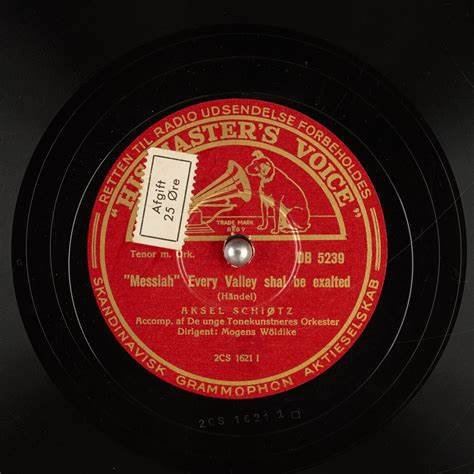
I’m currently reading The Game-Players of Titan by Philip K. Dick that was written in 1963 and published in early 1964. In it, characters from the 22nd century collect old records from the 20th century. I wonder if that will come true. Or will the music from the 20th century just sit on some computer, rarely played even by scholars? In the novel, Dick has his characters agree that a song, “Every Valley” by Aksel Schitz (book spelling) is their favorite vocal recording. I could find this (slightly different spelling):
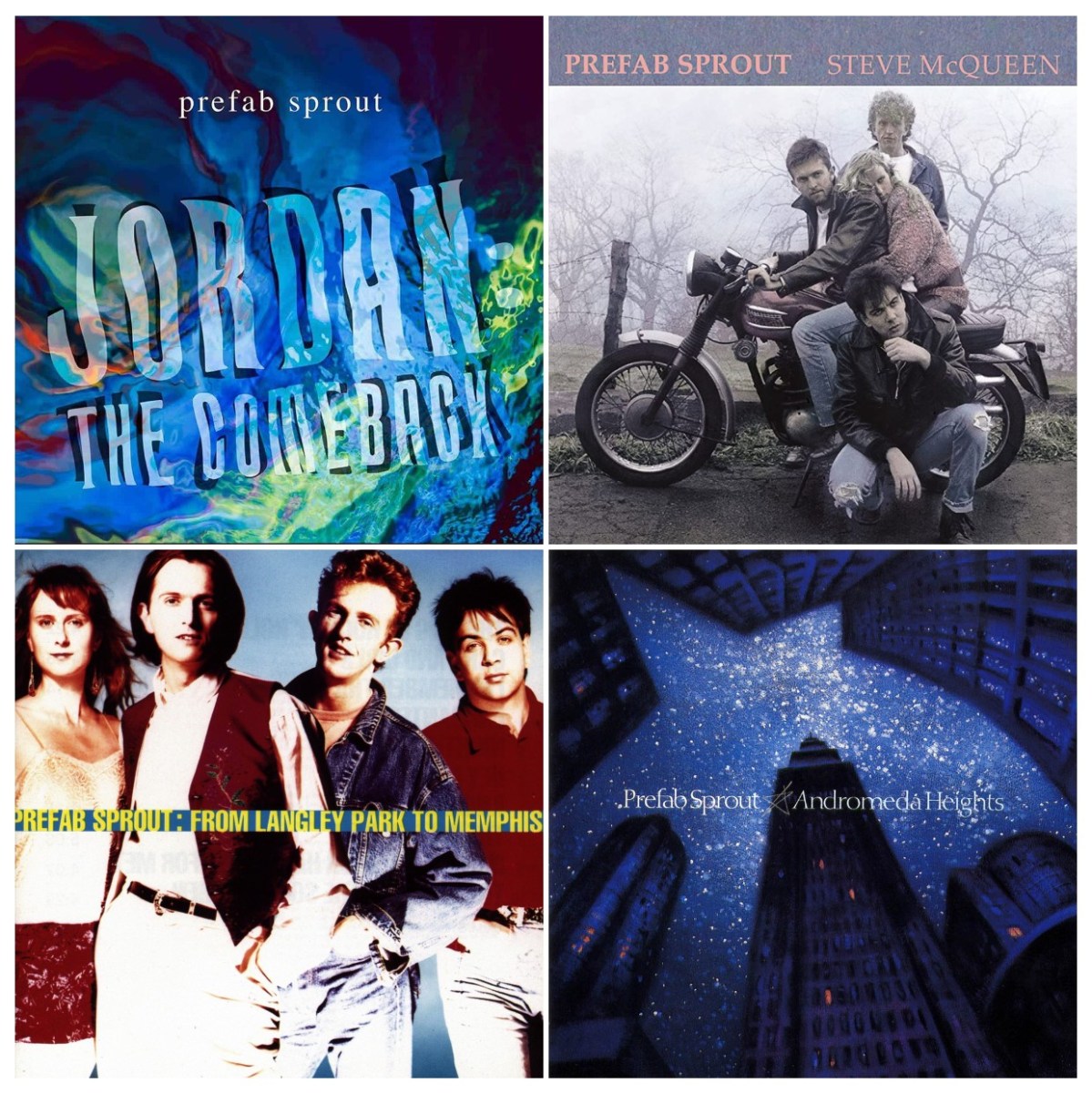
I get very few hits when I write about music, but I’m hoping to find a few old music addicts like me who didn’t discover Prefab Sprout back in the 1980s. Over the decades, I occasionally discover a band I’ll play obsessively for weeks. Well, I discovered Prefab Sprout on John Darko’s YouTube channel a few weeks ago and I’ve been playing them ever since. I started playing them on Spotify and Apple Music, but I loved them so much I’ve been ordering the CDs. I have a feeling I won’t get tired of this band for several more weeks.
It’s hard to put a love of music into words, so just listen below. At first, only a few songs grabbed me, especially the first two on Jordan the Comeback. But as I continued to play the albums more songs became great. This is why streaming music is so great. I can keep trawling the past until I find another band that pushes all my buttons.
There’s a meme challenge going on YouTube over the past couple of weeks for YouTubers who have channels devoted to collecting albums — What are the ten albums you’ve played the most? Some YouTubers take that to mean over their entire lifetime while others choose to interpret it in various other ways. No one seems to be able to answer the question asked, and I won’t be able to either. I’m going to give ten albums I played the most in the 20th century, and four I’ve played the most in this century. But in all honesty, the ten from the past century were played far more than any this century.
This is an almost impossible task. It challenges those who take up the task to push their memories to their limits. It also reveals delusions we have about what we think we know about ourselves. And it shows how we change over time, even when we think we haven’t. And to be completely honest, we fudge on the selection in favor of what we want to be remembered remembering. Even if you aren’t a record collector, try to adapt the task to something you love, and then give an honest answer.
One thing I found startling about watching these videos is how unique and different the lists are. Humans are truly diverse creatures. When I was growing up in the 1960s there were only three TV channels and AM Top 40 radio. It was easy to find other people who like the same TV shows and songs that you did. That’s almost impossible now. Any Top 10 list you make will be as unique as your fingerprints.
I’ve watched several of the videos and so far, I don’t think there’s been any overlap of albums. Isn’t that wild? And several YouTubers listed ten albums I’ve never played, and some listed albums I’ve never even heard of before.
I believe it’s delusional to think we know which albums we’ve played the most if we only go by what feels true. I’m sure people might think “I’ve played that album a million times” it’s obvious that such a statement is hyperbole. I’m not even sure its within reason to say, “I’ve played that song a thousand times,” even though I’ve thought it true about “Like A Rolling Stone” by Bob Dylan.
I doubt anyone has kept a diary of when they played an album and have trusted statistics. But that’s what’s fun about this challenge, trying to analyze a pattern that spans a lifetime. Google tells me there’s been 21,183 days since I started buying records in 1966. I was given a few between 1962 and 1965, but I don’t really remember them. Google also says there were 3,026 weeks, and 58 years in that period. There is no album I’ve played every week, but I’m confident there are albums I played at least once a year. Knowing those numbers will help me verify my memory.
I’ve been buying albums since 1966 and I have owned between 3,000 and 4,000. But making even that guess is psychologically revealing. I do know years ago when I ripped my CDs to MP3s that I ended up with over 1,900 of them. I’ve bought many since. I think I’ve bought around the same number of LPs but that’s only a guess. LP buying was dominant for about twenty years, as compared to thirty-eight years of buying CDs. Until the advent of streaming, I often bought 2-4 new albums a week, and during my LP buying years, I often bought used LPs, so that number was higher.
My record playing habit has always been to search for albums I love, play them over and over for days or weeks, and then burn out on them. However, I’d say less than 1 in 10 albums I bought excited me enough to play them over and over like that. Looking at the numbers, I’m guessing I’ve only loved about three hundred albums out of all those I bought, and of that three hundred, only about 30-50 are ones I like to play all the way through when I play them. That means I need to figure out which ten out of fifty I played the most.
The odds are some of the ten from the 20th century are the actual albums I played the most.
Playing around with numbers, I’m going to set my rule of thumb to thinking any pre-2000 album I played more than fifty times is a possibility, and any post-2000 album I’ve played more than thirty times.
20th Century
I know I’ve told people I’ve played “Like a Rolling Stone” by Bob Dylan at least 1,000 times. That’s only playing it once a day for three years, out of the possible 58 years since I first heard it in July 1965. But if I press my memory hard, I know I never played it daily for three years. And I know I haven’t played it even weekly. But I’ve bought Highway 61 Revisited and Blonde on Blonde twice on vinyl, once on CD, and once on SACD. I’m confident I’ve played those two albums once a year, and more than likely two or more times each year. That means I’ve easily played them more than one hundred times since they came out.
Now it’s easy to pick the next two albums I played the most, since they are both from the 1960s, and I’ve been playing them ever since. In the late 1960s and throughout the 1970s I played Everybody Knows This is Nowhere by Neil Young whenever I needed an emotional boost. It was like cocaine. Playing it just pumped me up, and I played the hell out of it. But I don’t play it much anymore. “Cowgirl in the Sand” is on my standard playlist, so I listen to it regularly.
The Secret Life of J. Eddy Fink by Janis Ian made me a life-long Janis Ian fan. I still play it regularly, and I love hearing the whole album. I even bought it again on vinyl several years ago when I got back into vinyl. (I’ve sold my entire vinyl collection more than once.)
Here’s where the YouTube meme becomes more challenging. My main clue is I’ve had this habit of buying an album and playing it repeatedly until I was tired of it. For many albums that was once. But for some that would be a week or two. In rare exceptions it might be a month. It was always until I found another album, one I had to hear in repeat mode too. I know I used to drive anyone living with me crazy because this habit. All ten of the albums I picked were ones I couldn’t stop listening to for weeks.
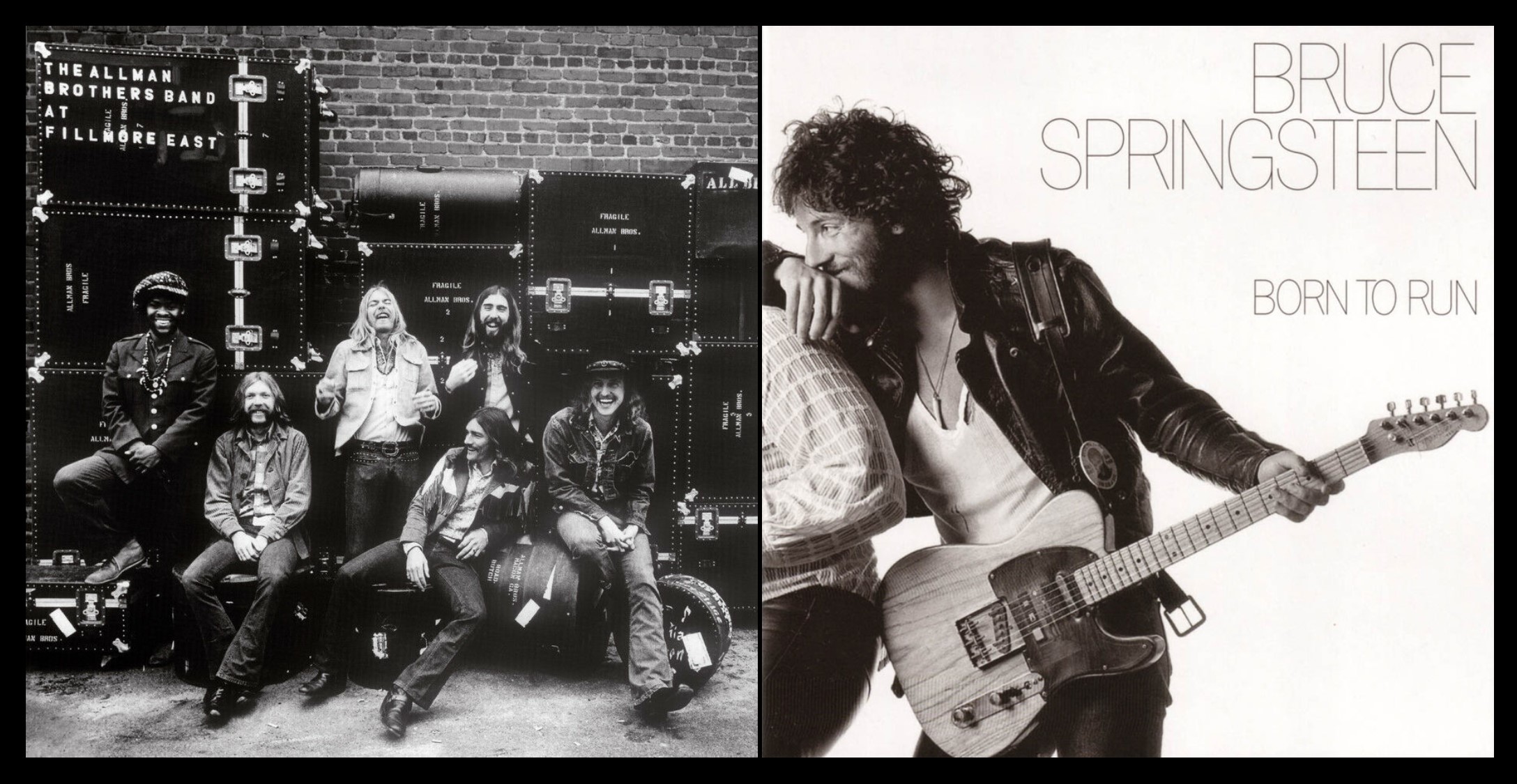
In the 1970s, The Allman Brothers Band at Fillmore East and Born to Run by Bruce Springsteen were those albums I played the most. And I got to see the Allman Brothers live in 1971 before Duane died, and Springsteen live in 1975, during the Born to Run tour. I’m still playing both albums after all these years.
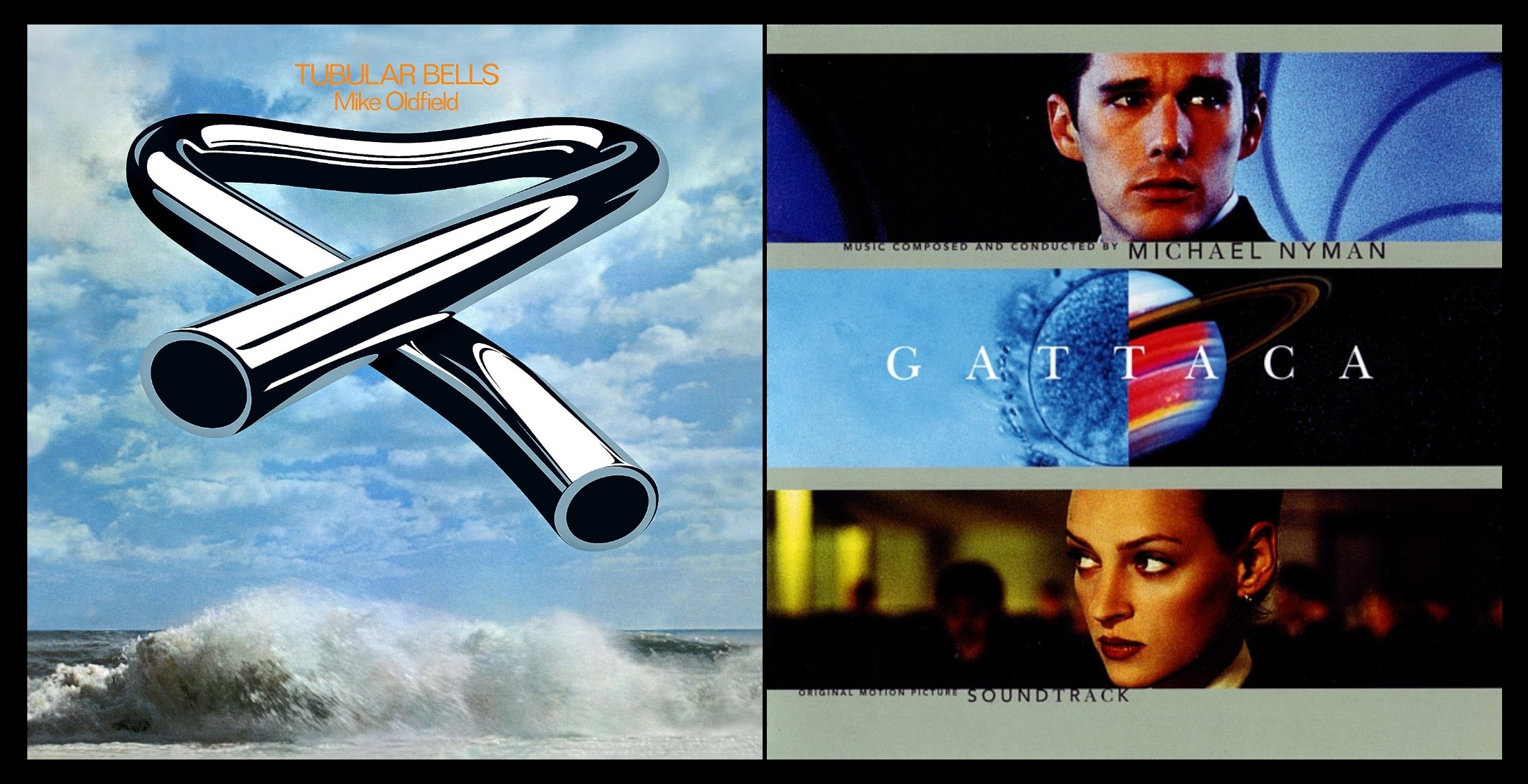
After I burn out on an album I could go weeks, months, or years before I played it again. The best albums would be gotten out again and put on repeat play for a while again. I’m sure I’ve had at least fifty albums I’ve played repeated for weeks. I love soundtrack albums, and Tubular Bells and Gattaca are the ones I’ve played the most, so I’m going to represent all my jazz and soundtrack albums with these two albums.
For most albums I never played them whole but repeated played one or two songs. Boy did I love CDs and having a remote. And streaming made this even easier. I have one Spotify playlist of just songs I love that I put on random play because I love hearing them over and over.
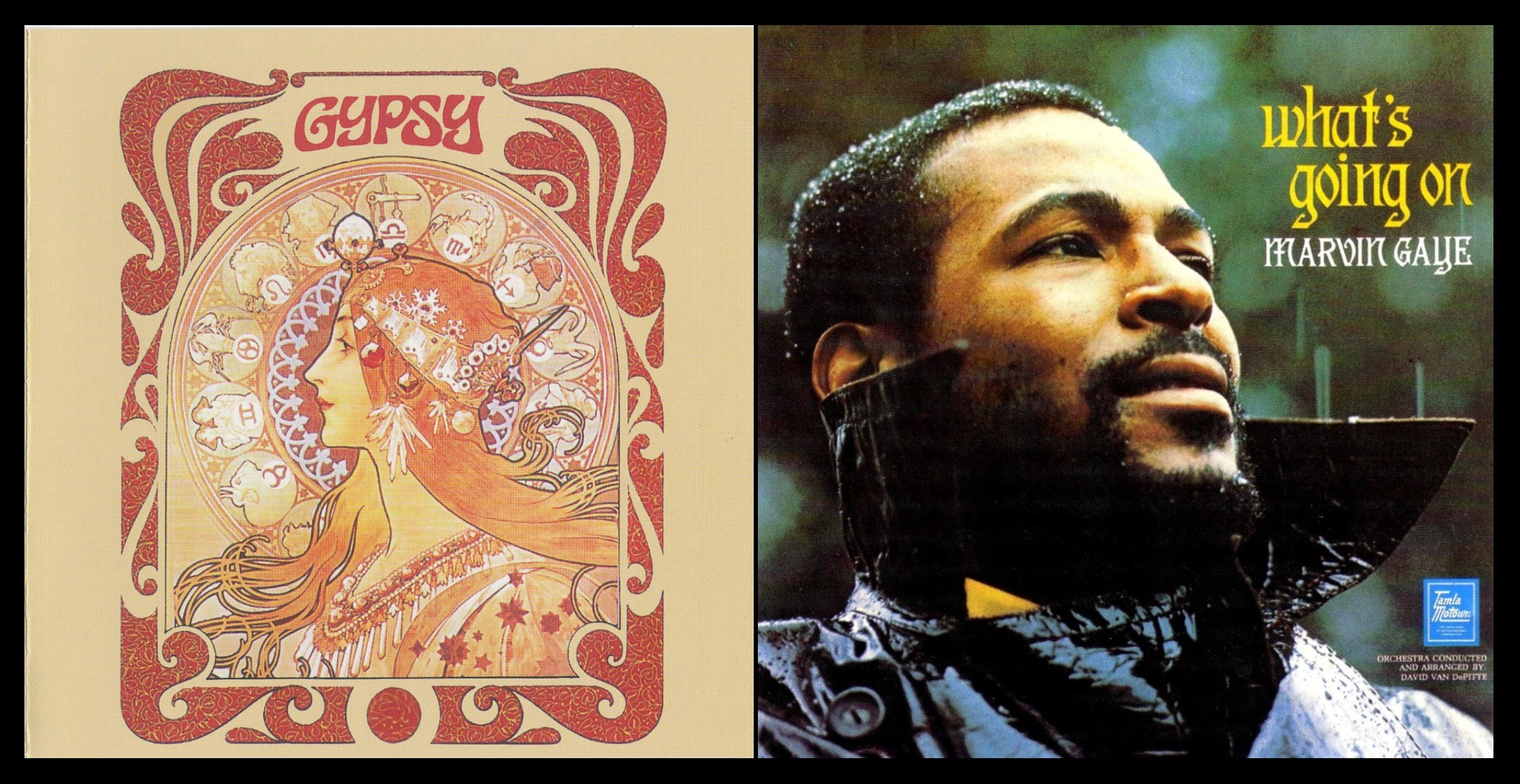
But for the 10 Albums I’ve Played the Most meme I’m pushing my brain to remember only those albums I love playing whole. Gypsy by Gypsy was a double album, but I would play it all the way through almost every time I played it, especially after I got the CD. But to be honest, I only play the first side of What’s Going On by Marvin Gaye — however, that one side is the most perfect side of any album I know.
21st Century
I think many YouTubers didn’t want to tax their memories, so they only pick ten albums they play the most currently or in recent years. I think that’s a cheat. The ten albums I picked for the 20th century are for the fulfillment of the meme. I just can’t let people think I don’t listen to contemporary music. The next four albums are ones I play whole, and over and over since I got them.
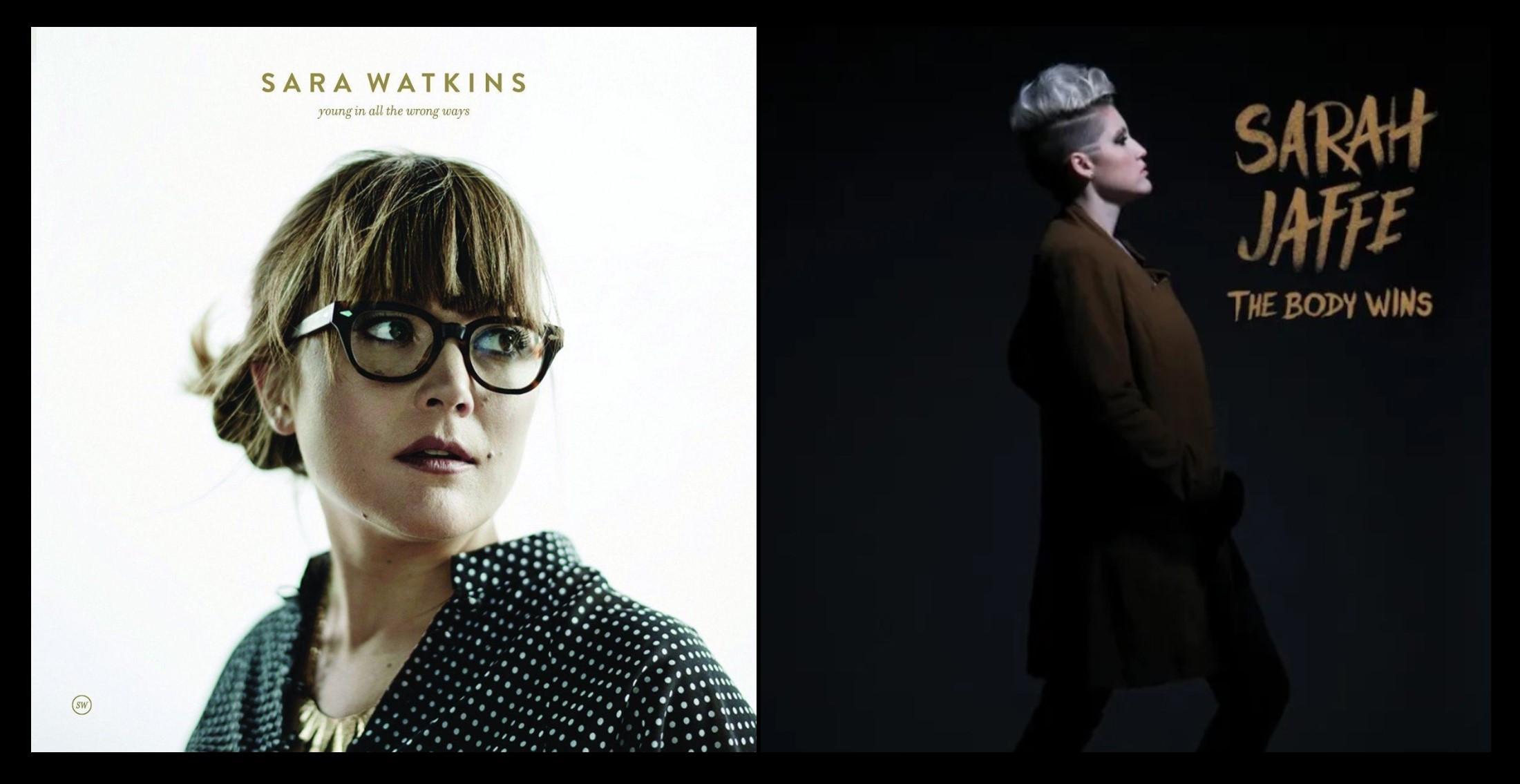
I bought young in all the wrong ways by Sara Watkins on LP a couple of years ago when I was giving vinyl another chance. (I’ve abandoned it yet again.) I loved playing young in all the wrong ways every night when I went to bed. I did this for weeks. I have several albums by Sarah Jaffe, but The Body Knows is the one I play most. I still play both albums regularly.
My new obsession is Kings of Leon, and When You See Yourself is the one, I play the most. I have several of their albums. I just love Adele, but 30 was special. I love to play it loud. Well, I love to play everything very loud. Loud for me is eighty-five decibels.
And most YouTubers were emphatic that they were not picking the Top Ten Best Albums. The meme really is about the albums we play the most. But it’s hard to pick a single album you played the most from artists or groups where you love many of their albums. For this meme, the ten selected don’t necessarily mean they are from my favorite artists or groups either.
I know back in the 1960s I played Bob Dylan, The Byrds, and The Beatles the most. But I stopped playing The Beatles as much since. I’ve had two or three Beatles playing jags in the last 50 years, but I never stopped playing Dylan or The Byrds. However, I don’t think I’ve ever played any Byrds album more than fifty times, but it’s close.
To appease my memory and maybe lie to myself mathematically I’m going to pick albums I’m the most emotionally addicted to, the ones I know I return to the most because they sooth my soul. They are the true album forms of heroin. And this might be the solution many YouTubers chose.
There are individual songs I’ve played more than any album by far. Two, “Fresh Air” and “What About Me” by Quicksilver Messenger Service were on two different albums. And they were the only songs on the albums I liked. So, I hate to use those albums for this meme. I could use a best of compilation, but I would consider that cheating on the game too.
There are albums I’m sure that I’ve played more than fifty times that I don’t want to list in my ten. The first album I bought with my own money mowing lawns was the soundtrack to Our Man Flint with music composed by Jerry Goldsmith. I just don’t listen to it anymore but back when I first bought it, I wore it out.
It’s hard to be honest answering questions like “What are the ten albums you played the most?” Like I said, I guess there are at least forty other albums that I might have played as much. I hate that I shouldn’t mention them, but I’ve already cheated by giving four albums for this century that I played the most.
If you’re curious, here’s my Spotify playlist of songs I play the most.
I feel like Susan and I have too many monthly subscriptions for watching television, listening to music and books, and reading the news. Everything is going digital, and everything requires a subscription. That increasing number of monthly subscriptions is bothering me, but is it really too many, or a problem?
I decided to create a way to measure their value. I looked at the monthly cost versus the total hours Susan and I use each service and then calculated the hourly cost of using each subscription. The results were surprising.
FYI, the hours were calculated by how much each of us used the service. For example, We both watch Acorn TV together for one hour a night, so the total usage was 60 hours for the month. For YouTube TV, Hulu, Peacock, and Netflix, the hours look very large, but it’s because I add both mine and Susan’s together and because Susan has the TV on in the background while she sews.
684 hours a month seems like a lot of digital content. But remember, most of Susan’s TV watching is while she’s working on her sewing. She’s being more productive than me. I only watch TV when the TV is on. There are 730 hours in a month, times two, which equals 1,460 hours. That means Susan and I spend over a third of our time using digital content.
$260.37 isn’t a huge monthly expense at all then when you think about how much we get out of it.
Even though that’s not that much for two people, I don’t want to waste money and I want to reduce our monthly bills. I consider anything under $1 an hour to be a good value. We are getting the most bang for the buck with TV. It’s news that’s more expensive.
It’s obvious I need to cancel my subscription to Apple News+. Having access to over 300 magazines seems like a fantastic bargain for $9.99 a month, but I never get around to reading many magazines — even though there are over a dozen I want to read. If I read magazines 30 minutes a day, that would be 15 hours for the month, or 66 cents an hour – in the value range. I need to either read more or cancel.
Apple News+ offers several newspapers. I could drop The New York Times and The Washington Post. I’d probably spend at least 30 minutes a day reading the news, which would bring the value under a dollar an hour. However, I want to support both the Times and Post as institutions. I need to think about this. Apple News+ is a bargain for news reading, but it’s terrible for supporting individual magazines and newspapers.
Calculating how much news I read each day should tell me just how many newspapers and magazines I should buy each month. If I was completely honest with myself, that would be one magazine and one newspaper. I’d probably settled on The Atlantic and The New York Times. But even then, most of their content would go unread. My eyes have always been bigger than my stomach when it comes to periodicals. I’m currently buying WAY MORE newspapers and magazines than anybody could ever read in a month, much less what I actually read.
I’m currently getting The New York Times for $6 a month because I quit to get an introductory rate, but when it goes back to $25 a month I don’t think it’s going to be a reasonable value.
We could probably slash that $260 bill for subscriptions. But seeing these expenses laid out like this is quite revealing. Susan and I hardly ever eat out anymore, and we stopped going to the movies, so this pretty much is our entire entertainment/education budget. It’s not that big, especially when you think it’s just $130 apiece.
I’ve been playing The Beatles all this week and I noticed something that has me thinking about it a lot. The first two Beatles albums Please Please Me and With the Beatles came out in 1963 in the United Kingdom but I didn’t hear them until after February 9, 1964, when The Beatles appeared on the Ed Sullivan Show. Obviously, some Americans heard Fab Four songs before then because there were mobs at the airport and 73 million people watched Ed’s show that night.
When do you remember first hearing the Beatles? I got interested in those dates because I was going to write an essay about what I remembered about The Beatles from 1964, but it bothered me I was recalling my 1964 but the tunes were from 1962 and 1963. America and England were out of sync by over a year.
Why hadn’t I heard the Beatles on the radio in 1963? Starting in 1962, I listened to Top 40 music several hours a day on WQAM and WFUN AM radio stations in Miami, so I should have heard The Beatles’ songs if they were released. I just don’t remember hearing them at all in 1963.
“Love Me Do/P.S. I Love You” was released in England on October 5, 1962, but not until April 24, 1964, in the U.S., when it reached #1 on the Billboard Hot 100 chart. Beatlemania could have started in late 1962, or early 1963 — why didn’t it?
“Please Please Me/From Me To You” was the Beatles’ 2nd single in England, released on January 11, 1963. It reached #1 on the New Music Express and Melody Maker charts. “Please Please Me/Ask Me Why” was the first Beatles single released in the United States on February 25, 1963, but failed to chart. Some radio stations around the country played this single but it got no screaming fans and was forgotten. “Please Please Me” reached #35 in Chicago on March 8 on their local charts, and again on March 15, but disappeared after that.
“Please Please Me/From Me To You” was re-released in the U.S. on January 3, 1964, and made it to #3 on Billboard. Again, it was obvious that Americans loved the Beatles, but why did we wait until 1964 to love them? This makes me want to write an alternate history science fiction story about Beatlemania hitting America during Christmas of 1962. And it can’t be all Capitol’s fault.
Three more singles by the Beatles were released in the U.K. in 1963: “From Me To You/Thank You Girl” on 4/11/63, “She Loves You/I’ll Get You” on 8/23/63, and “I Want To Hold Your Hand/This” on 11/29/63. Did Americans visiting England bring back these singles and albums? Weren’t there any word-of-mouth from the jet setters?
According to Wikipedia, 34 songs were recorded by the Beatles in 1962 and 1963. Capitol turned down the opportunity to put them out, and a little label, Vee-Jay snapped up the rights. Vee-Jay planned to release Introducing… The Beatles, a repackaged of the UK album Please Please Me in July of 1963, but Vee-Jay didn’t get it out until January 10, 1964. Then Beatlemania hit and Capitol took back the rights.
Theoretically, I could have heard some of the Beatles songs in 1963 on WQAM or WFUN in Miami, but I don’t think so. What if Beatlemania had arrived a year earlier? Would that have launched The Sixties sooner? The 1960s up until the assassination of John F. Kennedy on November 22, 1963, never felt like the legendary times we call The Sixties. 1960 to 1963 felt like the 1950s.
The Sixties, at least to me, began when The Beatles appeared on Ed Sullivan. Seeing them that night felt like Dorothy opening the door in The Wizard of Oz when the film went from black and white to Technicolor. The magic of the Sixties ended for me with Charles Manson and Altamont. In 1970, The Beatles broke up, my father died, and I moved from Miami to Memphis. That’s when I felt The Seventies began.
I was going to write an essay comparing The Beatles’ first two albums against their competition. In America, our first two Beatles albums in 1964 were a mixture of songs from the UK 1963 albums and 1962-1963 singles plus some cuts from the third and fourth British Beatles albums recorded in 1964. It’s all rather confusing if I wanted to understand music as a product of its times.
Here’s an overview of what The Beatles were doing in 1963. As they were writing those songs, or doing covers of American songs, it was 1963. But they made a social and psychological impact on us in 1964. That delay fascinates me.
This week I played all the Beatles albums from Please Please Me (UK 1963) to The Beatles (White Album) (UK/US 1968). I can play all the albums through Sgt. Pepper’s Lonely Hearts Club Band (1967) over and over and did this week. All the songs appeal to me. Each album was a unique masterpiece. Things completely fell apart with The Beatles (White Album). (George Martin and others thought it should have been a single album. I agree completely. The White album feels like a single album with a bunch of outtakes and demos.)
Even though I loved all those Beatles albums through 1967, I’ve only put a few of their songs on my Top 1000 playlist on Spotify. I’ve been wondering why for a long time. I want to compare The Beatles’ songs to the hits that came out at the same time that I love better. But when I saw the dates when the first two albums came out were from 1963, I wondered if should I compare those songs to songs coming out in 1964 when I first heard those Beatles songs, or to songs that were coming out in 1963 when The Beatles recorded their songs?
As I listened to the Beatles’ albums this week it was obvious with each album John, Paul, George, and Ringo progressed in creative sophistication. But then so did pop hits each year. In America, those 1964 Beatles releases stomped the 1964 American releases. But shouldn’t they be compared to 1963 songs?
Finally, could I have heard some Beatles songs in 1963 and they just made no impact on me? Did it take Beatlesmania to get us to love The Beatles? And could the reason I put so few of their songs on my Top 1000 playlist is because Beatlesmania and The Sixties ended in 1969?




 Auxiliary Memory