Why We Can’t Trust Subscription Music Services Like Rdio, Rhapsody, Spotify, MOG, etc.

In the post-CD world of music, the challenge is to keep our favorite songs forever even though we have nothing physical to hold and protect.  If your computer crashes or you lose your smart phone, can you recover all your favorite songs you’ve bought over the years?  (Or stolen.)

Digital music is in a total state of chaos.  I have songs in Windows Media Play, iTunes, Google Music, Amazon Cloud Player, iTunes Music Match and I have rights to listen to albums in Rdio, Rhapsody and Spotify, plus I own about 1500+ CDs.  No one site can play all the songs.

My favorite way to listen to music is via Rdio.  Rdio plays on all my computers at home and work.  It plays on my iPod touch, iPad 2, and it plays on my TV/stereo through a Roku box.  However, it doesn’t play all the albums I own, nor out-of-print albums, but it does play millions and millions of songs, so for 90% of what I want it’s excellent.  However, for those favorite songs it doesn’t have, it ruins the whole concept of subscription music.

For example, one of my favorite albums is No Guru No Method No Teacher by Van Morrison.  It’s now out-of-print, and I recently discovered that  when the song “Thanks for the Information” disappeared from my Songs Rated 10 playlist.  I thought I had it on CD, but evidently not.  I did have it on LP, but I got rid of my LPs years ago.

I probably didn’t get it on CD because it was on Rhapsody and Rdio and I got used to it being there, and thought it would always be there.  I was wrong, it’s been pulled.  I just ordered a used copy on Amazon for $10.25 + $2.98 shipping.  I’m sure I could have gone and found a stolen copy, but I’m not into that.  Once I get it I can rip it and put the songs on Amazon and Google.  I’m not renewing iTunes Music Match.

The problem is my favorite way to play my favorite songs is via playlists on Rdio.  Over time some songs disappear from subscription music services because the album goes out-of-print.  I HATE THAT!  I’ve been trusting subscription music services for years, and slowly it’s becoming obvious that if you really love a song and want to play it for the rest of your life you have to buy it.

But buying digital songs is iffy.  I’m trusting Amazon to always preserve the songs I buy from them – but what if Amazon goes out of business or gives up on Amazon Cloud Player?  How long will Amazon, iTunes and Google back up music if you buy it from them?  And what if they don’t sell the songs you want?

I should consider the CD as my master copy for life, but the CD format might not last that much longer.  Is the MP3 any kind of real archival medium?

Because music goes out-of-print and gets removed from Rdio and Rhapsody I’m going to have to change the way I listen to music.   I might need to move my playlists to Amazon Cloud Player (and maybe Google Music) and then use Rdio and Rhapsody as tools to discover music.  When I find a great song I want to listen to the rest of my life, I’m going to have to buy it and put it on Amazon Cloud Player.  I’m paying Amazon $20 a year to store the 20,000 songs I own so I can play them from all my computers and mobile devices.

Or I could stick with Rdio and just let out-of-print songs become forgotten songs.  I wish there was a way to upload out-of-print songs I own to Rdio so I could keep all my songs in one library.  Rdio is far superior to Amazon Cloud Player for managing playlists.  I can’t even find a way to delete a playlist on Amazon Cloud Player.

Why can’t I have all my music in one place where I can play it from all my devices?  Life was so much simpler when I had LPs and all the music I owned was on one bookshelf.  But back in those nostalgic times, I could only play that music in one place.  Now I can play my music anywhere, if I can keep up with all my song files.

JWH – 10/28/12
Pop Music versus Classical Music

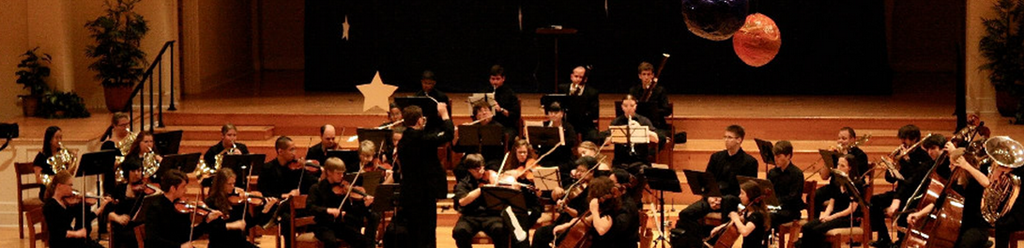
Growing up in the 1960s I was programmed to love rock music by AM radios.  I never developed an ear for classical music.  Last night, three lady friends and I, attended the opening performance for this season of the Memphis Repertory Orchestra.  I tried hard to get into the music.  It’s not that I hated what I heard, it was  enjoyable, even fascinating, but I didn’t get the emotional response from that music that I do from pop music.  I’m trying to figure out why.

I thought the performances last night were very good, and plan to attend again.  I’m intrigued once again with classical music.

memphis-repertory-orchestra 

The last performance, “Les Preludes” by Franz Liszt, was my favorite of the evening.  I got into it. I could close my eyes and forget my body, and let my mind flow with the music, and it was fairly exciting, going through a range of sounds that often evoked comparisons to real world sounds, like sheets of rain, or movie soundtrack imagery, like a city coming alive in the morning.  But even though the music was pleasant and thought provoking, it didn’t push any of my emotional buttons like I’m used with rock music.  Why?

I’m not blaming classical music here, I’m blaming me.  After reading The Mind’s Eye by Oliver Sacks, I’m all too well aware of my perceptual limitations.  This is a brain issue.  I know other people find this kind of music deeply moving and emotional.  Somehow my upbringing has made me colorblind to classical music.

Pop songs are short, usually have a strong backbeat that you can dance to, and they have a hook, a catchy phrase or melody that’s repeated.  The emotional mood of a pop song is usually singular, although there’s a few famous examples, like “Hey, Jude,” “A Day in the Life” and “Stairway to Heaven” that change moods in mid-song.  Pieces performed last night constantly shifted gears, and only rarely, did a short sequence push one of my buttons.  The second soprano, at one point sang a snippet of verses, that I wished someone would make into a whole pop song.

I would guess that fans of classic music must find pop hits musically terse and boring, if not monomelodic.  Symphony music is obviously polymelodic.

Classical music is like a long speech and sometimes I’m moved by a few catchy phrases here and there, but for the most part I’m indifferent to most of what’s being said.  It’s like listening to a foreign language speaker and occasionally hearing a word I know.

Classical music pieces are like novels with many scenes and pop songs are like short poems that hit you hard with one epiphany.

I would say a symphonic composition is like listening to an entire album of songs that must be perceived as a wholeness.  Parts of a classical composition that thrills me often lasts for just a few bars, sometimes only one, and never the 3 minutes common to a pop song.

Obviously, to appreciate classical music requires a different mindset.  I assume I am just too poorly educated to appreciate classical music, both in its technical nature, and in the training of my ear for listening enjoyment.  I also assume if I worked at it, I could learn to love classical music.  I should be embarrassed to admit this, but even pop fluff like Katy Perry or Ke$ha are thousands of times more exciting to me than any classical piece I’ve ever heard, and Bob Dylan is so far beyond them, that I’m in a different world.

My musical upbringing made me primarily attuned to the sound of the guitar, bass, and drums, and secondarily to organ and piano.  Later on I picked up a feel for the saxophone, mandolin, banjo, steel guitar, fiddle, trumpet and other instruments as folk, country and jazz influenced rock.  Eventually I worked backward in time through jazz and big band eras and acquired a taste for their sounds.  I have always liked symphonic music when it was played as movie soundtracks, but I’ve never been able to feel for music written before the 1920s.

To be completely honest, I’ve never learned to love jazz and big band like I do rock and pop, but I have learned to crave their sounds, to hunger for the feelings their tunes pull out of me.  Maybe one day I’ll be able to say I’m in the mood for a classical piece.

When I say feel for music, I mean, it makes me high.  It stimulates my emotions.  I crave it like a drug.  So far, classical music doesn’t get me high.

Classical music was a lot more popular in its day, but I’m not sure if it the common folk often hummed its tunes.  Few people got to hear Mozart’s compositions in his day, unless it was in church.  Folk music was probably more popular, or music from taverns and dances.

I’m mostly a self-educated person, even though I have a college degree.  I’ve read books about other places and times where the main characters were cultured, very well educated and spoke beautifully of the emotional depth of classical music pieces they loved.  That has often inspired me to buy classical music, but it just never worked.  I never felt what the characters described.  I’ve bought two separate recordings of Glenn Gould’s Goldberg Variations, decades apart, because of the powerful written descriptions I’ve read about his performances.  Each time I was painfully disappointed.  I could sense their intellectual achievement but they were cold and passionless to me.  Simone Dinnerstein warmed up the Goldberg Variations quite a bit, but not enough to make them hit songs with me.  Maybe Roy Bittan should give them a go.

I know classical music offers greatness, I just can’t perceive it.  Over the decades I keep trying.  I’ve bought a couple dozen classical CD sets over the years trying to perceptually break on through to the other side.  Haven’t made it yet.  Last night performance encourages me to keep trying.

I went with three women to the performance last night, Ann and Anne, and Robyn, a woman who teaches and performs classical music.  I grilled her for information, and I asked her about her tastes in pop music.  I got the feeling she doesn’t share my passion for rock and pop that I do.  Were we each conditioned to like only what we grew up listening to?  Is it genetic?  I wished I could have telepathically tuned into the heads of my three companions to see how they each perceived the performances.  Just how different are our inner worlds?  Are classical and pop music such distant lands that they are each alien landscapes to the other?  Are classical music lovers mentally different from me?

Of course, we all have our own unique collection of passions.  I am never moved to yell or high-five a friend over a football play on television.  I absolute love Breaking Bad, a television show my wife feels only psychopaths could embrace.  My friend Peggy thinks about dancing the bop or shag all the time, but I’m never moved to get up and boogie.  My wife and her family are mesmerized by golf games on TV, while I sit around wonder where’s the Kool-Aid I should have drank to feel such happiness.

Maybe I’ll never love classical music, but I’ll keep trying. 

I do worry that learning to love classical might change the way I love rock.  Does it work that way?

JWH – 9/2/12

Make Your First Song Count!!!

Listeners of Rdio, Spotify, Rhapsody, MOG and other subscription music services get to hear hundreds of new albums every Tuesday.  I’ve already tried six or seven new albums while eating my morning Quaker Squares.  I use Rdio, and on Tuesday when new albums are released I hit the New Releases button and see a scrolling parading of new albums marching by, in rows of five at a time.  I roll the wheel on my mouse and they just keep on coming, row after row, of new albums.  I don’t have time to listen to them all, or even a tiny fraction of them.  I just have to click the mouse to play – almost no effort at all.  What’s hard is finding a song that makes me want to play the whole album.

New-releases

Now here’s the thing:  The first song is everything.  If you don’t grab me with the first song I just click on another album.

In the old days, when we bought LPs or CDs at the store, often we bought them because it already had a hit song on it, or it was a band we liked.  Spending the money on an album meant you were willing to take the time to listen to all the songs, and the song order didn’t matter.  I’m just not willing to spend time on whole albums anymore when I have access to so many.

I’m quite anxious to give an unknown album a chance, especially if it has a cool cover, clever title, or interesting band name.  Those are the initial impressions that catch my eye.  Those three factors decide whether I hit the Play button.  What keeps me playing is my impression of that first song.  If I like the first song, even moderately, and especially if I think it’s new and different in a creative way, or has a distinctive vocalist, or addictive music, I’ll play the whole album hoping to find a great song.  That’s what I’m looking for, a great song I’ll add to my playlists.

It’s obvious most of the time when I don’t like a song.  What’s disappointing is to play a new album and the first song sounds good, but feels like too many other good songs.  I’ll agonize awhile, hoping the music will get beyond the cliché, but all too often I give these songs the hook as fast the the songs I immediately dislike.  When you’re wadding through 17 million songs you just don’t have time to waste.

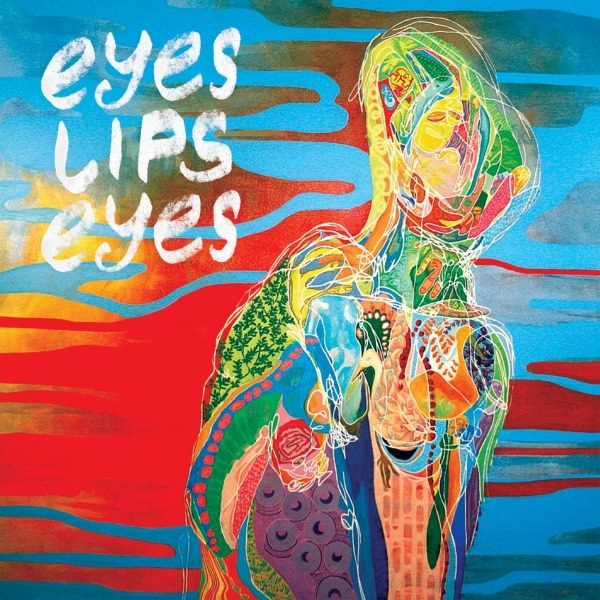
Tonight, for instance the song “Tickle” from What You Want by Eyes Lips Eyes started off with a nice instrumental that grabbed me, so I added it to my Under Consideration playlist.  It’s not great, but it showed enough promise to listen to more.

I liked “Tickle” enough to try all four songs from the EP.  It’s growing on me.  But I’ve got to admit if any of the other three songs had been first, I’d would have gone on to the next album.

eyes-lips-eyes

The next album to catch my attention was another EP of five songs, The Colour Age by Red Ink.  “Empty Town” had a nice 80s pop feel too it, and I liked the vocalist.  I almost didn’t give it a try because the cover is bland, the title dull and the group name gives off a negative vibe, but I did, and it’s a decent album.  I like all the songs, but don’t know if any merit going on a playlist, although “Promise” had a nice emotional feel to the vocal.  I added the album to my Collection, and put it the Queue to play again later.  [I did add it to my main playlist. “Promise” should have been cut 1.]

red-ink

Now, “Cheek Mountain” piqued my musical taste buds immediately.  It’s from a group Cheek Mountain Thief with a self-titled album.  I liked the first song enough to put the album in my Queue to play later as background music.  The songs are on the moody side, so I need a moody moment to give it a good listening.  But that first song earned it a further play.

cheek-mountain-thief

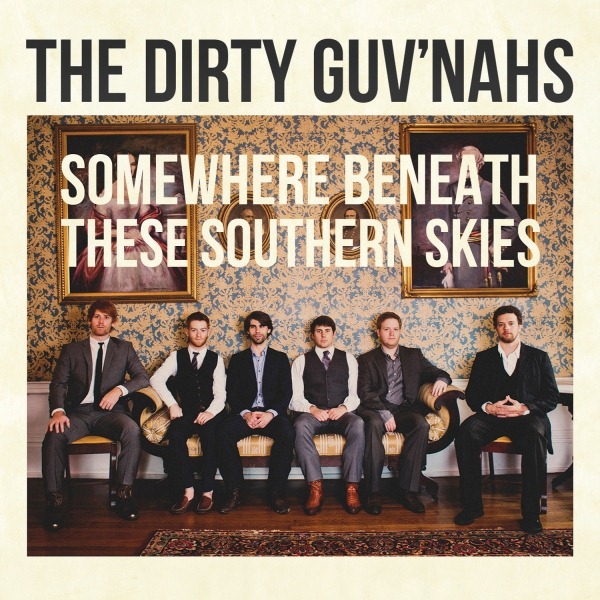
How could I not play an album by a group named The Dirty Gov’nahs?  And I liked the title too, Somewhere Beneath These Southern Skies.  The first song, “Can You Feel It” grabbed me.  The music and vocals reminded me a bit of Kings of Leon.  The first song got the album on the Queue for playing later, but the opening guitar of the second song, “Don’t Give Up On Me” got the album added to my Collection.  Playing on through album makes me wonder if I like it well enough to buy a CD copy.  It has a big rock sound, not quite old Southern Rock, maybe a bit like later Rolling Stones kind of beat.

The Dirty Guv’nahs are the kind of band I like discovering on subscription music.  So far the album only has 482 plays, but it sounds good enough to expect it will catch a lot more attention.  I put “Temptation” on my main playlist.

dirty-govnahs

The vocals of The Dahls grabbed me right away for “Josephine,” the first song on their album midnight picnic.  Country music with a twinge of folk, or maybe vice versa, with a dash of witchy music.  These two girl singers sound nice enough to add their album to the play later Queue.

The-Dahls

Now this is just five albums to play after scrolling past over a hundred albums attempting to catch my attention.  It’s work to find an album I’m willing to listen to all the way through.  And the odds are I won’t keep playing these albums.  I only find about one album a month that I really love.  The best I’ve found in the last couple months has been Our Version of Events by Emeli Sandé.

emili-sandi

JWH – 8/14/12

How To Pay for Music?

David Lowery, of Camper Van Beethoven and Cracker wrote “Letter to Emily White at NPR All Thing Songs Consider” last week that got a lot of attention on the net.  The post currently has 533 comments, many of which try to justify stealing music with various self-serving excuses, even after Lowry carefully explained why stealing music is hurting musicians.  Emily White had written “I Never Owned Any Music To Begin With” at NPR Music, confessing how she has 11,000 songs on her iPod but never bought more than 15 CDs in her life.  Emily loves music and wants to work in the music business, but confesses she doesn’t pay for music.  There are some fascinating comments for this blog post that’s well worth reading, but basically it comes down to telling hundreds of stories about why people don’t pay for music.

If all these people had their weekly paychecks stolen I wonder if they’d be so willing to admit to stealing other people’s pay?

Is there a solution to this problem?

In another post Lowery shows how it’s quicker to find music at iTunes and Amazon than to find copies to steal, disproving that people steal because it’s convenient.  People steal music because they don’t want to pay.  Lowery also showed that more music is available for sale than to steal, but that doesn’t seem to sway people either.  Most folks just flat out just don’t want to buy music anymore.

Is there anything the record companies can do?  Is there such a thing as music that can’t be stolen?  Before the Internet LPs and cassettes could be copied, but not easily.  The net lets people distribute stolen music easily.  Unless we do away with the Internet it’s doubtful the music industry can stop piracy, even with DRM.  So is this the end of the music industry?

I’ve bought 4 CDs this past month, but that’s a fluke, and one CD, Our Version of Events by Emeli Sandé, I bought two copies, one to give as a gift.  But I primarily listen to Emeli via Rdio ($9.99/month).  I could also listen to her by Rhapsody ($9.99/month) which is my backup streaming music service.  So I’ve paid 4 times for the rights to listen to this one album.  I could also listen to Spotify on my free account.  And if I wanted to take the trouble, I’m sure I could track down a stolen copy.  My point is Rdio is the absolute easiest way to listen to music.  The only reason I bought the CD is because sometimes I want to hear the music played very loud on my big stereo at it’s best sonic version.  But it’s a pain to keep up with CD and to play it.  So I just use Rdio 99% of the time.

emili-sandi

People can pay as little as $4.99 a month to legally listen to most music via Rdio, Rhapsody, Spotify, MOG and other streaming music services on a computer.  So why do people choose to be thieves instead?  I don’t know.  Like Lowery points out, paid for music is far more convenient to use.  They aren’t too cheap to pay $80 a month for a smartphone, but they won’t pay $10 a month to play the music they love on it.

I own two copies of all the Beatles CDs, the old ones and the new re-mastered ones, but I don’t play them because they aren’t on Rdio, and Rdio is too convenient.  People who work so hard to steal music have no idea how easy it is to use legal music.

But there’s a problem with streaming subscription music – some artists don’t feel they pay enough.  And that might be true.  In the comments to Lowery’s post, one person wrote in they were paid $.0091 per stream from Rhapsody and $.0008 from Spotify.  In other words, Rhapsody pays just under a cent per play and Spotify under one tenth of a cent per play.

For Our Version of Events I paid $8.99 for the CD.  That’s just 64.21 cents for my favorite song, “River.”  But that’s the whole cost which includes Amazon’s cut, the record company’s take and Emeli’s royalty.  I don’t know how accurate these streaming play figures are, but it’s enough to give us an idea.

“River” by Emeli Sandé Cost to Buy/Play
Amazon CD 65 cents (whole cost)
Amazon MP3 99 cents (whole cost)
iTunes 129 cents (whole cost)
Rhapsody .91 cents (royalty)
Spotify .08 cents (royalty)

For Emeli to make as much money as whole cost of the CD song, I’d have to play the “River” 71.43 times on Rhapsody or   812.5 times on Spotify.  No wonder artists think Spotify is a rip-off.  If anyone can document the actual payment schemes please post a reply.

I have no idea what Rdio pays per stream, but I’ve been playing the hell out of this song.  I’m sure I’m coming close to the 71.43 figure, meaning for people who love a song it can pay as much or more than buying a CD.

The problem with pay per stream method is songs that don’t get played don’t earn money, whereas CDs buyers do pay for them, even if they don’t listen to them.  Pay per stream is actually more fair, but it’s a big cut in pay to artists used to the CD sales method.  I’ve bought hundreds of CDs I’ve only played once or twice.

I wish all the streaming services would post their stream rates so us music fans could use that knowledge in deciding on which streaming service to use.  I’m about to settle on Rdio and abandon Rhapsody, but if I learned Rdio paid so little as Spotify I’d change my mind.

I don’t know how to make everyone pay for music, but I’m more than willing to pay for subscription streaming music.  $9.99 a month is little enough to be an honest music fan.  I’d be willing to pay more if I knew the artists were getting a better deal.  Even though I still buy CDs, they are very inconvenient to use and I prefer the emerging subscription streaming services.

Other sources about earnings:

JWH – 6/24/12

“Sucker for Your Marketing” – Sarah Jaffe

You know how a song gets stuck in your head and you can’t stop playing it? Well, I was listening to The Body Wins, Sarah Jaffe’s new album and got hooked on “Sucker for Your Marketing.”  If you have Rdio or Spotify you can listen to it here.

http://rd.io/x/QJhDK72U3w

The lyrics aren’t much, but I find the music hypnotizing.  Of course, it’s rather basic with Indian tribal dance like drumming, and an angry bass, and Sarah’s singing with far more emotion than the words convey, and then there’s the chorus of oh, oh, oh that reminds me of an exotic bird.  It’s a very sparse arrangement depending mostly on the rhythm of the drums and Sarah’s bass playing,  accented by a few piano riffs, and a violin that uplifts the song to sound like a much bigger production.  In fact, the violin sounds more like a strings section than a violin player.

My friend John Grayshaw suggested we write about demos of famous songs for my music blog, and this got me to thinking about how “Sucker for Your Marketing” was thought up and arranged.  I got on the net and found several live performances of “A Sucker for Your Marketing” as the song was called in its earlier forms.  Here’s one of the earliest.

As you can hear and see, the song is not the same as it will become on The Body Wins.  What’s interesting, is the song appeared on an album The Way Sound Leaves A Room, released in September of last year.  So it’s development is in between that of the live performance and the newest album released last week.  Again if you have Rdio, you can listen here.

http://rd.io/x/QJhDK_JQjw

This recording is rawer than the new version and the violinist didn’t play on this version.  However, here’s a video from 2010 that does have the violinist – I think she adds a lot to the song.  I’m not sure if the newest version has that violinist or a hired strings section.

That makes me wonder why she released the same song on two different albums with different arrangements?  Jaffe must obviously love it too, as well as her fans.  Maybe it will appear again on future albums with more development.  I’d like to see a longer jam version.  I’ve looked through many YouTube live versions, but none extend the song.

I think the song is evolving over time, becoming more powerful.  It’s a shame the lyrics don’t live up the the emotion I feel from the song.  I’m quite in love with The Body Wins.  I think it shows great development over Jaffe’s earlier folk album Suburban Nature, which I also liked very much.  One of the questions I had while listening to The Body Wins is whether or not these musical changes are Jaffe’s creative development, or a producer’s effort to make her more popular.  Watching the videos makes me think its her and the band evolving together.

Now here’s a live performance from February of this year that shows the band has gotten tighter, that Sarah’s singing is more in control, and their performance skills have gotten slicker.  This version also includes “Vulnerable” a song from Suburban Nature that often follows “Sucker for Your Marketing” in the videos on YouTube.

Here’s another version that I think was filmed by the record company and is probably an official video.  I don’t know if it’s been enhanced in editing.  But it really sells the song.  Try and watch it full screen at 1080p.  Sorry, but I can’t embed the video.

Sucker for Your Marketing

If you don’t like “Sucker for Your Marketing” try “Glorified High” at her site.  That’s what worked on my friend Stormey after “Sucker for Your Marketing” didn’t turn her own.

JWH – 5/5/12