Boyhood (RT=99%) vs. And So It Goes (RT=16%)

Lately I’ve been fascinated about the relationship between the movie ratings at Rotten Tomatoes and my actual reactions to the films.

Boyhood is the much anticipated, critically acclaimed art movie that is getting overwhelmingly great reviews.  Friday night Janis, Laurie and I went to see Boyhood with great expectations of being wowed.  We weren’t quite – it was close though.  Boyhood is mostly impressive and yet, somewhat dull in places.  The same could be said about life though.

Saturday I went to see An So It Goes with my friend Anne, who is in love with Michael Douglas.  I went thinking I would hate it because the film was getting almost universal bad reviews.  As you might ironically guess, I enjoyed this film.  It was far from great.  It was slight and clichéd, yet it had a satisfying story, although there was much in it that annoyed me.

There was something in the “bad” film the “good” film needed, and vice versa.  Films are mainly commercial products meant to make lots of money, but we all hope to go see something great, something memorable, something that will even have the brilliant insight of art, or the emotional impact of a classic.  Boyhood is a unique film, and comes very close to being the winning Lotto ticket, but not quite.   There was something missing that I can’t quite put my finger on, something that might have been in And So It Goes, but I’m not sure.

Part of this essay is about the ambition and success of movie making, and part of it’s about movies about males.  Oddly enough, these two films make a good set of bookends about young and old males, about the nature of characterization, and what it means to tell a story.  Richard Linklater’s Boyhood is almost like a documentary in that it chronicles the life of Mason from age 5 to 18, and his life with his mother, sister, father and two step fathers.

Watching Boyhood reminded me of my own time growing up.  Nearly everything Mason experienced I remember going through, although things were different over a half century ago.  It’s obvious the writers wanted us to identify with the film, although why the focus on the boy, when the sister was so much part of the story too?

My parents were alcoholic, so like Mason I have memories of mental and physical fights between my mom and day, of hurling dishes and much worse, and car rides with drunken drivers.  This part of the film was a post-card memory of my boyhood.  It bothered me that the story had to race over these incidents because living through such experiences deserves far more story than the glossy note taking we’re given.  Growing up with alcoholics deserve Marcel Proust volumes.

Like Mason I moved around a lot, and was always the new kid in school.  However, Boyhood did not convey this experience with any depth either.  Being the new kid involves a lot of different experiences.  And being the new kid time and again has its own stories too.  Learning the new environments, meeting new people from different regions, finding new friends, making a new best friend, over and over.  The first kids that check you out are always the tough kids.  I was always a year younger than everyone else in my grade, and a bit of a pussy, yet I always ended up hanging out with kids in trouble with the school administration or the police because I was willing to go along.  Normal kids aren’t that open to new people right away.  However, I was good at eventually finding the geeky oddballs, my kind of people, and making friends with them.

Again Boyhood just glossed over these kinds of events.  To me it seemed Mason always had it easy, even when things were hard.  I’m sure the writers and director didn’t want us to think that.  I’m thinking this is where the artifice of art would have helped this movie.  The movie is a series of snapshots taken over a dozen years.  It needed some kind of thread to tie them together.  We only get to watch Mason from the outside, so we don’t know what’s going on inside his head.  Books like A Catcher in the Rye and The Bell Jar tell us interior of such suffering, but this movie doesn’t.  Even when Mason becomes an artist, either from graffiti or photos, we don’t see any expression of his internal world.

Another memory I share with Mason was looking at panty and bra ads as a little kid.  Back in the 1960s it was very hard for boys to come by porn, so we were limited to Sear’s catalogs and National Geographic magazines in our quest to find female nudity.  I envy modern boys the internet.  I was surprised the film didn’t have more unique takes on Mason’s boyhood sexual experiences.  Actual boyhood is being tortured by horniness.  It’s also filled with desperate longing for naked girls, either real, imaginary or on paper.  This desperation didn’t come through in this story.  And neither did any distinctive unique experiences that might have conveyed it.

I remember in 7th grade, my third of three 7th grade schools I attended in two states, where a new found buddy and I discovered we could get into the crawl spaces under houses pretty easy, and sometimes there was good  junk hidden under houses.  In one abandoned house on a back country road we found a big stash of girlie magazines.  We guessed the boy who lived there had been too chicken to try and take his treasure with the movers.  This pile of cheap Playboy wannabes made Chucky and I heroes with other boys at school for a couple weeks, as we gave, sold and traded them away.  What really surprised me was how popular they made us with the girls on the school bus.  They went crazy all wanting to sit next to me to look at the naked women too.  Boyhood could have used an incident like this that would have made Mason’s life felt more unique and less generic.

And how could Boyhood pass up tales of masturbation?  What a missed opportunity.  Onanism is a huge factor in boyhood.  All guys accidently figure things out on their own at first, and go through a period of worry about doing something very weird, until they talk to other guys and then discover that all the guys are doing the same thing.  Then you have all those family years of furtively trying to sneak off a quick tug once or twice a day wondering if your family suspects.  I can’t believe they left out that universal boyhood experience.

Boyhood is very impressive but also dull in a way.  Maybe American city life in the 21st century has a lot of homogeneity to it.  Mason and his sister lead sort of a slow frustrated existence.  Their suffering didn’t seem that awful, and their peak experiences didn’t seem that high.  I guess real life is like that, and we’ve gotten used to movie life being more exciting.  I did share many of the exact experiences Mason had.  Like having a religious relative give me a Bible and explaining the red words in the back, having an old guy teach me to shoot a shotgun, having a teacher or boss try to explain how to get ahead, or meeting strangers and getting high.  But in this movie, these incidents has a sort of plain vanilla take to them.  My memories were more intense, more complicated, more full of details.  I guess that’s the problem of trying to squeeze twelve years into about three hours of art.

And that brings us to the other movie, And So It Goes, which is only 93 minutes.  Michael Douglas plays a major asshole Oren Little, who openly promotes his animosity with everyone.  Oren is a realtor that wants to make one final sale, his own house, which he insists is worth 8.6 million no matter what offers he gets.  However, Oren lives in a run-down little four-plex he owns that he calls Shangri-la.  His next door neighbor is Diane Keaton, who apparently is attempting to make a late life move into the lounge singing profession.  Because this film is directed by Rob Reiner, you hope this old couple will give us another When Harry Met Sally. Well, no such luck.  The film is so full of such old clichés that you feel insulted.  I love geezer flicks, but I’m getting tired of the senile plot of old woman with heart of gold taming boyish asshole, especially when they add the help of cute kid and stupid dog.

Unfortunately, Hollywood doesn’t make many movies for us people with wrinkles, so we sort of have to like what we get.

One interesting take in And So It Goes is the contrast between the Michael Douglas character and the Rob Reiner character, Artie.  Artie plays the piano for the Diane Keaton’s character Leah.  He’s the safe, nice guy friend to her, who obviously dreams of getting lucky with Leah.  The movie makes fun of Artie,  which irritates me, because I’d look somewhat like Rob Reiner if I wore a bad toupee.  What And So It Goes does is reinforce the cliché that women will go to bed with assholes and forget the nice guys completely, unless they need a favor.  Which Artie fawningly obliges.  See, And So It Goes doesn’t attempt to be anthropological about males like Boyhood, but it pulls off a good deal of insight with little time and effort.  That’s where art pays off.

A tiny piece of dramatic conflict can say so much.  To me, the most painful conflict Mason experiences in Boyhood is when he discovers his dad, played by Ethan Hawke, has sold off his antique Pontiac GTO to buy a minivan for his new replacement family.  Mason has believed since the third grade that the GTO was his legacy.  I felt for him, because as a teenager I wanted a 1967 Pontiac GTO badly.  My father did buy the cheaper Pontiac Tempest in 1967, and so that was a strange compensation.  To me, this one very specifically detailed experience Mason had was the most important emotional scene of the movie.  I could tell what he was thinking in greater detail because this fictional incident felt more real, as if it could have been based on a real incident.  Boyhood isn’t a documentary, and its characters are fictional, yet, it fictionalizes them in a very plain vanilla way.

And So It Goes is also fictional, but its fictionalize details have more color to them.  Unfortunately, Michael Douglas gets all the character attention in this film.  Keaton, kid and dog have very supporting roles.  Oren is redeemed when he delivers a baby in strained humor and eventually accepts responsibility for the grand kid.  Nothing is very good in this movie, yet I still enjoyed it.  Movie makers know how to churn out generic feel good for the most part nowadays, partly by being inventive with character details.  It’s a product, not an art.  We give them $10 and they give us a couple hours of reasonable escapism.  A good hack writer has no trouble making up details to paint a character.

Now an important psychological insight into me could be that I can see colorful details in movies about old people, but not about modern young people.

The trouble is Boyhood is being treated like James Joyce, and And So It Goes is being dismissed as a step up from fan fiction, and to me, the movie watcher, neither are as good or bad as the critics claim.  I will soon forget both thoroughly, yet while I was watching I didn’t regret spending my time or money for either.  That’s because we don’t really judge our escapism as real art.  Boyhood was an extremely neat film hack, but it didn’t go deep enough to be art.  The only other film I watched this week was Fahrenheit 451, a Truffaut film from 1966, that I think was the fifth time I seen it since it came out.  Now, that’s art, at least in my mind.  Any film you watch over and over again for a whole lifetime has to have a special tag.  Art is good enough for me.

Art is something that will last, will be remembered, and has something unique to express.  With movies and novels, the most artistic of them, will have a great story.  That’s what was missing from these two films.  Boyhood was too naturalistic, And So It Goes too contrived.  And So It Goes had too many attempted stories in it.  I can completely buy an old man obsessed with selling his house for a price that he believes in that no one else does.  I can completely buy a story about an old man who has to raise his granddaughter because his heroin addicted son has to go to jail.  I can completely buy an 65-year old woman trying to break into music as a Lounge Singer.  But doing all three in a 93 minute film is a farce.  Putting twelve years of boyhood into three hours is a stretch too.  The shorter movie needed more realistic details, and the longer film needed more artificial structure.

JWH – 8/4/14 (Happy Birthday Janis)

Did The First Movie You Ever See Haunt You For The Rest Of Your Life?

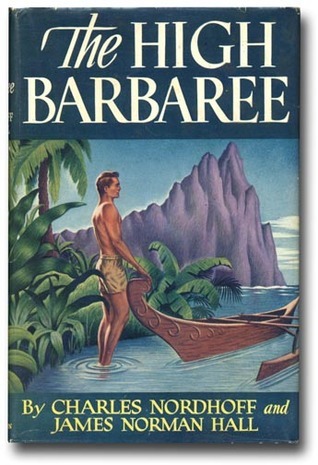
In 1947 MGM released High Barbaree, a film based on the 1945 novel High Barbaree by Charles Nordhoff and James Norman Hall.  The book is long out of print,  mostly forgotten, and memorable because its authors wrote Mutiny on the Bounty.  For decades the movie rarely showed up on TV.  TCM eventually started showing it now and then.  And finally, after 67 years I can own a copy on DVD.  It’s also playing on Warner Archive, the great streaming alternative to TCM.   One reviewer at Amazon.com said they had been looking for this movie for thirty years – well, I’ve been searching for it for over fifty years, ever since I saw it as a very young kid, the first movie I ever remember seeing.

high-barbaree-movie

Most movie buffs will not know about this film, and would probably only consider it a slight piece of nostalgic fluff.  For me, it’s burned into my deepest memories, one of the few important remembrances  I have of my father, but it also has heavy psychological history for me, and I would eventually learn for James Normal Hall  as well, who did all the writing for the novel.  High Barbaree is important to me because when and how I saw it, and not because of the film itself, although there were events in the film that resonate with my own life.   The film featured Van Johnson and June Allyson, and was one of six pictures they acted in together the 1940s and 1950s, all of them slight and mostly forgotten, except for folks like me, where the film got stuck in our memories of growing up.  High Barbaree the book is about dying and aging memories of youth, especially last memories.

High Barbaree is a recursive art form for me, because it’s a story about memories that I use to think about remembering.

High Barbaree

Can you remember the very first movie you ever seen?  I think I can, but I’m not sure.  Memory is a funny thing, especially when you remember something on the edge of that time between when you were too young to remember anything, and the time when you first start becoming a person.  I have some vague memories when I think I was three, and quite a few more memories when I was four and five.  When I first saw High Barbaree I must have been around four, but I can’t pinpoint my age for sure.  We were living in South Carolina for the first time, out in the country.  One night I got up in the middle of the night and walked out into the living room.  My dad was up watching the all-night movies.  He let me stay up with him, and I caught High Barbaree for the first time.  That’s the earliest movie I remember ever seeing.  I’m pretty sure as an even younger kid I must have sat with my parents watching movies on TV, but I don’t remember any of them.

I don’t remember much from when I saw High Barbaree the first time.  I believe I remember four vivid scenes or images, but I can’t be sure because I confuse my first memories of seeing the movie with my second time seeing it, about 7-8 years later, when I was around 12.  The four scenes that stuck in my mind were two small kids climbing an old wooden water tower, of the boy saying good-bye to the girl who is in the back of a truck driving away, a PBY amphibian plane floating on the water, and the old South Sea islander welcoming the grown up boy to the island.   From seeing it the first time in 1955, I certainly didn’t learn the actors names, or even that it was about WWII.  The story was about life-long friends, Alec and Nancy, who grew up as kids in Iowa, but were separated when Nancy’s parents moved the family to Montana.  I’m sure I didn’t understand that at age four.  Even at that young age I had moved enough to know the loss of friends, so that movie touched me emotionally even though my mind was extremely immature.  

Around the summer of 1963 I caught the film again, also in the middle of the night.  My sister and I loved old movies and in the summer time my mother would let us stay up all night watching them.  It meant we slept during the day and didn’t drive her crazy.  This is where I first memorized the actors and plot of the show.  I probably don’t have any real film memories from 1955 other than the deep psychological impressions.  In fact, I didn’t know I had seen the film before until we got to the scenes of the kids climbing the water tower.  I also remember the scenes of the kids departing, the PB-Y floating on the ocean and the sequence with the island. 

At my second viewing of High Barbaree I knew I had seen this film before and that it was from a powerful memory.  It stuck with me and over the years as I grew up I ached to see the film again.  My father died when I was 18, and I have very few memories of him, especially ones of us doing something together.  He usually worked two or three jobs and was seldom home.  Often he was stationed away from home.  This memory of him letting me sit up with him and watch High Barbaree in the middle of the night is a special memory.

I didn’t catch High Barbaree again until I was in my late twenties or early thirties, after I had gotten married, and Susan and I caught it on cable TV, sometime before TCM.  I was working at library then, and it was then that it first occurred to me that the movie might be based on a book.  Indeed it was.  This was back in the early 1980s, before we had a VCR.  I would have loved to have owned a copy of the film, but couldn’t.  So I went searching for the book.  No luck.  Years later, in the 1990s, I caught High Barbaree again on TV, on TCM this time, and I thought about finding the book again.  This time I had the internet, and I was able to buy a copy through ABE Books.

Reading the book gave me a completely different spin on the story.  James Norman Hall was nearing the end of his life – he would die in 1951, the year I was born.  Even though High Barbaree was about a young Navy flier, it was autobiographical, about Hall’s own life growing up in Iowa at the beginning of the 20th century, remembering his mother and father, and his home town.  I learned that after I discovered In Search of Paradise by Paul L. Briand, Jr., a biography of Nordhoff and Hall.

You might not want to read the next sentence because it contains a spoiler for both the movie and the book.  In the movie Alec is rescued and lives, and his story is only a dream, but in the book, Alec dies, and his story is his dying thoughts.  Hall had lived through two world worlds and was old enough to be thinking about death himself.  He had a daughter named Nancy he knew he’d loose when he passed on, and I assumed that fear was the basis for his novel.  High Barbaree is his fantasy of a mystical island where he might meet her again.  The movie makers took his somber little tale with thoughts of dying and made it into a romantic war adventure with a happy ending.

As a four-year-old kid I picked up on the story of separation and dying, and the mysticism and hope of fantasies.  I don’t know if High Barbaree caused this, but for my whole life I’ve been fascinated by stories of people stranded on islands or lost at sea.  Years later when I caught Mutiny on the Bounty with Clark Gable on the all-night movies I loved it.  I also loved the Marlon Brando and Mel Gibson versions too.

In 1971 I started studying computer programming and I’ve often thought about how our brains are programmed by pop culture influences.  I’ve seen High Barbaree six times over almost six decades.  Each time I saw it, I saw something else because I was a different age and person, but the impact of seeing it at age four made some kind of life-long impression, some kind of deep programming sub-routine in my brain.  I’ve seen thousands of movies, most of which I’ve completely forgotten.  If anyone reading this finds a copy of High Barbaree to watch they will probably not find much in it.  When I saw it again the other night it seemed very slight.  However, it did trigger emotional waves deep within my own memories, and from my knowledge of James Norman Hall and why he wrote in the book, that I can see that the filmmakers meant it to be much more than what it became.  I think the filmmakers also had an emotional response to the book and hoped to convey that in the movie. 

I’m not sure the emotions are there unless you can bring your own deep experiences to the film.  I wish I could see High Barbaree without all my psychological baggage that comes with me to know if there’s a deserved reason why the film has been forgotten.  I wonder how many young kids happens to catch High Barbaree back in the 1950s and now feel nostalgic for it after all these years.

This makes me wonder if any film can truly stand alone, or requires the fertile minds of the audience to make them succeed?

JWH – 7/15/14

Movies for Old Men

I can only remember my father going to one movie, in 1958 when I was six, when the whole family went to see Snowfire.  My wife’s father always bragged the last theater movie he saw was Fiddler on the Roof in 1971.  A neighbor who is one year older than me, claims the last movie he saw at the theater was Animal House in 1978.  My two closest male friends quit going to movies long ago, but I don’t know when.  The only reason I still go out to the movies is because of lady friends.  I do know some males my age that still love getting out to see a movie, but not many.  Yesterday I went with my friend Janis to see Godzilla – her pick – and I was bored the whole time, even though the young people seated around me were cheering.  The most fun I had was looking at all the odd names as the credits rolled by.

banner-belle-film 

Many of my lady friends love action blockbuster flicks, the kind I used to think were targeted to teenage boys.  The whole world seems to love superhero movies based on comic books.  Maybe I’ve morphed into a curmudgeon, because those movies seem downright stupid to me, with grown men pretending to fight each other with choreographed violence that’s as realistic as a Three Stooges slap fest while wearing embarrassing costumes that only a seven year old kid would wear in real life, and then only on Halloween.  And don’t get me started on the psychological appeal of flicks like The Expendables series.  Our society has gone gonzo for guns.  And it’s not that I’m anti-gun.  My favorite movie genre is the western—a Colt .44 and a Winchester is all the firepower I think anyone should need.  But I get the feeling everyone is scared and paranoid and feed off action pictures because they feel powerless and wish they had super powers, bulging muscles and very large caliber machine guns to protect themselves.

Janis and I also went to see Chef this weekend.  Now that was a good movie for an old man.  It was a touching story about a divorced dad getting to know his young son that he’d been neglecting because of work.  Jon Favreau plays a creative chef, Carl Casper, stuck in job cooking the same menu for ten years.  Carl gets in a internet feud with Oliver Platt, who plays Ramsey Michel, a vicious food critic blogger.  Carl bonds with his son Percy, played by Emjay Anthony, who teaches his dad about Twitter.  Then Carl inspires Percy to learn to cook.  Slowly the film becomes emotional rewarding, and a film worth watching by an old guy.  The theater I saw Chef at was small, but most the seats were filled with older people, and some of them even clapped at the end.  I’m not sure young people would have liked this film, but I doubt we’ll know, because it’s not the kind they’ll go see.  No guns, no car chases, no buff bods, no Wile E. Coyote violence.

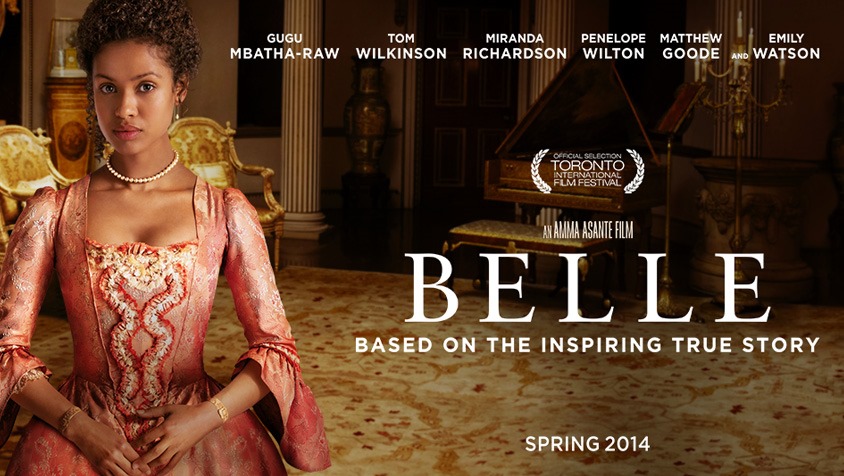
This afternoon I plan to go see Belle with three lady friends.  Even if I wasn’t hanging out with women, I’d want to see this one.  As an old guy, a well done historical film is actually a type of movie that makes me want to go out to the movies.  The older I get the more I like realism.  I prefer documentaries, or very accurate historical dramas.  You’d think it would be the other way around.  That young people would crave realistic movies to learn about life, and old people would want escapist fantasies.  Maybe I’ve given up on escapist fantasies because the older I get the less reason I believe that they will ever come true.  Even if I owned a whole arsenal of weapons and an elegant collection of spandex attire, and even had real bulging muscles to stretch out my costumes, I could never be a superhero.  It’s about as realistic as trying to fantasize that beautiful young women would want to have sex with my ugly old body. 

But I can relate to a clueless dad learning to Twitter from a ten year old.

JWH 5/26/14

Transcendence–Why Is This Film Only Getting 19% at Rotten Tomatoes?

I went to Transcendence thinking I’d hate this film because of all the bad reviews it’s getting, but to my surprised I ended up enjoying it way more than I imagined.  I went with two friends – Laurie walked out, and Ann said she liked it so much she wanted to see it again.  I thought Transcendence had some big problems, but overall it was a nice exploration of the idea of brain uploading.  Coincidentally, I’m listening to Accelerando by Charles Stross this week, and the science fictional ideas in the book overlapped nicely with those of the film.  Maybe I enjoyed the film merely because it was more fuel for the ideas I’m entertaining at the moment.

If you read the reviews I do concur that the film is lackluster in action, that most of the acting was subdued, and the plotting is clunky, but it just didn’t seem that bad, not a 19% rating at Rotten Tomatoes.  If you compare Transcendence to the dazzling Her, another movie about evolving computer intelligence, yes, this film is slight, but is it that bad?   I’ve seen films I thought were much worse get much higher scores at RT.

I have a hypothesis to test.  Does the acceptance or rejection of science fictional ideas in movies prejudice critics and fans opinions of a science fiction movie?  So if a movie explores an idea you hate, you reject the whole movie?

I wondered, if Transcendence presents ideas that people don’t like?  To talk about those ideas, I’m probably going to reveal some plot points, but many of these are in the previews.  The movie is about three AI scientists, one of which, the husband of the couple played by Johnny Depp, is shot by anti-AI terrorists and his wife saves him by uploading his mind into a computer.  Uploading also happens in Accelerando, and like that book, they also cover super technology brought about by post-human minds.  The book covers vast stretches of time, but in the film, all the advance technology comes out in two years.  This scares the regular folk in the flick, who feel they must destroy the Frankenstein AI.

Are movie goers tired of films about sentient computers?  Do they find post-human life offensive?  Are the networked humans too much like zombies to them?  Is nanotechnology just too scary to think about?  Or, was the ideas in the story fine, and they just didn’t like the writing, presentation, acting or settings?

TRANSCENDENCE

Science fiction books and movies have a long heritage of tales about intelligent computers.  Sometimes they are evil (Colossus), and sometimes they are fun (Short Circuit).  In Transcendence, it’s ambiguous.  Is that the problem?  Uploading minds is not as common, but there’s plenty of precedent (The Matrix).

I’m a little tired of science fiction being about saving the world.  Why does science fiction always have to involve a big threat to all of humanity?  There was no need to involve guns or violence in this story.  Gattaca was the perfect science fiction movie to me.  It was a personal story.  Ditto for Her and Robot and Frank.  Can’t we have a story about a super intelligent being without involve armies and terrorists?  Or maybe critics and audiences didn’t like this movie because there wasn’t enough action and explosions.

Or was the film disliked because it suggests that ordinary people will be obsolete?  What’s weird is movie goers love mutants in superhero comic book stories, but they don’t seem to like post-humans.  A human that can fly is fine, but one that makes us look past our due date is not?

Audiences are more forgiving than the critics at Rotten Tomatoes, and the audience response at RT was 47% for Transcendence.   That’s pretty low for audiences.  Maybe I should just accept that this film was a dog, and maybe I liked it because it was about some of my pet topics.  That does fit in with my hypothesis – I liked it for its ideas, and others hated it for the same ideas.   I really hated Marvel’s The Avengers, which got a 92% critics/91% audience rating at RT, and I disliked the movie intensely because of its ideas.

I wonder if movie makers could save a lot of money on special effects if they merely created science fiction movies with extremely popular science fictional ideas?

JWH – 4/22/14

Google Chromecast–Practically Useless

When I saw the ads on TV for the Chromecast I got the impression that anything you could see on your smartphone, tablet or laptop could be sent to your big screen TV.  Cool.  Well, it doesn’t work that way.  I ordered a Chromecast from Amazon for one purpose only, to see Watch TCM from one of my tablets to my big screen TV.  My wife works out of town, and since she loves TV far more than I do, I let her have the cable TV.  However, she’s let me have the streaming apps for HBOGO and Watch TCMHBOGO however has a Roku channel, so I watch it through my Roku.  I love TCM, but watching TV on an iPad is no fun for me, so I didn’t watch TCM.  Then I saw the Chromecast and thought, wow, I can now watch TCM! Quick review:  No such luck.

chromecast

It turns out the Chromecast is designed to work with only a handful of optimized apps.   Of the twelve apps listed, I only like three, and all three are available on my Roku.  So the Chromecast ends up being useless for me.  I went on the net to see if I could hack it for some other fun use, and discovered some people casting from the Chrome browser – but evidently that’s only from laptops.  I can’t cast from Chrome on my iPad or Nexus 7.

From Googling around I discovered other people trying to do the same thing I’m doing, buying a Chromecast in hopes of seeing TCM on their TV from their laptop.  Through this research I discovered Watch TCM is online and I can now watch TCM on my big screen TV via the computer that’s attached.  So I really don’t need to Chromecast at all.  However, since I don’t like sending things back I started looking around for other fun things to do with a Chromecast.  I hoped there might be a way to put Android on my TV using the Chromecast, but couldn’t find anyone that had done that.  About the only thing I found even slightly useful was to play YouTube on an older flat screen TV that doesn’t have a Roku.  And even this works very flaky. 

I started a one hour lecture on speeding up Python, but I couldn’t shut it off.  Once the film began it appears the Chromecast might not be getting the film from the iPad, but off the net.  I haven’t tested this thoroughly, but closing the YouTube app doesn’t stop the film.  Neither did shutting off the iPad screen.  I didn’t try shutting off the iPad.  I did shut off the TV.  Then turned it back on and the film was still playing.  I then started the iPad back up, launched YouTube app, and found I could then shut off the film.

The Chromecast is a nicely made product, that comes in packaging that reminds me of something from Apple.  The trouble is, Chromecast is so limited in what it can do, especially if you have a smart TV or Roku, that it’s practically useless.  My guess is its useful to people that have a TV with a HDMI port, but no other connected devices or smarts.  If Chromecast had merely mirrored my Nexus 5 or iPad screen to my TV it would have been wonderful to me.  And such a feature might be forthcoming in future updates.  So I don’t know if I should keep the Chromecast or send it back.  I was hugely disappointed.

Evidently, there’s a lot of us old baby boomers that love old movies that don’t want to buy a zillion cable channels we don’t want to watch.  Our alternatives to TCM are improving.

Note #1.  To TCM:  Put Watch TCM on the Roku and charge $7.99 a month like Netflix and Hulu Plus.  TCM is the gold standard for old movie watching, but not worth buying cable just to watch old movies.

Note #2.  For you old movie fans, try Warner Archive Instant on the Roku.  At first it looks like it has a very limited selection, but poke around.  Plus new films are cycled in each month.  I find plenty to watch, except that in the past few weeks net traffic keeps it from working during prime time hours.  Warner Archive focuses on the 1920s through the 1980s. 

Note #3.  If you live in one of these cities, Sony is now broadcasting old movies over the air for something called getTV that appears to be capitalizing on the TCM craze for old movies.

Note #4.  Try Classic Flix.  It’s a disc rental service like Netflix, but focuses on old movies.  Unfortunately, it has only one mailing location – California, so it takes 3-4 days for me to send back a movie.  I get about 4 movies watched a month for $10.99.

[Translation.  By old movies I mean movies from the 1920s to the 1950s.  I keep meeting young people that translate old movies to mean movies from the 1980s and 1990s.]

JWH – 3/23/14