The Burden and Responsibilities of Family Photos

When people die their children usually go through the deceased possessions and divvy up the family mementos which usually include photographs the dying person has collected in their lifetime.  My wife and I have the photographs from her family and my family.  And when people in your family know you have the family photos they tend to send you the odd photo in their collection that would mean something to you from their family.  Awhile back my cousin Alana sent me some pictures she had inherited from my grandmother when she died.  I had not heard from my father’s side of the family in decades, so we had a lot of catching up to do.

One of the photographs is four grown sons and their father and mother.  One of the sons is my father’s father, or my paternal grandfather that I never knew.  I never knew my maternal grandfather either.  All I ever knew about family history was was from my two grandmothers.  So this photograph introduced me to my grandfather, and great grandfather and grandmother, as well as three great uncles I never remembered even mentioned by anyone.  I wonder about their families.  Is there anyone like me with a copy of this photo wondering about the other three brothers?

1920s - Dad's father on right - with parents and brothers - cropped

My grandfather was named George Wallis Harris.  I’m James Wallace Harris, so somehow the spelling got changed, or the spelling from the genealogy was wrong about my grandfather.  He married Helen Imogene Delaney, and my dad was called George Delaney Harris.  I almost was James Delaney Harris.  My father’s father was the man on the right.  His brothers were from the left, Jan, Charlie and Carl.  My grandfather was born in 1897 and my grandmother in 1898.

The older couple in front of the sons are my great grandparents George General Harris, born 1872, and Minnie Maude Maynard, born 1871.  All I know about these people is they lived in Nebraska.  My father was born in Nebraska in 1920, but moved to Miami as a small child.  I can remember him telling me stories about visiting Nebraska, and how the farmers would get together to kill jack rabbits by walking side by side down the fields to flush them out.

I think my great grandparents worked a farm, but I don’t know. Only two of them bothered to dress up for the photo. I can’t tell if my great grandmother’s dress was dirty or is the smudges part of the photo or the copy of the photo.

I found one other photo among my mother’s photos that I think is of my great grandfather and my father and his younger brother Jack.  I don’t have any photos of their younger brother Bob at all.

1929q Jack Grandfather Dad - I guess

When I say owning the families photos are a burden or responsibility it’s because I have pieces of history, and maybe the only known copies that are evidence to people’s lives in the past.  I uploaded this photo to the web so my cousins could have it, and maybe convince my nephews to take interest.  Since Susan and I have no children I’m not sure where our photo collection will go when we die.  I assume we’ll give everything to our nephews and nieces.  We should give them copies now before something happens.

If our photos were to be burned up in a fire or destroyed in a flood, all these unique views of the past would be gone.  So I’m thinking I should put in the extra effort to preserve them.  It’s a shame there isn’t some kind of national historical photo registry.  There might be people alive today that could tell me more stories about these people.

All I know is my grandfather and grandmother, who is from Indiana, moved from Nebraska to Miami in the 1920s, but I don’t know how early.  I do know they were there by 1928 because I have this photo labeled “George Jr. and Jack Harris 1928, Coronado Apts. N.E. 17th Terrace.”  I had heard stories of them talking about the great Miami hurricane of 1926, but I don’t know if they there then or not.  My sister says my grandfather was referred to as a barefoot mailman, but that was something that started in the 1890s and I don’t think they were there that early.  Uncle Jack was born in Nebraska in 1924, so I assume they came to Miami between 1924 and 1928.
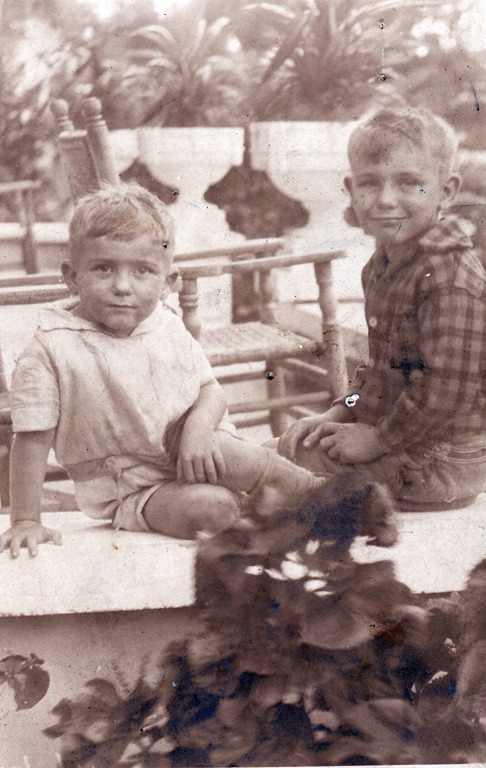
1928 Jack and Dad Coronado Apts

My father died when I was 19.  He always worked two and three jobs and was never home except to sleep, so I don’t remember talking to him much.  He was in the Air Force and we moved around a lot.  But we mostly lived around Miami, and when we were there I’d see my grandmother Helen Delaney Harris, whom I called Ma.  She mostly talked about growing up in Indiana.  I only have a few photos of her, the earliest of which is a newspaper clipping.  She’s third from the left on the top row wearing some god awful bow or flower on her head.
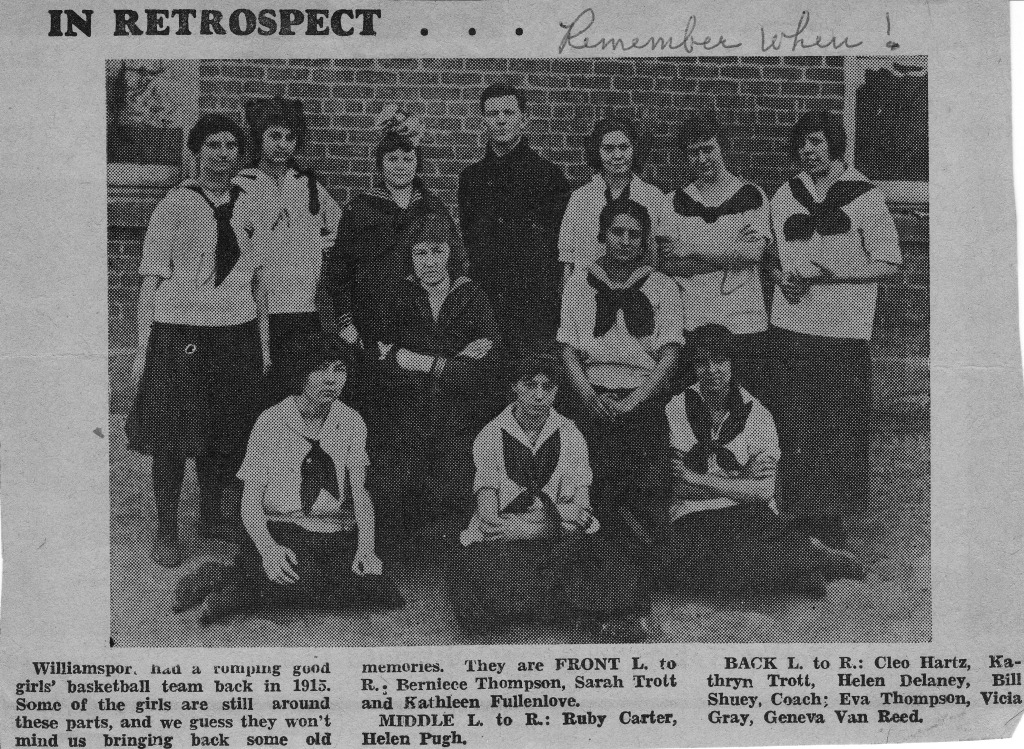
Helen Delaney Harris - school girl

I only remember a few stories about Ma even though I used to stay with her.  She managed apartments when I was growing up and sometimes my parents would leave me with her.  The apartments were always ones where old people lived and I’d hear a lot of stories about the old days, including meeting an old lady who had been on the Titanic.  I wished cheap video cameras had existed back in the 1950s and 1960s so I could have recorded these memories.  That’s the thing, all we have now are the photographs.  The stories pretty much went in one ear and out the other.  I wished I could have saved them.  Here’s the best photo I have of Ma.
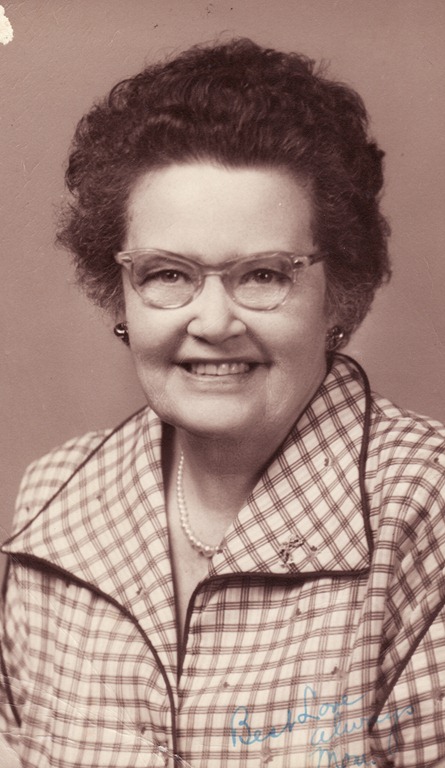
1957-04 Dad's Mom Helen Delaney Harris

I do remember stories about her teaching in a one room school house, and that during the war she drove trucks and chauffeured officers as a staff driver.  She had lots of old friends and loved to collect figurines of dogs.  That’s not a lot to remember is it?  That’s why these photos are so important.  They are my only real evidence of the past.  I’m like that guy in that movie Memento trying to figure out life with only short term memories.  I have another photo of Ma.  When my mother got tuberculosis and went to stay in a sanatorium up north at Valley Forge, and my father was stationed in Canada, Ma took care of my sister Becky and I for several months.  This photo is from that time.

1959 - Jim Helen Becky

She looks so old there, but was just 61.  I’m turning 60 this year.  This photo was taking in Hollywood, Florida around 1958-59.  The house there is one of my favorites of childhood but I have no photographs of what it looked like on the inside.  I’d give anything if my parents had taken more photos.  I’m not sure who took the photo here, but I think it was taken to send to my mother in the hospital.  Those were our Easter outfits that year, and my snappy white hat blew out of the car window coming back from church.  Would I remember that without this photo?

I really don’t remember much about my father.  I don’t have many photos of him either.  Here’s one I like taken when he graduated high school.
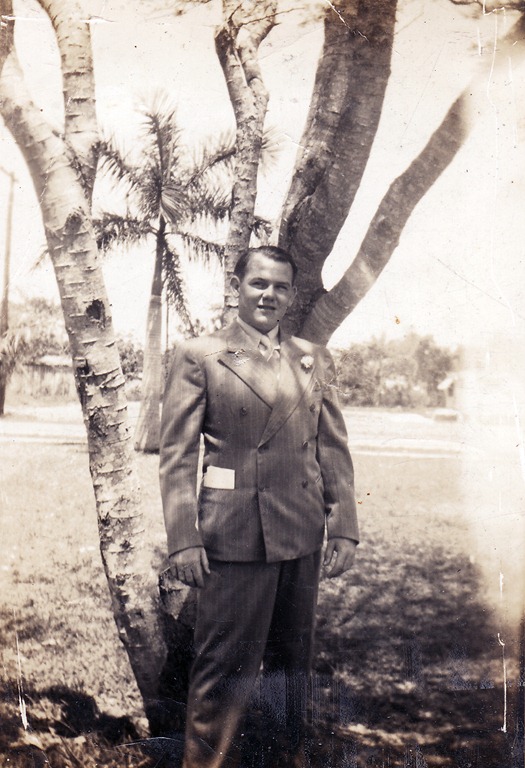
1939-05 - Dad at Homestead FL

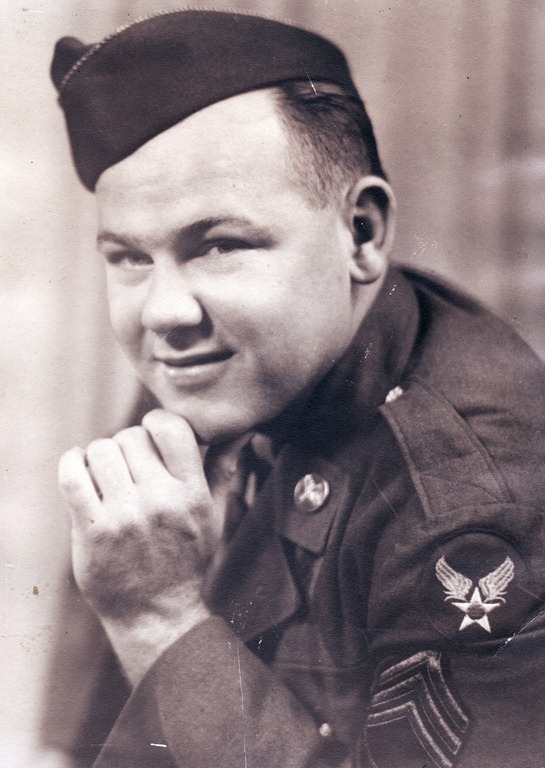
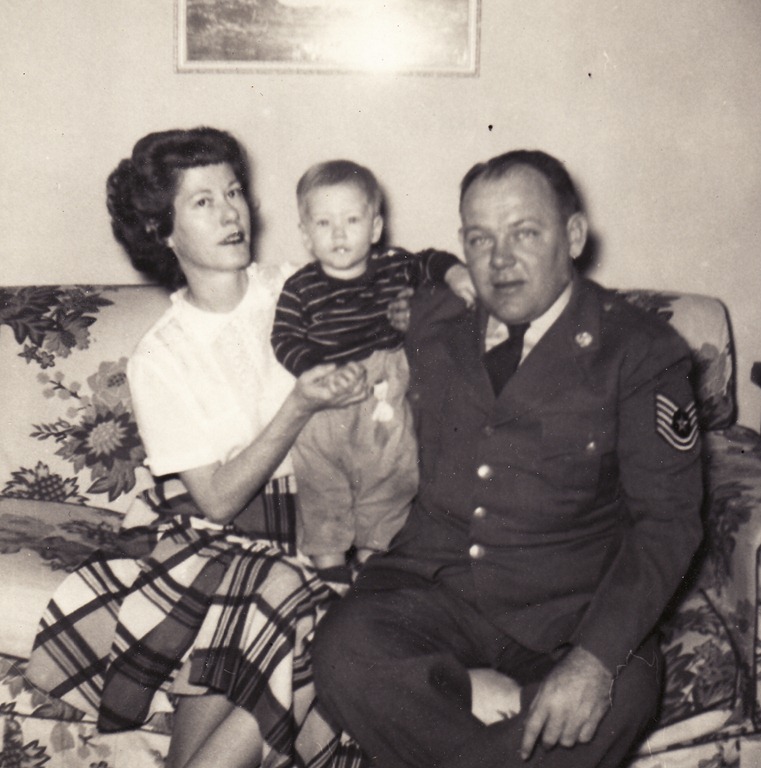
He’s a little younger in this photo than I was when he died in 1970.  I was 19.  I know very little about his teenage years, but I do know he hated my teenage years.  I had long hair, did drugs and was against the Vietnam war.  His dream for me was to go to the Air Force Academy.  I don’t know what his dreams for himself were.  Years ago I found a clipping from the Miami Herald that mentioned he and some of his classmates working on a project for the paper.  He told me he delivered telegrams for Western Union to make money in high school.  In 1942 he joined the Army and ended up a drill sergeant out in Arizona.  Somehow he started in the Army but ended in the Air Force.  I don’t know if he was ever in the Army Air Corps.  Maybe these uniforms can reveal that.  For all I know he could have been in the Army during the war and got out and then joined the Air Force.
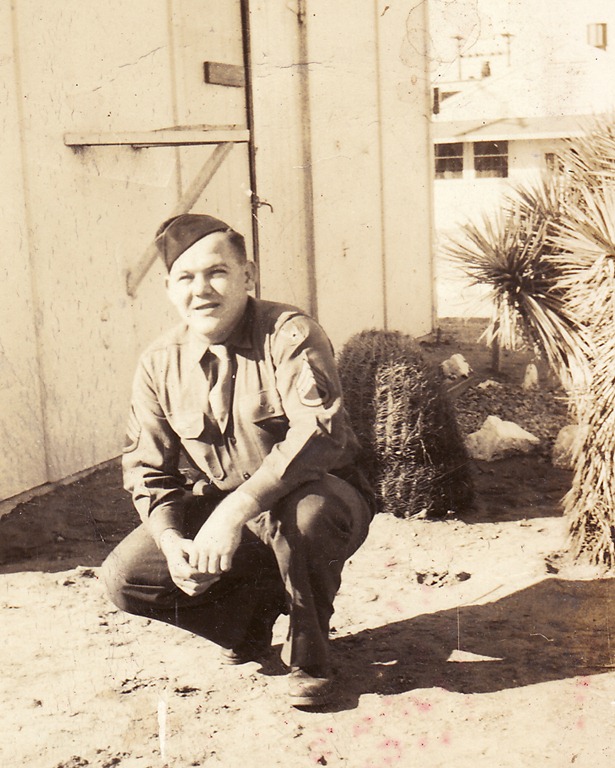
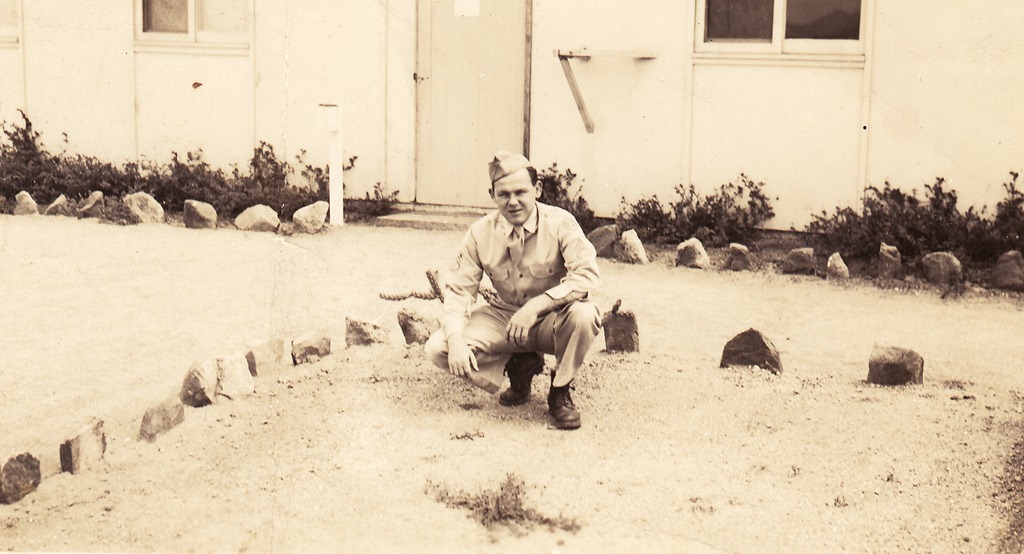
1945-01 Dad in Arizona

1944-04 SSgt George D

1945 Dad

1949g -Mom and Dad

1952 - Mom Me Dad 2

The last photo with me and my mom from 1952.  The one before that was with my mom, before I was born, when they lived in Puerto Rico, probably round 1949.  I think that was the happiest time of their marriage.  For the first six years of their marriage they were told they couldn’t have children.  I do know Becky and I were a handful.

I can only find one later photo of my dad, an accidental photo, taken in 1969.  He’s profiled by the light, shining on his bald head.
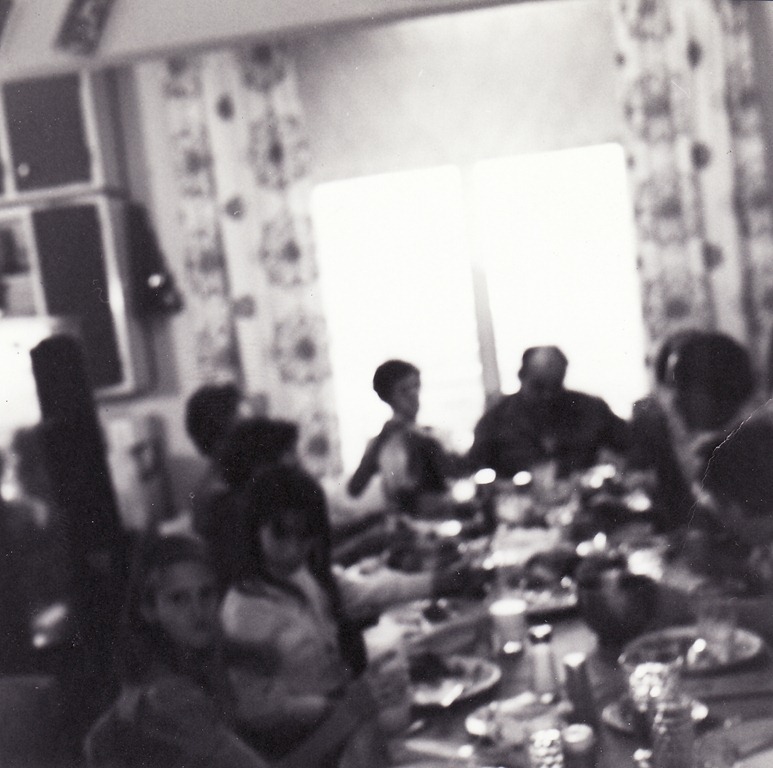
1969 - Last photo of Dad

I have a few more photos from when he in high school and in the service, but these few here are pretty much all the evidence I have of my dad’s existence. When my sister and I die, and these photos are given to my nephews, this is all they will know about their maternal grandfather.  Maybe I can convince them to read this blog.  (Nick and Mack, if you want want copies of all the photographs just let me know.)

That’s the thing, what kind of past would we have without photos to remind us?  I have a responsibility to preserve the evidence that I have, but I don’t know how long people will care.   We believe people continue to exist as long as other people remember them.  That’s an interesting obligation.

If you keep the family photos you become the family historian, and a detective.  I really wasn’t prepared for this job.  Instead of inheriting all the pictures when the last member of the previous generation dies, children should each be given a copy of the family photos when they are little and encouraged to talk to the people in the photos when they are still living.  Probably good families do this, but we were wild active kids who couldn’t sit still.  We were hyperactive before they invented the word.

Like I said, Susan and I never had kids, so who will remember us?  And I probably don’t have many more photos of myself than I do of my dad.  I wished we were a family that liked to take pictures.  I wished we had taken one good photo of every family member each year.  I wished we had taken photos of all our pets.  I wished we had taken photos of all my friends and classmates.  I wished we had taken photos of all my houses, schools and neighborhoods.  I even wished we had photos of all our cars.

Hell, I didn’t know I’d get old some day and be tested on this stuff.  And I certainly didn’t know it would be my own desires that would be doing the testing.  I wish I had been forewarned that I would someday be the family historian and keeper of memories.

For my next project I’m going to research how to properly find, repair, store, and maintain old photographs.

JWH – 3/6/11

Outlook Tasks v. Remember the Milk v. ToodleDo

I’ve always have a million things I want to do, but not the discipline for getting things done.  I tend to get distracted by reading, surfing the web, watching television or listening to music.  All my life I’ve made to-do lists on note cards, backs of envelopes, post-it notes, Moleskine notebooks and even emails.  I’ll make up a good list of things to accomplish and then do a couple items and then loose the list and not think about it.

Taking the time to concentrate on what I want to do is good, but following through is hard.

Keeping a to-do list is like trying to make New Year’s resolutions every day, and that ain’t natural.  On the other hand, I do have a lot of tasks I want to get done.  On most days I struggle to remember my to-do list in my head.  I go to sleep at night thinking about things do to and I tell myself to try and remember just two things.  Some days I do and some days I don’t.  Like last night, I thought to myself I should take an old bottle of pills for my back to work so I’d have some there.  I actually remembered to do that.  I was also going to post a comment on Amazon about some t-shirts I bought that promised generous length but warn others that the extra length disappeared after one washing.  I forgot that one.

At work I started putting my work to-dos in Outlook Tasks.  I’ve tried that before but would forget they were there.  But this time I set a reminder date and they pop up like calendar reminders.  That was a key lesson – using reminders.  One cool thing I discovered about Outlook was the ability to organize tasks into folders, so I can separate various work and home to-dos into separate groups.

The first thing I do in the morning, well after taking a pee and giving the cats some crunchies, is to read my email.  I’ve tried emailing to-do lists, but they get pushed down by all the other email.  Since I’m always in Outlook I figured I should try to make use of its built in to-do list Tasks feature.  Outlook is always running in the background at home or work, but I never developed the addiction to Tasks.

Tasks don’t show up as part my my Exchange client on my iPad touch.  That means I don’t see my To Do lists away from the computer.  I do carry my iPod touch with me everywhere because I’m addicted to listening to audio books and playing Words With Friends.  I needed a To Do App that would be my vital third reason to carry the iPod touch. 

So I started looking for something more.  What I wanted was something that would work on every computer and on my iPod touch, or any future smart phone I might buy.  It turns out there’s lots of companies selling To Do List software that meets my requirements.  Along the way I encountered the Getting Things Done philosophy.  Here’s a pretty extensive list of To Do programs that use the GTD concepts.  Here’s another site I found, 50+ Online To Do List Managers.

43 Folders even has a section on “Getting started with ‘Getting Things Done’” that convinced me to order the David Allen book, which is more complicated than just keeping lists.  But I still needed a program for lists.  I looked at many.  I had heard of Remember the Milk which I signed up for the free account.  It looked slick and promised to work with all kinds of other programs and mobile devices, but I just didn’t find the online interface intuitive. 

I also signed up for the free account at Toodledo.  The program is far less slick but I could immediately work it, and it’s interface reminded me of LibraryThing, another online program I love.  I played with the free version Toodledo for awhile, bought the $2.99 App for my iPod touch, and then paid for the Pro version ($14.95/year).  It’s nice to study my To Do list when I’m away from my desks at home and work, plus the more I used Toodledo the more I liked it.  I’m already getting more things done.  Now I need to study the Getting Things Done philosophy and integrate it into my life.

I’m learning things like putting deadlines on my To Do items.  I never did that before, but once I started the impulse to get items off my list increased.  Toodledo allows me to send emails to the program and it will automatically add items to my list of things to do.  This is convenient because I have email open all day long.  The key to using To Do lists is to look at them frequently and to add items as soon as you think of them. 

I’m combining this endeavor with a concurrent task of getting rid of as much stuff as I can.  We’re getting rid of furniture, old clothes, sentimental junk, books, DVDs, etc.  I’m converting a four drawer file cabinet to three small plastic folder boxes which I’ll keep in a closet I’ve cleaned out.

I don’t know yet if Toodledo is perfect for me.  Outlook Tasks has some great integrated features with its calendar and email functions, and even Remember the Milk has many features to integrate with other apps.  What I’m learning is one program can’t stand alone.  If a new version of the Exchange client for iOS shows up offering Tasks I could go back to Outlook – but I actually like the simple interface of Doodledo over Outlook Tasks interface.

I wished I would get up very early, bathe, do yoga and then light some incense like a monk, and meditate on my To Do lists for twenty minutes.  I need to develop my priorities and learn to understand the differences between tasks, goals and ambitions.

JWH – 3/2/11

Starman Jones, Then and Now

Memory is a peculiar attribute of consciousness.  Who we are, and what we know, is based on memory, but our memories are so damn faulty.  I first read Robert A. Heinlein’s Starman Jones back in the 8th grade, which was 1964-65, making me about twelve or thirteen.  That’s as good as my memory gets.  I wish I was one of those people like Isaac Asimov, who could say, on November 17th, 1964, a Tuesday, I was visiting my school library when I discovered a green book called Starman Jones – and it changed my life.  Well, I can’t.  I do know I discovered Red Planet first among the Heinlein juveniles, but I haven’t the slightest idea in what order I read the next eleven.  I doesn’t matter, but I wish I knew.  I think remembering all the details would have saved me from a life of absentminded existence.

I do have a few artifacts from the past that help verify my memory.  Below is a scan of a hardback copy I bought with my first paycheck of my first hourly job.  The book is signed by me 2/8/68.  I had gotten a job at the Winn-Dixie Kwik-Chek in Coconut Grove, Florida in November of 1967, when I turned 16.  I ordered all twelve Heinlein juvenile titles directly from the publishers and it took about six weeks to get them.  Next to my signature in this edition are three tick marks, meaning I had read it three times, but I stopped making those tick marks decades ago.

StarmanJones

I am sure I discovered Heinlein in the 8th grade because my 8th grade English teacher had put Heinlein on an approved reading list we could use for extra credit.  I had discovered a few classic science fiction books by then on my own, like H. G. Wells and Jules Verne, but I had not yet discovered the genre of science fiction.  I am 59 now and it’s extremely hard to imagine my 12 year-old self.  I’d give anything to have perfect memory of being 12 and reading this book for the first time.  I do know I was seriously into Heinlein by the Gemini space mission years and dreamed of growing up and becoming an astronaut.

I bring all this up because I recently listened to an audiobook edition of Starman Jones.  This is the second time I listened to the story, and I’m quite confident I read Starman Jones at least four times between 1964 and 1992.  For me, the book holds up extremely well.  And in the Classic Science Fiction book club I’m in, we’re reading it for our December selection.  Several people are reading it for the first time, and I get the impression they like it.  [Here’s Carl’s review.]  

Maybe Starman Jones will become a science fiction classic.  It’s among my Top 10 favorite Heinlein stories, and I consider it one of the Top 25 science fiction books of all time – but that’s my prejudice nostalgia talking.

Can I make an objective case why I think Starman Jones is a great science fiction novel?  Why does a book first published in 1953 for boys deserved to still be read by people of all ages in 2010?  Does it have qualities like Jane Austen’s Pride and Prejudice or Great Expectations by Charles Dickens that make them readable and loved so long after they were first published?  Austen and Dickens wrote two of the greatest love stories of all time, and I’m afraid Max and Ellie are no Pip and Estella.  Max Jones is more like Jim Hawkins in Treasure Island, a young man who gets to travel very far from home.

Starman Jones is for anyone who daydreams of exotic adventures.  Starman Jones is for readers who want to escape their mundane life and see the universe.  That’s the key, I didn’t say, “See the world.”   The quintessential science fiction novel is about going to the planets or the stars.  Max Jones is an Ozark farm boy in the future that has an eidetic memory and has memorized his Uncle’s astrogation manuals – the mathematics for navigating in space.  Many of the book club members got into science fiction because of seeing Star Wars when they were nine.  Luke Skywalker was also a farm boy that wanted to go into space, and he had his own special hidden talent too. 

I think those overlapping story aspects reveal qualities that go into great science fiction.

I wish I could remember what being Jimmy Harris was like in 1964 – because being Jim Harris of 2010 isn’t the same.  Back then I was naïve enough to believe I would actually go into space like Max.  Now, I can only read books and judge them for their ability to help me forget that I didn’t grow up to live the life of the romantic fiction of my youth.  Why has the Harry Potter books become so successful with young and old alike?  I think we all want to be 11 again, and live in a world where we can find Platform 9 3/4.  Kid readers don’t know that magic doesn’t exist – us old farts don’t care that it doesn’t.

Starman Jones has that quality that makes readers believe in the magic of space travel.  At 59 I know I would hate being an astronaut, so I’m not reading Starman Jones for the same reason I loved it as age 12.  But this revelation might point to why Pride and Prejudice and Great Expectations are great books in the same way.  When we’re young, reading those books make us  want to find love and romance in our real lives, but when we’re older, we read those books differently.  We know we’re too old for new love and romance, travel and adventure, except through books.  We understand why Dickens made up the story about Pip and Estella.  (Dickens wrote Great Expectations while he was an old man chasing a very young woman chaperoned by her mother.)

A great classic has to sell the future as a possibly reality to fuel our youthful dreams, but it is also has to satisfy us late in life as a substitute for waning love and adventure as a dying fantasy we embrace to fuel our wilting spirits.  I wish I could perfectly remember who I wanted to be when I was young, but then I wish my younger self could have experienced what I became – in other words, if I could have only known then what I know now.  If I did, would I have known when I first read Starman Jones what it would eventually mean to the 59 year old me?  Could a wise young me have thought, “This is the fantasy of my life.”

JWH – 12/7/10

Being An Old Dog Learning New Tricks

I’ve been in my present programming job since 1987.  I’m a database programmer, but I’m not part of IT, but was hired by a college within the university where I work.  I was employed way back then to set up a Novell network and develop a multi-user dBase III system to shadow the university’s canned student information system.  In the mid-nineties, I rewrote everything in HTML and classic ASP for IIS and Microsoft SQL Server, and switched our network to Windows and TCP/IP.  I have cranked out hundreds of thousands of lines of custom code since.  Now our university IT department wants all us non-IT programmers to rewrite our code to meet IT standards that runs on their servers.  I’m totally behind that, because I know when I retire someone will have to maintain my code.

The trouble is, I’m 58 and this means I’ll have to learn a whole slew of new languages – XHTML 1.0  Strict, CSS 2.0, PHP, and JavaScript, new frameworks JQuery and CodeIgniter, switch from Textpad, a programming editor to Eclipse, an IDE, and they want me to learn generic SQL that works with an abstraction layer in case we switch backend databases.  Plus I’m switching web servers from ISS to Apache.  This is a lot of new stuff for an old dog to take in.  My very comfortable environment that I’ve lived and worked in for 15 years is now totally Alice in Wonderland.  It’s like moving to Paris and having to learn French.

I do believe this is good for me, especially for exercising my aging mental stamina, but I can feel that it’s pushing the limits of what my mind can handle.  I’m sure in several months I’ll be comfortable in the new paradigm, but for now I feel like I’m a couch potato going on the Biggest Loser.  I wonder if all this mental weight lifting and running, all this programming huffing and puffing, is going to kill me.

Now that I’m getting old, I know why old dogs don’t want to learn new tricks.  It’s so much easier to stay in the comfort zone of doing my old tricks.  What’s weird is I’m learning all this new technical stuff at the same time I’m becoming so forgetful in everyday life.  More than anything, I’m in a USE IT OR LOSE IT phase of life.  It feels like I’m surfing and the only thing I can remember is the wave I’m riding right now.

The famous urban legend is we only use 10% of our brains.  I’ve read about scientific experiments that disprove that.  One set of experiments had test subjects learn something new and test their retention ability, then after awhile, switched them to studying something different.  As they learned new stuff they forgot old stuff.  Other experiments mapped the brain with various scans.  There aren’t any unused portions.  What they learned is we all use our brains fully, but fully varies from person to person, and I’m guessing also varies at different times in our lives.  It’s like that circus act where a guy keeps 30 spinning plates all twirling at once.  When we’re young we can keep 25 things going at once, but as we get older, that number decreases.

Learning my new programming paradigm is like trying to be young again.  It’s fun and exciting, but this time around I realize I’m pushing my limits.  I can feel my limits in a way that I never imagined when I was young.  I wonder how far and how hard I can push those limitations, and for how long.

JWH – 1/20/10     

Inventions Wanted: Universal Photo Database

I often wish I had photographs of certain people or places from my past.  I constantly damn myself for not chronicling my life better.  I’ve even wondered if anyone else might have photographed those people and places.  This gave me an idea for a great invention, the Universal Photo Database (UPDB).

I have lots of old photos of my mother and father, and some of my grandparents, with a few of my aunts and uncles and my cousins.  If there was a UPDB, I could submit my pictures to it, along with the names of the people in the photos.  Then if anyone in the world put in a search, for example “George Delany Harris,” my father, they’d find the photos I uploaded.  It’s not likely people would be searching for him, but he was in the Air Force for twenty-four years and maybe old service buddies wondering what happened to their old pal would.  On the other hand, other people might have photos of my dad that I’d like to see.

Jimmy-Patty-Becky-Jody-Christmas-1958

[Jim Harris (me), Patty Piquet (spelling?), Becky Harris (my sister) and Jody in front of house in Lake Forest subdivision, Hollywood, Florida, Christmas, 1958.]

When I was growing up, we’d often go outside to take the photos to have good light.  Us kids would stand on the sidewalk in front of the house, often grouped in gangs of friends.  Photos for the UPDB could also be tagged by location, such as Maine Avenue, Homestead Air Force Base.  My sister and I had a bunch of friends on that street but no photos, so maybe Arthur or Alice, or Gary and Gerry, if such a UPDB existed could post their family photos, and if I searched on “Maine Avenue” and “Homestead Air Force Base” and (1961 or 1962) I’d find them.

Or I could search for “Lake Forest” “Hollywood, Florida” 1958-1963 and I could find photos of the old subdivision where I grew up.  Facebook has accidently created a beginning of a UPDB for the Lake Forest (Hollywood, FL) Historical Appreciation Society.  The group has 90 photographs, some of which seem to come from the era when I lived there, so obviously, this idea of mine might have widespread appeal because there are other people feeling nostalgic for that neighborhood too.  Multiply that desire by millions and billions of people and you’ll see the potential.

Patty---Mike---Becky-April-1959

[Patty Piquet (spelling?), Michael Kevin Ralph and Becky Harris (my sister) in front our house in Lake Forest subdivision in Hollywood Florida, April, 1959.  Patty and Mike, are y’all out there?] 

The tremendous popularity of Facebook is due to nostalgia I think, but so far its technology is based on simple groupings allowing people to reconnect with old acquaintances.  A UPDB with key fields based on names, locations and dates would redefine our interest in the past, and it could be used for other purposes other than wistful remembering.  Think what it would mean to biographers, writers and reporters?

My favorite science fiction writer is Robert A. Heinlein.  What if every fan photo, interview photo, magazine photo, fanzine photo, convention photo ever taken of Heinlein was uploaded into the UPDB along with information, memoirs, interviews, etc. linked to the photos, wouldn’t that create a wonderful library of information for researchers and fans to study?

Also, how often do you find old family photos where you don’t know all the folks in the shot?  Uploaded those photos to the UPDB and someone might identify the mystery faces.  Or how often do you clean out old closets and drawers and throw away ancient photos?  That’s history buried in the landfill – ain’t that a crying shame?  Every photo is a snapshot of reality from a unique time and space location, and who knows what value it might contain.

Most libraries have a special collections department that collects local photos, but they are impossible to use without visiting each collection in person.  Imagine if all the special collection photos where uploaded to the UPDB?  Or old archive photos from newspapers and magazines?  Or all the school photo annuals?

Imagine if Google Maps was cross-referenced to the UPDB where you could zoom in and see photos based on location and time period?  What a fantastic mash-up that would make.  Now that we live with pocket telephones that have built-in cameras, wouldn’t it be easy to create photo diaries of our lives?  Especially ones with GPS tech built in that could date/time/location stamp each photo?

When I was growing up, buying a roll of film for the Kodak Brownie was a rare event.  For most years of my life I doubt there were no more than 2-3 photos taken of myself, and some years none.  There is a small chance I’m in other people’s photos.  During the decades of my parents life, they probably went years without being photographed.  And their parents and grandparents were probably only photographed a handful of times during their whole lifetime.  If we don’t make an effort now, those photographs will soon disappear.

On the other hand, the current digital generation will have hundreds, if not thousands of photographs of themselves, so they will overwhelm the UPDB and techniques will be needed to weed out the photos worth saving.  One of my favorite blogs, Times Goes By written by Ronni Bennett has a top masthead of 10 photos of Ronni taken across her life that makes a wonderful timeline image.  I wish that everyone I meet on the web had a linked page with a similar timeline photo of themselves.  At minimum, each person should have a photo for each year of their life.  Go look at Ronni’s photos – doesn’t that time dimensional aspect add so much to your immediate impression of her?

Everyone is amazed by what the Internet does now – I’m waiting to be blown away by what it will do in five years, or ten years.  Imagine and contemplate what Facebook could be in 2015?  or 2025?  Picture me singing and smiling like Al Jolson, “You ain’t seen nothing yet!”

JWH – 11/25/9 (My birthday – age 58)