Why Can’t We Be Good When We Know What’s Bad?

I’ve been reading about how our western diet is spreading around the world and bringing obesity, diabetes, hypertension and a host of other non-infectious degenerative diseases to people who used to eat differently, and lived healthier.  It’s quite obvious that our high fat, high sugar, high salt, high calorie diets are bad, so why don’t we eat better?  Why can’t we be good when we know what’s bad?

We just can’t seem to resist sweet, salty and fatty foods when they are in abundance.  Generally, where humans are thinner, more active, with little diabetes and hypertension its because they didn’t have a whole lot of food choices to begin with.  The western diet is really one of abundance and variety, and people around the world if given the opportunity to eat like us, become pigs like us.

My question is:  Why can’t we say no?

I have no answer.  I weigh 240 pounds.  I certainly can’t say no.

Actually, that’s not completely true.  I’ve given up many favorite foods over the years, and I still gained weight.  I do eat healthier, but I don’t eat less.  I am driven by hunger.  I can’t say yes to being hungry.

I keep eating more than I should knowing that I will suffer degenerative diseases in the future.  That’s insane.

I find this philosophically fascinating.  Obviously the rational mind has little influence over the physical body and the hormones that regulate it.

What if science could create a pill that makes us shun desserts, fatty foods, fried foods, salty foods, etc., and made us crave just the right amount of healthy foods, would you take that pill?  What if this pill made food a non-issue, so you just ate exactly what your body needed to be healthy.  Would you take that pill?  It might kill off gourmet eating, fast food, candy, pastries, soft drinks, and all the other stuff we so love.

Yeah I know, you’re thinking, “Why can’t what’s bad be good?”  See that opens up another philosophical question.  What if bad food is what we want.  What if bad food is what makes life good?   That’s easy to believe, but remember the heart disease and diabetes?  Remember all the obese children and young adults?  Brownies and Ben & Jerry’s Ice Cream are evil.

What if our current stage of humanity is a paradigm shift like going from hunter and gatherers to an agricultural society?  Humans have always pretty much eaten anything they could put in our mouths that didn’t kill us.  That’s why we’re called omnivores.  But what if we’re moving into a new phase of existence where we must become healthyvores?  Can our species make the transition?  If I had a time machine and could jump ahead a hundred years, or five hundred years, would I find homo sapiens 2.0 living a much longer and healthier life?

I don’t know.  It’s something to think about.  I’m not sure we can always change, to always evolve.

JWH – 2/18/13

Treating Back Pain Without Drugs

Most people I meet with chronic back pain only fight the pain with drugs.  I’ve discovered some other techniques to try.  Overall, what I’ve learned is my back is trying to communicate with me and all pills do is tell it to shut up.

I am not a medical expert of any kind.  I’m only recounting my personal experience with living with back pain.  I’ve greatly benefited from going to physical therapy (PT) and the training the PT doctors gave me to do daily exercises on my own.  Although you can find all kinds of PT exercises for back pain online, I highly recommend talking to a doctor before doing any exercise if you are suffering from chronic back pain.  The point I want to make is I’ve discovered some ways to avoid back pain without depending on powerful drugs.

Years ago when my degenerative back disease began and I was in a lot of pain I took prescription pain pills and muscle relaxers, but when I learned my condition was chronic I stopped taking those pills

I have three kinds of symptoms:

  • inflammation/tension/tightness (lower back)
  • numbness/nerve sensations (foot and leg)
  • muscle pain (lower back, hip, leg)

The inflammation/tension/tightness is almost always present in my lower back but in varying degrees of discomfort.  If things get worse, my foot goes numb and the numbness works up my right leg.  When things get even worse, my left leg goes numb too.  When things get really bad I have increasing constant dull pain and infrequent sharp shooting pains in my lower back, hip and leg.

I can keep the sharp and shooting pains away if I do my PT exercises daily, do regularly rowing exercises on the Bowflex, and if I don’t walk or stand for longer than 10 minutes.

I can keep the numbness to a minimum if I take B vitamins and exercise regularly, and don’t stand straight or lie flat for any length of time.

I used to keep the inflammation/tension/tightness to a low level with anti-inflammation pills, over-the-counter pain pills and regular PT exercises.  However in recent months the anti-inflammation pills have messed up my stomach and intestines and I’ve had to stop them.*[See update below]  I’m learning how to keep this kind of pain at a minimum without those drugs by carefully babying my back and not inflaming it.  No lifting, lots of rest, more exercising.

I now ask younger people to lift stuff for me, and I even take the elevator sometimes.  I’m getting old and creaky.

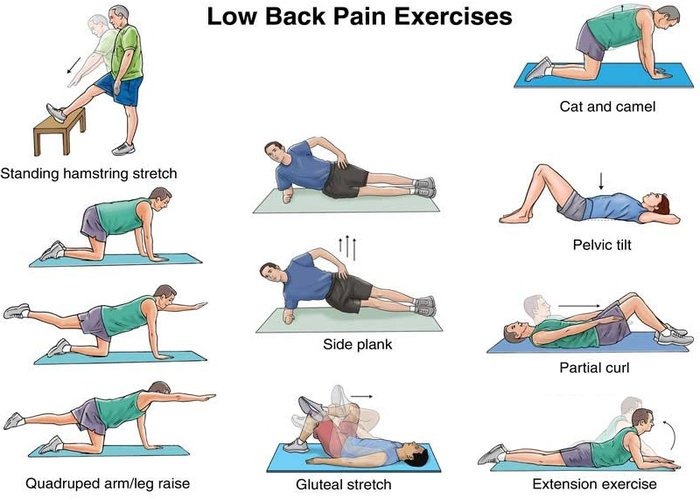
The exercises I learned from my PT classes are very simple, like these:

back-exercise

I’m writing this because I’ve had to stop taking any anti-inflammation medicine because it’s tore up my stomach and intestines, and I’ve learned that I can get about the same relief without those drugs if I’m careful.  Although my doctors have prescribed some powerful pain pills I’ve avoided taking them.  I have lived off of various anti-inflammation drugs over the last few years, but I can’t take them anymore.  Doctors keep prescribing drugs that are easier on the stomach, but evidently my stomach is on the wimpy side, or years of taking pills have beaten it up badly.

I’ve always liked the anti-inflammation drugs because they reduce the feeling of inflammation and tension in my lower back, but when I had to quit these drugs I realized that those drugs were the cause of some of that inflammation.  Taking a pill would reduce the tension, and the wearing off the pill hours later would make it spring back.   After several days of not taking the anti-inflammation pills, I had much less inflammation and tension.  I’ve started and quit several different kinds of anti-inflammation pills and I’ve noticed this affect twice now.

Lower back tightness and inflammation builds up during the workday, especially when I do a lot of walking and standing, and time and again I’ve discovered I can quiet my back by just exercising and/or resting.  That made me think some of the stuff I was feeling as inflammation was drug withdrawal or drug craving.

I’ve been dealing with my back problem for years and it’s a degenerative disease.  Walking, standing, or lying flat makes my back worse, so I’ve learned to live with limitations by altering my lifestyle.  For instance I no longer sleep in a bed.  Sleeping in a recliner significantly reduced my daily pain.  Not walking for exercise reduced my pain.  Getting a better office chair at work and home help too.

I also bought Z-Coil shoes and they have been a huge help.  Before I got Z-Coil shoes when my back was stressed I’d get weird sensations when walking.  I’d feel like I was stepping into a hole or sliding on ice with some steps.  I assumed I was compressing a nerve.  The Z-Coil shoes act like a shock absorber so I don’t compress the nerve and feel those weird sensations.  I also tried Gravity Defyers but their springs weren’t powerful enough to help me.  Z-Coil springs are very large and visible so they are very ugly shoes, but I wear them because they let me keep working, and they let me walk further than I can without them.

Z-Coil shoe
Z-Coil shoe

I’ve tried all kinds of drugs over the years, various pain pills, muscle relaxers, and anti-inflammation meds.  For my particular problem I’ve learned that physical therapy is the most effective treatment.  I do take an occasional Tylenol or aspirin, but daily PT is best.  If I don’t do my PT my back will slowly tense up, and over days I’ll get hip pain, pain down the leg, and numbness in my foot, and then a lot of lower back pain.  When the pain is very bad I have a hard time getting up or down.  Doing daily physical therapy keeps the worst pain away.

I seldom skip my daily PT, and when I do, I regret it.

I still have a certain amount of discomfort, but not the major pain.  I’ve learned I need to do  Bowflex exercises once a day to reduce a lot of tension in my lower back and fight off leg numbness.  I do a rowing exercise daily, just 130 strokes.  I’ve also learned from trial and error that taking a B-complex vitamin reduces the numbness in my foot and leg.

The last technique I’m working on to help myself is losing weight.  I’ve been overweight for decades, and at 235 pounds, just existing is like carry two sacks of cement with me at all time.  However, feeling bad makes me eat, so I’m always gaining weight.  When I get up to 240 my back gets much worse and that pain makes me diet for awhile.  As I drop back to 230 it gets better, I treat myself to junk food, and then I yo-yo back up to 240.  I’m hoping in the next year to get down to 200.

My back doctor has told me time and again to avoid surgery at all costs.  And before I consider surgery to try nerve block shots.  I’ve never liked the idea of nerve block shots and now they are in the news because of contamination, I doubt I’ll ever try them.  I did hear about a new surgical technique that’s just finished clinical trials and could come online in 2014.  The new technique involves regenerating the discs in the back, and I like that idea.  So I’m hoping exercise and losing weight will keep me going until this new technique is FDA approved and my insurance covers it.

JWH – 12/2/12

*Update 1/16/14

Last year I learned I had problems with gluten and gave it up.  I did it because of stomach and chest pains, which went away immediately.  But over the weeks of going without gluten I realized my inflammation was much improved and much of my joint pain had disappeared.  My knees seem twenty years younger.  I still have problems with the spinal stenosis, but much of my other pain has disappeared.  Over time going without gluten has made me feel much better.

I’ve told some of my friends about pain reduction through avoiding gluten, and one lady who had regular joint and arthritis pain gave up gluten and she reported she was eventually able to go without her pain pills.  If you have chronic pain of any sort, you might experiment with going gluten free and see if it helps.

Table of Contents

How Good is Your Visual Memory?

I recently read The Mind’s Eye by Oliver Sacks and I can’t stop thinking about it.  Sacks is professor of neurology and psychiatry that writes about medical oddities relating to cognition.  The Mind’s Eye is about all aspects of vision and how it impacts the brain, our behavior and our perception of reality.

I’ve always assumed I was an average person, with average abilities, so that I was smarter than some, but dumber than others.  That I was stronger than some, and weaker than others.  I’ve always assumed I fit comfortably in the middle of the bell curve of what it means to be human, and thus assumed what I see and feel is pretty much what other people see and feel.  Reading Oliver Sacks proves that assumption completely wrong.
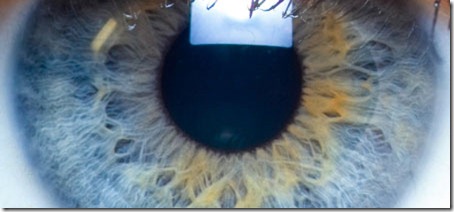
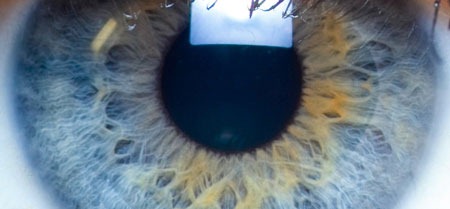
Iris

We all see the world drastically different, both at a physical level and at a conceptual level.  People aren’t a homogenous species.  If you’ve watched the recent Olympics you know what physical extremes exists.  Reading Oliver Sacks will illustrate the cognitive extremes.

Even in the snug middle of the bell curve, we’re all very different.  In the last chapter of The Mind’s Eye, Sacks writes about blindness and talked about his essay on John Hull, author of Touching the Rock: An Experience of Blindness.  Hull wrote about losing his sight, and slowly forgetting all visual memories until years later he reached what he called “deep blindness.”   Hull blew my mind, when he wrote that he felt deep blindness was a richer state of mind. 

In his essay on Hull, Sacks seem to imply this was how blindness worked in general.  Later he was surprised by all the letters he got from blind people explaining how their blindness had not worked that way.  He soon learned there was an array of human responses to going blind.

From this Sacks wrote about visual memory.  Sacks himself discovered he himself had poor visual memory when he took a lizard skeleton to his mother and she visually memorized it by turning it 360 degrees, stopping each 30 degrees to memorize that view.  She was a surgeon and had expected her son to be a surgeon too, but when she realized he didn’t have her visual memory, she told Sacks he shouldn’t go into surgery.  I suggest you find a copy of The Mind’s Eye and read the whole chapter rather than me paraphrasing it all, because it has an astounding amount of information about visual memory to contemplate.  Especially the stories about blind people who still feel they live in a visual world – an artificial reality inside their heads.

Like Sacks I have poor visual memory. Sometimes when I listen to music with my eyes closed, I’ll have flashes of visual scenes, but I have no control over them, and they last so little time I can’t study their details.  People with great visual memory can study their mind’s image and draw them.  A stunning example is Stephen Wiltshire, who draws Rome from one helicopter ride.  (See other videos here.)

If I was to go blind, I assume my experience would be pretty much like John Hull, and I’d eventually forget my visual memories and end up in deep blindness.  But thinking about this, I wondered if I couldn’t exercise my visual memory, like doing push-ups to make my arms stronger, and develop my visual memory.  After I read the last chapter in The Mind’s Eye I started paying more attention to visual details and became fixated on a church steeple I see on my drive to work, atop Audubon Baptist Church.  I drive by a 8:25 in the morning when the sun is behind me and there is no shadows, and again at 1:55 when I’m returning from lunch, and it does have shadows.

The first time I noticed this steeple after reading the book, I tried to memorize as much as I could when I was at the light near the church.  The steeple sits on a peaked A-shape roof.  The steeple has four parts, a square based with one round window per side, an eight-sided level above that with large rectangular windows, an even smaller level above that with wooden shudders, again eight sides I think, and a tall steeple that comes to a very sharp point.

When I got back to work the first time I tried to draw it from memory.  But I didn’t have any visual memory.  I remember the peaked roof, the four sided box, an eight-sided box on top of it, and another eight-sided box on it, and then the steeple, so I tried to draw those geometric shapes.  It was a terrible drawing because I tried to draw all the sides.  The next time I drove by I studied it again and realized, duh!, that I only see one side of things, and only a portion of the geometric shapes, and from a certain angle.  I had started my drawing with an 3d octagon wire shape, and that’s a conceptual view, not a visual view.  So if I’m looking from the side, I’ll see one side of the 4 sides, and 3 sides of the 8 sides, and essentially a very long triangle.

To test my memory just now I found a picture of the church on the web and it’s nothing like what I remember seeing.  For some reason I remember the church as having wood siding, and it’s brick.  I did remember the wooden slates on the third level, but I didn’t remember the tall windows of the second layer.  I’m no Stephen Wiltshire.

I remember having a much better visual memory when I was young and smoked pot.  Oliver Sacks said he experimented with large dosages of amphetamines when he was young and for a few weeks could draw quite well, especially from his visual memory.  After he stopped taking the drugs he lost all ability to draw.  The poet W. H. Auden took Benzedrine to write poetry, because it helped him to concentrate intensely on detailed verbal imagery.  I assume drugs in each case helps tune out larger reality so we can zoom in on a single tiny aspect, which helps the brain focus.  But can visual memory be enhanced without drugs?

I’m pretty sure it can because of my experiment with looking at the church steeple.  If I studied that steeple every day, and tried to draw it every day, and checked my errors every day, I’d learn about seeing and drawing, but I don’t know if I would have a better visual memory.  Many of the blind people Oliver Sacks wrote about, have extremely detailed inner worlds.  They know they aren’t accurate compared to the outer world they can’t see, but they are very functional models and maps that help them live and work in reality.  One blind man even re-shingled his own roof, freaking out his neighbors because he worked at night.  Another could design machinery with his inner sight.

I think when I have flashes of visual memory it’s more like dream memory.  I have very vivid dreams, but sometimes I’ll have microsecond flashes of dream memory when I’m awake.  When I took drugs when I was a kid, some of those memory flashes would last seconds.  I remember one of flying over the Golden Gate bridge, as if I was a bird, or riding in a helicopter.  Often my flash memories are visions from great heights – and I can’t explain that.  A person with good visual memory could retain those images in their mind.  I can’t.  My memory of them are more like wordy descriptions, which probably explains why I write rather than paint.

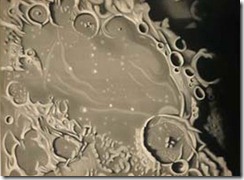
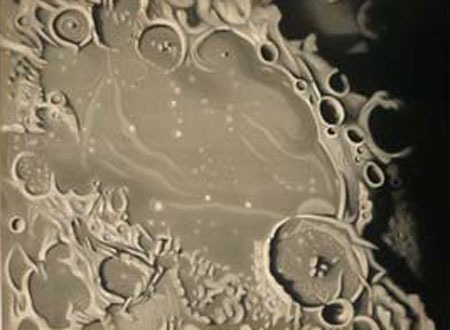
I’ve always been impressed by 19th century scientific drawings.  Drawing was an important skill to a scientist.  I don’t know if this meant they had good visual memory, or just a good eye for detail.  And that makes me wonder if I developed an eye for detail would that enhance my visual memory?

Reproduction, © Bloomsbury Auctionsmoon-drawing

I’ve always wondered if painters had to paint 100% of what they put on canvas while observing their subjects, or did they paint some of their pictures from memory.  Often when I look at photographs I think I remember in great detail, I’m shocked to find my memories are either wrong or just fuzzy smudges at best.  People with perfect visual memories are often autistic.  Temple Grandin, a famous autistic person, profiled by Oliver Sacks and featured in the wonderful HBO movie of the same name, thinks in visual imagery.  I’ve many times wondered if animals, who don’t have our language skills, think in pictures too.

To be honest, I believe I have a poor visual memory because I go through life not paying attention to visual reality.  My life is books and words.  I think in concepts.  And I wondered if John Hull felt deep blindness was more rewarding because it allowed him to focus more intensely on concepts.  Now, I have no desire to go blind, but I can imagine after reading Sacks, that blindness isn’t the sensory depravation I once thought it was.

Also, I wonder if I can improve my current abilities.  The cliché is your hearing and touch senses improve if you go blind, but do you have to go blind to improve your other senses?  Can one enhance all our senses, or is their a limitation in brain processing?  Because I’m getting older and my memory is failing, I pay attention to all that advice about improving memory.  I started playing Words with Friends.  I used to be terrible at Scrabble, but now I keep 6-8 Words with Friends games going and I can now beat people that used to always stomp me.

I’m confident if I got some drawing books and practiced, or even took some drawing classes, I could improve my drawing skills, but I also wonder if those skills would translate into better visual memory?  Is that a physical limitation – you either have it or you don’t?

How good is your visual memory?  Post a comment.

JWH – 8/11/12 

Living in a 2D World

I’m reading The Mind’s Eye by Oliver Sacks, and his chapter on stereoscopic vision made me think about my own vision and how I live my life.  I have a bad right eye and I have poor stereoscopic vision.  When I close one eye I don’t notice any difference.  I was told when I was young that my mind compensates with a pseudo-sense of 3D.  Dr. Sacks spends quite a bit of time talking about how much he loves his stereoscopic vision, that he’s even a member of New York Stereoscopic Society and has been a lifelong collector of stereoscopic cameras and viewers.  When he lost vision in one eye he wrote quite eloquently about what it means to live in a 2D world after being so attuned to 3D reality.  He also chronicles a patient that spent most of her life in a 2D world, and acquired 3D vision late in life.

The Mind's Eye by Oliver Sacks

Sacks mentioned several times in chapter 6 that many people have weak stereoscopic vision and have learned to compensate and don’t even know what they are missing.  I guess I’m one of them.  But then I got to thinking about my visual world.  I spend all day working in front of a computer, and all evening either at the computer, TV set, or reading books, and that means I spend a majority of my day looking at 2D fields, either of LCD or paper.  I also love paintings, cover art on books, CDs, LPs, magazines, and photography.  I also have a tablet computer and iPod touch – more 2D living.

I wonder if my lack of 3D vision pushed me into enjoying 2D hobbies and jobs?  I love hi-rez computer screens.  I’m happiest when I’m immersed in one of my 2D worlds.  But I’m not alone.  Is all our gadgets and screens pushing us all into preferring a 2D world?  If I had been born with great vision would I have become a bookworm and computer geek?  From reading The Mind’s Eye we are warned very vividly to expect a lot of changes and adapting to failing bodies and brains when we get old.  All his case histories are about people adapting, so I assume I adapted before I even knew I was missing anything.

I can’t recommend The Mind’s Eye highly enough.  It’s fucking intense.  It’s the scariest book I’ve ever read.  Most people will find this book immensely depressing and horrifying.  Zombies and vampires are kittens and puppies compared to what awaits us in old age.  It scares me and inspires me at the same time.  It’s about people with various kinds of brain damage, usually from dementia, stroke, aging, birth defects, etc., and how they coped when their way of life was greatly disturbed when one day one of their abilities were taken away.

What’s funny is most of the people that Sacks writes about deal with their disability with great bravery, but Sacks tells us how frightening and depressed he got when he chronicles losing vision in his right eye.  But even with all his physical failings, this 79-year-old man does more each day in old age than I ever did on any day in my prime. 

That’s why this book is so inspiring.  We’re all going to die, and more than likely, we’re all going to see our bodies and minds deteriorate before we get to take that long dirt nap.  It’s going to be painful, scary, depressing and hard.  But Sacks tells us stories about how people go through horrible conditions.  If I have a stroke in my future, then I’ve very glad I read this book.  I once had a stroke like incidence and the details in this book explained what happened to me.  For a short time I lost all language awareness.

We are used to thinking that aging means failure of our physical health.  But our brains wear down too, and in many ways.  Sacks profiles people who have lost the ability to read or recognize faces or objects, things when we read about them sound bizarre.  But if you’ve ever known people who have had a stroke, or dementia, you’ll recognize all of these horrifying failures of brain functionality.

We like to think of ourselves as little souls inside a body.  That if we lose a leg or have a heart attack it’s something that’s happening to our body.  We seldom contemplate what happens when our soul comes apart?  If you woke up one day and couldn’t tell the difference between your wife, mother and daughter, how are you going to react?  Quite a few of these stories are about people who have healthy eyes but can no longer process vision in a normal way.  Sacks explores many subprograms that make up our visual processing of reality.

If you read The Mind’s Eye you’ll see how everyone adapts their limited senses to reality.  No one is 100% functioning in all brain processing.  Reading this book makes me realize how I’ve adapted to living in a 2D reality.  My brain has adapted my vision so I can drive, walk down stairs, wash the dishes, play ball, catch a Frisbee, but from what I’ve read I’ve never known the beauty of stereoscopic vision as Dr. Sacks describes it.  When Sacks lost his 3D vision, he had trouble walking down stairs, taking ahold of objects, and did things like pour wine into people’s laps.

I hope I can remember this book, because when I experience brain damage or mental malfunction, I want to stay calm and not freak out.  When my brain starts breaking down and my consciousness observes the world going wacky, I want to go, “Hey, I know what this is, the area of my brain that processes written words must have conked out.”  Several people in this book described seeing words as if everything was written in a different language and alphabet.  Can you imagine how scary that would be?  Hopefully understanding the ideas in The Mind’s Eye might help deal with such experiences – if I can remember.

The thing I fear the most is not remembering who I am.  But you know what?  People adapt to that too.   

JWH – 8/8/12

Damn, I’m Out of Shape!!!

I went swimming today, the first time in probably a quarter of a century.  It was an eye opening experience.  If I fell off a boat without a life preserver I’d be dead in 2 minutes, maybe even 1 minute.  I was never a good swimmer, nor could tread water well, but I had the stamina to struggle along for maybe 50 yards.  I could have put up a good fight.  At 60 and weighing 232 pounds I’d just go under immediately in open water and not come up.

When I was first married, and we lived at an apartment with a pool, I weighed 155 pounds and could run for miles.  I thought before I got in the pool today that fat floated.  Boy was I wrong.  My fat don’t float!  I sink.

For years people have been telling me to take up swimming to help my back.  I’ve always said no because swimming is inconvenient.  But my neighbor, who has a pool, has been urging me to use her pool, so this morning I gave it a try.  I jumped in off the ladder at the deep end and immediately discovered my lack of buoyancy.  It was a struggle to get back to the surface.

At first I thought her pool too small to do laps, but then I tried to do a lap, on the short length, which can’t be more than 20-25 feet.  I made it, using my flailing doggie paddle style, but I had to grab on the edge of the pool and catch my breath after just the first crossing.

I did some experiments trying to hold my breath under water using the stop-watch feature of my Casio.  At first I could only go 8 seconds.  Eventually I worked up to 13.  That’s pitiful.  I guess that’s a sign of getting old.  When I was young it wasn’t much trouble to hold my breath under water for 60 seconds or more.

I stuck with doing laps and I went back and forth maybe 10 times, either doggie paddling, or some kind of crude breast stroke.  I tried the normal crawl one time but I just don’t have that kind of coordination.

I’m not completely out of shape.  After swimming I did 20 minutes of physical therapy and then 10 minutes of Bowflex.  But it’s obvious that being overweight and 60 that I’m at a lifetime low point when it comes to stamina.  Before my back got bad I did stair walking at work and could do 20-24 floors on my break.  I can ride my bike for 30-45 minutes now, but I’ve discovered that unless I’m riding uphill, bikes are so efficient that it’s not much exercise. 

It so weird watching my body decline, because mentally I feel like I did when I was 19.

So far I’ve lost 6 pounds on my diet.  I do believe if I worked hard I could regain some of my stamina – but will I?  I’ve discovered in recent years I’ve adapted to a very sedentary lifestyle.  My back limits my activities, especially standing or walking, so I’ve just accepted doing less.  I think I need to get an exercise bike to push myself.  Sitting on a bike, leaning forward on the handlebars, doesn’t hurt my back.  Swimming, or more precisely, trying to swim, didn’t seem to hurt my back either.  So I’ll keep it up.  At least in warm weather.

On one hand I feel like just accepting getting old and doing less, on the other hand I believe I should fight the inevitable.  I see all these natural catastrophes on TV and how old people need so much help just to run away from danger.  I don’t want to be like that.  I see news reports of people rushing to rescue stuff in their homes before fires engulf them.  With my stamina I couldn’t rescue much.  And living in an emergency shelter would be very hard on me.  I’ve gotten old and soft and addicted to creature comforts, the crutch of modern air conditioned living. 

I wouldn’t be much of a survivor in a post-apocalyptic world.

I’ve become an animal highly adapted to a very specific environment.  I’ve developed a routine where I expend very little energy to survive.  But what will life be like at 70?  Or 80?  I would ask about 90, but I just can’t imagine my declining stamina letting me live to 90.  But I see 90 year-old people all the  time – but most of them move very little.

Do I ride the current slope of my declining stamina, or do I made a big effort and bend that declining slope into a rising one?  Could I regain the stamina I had at 50 or 40?  That might be dreaming, but I do know people my age that are many times more active than I am.  However, I think they’ve always been many times more active than I was.

I’ll keep you posted.  I need some way of measuring progress though.  Have to think about that.  Are there standardized tests for stamina?

JWH – 6/30/12