
by James Wallace Harris, Friday, April 13, 2018
Have you ever wanted to write science fiction? I have. It was always a kind of dream ambition — like other kids wanting to be rock stars, actresses, or football players. I took a creative writing course in high school, and another in college. I never really work hard at writing though. That’s what it takes, hard work. Like I said, the ambition was more of a daydream fantasy. Then in my fifties, I got serious and started an MFA degree, eventually producing about thirty short stories, and two novel drafts. I even got into Clarion West, an intensive six-weeks writing workshop for would-be science fiction writers. I had to save my vacation for years to take off that much from work.
After Clarion I went back to work and eventually stopped writing fiction. Without a class requiring me to write stories, I just didn’t. I discovered I loved writing essays. Yet, I still yearn to write fiction. It’s damn easy to write crappy fiction, and damn hard to write good fiction. Also, there is something psychological to fiction writing that I haven’t worked out yet.
Clarion West was a significant experience. Going to Seattle for Clarion West was especially interesting because I got to meet sixteen other people with that same daydream. Most of my classmates were young, in their twenties, a few in their thirties, and three of us old guys who were just into our fifties. I guess some dreams never die, no matter how old you get.
Writing fiction is hard because good fiction blends real-life experiences into made-up stories. And with science fiction, you have to speculate about possibilities that could exist, but don’t. The best fiction mixes in philosophical insight with artistic creativity. And like they taught us at Clarion West, good writing is the accumulation of significant details.
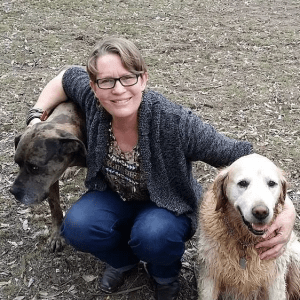 Lynette Aspey was one of my classmates at Clarion West in 2002. I just read her new story “Painted Ocean” and started thinking about Clarion again, my time in Seattle, and what it means to write fiction. Her story is an excellent example of all the elements of why I wanted to write fiction.
Sixteen years ago, seventeen of us hope-to-be SF writers moved into a twelveth floor dorm for those six-weeks, attending writing lectures and critiques Monday through Friday. Our teachers changed every week. They were Kathleen Alcalá, Pat Cadigan, John Crowley, Gardner Dozois, Joe and Gay Halderman, and Paul Park. We also had special guest authors visit us on the weekends (Octavia Butler, China Miéville, Lucius Shepard) and we attended local science fiction parties getting to meet even more writers. It was an immersive experience.
We asked Gardner Dozois how many Clarion West students went on to publish science fiction. Gardner told us he expected a few of us to get published in a couple years and a few more five to ten years after that. That scared some of us. Lyn got a story, “Sleeping Dragons” accepted by Asimov’s Science Fiction and published in September 2004. I thought for sure I’d be reading a lot of her work soon. That didn’t happen. Several of my classmates went on to publish stories and novels. I didn’t. Gardner was right.
Lyn, her husband, and the daughter she was pregnant with at Clarion West became world travelers, lived in the Carribean for years, did a lot of sailing on a 43-foot ketch, including crossing the Atlantic. Lyn lived the adventures most people just read about. I was always envious of her because I love to read about people sailing around the world. I hoped she’d eventually write a nonfiction memoir about her life on the ocean. “Painted Ocean” is fiction, but does contain a lot sailing images and details.

Recently, I’ve been hearing from Lyn on Facebook, where some of our 2002 alumni occasional post. She’s back living on land, in Australia, and writing stories again. Her new story “Painted Ocean” was published in Aurealis #109, a science fiction magazine from down under. Unfortunately, I can’t give you a link to read it online. I bought a copy of Aurealis #109 for $2.99 through Smashwords. I wished it had been on sale at Amazon for the Kindle because that’s the ebook platform I’m locked into. However, this situation has taught me how to deal with non-Kindle ebooks. Smashwords offers its downloads in several ebook formats, and I put a pdf copy on my Dropbox to read with my iPad. In the last couple of months, I’ve bought three books from non-Amazon sources. I think it’s important we support these alternative publishing platforms.
As I read “Painted Ocean” I was amazed by how good a writer Lyn has become, even after laying off for all those years. On her blog, she wrote, “A long time in the making …” about the writing of “Painted Ocean.” Go read it, especially if you want to become a writer. She says this story was started the Joe Haldeman week at Clarion West, but I did not remember it. To be honest, I don’t even remember my six stories. Each week we read and critiqued 17 stories. Lyn says Haldeman told us to write something hard.
“Painted Ocean” is an ambitious story. It blends AI, simulated reality, sailing, climate change, betrayal, and the love story of two older people. There is also a lot of allusions to the “Rime of the Ancient Mariner” by Samuel Taylor Coleridge, evidently a favorite poet of Lyn’s.
As I read about Annie Janssen, a woman with her gray hair in a bun and a brilliant hacker, I wondered if Lyn had created Annie by projecting her own self into the future. Reading her blog after finishing the story, it let me know she had read there weren’t many older female protagonists, so that challenge inspired her. Theodore Janssen is based on Lyn’s father, who had died seven years before Lyn attended Clarion West. Theo is trapped in an artificial reality on a sailboat name SaltTrader:
As Storm lashed out in fury, Theo’s yacht coalesced; broken pieces fitting together like a movie played backwards. The cockpit rebuilt itself around him, the decks with their fittings, the mast, boom and shrouds. Theo heard the rapid ching-ching of halyards hitting steel and, finally, her tattered sails came together like a soul re-knit.
SaltTreader heeled violently as the wind snagged her sails: a call to action.
Jumping forward, Theo released the mainsheet, spilling the wind in the mainsail. The sudden release of pressure brought SaltTreader upright. Her unrestrained boom swung dangerously but Theo was already at the mast, releasing the mainsail’s uphaul and letting the heavy layers of canvas drop to the deck where the wind clawed at but couldn’t fill them.The foresail backed, bringing SaltTreader’s bow about. Just as she pointed into the wind, Theo released the foresail’s uphaul so that the sail could drop down the forestay, and raced to the bow.
He wrestled the heavy, flapping canvas as if it were a beast until it finally fell, defeated, to the deck. The well-worn ties that Theo always left in position on the guardrail for just this purpose re-materialised. He quickly secured the big foresail before scrambling back to the mast to begin tying down the mainsail.
SaltTreader wallowed dangerously.
Without the time to go below and find the tiny scrap of sail he used as a stormsail, Theo thought it on.
Storm howled. A powerful gust pinned him to the deck.
Using that power, Theo realised, was the equivalent of leaving an error message in the code.
But that little scrap of sail made all the difference. SaltTreader heeled and the wind drew her up the waves.
With the canvas secure, the banging and flogging abruptly disappeared. Now he could hear the hiss of breaking seas and the whine as wind whipped through his rigging, but she crested another mountainous wave. Theo became the master of his vessel once again.
The action of the story switches from the real world to the artificial world. “Storm” is the rogue AI which has gained control of a vast system of weather monitoring and controlling computers. Annie is on the outside, and what’s left of Theo’s personality is on the inside. Annie communicates with Theo with Coleridge like imagery.
Throughout the story, I wonder what is personal to Lyn’s life, what is science fiction, what is remembered from her sailing experiences, and what comes from her fears of the future. All of this wondering, and thinking about story construction makes me think about trying to write fiction again. So, Lyn, thanks for reminding me of old desires.
I really enjoyed reading Lyn’s story and her essay about writing it. Essay writing is all about describing real events, thoughts, concepts, and capturing them honestly as possible. Fiction goes into another realm. I’ve been thinking more about that realm again. I wonder how many of the Clarion West classmates still think about it too.
JWH



 Auxiliary Memory