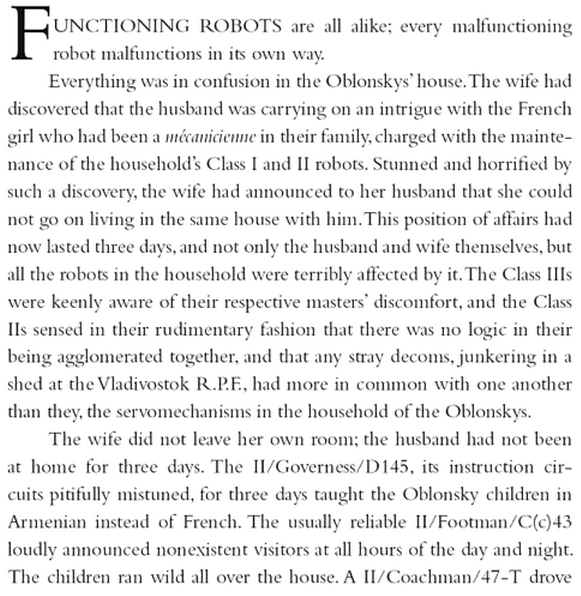
Forgotten Science Fiction: The Last Starship From Earth by John Boyd

Every year thousands of SF and fantasy books get published, but few are reviewed, not many more become popular, and damn few get remembered.  Ten years out, most books are out-of-print and forgotten.  How many books can you remember from 2002?  And if we’re talking fifty years down the timeline, well it’s almost a miracle for a book that old to still be read, much less remembered and loved.

I discovered science fiction in the 1960s, in my teens, and like most people reading their first hundred SF titles, they all seemed so damn far out!  Now decades later, I doubt my memories of those first impressions.  So, when I have a little extra reading time, I order a book from ABE Books based on those dying memories and reread it.  I’ve now reread many of my teenage classics and a majority of them don’t hold up.

Most memories are fleeting, and my memory of The Last Starship From Earth was next to nothing.  All I remembered was a favorable impact.  Just a lingering sense of it being a standout read for 1968 or 1969.  To test that memory I recently bought and reread The Last Starship From Earth.  Sad to say, it was a discard from the Columbus Public Library, a common practice for books that don’t get checked out.  Not a good sign.  The last English reprint of this novel was in 1978.  It’s last edition was in French, in 1995.
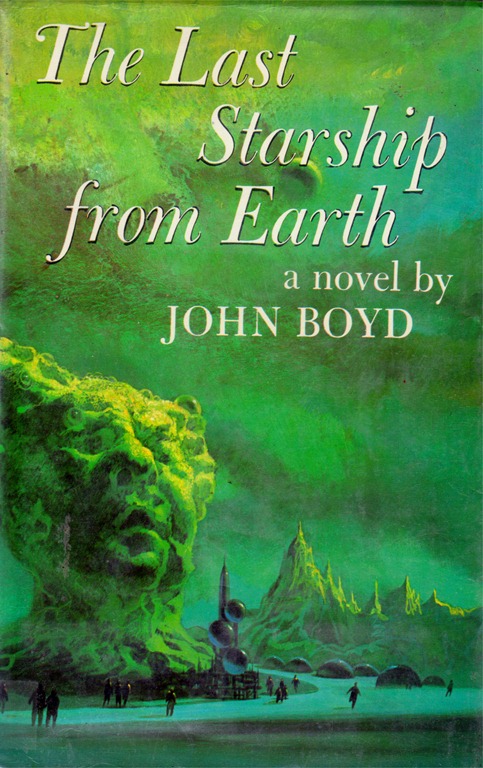
The-Last-Starship-From-Earth-by-John-Boyd

The Review

The Last Starship From Earth is a dystopian novel set in 1968 and 1969, but not the 1968 and 1969 that I remember, or lived through.  In the world of this story, Jesus did not die on the cross, but was killed leading an assault on Rome.  He was the Messiah that people expected.  The government of John Boyd’s world is a global government run by Christians along “scientific” lines, where psychologists and sociologists in conjunction with the Church and an AI Pope rule the world.  People marry and mate because of their genes, sort of like the film Gattaca, and the hero of our story is Haldane IV, M-5, 138270, 3/10/46, a math student of great promise, being the fourth in line of great mathematicians.  Unfortunately Haldane gets the hots for Helix, a mere poet.  By law and social custom Haldane is expected to have nothing to do with her, but as you’d expect he falls in love with her.

Haldane concocts a ruse to justify more meetings with Helix by studying Fairweather I, a 19th century mathematician who also wrote poetry.  Much of the first half of the book deals with pseudo-academic studies from this alternate history.  Boyd is creative in his steady flow of ideas and concepts, but there’s little emotion in the story.  It’s somewhat Heinlein-esque, in it’s attitude and world building, but lacks the charm of Heinlein’s best prose.

Now, this quick summary is enticing, and I would like to report that The Last Starship From Earth is a forgotten classic, unfortunately, that’s probably not true.  I enjoyed the book, but only as a quick read.

Surfing the web I’ve found few other reviews of this novel, and although I’ve found people who claim it’s their favorite book, I also found people that thought it ho-hum.  Now, I’ve got to admit it has a humdinger of an ending, almost as startling as the film The Sixth Sense, but I’m not sure this last minute thrill pays for the reading the whole book.

I found the love affair of Haldane and Helix no more believable than Romeo and Juliet and far less exciting.  John Boyd does write well, but the plot is mostly intellectual, about the dystopian society, and its complications.  The book is only 182 pages, and the whole tale feels rushed.  Boyd staked out a solid gold claim but never mined it.

Analysis with Spoilers

The trouble with many SF novels, especially those written back in the 1950s and 1960s, was they were written very fast, and they were about ideas and not characters.  John Boyd has actually written a very ambitious novel by creating an alternative history of Jesus, but he never fleshes it out, and most of the story is a setup for the surprised ending.  The scope of the book is epic, the line by line writing reasonably entertaining, but the overall feel of the book is thin.

Haldane and Helix are discovered, and the middle part of the book is a trial that allows Boyd to work out the politics and legal system of this alternative reality, however, like the rest of this book, it’s rushed.  It’s padding.  That’s its downfall.  He has a big ending but it’s way bigger than the story.  To pad the story even more Haldane is sentence to exile on Pluto, which is called Hell.  There he meets Fairweather I and is reunited with Helix, who happens to be Fairweather’s granddaughter.  Fairweather needed a mathematician for his time machine, and Helix was sent to Earth to engineer the exile of a mathematician to pilot an experimental time machine.  In a very short time Fairweather makes Haldane immortal, tells him his new name is Judas Iscariot, and his mission is to go back in time to kill Christ.

Now if Boyd had spent a couple hundred pages recreating the Biblical world and shown how Haldane tracks down Jesus, we would have had a much better story.  But all of this was summed up in a short epilogue.  We are told Haldane captures Jesus and puts him in the time machine and sends him back, and the rest of the epilogue is about how he has relived the two thousand years to return to his own time and meet a girl that’s an awful lot like Helix, living in a future that’s much more like ours.  But did Haldane let Jesus die on the cross, or does he just disappear him from history?  Unless Haldane at least engineers a dying on the cross scene for history, we should not expect this timeline to be ours.

How do you plot a riveting novel with great characters based on the idea that Jesus didn’t die on the cross and the world became very different?  How do you tell the story twice?  Boyd really grabs a tiger by the tail and yells, “Look at me!”  And I think, “Cool!  Far out man!  But what are you going to do with him?”  He’s got to do more than just swing it around.  I’ll give Boyd a solid C for his world building, but they are only tantalizing sketches.

I really like this ending, but is it good enough to make The Last Starship From Earth a classic SF novel worth reading today?  I’ve linked several references to this book on the net and even though I can find fans of the book, I can find more people who think it sucks.  You’d think  Boyd Bradfield Upchurch, John Boyd’s real name, if he’s still alive, would arrange for his books to be reprinted as ebooks.  That certainly would make it easier for more readers to decide if The Last Starship From Earth is worth reading.

I’m afraid Boyd falls far short of classic standing.  The Last Starship from Earth is a good novel for science fiction historians to read, but it needed to be four or five times longer, more the size of Dune, to get the job done that Boyd outlined.  However, I’m not sure how he could have pulled off this big ambitious idea.

And is Boyd saying our history is the better timeline?  Why is his first timeline all that evil?  Is the freedom to fuck whoever you want the perfect ideal worth rewriting all of history?  Isn’t the more interesting story about a world where the promise of salvation and eternal life never happened?  Isn’t Boyd’s surprise ending really a cheat?

Time travel machines often ruins more stories than they’ve ever help.

Boyd has a three part story.  Life on Earth in an alternate timeline, life on Pluto, life on Earth in another timeline.  The story really isn’t about genetic breeding of humans like we see in Gattaca, or in Heinlein’s Beyond This Horizon or Huxley’s Brave New World.  It’s about an oppressive government.  But does it deserve to be wiped out by time travel?

Here’s the thing, our 1968 was a horrible time for America, but should we send a man back in time to wipe it out?  Boyd wasn’t writing a protest novel like Nineteen Eighty-Four.  Nor did he write a novel that truly explored a timeline with a different Christ, which would have been ambitious enough.

Would The Last Starship From Earth been a better novel is it hadn’t used the time machine gimmick?  Not as it stands, but it potentially could have been.  I believe it’s a grave mistake for any alternate history novel is have a do-over.  Time travel is really a very dangerous concept to use in fiction.  Time travel is very hard to pull off.  The beauty of an alternative history novel is the alternative history.  Don’t add time travel.  This would take away Boyd’s surprise ending, but it would have meant he would have been forced to write a better novel.

I felt cheated when Helix shows up so easily on Pluto, in what at first appears to be a happy romantic ending, but then we’re thrown for another loop.  Haldane loses her again, only to find her again 2,000 years later.  Oh come on man, this horny-at-first-sight love isn’t believable.  Weren’t there no math babes for Haldane?  This really is a case of what you can’t have makes the heart grow fonder.  And neither Haldane nor Helix are all that interesting – if you want a great love story you have to have great lovers.

The powerful driving motive in Gattaca is that Vincent wants to go into space.  He wants to prove that he’s as good any genetically selected human.  The driving force of The Last Starship from Earth is Haldane wants to screw Helix.  Boyd doesn’t make it believable why his world outlaws sex, nor does he make it believable that Haldane and Helix are in big time love.  Hell, even the prosecutors of the story wink at him, and say why didn’t you use a condom and just screw her, implying this world does overlooks recreational sex, just not casual genetic mixing.  But then Boyd never explains why his world requires genetic  fidelity to specialties like mathematics and poetry.   In Gattaca we have the justification that their world doesn’t want naturals to pass on bad traits, but in Boyd’s world there is no reason to breed pure bred mathematicians.  Also, how many math geniuses does one world need?

John Boyd wrote just enough alternate history world-building to set up his surprise ending.  In essence The Last Starship From Earth is a O’Henry type story, and we now use those type stories as examples as how not to write a story.  However, The Last Starship From Earth suggests two possible storylines I’d love to read.  First, I’d love to read an alternate history where Christ was the Messiah that everyone was expecting.  Second, I’d love to read a time travel story about people having to learn what it takes to live in ancient Israel and track down Jesus.  Both would require a tremendous knowledge of real history.

JWH –5/28/12
Anna Karenina–Translations

Every time we read a book we have to translate it into our mind, even when we’re reading a book written in the language we speak.  If the book was written in another language, we have to depend on another mind to do an initial translation for us.  Sometimes two or more people work on a foreign language translation.  Those translators must interpret what they read in the original language and refashion it into English for us.  They have to choose between a literal translation and one that reads well.  Many decisions have to be made.  If an old book is being translated, does the translator preserve the language of the past, or modernize it, do they translate the colloquial phrases, or substitute similar English sayings, should they improve upon the original authors writing, for example, and change a weak passive sentence into a strong active one, etc.

In our modern world books are most often translated to film, but every reader translates words into pictures when they read.

anna-karenina-kk

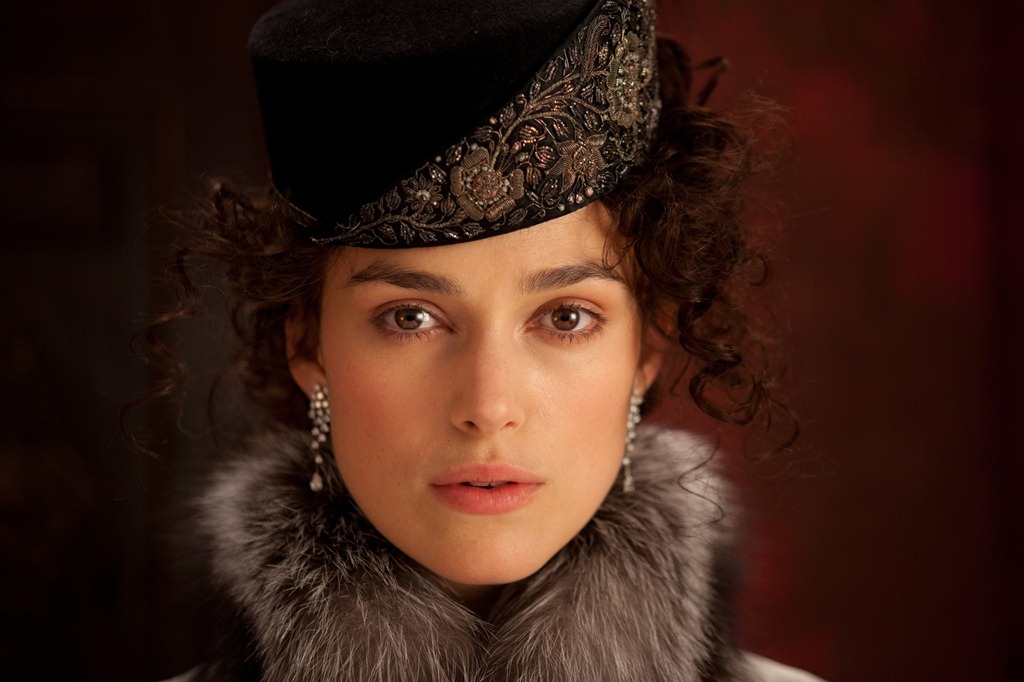
There are so many kinds of translations going on, more than just moving ideas from one language to another.  When we read a story we picture it in our minds, and we seldom picture it as the author pictured it.  How often have you read a book and then talked with someone about that book only to find they translated the book completely different.  The best illustration of this when movies are made from books.  Is Keira Knightley what you think when you imagine Anna?  Or is Aaron Johnson how you picture Count Vronsky?

anna-karenina-vronsky

If you’ve read a book about a poor person and have never been poor yourself, you will translate the book different from a reader who has been poor.  I have never been a woman, Russian, rich, dashing, beautiful, lived in the 19th century or been part of an aristocracy, so I have to imagine a lot when reading Anna Karenina and translating what it must have been like to been Anna or Count Vronsky.  I have studied American History, but is translating concepts about American slavery equal to Russian serfs?  I’ve seen Greta Garbo play Anna in a 1930s film, but is Garbo anything like what Tolstoy pictured when he was describing her with words?

Here is a portrait of Baroness Varvara Ivanovna Ikskul von Hildenbrandt that was painted in 1889, years after the book was published, but who people in Russia then used as a model for Anna.

PZ 401-038-753
Ilya Repin
Portrait of Baroness Varvara Ikskul von Hildenbandt, 1889
The State Tretyakov Gallery

Researching translations is fun.  That’s why studying the Bible is fun for me even though I’m a non-believer.  My friend Mike loves studying Homer and other Greek and Roman writers and comparing translations.  Readers have to constantly ask:  Is this a good translation?  Think of how many Christian creeds, sects and churches been created from reading one book.

I’ve always wanted to tackle Anna Karenina or War and Peace.  Well I’ve finally read (listened) to Anna Karenina, but how much of the story did I get?  Is one reading enough to make a fair judgment?  Did I pick the right translation?  Without doing any research I ended up with the Maude translation because I liked the sound of the reader of the audio book.  But I have to wonder, did I pick a good translation.

I’ve gone out and found four different translations.  Two of which I have on my Kindle, and two of which I did a screen shot of the first page off of Amazon.com.

Here’ is the opening of Anna Karenina translated by Constant Garnett (1901):

Happy families are all alike; every unhappy family is unhappy in its own way.

Everything was in confusion in the Oblonskys’ house. The wife had discovered that the husband was carrying on an intrigue with a French girl, who had been a governess in their family, and she had announced to her husband that she could not go on living in the same house with him. This position of affairs had now lasted three days, and not only the husband and wife themselves, but all the members of their family and household, were painfully conscious of it. Every person in the house felt that there was no sense in their living together, and that the stray people brought together by chance in any inn had more in common with one another than they, the members of the family and household of the Oblonskys. The wife did not leave her own room, the husband had not been at home for three days. The children ran wild all over the house; the English governess quarreled with the housekeeper, and wrote to a friend asking her to look out for a new situation for her; the man-cook had walked off the day before just at dinner time; the kitchen-maid, and the coachman had given warning.

Here is the same opening translated by Louise and Aylmer Maude (1918), the version I listened to:

ALL happy families resemble one another, each unhappy family is unhappy in its own way.

Everything was upset in the Oblonskys’ house. The wife had discovered an intrigue between her husband and their former French governess, and declared that she would not continue to live under the same roof with him. This state of things had now lasted for three days, and not only the husband and wife but the rest of the family and the whole household suffered from it. They all felt that there was no sense in their living together, and that any group of people who had met together by chance at an inn would have had more in common than they. The wife kept to her own rooms; the husband stopped away from home all day; the children ran about all over the house uneasily; the English governess quarreled with the housekeeper and wrote to a friend asking if she could find her another situation; the cook had gone out just at dinnertime the day before and had not returned; and the kitchen-maid and coachman had given notice.

Here is another translation, from Joel Carmichael (1960).

anna-karenina-carmichael

And here is the more recent translation by Richard Pevear and Larissa Volokhonsky (2000):

anna-karenina-pevear

This last translation was made famous by being picked for the Oprah Winfrey book club in 2004.

While listening to the novel I felt there were phrases that sounded modern, and wondered if Russians had some of the same sayings we did, or if the contemporary feel came from the translators.  Then my friend Mike called me to talk about his research on translations of War and Peace.  So I got to thinking about the translation of Anna Karenina.

I was very happy with the Maude translation, but it felt like I was reading Dickens.  But then Tolstoy wrote Anna Karenina just after Dickens died.  It was also serialized like Dickens’ novels, so it had that episodic feel.  Plus, both writers are coming to grips with similar changes in society brought about by industrialization, science and technology.

If you look at these different versions you’ll notice they are different and similar.  So, does the translation really matter? 

In the old two, Oblonsky had an intrigue with the French governess, while in the modern versions he had an affair.  Why the change?  How long has “an affair” meant what it does now?  But look at some other phrases:

“The wife did not leave her own room, the husband had not been at home for three days.” – Garnett.

“The wife kept to her own rooms; the husband stopped away from home all day;” – Maude, and it’s only part of a long sentence.

“Oblonsky’s wife refused to leave her rooms; he himself hadn’t been home for three days.” – Carmichael.

“The wife would not leave her rooms, the husband was away for the third day.” – Pevear and Volokhonsky.

Notice, there’s even changes in facts.  In the first the wife had one room, in the others, rooms.  In the second, the husband had been away all day, but in the others three days.

Notice how we’re told the cook has left.

“the man-cook had walked off the day before just at dinner time” – Garnett.

“the cook had gone out just at dinnertime the day before and had not returned” – Maude.

“the day before the cook had picked dinner time to go out” – Carmichael.

“the cook had already left the premises the day before, at dinner-time” – Pevear and Volokhonsky.

The Carmichael one doesn’t mention that the cook never returns.  And why doesn’t three of them mention that the cook is male?  I assumed the cook was female from my translation, but that’s my cultural spin on things.  I thought “walked off” was the strongest way of saying the cook quit.  “Left the premises” seems passive and not definite about why.

Well we do know why, the household is in confusion, upset and topsy-turvy.   Each of those words convey a different meaning to me, and none of them really convey the anger of a marital fight.  But then that might be Tolstoy’s failure.

Also, the famous first line is subtly different.  I wanted it to be more succinct.  Like “Happy families are all alike, unhappy families are distinctive.”  I don’t know Russian and would never be in the position to do a translation, but are the others translators like me, wanting to write the lines like they would want to read them?  If I had translated Anna Karenina it would have been a much shorter book, but is that translating or editing?

Then there’s Android Karenina, a parody mash-up of classic novel and science fiction – it’s another kind of translation.

android-karenina

Now many readers will be outraged by this particular translation of the novel, but really, is it any different in its extremes than the many film versions of Anna Karenina?  Most movie versions jettison the stories of Levin and Kitty, who appealed to me far deeper than Anna and Count Vronsky.  Just look at all these images from a Google search.  Each actress, or each painting for a book cover is an interpretation or translation.

How can modern readers understand Anna Karenina without understanding the social norms of the 1870s?  How much history do we have to know to really appreciate what Tolstoy is writing about?  I read AK at 60 and admired it greatly.  I could not have comprehended it at 20 or 30 or even 40, but even at 60 I’m sure I’m missing most of the story.  I don’t know Russian, but even if I did, I really don’t know much about life in 19th century Russia.  However, reading Anna Karenina is teaching me about Russia, like Dickens, Elliot and Trollope are teaching me about 19th century England.  Again though, through their translation.

History and fiction are constant mistranslations of reality, that change from generation to generation.

To see how we mistranslate history watch this little video “5 Historical Misconceptions Rundown" at YouTube:

JWH – 5/11/12

Can Any One Novel Be More Valuable Than Another?

People love to create Best of Lists for what they think are the greatest novels of all time, but I’ve got to ask:  What is the value of one novel?  Is any one novel really more valuable than any other novel?  I’m reading Anna Karenina (1877) because it was the #1 novel chosen from 125 writers voting for their all-time favorite novels in the book The Top Ten ed. by J. Peder Zane.  Can I say Anna Karenina is really more valuable than any other novel?  It might be more valuable to the people who contributed to the Top Ten, but is it more valuable to any reader than any other book?

Can professors of literature definitively say one list of novels is more valuable than other because of their worth to culture?

What do we get out of a novel?  What makes a novel valuable?  What makes a novel loved, or inspiring, or artistic?

I have a degree in English Literature, and I’ve been a lifelong bookworm, and I maintain a site about The Classics of Science Fiction, and yet I know nothing that proves a novel as value other than any one reader’s fondness for a particular novel.

I’m almost finished with Anna Karenina and it’s been very enjoyable, but I wouldn’t rank it #1 on any list I’d create.  But let’s compare it to some other novels from the 1870s I’ve read:  The Way We Live Now by Anthony Trollope (1875), Middlemarch by George Elliot (1874), The Mysterious Island by Jules Verne (1874) and The Adventures of Tom Sawyer by Mark Twain (1876).  I’ve give them in the reverse order of when I read them, because I think that matters.

Of these, I currently rate The Way We Live Now the highest, but that’s because it was the most entertaining, most engrossing, most diverting book I read in a long time.  But I have talked some of my friends into reading it and they found it boring.  And if I had read it when I was young I would have found it boring too.  And if I had been made to read it in school I would have hated it.

How often do we read a novel other than to be entertained?  Is entertainment value the only real criteria for evaluating a novel?  School teachers and college professors think reading is good for us, and good people read good books.  They imply that the novels they make us study in school are more worthy than novels we’d choose ourselves, but is that true?

Can society qualitatively prove that Pride and Prejudice is superior Pride and Prejudice and Zombies?  What educators want is a literate society, and that’s understandable because scientific studies show that a literate population is more successful.  But can science prove reading one book is better than reading another?  Or can we, with mere logic?

I think a kid who has read To Kill a Mockingbird by Harper Lee (1960) should learn something important about race relations.  I wish I had read and understood Pride and Prejudice when I was a teen because it would have helped me understand girls better.  Reading Slaughterhouse Five and Catch-22 taught me about the absurdity of war.  But is social awareness why educators want us to read books?  I don’t know.  It is a kind of value.  I thought I learned a lot about Asperger’s from reading The Curious Incident of the Dog in the Night-Time by Mark Haddon (2003).

I think we can safely assume books have value for broadening our horizons, to help us empathize with people different from us, to virtually visit foreign countries and distant times.  If you read the books on The Top Ten list, you will be educated in a way that’s different from a normal classroom education.  Of the 1870s books I mention above, they will teach you about life in England, America and Russia during that decade and what people were like.  Of do they?  And what about the Jules Verne book?  It wasn’t real at all, but it was one of the most fun books I read as a kid.

And do we really want to put a value on novels based on how much daily-life historical information it might contain?  And do we get information from the novel, or does it merely reinforce what we already know?  Do you learn about racial injustice from To Kill a Mockingbird, or do you learn about racial injustice and then admire To Kill a Mockingbird?

For me to admire Anna Karenina, I think it took me 60 years of growing up and gaining the experience so I could admire it.  I think that novels only mirror our current state of development and you can’t give children wisdom by giving them novels to read.

A list of great books are only great if you’re ready to perceive their greatness.  We can’t share shared culture, but we can share being at the same psychic place with other people.  That’s why it’s so great to talk with another reader about a book they just discovered and loved and you’re in the same place too.

So, then is the value of a book it’s ability to be an emotional or intellectual trigger?  Then to make a list of Top Ten favorites really is saying, if you’re been where I’ve been, then these books might work for you.

While working on The Classics of Science Fiction I learned several things about books and their lovers.  If you’ve only read five books, then those are the five best books in the world, and if you loved one more than the others, it’s the most mind blowing book ever.  I’d often get emails from kids asking why a particular book wasn’t on the list because in their mind it’s the most far out book they know about and it deserves to be recognized.  Are there books I could give these kids to read that are absolutely superior to what they’ve already discovered?  I can’t guarantee that.  My list is based on the consensus of twenty-eight other lists.  I was trying to be scientific about building a best of list.  But even the weight of my statistical method is no proof of value.

If you look at the final rankings, three books were on 25 of 28 previous best of lists.  They were Dune by Frank Herbert (1965), The Demolished Man by Alfred Bester (1953) and More than Human by Theodore Sturgeon (1953).  Statistically the odds are good that any science fiction fan reading these books should like them, but that’s not true.  Most kids today would be blown away by The Hunger Games, and maybe Dune, but would probably find the other two dated, even though old-timers who grew up reading science fiction in the 1950s and 1960s love those two books.

Again, I think this is because what makes a book valuable is what’s inside us when we come to the book.  It’s very difficult to be young and time shift.  Contemporary books mean more to the young than old books.

In my science fiction book club we’re all listing our all-time favorite ten science fiction books in a database.  There is very little consistency.  It’s my theory that we each define science fiction differently.  That there is no 10 great science fiction books that define the genre, but there are 10 books that define science fiction for each of us.  My Classics of Science Fiction list is merely a statistical sample of how many baby boomers define themselves with their favorite books.  There is a lot of overlap for a handful of books, and then we wildly diverge.

It’s like how most baby boomers loved The Beatles, but not all, and how there is no consensus at all about which groups would fill the #2-10 slots for the top bands of the 1960s.  I still love The Beatles, I just don’t listen to them anymore.  I still play Bob Dylan songs from the 1960s every day.  Why is that?  I still reread a handful of books I discovered as a teen in the 1960s.  But the rest, even the ones I loved then, I don’t care for anymore.  Again, how books are valued is by something inside us, and it changes.

I’d love it if we could get every bookworm in the world to put their all time favorite 100 books into a worldwide database, with each numbered by rank preference, and tagged by the year and age they read them.  Then I’d like to see the meta results.  How many books would become universal favorites?  How many would be teen favorites?  How many would be old age favorites?  How many books are loved outside of their generation.  This would be a fabulous experiment.  But it’s about the only scientific way I can think of to put a value on a book, and compare them.

JWH – 4/24/12

New versus Old

The Hunger Games has sold millions as a book, and then sold millions of movie tickets.  Like the Twilight and the Harry Potter stories, The Hunger Games created mobs and mania opening weekend.  What I’d like to know is why do only new books create a mania?  At least at the movies.  The John Carter of Mars books were hugely popular in their day, and they had nearly a century to build up fans.

Why didn’t all the John Carter of Mars fans come out for premier weekend of John Carter?  I read the Edgar Rice Burroughs John Carter books when I was a teen and found them thrilling.  I suppose there are few young people discovering them today, and without the kids you can’t have pop culture mania.  Or can you?  The best counter example is Lord of the Rings and Stieg Larsson Millennium series.  Not quite the same hoopla, but pretty big – adults don’t show their excitement in the same way as kids, but I knew an awful lot of bookworms my age gush about the Stieg Larsson books.

What do you do if you don’t have new books to make into blockbuster movies?  Can old ones do the job?  Larsson is an example of the new making a big entry splash, but Lord of the Rings does prove an old book can still generate some pop culture excitement.  The size of the mania seems related to the size and age of the audience.

Would there have been a mania for The Beatles without teens?  Disney spent a PowerBall fortune making John Carter and it flopped.  Didn’t they know movie manias require the endorsement of the young to make the kind of money they want?  Did Disney think they could create an instant mania?  Avatar did it?  Why?  Sometimes the mania hits without books preceding the movie.

I assume movie makers use books for a ready made audience.  So have they mined all the old best sellers of history?  Look at this list of All-Time Best Sellers at Wikipedia.  Six books have sold more than 100 million.    The all time top sellers at 200 million copies are A Tale of Two Cities and The Little Prince, although other people estimate Don Quixote has sold more than 500 million copies.  I doubt we’ll have open weekend mania if these books were made into films.

The real sellers are series books, with Harry Potter toping the list at 450 million.  Edgar Rice Burroughs did make a show with his Tarzan series at 50 million copies, but John Carter wasn’t listed.  Looking at the list shows some promising titles that haven’t been filmed, but overall the list looks well picked over by Hollywood.

Last year, Ayn Rand’s cult classic, Atlas Shrugged came to the movies at the old theater that I go to see art and foreign movies, where the parking is usually empty.  The lot was full for Atlas Shrugged, even though the film got horrible reviews.  Old books can sell new movie tickets, but it’s a hard sale, and the local news didn’t film adults waiting in line wearing costumes for Atlas Shrugged.  If they had worn Ayn Rand outfits, maybe the film crews would have been there.  Maybe movie makes need adults to act more like kids if want to make a killing in that first weekend.

Science fiction fans have been waiting half a century to see Stranger in a Strange Land or Foundation at the movies, and if they got big Disney sized productions would they do any better than John Carter without the backing of teenager movie goers?

Masterpiece Theater fans watch production after production of old classics, but how many fans does it have?  Downton Abbey created a bit of a mania for the baby boomer set but it was no Beatlmania.

Real fan mania requires both new and old fans.  That’s why some YA novels are read both the young and the formerly young.

Poor movie producers hoping to become billionaires just need to wait for the next new thing, whatever it might be.  That’s probably why they keep remaking movies, because waiting for new authors to write runaway bestsellers is kind of tedious.  Old pop culture doesn’t recycle very well.  The current boom in comic book productions seems to pay off, but how long can they keep that going?  At some point superheroes will jump the shark.

Hollywood must really be desperate if they have to make Abraham Lincoln: Vampire Hunter.  This is an attempt to combine the old with the new, even though vampires stories are really old, they’ve been through several recycling’s, but they are currently new again.  For awhile.  Just look at this trailer.  Is it new or old?  Will it sell or bomb?  Is it a new trend to repackage old history with new fantasies?

How many new stories are invented each decade that are so well loved they will sell millions of tickets the first weekend? And are there any old stories that can still do the same thing?

JWH – 4/3/12

What is the Kindle Doing to the Science Fiction Genre?

Here is the Kindle Best Sellers in Science Fiction showing two lists, Top 100 Paid and Top 100 Free.

The #1 book on the paid list is A Dance with Dragons by George R. R. Martin.  Okay, that’s natural, it tops other bestseller lists too.

#2 is five John Carter novels bundled together for 99 cents.  I can see that, the movie is getting people to read the old ERB books.

#3 is Ender’s Game – another natural, but it’s old.  I guess people with a new reading gadget are rereading their old favorites.  Cool.

#4 is Wool Omnibus by Hugh Howey.  WTF?  Who is Hugh Howey?  And he’s got 277 customer reviews!  In fact, Hugh Howey has several Kindle books in the Top 100 paid.  How did this unknown writer get in the Top 100 Kindle SF books?

Going down this Kindle Top 100 list for Science Fiction I realize that unknown authors are grabbing many positions on both the paid and free Top 100 lists.  There’s a smattering of old time favorite SF writers, Heinlein has two titles, Asimov, one, and a few modern SF writers of note like Dan Simmons and Orson Scott Card have a few more, but for the most part the these best sellers are books I haven’t heard of before, by authors unknown to me.

Is the Kindle changing the reading habits of science fiction readers?  And other genres as well?

My favorite science fiction writer is Robert A. Heinlein, but then I’m 60 and my reading tastes are as old as I am.  When I started reading science fiction in the 1960s Heinlein-Clarke-Asimov were the big three of the genre.  Most of the SF authors I’ve discovered in the last 50 years don’t have books on this list.   Why?  Are they out of fashion, or has Kindle reading habits changed things dramatically?

How are low cost and free Kindle books going to affect professional writers?  Also, notice the name of the publishers of these books – they are unknown to me, so I have to wonder if they aren’t self-published.

Supposedly, Kindle books are outselling all other forms of books, so is this what people are really reading in the SF genre today?

Many of Heinlein’s books are available for the Kindle, but only two are in the Top 100, and one of those is there because Amazon put it on sale last month.  There are many Kurt Vonnegut books in the Top 100 Paid listing, but again, they are on sale this month.  Amazon uses the technique of lowering the price of a book for a few days to get attention and then upping the price.  New, unknown writers, are using the same technique with their self-published books, and evidently its working very well.  Better than book reviews, better than word of mouth reviews.  Establish writers are now using that trick too.  That trick only works with Kindle ebooks.  It would be interesting to see if it worked with printed books.

If you look at Locus Bestsellers for March 2012, many of their books aren’t on the Kindle bestseller list.  If you look at Amazon’s Best Sellers in Science Fiction general list that includes printed books and Kindle books, the makeup of this list is different, but the Kindle books are having a huge impact.  Here is the Science Fiction Book Club Top 100 Bestsellers.  Notice how it’s dominated by series, media tie-ins and non-science fiction titles.   The SFBC has little science fiction.  Not so for the Kindle list.  Evidently would-be writers are very anxious to write science fiction and readers are finding it on Amazon to consume in mass quantities on their Kindles.

There’s more new science fiction, and dare I say, more exciting sounding science fiction by the unknown authors at the Kindle store.  Big publishers push blockbusters and name authors, and media related books, so the unknown writer doesn’t have much of a chance, but that’s not true in the wild west gold rush of self-published ebooks.  Something is happening here, and we don’t know what it is.

The press has been full of stories for the last two years about how ebooks are impacting traditional publishing, but I don’t think they imagined the paradigm change that self-publishing is making on bookselling.  Self-published ebooks are becoming the  universal slush pile for all readers to work through to find that gem they want to make a success.  Discovering a new author and promoting her can become a new form of social networking.

Think about that.  In the old days assistant editors would cull the slush pile for worthy books to show editors.  Getting a book published was a long slow process that winnowed out the bad.  Now Amazon has made free ebooks the slush pile anybody can read.  If it gets a lot of downloads they put a price on it, if it sells, they promote it.  If it keeps selling, they publish paper copies.  If it keeps selling, a big name publisher will grab up the author.

But do we really want to be slush pile readers?  I’m old, and have little time, so I usually go with the definitive classic now, but young people with lots of time seem to have no problem trying an unknown writer.  Those people are pushing Hugh Howey forward.

I’ve thought science fiction has lost most of its vitality in recent years.  Writers have become obsessed with series, trying to build their book sales by pushing a popular character.  That’s comfortable for some readers, but I liked when science fiction writers were always trying to top each other with far out ideas.  I don’t know if the self-publishing revolution will bring back those days, but maybe.

Finally, does it mean if you don’t own a Kindle you’ll be out of touch with the popular reading reality?  Yes!

SF Signal is a good site to keep up with free SF.  They feature almost a daily roundup of free science fiction.  Today Chasing Vegas by Tad Vezner caught my attention.  The customer reviews at Amazon are very encouraging and it has a great cover.  The old saying is you can’t judge a book by its cover, but I don’t know if that’s completely true.  It seems to me, the best of the self-published books have nice covers.  I don’t know if that’s a real indicator or not.  But in this new paradigm of reading from the slush pile I’m not willing to try just any book.  I look for customer reviews and a good cover.  I hope self publishing authors will do two things.  Hire an editor and buy a cover.

JWH – 3/24/12