The Defining Science Fiction Books of the 1960s

1950s 1960s 1970s 1980s 1990s
We've added a new feature that allows you to create your own lists from our database of recognized novels and short stories. You can set your own date ranges. Change the citation numbers to focus on more popular titles.

After completing The Defining Science Fiction Books of the 1950s, I decided to push ahead into the 1960s.  Going through the databases and assembling the list was a shock to my memory.  I remember the 1960s being a tremendous decade for science fiction, and it was in volume, but I just don’t know how many of the books I found to list here are actual classics.  I’ve reread far fewer of these titles than I did for the books from the 1950s, so I’m going more from distant memory than recent.  And I padded the list with more books I remember reading about but haven’t read.  I included them because they still sound good enough to track down in 2013.  Many of these books listed below are ones I discovered researching the Classics of Science Fiction website, so they stick in my mind.

Also, I’m doubting the completeness of my databases.  I had to consult several sources to find many of the titles I “remembered.”  If I had to actually make up this list from cold memory it would be far shorter.  I needed tools like the Internet Science Fiction Database to trigger buried recollections.

In the 1960s I loved shopping for books so much that I would visit bookstores two or three times a week.  Towards the end of the decade I learned how to go to flea market and garage sales and offer to buy whole boxes of paperbacks cheap.  I’d then take them to 2 for 1 trade in stores.  I got to know the science fiction sections of several used bookshops in Miami.  So looking for cover art for this list was a trip down memory lane.

I’d often read a book a day back then.  Which is probably why I don’t remember these books so well – I read fast, and consumed science fiction in mass quantities.   Some do stand out, especially the titles I’ve reread over the years.  In terms of ideas, the 1960s were rich in original content.  Most of the 1950s was spent reprinting the classic stories of the 1930s and 1940s pulp area.  This still happened, but less often.  Heinlein’s great short novel Orphans in the Sky from 1963, is really two novellas from the early 1940s, “Universe” and “Common Sense.”  Thus it’s very hard to think of Orphans of the Sky as a classic 1960s novel.

Twelve 1960s SF Books That Might Be Remembered in the 22nd Century

The original essay I wrote about the 1950s was inspired by the Library of America’s collection of 1950s science fiction. I assume Library of America will published a collection for the 1960s, and then the 1970s. After collecting all the most memorable titles from the 1960s that I could find, favorites just don’t jump out at me like they did for the 1950s. However, I would say this short list of books are the standout science fiction books of the 1960s, the ones most remembered by people who don’t normally read science fiction. These are the titles I think will be remembered by literary scholars in the future, if they’re willing to read science fiction.

  1. Solaris by Stanislaw Lem (1961)
  2. Stranger in a Strange Land by Robert A. Heinlein (1961)
  3. A Clockwork Orange by Anthony Burgess (1962)
  4. The Man in the High Castle by Philip K. Dick (1962)
  5. A Wrinkle in Time by Madeleine L’Engle (1963)
  6. Dune by Frank Herbert (1965)
  7. Flowers for Algernon by Daniel Keyes (1966)
  8. The Moon is a Harsh Mistress by Robert A. Heinlein (1966)
  9. Do Androids Dream of Electric Sheep? by Philip K. Dick (1968)
  10. Stand on Zanzibar by John Brunner (1968)
  11. Slaughterhouse Five by Kurt Vonnegut, Jr. (1969)
  12. The Left Hand of Darkness by Ursula K. Le Guin (1969)

I personally think Stand on Zanzibar is one of the standout SF novels of the 1960s, but it’s quickly becoming forgotten.  When it comes down to the nitty-gritty I’d say Stranger in a Stranger Land and Dune are the quintessential novels of the 1960s.  They aren’t my favorites, but I think they are the ones remembered by the most people.

What’s fascinating to think about, is this list of books will be how the 1960s will be remembered by science fiction readers in the future. Even though science fiction is mostly set in the future, it’s really about the period in which it was written. Psychoanalyzing the 1960s through the lens of science fiction is going to be very weird, especially when our descendants look back on us through the eyes of Philip K. Dick.

Here’s the larger list I worked from, the titles that hard core science fiction fans should easily remember and love.  These are the books that I either read, read about, won awards, or are often talked about at the Classics of Science Fiction Book Club.  Compiling this list makes me want to reread a lot of books.

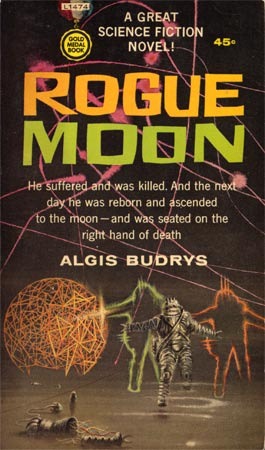
1960

budrys_rogue_moon
1961

the-lovers-philip-jose-farmer
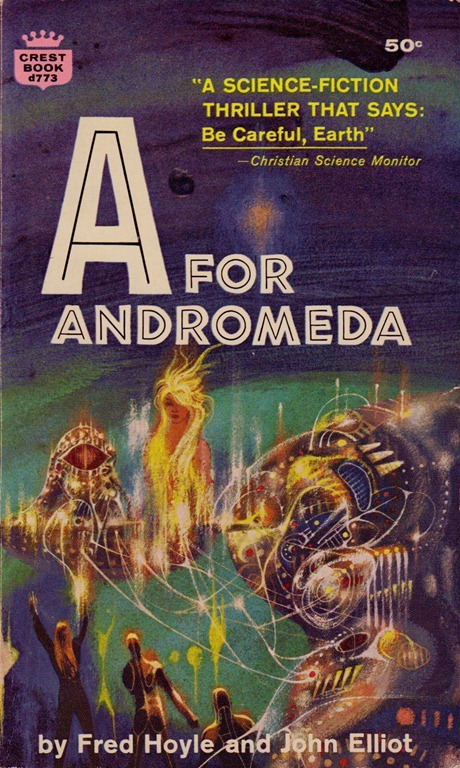
1962

a-for-andromeda
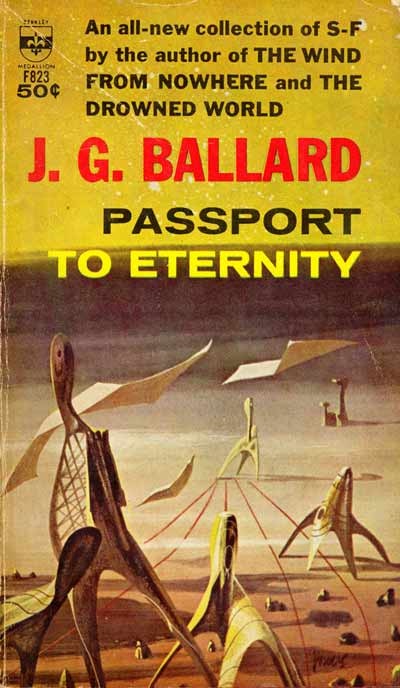
1963

passport-to-eternity-j-g-ballard
1964

farnhams-freehold-heinlein
1965

dune
1966

mindswap
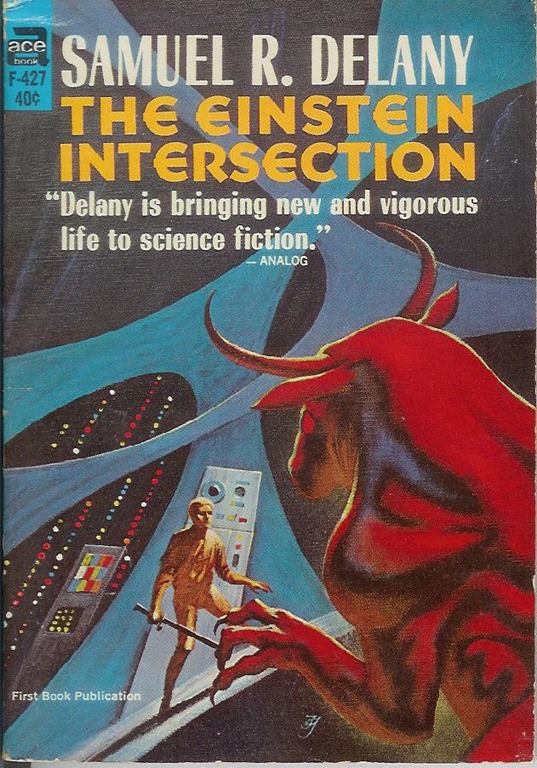
1967

the-einstein-intersection
1968

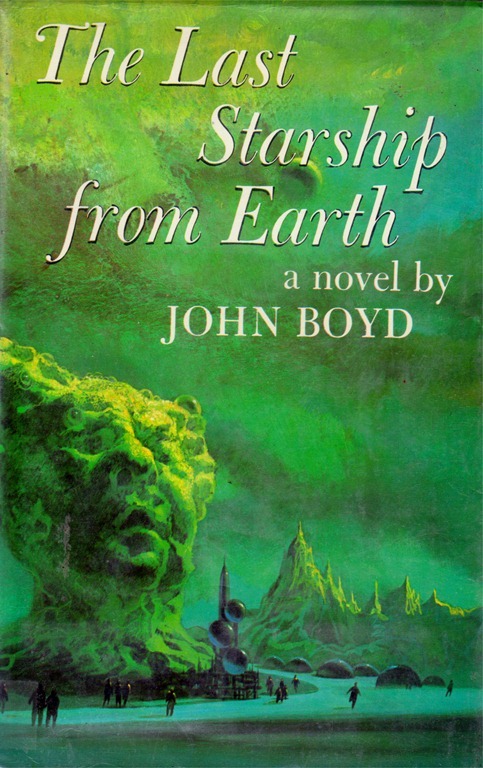
the-last-starship-from-earth-by-john-boyd
hawksbill-station-silverberg
1969

nightwings-silverberg

1960s SF: My Personal Favorites

  • Empire Star by Samuel R. Delany
  • Stand on Zanzibar by John Brunner
  • Flowers for Algernon by Daniel Keyes
  • Slaughterhouse-Five by Kurt Vonnegut, Jr.
  • Orphans of the Sky by Robert A. Heinlein
  • Do Androids Dream of Electric Sheep? by Philip K. Dick
  • Nova by Samuel R. Delany
  • Rite of Passage by Alexei Panshin
  • Podkayne of Mars by Robert A. Heinlein
  • Stranger in a Strange Land by Robert A. Heinlein
  • Dune by Frank Herbert
  • The Martian Time-Slip by Philip K. Dick
  • Way Station by Clifford D. Simak
  • The Man in the High Castle by Philip K. Dick
  • Babel-17 by Samuel R. Delany
  • The Left Hand of Darkness by Ursula K. Le Guin
  • The Einstein Intersection by Samuel R. Delany
  • Mindswap by Robert Sheckley
  • Four for Tomorrow by Roger Zelazny
  • This Immortal by Roger Zelazny
  • Behold the Man by Michael Moorcock
  • Omnivore by Piers Anthony
  • The Past Through Tomorrow by Robert A. Heinlein
  • The Moon is a Harsh Mistress by Robert A. Heinlein
  • The Three Stigmata of Palmer Eldritch by Philip K. Dick
  • Hothouse/The Long Afternoon of Earth by Brian Aldiss
  • Pilgrimage: The Book of the People by Zenna Henderson
  • A for Andromeda by Hoyle & Elliot
  • The Last Starship From Earth by John Boyd
  • The Dream Master by Roger Zelazny
  • Dimension of Miracles by Robert Sheckley
  • The Witches of Karres by James Schmitz
  • Make Room! Make Room! by Harry Harrison
  • The Eleventh Commandment by Lester del Rey
  • The Drowned World by J. G. Ballard
  • Lord of Light by Roger Zelazny
1950s 1960s 1970s 1980s 1990s

JWH – 4/7/13 – Table of Contents

On the Road (2012)–1920, 1922, 1947, 1951, 1957, 1969, 1970, 1971, 2013

The new 2012 film version of On the Road, based on the classic 1957 novel gets only 44% positive rating with critics on Rotten Tomatoes.  Fans like it even less, with just 40% approval.  And I know why and understand their reasons, but it’s not the movie.

I loved the movie, but I’m haunted by the Beats.

I think director Walter Salles and screenwriter Jose Rivera, did an excellent job capturing Jack Kerouac’s novel.  But see, that’s problematic, since the book itself is hard to like, even though it’s considered one of the best American novels of the 20th century by many literary historians, and yes, hated by just as many.  However, On the Road is more than a novel, it’s a legend.  The characters are based on real people.  These people were so fascinating they became characters in many other novels by various Beat writers.  Countless biographies have been written about their beat lives, and over the years films and documentaries have been made trying to capture this very tiny subculture.  We’re not reviewing a movie, we’re reviewing mythology.

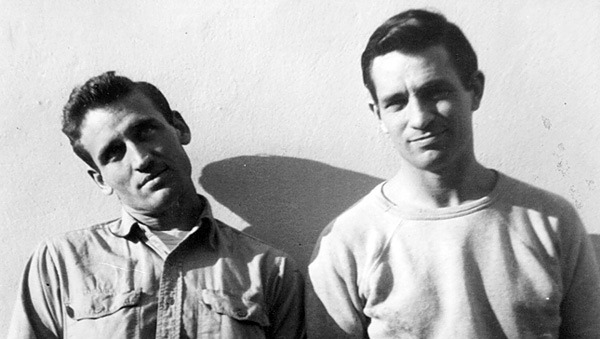
The encounter of two men, Neal Cassady and Jack Kerouac generated a whole literary movement, the Beat Generation.

jack-kerouac-and-neal-cassady

On the Road, came out in 1957, but was about Kerouac’s real life of 1947-1949.  It was essentially written by 1951, the year I was born, but tinkered with, and not published until 1957.  That’s a long time ago to most young movie goers today.  If Kerouac had lived he’d be over ninety.  So the 2012 film On the Road, is really a historical flick.  It’s about a bunch of unhappy crazy people who did a lot of drugs and rushed back and forth across the continent several times trying to find happiness, kicks, or just escape from their inner demons, obligations and boredom.

When I first read On the Road in 1969, it felt contemporary because the beats were a whole lot like the hippies, at least superficially.  It took me a while to realize that On the Road was about my father’s generation.  My dad was born in 1920, and Jack Kerouac was born in 1922.  Kerouac died at 47, in October of 1969, and my dad died at 49, in May of 1970.  They both died miserable drunks.  They both smoked a lot of unfiltered Camels.  They both travelled back and forth across America in a restless attempt to find themselves.  They both were failures at marriage and raising kids.  I use Kerouac to understand my uncommunicative father.

When you’re a kid and read On the Road for the first time it’s tremendously exciting.  It’s adventurous.  It’s about hitch-hiking.  It’s about sex and drugs.  It’s about jazz.  Yes, it’s that old, before rock and roll.  After doing a lot of drugs and hitch-hiking trips myself, I saw the book in a different light by 1971.  I reread On the Road every few years, and the older I get, the more I understand the suffering behind the story.

I wonder if the 60% of movie fans, and 56% of critics who watched On the Road are savvy enough to immediately realize that this story is about misery and not glamor?  To be on the road that much, to drink that much, to take that many drugs, to fuck that many people, requires a tortured soul driven by restless, existential pain.

Maybe I love this film because I read the pain in every character on the screen.  This is a great film when you realize it’s not a fun film.  Sure, they quote Kerouac’s famous lines twice in the film

The only people for me are the mad ones, the ones mad to live, mad to talk, mad to be saved, desirous of everything at the same time, the ones who never yawn or say a commonplace thing but burn, burn, burn like fabulous roman candles exploding like spiders across the stars and in the middle you see the blue centerlight pop and everybody goes ‘Awww!”

Kerouac rewrote his life to make it better, to romanticize it, to make it more meaningful, more exciting, but if you read the many biographies about Jack, you know he failed to fool himself.  He knew they were all beat characters.  When he discovered Zen, he hoped to put a spiritual spin on things, and hoped he could find enlightenment in his life, or at least write an enlightened view of it.  He failed.  Alcoholism consumed Kerouac, just like my dad, my dad’s brothers, and their father.  I come from two beat generations.

Everyone is initially seduced by Kerouac romantic spin on his life.  Everyone loves Neal Cassady/Dean Moriarty because he’s so wild and bangs all the chicks, but they forget that ole Dean will abandon you in a Mexico City flophouse when you’re out of your mind with dysentery and have no money, or run off and leave his wife and children to get his kicks making some other woman equally miserable.  Neal was a petty criminal, street hustler, con man and user of people, but all too often people loved him.  And Kerouac knew that.

Whether Sam Riley as Sal Paradise (Jack Kerouac) or Garrett Hedlund as Dean Moriarty (Neal Cassady) are convincing in their roles depends on your image of Jack and Neal.  I loved that the movie didn’t romanticize these two.  I don’t think Kerouac did either in his book if you read it closely, but too many would-be beats and hippies have.  I am reminded of the contrast between the 1968 book The Electric Kool-Aid Acid Test by Tom Wolfe, about Ken Kesey and his Merry Pranksters and their trip across 1964 American in an old bus named Further, and the recent documentary Magic Trip that used actual film the Pranksters took on the trip.  History and nonfiction don’t match up.   For On the Road, history and fiction don’t match either.  A good writer can make real life a whole lot more glamorous than it is.  I believe Kerouac wanted to chronicle his life without the glamor.

Which brings us back to modern American movie goers, they are incurable romantics.  They hate realism.  They embrace a comic book view of reality.  That’s why I think 60% of them turned their thumbs down for On the Road.  That’s why the film played only one week in my city, and why there was only one other person in the theater when I went.  That’s why they didn’t like a realistic story about a struggling young writer who loves a low-life hustler and makes him the center of his novel, his life, even though time and again, the bastard left him high and dry, and crushed his soul.  Kerouac wrote a lot of books, but only the ones that have Neal in them still matter.  Jack returned to Neal time and again, in life and in books, but without Neal, Jack never could get his life together.  Success didn’t help, and only made it worse.

Neal Cassady was the bus driver for Ken Kesey and the Merry Pranksters, and Cassady brought the King of the Hippies to meet the King of the Beats.  It was a disaster for the old friends.   Jack and Neal are now legendary mythic characters.  Trying to understand the realism of their friendship requires reading book and after book, and now watching movie after movie.

I think if you’re among the people trying to understand the story of Jack and Neal, you must see this film.  Everyone else should be warned.  If you didn’t like it, then you’re lucky, you don’t have a beat soul.  If you love it, you’re among the haunted by the myths of the Beats.

4/4/13

Books That Show Us Reality–The Power of the Red Pill

We live in strange times. 

Science is under attack by the faithful.  Most people prefer fiction over fact.  We know more about the nature of reality than ever before, yet few people want to look reality in the eye.  Everyone claims they want to know the truth, but do they?

It’s like in the movie The Matrix, when Neo is offered the red and blue pill.  Morpheus tells Neo the red pill will show him the truth and the blue pill will return him to forgetfulness.  On this planet, most people take the blue pill.

What if you wanted to take the red pill? 

Naturally, a red pill to reveal the truth does not exist.  But there are read pills, called books, that do.

Reality-bites

Up until the middle of the 20th century, an exemplary education involved the knowledge of the great books of the western world.  For the last fifty years we have been rejecting the great books kind of education, but we haven’t substitute a new canon.  A well educated person no longer has to know Greek, Latin and French, or the defining books of the classical world.  Science started in the 17th century, got up to speed in the 19th, and launched into orbit in the 20th. 

Yet few inhabitants of planet Earth embrace scientific thinking.  Fear of oblivion push many into the opium of religion, and most of the rest hide out in escapists fantasies and games.  Science is the only path to the truth, but few follow it.

What we need is a new set of great books, a new canon, whose content will define a well educated person.

I want to create a new definition of education.  Let’s start with a cockroach.  When you go into your kitchen in the middle of the night and turn on the light and see a cockroach run for his life, think about what it knows.  Think about what reality is to a cockroach.  The poor little fella knows nothing of physics, biology, history, mathematics, literature, or even language.  He has no tools to describe or analyze reality.  He’s a tiny little machine with sensors that help him search out food.  He also has a sensor that tells him to run for cover when the light goes on.  He doesn’t know your foot is about to squash his little body.  His awareness of reality is without thoughts.  His potential for education is nil.

Now, lets step up to a border collie.  Her awareness of reality is far richer than the poor cockroach.  We’re not sure if dogs think or have a language, although recently scientists claim that dogs can learn a couple hundred words, but they don’t perceive words like we do.  Our border collie is well adapted to education and can be trained to do all kinds of work and tricks.  She is even eager to learn.  But alas, she knows no more of physics, biology, history, mathematics, literature than our friend the cockroach.

We all approach reality like the blind men caressing separate parts of an elephant and speculating about the whole animal.  Some creatures can perceive more of reality than others.  Educated humans with all our senses are able to see the elephant complete in many dimensions,  even all its component molecule and atoms, and even trace its origin in its evolutionary past.  We see a lot of reality, but far from all – and nothing blocks us from seeing further.

Cosmologists see the largest aspects of reality.  Particle physicists see the smallest parts of reality.  Yet neither see the ultimate largest or smallest.  Our universe is probably one of an infinity of universes, so there is no end to big, and probably there is no end to small either.

Science has turned on the light, and scurrying humans can see it all, from immensely tiny particles to the furthest reaches of the universe, from the Big Bang until now.  Yet most people choose to hide in the cracks of darkness.

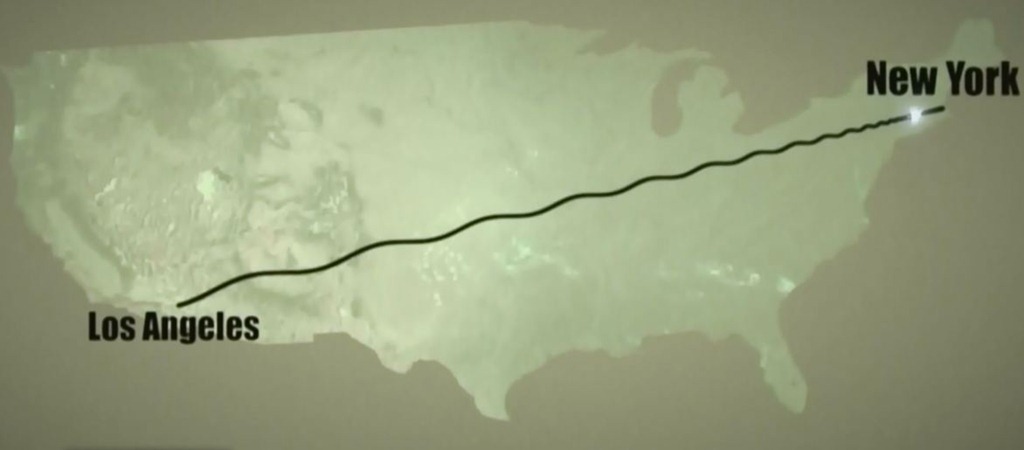
On a recent PBS show NOVA, “Earth From Space” they showed a map of the US with a squiggly ling running from New York to Los Angeles to represent the size of the electromagnetic spectrum.  The scientist interviewed explained the visual part of the spectrum we use to see would be about the size of a dime.  We have built new senses to see all of reality, we are way beyond biology.  We are now cyborgs.  But for the average human, there is little knowledge of our true capabilities.

spectrum

My definition of education is learning to see as much of reality as possible.  Unfortunately, most homo sapiens hide from reality, lost in their fantasies of religion, desires, fictional diversions, games, routines, habits, impulses, etc.  We are closer to the cockroach when we spend so much time pursuing food and sex.  We are like the border collie when we learn to work and earn a living.  But we are the most human when we’re examining the scope of existence.

Now to the great books.  Books are a tool like the telescope, microscope, or interplanetary robot, they let us see further.  If we read the right book, we’ll add details to our personal model of reality. We never see reality directly, but model it in our minds.  Tragically, humans are prone to delusions and fantasies that distort their models of reality.  Think of the wretched conspiracy theorist who builds highly distorted views of reality, or the faithful who shape reality by ancient Bible stories that pander to their fear of oblivion by promising eternal life.

Yes, it’s easier to take the blue pill and forget.  Taking the red pill requires a lot of study and work.

A great education is developing an internal model of reality that closely mimics our external reality.  A great education is learning about all the models of reality that failed.  Plato’s model of reality is abysmally wrong, yet we still study Plato.  Science is a long history of getting it wrong, but it’s cumulative history is a collection of good working models.  The theory of evolution is one of the most successful models of reality ever imagined.  Evolution is now the key tool for understanding how reality works.  Evolution explains change, and reality is constantly changing.

It’s time to get to the nitty gritty of this essay. 

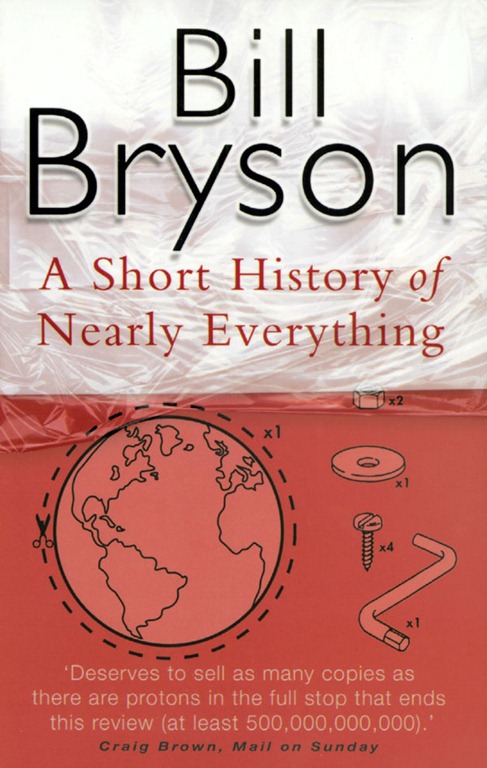
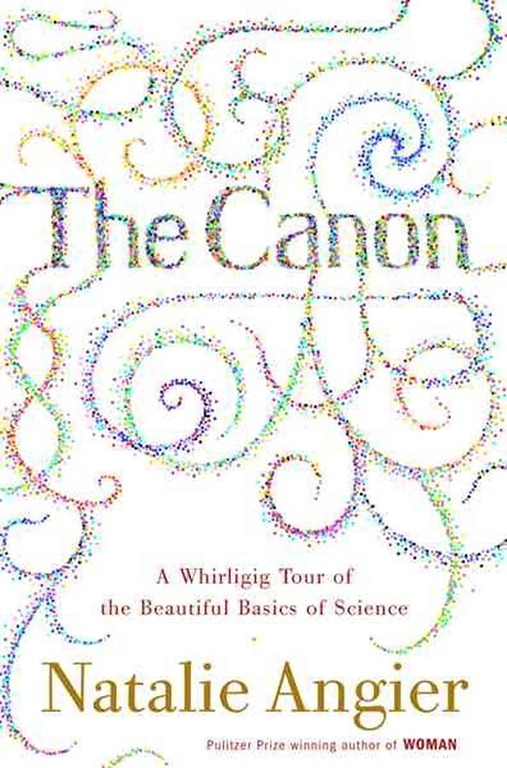
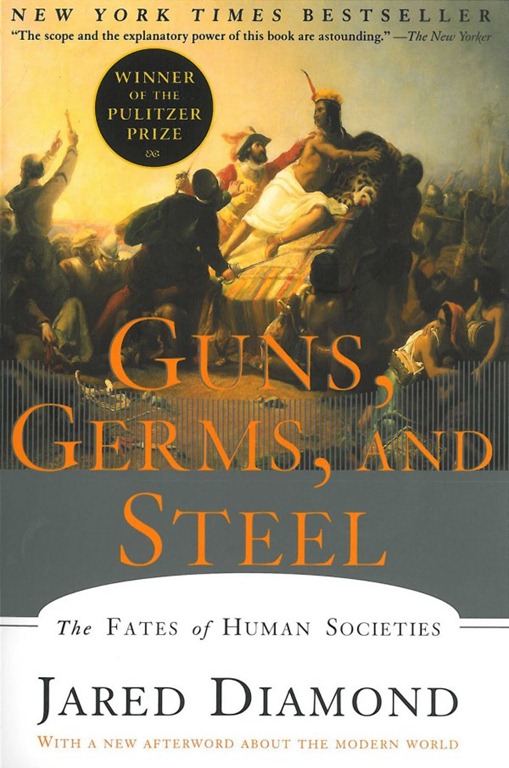
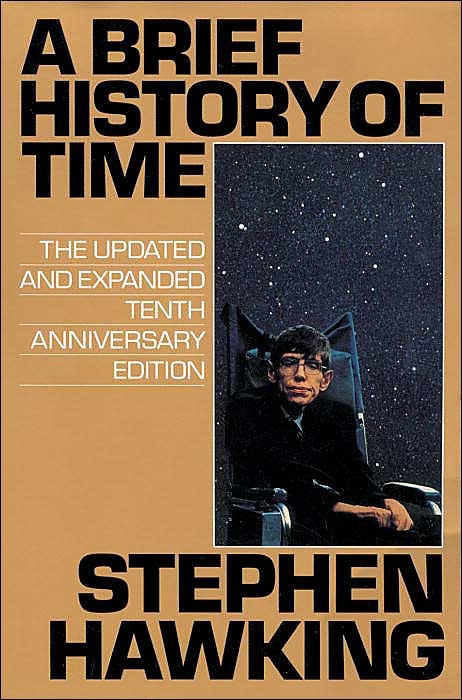
What books are the red pill for showing the truth about reality?  My knowledge and experience is limited, so I can only make a crude guess.  What I’d like to see a collective development of a canon of great science books.   The Scientific Canon needs a small set of introductory books that will illuminate the uninitiated into the world of science.  Then it will need a more extensive list of books for further study.

Coming up with a list of introductory books will be hard.  It won’t be like religion, with The Bible or Quran, where one book will do, science will take many.  And where do we start?  At the beginning with The Big Bang and cosmology, the science of the very big?  But to understand cosmology requires understanding particle physics, which is the study of the very small.  Science really doesn’t make sense without understanding evolution.  It really helps to grasp how unintelligent design, in a random chaotic system, can produce order even when the second law of thermodynamics exists.  Entropy is such a backasswards slippery concept to mentally wrestle.

Developing the Scientific Canon will be hard.  Obviously our school systems are failing at the job, even when they have a captured audience and powerful textbooks.  Can anyone list twelve books that will give the average person a basic grasp of science?  Even with a longer list, like Harold Bloom’s Western Canon list, how well verse in science can a reader become without knowing mathematics?  Is a scientific understanding beyond most people?

Here are some books I’ve been very impressed with, but I can’t claim are the best volumes for the introductory list.

A-Short-History-Of-Nearly-Everything

the-canon

the-elegant-universe

ontheoriginofspecies

DawkinsGreatestShowCover

guns-germs-and-steel

first-three-minutes

A Universe from Nothing

brief-history

the-edge-of-physics

the-information

the-selfish-gene

social-conquest-of-the-earth

in-pursuit-of-the-unknown-17-equations-that-changed-the-world

wonderful-life

beginning-of-infinity

your-inner-fish

surely-you-must-be-joking

JWH – 2/15/13

Identifying the Greatest Books of All Time

Books, whether novels or nonfiction, are inherently subjective in their appeal, so is it even possible to claim to know the greatest books ever written?  I don’t think any one person can objectively claim any list of books are the best ever written.  However, I think it is possible, by using statistics, and the wisdom of crowds, to identify the books that have had the greatest impact on the most people.

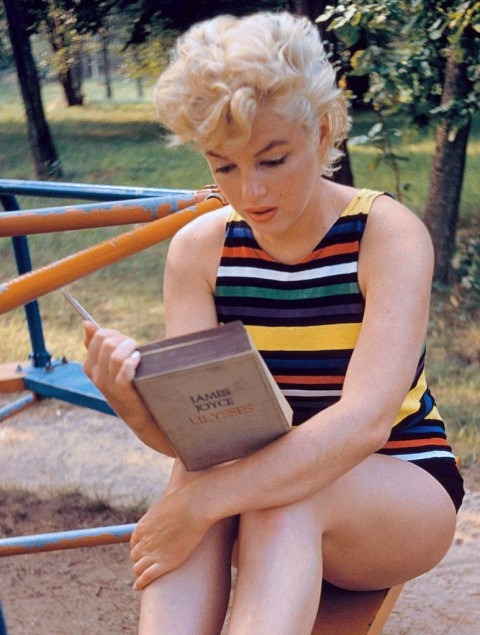
marilyn-reads-joyce

There is a long tradition for critics and scholars to list books they proclaim are great.  This is subjective no matter how well educated the selectors are in literature.  Now, if we take a hundred literary authorities and ask them to list their top 100 books of all time, put those books into a database and then create a list that shows which books were on the most lists, I think we can consider this more objective.  But even still, there is no Platonic ideal form of a great book that exists in reality.  How great is War and Peace if you can’t stand to read it?

That doesn’t stop people like me, life long bookworms addicted to books, to always search for our next fix, hoping for the most intense literary high yet.

Aggregating best of book lists is different from fan polls, although if we poll enough readers, standout titles will emerge.  Critics and scholars have read widely and studied literature, so their opinions count for more, but their opinions aren’t perfect.  Scholars know the older books better, whereas fans know the newer books.

Back in the 1980s I created a meta-list of science fiction books for a fanzine called Lan’s Lantern.  It was simple, I used eight best of lists, to produce a final list that contained books that had been on at least three of the eight lists.  I called the list The Classics of Science Fiction.  In the 1990s I updated the system with more lists, and put it online.  In the early 2000s I got some outside help and expanded the citation lists to 28 best of lists and set the cutoff to seven lists.  You can see the ranked results here.  The top three books had been on 25 of the 28 lists.  I thought that represented a kind of validity.

Ever since then I’ve wanted to build a database for all books, not just science fiction.  Several years back I got a domain name and hosting service and set up the beginnings of such a system, but the database got hacked and I gave up.  Recently I discovered that Shane Sherman has developed a database system at The Greatest Books of All Time that is similar to my dream book site.  He covers fiction and nonfiction and works with 43 best of lists.  However, Shane uses a different method for creating his final rankings by selective weighing of lists.  Yet another approach to identifying the great books.

Shane’s site is quite wonderful.  It’s simple and elegant.  Create an account or sign in with Twitter, and then start scanning the lists.  You can check the books you’ve read and the ones you want to read and the site will remember.  If you’re a book lover, you’ll enjoy going through the various lists, both the 43 best of lists and Shane’s two generated lists:  Fiction and Nonfiction.  I love best of lists.  I collect books recommending the best books of all time.  Over the years I’ve been teaching myself about the history of books.  When I make new friends I love talking to them about their favorite books.  I find the fame of books fascinating.

Best of book lists can be created from fan polls, critic lists, scholars lists, awards lists, library lists, and other criteria, such as whether a novel has been made into a movie, or was an all time best seller.  Popularity is important, but it’s not the only factor.  Critics and scholars are far more knowledgeable about the history of books than normal fans, but if the fan polls are large enough, they can be effective.  Various book awards, Pulitzer, Booker, Newberry, etc., have their own systems for selecting books, that try to go beyond the subjective, but the award judges have limitations too.  No one person can know about even a tiny fraction of published books.

If one list can’t be perfect, what about aggregating many?  Combining lists can generate interesting results.  For example, I’ll use four lists.

Shane Sherman’s top dozen books are:

  1. Don Quixote by Miguel de Cervantes
  2. Ulysses by James Joyce
  3. Lolita by Vladimir Nabokov
  4. The Adventures of Huckleberry Finn by Mark Twain
  5. The Great Gatsby by F. Scott Fitzgerald
  6. 1984 by George Orwell
  7. War and Peace by Leo Tolstoy
  8. In Search of Lost Time by Marcel Proust
  9. Anna Karenina by Leo Tolstoy
  10. Madame Bovary by Gustave Flaubert
  11. The Brothers Karamazov by Fyodor Dostoyevsky
  12. Middlemarch by George Eliot

If you look at the 43 lists at Shane’s site you will be hard press to find another one that has the same top 12 novels.  One that does come close is The Novel 100: A Ranking of Greatest Novels of All Time by David Burt.  From what I can tell, Burt doesn’t use a system but just claims to be an expert.  His top 12 are:

  1. Don Quixote by Miguel de Cervantes
  2. War and Peace by Leo Tolstoy
  3. Ulysses by James Joyce
  4. In Search of Lost Time by Marcel Proust
  5. The Brothers Karamazov by Fyodor Dostoyevsky
  6. Moby Dick by Herman Melville
  7. Madame Bovary by Gustave Flaubert
  8. Middlemarch by George Eliot
  9. The Magic Mountain by Thomas Mann
  10. The Tale of Genji by Murasaki Shikibu
  11. Emma by Jane Austen
  12. Bleak House by Charles Dickens

The overlap suggests that Burt is a very savvy literary scholar because he comes very close to the results generated by Shane’s system.

J. Peder Zane found another way to use the wisdom of crowds by asking 125 writers to submit their favorite 10 books and then built a database to see which books were recommended the most.   The list was called The Top Ten.  Using a point system, these 12 books came in at the top:

  1. Anna Karenina by Leo Tolstoy
  2. Madame Bovary by Gustave Flaubert
  3. War and Peace by Leo Tolstoy
  4. The Great Gatsby by F. Scott Fitzgerald
  5. Lolita by Vladimir Nabokov
  6. The Adventures of Huckleberry Finn by Mark Twain
  7. Middlemarch by George Eliot
  8. The Stories of Anton Chekhov
  9. Hamlet by William Shakespeare
  10. In Search of Lost Time by Marcel Proust
  11. Moby Dick by Herman Melville
  12. Ulysses by James Joyce

As you can see, many of the same titles are showing up over and over again.  Ulysses, War and Peace, In Search of Lost Time and Madame Bovary were on all three of these lists.

Now compare this to a large fan poll.  The BBC got over 750,000 readers to vote on their favorites, these were their top 12:

  1. The Lord of the Rings by J. R. R. Tolkien
  2. Pride and Prejudice by Jane Austen
  3. His Dark Materials by Philip Pullman
  4. The Hitchhiker’s Guide to the Galaxy by Douglas Adams
  5. Harry Potter and the Goblet of Fire by J. K. Rowling
  6. To Kill a Mockingbird by Harper Lee
  7. Winnie the Pooh by A. A. Milne
  8. 1984 by George Orwell
  9. The Lion, The Witch and the Wardrobe by C. S. Lewis
  10. Jane Eyre by Charlotte Bronte
  11. Catch-22 by Joseph Heller
  12. Wuthering Heights by Emile Bronte

The British are partial to British authors, with only two Americans making it to the top dozen, and no non-English writers in this portion of the list.  War and Peace did make it to the #20 spot, and Ulysses came in at #78.  Many of the others titles from the other three list did show up within the BBC Big Read top 100, so even average bookworms can love stogy literary classics, just not as much as fun books like Harry Potter.

If we could get one million bookworms from all over the world, what would that list look like?  What if there was a web site that allowed every bookworm in the world to submit their top ten favorite books, what might the overlap list look like?  If a hundred million Chinese readers participated, what Chinese books would we see?  It’s interesting that in the first three lists above, created by English speakers that so many non-English books made the list, but the western world does dominate.

The Top 100 Works in World Literature attempts to correct the western centric view.  You’ll have to visit the site to see the list, because it’s alphabetical, so there’s no top 12 to show and compare.  However, many of the books from the top three list above are on this top 100 list too.

There are a good many best books lists out there.  Shane has gathered 43.  I wonder what using 100, or 500 such lists would show?  If we could survey all the schools, colleges and universities around the world for what books are taught each year, what would that list look like?  What if we could see the long term sales figures for books, to see which books sell the most year after year?  And what books have inspired the most movies, plays and television productions?  Which books have been written about the most?  Which books have been quoted the most?

If somehow we could put all this information in one giant database, and develop a point system that weighs their different values, I think we’d come up with a very valid list of top books.  Of course, such a list would then cause a recursive effect.  If all readers felt certain books were not to be missed, wouldn’t that further reinforce their success?  Isn’t such an effect already happening with English majors?

If a novel came out in 2013 that was more powerful than anything written by Tolstoy or Joyce, how long would it take to be recognized by this statistical system?  Meta list statistical systems favors older books with momentum.  Only well trained scholars and critics could spot a new contender quickly.

Other Aggregate Lists

Fan Polls

Scholar/Critic/Editor/Reviewer Lists

JWH – 2/12/13

Reading Synergy

Sometimes I luck out and read two great books about different subjects that reinforce each other’s ideas and make each book more powerful.  Earlier this month I read Half The Sky: Turning Oppression into Opportunity for Women Worldwide by Nicholas D. Kristof and Sheryl WuDunn.  Now I’m reading The World Until Yesterday by Jared Diamond, about comparing modern society to human societies of the past.  Jared Diamond makes a case that human behavior is different under state governments than how we lived under pre-state societies.  Diamond describes life and psychology in hunter and gather cultures, as well a chiefdoms and tribal societies.  It might surprise you that there is much in the two books that overlap, but then any two books that chronicles so many cultures around the world are bound to overlap.

the-world-until-yesterday

Half the Sky is introduced by saying 60-100 million women are missing from the current population.  Kristof and WuDunn point out that gender selected abortion, infanticide, the favoring of male children to receive medical care over females, enslavement, torture and other horrible social practices explain the missing females from the world’s population.

Jared Diamond also describes how pre-state cultures are hard on females.  His book explains why these cultures practice infanticide and gender selected abortions when they have access to technology.  What Diamond essentially says is our modern way of life is new and that humans lived much differently for millions of years before the advent of state controlled governments.

Most traditional cultures, as Diamond calls them, fought constant wars over women, food, land and natural resources.  Societies were male dominated and women were possessions.  Polygamy was the common marriage arrangement which inherently treats women unfairly.

If you blend the two books together you see that the world is going through a transformation.   We’re shifting from traditional cultures to state cultures which over time has abolished slavery and moved towards monogamy and fairer treatment of women.

half-the-sky

Kristof and WuDunn make a case that if we change how we treat women, we’ll change how societies operate, and thus reduce terrorism and war, and increase economic activity and freedom for all individuals.  Diamond indirectly says states protects individuals and frees them from constant warring and violence, which is mainly caused by males seeking personal revenge and retribution.  He also points out the ownership of women causes much of the violence in traditional societies.

There is a synergy between that and the TV show I’m watching on DVD, Hatfields & McCoys.  The two feuding families were more like two feuding tribes.  I find further reading synergy between the above and the book Empire of the Summer Moon by S. C. Gwynne describing the history of the Comanche Indians, and The Old TestamentThe Old Testament is a history of the twelve tribes of Israel conquering the Canaanites, and later about the twelve tribes of Israel trying to survive the onslaught to two state run societies, The Babylonians and The Romans. Empire of the Summer Moon is about the Comanches fighting the onslaught of the United States of America, another state run society.

For most of human history we live and fought each other as small groups.  The standard operating procedure was kill your enemy, enslave the women, and adopt the children.  The Old Testament illustrates this perfectly.  Sometimes God told the Israelites to kill everything that walks and crawls when they invade a village, and sometimes God told them to kill only them men and keep the women and children.  The tribes of Israel acted no different from the Comanches.  Whether they were as cruel in their torture was not noted in The Bible, but I expect it was pretty much like what we saw between the Hutu and the Tutsi.

The upshot of all these books is individual freedom, peace, gender equality, the semblance of justice comes from state run governments.  If we don’t want tribal societies like the Taliban or Al-Qaeda then we have to promote strong central governments.

Kristof and WuDunn don’t go into this directly.  They just advocate uplifting women where we can, but what that really means if Jared Diamond is right, is we have to eliminate old traditional ways, which is a kind of cultural imperialism.  Diamond is very fond of traditional societies and thinks we can learn from them, and that might be true, but he knows we can’t maintain all the old ways.  This is best illustrated in his introduction when he compares 1961 New Guinea people to 2013 New Guinea people.  The World Until Yesterday is an extremely important book.

In a pre-state society, safety is living very close to your tribe and your tribal alliances.  It is extremely unsafe to venture far and meet strangers.  Nearly all strangers are considered enemies.   If you are alone and meet a group of strangers expect to flee or die.  If you are with your friends and find strangers in a smaller number, expect to kill.  This is the basis for our xenophobia.  It worked the same for the Hatfields and the McCoys.

In a state society we learn to trust strangers.  We can safely travel the world as long as we don’t venture into traditional societies.  When you go to France you don’t expect the Frenchmen to kill you.  That won’t be true in areas where people still live by traditional ways.

Kristof and WuDunn inadvertently make the case that lingering traditional societies are killing off women, or cruelly oppressing them, and that we need to spread strong governments into traditional societies.  What they explicitly advocate is finding gentle ways of changing social customs in traditional societies to be more enlightened about women.   If you read Empire of the Summer Moon you’ll see how 19th century people wanted to gently change the Comanche.  It didn’t work as planned.  I doubt changing the Taliban will be any more of a success.

empire-of-the-summer-moon

Strangely enough, the real vector of change is television and the internet.  Knowledge is homogenizing.  Citizens of traditional cultures resent being forced to change.  Practices like infanticide and female genital mutilation are natural, if not holy and good to them.  It is insulting to these people to tell them their ways of doing things are evil and grotesque.  But if they are given a choice they sometimes choose to change on their own.  Television and the internet help them see their choices.  Kristof and WuDunn say helping women will cause positives changes too.  That’s a great hypothesis to test.

I highly recommend reading Half the Sky, The World Until Yesterday and Empire of the Summer Moon together for the strong synergy of ideas.  All too often we think our way of doing things is the right way, and everyone else’s way is wrong.  Many people advocate cultural relativism, but I don’t.  I believe individuals are more important than cultures.  There is no superior culture, but I advocate the maximum protection of the individual with the goal of giving everyone the most freedom possible.  That avoids the which culture is better issue.  Of course, individual freedoms tend to homogenize societies because it does away with violence, gender bias, slavery, polygamy,  and all kinds of other culture beliefs that tend to color individual cultures.

JWH – 1/28/13