
I have now read five books by Bart D. Ehrman about Jesus and The New Testament. This is rather strange considering I’m an atheist. The books were
- Misquoting Jesus: The Story Behind Who Changed the Bible and Why (2005)
- Jesus, Interrupted: Revealing the Hidden Contradictions in the Bible (And Why We Don’t Know About Them) (2009)
- Forged: Writing in the Name of God—Why the Bible’s Authors Are Not Who We Think They Are (2011)
- Did Jesus Exist?: The Historical Argument for Jesus of Nazareth (2012)
- How Jesus Became God: The Exaltation of a Jewish Preacher from Galilee (2014)
The reason why I’m so fond of Ehrman’s books is he’s a historian writing about how Christianity came about and does not digress into theology. I study the origins of Christianity in the same way my friend Mike studies ancient Greek literature and philosophy. Ehrman works very hard to walk the razor’s edge seeking the academic truth of things, but in doing so, often offends the faithful.
Most people in America who consider themselves Christians aren’t interested in the historical details of their faith—they believe because that is what they were taught growing up and never took the time to study The New Testament. If they did, they’d find it to be a black hole of endless scholarship. Ehrman is the James A. Gray Distinguished Professor of Religious Studies at the University of North Carolina and he says his classes are very popular with all kinds of people, and points out that his conclusions of historical scholarship are middle of the road, and most of what he teaches has been common knowledge for a long time in seminary schools. Readers are often shocked by what they read in Ehrman’s books but that’s because the ideas are new to the readers, and not to historians of Biblical scholarship.
If what you know about Christianity and The New Testament is was what you learned in Sunday School you might find Ehrman’s books both fascinating and a challenge to your beliefs. Ehrman started out as a Evangelical himself, but after years of Bible study has become an agnostic. His books do not attack beliefs or believers. Ehrman is the kind of truth seeker that learned the ancient languages of The Bible so he could do his own translating, and got a doctorate from Princeton Theological Seminary. Ehrman moved from believing in The Bible to becoming obsessed with how The New Testament came about. He has written over twenty-five books on the subject, some for the general reader and others for academic scholars.
We know very little about the actual man Jesus, but through the detective work of textual analysis, anthropology and historical studies of the times in which Jesus lived, Ehrman pieces out one view of Jesus that he claims is a pretty common view among Bible historians. This is best seen in Did Jesus Exist? Then Ehrman explains how the followers of Jesus made him into the God we know today in the book How Jesus Became God. Then his books Misquoting Jesus, Jesus, Interrupted and Forged explores how The New Testament and Christianity evolved in the first four hundred years after Jesus’ death. If you read these five books you’ll have a pretty good overview of the current historical studies on Jesus and The New Testament. Ehrman also has a number of entertaining courses at The Great Courses site.
I read these five books in the order they were written and published, but I’d recommend reading them in a different order if you are new to Ehrman. They all cover the same big territory, but they each focus on threads of finer detail.
Did Jesus Exist?
I’d start with Did Jesus Exist? because Jesus is how everything got started in the first place. Ehrman finds the most objection to his books by fundamentalists who believe in the literal truth of The Bible, and strangely for this book, by atheists and agnostics who wish to disprove the existence of Jesus. There is a growing population of humanists who wish to turn Jesus into a myth, and Ehrman’s historical work undermines their beliefs too. Basically, Ehrman walks a middle ground between the fervor of belief and disbelief.
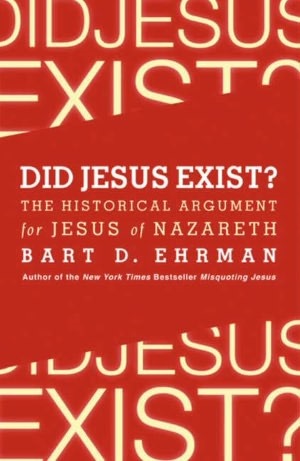
I wish the conclusion to this book was available online so I could link to it. Ehrman explains how he attended a meeting of the American Humanists Association to receive their Religious Liberty Award and was surprised to find the non-believers spending so much time talking about religion. He was also shocked that many of these scientific minded people have thoroughly embraced books by writers who claim Jesus is a myth. It disturbs Ehrman because he knows the pseudo-scholarship approach to proving Jesus is a myth has as much academic validity as Creationism and Intelligent Design and these proclaimed embracers of science don’t seem to know that.
Ehrman in his book Did Jesus Exist? has to attack ideas many of his most popular fans cherish. Ehrman’s books clearly disproves the fundamentalist view of the literal interpretation of The Bible, which agnostics and atheists love, but his scholarship also finds consistent evidence that a man named Jesus did exist. So, in one book Ehrman undermines the faithful and the unbelievers. Ehrman shows the same kind of airy philosophy that goes into convincing people that Jesus was a God is the very same kind of philosophical slight-of-hand that goes into making Jesus a myth.
Whether you’re a believer or disbeliever, don’t you want to know the truth? I’m not saying the Ehrman knows the absolute truth, but I am saying his middle of the road, conservative academic approach is more scientific and reliable than just taking other people’s word for things. What we all need to do is learn to demand the evidence for anything claiming to be true. And we need to learn the difference between bullshit evidence and research consensus evidence.
Ehrman embraces the study of history as if it was a science, demanding evidence. The mythicists, as Ehrman calls the Jesus as myth people, promote their beliefs without real academic vigor. Some only offer wild speculation, but others, some even with PhDs, do attempt to make their points with evidence, but Ehrman makes a good case their evidence is poor, and their logic weak. It’s a fascinating book that sets the stage for his next book.
How Jesus Became God
Ehrman works to prove that Jesus did not see himself as God, or even divine, but that his followers after his death did deify him. Ehrman carefully and academically explains the historical existence of Jesus and how Christians transformed a flesh and blood man into divine being to serve their purposes. This is a great book for The New Testament Bible study because Ehrman spends most of his time exploring the writings of Paul, the four Gospels, Acts and other references in The New Testament to show how Jesus changed over time. The textual analysis Ehrman makes should be obvious to anyone who just reads The Bible. So, why haven’t most Christians noticed what Ehrman points out?
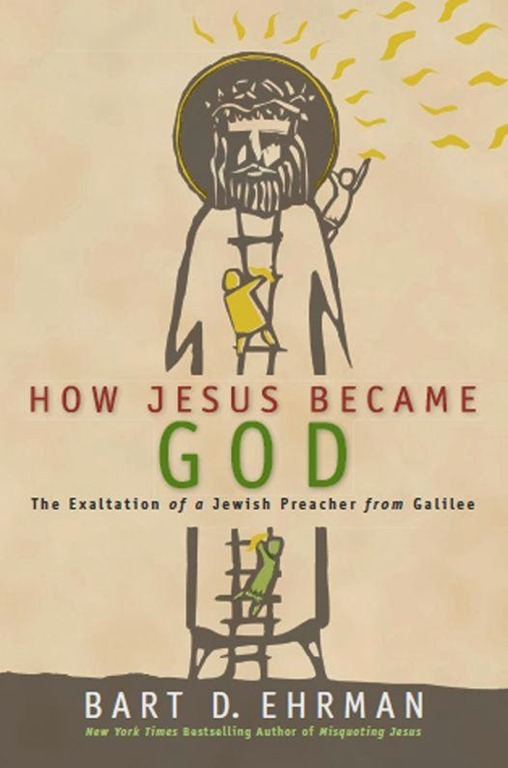
Most people who read The Bible, read it in pieces, jumping around as it’s presented in a Sunday School lesson or sermon each Sunday. Ehrman suggests reading it by comparing all the stories from different books about the same event. This any reader can do. What Ehrman brings to the table that most average Bible readers don’t have is the scholarship that explains when various parts of The Bible was written and by who. When you plot what was said when, you’ll begin to notice that The New Testament is full of contradictions but they make sense if you look at them on a timeline. It’s quite obvious that theology developed over time, and the theology was constantly changing. Even within The New Testament its possible to see that Jesus went from a man to a God. However, to fully understand this transformation requires further study of Christian theologians and their writing for the next three hundred years. How Jesus went from human being to The Trinity took three hundred years to hammer out, and there were a lot of strange side trips along the way, especially by Christians now called heretics and Gnostics today.
How Jesus Became God sets things up nicely for the first Ehrman book I read.
Misquoting Jesus
Have you ever wondered how The New Testament was written, edited and published? Especially since it was put together over a thousand years before the printing press. Have you ever wondered who wrote The New Testament? Many people think it’s the absolute word of God, as if God dictated The Bible to someone. Have you never noticed that Bible stories have many different points of view, writing styles and often contradict each other? Have you never wondered how something that was written almost two thousand years ago could be published consistently without errors and changes? Have you ever tried to copy a passage in a book by handwriting? How well did you do?
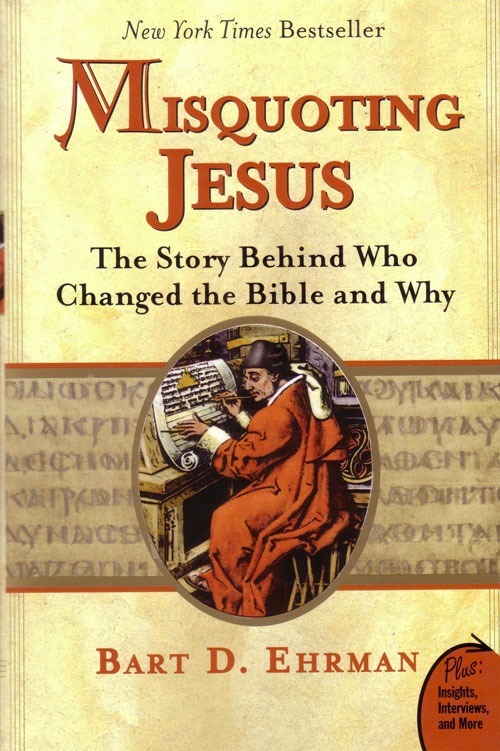
Once you learn that who Jesus was is determined by who was writing about him, then it’s easy to understand how The New Testament was put together and why. Actually, The New Testament is very poorly edited because its far from consistent. It leaves in evidence of earlier thinking that was supplanted by later theology. And it becomes all too obvious that your favorite Jesus quote depends on when that portion of The New Testament was written, and what his orthodox followers believed at that time.
And as manuscripts were passed around the Roman world, copied by scribes in different locals, with different beliefs, often they were altered to reflect a particular view of Jesus. We don’t have the original drafts of The New Testament books, but we do have hundreds and hundreds of copies that showed up hundreds of years later. We can trace changes that were made as they circulated from community to community. And scholars have also detected forgeries.
Forged
Have you ever heard that some of the books in The New Testament were forgeries? For example, for over a hundred years now, some scholars believe some of the books claimed to be written by Paul were obviously not. How did they learn that? Plagiarism and forgery did not exist like it does today, so Bart D. Ehrman has to explain how the various books were written and how their authorship got attributed. Back in the early days of Christianity, in the first four hundred years after Jesus died, being a famous author was not like it is today. If you wrote something you wanted people to believe, you often said it was written by someone else, someone people would believe.
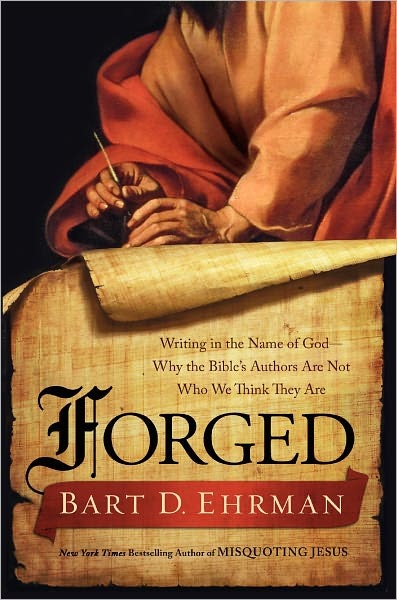
Using contextual study, and even computers to analyze style and content, it’s possible to determine if the same person wrote or did not write two different essays. But even without the skills of a historian or a computer, it’s pretty easy to see that certain lessons from different books in The New Testament teach radically opposing ideas. Reading Forged will show the common Bible study student how to read scripture far more closely. This leads us to the last book I’m recommending to read.
Jesus, Interrupted
Knowing what Jesus really said is very difficult. Most religious people assume everything printed in red in The New Testament is something Jesus actual said. Well, historians like Ehrman would beg to disagree. What’s so fascinating about this book is Ehrman gets to write a bestselling book pointing out contradictions in The New Testament that any careful reader should have already noticed for themselves. I have a feeling that most believers attending church were like me as a kid. I listened to the preacher quote a passage of The Bible and then tie in some personal experiences from his own life or people in the church, and then turn scripture and contemporary life problems into a sermon. As a kid I never read The Bible from start to finish. If we did, we might remember while reading The Gospel of John things said that might contradiction what we head already read in The Gospel of Mark. Most readers don’t cross-compare, but just work to decipher scriptures one line at a time.
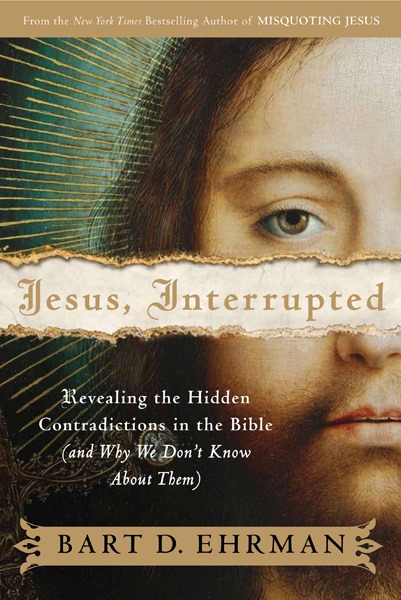
Ehrman teaches readers the trick of parallel reading. Pick specific incidents in the life of Jesus, and then read about the same incident in different places throughout The New Testament. It becomes all to obvious that the various writers had different stories to tell, and different theology to preach. The contrast between the stories in Mark and John are startling. Why haven’t the average Bible reader notice that? I’m sure many have, but I think most haven’t.
If you go searching for reviews of these books at Google you can find lots of reviewers who attack what Ehrman has to say. Now there are different kinds of attacks. Sometimes, other scholars call Ehrman out on his scholarship. It seems to me that in Ehrman’s newer books he spends far more writing time explaining how he made his conclusions in comparison to other scholars, in a preemptive attack on this kind of criticism. This makes for good writing and better reading. The other common kind of attack on Ehrman’s work is by Christian apologists who seek to defend their specific theological view. The quality and validity of these kinds of criticism vary greatly.
Ehrman constantly reminds his reader that he is a historian and that metaphysics lies outside the scope of historical studies. The trouble is the true believer, especially the fundamentalist, believe that their theology is the true view of history. They assume the metaphysical is part of history. This is what makes Ehrman’s books controversial with certain readers.
I am an atheist. I don’t believe the metaphysical exists. To me, Ehrman’s books are excellent explanations on how Christianity got started in a historical context. His books also explain to me at least, when and how some Christians acquired their theological and metaphysical ideas. True believers don’t seem to understand that all concepts, all memes, have a history. Someone thought them up. Where we differ is I see them as ideas and they see them as God’s word.
These five books by Bart D. Ehrman go a long way to explaining the history of certain ideas that are programmed deeply into Western culture. No historian, philosopher or scientist will ever be able to prove or disprove the cherished metaphysical desires of believers. However, most believers embrace their beliefs without much analysis. Reading these five books could dissolve such beliefs because they raise logical questions that are corrosive to simple thinking. However, there are many believers who develop very complex thought systems to maintain their beliefs. These people will have to read Ehrman and come up with rationalizations that counter his assertions.
JWH – 7/21/14









 Auxiliary Memory