I’m Retired–Do I Throw Away My Alarm Clock?

Which is better:  Following disciplined habits or natural cycles?

Having to get up and get to work on time used to provide discipline in my life.  When I was off for weekends or vacation days, the time I was ready to start my day got later and later.  Every morning I need to shower, exercise, dress, eat breakfast, floss and brush teeth before I’m ready to start my day.  If I get up at 6 AM I can be ready to go by 7:30.  But if I snooze until 7 or 8 AM, my day might not start until 9:30.  This morning, I got up later, and didn’t hit the computer until 9:36.

Now that I’m retired I have a choice to make.  Do I live by the clock or my biology?

clock-stethoscope 
[Living against the clock: does loss of daily rhythms cause obesity?]

Sleeping in seems so wasteful.  But is that a false assumption?  Now that I’m retired, does it matter what time I start writing each day?  Would I be more productive if I lived by the clock or learned to adapt to my natural rhythms?

I’ve always assumed discipline is a major virtue.  That we each seek to conquer nature by using willpower to bend our bodies and environment into our control.  Isn’t it everyone’s assumption that we must overcome our animal urges?  However, studies on health and stress show that might not be the best way to live, and that going with the natural flow of things might be healthier.

If you look across the Earth, have we conquered nature, or merely destroyed it?  That’s getting awful philosophical as to whether I should sleep in or get up early.  Can’t I just accept that the early bird gets the worm?  Now that I’m thinking about this question I realize I’m living by a lot of assumptions.  My 9 to 5 work years forced me to get up early, but now I’m free to follow a different path.

Since my health is in decline, it’s more important that I listen to my body than the Clock app on my iPod touch.  Just writing these words shows me I need to do a lot of rethinking of my commonly held assumptions.  And what other assumptions do I need to question about my other daily habits?

How many meals should I eat and when?  Do I need to shower every day?  Does it have to be in the morning?  What time is best to do my exercises?  When is the best time to write, clean house, socialize, watch TV, etc?  What if I follow my circadian rhythms and I no longer track a 24 hour clock?  How do I adapt my freeform schedule to my friends who follow a work schedule? 

There is something to be said for natural sleep . I notice this morning when I woke up at 7:30 that it was just getting light.  I’m wondering if my natural alarm clock is set by the amount of light outside.  The room in which I sleep faces east, and has one long window without curtains  across the east wall.  Maybe I should do a scientific experiment and note when I wake up and when sunrise is for that day, and see if in the course of the year if I follow a natural cycle.

As I’ve been sleeping later, I’ve been wanting to stay up later.  I’ve been retired just six days but I’m already having a hard time remembering what day it is, and I’ve stopped following the clock.  Also, I’m now eating at different times.  I even nap later.

My retirement goal is to write a novel.  I assumed before I retired I needed to stick to a disciplined schedule and work at novel writing just like I worked as a computer programmer.  Now I’m thinking that was a false assumption.  Or is that just a rationalization to sleep later?

The western world changed after the invention of the clock.  Now that I’m retired I realize I’ve left clock time.  Because I don’t have cable TV, I don’t even watch TV to a schedule anymore.  I’m on Netflix time.  Does this mean I’ve been a Morlock all my life and now I’ve become an Eloi?  That might not be good.  Modern sequels recognized the virtues of the hideous Morlocks – they got things done, while noting the Eloi were lazy and wimpy.

Living by the clock is mechanical.  Living by nature is undisciplined.  There’s got to be a happy medium – or is that another false assumption? 

JWH – 10/28/13

What Makes You Cry?

I don’t cry, not the boo-hoo kind of weeping, I’m more of a Mr. Spock when it comes to emotions.  But I do get misty-eyed from time to time, and as I’ve gotten older, those wet eyed moments come more often.  What makes us cry?  And obviously, we all cry for different reasons.  Yesterday my friend Mike sent me a video, “Bittersweet Melodies” by Feist, that choked me up.  If I wore mascara it would have run.  It had gotten to Mike too.  I forwarded the link to some of my friends and to the online book clubs I’m in.  So far I’ve heard from about fifteen women and a handful of men.  Men get choked up.  Women think its nice, clever, but no tears.  I’m waiting for more responses, but so far it’s quite gender specific.

Like I said, it doesn’t take a rocket scientist to observe that everyone has different buttons to push to turn on the waterworks.  But of my  small sample, it seems the Feist video worked with men but not women.  So here’s an experiment, watch this video and let me know how you reacted.  Do you think it’s just clever, or does it choke you up?

[The original photographs used in the video can be found here and here.]

Before and after pictures of people getting older is a definite emotional button for me, but understanding why, is harder to explain.  The wistful Feist song does create an emotional mood, but it’s the photographs that poke me in the heart.  Why?  Well a couple of anecdotes might help.

When I was a little fella, I remember this time I had to get a shot.  I was in a full blown bawling meltdown and the doctor and my mom were trying to get me to cooperate and get punctured.  I remember the doctor patiently waiting for me to settle down. 

When I had calmed down a bit he said, “You don’t have to cry.”

I don’t think I said anything, but I was thinking, “Huh?”

He again said, “You don’t have to cry.”  He had gotten my attention.  Then he came closer and whispered, “You can choose not to cry.”

I thought about it for a moment, turned off the faucets in my eyeballs and let him give me the shot.  I was amazed I didn’t have to cry.  I remember consciously choosing not to cry the next time my mother switched me, and when my dad gave me the belt.  I then learned not crying enraged my parents who would switch and belt harder because of my lack of reaction.  Not crying had a kind of empowerment.  I went with it.

Babies cry, I believe, because they have no other outlets for communicating their needs.  I think as adults we cry when we have no other ways to express what we feel.  Most of the time we do, so we don’t cry.

The other anecdote from childhood that is useful for this topic is about separation.  To kinds of separate.  As a kid my family moved around a lot.  A whole lot.  I’d always make a best friend wherever we moved, but ultimately, that friendship would be torn apart, just something beyond my control.  Starting at an early age, looking back and thinking of lost friends always choked me up.  I think that’s why most people cling to the idea of heaven – they can’t bear that they will never see some people again.  That’s why death tears us up, we can’t communicate our feelings of loss and separation.

When I was very little, I woke up in the middle of the night and went out to the living room where my dad was watching all-night movies.  He let me stay up and I watched a film about two kids being separated when one family moved away, then they were reunited during WWII, in the Pacific.  I was too young to understand this, I just felt it.  That film burned into the core of mind, at the bottom of all my memories.  Years later I caught it again, when I was old enough to remember its name, High Barbaree, and the actors, Van Johnson and June Allyson.  Eventually I learned that it was based on a book by the same name, written by Charles Nordhoff and James Norman Hall, the writers of The Mutiny on the Bounty.  The story was about the last memories of a dying man, but of course, in the Hollywood version, he’s rescued from death.  His dying thoughts were about his childhood and teen years.  I think men feel separated from their young selves, in a way that women don’t.  I know there are no hard and fast gender generalities, but this one sort of works.

The key to my deepest emotional buttons are encrypted in that movie and book.  Events in that story resonate at the core of my being.  And that reveals probably my most powerful emotional button, the desire to return to childhood.  We can return home, to the physical location where we grew up, but we can’t return to the state of mind when we called it home.  I wonder if my lady friends didn’t respond to the Feist video because they don’t have that urge to return to childhood.  Women want to be young again in body, but guys want to be young again in mind.

I’ve read there are two kinds of people, those that would pay anything to relive their adolescence, and those who would pay anything to erase the memories of those same years.

“Bittersweet Melodies” is incredibly wistful to me.  When I really like a person I want to see photos of when they were kids.  I want to know what they did when they were kids, and where they lived.  Sometimes I think our true souls are the ones we had at age twelve.

JWH – 6/17/13

Four Little Girls Buy A Jimi Hendrix LP

I was flipping through the “new arrival” bins of used LPs at Spin Street when four teenage girls, all looking about fifteen, showed up to paw through the albums too.  I heard one excitedly tell the others she found a Herman Hermits LP.  My first thought was how did a 2013 teen even know about a 1963 teenybopper group?  I was mildly annoyed at these little girls because they had gone over to the used Rock section, the place I wanted to go next.  So I went to where the used Jazz section used to be, and I discovered that Spin Street had moved the used jazz LPs or done away with them.  So I went to new Rock section, which was now was much larger than before, covering up where a third of the used rock records used to be.  LPs really must be making a comeback.

I was surprised at the flock of girls in the LP section, a room at the back of the store away from everything else.  I assumed their parents were out front, because they didn’t look old enough to drive, but I could be wrong.  I’m used to seeing old geezers like me time traveling through these dusty bins, and sometimes I even saw some hipster thirty-somethings, but never vinyl record buyers this young.

So while the girls were looking exactly where I came to shop, I contented myself to look through the new LPs.  Eventually I noticed they had disappeared, but I hadn’t finished, so I stuck with my systematic flipping of new LPs, going from Z to A.  By the time I had gotten to the I’s, two of the girls were back and jumped into the H’s right next to me, looking for Jimi Hendrix.  They pulled a couple LPs out of the bunch, and one asked the other, “Do they have ‘Purple Haze’?”  The other replied “This one does.”

ZB3276_169191_0308

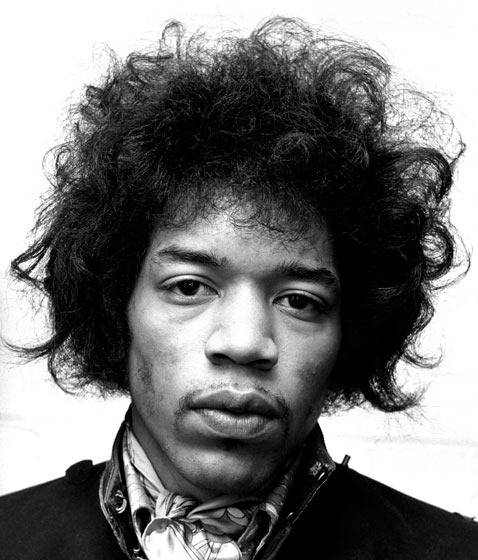
They put one of Hendrix’s posthumous albums back, and took  Are You Experience with them to the other two girls, and headed to the checkout.  I really wanted to ask them how the hell did they discover Jimi Hendrix, a guy I discovered at 15, almost fifty years ago.  I thought it very strange indeed, like if I had gone in a record store in 1964 and bought a 1924 Bix Beiderbecke record.  It took me until my forties to work back in music history forty years.

I don’t normally talk to teenagers because I worry about invading their space.  When I was that age I didn’t like old people intruding, so I’m hesitant to do it  myself, now that I’m old.  I wanted to know if they read about Jimi Hendrix in a magazine, or their parents or grandparents played him at home, or they heard him on the radio.  And do teens even listen to radio now-a-days?  Jimi Hendrix is legendary, but is he well known among the young?  I imagined it’s not hard to discover him, I was just curious how.  Is he taught in school?  And why didn’t they just steal his .mp3 songs off the net like normal kids?

These little girls, who all looked alike, skinny, brown hair, dressed in dress shorts and blouses, looking like typical Bible Belt Baptists kids that I often see around Memphis, seemed so young and innocent looking.  What the hell are they listening to Jimi Hendrix for?  I remembering tripping at 16 and listening to “Purple Haze.”  Were these little clean-cut girls doing drugs?  Did their grandfathers and grandmothers tell them about the time they dropped acid and saw Hendrix?

Jimi was the ultimate bad boy of the sixties.  Girls loved him.  So I guess it’s not strange that girls might still love him.  I just can’t imagine these little girls going home, putting Hendrix on the turntable, cranking up the amp, and then lighting up a bong.  If I was a young parent today and my kid brought home a Jimi Hendrix record, I’d wonder if they were doing drugs.  Especially when the album is entitled, “Are You Experience.”

But I really doubt these girls got high.  This is a different world than 1967.  So how do 2013 children see 1967 kids?  Can they ever fathom how we grew up?  I’m living in 2013 and can’t imagine what 2013 kids are like.  When we were young we’d say, “Don’t trust anyone over 30.”  Decades later we began to say, “Don’t trust anyone under 30.”  Soon I’ll be thinking, “Don’t trust anyone under 60.”

Or is it a matter of what goes around, comes around?

are-you-experienced

I considered long and hard about buying a new LP version of Electric Ladyland, but hell, I’ve already bought it at least three times in my life (LP, CD, remastered CD).  I ended up buying 180 gram version of Ceremonials by Florence and the Machine.  An older young women, in her early twenties, the cashier, was quite pleased with my selection, and told me it was a wonderful album.  She seemed glad that gramps was trying something new, but  I wondered it she was secretly thinking, “Why doesn’t this old fart act his age and buy a Jimi Hendrix record!”

JWH – 5/27/13

Quartet (2012)–A New Geriatric Genre?

Is it me, or are there more movies showing up on the big screen catering to the social security set?  I’m sure there’s plenty of septuagenarian actors anxious for work, but I’m also hoping Hollywood is finally targeting us folks living in the 55+ demographic landscape.  That would be wonderful, since I’m awful tired of watching flicks for kids, especially when adolescence ends at 45 nowadays  I qualify for social security at the end of year, and only expect to get older, so I’m hoping there will be a boom in this geriatric genre.

The other night, four of us, three 61 year-olds, and a 55 year-old youngster in tow, went to see Quartet about life in a retirement home for musicians and singers put out to pasture. It stars Maggie Smith (78), Tom Courtenay (75), Billy Connolly (70) and Pauline Collins (72), four former opera singers separated in youth but thrown together in old age.  Quartet is advertised as a heartwarming and uplifting film about old age.  That’s exactly what I got out of it too, until I started talking to my friends who saw it with me.  Then it made me think about films for and about the old.

Quartet

When my friend Annie expressed disappointment I was surprised.  I had been so completely entertained.  Annie thought it was morbid and felt some of the characterization was undignified.  Anne and Janis did like the film, and both had laughed heartily throughout the show.  That night I laid awake thinking about Annie’s comments.  Was it the movie she didn’t like, or being reminded of getting old?

Quartet also featured many characters played by real retired musicians and singers, and during the credits, we were shown photos of these people as they look now and when they were young.  That was both lovely, and shocking.  We all get old, and we must accept and embrace the reality of being old, but time melts youthful faces into distortions, even grotesque masks of our former features.  And I can see how Annie would think this would be morbid.  My friends and I saw Quartet on a Tuesday night, and there exactly 10 people in the audience, none younger than 55.  I doubt even on a busy night if Quartet attracts many young people.  It’s hard to promote our sunset years as thrilling movie fare.

Mary Pols at Time Magazine was less than enthusiastic about Quartet, calling the film “terribly cloying and cutesy.”  Now, I can buy that, but isn’t that true of most uplifting movies of our time.  We don’t like realistic movies.  We cover everything with a patina of cutesy.  Even when we’re critical, it’s usually only with the sharpness of satire that’s merely funny.  Quartet portrays little realism about getting old.  The Best Exotic Marigold Hotel was a bit more informative.  I wait to see if Amour goes deeper into the subject.  I was entertained by Quartet, but disappointed it wasn’t insightful.  I watch these geriatric genre films hoping to learn how to deal with getting old.  But that can’t be a real criticism because films are seldom inspirational. 

The retired citizens of Quarter live in Beecham House, a humongous manor house, beautifully restored, set against a magnificent English countryside.  Nobody suffers neglect, bedsores or even loneliness.  This is geezer nirvana.  The aged here spend their days creating music and having a rather good ole time.  Quartet is like a Mickey Rooney and Judy Garland musical, with the old folks putting on a show to make dough to keep the joint going.  Unless everyone at the grand performance paid $50,000 for their tickets I can’t imagine how anyone would think this as a realistic view of retirement living.  But then, are movies targeted at the youthful end of the demographic chart selling a realistic view of life either?  No, but we all grow up hoping life will be like the movies, so is it all that strange to have Hollywood sell us fantasies about life after 60?  The trouble is, I now feel cheated by fantasies I had in the first third of life about the second third of life.  So Hollywood, or wherever they make British movies, I can’t speak for the other old dudes , but I don’t want fantasies about my final third.

This brings up the question:  If we’re old and getting older, do we want films that fool us about our future or grittily tell it like it is?  Anyone who has had to care for parents with dementia or breaking bodies has seen a realist view of their future.  Do we really want to pay $10 to see a two hour recreation of dismal living?  On the other hand, do we want to buy some Santa Claus version of what our “Golden Years” should be?

Clint Eastwood has the right feel in Grand Torino (2008) and Trouble with the Curve (2012).  Too often Hollywood wants us to think of the elderly as cute codgers, like in Cocoon (1985) and Going in Style (1979) where old people are shown as loveably, but goofy and eccentric, not average people inhabiting decaying bodies and minds.

Part of the problem is how the young see the old.  Young people don’t like the old acting young.  I have to admit I have that prejudice too.  Getting old doesn’t really change our sense of self all that much.  How often have you heard granny or granddad say they felt like 19 on the inside?  We want old people to act old, to be dignified, to dress conservative, to be neither seen or heard, to sit in their retirement rooms and wait quietly to die.  A good example of this is again from the Time review by Mary Pols where she describes character she really dislikes:

I’ve saved the character I like the least for last. Wilf (Billy Connolly) is the resident dirty old man of Beecham House, a title no one would dare challenge him for, unless they had an actual court record. Wilf hits on everyone, including Cissy, whose “tits” he remarks on while eating his toast, and most persistently on the very tolerant director of Beecham House, Dr. Lucy Cogan (Sheridan Smith). The character is included without commentary and his grossness is treated entirely as comic. Being a pervert is his only contribution to the story. He makes Norman, the resident horn dog of the The Best Exotic Marigold Hotel seem a model of restraint in comparison. Dr. Cogan would have done the world a favor if she kneed him in the groin. But not at Beecham House, where everyone gamely gums their bread and jam and gets a good chuckle out of old Wilf. Obviously Hoffman and writer Ronald Harwood have never been groped by anyone old enough to be their grandfather.

Wilf does flirt constantly with all the women in this film, young and old, but I don’t remember a single scene of him groping anyone.  He does try to snake his arm around the doctor once, which seemed rather chase.  I liked the Wilf character because he did maintain his old self.  Sure he was a flirt, and even a dirty old man, but it was his way of keeping a stiff upper lip while going down with the ship.  We see Wilf experience one scene of physical weakness, an attack of dizziness.  Sure he propositions all the women, but they don’t take him serious, and I doubt he expects them too either.  And does any character or member of the audience believe he can live up to his boasts given the chance?  No, Wilf is trying to act like nothing has happened, that he isn’t different.  He’s pretending he can still get it up.  I don’t even think he’s delusional.  It’s his way of not being a downer.  He doesn’t want people’s pity.  It’s an act that keeps him from withdrawing from the world.

I know that’s not realistic, but don’t we all put a positive spin on our lives from birth?  Don’t we all live with endless hopes and desires?  If we’re going to be hung, don’t want we want to walk up the gallows stairs with some dignity?  Why bitch and moan about getting wrinkled, why whine about droopy dicks and tits, why cry over failing bodies, or become depressed over forgetting a lifetime of facts.  Sure it sucks to live in pain from a body becoming undone by decay but must we wallow in pity and tears?   Why are we only beautiful when we’re young?  Why is life only worthwhile when our bodies are ascending?  Isn’t life just as existential on their decline?

That’s what I want from these films about getting old.  I want them to be charm schools on how we should act when we get wrinkled, frail, forgetful and forgotten. 

JWH – 2/9/13

Rejuvenation Delusions–Searching for the Fountain of Youth

This is one of those essays I occasionally write that get no hits.  Usually I don’t even publish them to the blog.  It’s a Sunday night and I’m tired.  I write this trying to capture how I feel, which is old, but how does one put that into words?  When I was young and met old people trying to recapture their youth I thought they were pathetic.   I knew they wanted young bodies and youthful vitality, but I didn’t know how it felt to have an old body or what it meant to be old.  I heartlessly felt no empathy for them, and now the chickens have come home to roost.

GBS

My two days of freedom from work are about over, and I feel depressed that I have only three hours to accomplished something but I’m too tired to do anything other than to write this.  I saw two tragic romantic movies this weekend, Anna Karenina and The Royal Affair – so I think I’ve overdosed on watching beautiful people leading passionate young lives, which makes me feel even older and more worn out than I actually am.

But you know what the weird thing is?  My mind is just as ambitious as ever.  The pain in my back and legs grows as I stand or walk, and I’m only good for about ten minutes of activity, but I daydream of hiking the Appalachian Trail.  My dick has reached those hilarious ED years but it still has an ambitious role in my idle thoughts, sort of like daydreaming what you’d do if you won the $500 million dollar lottery.  In other words, why should I think critically of people looking for the fountain of youth at the end of a plastic surgeon’s scalpel.  Nor should I think “dinosaur rock” when I see that The Rolling Stones and The Who touring again.

Like George Bernard Shaw said, “Youth is wasted on the young,” because you REALLY don’t know what the hell he meant until you get old.

That’s the vexing thing about life, we all  keep trying to be young way beyond our youth.  None of us want to just give up and die.  I’m reminded of a Vaughn Bode underground comic I read back in the 1970s, about a little cartoon creature that had been captured by an enemy who cut off his arms and legs, poked out his eyes, and left him in a dungeon.  In the final panel the little disfigured cartoon creature whispered to his fellow prisoner, “I’m going to escape when they go to sleep.”  In other words, we don’t give up no matter how pathetic and wrinkled we get.  Just pass the Viagra, Botox and amphetamines – we’re all Joe Gideon from All That Jazz until our hearts blow a gasket.

Now, is that pathetic or heroic?

You know what though?  I’m pretty sure I’ve written this all before, maybe even using the same words, quotes and similes, but my old fucking mind thinks its new.  Ha-ha.  Maybe we lose our memories so won’t just give up in frustration!

I still can’t capture in words what it means to feel old but think young, other than to say, “Tomorrow I’m going to buy an electric guitar and become another 1965 Bob Dylan,” or maybe I’ll join NASA and convince them geezers belong on Mars.  Or maybe I’ll just write a book about a 61-year-old ex-astronaut who buys an electric guitar to become a rock star.

I never did like that crazy witch Scarlett O’Hara, but she did have it right, “Tomorrow is another day.”

[Wow, I still have 90 minutes of weekend freedom to do something still.]

JWH – 12/9/12