Linux Diary 0000

by James Wallace Harris, 11/17/23

You may think this diary is about technology, but deep down it’s about being old and fighting to learn new things. My life would be far easier if I weren’t pushing myself to learn Linux. I spent hours yesterday trying to get Linux Mint Debian Edition working with my scanner and printer. So far, I’ve mostly failed. Both work with my Windows and Mac OS machines, so I know both devices work and the cables work. Both took just minutes to set up on those OSes.

Failing is frustrating. But failing is how we learn. Technology is getting so easy to use that we learn less and less by using it. Technology is getting so good that the technologically challenged can fumble around and make their phones, TVs, and computers work by themselves. We used to believe every kid should study STEM courses, but recently the big tech companies laid off a quarter million computer careerists. We weren’t smart enough to foresee technology getting smarter.

Of Arthur C. Clarke’s Three Laws, the third says, “Any sufficiently advanced technology is indistinguishable from magic.” Most technology is approaching magic in use by most people today. As it does, we’ll need fewer magicians. This is becoming even more true as we rely on artificial intelligence.

At seventy-two I doubt I’ll have time to become a Linux Wizard, but I might become a wizard’s apprentice. Linux isn’t made for Dummies, although the Wizards of Linux are working hard to spread Linux to everyone. Linux is already hidden away everywhere. You use it but don’t know it. All I’m doing is trying to consciously get to know it before it turns completely magical.

I got LMDE (Linux Mint Debian Edition) running on my new Minis Forum EM680. It looked great and worked in the way I wanted — until I tried hooking up my printer and scanner. In both cases, Linux said it saw the device, even giving me their names, but said there was an error communicating with them. I started with the built-in drivers and utilities that come with LMDE. I then downloaded drivers and utilities from HP and Epson. Same results. They recognized their own hardware by name but said there were problems.

I wondered if the problem was the new AMD computer or LMDE? I got out my old NUC 5 with Linux Mint based on Ubuntu. This time the drivers that came with Mint worked with the HP Officejet. I got the printer working with a USB cable and with a Wi-Fi connection. But I wanted to use HP’s utility hoping I’d get more functionality out my all-in-one printer/scanner/copier. No matter what I did I couldn’t get any further with the HP driver and utility. I didn’t bother testing the Epson Perfection V370 and Plustek 3800L scanners. I figure I’ll work on the HP Officejet all-in-one first. Get the printer going, and then see if I can get its scanner working.

I then started Googling and found people having the same problem with HP and Mint. One Reddit thread suggested that the latest Linux Mint and the HP software had a timing problem. One guy even said if he turned everything off and on, then waited thirty minutes, the HP device manager would work with the printer one time. This is why most people don’t use Linux. This is why I should give up. But I won’t.

I also posted a message to a group of people who scan books and magazines asking if any of them used Linux. Three said they did. Two used Ubuntu Linux and one Fedora. Ubuntu and Fedora use the Gnome desktop manager, a graphical user interface. Mint uses Cinnamon for its desktop manager but is based on the Ubuntu distribution. I picked Mint because I like the way Cinnamon looks and feels. I dislike the Gnome desktop. But the Mint version I used also switched from the Ubuntu Linux distribution to the Debian Linux distribution. To make matters even more confusing and amusing, the Ubuntu distribution is based on Debian.

In other words, the Debian people build a version of Linux, and then the Ubuntu people customize it the way they like it, and then the Mint people take that and customize it again to their tastes. LMDE tried to simplify things by putting Cinnamon directly on Debian.

My problem might be a configuration problem. Maybe it’s a dependency problem. Maybe it’s caused by new hardware. Or its old drivers. Or conflicting drivers. Who knows?

I don’t know if my major problem lies with software configuration or the new hardware on my new computer. That’s why I started testing things on an old computer. The new machine has an AMD CPU while the old one has an Intel CPU. And they each have different GPUs.

This is further complicated by the fact that HP and Epson try to make drivers and utilities that work with all flavors of Linux and hardware. But the configuration combinations are endless, and that’s where problems arise. Even Vuescan that works with a wide variety of scanners didn’t work. It recognized the scanner was an Epson Perfection V370 but couldn’t talk to it.

Now this brings me to the point where I need to decide what to do. My friend Mike sent me a text this morning that said Nvidia updated its driver for Linux, and it fixed a bug that the last version caused him. The fix he made for that bug was to downgrade to an earlier edition of the driver. Waiting is sometimes a solution, so now Mike’s back to using the latest Nvidia driver. I could wait and see if Mint LMDE sends out a fix in the future. I’m in no hurry because I can print and scan from my Windows machine.

However, the goal is having a Linux machine that does everything I want to do. Luckily, I have two Linux machines. I can keep Mint on one and continue to learn to use that distribution. I can then use the second machine to test different Linux distributions.

Then what distribution will I try next? Linux has countless distributions. They vary by what graphical desktop they use. But they also vary by how often they update to the latest version of Linux itself, all its support programs, and all the various application programs, and which programs they prefer. They fall along the spectrum from old and stable to new and bleeding edge.

There’s a big advantage to sticking with the tried and true. But new CPU, GPUs, and other technologies need the latest version of Linux to recognize the new hardware, but the latest versions of applications often break things, and it takes a while for the bugs to be discovered and fixed. So, you want the latest hardware support and the shiniest new software, but not if it breaks something. It also helps to pick a distribution that is so popular that it gets supported first.

For my test machine I need to try Ubuntu, which is popular and widely supported, and Debian which is old and conservative. That tried-and-true nature is why Ubuntu starts with Debian and adds newer hardware support and mostly new applications. However, Debian changed recently to speed up hardware/software adoption yet stay reliable. It also comes with a plain version of Gnome, the desktop manager. However, Ubuntu is what two of the guys use that said they scan with Linux. And when you go to software web sites that support Linux, usually it’s Ubuntu.

I’ve just talked myself into getting a copy of the last version of Ubuntu that offered long term support and test it with my HP Officejet, Epson Perfection V370 scanner, and my Plustek 3800L scanner.

I wrote this to help me decide what to do. Hope it wasn’t too boring to read. But if you use Linux and have any tips to help me out, let me know.

JWH
Deciding What Will Be My 7th Habit

by James Wallace Harris, 10/26/23

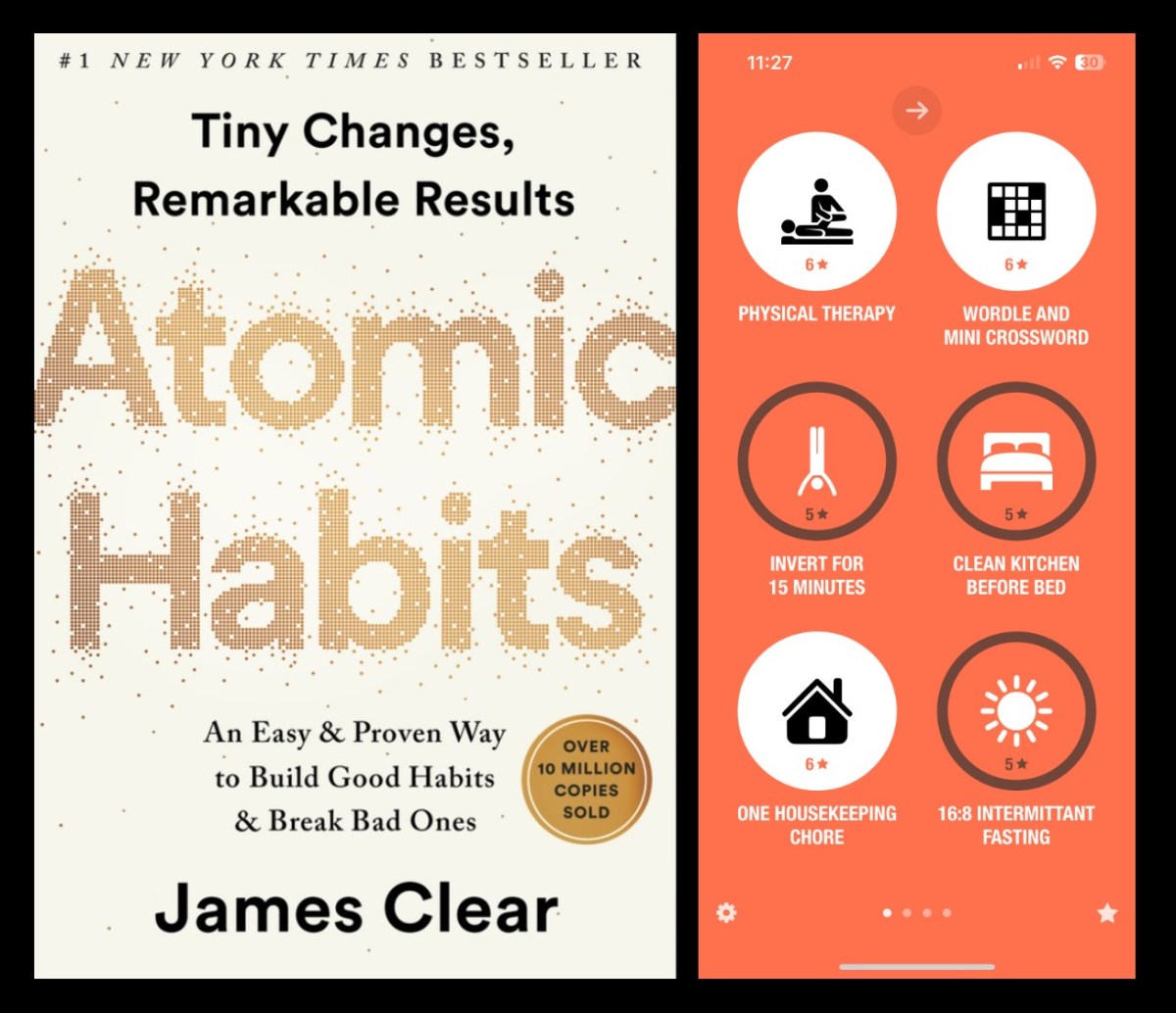
About ten days ago I bought Atomic Habits by James Clear and started reading it. It’s quite convincing about how to start good habits and phase out bad ones. I then decided I should track my habits and created a spreadsheet, but then a couple of days later a video about habit tracking apps showed up on my YouTube feed. I decided on one called Streaks for iOS; it was $4.99.

Streaks can track twenty-four daily habits. I decided to track six habits I’m already half-ass doing now:

  1. Physical therapy exercises
  2. Wordle/Mini crossword puzzles
  3. Invert for 15 minutes (with inversion table)
  4. One housekeeping chore
  5. 16:8 Intermittent fasting
  6. Clean kitchen before bed

After six days of practicing with these six habits I see how Streaks works. James Clear in Atomic Habits advises to focus on systems rather than goals. Instead of wanting to write a novel, make writing fiction daily a habit. And instead of aiming big, aim small instead. Clear says making tiny changes can lead to big results.

My starting six habits which I’ve been working on for years are mostly about mental and physical health. I haven’t always stuck with them, but I have learned, without a doubt, that if I do them every day, I feel better. Streaks has helped me stick with them better because keeping a streak going is challenging — like a little game. And I hate the idea of breaking the streak.

It’s time now to pick something I want to do but I haven’t gotten a half-ass habit going already. I don’t want to be too ambitious. Failing at New Year’s resolutions has always been demoralizing. I need another win to bolster my momentum. Yet, it needs to exercise my new habit muscle.

My life-long fantasy to write fiction is an obvious choice, but I think it might be the wrong time. I’ve always failed at fiction writing before, so I don’t want to fail at it again, and possibly ruin my efforts at forming atomic habits. I need a new habit that is both small but bigger.

However, selecting a new habit that will lead to achieving a cherished goal is an enticing thought. Isn’t that why I’m pursuing this habit system? Here are some things I wish I were doing in retirement:

  1. learn Python and make programming a hobby
  2. study math as a hobby
  3. learn to draw illustrations like I see in 19th century science journals
  4. learn Obsidian and use it with Readwise to create a second brain for remembering what I read and want to write
  5. read one lengthy article a day and write about it
  6. write short stories

These are all things I wish I worked on a little bit each day. I could add all six to Streaks with the self-imposed rule of doing each for a minimum of fifteen minutes a day. That would only be ninety minutes of activity, less than watching one movie. But Atomic Habits claims building one habit will strengthen other habits. So maybe, it’s better that I add one at a time.

Items 4 and 5 go well together, and would aid things when I go for item 6, but how would I structure it into a daily habit? Reading a long-form article can take an hour or two, and taking notes for Obsidian could be another hour or two. Writing about what I learn could take another three or four hours.

Streaks does track weekly habits, but I’m not ready to try one of those yet. Studying math on Khan Academy, practice drawing with You Can Draw in 30 Days by Mark Kistler, or writing 500 words on a short story is habits much better suited for finishing up in 15-30 minutes.

I don’t know if this is cheating, but it occurs to me that I should try doing each of these activities daily without adding them to Streaks and then see which one I stick to the most. Then add it to the habit tracker. (Don’t place a bet unless I think it’s a sure thing.)

This is psychological revealing. Could this be what I do all the time? I don’t try to create habits because I don’t want to fail at them. All six of the habits I’ve created already on Streaks are ones I need to do or I’ll feel bad. Feeling bad is a great incentive — I’m highly motivated to avoid pain and suffering. And those six habits were ones I was mostly doing anyway.

I’m a laid back lazy guy that dislikes obligations. Creating a habit is taking on an obligation. I guess successful people who get a lot done either don’t mind obligating themselves, or thrive on it.

Fantasizing about being a different person is one thing, but actually becoming a different person is WORK. (You should voice that like Maynard G. Krebs did in The Many Loves of Dobie Gillis television series.)

JWH

Looking Back at My First 10 Years of Retirement

by James Wallace Harris, 10/15/23

Friday was my 10th anniversary of retiring. I started work at Memphis State University in 1977 and retired from The University of Memphis in 2013. I hadn’t moved, they changed the name. Those 36 years represents half of my 72 years. The second largest chunk of time in my life was K-12 schooling. It’s interesting to see retirement has become the third largest segment of this pie chart.

These ten years of retirement were the same number of years as third grade through twelfth, but they certainly didn’t feel the same. For some reason, 1963-1969 were the longest seven years of my life, way longer than the last ten years of retirement. Isn’t that weird? Why have they sped by so fast?

When I look back, I can see a lot has happened. Three presidents. A pandemic. Several wars. Quite a bit of economic ups and downs. In the past ten years we’ve all seen society transformed by smartphones. The worst political polarization of my lifetime has happened in this last decade. There were lots of marriages and babies in our family, and several deaths. I entered my socialist years with social security and Medicare. I’ve had several surgeries and lots of MRIs, CT scans, a couple ER visits, and endless medical tests. Yet, I’m basically healthy.

I have lived in the same house since I retired. Those seven years I mentioned, I lived in nine different houses in three different states. Maybe that’s why those were the longest years of my life. These past ten years have been the most stable of my entire lifetime, and I’m not bored.

I thought when I retired I would do so much with all the free time I would have, but that hasn’t happened. The past ten years has been a slow decline into inactivity. I guess that’s what getting old means. And I accept that decline.

When I first retired, I didn’t watch TV until about eight o’clock at night. I tried to stay active all day. Susan worked out of town, and I spent a lot of time socializing.

Now my daily routine starts with an hour of YouTube videos after I do my physical therapy exercises. Then I putter around doing chores, eating lunch (breakfast since I’m intermittent fasting), writing blogs, listening to music. Then another hour of TV with Jeopardy and NBC Nightly News at 5:30 with Susan. After dinner I wash dishes and try to watch TV by myself while Susan watches her shows. I usually fail and switch to blogging, reading, or listening to music. I finish the evening at nine with two hours of TV watching with Susan, shows we both like.

In 2013 I probably watched 1-2 hours of TV a day, and not every day. Susan was working out of town, and I’d only watch TV when I had friends over in the evening. Now, I’m logging 4-5 hours a day. Television has become an addiction in retirement. I’ve been thinking about breaking it, but I’m not sure I can be more active anymore.

In 2013 I would go out several times a week with friends. I’d go to the movies once or twice a week, eat out several times, and I’d go to museums, parks, shopping, or just walks. Now I go out once a week to the used bookstore, and every other week to the grocery store. Susan and I take turns grocery shopping since we both hate doing it. The pandemic really changed my habits, but also my spinal stenosis limits my walking. However, staying home more does not bother me at all. In fact, I love it. My mother was that way when she got old too. A lot of people do that as they age. Like most of the old people I’ve known, I want to die at home, in this house.

What I’ve really gotten into these past ten years is reading. I read about fifty books a year, so I’d guess I’ve read about five hundred books since I’ve retired.

And several years ago, I joined with a guy from Britain and another from South Africa on Facebook to moderate a science fiction short story reading group. We discuss one story a day, and I’ve slowly developed several online friends from this activity. I’ve been focusing on reading short stories for the last five years and I’d guess I’ve read at least two thousand since then.

I also write essays for two different personal blogs. For a few years I wrote for three web sites, Book Riot, SF Signal, and Worlds Without End. I’d guess in my ten years of retirement I’ve written at least 1,500 essays.

I don’t keep records, but I’d guess I’ve watched a hundred TV series in my retirement. When Susan worked out of town, I’d watch them with my friend Janis. And since Susan retired, I watch them with her. I don’t really like watching TV by myself, so I tend to watch what other people like. My favorite series with Janis was Breaking Bad. My favorite series with Susan was Call the Midwife. Lately, my friend Annie has been coming over and we’re going through the films of Alfred Hitchcock. Ann and Tony come over to watch various shows, we’re currently finishing Ted Lasso. Our friends Mike and Betsy used to come over for TV or movies but since the pandemic that’s stopped. Watching TV series and movies with other people has been a major social activity for me during my retirement years.

Another recent activity is having people over for games and cards.

Our cats Nick and Nora died during the early years of my retirement, and now we have Ozzy and Lily. They are a big part of our retirement life since Susan and I have no children.

We bought this house; the one Susan grew up in when her parents died. That was 2007, I think. We had Susan’s brothers, wives, and their children over for Thanksgiving and Christmas for several years to continue the tradition of her parents. But by the time I retired, the nephews and nieces were grown up and had families of their own, and we stopped hosting the holidays. In terms of family life, the past ten years have been noticeably quiet. My mother, aunts, and uncles all died off before I retired. Since then, about half my first cousins have died. Our generation is fading away.

My retirement years have been mostly about maintaining friendships. I spend a lot of time on the phone keeping up with people. Some of my friends still come over to the house, but that’s slowing down too. Many of our friends no longer travel or drive at night. My sister still visits. And a few old friends that have moved away come to Memphis now and then. Getting old is weird that way.

Retirement goes hand in hand with aging. I didn’t foresee that before I retired. I thought I wouldn’t feel old for many years, and my first decade of retirement would be more active. When I first retired, I fantasized about moving to New York City for a year. Later, I thought about moving to The Villages in Florida. But NYC was impractical, and the pandemic and health problems killed off Florida. I no longer think about traveling, and the only way I imagine moving is if we need to move into a retirement community or assisted living.

My goals have become less ambitious. I’m reading self-help books about developing good habits. I want to do more reading and writing but be more organized and focused. I’m researching ways to take notes and remember what I read because I’m starting to forget more.

I think the next ten years of retirement will be more streamlined. I want to get rid of stuff and focus on accomplishing small quiet creative projects. I know I’m physically running down. I feel wiser than ever, but I’m losing mental horsepower. I need to become more efficient in my use of mental and physical energy.

These ten years of retirement have been nothing I planned. But then, long ago, even when I was still young, I had learned the future is everything we never imagined. My friend Linda and I are studying Stoicism. I think it’s the perfect time for that philosophy, both in our lives, and in this moment of civilization.

JWH

Discovering New Music From the 1980s – Prefab Sprout

by James Wallace Harris, 10/6/23

I get very few hits when I write about music, but I’m hoping to find a few old music addicts like me who didn’t discover Prefab Sprout back in the 1980s. Over the decades, I occasionally discover a band I’ll play obsessively for weeks. Well, I discovered Prefab Sprout on John Darko’s YouTube channel a few weeks ago and I’ve been playing them ever since. I started playing them on Spotify and Apple Music, but I loved them so much I’ve been ordering the CDs. I have a feeling I won’t get tired of this band for several more weeks.

It’s hard to put a love of music into words, so just listen below. At first, only a few songs grabbed me, especially the first two on Jordan the Comeback. But as I continued to play the albums more songs became great. This is why streaming music is so great. I can keep trawling the past until I find another band that pushes all my buttons.

JWH

Remembering the Sixties in Two Bad Movies

by James Wallace Harris, 10/4/23

I’m always shocked by how much American society has changed since the 1960s when watching movies and television shows from that decade. I graduated high school in 1969.

I’m curious how people born after the 1960s picture it in their mind’s eye. I grew up in the 1960s and remember two versions of that decade. I mostly recall the pop culture 1960s that everyone learns about in history and from the media, but if I think about it, I remember another 1960s, one far more mundane, and quieter. The difference you might say between The Beach Boys in 1963, and The Beatles in 1969.

Over the last two nights, Susan and I watched two movies from the 1960s that reminded me of the less famous version of that decade: Boy, Did I Get a Wrong Number (1966) and Doctor, You’ve Got to Be Kidding (1967). Neither film was particularly good, but I found them both to be fascinating time capsules of that other 1960s.

Someone growing up in the 21st century would probably find both films stupid and even offensive. They would probably wonder where the smartphones, tablets, computers, and social media were, and why no one used certain now universal four-letter words routinely as adjectives, adverbs, and nouns. I’m sure they would think the acting stilted and why people fit into roles, especially gender roles. Those thinking a little deeper would wonder why all the famous 1960s pop culture was missing. But I think the thing that would standout the most, was the attitude both movies presented regarding sex. You’d think people living in the 1960s were Victorians.

Both Boy, Did I Get a Wrong Number and Doctor, You’ve Got to Be Kidding were about sex, but neither showed actual nudity or anyone having sex. Doctor is about Sandra Dee getting pregnant and three boyfriends wanting to marry her. None of the three had had sex with her. And the only reason we know Sandra Dee had sex with her boss, George Hamilton, was because the movie showed fireworks.

Boy is about Bob Hope, a late middle-aged real estate agent getting accidently involved with sexy movie star Elke Sommer, but not really. Elke Sommer plays a French actress famous for making movies where she takes bubble baths. She really wants to do dramatic roles and free herself from tub casting. Ironically, we see her taking several foamed covered baths in this film. 1966 is before they started having nudity in films, but it tries hard to show as much of Elke Sommer as possible. Boy, Did I Get a Wrong Number advocates good old fashion puritanical values while promoting itself with the allusion of sex.

I thought both films were accurate with the clothes, houses, furniture, and cars. The look of the other sixties does come across in these films. Even the lame jokes and goofy dialog gave off the right vibes for the times.

Both films were aimed at the silent majority but tried to appeal to the emerging youth culture. It’s strange how we see counterculture slowly take over Hollywood by watching old movies and television shows from the late 1960s and 1970s. Very few movies in the middle 1960s showed what was happening in the rock world, or counterculture. If they had rock music, it was generic instrumental shit. Hollywood lagged for several years recognizing the social impact of rock.

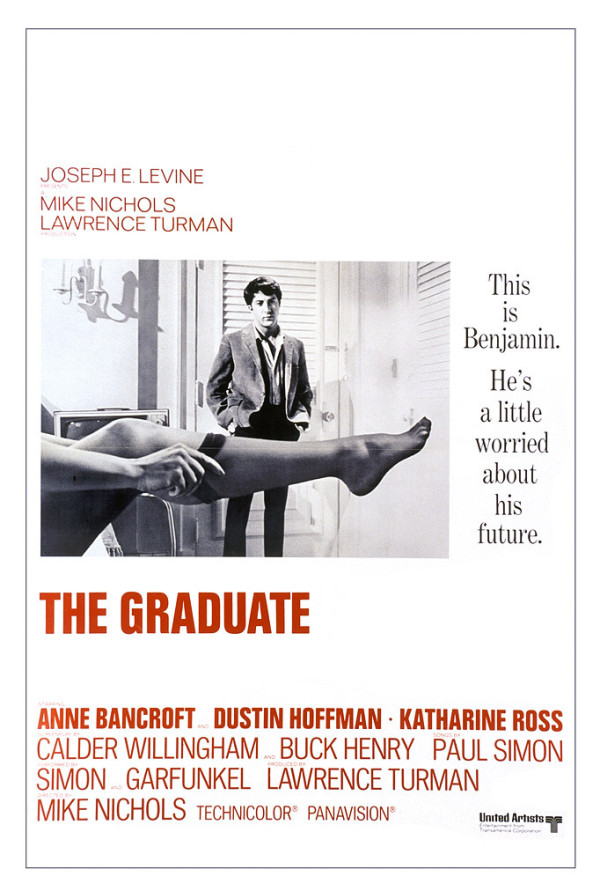
I remember seeing The Graduate in late 1967 and thinking how radical it was. The soundtrack used Simon and Garfunkel. That was tremendously exciting at the time because it felt like my generation was finally being recognized. However, seeing it recently was another shock. It wasn’t that radical at all, not how I remembered feeling it in December 1967. The Graduate was still much closer to that quiet version of the sixties than the infamous loud sixties. I see it now as a transitional film.

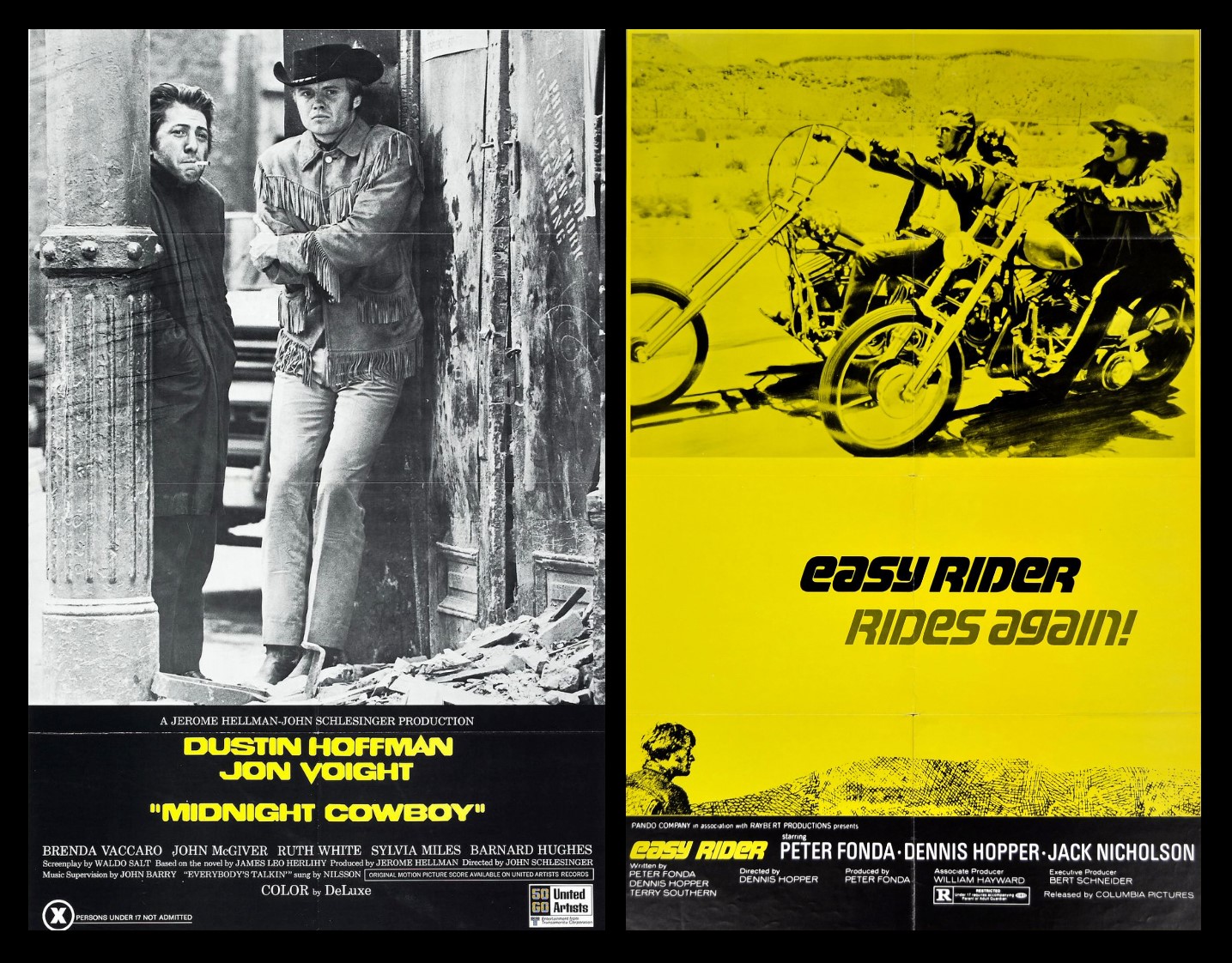
It wasn’t until 1969, with Midnight Cowboy and Easy Rider, that we began to see that notorious version of the 1960s. I remember how shocking both films were when I saw them at the theater. But by then, my personal sixties were closer to those films. But in 1966 and 1967, my life was still like the Bob Hope and Sandra Dee flicks.

Another way to look at it was Hollywood was censored for showing real life for many decades, and finally in the late 1960s changes in the laws allowed it to portray a more real America.

I’m not sure any film captures the times in which they were made. They all create a mythic view. But I need to think about that. Are there any films from the 1960s that come close to how I lived in that decade? Do you have a film, from any decade, that you feel represents something close to how you grew up? I was too young, but I do remember people like the characters in America Graffiti. Actually, I remember people like the Bob Hope and Sandra Dee characters too. Maybe it’s the characters and settings that feel more historical than plots.

JWH