When Tsundoku Meets Döstädning

by James Wallace Harris, 7/9/24

Tsundoku is a Japanese term for buying books and magazines far faster than you can read them. Döstädning is a concept from Sweden that translates into death cleaning, advice for how to get rid of your stuff before making other people do it after you die.

At 72, I figure it’s my time to turn the tide of tsundoku into a wave of döstädning. Last year I took many shopping bags of books to give to the Friends of the Library so I could shelve every book in my house. I had finally reached the equilibrium of perfectly filled bookshelves with no books lying on desks, tables, nightstands, or floors. It felt so good.

Today I gathered all the books lying on desks, tables, nightstands, and floors and had to stack them on top of my bookshelves again. I’m losing the battle with tsundoku again.

I don’t get out much anymore. I take my turn going to the grocery store every other week, and I go to the Friends of the Library Bookstore once a week. I buy books I think I want to read before I die, but I’ve already own enough books to last me until the middle of the twenty-second century.

Instead of coming home with two or three books every week from the Friends of the Library Bookstore I need to take two or three books to donate. That would still give me an outing every week. I guess I could continue to buy books so long as I always donated more books than I purchase.

If I knew some Japanese and Swedish people, I’d ask them to produce a phrase that means “döstädning my tsundoku.”

I need to develop a system for death cleansing my bookshelves. One idea came to me while reading A Gentleman in Moscow by Amor Towles. The story is about a Russian aristocrat, Count Alexander Rostov, who is sentenced to life imprisonment in the Metropol hotel after the Russian revolution. But instead of remaining in his luxury suite, Count Rostov is forced to live in a tiny garret once used by the servants of the aristocracy. He keeps one book with him to read, Michel de Montaigne’s Essays. What a wonderful book to read in that situation.

That reminded me I needed to finish my copy of Montaigne’s complete essays.

And it gave me another idea too. I need to read books that are most suited for an aging guy waiting for the guy with the scythe to show up. Books that make me feel philosophical positive about my life and help me understand the decline of civilization. I feel A Gentleman in Moscow is most suited. I would call it a fairytale for old folks, something Charles Dicken, Robert Louis Stevenson, and Tolstoy might have collaborated on if they were living in our century. It is a delightful yarn about a man growing old imprisoned in a hotel while the twentieth century changed outside his window.

I need to start thinning my book collection of books aimed at young people, unless they are books I read when I was young and want to remember them from an aged vantage point.

I need to read books that make me feel good about getting older. I need to jettison books that don’t deserve to be among the last books I read. Even if I live another couple of decades, I doubt I can squeeze in more than a thousand books, and that leaves me a couple thousand to abandon. If I live only another five years, I might finish 250 reading at my peak pace when I was younger, but more than likely, less than two hundred, since I’m now reading less every year.

Some days I don’t feel like I’ll make it to eighty, and on other days feel, gee, I might make it to ninety. I need to save those books suitable for someone in their 70s or 80s, and thin out the others.

It would be fun to see my library shrink over time, each year further distilled into a smaller collection of greater books, so in my last year I read only classics that fully reveal their depths to readers about to depart this planet.

Now, I think I have a system I can work with. It sounds logical and doable. I’ll have to report back in the future if it works. When I get in there pulling out books one by one, and asking myself if they are worthy of reading in my elder years, I might think every volume I already own is perfectly suited.

JWH

What I See Outside My Window vs. What I See on My TV Screen

by James Wallace Harris, 7/5/24

The picture above was taken from my dining room window. Not much is happening. It’s quiet and peaceful. In my den, looking through the sixty-five inch window of my television screen, I see so much turmoil and suffering. The fall of civilization is what’s happening.

One of my favorite novels is called The Door into Summer because the cat in the story hates New England winters and asks to see what’s out every door hoping to find one that leads to summer. I can open my front door and walk out into summer. It’s 77 degrees outside right now – not bad at all for July in a year that might become the hottest year on record. So, why do I spend my days watching television when all it does is to depress me?

The need to know what’s happening is a burden. The belief that I can control anything through knowing more is an illusion and deception. However, there are wars going on all around me and I don’t know if I can sit them out. My friend Anne lives in a nice neighborhood too, but last week there was a shooting at the house one over from hers. Yesterday was the 4th of July, and we heard plenty of fireworks. But we also heard plenty of guys shooting off their guns.

Crime and climate change are getting nearer all the time. What if I looked out my window and saw this:

Thousands of people are seeing this everyday around the world because of hurricanes, tornadoes, floods, and fires. In a decade it could be millions seeing such sites every day. Can we learn anything to avoid that future?

There is a cultural war happening all over the world and the battles are being fought in polling booths. Popularism wants to rewind the clock on progressive progress. To understand this, watch this talk by David Brooks. It’s one of the most uplifting things I’ve seen on my television screen in a very long time.

If you listen to Brooks, you’ll understand what the conservatives want to do with their Project 2025 plan and why. They believe it is their door into summer. If they succeed, I believe 1/20/2025 will be remembered like 4/12/1861 or 6/28/1914. It would be so much easier for my mental health to quit watching TV, but is that really an option? I can understand why Christians are fighting so hard for their way of life. I would have no problem surviving in their utopia if they got everything they wanted. But millions of people wouldn’t, and it will lead to civil war and self-destruction.

The world is going nuts while the environment is going down the drain. On one hand, I can’t stop watching this slow-motion apocalypse. One the other hand, I just want to look out my window or read a science fiction novel.

JWH

I Want to Argue with Carlo Rovelli

by James Wallace Harris, 7/1/24

Can I understand science if I’m not a scientist? I read popular science books, but that doesn’t mean I understand the work that went into making the scientific discoveries they report on. However, is it possible for me to intuit what popular science writers are describing?

I’ve been thinking a lot about the concept of Universal Now. What is this thing we call now? How is it different from the past and future? But the most important question that’s driving me crazy is: Is it now everywhere in the universe at the same time? But then, what is time? I went looking for a book that might answer these questions and found The Order of Time by Carlo Rovelli. I discovered that book from finding the article “Now Means Nothing: How Time Works in Our Universe” online. It was taken from The Order of Time.

This passage tangles up my brain:

Now Means Nothing 

What is happening now in a distant place? Imagine, for example, your sister has gone to Proxima b, the recently discovered planet that orbits a star approximately 4 light-years away from us. What is your sister doing now on Proxima b?

The only correct answer is that the question makes no sense. It’s like asking, “What is here, in Peking?” when we are in Venice. It makes no sense, because if I use the word “here” in Venice, I am referring to a place in Venice, not in Peking.

If you ask what your sister, who is in the room with you, is doing now, the answer is usually an easy one: You look at her, and you can tell. If she’s far away, you phone her and ask what she’s doing. But take care: If you look at your sister, you’re receiving light that travels from her to your eyes. That light takes time to reach you — let’s say a few nanoseconds, a tiny fraction of a second. Therefore, you’re not quite seeing what she’s doing now but what she was doing a few nanoseconds ago. If she’s in New York and you phone her from Liverpool, her voice takes a few milliseconds to reach you, so the most you can claim to know is what your sister was up to a few milliseconds ago. Not a significant difference, perhaps.

What does it mean, this “modification of the structure of time”? Precisely the slowing of time described above. A mass slows down time around itself. The Earth is a large mass and slows down time in its vicinity. It does so more in the plains and less in the mountains, because the plains are closer to it. This is why the friend who stays at sea level ages more slowly.

Therefore, if things fall, it is due to this slowing of time. Where time passes uniformly, in interplanetary space, things don’t fall — they float. Here on the surface of our planet, on the other hand, things fall downward because, down there, time is slowed by the Earth.

Hence, even though we cannot easily observe it, the slowing of time nevertheless has crucial effects: Things fall because of it, and it allows us to keep our feet firmly on the ground. If our feet adhere to the pavement, it is because our whole body inclines naturally to where time runs more slowly — and time passes more slowly for your feet than it does for your head.

Does this seem strange? It’s like when watching the sun set, disappearing slowly behind distant clouds, we suddenly remember that it’s not the sun that’s moving but the Earth that’s spinning. And we envision our entire planet — and ourselves with it — rotating backward, away from the sun.

I really dislike that answer. It goes against my sense of intuitive logic. I can understand that time is relative. I can even understand that it’s impossible for us to know what’s happening on Proxima b because of the speed limit of light at any given moment. But I refuse to believe that if Proxima b still exists, that the same now I’m experiencing isn’t occurring there too. Any sentient being will experience the moment of now at a different rate, but don’t we all exist in the same Universal Now?

To me, it feels natural to think of the universe as one giant entity that is evolving/growing. I can accept that time is variable in separate places within this entity, but I feel there is a Universal Now everywhere. Only it’s perceived at different speeds. And that’s okay. I don’t expect us to be in sync in our sentient awareness of the Universal Now.

For example, a hummingbird perceives time differently from people. We seem to be slow moving to it. A computer with a clock with operates at trillions of cycles per second will see time differently too. Just because we each perceive time differently, doesn’t mean we don’t all experience it in the same Universal Now.

I have read that the Big Bang didn’t occur in an infinite void, that space and time were created with the Big Bang. I picture the universe as one cosmic system that evolves/grows. Time evidently is the awareness of change/growth at any given point. That if stars were sentient, they’d feel time differently than we do, or if bacteria could sense change, or if humans were traveling at different speeds, every perspective would sense time differently. But that doesn’t mean it isn’t happening in one Universal Now. I just can’t grasp what Ravelli is saying.

Everything that can perceive time doesn’t perceive it in the same way, but I believe they all exist together and there is one now they are all reacting to.

If my sister Becky went to Proxima b, and we had an ansible (a science fictional communication device that can transmit and receive instantaneously from anywhere), Becky and I could have a conversation in this Universal Now that I’m talking about.

Now if Becky were on a spaceship going near the speed of light, our voices would change. I would speak so fast she couldn’t comprehend me, and she would speak so slowly I couldn’t understand her either. But if the ansible had a record feature, my message could be slowed down, and hers could be speeded up.

I’d have the same problem if I was talking with a star or a bacteria (ignoring the language barrier).

If I was on Earth, and Becky was on her way to Proxima b, and I thought, “I wonder what Becky is doing now?” Becky would being doing something.

If time is relative, and it is unfolding at different speeds, I can’t help but think, “What is it unfolding into?” To me, that’s a Universal Now, the same kind of place that spacetime unfolds into, some kind of existential nothingness. If the universe is expanding, isn’t that the same as growing? And if time is unfolding, isn’t that a kind of growing too? Maybe it’s even the same. Maybe the Now I’m talking about, and the Nothingness that spacetime is expanding into, are the same thing.

To humans, time is sensing change. It is perceived at different rates. Without an ansible, I can’t know what Becky is doing on Proxima b because it would take over four years to learn whatever it was. Where I disagree with Carlo Ravelli is Becky isn’t experiencing the same Universal Now I’m experiencing.

I can comprehend why time is relative and why different sentient beings would perceive it differently. I just can’t understand why there isn’t one Universal Now that spacetime isn’t unfolding into.

As I write this, I assume Carlo Ravelli is experiencing the same Universal Now. I can’t know what he’s doing, or what time it might be, but if he’s alive, he’s doing something, and he’s feeling time unfold at the same time I’m feeling it unfold.

And if there are multiverses. I think they all exist in the same Universal Now. I can’t understand why there isn’t nothing rather than something. But no matter how many universes or dimensions there are, I’d like to think they are all in one Universal Now. It would hurt my mind too much to imagine multiple creations.

JWH

Will We Ever Be Able to Know Why There is Something and Not Nothing?

by James Wallace Harris, 6/29/24

Is there one question you’d love to know the answer to before you die? For me, it’s always been “Why is there something rather than nothing?” Religious people want to believe God created everything, but there’s always that one smart kid who asks: What created God? We get into the problem of infinite regression. Of course, there’s the famous story by a scientist where the punchline is: “Turtles all the way down.”

Science has been trying to answer this question forever. At the small end, we have elementary particles in the Standard Model, with scientists and mathematicians speculating they came about because of strings or other concepts. At the large scale, cosmologists think the universe might be part of a multiverse. But don’t we have the same problem? What creates strings and multiverses? It’s something tinier or larger all the way down or up.

I must assume I will never know the answer to the question that gives me the most existential angst. I used to think as a kid, when we die, we’re finally told the answer to all our questions. But if I find myself in another dimension after death, I’m just going to ask: “What created this place?”

Maybe the answer that leads to happiness is to ask questions that can be answered. To focus on a smaller domain of existence. If I reduce the domain to planet Earth, I’d ask: “What happens to humans after runaway climate change?” It’s possible to speculate with some possibilities of getting the answer close to what might happen. But is such speculation useful?

If I reduce the domain to the United States. I guess the question right now that most people are asking: “Who will be elected president in November?” Until the debate Thursday night, we assumed it would be one of two possibilities. But have things changed? Don’t things always change?

I think I need to reduce the domain again. On a very personal level I’d like to know: “What is time.” And I don’t mean where in the Earth’s rotation, or orbit about the sun. No, I want to know: “What makes reality grow from one moment to the next?” Nothing stays the same. So, what is the smallest degree of change perceptible? Is it the vibration of subatomic particles? Is it the fields and forces that make up those particles? What is one tick of reality’s clock?

This is why I’m currently reading books like The Order of Time by Carlo Ravelli and On the Origin of Time by Thomas Hertog. I struggle to understand what these books are telling me. Is it possible to understand physics without understanding mathematics and science at the graduate level? I can vaguely sense what I think they’re talking about, but I might be deluding myself.

I do think time might be the key to why there’s something and not nothing, but I’m not sure we can ever grasp the reality of spacetime. I’m certainly no Einstein or Hawking. I don’t even understand science at an eighth-grade general science teaching level. To me, comprehending time is closer to being a meditating Buddhist.

What question would you love to know the answer to?

JWH

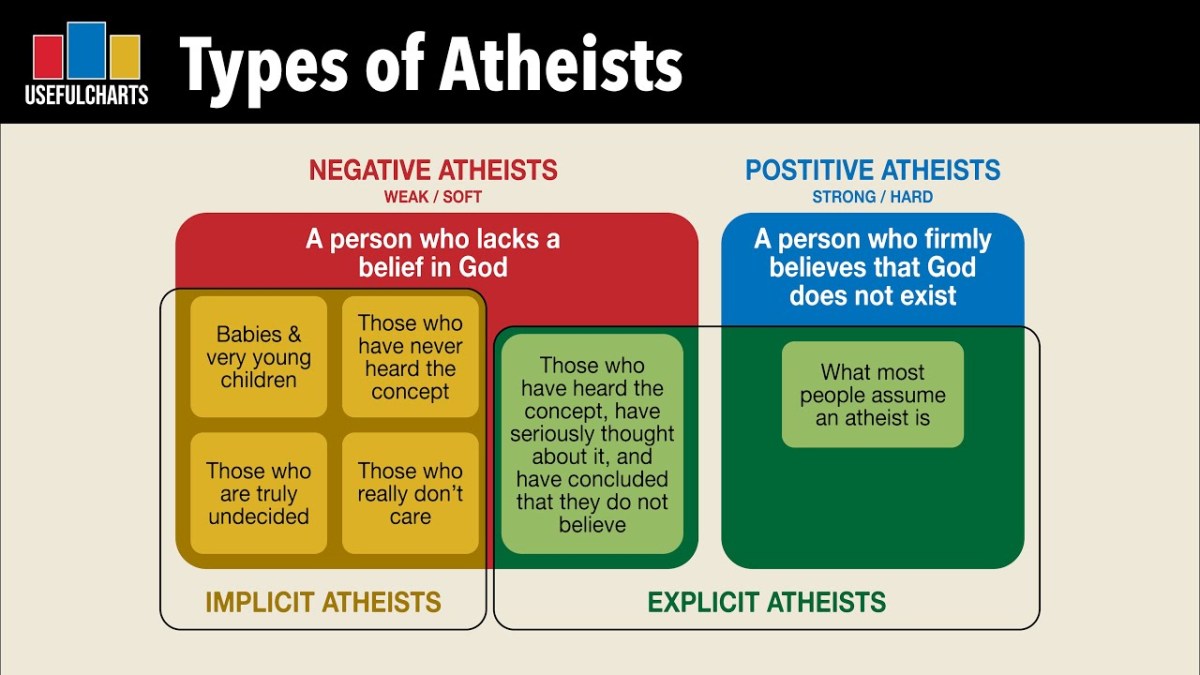
If Ignorance is Bliss, is Knowing Suffering?

by James Wallace Harris, 6/27/24

This essay is about how keeping up with current events is hard on our mental health. Is there a point in becoming informed that turns self-destructive? Happiness seems to be a balance between knowing and not knowing, between learning and ignoring.

I’ve always been amazed by the amount of fiction we consume in our lives — the books, movies, television shows, plays, video games, role playing, comics, fantasizing, bullshitting, and so on. Is fiction our way of regulating our awareness of reality?

I’m trying to decide in this essay just how much news I should consume. I believe I have three basic choices:

  1. Ignorance really is bliss.
  2. Learn enough to maximize my own survival.
  3. Learn everything I can to answer why and maybe know what can be changed.

I also consider the first three lines of the Serenity Prayer practical advice:

God grant me the Serenity to accept the things I cannot change,
Courage to change the things I can, and
Wisdom to know the difference.

Mental health depends on knowing what can be changed and what cannot. I believe the old saying, “ignorance is bliss” is merely advising people not to try to change things. Eastern religion and philosophy are all about acceptance, and that might be one path to happiness, or at least contentment. Western religion and philosophy have always been about control, which often leads to frustration and unhappiness. However, Western religion and politics have always been delusional because they don’t know enough to wisely make changes. Too many people think they know, but don’t. And too many people pursuing ignorance follow the people who don’t know. In other words, even if you learn everything you probably won’t be able to do anything.

For most of my life I hoped humanity would evolve into a global humanistic society that was ecologically sustainable, maximizing freedom, and minimizing inequality. That’s obviously not going to happen. Instead, we’re returning to nationalism, xenophobia, and fascism. The growing consensus advocates: get all you can, protect what you have, and let the losers lose. Even Christians have become Darwinians.

The main message in the movies and television shows we consume is the good life is eating, screwing, buying, and travel. But hasn’t that made us the most invasive and destructive species on the planet?

I believe the fiction we consume, and the fantasies we chase, is our way of self-medicating a deep depression caused by seeing too much of reality. If I read or watch too many news programs, documentaries, or nonfiction books about what’s happening around the world I get bummed out and need to retreat. Is that the best thing to do? Or the only thing to do?

How much of learning about reality is educational, soul strengthening, and enlightening? Billions of people are suffering. How important is it to know that the majority of people on this planet spend a good deal of their lives in misery?

If you only watch NBC Nightly News, Fox News, MSNBC, or CNN, you’ll only end up worrying about problems in the United States. And that’s enough to depress most people. But if you take in news from around the world, it can deeply threaten your mental health.

I watch a lot of news from all over, and I’m convinced that our civilization is in decline. The number of failed nations grows every year. The number of weather catastrophes increases every year. Wars and famines are increasing. Life expectancies are declining. Economies are breaking down, and people are dying, becoming homeless or refugees, and suffering in ever-growing numbers. We’re lucky in the United States that we don’t suffer as much, but that’s why millions want to come here.

Decades ago, I stopped watching local news so I wouldn’t be depressed about crime. Even though I live in a high crime city, I seldom hear about it, and thus seldom worry. I could do the same thing with national and international news. That would be good for my mental wellbeing, but shouldn’t I do something?

Liberals believe society should alleviate suffering through laws. Conservatives want to solve the same problems by convincing everyone to pull themselves up by their bootstraps. The reality is liberals want to solve society’s problems by spending the conservative’s money, and the conservatives just want to ignore the problems and keep their money. And it seems the only problem politicians really want to solve is how to get reelected and feed their egos.

Civilization is coming undone. That’s all too obvious if you watch a lot of news and study local, state, federal, international, and world events. However, knowing, and even understanding the problems we face doesn’t empower us to solve them. We either solve them together, or not at all, and if you’re an ardent news watcher, you’ll know we’re living in an age where we don’t work together.

Here’s where I’d love to list and catalog all our problems and assess their chances of being solved. But that would take a book length bit of writing. I’m sure you see enough of the news to know about all the problems we face — or do you? Would knowing more help or hurt you?

I could construct a detailed taxonomy of all the problems we face. I could stop reading novels and watching television and study the heck out of current events. But other than finding enlightenment about why civilization is collapsing, are there any mental, spiritual, or psychological benefits to learning how and why we’re self-destructing?

The real question is: Can we do anything to stop our self-destruction if we all agreed to work together and knew the right solutions? Even if we banned all airplane travel, reduced car travel to a minimum, rebuilt the energy grid that maximized renewable energy, and we all became vegetarians, we’ve already put enough CO2 in the atmosphere to radically change the climate. We may have already destabilized the climate so it can’t be reversed.

And we don’t have to wait until the seas rise above New York and London before climate change will do us in. We’re about to see the collapse of the home insurance industry which will completely destabilize the economy around home ownership. Just that might bring about economic chaos.

I could go on. Aren’t we like cattle in a stockyard? Would knowing about the captive bolt pistol offer any personal benefit in our lives? Or is there a kind enlightenment to be achieved by figuring out how the system works?

JWH