Do You Feel Guilty That Spotify Pays Artists So Little?

By James Wallace Harris, Tuesday, February 10, 2015

Since a generation of young people had no ethical qualms over stealing music, asking if artists are paid too little under the new streaming model might be a moot point. We live in a society where we want everything free or very cheap, but we’ll also pay $7 for a cup a coffee, or $200 to see a Broadway roadshow. For many people, music is a peak experience, more important than coffee or plays, often providing the emotional soundtrack to their memories. Shouldn’t we worry that people who create the songs we love get paid properly?

spotify

What we’re seeing here in America is a economic paradigm shift that’s effecting all aspects of society. The middle class is being deflated while its wealth is being shifted to the ultra rich. More and more people work for minimum wage. Even once well-to-do professions are under attack. And people who were once rich rock stars are now making far less. The super-stars are always well-rewarded, but making it big isn’t as easy as it used to be. Streaming music is great for tens of thousands of would-be stars to get a start, but it’s now much harder to make a living from even a moderately successful album. The middle-class artist is disappearing too.

So, I’m asking, are you fine with that or not? I love Spotify, but it bothers me that artists who once made much more money from the CD sales model are now making much less renting their music. Listening to music over the internet is far more convenient than playing CDs or LPs. Having access to nearly all music with the tap of a few keys is fantastic. Paying $10 a month is an incredible bargain. And knowing it’s legal is righteous. But, is it fair compensation for the artists?

PBS News Hour has been running a series on this issue. Their coverage is probably all you need, but this discussion is all over the web, especially since Taylor Swift pulled her catalog from Spotify. Here are some recent articles:

If you read enough of these articles you’ll realize this is a vastly complicated issue. Part of the problem is most of the streaming royalties goes to the record companies, and song writers, singers, and musicians get the tail end of the payment stream. But that was also true back in the LP/CD days. How the record companies divvies up its money with its artists is between those parties, but as fans we pay for the music, and set a standard. At least streaming is a major step up from stealing. Personally, I’d like to see more profits go to the artists themselves, and I’d like to see royalties paid to musicians. I think it stinks that all classic songs I love, the musicians were only paid a one-time fee.

The solution I would suggest is streaming services should charge a subscription fee for their service only, and then we pay 1 cent per stream to be divvied up by the record company, composer, singers and musicians. So Spotify might charge $2.99 a month for me to use their service, and that would go to them. And I would be billed 1 cent per stream, so my monthly bill would vary. If I listened to no music that month, it would be $2.99. If I listened to a 1,000 streams, it would be $12.99. Most people pay $9.99 now, so that would be equal to 700 streams.  That’s about 25 streams a day, or about 1.5-2.0 hours of music a day. Which is probably more than what most people listen to. If you want constant background music you should use radio or Pandora type services.

Such a payment system would also allow me to subscribe to more than one music service, because they do offer different content and different features.

CD and digital song purchase sales are down. At one cent a stream, it would take 129 listens by a fan to equal the purchase of a song. I think this is a decent equivalent. But if you watch the PBS Newshour shows you’ll see how artists lament the passing of albums. Fans really prefer hits. Spotify could encourage albums listens by charging 5 cents to stream an entire album.

Streams should not count unless we listen to more than sixty seconds of a song. Any song we give the hook in less than a minute should be considered a free trial.

If artists wanted to sooth listeners who hate the thought of constantly renting, they could let streaming services count the plays and after 129 mark the song as owned, and free from then on out. This would also encourage subscribers to stick with the service.

I bought thousands of albums in the last fifty years, and many of them were duds. I’d only listen to them once or twice. Most often I’d buy an album and listen to one or two songs many times. Album sales were not always fair to listeners, even though artists made the most money from them. The streaming model of pay per play is actually more fair to listeners and artists. It’s fair to artists because they’re paid each time a fan plays a song. It was always depressing to spend $15 for an album that turned out to be a turkey.

I hear the complaints by my favorite songwriters that Spotify cheats them. I feel bad. But I also think one cent a stream is a fair price. It’s more than what they get now, and if their songs are actually popular, they’d earn about the same, or even more in the long run over CD or digital sales. Songs that people really love will get played 129 times, and if an album has enough good songs, it will eventually earn about the same amount of money.

I’ve bought many albums by Bob Dylan three times, first as LP, then CD, then as SACD. I still play his songs so much, I’m sure at one cent a play, I will eventually pay more than what I did buying those albums three times.

JWH

Asking Who, What, When, Where, Why and How About Ourselves

By James Wallace Harris, Thursday, February 5, 2015

Most people are too busy with life for self-examination. In youth we have family and school, in adolescence and our twenties we have the biological imperative to get laid and complete a bachelor’s degree, then comes jobs, marriage and kids. Often, it’s not until we retire that we have the time to think about who and what we are, when and where were going, and why and how. Now that I’ve been retired over a year, and have had the time to contemplate these questions, I’m starting to see things differently.

Quite often in life when we meet a new person, we’re asked what we do. I always said programmer. It was an easy answer. Now that I’m retired I can’t say that anymore. I now tell people I’m retired. That’s an easy answer too, but not a good one. When we’re young we’re asked what we want to be when we grow up. When we’re in college we’re asked about our major. But once we get a job, our work defines who we are for decades. Our job description answers who, what, when, where, why and how. But it’s not a good answer.

earth-in-space

Some people like to define who they are by their philosophy. They will say they are Christian, Muslim, Atheist, Republican, Liberal, Vegan, and so on. And like our job label, this is an easy pigeonhole to categorize oneself for others. Yet, when you have all your time free, with no external agency defining who you are, it gets a lot more difficult to answer who, what, when, where, why and how about our personal identity

If you study reality enough you’ll learn that no God defines our purpose , and the multiverse is indifferent to what we choose to be. We literally have the free will to do what we want – if we can throw off our biological impulses. Most of us follow those inner urges to find companionship, sex, social relationships, food, conflict, pleasure, and other bodily cravings. If you can step back from those bio-programs you’ll see your bigger potential. The trouble most people face is the angst of deciding. It’s much easier to hide out from fulfilling our potential by watching television, reading books or eating Ben & Jerry’s New York Super Fudge Chunk.

At a very basic level, what we do every day answers who, what, when, where, why and how. At the moment I can say I am a blogger, that is writing this essay at 7:41am CST, 2/5/15  in Memphis, Tennessee, USA, North America, Earth, Solar System, Milky Way, Local Group, Virgo Supercluster, Universe, Multiverse that’s about the philosophical anxiety I’m feeling over what to do with my free time, using Windows Live Writer for WordPress.

Generally we consume our time with family, friends and routines of life, so we don’t think about our existential opportunities. We’re like the animals – amoeba, penguins, rattlesnakes, naked mole rats, bonobos – and focus on business at hand. Our activities keep us from  noticing the huge reality we live in. It’s only when we stop the routines that we notice how far out things truly are. Sometimes visionary writers and artists will remind us, but not that often.

Being self-aware in this vast reality is a tremendous piece of luck. The odds are beyond winning a thousand $300 million sweepstake tickets in a row. It’s a tragedy that we ignore reality. On the other hand, paying attention is the hardest thing we can do.

JWH

A Different Flavor of Science Fiction–The Signature of All Things by Elizabeth Gilbert

By James Wallace Harris, Tuesday, February 3, 2015

The Signature of All Things by Elizabeth Gilbert is fiction about the heart of science. Alma Whittaker, the protagonist represents the empirical ideal, while Ambrose Pike stands in for the mystical and metaphysical. The Signature of All Things is another kind of science fiction, a story about scientific thinking, set in the 19th century, the century where the scientist came into being, the century where we turned from reading the word of God to reading all things natural, the century where evolution was revealed as the driving force of creation.

I love The Signature of All Things by Elizabeth Gilbert so much that I hunger to know how it was written. This book is such a perfect mixture of historical detail, psychological realism and imagined characterization that it becomes deeply philosophical, going well beyond just a great story. I can’t help but believe it’s Gilbert’s personal statement about the nature of reality. I don’t know if Alma Whittaker is Elizabeth Gilbert, but she’s probably the woman Gilbert would want to be if she lived in the 19th century. Don’t let any prejudice about Gilbert’s earlier books keep you from reading this one.

If you love stories of the 19th century, especially ones about natural philosophers becoming scientists, then you should read The Signature of All Things. Gilbert’s sprawling tale covers two lifetimes beginning in the 18th century and ending in the 19th, and includes sea voyages, botany, biology, lithography, Tahiti, Captain Cook, Joseph Banks, Charles Darwin and Alfred Russell Wallace. This time around, we get to live an alternate history where there is a woman scientist, Alma Whittaker, who made some very great discoveries on her own. Alma Whittaker is the person you’d want to be if you could reincarnate backwards in time.

If you’ve ever fantasized about living in the 19th century and becoming an amateur scientist yourself, The Signature of All Things is among the more detailed of such fantasies. Science fiction has always looked to the future, but the future hasn’t turned out to be everything it was cracked up to be, so many science fiction fans have turned to fantasy, and many of them love steampunk, a retro look at the Victorian era. This book isn’t steampunk, but it wears the same appealing fashions. I think there are many deep rooted psychological reasons why us futurists have turned to look backwards to Darwin and Dickens. This book is historical, but not quite historical fiction. It has intense sense of wonder, but it’s not science fiction, not in the traditional sense, but it should appeal to the science minded person.

Science fiction itself evolved out of Victorian era sense of wonders, and we grew up believing in lone inventors who could master the magical incantations of science. We love all those butterfly collections, scientific sea voyages and dinosaur hunters.

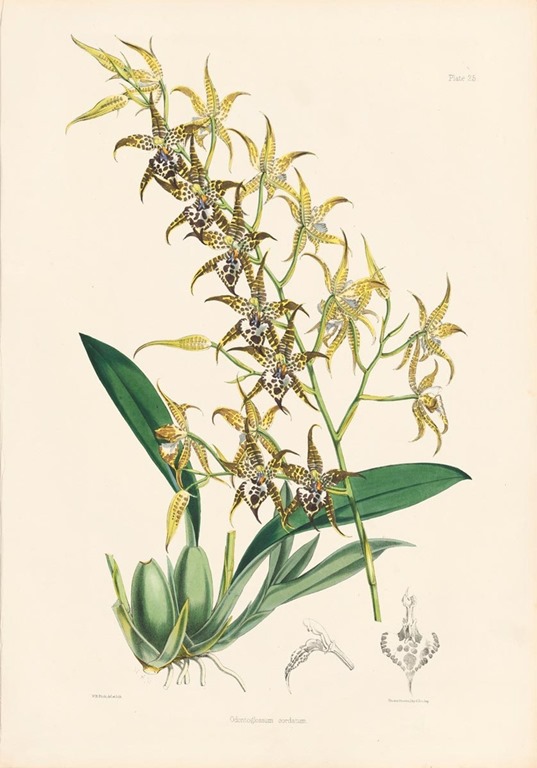
Orchid lithograph

The Signature of All Things is a love letter to those who embrace the natural world over the metaphysical.

The entire time I read The Signature of All Things I kept wondering how Gilbert imagined her novel. I’d gladly buy The Making of The Signature of All Things if Gilbert would write it. The book is an amazing feat of imagination, research, inspiration and psychology. In one sense it’s a feminist fantasy, and on the other hand, it’s a fantasy for anyone who reveres the 19th century. I got on the Internet hoping to find clues as to how and why Gilbert wrote this novel, and I luckily discovered that Gilbert had a Pinterest page devoted to The Signature of All Things. The financial success of Eat, Pray, Love let Gilbert spend three years researching The Signature of All Things. Few writers get such an opportunity, and her hard work paid off in a big way.

The first fifty pages of the book is about Henry Whittaker, a fascinating character that could have easily overshadowed the main character, his daughter Alma. Alma Whittaker is the ultimate free-range child educated by her stern Dutch mother, Beatrix. Alma was born January 5, 1800, so she ages with the century. Alma grows up on a huge estate outside of Philadelphia, and her father invited the most interesting men in the world to visit. Even as a child, Alma was expected to carry on an adult conversation at the dinner table. She mastered many living and dead languages, read everything in her father’s large library, and taught herself to become a botanist, specializing in mosses.

I can’t begin to chronicle all the ideas in this novel. Gilbert distilled her three years research into five hundred pages of fiction, and on almost every page, I wondered about her choice of detail to reveal. The book is tightly plotted, with an abundance of vivid characters, and the reader travels around the world three times. And it’s not until the end, that everything finally comes together. It’s a very satisfying ending, yet I wanted to know more. I wanted to know how and why Gilbert made her writing decisions.  I found some of the answers I sought in this interview:

Victorian scientists were big on developing classification systems, mapping every scrap of land and sea, inventing coordinate grids and measurement systems, taxonomies, and most of all, collecting. Science in the time of Dickens was small enough in scope, that most intelligent individuals could be well-versed generalists. There is a special kind of appeal to science before relativity and quantum mechanics. A gentleman or gentlewoman with a microscope and telescope could confirm most of what they read, and it was still possible to keep up with the reading in most fields.

Alma Whittaker, is a woman that wants to understand, and through almost endless hardships, becomes enlightened.

JWH

Should We Force Ourselves to Read Great Books Even If We Don’t Like Them?

By James Wallace Harris, Thursday, January 29, 2015

People discipline themselves to eat healthy even though they crave Ben & Jerry’s. People push  themselves to exercise, even though they’d rather keep playing Call of Duty. Should we make ourselves read James Joyce instead of James Patterson? Should we put down Gone Girl and pick up Anna Karenina?

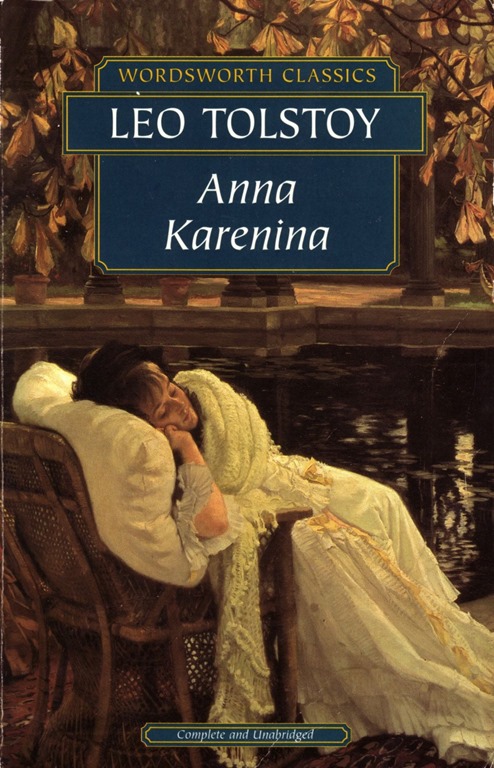
Anna-Karenina

My friend Mike just finished Don Quixote and emailed,

Are books like Ulysses and Gravity’s Rainbow and Infinite Jest really worth the time and effort required to read them? What does the reader get in return? When I finished the final page of Don Quixote, my only feeling was relief that I didn’t have to read another word about Don Quixote and Sancho Panza. All that time invested and my only feeling was relief.

That’s not very good testimony for reading the classics, is it? However, I should point out that Mike has read widely in the classics, and this could be an example that not all classic books work for all people. Evidently he loves Homer and Dickens, but not Cervantes.

But that still brings back the question: Should we read the classics because they are good for us? Even if they bore us? I’m not sure I buy into the Great Books of the Western World theory of education. I think we need to be reading great books, but not necessarily the most famous ones.

For instance, at The Top Ten, a site that tries to identify the best of the best books, the #1 book they identify is Anna Karenina, from 1877. I thought it good enough when I read it a couple years ago, but not great. I much preferred The Way We Live Now by Anthony Trollope, from 1875, to explore that time period of history. I learned a lot about Russia and the serfs from Anna Karenina, but not as much as I learned about London from Trollope. Maybe my personality is tuned to resonate with Trollope, but not Tolstoy.

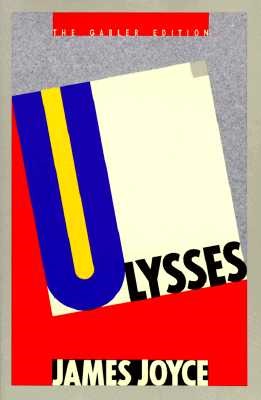
Ulysses-Remastered-Book-Cover 

Even great writers on the best of the best lists, can’t agree about what is great literature, here’s a recent quote from Vladimir Nabokov on great books:

I’ve been perplexed and amused by fabricated notions about so-called “great books.” That, for instance, Mann’s asinine Death in Venice, or Pasternak’s melodramatic, vilely written Doctor Zhivago, or Faulkner’s corncobby chronicles can be considered masterpieces, or at least what journalists term “great books,” is to me the same sort of absurd delusion as when a hypnotized person makes love to a chair.

Nabakov’s Lolita is #5 on The Top Ten list, which is based 125 writers each picking their Top Ten books, and assembling a list of which books were on the most lists in a weighted system. 25 of the 125 writers had put Anna Karenina on their list, so who am I to argue with them. But I do. The Greatest Books uses a different system to identify the best books of all time, and 7 of its top ten overlap with the Top Ten list, but Anna Karenina was #16, and Lolita #15. And, The Way We Live Now isn’t on their list at all.

I’m currently struggling through Ulysses by James Joyce. I understand why it’s brilliant. I recently read The Most Dangerous Book Kevin Birmingham, a history of Ulysses, to prepare for listening to Ulysses. I know the struggles Joyce went through to write his masterpiece, the tremendous hurdles to get it published, and all the legal battles over its moral value. Yet, I can’t quite say it’s a fun read. I’m having to make myself absorb Ulysses. I can sense its brilliance, no question, but I can also sense brilliance when a physicist writes arcane mathematics on a blackboard that I can’t comprehend.

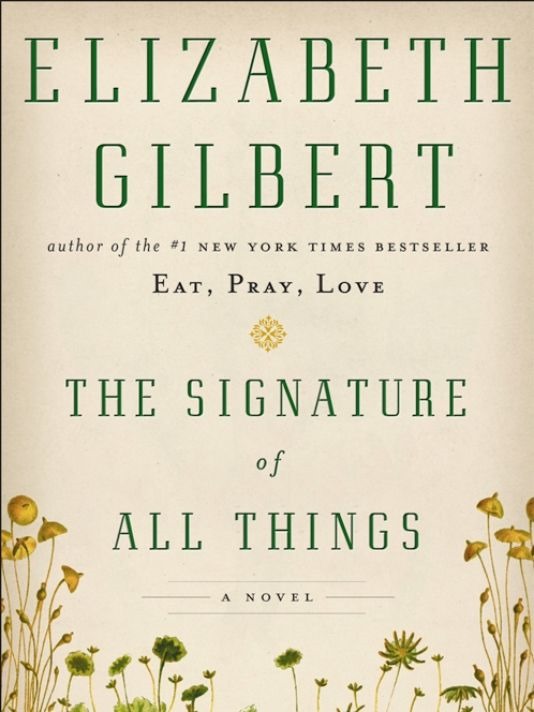
the signature of all things

On the other hand, the more I push myself into the fictional world James Joyce created the more I learn about history and literature, and the development of modern thinking that emerged in the 20th century. My trouble with Ulysses is I fail to escape into it. I stopped reading Ulysses to read The Signature of All Things by Elizabeth Gilbert, a book that captivates me in its recreation of the 19th century. Both books draw me into the past, but one was written by an observer of its time and place, and the other by an author who must imagine the past. You’d think the massive abundance of actually observed details would be more seductive, yet Joyce actually makes it hard for the reader.

I’m not sure if this quote is even close to correct, but I believe Joyce said he’d rather have one reader who read his book a million times than a million readers. I might ask is it better to read a thousand books once, or a hundred books ten times. At what stage in our reading life do we need to read books that require greater effort?

Ultimately, to answer the title question of this essay we must examine why we read. Whether we’re reading fiction or nonfiction, I think we have psychological motivations for spending so many hours staring at black marks on white pages. Doesn’t it really come down to this:

  • Escapism
  • Education
  • Entertainment
  • Enlightenment

Many critics use the word escapism as a criticism, but I think it’s one of the more powerful appeals of reading. Reading is a like a drug, where we turn off our awareness of here and now, and go somewhere else. Even great scholarship is escapist. We love to immerse our minds into novelty, whether fiction or nonfiction, and forget about our mundane reality.

the way we live now

Even if we’re reading a trashy best-seller, we like to think we’re learning something about the world. If I choose to read Fifty Shades of Grey I’d like to think I was actually learning something about why people are into S&M. We don’t read for one of these qualities, but all of them. The best of books allow us to escape into an alternate reality built with words, where we seek pleasure, knowledge and epiphanies.

The reason why I have trouble reading Ulysses is because it doesn’t allow me to escape, and it’s low on the entertainment scale. It is high on the education and enlightenment scales. The Signature of All Things is addictive where Ulysses is not because of its escapist and entertainment values, but also because it is educational, and maybe even enlightening.

This doesn’t mean I’ve giving up on Ulysses. I created a study group to push myself harder with Ulysses, to see if it will pay off. Of course, this equates reading Joyce to mountain climbing. Will I be like Mike, and just be glad I finished when I’m done, that getting through the book is the goal, like getting to the top of a tall mountain? Or will the exercise make my literary mind and body healthier?

I don’t know, but maybe will by the end of June 16th.

JWH

Creating Book Club to Read Ulysses by James Joyce

By James Wallace Harris, Wednesday, January 28, 2015

My friend Mike and I decided to read and discuss Ulysses by James Joyce. We’ve been reading about the book’s various editions, and whether or not new readers should use study guides. Since all of this was getting so interesting, I suggested we create a public group at Yahoogroups, and Mike agreed. Because we want to finish up some other books, and because I thought it would be cool to finish our discussion of Ulysses on Bloomsday (Ulysses takes place June 16, 1904), we decided to start February 17th. The book has eighteen chapters, and we’ll discuss one a week, finishing the last, “Penelope,” the week of 6/16/15. This gives people three weeks to finish up their books, find a copy of Ulysses, and maybe study up on it some.

If you’re interested, you can join here if you have a Yahoo account: https://groups.yahoo.com/neo/groups/ulysses-2015/info . Otherwise, shoot an email to ulysses-2015-owner@yahoogroups.com and I’ll add you manually to the mailing list. Ulysses is one of those books that many people intend to read, but never do. It’s been on my To-Be-Read pile for over forty years. I’ve read Portrait of an Artist as a Young Man three times to get ready, but have never followed through. Recently I read The Most Dangerous Book by Kevin Birmingham, a 2014 book about the history of writing, publishing and legal battles over Ulysses. I figure if Joyce went through that much suffering to write his novel, and so many people were willing to risk jail to publish it in America and England, then maybe I need to make more of an effort.

Ulysses-Gabler edition

Ulysses was an incredibly notorious book in the early part of the 20th century. It was banned in America and Great Britain, and Americans would smuggle copies from Paris. Because it was frequently pirated, and because Joyce constantly changed it, even adding large amounts of new material to the printers’ page proofs, Ulysses has had many editions and corrected editions. Because it was originally set in type by French printers that often did not know English, there were lots of typographical errors. The public domain editions that are now available as free ebooks use those older editions. Mike and I are going to use the Gabler edition, but that’s controversial too. Many are happy with the 1960/61 editions. There is much argument over which edition to read and how to read Ulysses – with or without supplemental guides.

I plan to listen to Ulysses. I have two audio editions, know of a third commercial one, and a fourth free audio edition. I’m going to buy the Gabler print edition because it has line numbers, making referencing easier. I’m also going to get Joyce’s Ulysses, a 24-lecture audiobook from The Great Courses by Professor James A. W. Heffernan. It’s available at Audible.com for $35 or 1 credit, and at iTunes for $30. A detail description of that can be found at The Great Courses site, but it’s too expensive to buy there when it’s not on sale.

One reason to listen to Ulysses is it sounds wonderful. Especially if read by a narrator with an Irish accent.

I usually like to read one large classic literary novel each year, so this year I thought I’d go all out for Ulysses. Ulysses can be daunting to read, because some sections of it feel like gobbledygook. Plus it has the reputation of being very intellectual. Strangely, it’s not intellectual, at least the parts I’ve read so far. It reminds me more of modern observational stand-up comedy. The book is very sexual and bodily, dealing with all kinds of human appetites and passions. Where the book gets into trouble with most modern readers is the stream-of-conscious passages. Joyce wanted to show how our minds work – which is often incoherently, with lots of free associations and unconscious impulses.

The reason to read Ulysses is because it divides classic literature and modern literature, in the same way the inventions of Thomas Edison divides humanity between that of gas light and electric light. Or the way George Carlin and Richard Pryor divides stand-up comedy before the seven deadly words you can’t say on TV, or the difference between Marlo Thomas’ That Girl and Girls on HBO. Some inventions, some works of art, some scientific insights, just change the whole human race. Understanding those changes are personally enlightening.

We’re constantly redefining what’s modern, which is another reason why it’s hard to read Ulysses. To young readers today, this 1922 novel is not shocking, other than the fact that characters don’t talk on smartphones or socialize on the Internet. To Joyce, his youth seemed radically different from the world of his parents, and he spent so many years trying to capture June 16, 1904 that I wonder if Joyce noticed the world radically changed again by 1922?

Ulysses is a novel, but it’s both literary archeology, and from the viewpoint of the 22nd century, historical insight into the early 20th century.

JWH