Rescue Worms

By James Wallace Harris, Friday, September 18, 2015

When you see a worm wiggling in the street do you pick it up and put it back in a flowerbed? Do you save rescue worms?

earthworm-wallpaper-3

I’ve done this for years and thought I was the only person who’d be silly enough to save a worm, but recently I’ve discovered that many of my friends are also heroes to earthworms. I was walking with my neighbor Ernie this year and we spotted a worm struggling out in the street and I told him I always rescue them. He said he did the same thing. Then I was walking with my friend Leigh Anne and we found a stranded worm out on the hot pavement and she picked it up and put it in the grass. She also said she routinely rescued worms. She even picked up our squirmy friend with her bare hands, which impressed me because in recent years I’ve become germophobic and won’t touch them.  I always rescue my worms with a twig or leaf. I don’t know why I’ve gotten prissy about touching worms. When I was a kid I used to go through the cow patties with my bare hands to find worms for fishing. And as a teen me and my friends used to hunt for magic mushrooms out in cow pastures and we’d just brush them off before eating them. I told my friend Annie about this, and she said she also rescues worms, and picks them up with her bare hands.

Does everyone give a dying worm a helping hand?

By the way, have you ever wondered why the worm crosses the road? It’s pretty obvious, but I didn’t know the answer until I saw why one morning. Stupid birds will drop their breakfast and won’t remember to pick it up. A car will go by, or a dog, or even another bird, and they’ll drop their meal. I’ve been paying attention to birds with worms on my morning walks, and sometimes a bird will just forget they had a nice juicy worm to eat, leaving their poor victim out to die a horrible death—wiggling until it dries up.

This morning I saw a woman rescue a worm and walk into someone’s yard to put it in a flower bed. She saw me and looked embarrassed. I just gave her a friendly wave. Usually I just put street worms back in the grass. I do wonder if I’ve ever pissed off a worm that was actually trying to cross the road.

JWH

How TV Shows Defines Us

By James Wallace Harris, Thursday, September 17, 2015

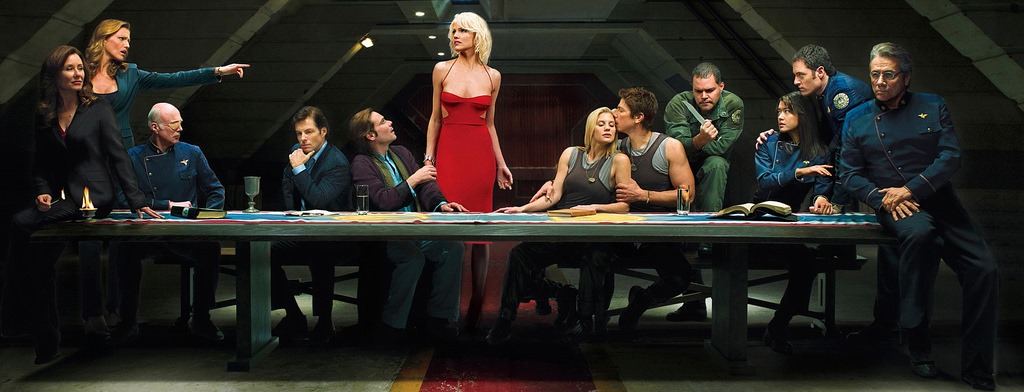
Yesterday The Hollywood Reporter came out with Hollywood’s 100 Favorite TV Shows where they conducted a poll asking people to vote for their single all-time favorite TV show. My immediate answer was Breaking Bad, which came in at #2. I was familiar with most of these shows, and had faithfully followed many of them, but only six were ones I wished I owned as complete series on Blu-ray (and would want to watch again). The other five were The Twilight Zone (#17), Friday Night Lights (#38), Downton Abbey (#44), Freaks and Geeks (#50), Star Trek: The Next Generation (#55) and Battlestar Galactica (#95).

Balllestar Gallactica Last Supper

Now that’s an odd combination. But I have to assume it’s a kind of fingerprint, one that identifies my personality. Ten or twenty years ago I probably would have listed several sitcoms among my favorites. I hardly ever watch sitcoms anymore. Have I lost my sense of humor? This summer my favorite shows were Humans and Mr. Robot, both of which I bought. I’ve already seen Humans twice, and I’m watching Mr. Robot again with a second set of friends. Shows not on the Hollywood Reporter list that I’d add to my collection would be Northern Exposure, Shameless, Big Love and The Outer Limits. My all-time favorite television show has been NOVA – but they don’t seem to want nonfiction.

The common theme of my TV shows is science fiction, yet my most love series is about a meth maker. In terms of self-reflection I’d have to say I grew up like the geeks in Freaks and Geeks. That’s probably my 2nd all-time favorite, and I’d say my third is Friday Night Lights or Big Love, which is weird because I hate football and I’m not religious. And why would anyone identify with the people in Shameless?

For most television, and I’ve been a very avid watcher since 1955, I can only watch a series once. Of the shows I’ve listed here, I’ve already watched twice, or plan to. I’m not sure I can watch Star Trek: The Next Generation again, but I keep hoping I can. I have such fond memories of that show, but whenever I try, I discover it’s still too soon. I’m already ready to watch Breaking Bad and Freaks and Geeks for a third time through. However, since I know my tastes have already changed several times over my lifetime, I wonder if I will still love any of these shows in my seventies or eighties?

My guess is we all respond to a certain kind of storytelling, and the shows we love resonate with that inner narrative we use to see the world. By that measure, my preferred shows have one consistent trait, they are all about oddballs and oddities. I’ve never been a team player, and I’m fascinated by people living on the edge of normal. My guess the person I become in my eighties will love recent shows, and he will have forgotten all these older ones. I listed The Twilight Zone and The Other Limits because they are anthologies that still work for me, but only barely.

One reason I loved Mr. Robot this summer was because it was complicated and contemporary. If you graph shows by complexity, you’d see that shows of the past were simple, and we’re moving towards ever increasing sophistication in storytelling. If my cognitive functions hold up as I age, I think I’ll always prefer richer storytelling. And I worry about my friends who have become so nostalgic for simpler storytelling.

I used to love Gilligan’s Island in the sixties but now when I catch it flipping through the channels I wonder if I was brain damaged as a kid. In fact, nostalgia drives me to try to watch many of my favorite shows from the 1950s and 1960s, and it’s always a painful experience I can’t endure for more than a few minutes. How come I changed?

We all grew up with television, and I think our favorite television shows are touchstones for some of our best memories. I often think of people I used to know by the shows I watched with them. When I think of my mother and father, I remember the shows they loved, and figured those shows are a way to understand who they were. When I talk with my sister, we mainly discuss the television we’re watching. When I meet new people, I often relate best to those people who talk about shows I like too. I’m convinced that television shows are much better indicators of personality traits than astrological signs. I know that’s not scientific, but doesn’t it just feel right?

JWH

Are Historical Movies An Insult to History?

By James Wallace Harris, Monday, September 14, 2015

Last night I watched Belle Starr, an old 1941 western with Gene Tierney and Randolph Scott. I didn’t know anything about Belle Starr before the movie, other than her famous name. So after the show I looked her up on Wikipedia. The movie was complete bullshit. Now this is a particularly bad example to ask this question: Should we avoid movies that claim to be based on history?

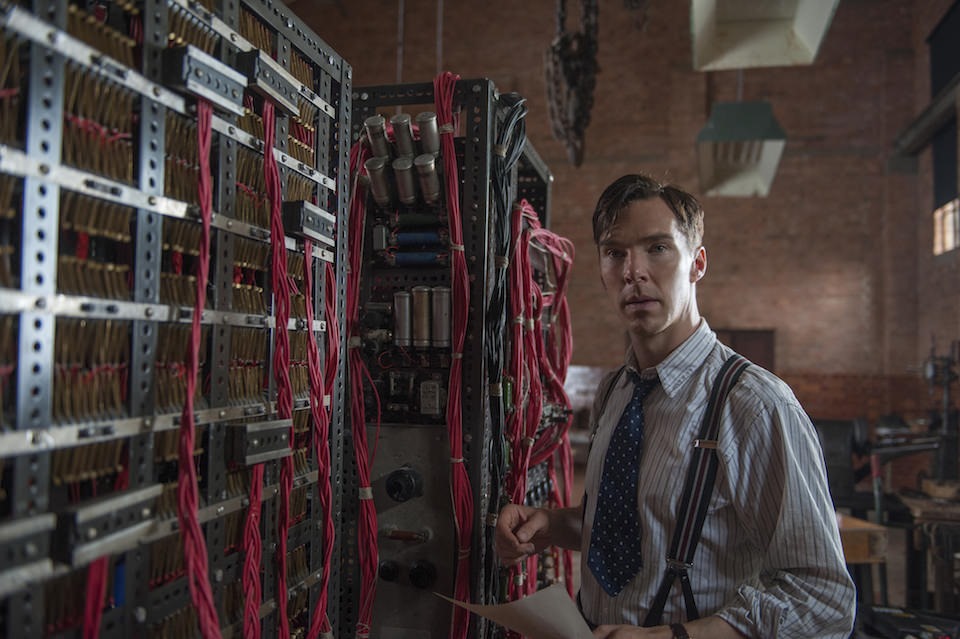
THE IMITATION GAME

In the past year I’ve seen films about Alan Turing, Stephen Hawking and J. M. W. Turner. All three films won awards and received much critical praise. In each case I felt like I was looking at detailed recreations of the past. Yet, when I read “A Poor Imitation of Alan Turing” by Christian Caryl, I was troubled that I might have gotten a very wrong impression about Alan Turing. I now wonder about my history lessons on Hawking and Turner. Watching those films let me feel I was getting to know those men. Now the more I read, the more I doubt, the more I feel confused, and even misled.

Movies make a far greater impact on our brains than reading black and white words on paper. Even documentaries can give the wrong impression, so we must be extra cautious with historical fiction. Should we assume any fictional account of history is only fiction? That’s really hard for me to do. I can’t turn off my sense that I’m learning history when I’m watching a film, or reading a historical novel. If I know some of its real, then all of it feels real, especially if the storytelling is good. Fiction can be very convincing.

We have all kinds of ways of learning about history. History books, journals and courses are the most respected sources, but there is also museums, paintings, photographs, archival film, newsreels, sound recordings, transcribed interviews, letters, diaries and even archeological artifacts. If you’ve ever seen a Ken Burns documentary, you know how powerful such evidence can be. Yet, when we watch a movie, it feels like we’re reliving history. It’s very hard not to let Hollywood teach us about the past.

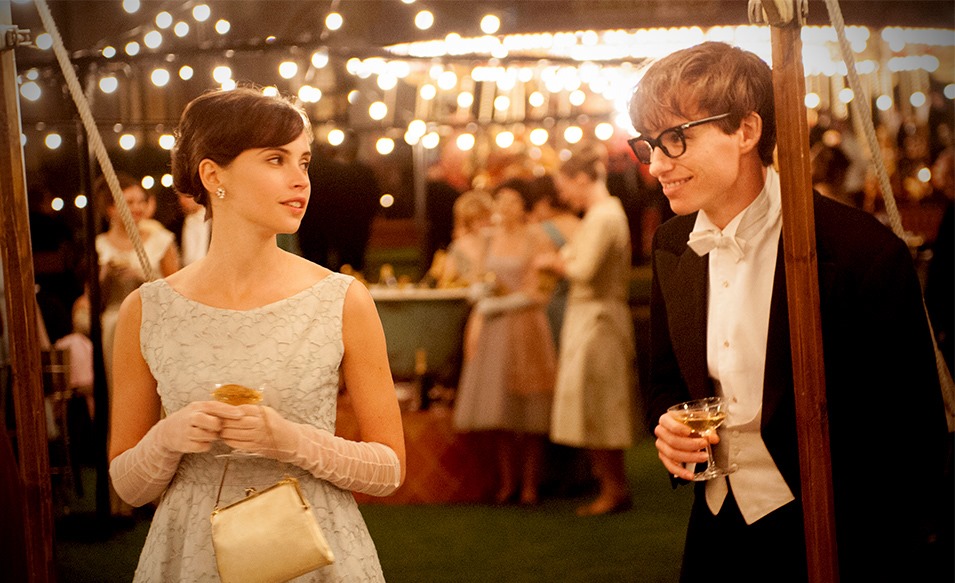
stephenandjane

I must wonder, did The Imitation Game treat Alan Turing fairly? Would Alan Turing have been flattered to see himself on the big screen as a cinematic hero? In a way, it was vindication for being mistreated in life. In another way, it was an insult, because they still got him wrong. I’m pretty sure the real Belle Starr would have laughed her ass off at seeing Gene Tierney’s version of herself. Stephen Hawking has been very kind in his praise for The Theory of Everything, saying it was broadly true, and at times it felt like he was seeing himself on the screen. However, Slate magazine compares film and history in “How Accurate Is The Theory of Everything?” and again, I’m disappointed by how I’ve been tricked. How disconcerting must it be for a real person to compare what they see on the big screen to real memories?

Our approach to history has always been fast and loose. Often shows on The History Channel are an abomination. Remember, The Man Who Shot Liberty Valance, and the quote, “When the legend becomes fact… print the legend.” Of course, that’s the movie’s side of things. Quite often when I see clips from Fox News, I get the feeling their sense of reality was learned from Ronald Reagan’s screenplay tinted view of history. We often remember the facts the way we need them remembered.

I’m starting to wonder if I should avoid any film or television show that claims to be based on truth, because movies are so powerful, that once I see them, that’s how I see history.

JWH

The Way We Were and The Way We Are

by James Wallace Harris, Wednesday, September 9, 2015

One of the few positive aspects of getting older is living long enough to see great changes in society. Although, a savvy young person should be able to observe the same changes by watching old movies. It’s not the same thing as living through those changes, but it’s good enough for intellectual chitchat. I’ve been watching a lot of old movies from the 1950s, especially ones from 1951, the year I was born, and struggling to understand why I like them so much now that I’m 63. It’s amazing how much different America is today than it was then. What’s far more important, is seeing how we’ve stayed the same. That takes a discerning heart, and it’s easy to overlook how we haven’t changed because all the new stuff overwhelms our senses.

To get the easy stuff out of the way quickly, in the 1950s there were no smartphones, internet, personal computers or social apps. White males dominated society, people of color were barely visible on screen. Women usually wore dresses, stayed at home defining themselves as wives and mothers. There was a double standard for sexuality back then, and women were considered tainted if they had sex outside of marriage. There wasn’t much of a youth culture. Watching these old films its easy enough to spot obvious differences between then and now, like how men wore hats and suits all the time, and cars looked like those we see in Cuba today.

There are less obvious differences that are more subtle to spot. Movies in the 1950s feel like they are made for adults, while many movies today seem to be made for adolescents or the adolescent in us. There were some science fiction and fantasy films back then, but they weren’t the norm. And even then, their science fiction and fantasy had a foundation of realism that modern genre films lacks. Partly that’s due back then because fewer movies were completely escapist, and they didn’t have CGI to make the unreal real—which tends to make the real unreal.

Like I said, it takes more work to study how we’re the same. The reason why we can still enjoy the plays of Shakespeare is not because we enjoy people talking funny and wearing weird clothes, but because how we see ourselves in those people who talk funny and wear weird clothes.
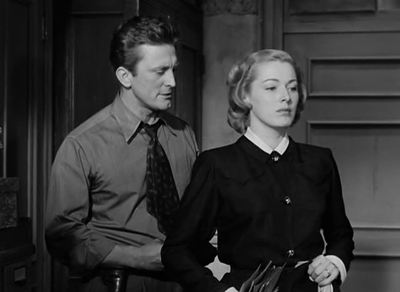
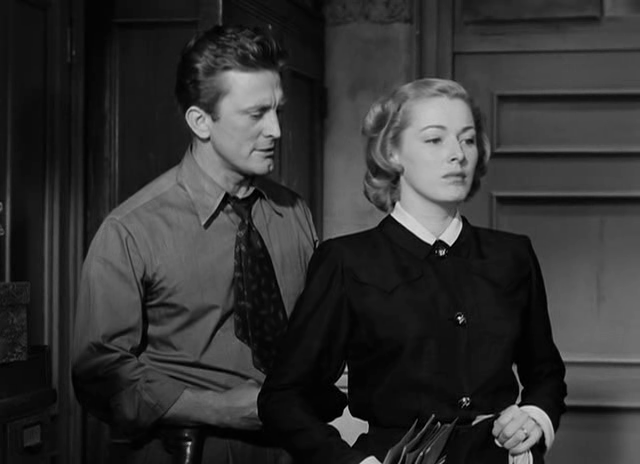
detective-story-1951

Last night I watched Detective Story (1951) about a morally rigid cop Jim McLeod (Kirk Douglas) learning his wife Mary (Eleanor Parker) had an abortion before they met. Detective McLeod was raised by a criminal father that McLeod despised. McLeod upbringing contra-conditioned him to demand that everyone fit an exacting black and white categorization. McLeod judged everyone that came into the precinct as righteous or evil, with no room for compassion, or understanding. I see that kind of rigid morality all the time on the nightly news, and sadly in some people I know. McLeod’s thinking was no different from members of ISIS, people living in Old Testament times or Donald Trump’s political persona.

Ace in the Hole - 1951

A more complicated example of sameness is Ace in the Hole (1951) which also starred Kirk Douglas, as Chuck Tatum, a cynical reporter capable of great compassion or cruelty depending on his personal needs. Chuck Tatum used his psychological skills to manipulate people and orchestrate sensational news stories. Tatum reminded me of Steve Jobs, because he believed it was good to push people into doing more.
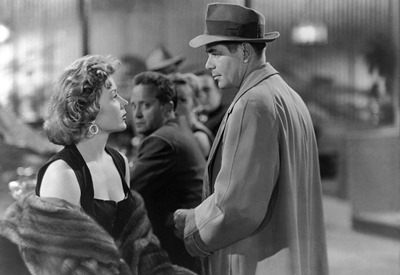
The Big Heat

Many young people think terrorism is something new since 9/11. It’s always existed in human society. The Big Heat (1953) has Det. Sgt. Dave Bannion (Glenn Ford) fighting terrorists who control the police force and corrupts the government. Small minded men with big guns kill Bannion’s wife with a car bomb. They kill witnesses and anyone who tries to help Bannion. Makes me think of the news from Mexico, but corruption using violence to rule is common throughout the world.

And it’s not just seeing that the bad people then are just like the bad people today. The good people then are like the good people today. Det. Lou Brody (William Bendix) in Detective Story  tries very hard to get Jim McLeod to bend and see shades of gray in the folks they arrest. In fact, if you look at every character in this film, to see what motivates them, you can find parallel characters in today’s movies and real life.

This reminds me of something I learned from anthropology. Neanderthals were a species that lived unchanging lives for hundreds of thousands of years, making the same tools in the same old way all their long species’ lifetime. Our species, Homo sapiens, have changed a lot over the millennia, yet, there are other traits that don’t change, and like the Neanderthals and their stone tools, we keep constructing similar personality traits over and over again, with the same routineness that our cousins flaked out stone scrapers.

For most of my life, the 1950s was my least favorite movie decade, but in recent months, it’s become my favorite. That will change. It always does. I stay up late watching shows that I once thought dreary and depressing, and now I find fascinating and inspiring. I remember the 1950s, just barely, since I was born in 1951, and these movies little resemble the memories I do have of those times. The closest they overlap are of a trip to New York City in 1959.

Living in Kidland in the 1950s was much different from Hollywoodland. I didn’t know any cops, mobsters, B-girls, reporters, or small-time hustlers. My world looked like those old home movies that The Center For Home Movies work to preserve. And I’d bet lots of family home movies taken today have strange similarities with home movies taken back in the 1940s and 1950s. I live in a house and neighborhood that was built in the 1950s, and sometimes on my morning walks I pretend I’m seeing the neighborhood like it was long ago. Since most people park their cars behind their homes it helps with the illusion. I see women coming out in their robes to pick up the paper, and they look like the women I saw when I delivered papers in the 1960s. I’ve read a lot of books written in the 19th century, and on the surface people appear very different, but if you look closer they don’t. Just read The Way We Live Now by Anthony Trollope. It’s much harder, but I can even find overlap with tales as old as The Bible, Homer, Plato, or Lucretius.

Even with smartphones, Ecclesiastes was right.

JWH
Where Do Old Nerds Go To Die?

By James Wallace Harris, Tuesday, September 1, 2015

While I was still working and planning my retirement, I assumed I would eventually relocate somewhere with a low population and high density of 55-plus people. I don’t like the idea of getting old and living in a big city. The older I get, the less I tolerate the hustle and bustle of young people. Now that I’ve been retired for a couple of years I’m feeling a stronger urge to find that place. In my mind I picture the elephants in the old Tarzan movies who instinctively knew the path to the secret elephant grave yard. My instincts are taking me in weird directions.

Staying put in my house that will be paid off in four years will be the easier, less stressful path to take. Yet, now is the time to consider moving to a town that’s safer, quieter, more beautiful, and possibly populated with people more like myself. I figure the older I get the more stressful it will be to move, so if I’m going to move, doing it it sooner would be better than later. Deciding where keeps haunting my mind. Starting over means both adventure and loss. I moved a lot growing up, so I know what it’s like to begin again in a new town, leaving all my old friends, and having to look for new ones. However, I’ve been settled in one city for over forty years now, so I’m a much different person.

When I wonder about where to retire I fantasize about my ideal living environment.  Susan would like to stay near her family, but I feel we’ve always stayed near her family, so maybe it’s my turn to pick. My sister lives near West Palm Beach, Florida, and I grew up in Miami, where my oldest friend still lives. Nostalgia makes me want to return home, but South Florida has changed a lot in 45 years. Thomas Wolfe was right, we can’t go home again. And when I drive around Florida using Street View on Google Maps it’s not the terrain I want to see when I leave this planet. But what landscape do I want to pass my waning years viewing?

If you think about it, where you retire is where you’re likely to die. And as much as we like to think about beautiful bucket-list places around the globe, most people want to die at home. And to be honest, it would be much more natural for me to die in front of my computer monitor or big screen TV than on some scenic mountainside or majestic beach. I fantasize I want to move to one of those beautiful mid-century houses I see in Atomic Ranch Magazine, in a quiet 55 Plus community of blue state folks. I could do that, but nagging doubts hold me back.

I’ve been anguishing over that issue for months now, so I was surprised this morning when my unconscious mind spit out the answer. And it wasn’t what I expected at all. Out of my dark subconscious a ray of illumination informs me that thinking about where to move my body is a diversion from the real issue I face; where to locate my mind.

TV

Now, here is where things get really squirrelly, and my unconscious mind shows its savvy awareness of my true motivations. I’m almost embarrass to admit what my dark mind tells me, because it seems like a kind of perversion of the natural. What I love are high resolution screens. What I enjoy most is processing reality through television screens, computer screens, tablet screens and smartphone screens. Because wherever I move, what I want is a comfortable house that will hold all my screens and a high speed connection to the internet.

That should have been obvious to me all along, because for all these months I’ve agonized over where to retire I’ve also been researching how I can upgrade all my screens to 4K resolution. When I contemplate this revelation I realize I spend most of my waking hours in front of screens, and the only time I prefer 3D reality is when I’m with people, eating, going for walks, or looking at paintings in museums. Most everything else I prefer digitized.

Where to retire will be the best place for me to keep my screens and speakers, hang out with friends and go for walks. I’m not really interested in golf, shuffleboard or skiing, although if I lived somewhere where people did those things daily I might do them to be social. I need a certain amount of social time, but not nearly as much as I crave screen time.

It’s weird to confess I love books, movies, television shows and music so much, but if you think about it, I’ve always loved them, so why should I expect to change? What would be great is to move to a retirement village populated by people like me who want to socialize by sharing what they are learning and experiencing from their screens.

Is there a place where old nerds go to die?

Then my unconscious mind informed me of its second revelation. It’s not time to be thinking about dying, or even retiring. Just because I’m retired from the world of work doesn’t mean I’m retired from my ambitions. My hidden self informed me this morning not to waste time on thinking about where to live, but to apply that processing time to being creative. I retired from work to have time to write. I have that. I’m already where I need to be.

Thinking about beautiful locales of where to live was only a way of avoiding working on my ambitions. I need to move to Shangri-La when I no longer have the will to keep trying and want a pleasant place to wait to die.

Since I’m not an old nerd ready to die, then I’ve got to get back to work.

Have screen—will travel.

JWH