
By James Wallace Harris, Wednesday, January 14, 2015
If you think terrorism and war is bad now, just study how things were one hundred years ago. We think of America as the land of the free, but during the 1910s people were being jailed for printing words and jokes about things we commonly see in sitcoms. Language we’d consider G-rated would get you jailed back then if you used it in a literary work that was sent through the U.S. mails. Writing about contraception, condoms or abortion could also get you thrown in the slammer. Using phrases like “snot-green” or “old fart” would get you labeled as a horrible lower-class person. And it sickened and horrified cultured people when James Joyce wrote about Leopold Bloom eating organ meats, even though everyone ate organ meats. One hundred years ago people just didn’t like facing up to the gritty details of life, details we embrace today.
Because of laws regulating decency, sedition, sexual practices and other moral issues, most of 21st century writers, movie makers, publishers would be jailed if their work appeared a hundred years ago. This doesn’t mean the common people didn’t say anything they wanted, but state and federal governments tried very hard to control what people printed and shipped through the mails. If liberals think conservatives are controlling now, just read about the history of censorship in America. We’ve come a long way baby.
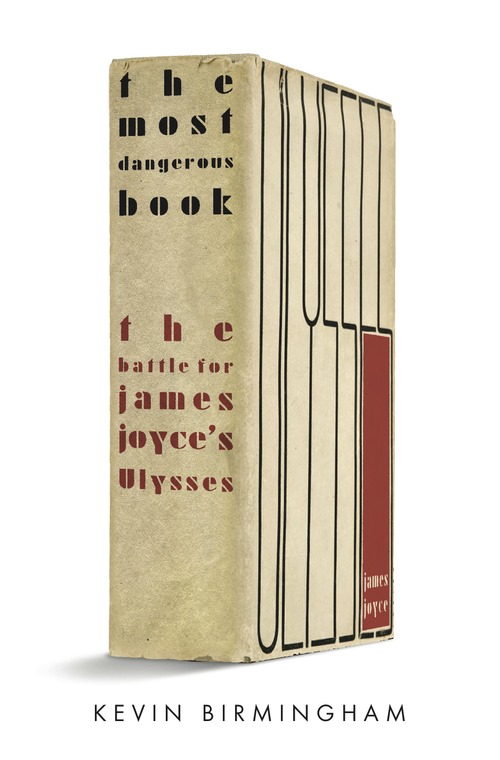
The Most Dangerous Book: The Battle for James Joyce’s Ulysses by Kevin Birmingham thoroughly entertained me with his history of censorship and legal battles to publish what is now considered the best novel in English literature. Even if you have no interest in James Joyce, this book is fascinating history. It does deal with Joyce’s immense struggle to be an artist, and to push the limits of literary expression, but it’s also about why and how our society wanted to rein in artists. It’s about the editors and publishers that risked jail to publish writers like Joyce. In 1920, the year my father was born, Jon Stewart would probably have been sentenced to ten years in jail for each episode of his show, if they could have seen The Daily Show back then.
I listened to The Most Dangerous Book to prepare me to listened to Ulysses. I keep trying to get into Ulysses but I always fail. Ulysses is an almost impossible book to get into, very tough going, but not because Joyce was so intellectual and learned. Joyce wrote about ordinary events and people, but used new writing techniques to show how people actually thought and felt. Since we often think about sex and bodily functions, or feel thoughts about people we’d never express, our minds are chaotic tangles of incoherent phrases and perceptions, and Ulysses tries to capture this stream of consciousness. In the 1910s and 1920s, readers found his experiments startling, offensive, unnerving and threatening. Some European and American government officials thought Joyce’s apparent nonsense could be coded messages of espionage. Even his most ardent admirers struggled to decode his prose.
Joyce set the stage for comic observations about humanity that armies of standup comics still mine today. Yet, a hundred years ago, this so horrified government officials they did their damnedest to erase, and keep from the public. Their paranoia over strange ideas was fueled by radicals and anarchists who promoted conflict, disorder and social unrest. There were hundreds of terrorists bombings back then each year. The government associated anything Avant-garde with radicalism.
We have practically no censorship now, and a lot less social unrest and terrorist bombs. Strangely, the lingering forms of censorship we see today often come from terrorist bombers who want to revert our freedoms. The Comstock Law of 1873 was a kind of American Sharia Law, and the people who terrorized the literary world back then was the U.S. Post Office.
The founding fathers made free speech legal, but they didn’t understand what that meant. We’re still exploring the social implications of real free speech. Kevin Birmingham’s book is a stunning history of the fight for free speech in the early part of the 20th century. He focuses on an array of literary freedom fighters who were directly or indirectly connected to helping James Joyce get his book published. Whether or not you’re interested in literary history hardly matters if you love history itself when considering reading this book.
History is like a jigsaw puzzle with an infinite number of pieces. A great history book is one that helps you put hundreds of pieces together to reveal the big image of the past. A great history book also helps connect its images with pieces of images you’ve assembled from other great history books. The Most Dangerous Book helped me see a lot more of 20th century American and European history.
I still find listening to Ulysses hard going, but I’m making a greater effort because of The Most Dangerous Book. Birmingham explained the tremendous struggle by Joyce to write his book, and why. Birmingham gives a great deal of background facts that interpret each chapter in Ulysses. But most important, he testifies to the valiant effort so many people made that allows us to read Ulysses and books like it. I’m very grateful to those people. I think we all should be.
JWH


 Auxiliary Memory