What it Takes Personally to Write My Novel

I woke up early this morning and started fantasizing scenes from the story I hope to make into a novel.  I’ve been writing novels in my head for most of my life, but except for when I’m taking writing courses (with deadlines), I just don’t write fiction.  I should be honest with myself and admit I’m never going to write that novel.

But I can’t.

pugs-00015

All my work life I dreamed of having time to work on my novel, and now that I’m retired and have that time, I don’t.  That should emphatically tell me something too.

But I’m not listening.  I keep thinking I’ll change.  And herein lies the rub.  I need to change!  But can I change?  It will require a metamorphosis not as extreme as Kafka’s Gregor Samsa, but pretty close.  I don’t need to become a six foot bug, but I do need to become something that’s not like me at all.

And the willpower for this change will be greater than even losing the weight to have a healthy body mass index – and I’ve never been able to lose weight either.

I know, I’ve whined about this many times before.  I’m sure I’m boring what few regular readers I have for this blog.  But I keep thinking, this time will be different.  This time I can write something that will convince myself to change.

Do you believe me?  I wouldn’t either.  But should I give up?

After breakfast I sat on my couch and thought about this.  What would it take for me to change?  Without being drastic, without going overboard, I figured all I need to do is alter some of my habits but keep most of them so I won’t freak out.   Currently, I like to write a blog post every morning, and that averages about a 1,000 words.  I’m usually through by noon.

Step one.  From now on I can only write fiction before noon.  I can do anything I want after noon, even write blogs, but before noon, I can only write fiction.  That should give me plenty of time to pursue all my favorite time-wasting activities, so I won’t feel deprived, but enough time to get some novel writing done.

Step two.  I spend most of my reading time reading off the web with Zite, News360 and Flipboard, or reading nonfiction books, or nonfiction from magazines.  All of this nonfiction inspires me to write nonfiction blogs.  I need to read more short stories and novels.  I don’t think I can kick this nonfiction reading habit, but I’ll try to never read nonfiction before 3pm, and spend time after lunch reading and studying fiction.

Step three.  I should only read fiction that I wished I had written.  I need both inspiration and models.  I need to study what I like and figure out how it works.

Step four.  Let’s see if I can stick to these three baby steps until June 1st and see what happens.

p.s.  This means I might be posting fewer blogs.

JWH – 4/26/14

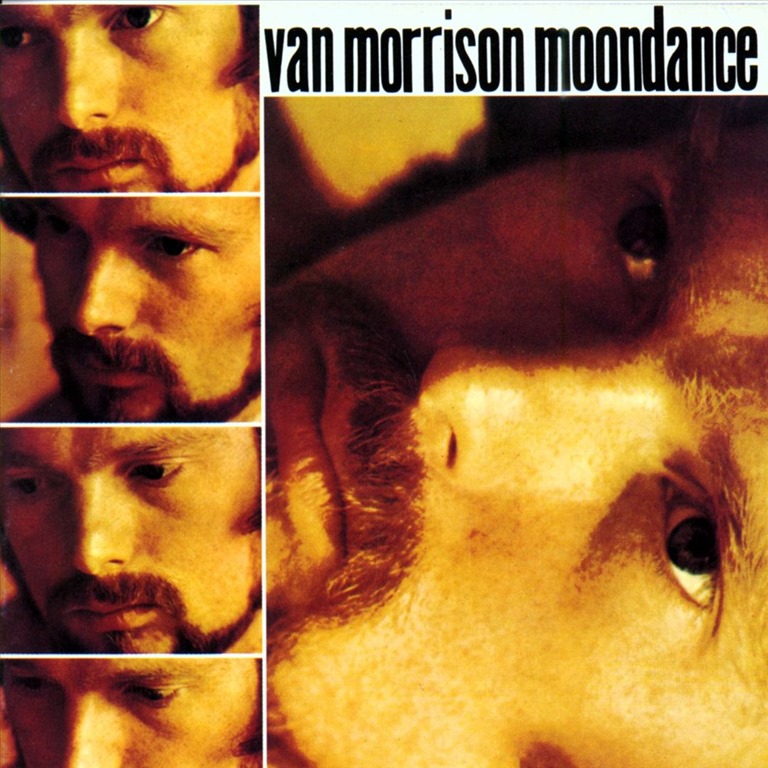
Moondance by Van Morrison–Spotify v. FLAC

van-morrison-moondance

Moondance, Van Morrison’s third solo album, recorded from August to December, 1969, and released February 28, 1970, is a true classic rock album.  Moondance placed #65 on Rolling Stone magazine’s list of “The 500 Greatest Albums of All Time” and was inducted into The Grammy Hall of Fame in 1999.  A detail history of the album can be read at Wikipedia.  Discogs lists 64 different versions of the Moondance, the most of any of the 51 Morrison albums listed there.

Play the album while you read.

As I wrote yesterday, “Pono, We Have a Problem,” I just bought a new Denon AVR-X1000 receiver that can play 24-bit FLAC files and I wanted to find the best album I could to test out high definition audio.  At the time I couldn’t decide for a number of reasons, but mainly because I couldn’t find a FLAC album I wanted to spend $25 on that I would enjoy listening to the whole way through.  Then one of my readers, paintedjaguar, chided me for not having the patience to savor a whole album, and I realized he was right.  I needed to not think about hit songs, but just find a great album.

Concurrent with looking for a FLAC album to buy, I was setting up my new receiver to play Spotify and I thought, “Why don’t I play some albums from my HDTracks wish list to see if I can sit through any of them.”  The first one I picked was Moondance, and as an extra surprised, Spotify had a recent remastered 4-CD edition of Moondance.  I fired it up and was blown away by the sound.

I don’t know if it was my new receiver, or the new remastered CD, but between the two of them Moondance sounded awesome.  The soundstage was huge, and every instrument was distinct, bright and highly textured.  I sat and savored the entire album in one sitting.  It was like listening to a fantastic concert.  I later read that Van Morrison wanted to record the album live, and tried to make it sound like a live performance in the studio.

Listening to Moondance has taught me I was wrong to always want to just buy hit songs, and that sometimes a whole album is a coherent work of art that should be experienced occasionally as one performance.

I was so impressed with the sound quality of Spotify’s streaming that I wondered how could it possibly sound better.  This streaming MP3 version impressed me like playing SACDs or 180g vinyl.  When it was over I knew I had to buy the 192kHz 24-bit FLAC version.  If Neil Young was right, the high definition version should make the MP3 version feel broken.

So I did.  And it didn’t. 

To be fair, there’s a problem in making the comparison that tells a very complicated story.  The Spotify version, which is a MP3 compressed file streaming at 320bps, should have only a fraction of the recorded information that the 24-bit FLAC file had, and thus it should have sounded fractionally good.  The trouble is the FLAC file apparently is from an older CD release, and the Spotify version was from a newly remastered CD, and they’ve done an excellent job, like the recent remastering of The Beatles CDs.  I was not comparing apples to apples.

On the other hand, this implies a whole lot of possibilities to consider.

  • There’s still plenty of room to improve CD technology.
  • There’s still plenty of room to improve MP3 technology.
  • There’s still plenty of room to improve streaming technology.
  • Albums can vary significantly depending on how they are mastered.
  • How is the loudness wars affecting our listening?
  • Where do FLAC editions come from?
  • Would playing the remastered CD version of Moondance in 192kHz 24-bit FLAC sound significantly greater?
  • How important is hearing ability in all of this?
  • How important is being in the right frame of mind at the time?
  • How important is the playback equipment?

All these possibilities are starting to make my head explode.  My quest to enjoy my favorite music in the highest resolution possible has led me on quite a chase.  Moondance is a fantastic album.  It’s so good it sounds great on AM radio all the way up to my big stereo system.  Does it matter how high resolution is the recording?  I’m listening to the album as I write, played through Spotify on my Klipsch THX computer speakers.   It sounds great, but nothing like last night when I had kicked back in my recliner and played Moondance loud through my new receiver and my floor standing Infinity speakers.  Then I felt like I had traveled back in time to 1969 and I was sitting at a table in a small club listening to a concert.  And that was with a MP3 recording, technology with supposedly the least quality of all the formats.

Don’t get me wrong, the 24-bit FLAC recording sounded incredibly solid.  Van’s voice was rich and thick, and the instruments were smooth and deep sounding.  It has the warm feeling that vinyl fanatics always gush about, but it lacked the punch of the remastered copy, and it soundstage was smaller, with the instruments less distinct.

It’s also important to understand when I played Moondance I was in the most receptive mood possible.  It was at the end of the day and I wanted to relax.  The bright sun was fading and the moment felt serene.  I was in my La-Z-Boy and I didn’t want to go anywhere, or do anything else.  I had just read paintedjaguar’s comment, and I was challenged to experience a whole album.

This says, if you can find the time to listen to an album, you should make an effort to hear the best possible version you can on the best possible equipment you have.  Music deserves the same attention we give a movie when we’re at the theater.  We don’t want to hear other people chattering, or chomping on their popcorn, or feel the glare of their iPhone screens in our peripheral vision.  When we’re watching a movie we stop thinking and experience the show.  That’s how we should listen to music when we’re ready to play a whole album.  I know most of the time we want music to be the daily background music of life, and that’s perfectly copasetic, but sometimes you should just listen to music like watching a movie at the theater.

I beg my friends to come over to listen to albums with me and they all claim I’m crazy.  They can’t believe I waste time that way.  They think of nothing of getting me to sit in a dark movie theater with them for two hours, but won’t spend forty minutes with me playing an album.  Of course, some of them will spend $50-150 to go to a live concert, especially to see dinosaur rockers long past their prime, trying to recreate their classic songs from the albums I want them to come listen to with me.  Go figure.

High definition audio is cool, but it’s not the point.  Albums are works of art.  They have history to be understood.  They are moments in time.  They are powerful expressions of creativity.  The lesson I’ve learned in this pursuit of higher fidelity is to play the music on the best equipment possible, with the best speakers or headphones available, and to take the time to listen when you can shut off your mind and let your consciousness flow down steam with the music. 

And yes, play your music as loud as you can stand, (yet don’t offend your neighbors).  A whole lot of fidelity comes through just by turning it up and paying attention.

JWH – 4/25/14

Pono, We Have a Problem

Pono, the promised portable 24-bit FLAC player scheduled to ship within a year, has me all excited about high definition music.  Because I couldn’t wait, I started researching options to play 24-bit FLAC files now.  I ended up buying a new Denon AVR-X1000 receiver, and here’s where I discovered three huge problem that Pono might have.  I’m all dressed up with no place to go.

Neil-Young-with-Pono-on-L-008

Music Selection

I’ve been clicking through HD Tracks catalog of HD audio files, and even though they have big selection, I can’t find anything I want to buy.  Now I must admit, when SACD came out I bought about 15 of my all-time favorite albums in that format, and see no reason to buy them again.  Those SACD albums are available as FLAC files, and if I hadn’t bought them on SACD, they would have been my first purchases.  The selection is very disappointing if you want 96-192kHz 24-bit high resolution music files.  I could think of plenty of albums I would buy, but they aren’t there.  Ironically, there’s no Neil Young.

Most of the 192kHz/24bit files are for older albums, which is great, but I’d like to hear new stuff with studio master quality.  The new Bruce Springsteen came out as 44.1kHz/24bit.  If the whole selling point is massive high-resolution files, this misses the target.

I have to hope when the Pono comes out, and the Pono Music store opens, this will change.  And there are rumors that iTunes will start selling high resolution music files.  I’d prefer to buy from Amazon, since my other digital music purchases are stored there.

Album v. Song

Right now, you generally have to buy a whole album, and this sucks.  The digital music revolution has taught us we want to buy songs, not albums.  There are many albums at HD Tracks that have songs I would buy, but I just don’t want the whole album.  Right now it seems like Pono is a scheme to get people to buy whole albums again!  I don’t know if that’s going to work.

I’ve been thinning my CD and LP collections and it’s so painfully obvious that I bought most of them for one song.  Many albums that are legendary in my memory, but when recently replayed showed I no longer have the patience to sit through entire albums.  On many CDs, some now 30 years old, I’ve even forgotten the song that made me buy the album in the first place, and sometimes even after playing the entire CD I can’t remember.

It’s a hit song world now.  Few albums are like Blonde on Blonde by Bob Dylan, where I love most of the songs.  And that’s the first SACD I bought, along with Layla, and The Allman Brothers Band at the Fillmore East.  (Isn’t it odd they were all double LPs.)

There is a naturally tendency to want to hear songs we’re obsessed with at the moment.  Back in the 20th century when LPs and CDs were the only way to get music, I’d buy 2-4 of them a week trying to find music I’d love.  It was always a gamble.  iTunes has taught us not to gamble, but just buy the song that presses that button in our brain that makes us want to play songs over and over again.

With the prices they charge for high resolution music, and the fact that I have to buy a whole album, that means I will only buy albums that are truly incredible.  Sadly, those are few and far between.  I would be very tempted by those old Rhino double CD anthologies as FLAC files, especially those for Quicksilver Messenger Service, Graham Parker, Free and Savoy Brown.

If HD Tracks sold by the song, I would have already bought about 50 of them, even at twice the price of an iTunes song.  As it is, I’m struggling to find the first album to buy to test out my new receiver.  I hate to waste $25 just to test the concept and end up with only one song I like.

Price

I’ve been going through the HD Tracks catalog anxiously looking for something to buy and the $25-30 sticker shock is making the decision agonizing.  Most of the albums I want I already own on CD, or even twice on CD because I’ve already bought the remastered edition.  And for a handful of my favorite albums, I’ve already bought them on SACD.

Rich audiophiles probably think nothing of the pricing of 24-bit FLAC files, but for the masses, it’s going to be a problem.  For the Pono or other high resolution players to catch on, I think music publishers will need to be willing to sell by the song, and I hope that’s what iTunes will do.  I’d prefer to get my songs from Amazon though.

Mass Appeal

I truly doubt high resolution music files will catch on with the masses.  Several of my readers have told me my posts about high resolution music are the ones that bore them the most.  (Sorry guys.)  And I’ve talked with a bunch of my music love friends, and they have little interest either.  And despite Neil Young’s famous video of all these big name musicians getting out of his car and exclaiming the Pono sound blew them away, I’m not sure if the average person can tell the difference.

My new receiver allowed me to play my SACDs again.  I haven’t played them in a while since my new player wouldn’t work with my old receiver.  I put on a SACD and I was amazed at the sound quality – for a while.  I tried Blood on the Tracks and instantly said to myself, “Just listen to that guitar!”  The texture of the bright strings made it feel like a guitar player was right in the room.   However, this magic only worked as long as I applied my full focus of concentration.

I then played my favorite song,  “You’re a Big Girl Now” via Rdio.  My mind sensed something was missing, that this version wasn’t quite as good, but as soon as I relaxed my concentration, it no longer mattered.  MP3 music isn’t bad at all, it’s just not all there, and you have to really focus to notice the missing stuff.

To appreciate high resolution audio you have to concentrate.  You have to listen to the music with total rapt attention.  I listened to some 24-bit classical music and it felt like I was at the symphony, but only while my mind stayed razor sharp on the music.  As soon as I relaxed and listened to the music like a drug washing over me, the high resolution sparkled disappeared.

I’m not sure if most music fans ever concentrate on their music enough to appreciate high resolution sound.  It’s not a dramatic jump like going from analog TV to HDTV.  Which is why 4K TV probably won’t catch on either.  And it’s why all those articles by geeky guys explaining how the Red Book CD standard is more than enough for the average ear is probably true.

I still want to buy a 192kHz/24bit album to test on my new receiver, but between limited selection, finding an album with enough songs I love, and price, it’s proving to be damn hard.  Sorry, Neil, we have a problem.

[Read about which FLAC album I pick and the testing.]

JWH – 4/24/14

What Happens When Humans Aren’t the Smartest Beings on Earth?

What if people weren’t the crown of creation?  What if we had to play second banana to Humans 2.0, AI machines, visiting aliens, cyborgs or other potentially smarter beings?  I think our fear is they would treat us like we have treated chimpanzees.  What if intelligent machines emerge, homo sapiens superior evolve and we make SETI contact, and suddenly we’re number four on the totem pole of intelligence?
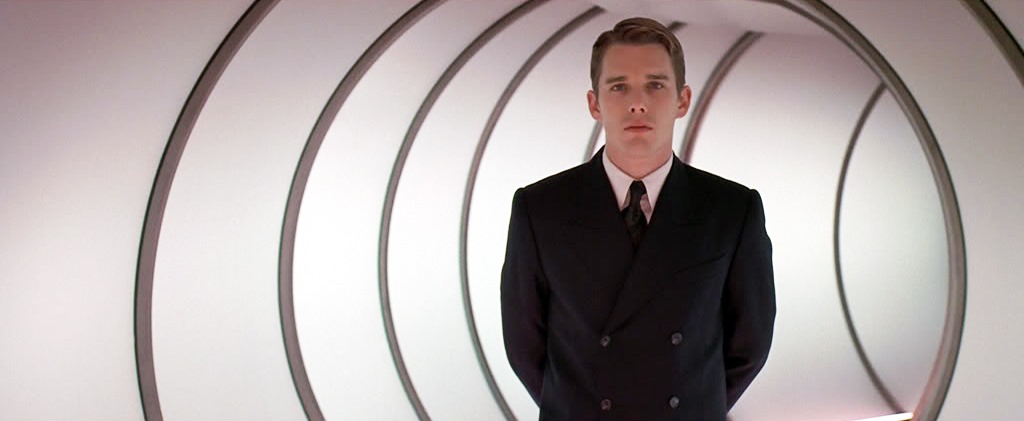
gattaca

Unless we destroy the planet and make ourselves extinct, sooner or later we’re going to be replaced at the top of the smart chart.   How will that effect us personally, our society, and how we think about our future?  Most primitive cultures when contacted by modern humans haven’t fared well.  Science fiction has been preparing us for centuries, but I’m not sure if science fiction has done a good enough job covering all the possibilities.

Possible Replacements

It doesn’t take a lot of time to think up possible replacements who could claim our throne as being the smartest beings on the planet.

  • Genetically enhanced humans
  • Naturally evolved humans
  • Artificial beings
  • Cyborgs
  • Uploaded humans
  • AI super computers
  • Robots
  • Androids
  • Alien visitors
  • SETI contact

I’m not sure if we’re not already seeing a natural selection in our species.  Our severely polarized society, divided between liberals and conservatives, between the scientific and the religious, between the secular and the sacred, might already be moving us towards separate species.  The conservative fraction that clings to the past is becoming anti-intellectual and anti-education.  If the scientific minded only breed with the scientific, won’t they produce a line of smarter humans?  Of course natural selection doesn’t always produce successful adaptations.  Some people have suggested the rise of autism comes from overly smart people mating with other overly smart people.  It might turn out that intelligence isn’t an important trait, or one vital for survival.

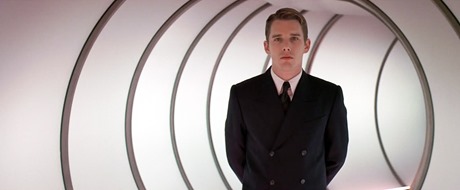
Then there is genetic engineering.  Think of the movie Gattaca, the old classic Brave New World, or Beggars in Spain by Nancy Kress.  We’re getting very close to making customized homo sapiens sapiens.  In just a few generations we could have a new species that make us look outdated.  Gattaca was a salute to the natural human, but was it realistic?  We loved Vincent for competing and winning, but can humans really compete with super humans?  Again, we’re assuming that intelligence is trait that wants to win out.

We might even be doing something now that will lead to a more naturally evolved humans.  As more women select Caesarian sections for childbirth, we’re changing an important factor that might lead to change.  Our brain size has always been limited to the size of the birth canal – now its not.  Over time we might see new adaptations.  Read Greg Bear’s Darwin’s Radio.

Work with our genome has shown that DNA is an erector set for building biological machines.  How soon before we start creating new recipes?  Whole new artificial beings could be created, or animals could be uplifted to human intelligence and beyond.  Think about the science fiction of Cordwainer Smith and H. G. Wells The Island of Dr. Moreau?

Google Glass might be our first step toward becoming cyborgs with auxiliary brain power.  Wearable computers, artificial limbs and senses could lead to supercharged brains and all those science fiction scenarios where people jacked into machines.

I’m not a big believer in uploading brains into computers, but a lot of people are.  Now that my body is getting old and failing, the idea is becoming more appealing.  People like Ray Kurzweil hope to find immortality this way, and such ideas have been the theme of many SF stories.  Sometimes those stories are wished for fantasies, and sometimes they are feared nightmares.

What I’m waiting for is the technological singularity.  AI super computers should be just around the corner if I can live long enough.  Many people fear AI minds with stories ranging from “Press Enter _” by John Varley to the latest movie Transcendence, but I’m hoping machine minds will be benign, or even indifferent to humans and animal life.

Who Do You Want To Do Your Brain Surgery?

If after we get bump down the intelligence list, how is that going to change society?  If you need brain surgery would you want a human or post-human holding the scalpel?  Or would you prefer an AI mind that is 16 times smarter than a person?  If a human and a robot were running for President, who would you vote for?  Liberals like smart dudes, but conservatives don’t.  They like old friendly duffers like Ronald Reagan.  But what if the robot had the combined intelligence of all of Congress, the Supreme Court and every CEO in America?

We’re already designing smart cars to drive us because it will be safer, and we already have planes with automatic pilots, how long before we have machines doing everything else for us?  Will we just sit around and eat bon-bons?

If we share Earth with beings more intelligent than us, won’t we ultimately let them run things?  What if they were smart enough to tell us how to handle global warming so we suffered the least, paid the least, but got the maximum benefits from changing our lives, thus making the Earth’s biosphere more stable?  What if they gave us wealth and security, and protected all the other species on the planet as well?  Would we say, hell no!  Would we say we prefer to take our chances with failure just so we could make our own decisions?

Democracy v. Plutocracy v. Oligarchy  v. Cyberocracy

We like to think we currently rule ourselves through collective decision making, but more than likely, we could already be an oligarchy or plutocracy, ruled by a limited number of rich people.  What if we could create powerful super computers that ruled us politically and ran the economy?  Would you prefer to be ruled by a handful of rich people, or a handful of smart machines?  Remember who flies your 787 now.  This idea scares the hell out of most people, but just how smart was George Bush at running the country, or how much better is Barack Obama, who most people would say is brainer?   What if decisions about taxes weren’t made by people filled with emotions?  What if we told the machines to maximize freedom, minimize taxation, maximize security, health and wealth, minimize pollution and environmental impact, and so on, and then just let them figure out the best way.

What If Post-Humans and Robots Are Atheists?

How will ordinary humans feel if their replacements reject God?  What if massive AI brains see nothing in reality to validate religion?  What if SETI aliens, say “What is a God?”  One of the common traits of western civilization impacting newly discovered primitive people is their demoralization of losing their gods.  Look what Europeans did to the Native Americans.  How are we going to feel when we’re invaded by post-humans and intelligent machines?  Will they make us move onto reservations?

The Art and Science We Can’t Imagine

What if our minds cannot feel the art and understand the science of our intellectual descendants?  We can look back over thousands of years, to what our ancestors have imagined, built and perfected, and understand what they created.  We know them because we’re an extension of who they were.  When greater minds come after us, they will understand us, but will we know them?  At what point will we no longer be able to follow in their footsteps?  Whether we like it our not, our brains have limits. We’ve always been used to exploring at the edge of reality, so what happens when we become aborigines to beings who see us as the first beings, and they are the later ones?  The ones who leave us behind.

Getting a PhD

Of course, being a scientist might not be as much fun if you had to compete with Human 2.0 folk, or AI minds.  Vincent in Gattaca pushed himself to inhuman efforts to compete against gene enhanced humans, but I’m not sure most people would do that.  AI minds could do a literature search for a PhD and distill the results in no time.  They would probably inherently know how to create and test a hypothesis, set up the experiments and research, and since they’d have math coprocessors in their brains, instantly do all the statistics.  Could any Human 2.0 or 3.0 individual compete with AI minds that are 16 or 64 times as smart as a Human 1.0 is now?

pug in lap

Life as a Lap Dog

If we couldn’t be the top dog, would we want to be a lap dog?  Or would we want to live like the Amish and exclude ourselves from the future modern world?  Can you imagine a mixed society of Humans 1.0, Humans 2.0, AI minds, robots, cyborgs, androids, uplifted animals and artificial beings all coexisting happily, or even roughly happy?  We don’t get along well with each other now, and we haven’t been too kind to our fellow animal citizens on this planet.  But then, maybe we’re the problem.

I already know I’m not the smartest geek in the group now.  I know I’m well down on the list of GRE scores.  I’m not a boss or a leader.  I’m not on the cutting edge of anything.  And most people are like me.  I putter around in my small land, ignoring most of the world.  Maybe that’s why I’m not scared of being replaced at the top, because I’m nowhere near the top.

You know, here’s a funny thing.  If an AI robot walked up to you at a party, one that has the brain power of 64 humans, what would you ask it?  What are you dying to know?  Is there anything the robot could tell you that would drastically change your life?  I’d probably say to it, “You read any good books lately?”

JWH – 4/23/14
Michael Bishop

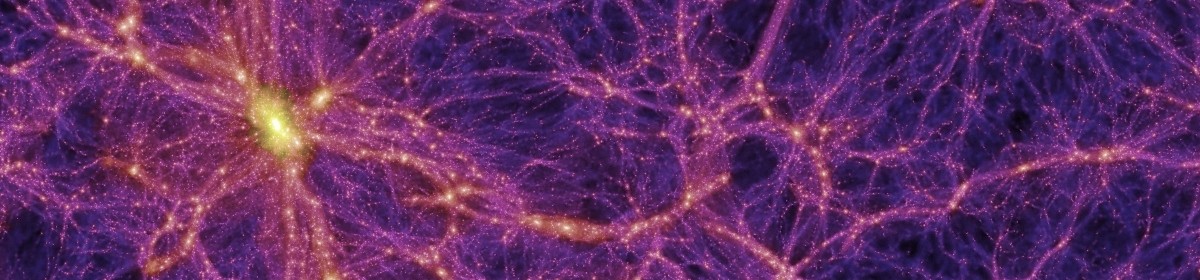
Joachim Boaz over at Science Fiction and Other Suspect Ruminations has asked several of his blogging friends to review the books of Michael Bishop.  Joachim explores the 1960s and 1970s looking for intellectual and philosophical science fiction books to review.  He especially loves their covers – that’s how I got hooked on his site – and collects them into visual themes.

Joachim invited me to contribute to his Michael Bishop reviews and I reviewed Brittle Innings, a rather strange novel about a 1943 minor league baseball team playing in rural Georgia one very hot summer.  The story is a lovely historical novel set during WWII, that shows a love of baseball, a literary feel for the south, and a fondness for Mary Shelley’s Frankenstein.  In Bishop’s literary fantasy, the monster lives and ends up as a big ugly slugger playing for the Highbridge Hellbenders as Hank “Jumbo” Clerval, but the story is really about a seventeen-year-old boy from Oklahoma, Danny “Dumbo” Boles, that gets a chance to play semi-pro ball because he’s too young for the draft.  Hank plays first base, and Danny plays short stop, and together they achieve minor fame as Dumbo and Jumbo.

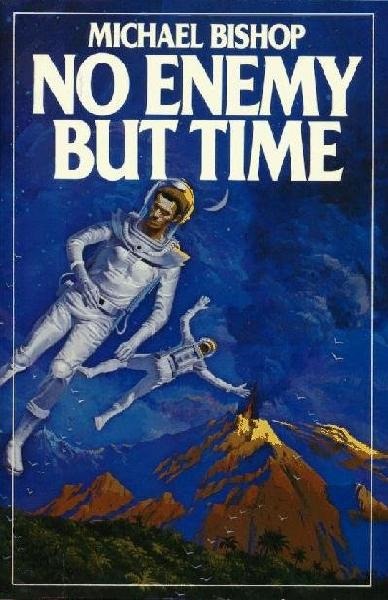
Michael Bishop wrote over a dozen novels from 1975-1994 that got a good deal of attention in the science fiction and fantasy genre, including winning a Nebula for No Enemy But Time (1982) and a Locus Award for Brittle Innings (1994).  No Enemy But Time was chosen for the book Science Fiction: The 100 Best Novels by David Pringle.  It also made my Classics of Science Fiction list.

Joachim feels younger readers need to be introduced to Bishop’s work, and thus the series of guest reviews.  I’m very glad I read and reviewed Brittle Innings because it makes me want to go read more Michael Bishop.

no enemy but time

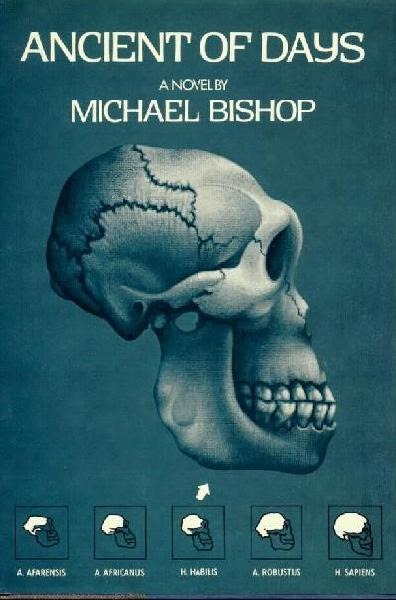
ancient

Philip K. Dick is Dead

transfig

brittle

JWH – 4/23/14