A Choice of Two Creation Stories: Cosmos v. The Book of Genesis

Although the new documentary series Cosmos is a science show, it can also be seen as a creation myth.  It tells how the universe was created and how people came about.  This puts it in direct competition with all other creation myths, such as The Book of GenesisCosmos represents the creation myth of 2014.  Trying to find a date for when the Book of Genesis was written is very hard.  We don’t know when or who wrote it, but there is great speculation, both by scholars and the faithful.  Unfortunately the faithful have come up with endless theories to when The Book of Genesis was written and by who.  Some of them are very creative, but they are all self-serving, in that they are meant to validate a particular view of religion.  Let’s just say The Book of Genesis was orally created thousands of years ago, before written language, before history, before science, before philosophy, before most every kind of systematic form of learning that we know today.
For-Cosmos

My point here, is we’re constantly creating stories to explain reality and our origins.  Three thousand years from now, the science of Cosmos will seem quaint – maybe as quaint as The Book of Genesis seems to most educated people today.  And maybe there will be a small segment of the population that clings to the ideas of Cosmos 2014 because it rationalizes some idea we treasure now but is rejected in the future.

Young Earth Creationism is the idea that reality has only existed for about 6,000 years and any suggestion that anything is older is a challenge to their theory.  Basically, these believers do everything possible to rationalize that The Book of Genesis is literally true, even though its full of internal inconsistencies.  They believe Moses wrote the first five books of The Bible around 1445 BC, even though Moses is a character that comes generations later.  They’ve even come up with an idea of how Moses could have done this, The Tablet Theory.

Cosmos is based on science, and science claims to be based on directly studying reality.  Because science is logical to most people, people with opposing creation myths like the young Earth creationists, now attempted to be scientific.  Sadly, their pseudo science is pathetic.  Both sides will reject the myth label, and insist their story is the actual explanation of how reality works.  That puts them into direct competition for the hearts and minds of citizens of the Earth.

Trying to understand how many Americans believe young Earth creationism is hard, but here is one study, “How many Americans actually believe the earth is only 6,000 years old?”  Tony Ortega estimates this is around 31 million.

The new Cosmos will be seen in 170 countries in 45 languages, but how many people will accept it as the best possible current creation story is hard to calculate.   Neil deGrasse Tyson is the new Moses of science, and he claims the universe is 13.8 billion years old, and instead of structuring his story around 6 days, uses an analogy of the 365 day calendar to picture how 13.8 billion years would unfold.  The image is our modern world since the Renaissance would fit into the very last second of that imaginary year is just bind blowing!  One year has  31,536,000 seconds, so this creation myth is quite complex. 

The Book of Genesis, a single chapter in one book, and is merely a few thousand words.  To understand those 13.8 billion years Cosmos covers you’ll need to read hundreds of books just to get the basic ideas how how things works, and thousands of books to get a fairly accurate picture.  I wouldn’t be surprised if there weren’t at least one scholarly book for each of those 31,536,000 representational seconds.  Maybe the faithful prefer The Bible for their explanation of reality because it’s requires reading only one book.

For most people, watching the whole series of Cosmos will only be educational in the vaguest sense.  Fundamentally, it will just be another creation story to accept or reject unless they study more science books to dig into the details.  I’ve often wondered just how many science books an average person had to read before they could claim they have a decent sense of scientific understanding.  To get some idea of the variety of science books available, read Gary’s Book Reviews at Audible.com.

Fans of the new Cosmos after finishing the series could read ten of the best popular science books on cosmology and still not understand much.  It’s a shame that K-12 schooling isn’t structured so children end up recreating the classic experiments of science.  Educating a scientific mind might be beyond reading books – it might require a series of AH HAH! moments of doing actual experiments.

Cosmos is a magnificent television show, but it’s only a beginning.  I’m sure the producers only expect it to inspire rather than teach.  It is Glenda telling Dorothy that the Yellow Brick Road exists, and viewers need to follow it to discover the real meaning of science.

The Great Books of Science

Encyclopedia Britannica has Great Books of the Western World – 60 volumes of the most influential writing in history.  This set was inspired by the 1909 idea of Harvard University and their Harvard Classics.  Which is also imagined in Harold Bloom’s Western Canon.  What we need now is The Great Books of Science series.  It doesn’t have to be an actual publication, but a constantly updated list of the best 100 books to read to understand science.  Science books get dated quickly, so the list needs to be constantly monitored and revised.  The editorial board needs to be scientists, or at least popular science writers of great experience.  Here are some attempts of coming up with such a list of science books.

As you can see, I didn’t find that many lists, so it’s a great project waiting to happen.  There’s many more lists of great science fiction books than science books, which is sad.  I love science fiction, but shouldn’t real science be more popular?

JWH – 3/13/14

Does the Multiverse Vindicate Fred Hoyle’s Steady State Universe?

The multiverse, which is a trending idea in science that currently has little or no validation, suggests that our universe is but one of many or even an infinite number of universes.  If there are an infinite number of universes, then we’re back to a steady state theory of everything, which is a theory Fred Hoyle revised to counter to the Big Bang Theory.  The Big Bang Theory explains just one universe, ours.

The idea of the multiverse comes in many flavors, and some of them have a steady state quality to them.  Does this vindicate Hoyle and Sir James Jeans?   I’m hesitant to even link to the Wikipedia page after reading Peter Woit’s “Multiverse Mania at Wikipedia” but follow the link and read it anyway, and then follow Woit’s link.  I’m also reminded of Farewell to Reality:  How Modern Physics Has Betrayed the Search for Scientific Truth by Jim Baggot, and his idea of fairy physics.

However, the idea of the multiverse is catching on.  Like string theory, its just so damn appealing, but it’s still much closer to ontological wishing than real science.  Last night the new Cosmos even mentioned the multiverse theory and had a beautiful animation to explain it.

I hope everyone on Earth got to see Cosmos last night, even though everything it said is old news, and very basic, and everyone should know anyway.  It’s a great to be reminded how fantastic our existence is, and we have many episodes to explore.  But there are people that don’t watch science shows like NOVAThe Universe or How the Universe Works, so it’s always nice to have another beautiful show about science.

I also hope that people also caught 60 Minutes where they scooped Fox on cosmological wow with their story on “ALMA:  Peering into the Universe’s Past.”  It was great to get so much cosmology in one night.

JWH – 3/10/14

Are Young Women More Artistically Beautiful Than Other People?

If we were robots, with video camera eyes, everything in our visual field would be of equal value.  So, why do our brains light up when we see flowers, sunsets and young women?  Will we ever be able to program a robot to have a sense of beauty?

And if biology is the basis of beauty, why isn’t food and potential mates the only things we see as beautiful?  How did a sense of beauty evolve in our minds?  Does it serve a purpose?  Isn’t a sense of beauty one of our most motivating qualities?

I love looking at photographs.  I have a dual monitor setup and use John’s Background Switcher to display 8 photos on my desktops every 10 seconds, chosen from sites like 500px, Flickr and others.  This way I see scenes from all over the world, nature, animals, forests, oceans, lakes, mountains, stars,  buildings, bridges, and sometimes people.  What’s strange is for some sites, when they show people, 95% of the time it’s a young woman, probably age 18-25.  Now these are supposed to be art photos, not sex photos.  Why are young women more artistically appealing than other people?  Is there a reason other than sex?

Photographers do like taking pictures of other kinds of people, but even then the range is limited.  It’s cute kids, or very old people with tons of wrinkles.  (I assume wrinkles are very artistically inspiring, especially in black and white.)  But statistically, young women are the dominate subjects for photographs of humans.  Why do young women trigger the neurons that define beauty in our brains – more than any other object in reality?  I don’t know how woman and gay men rate the beauty of young women, but I often hear them talk about beautiful women, so it isn’t just us guys brainwashed into seeking sex objects.

It’s not news that young women appeal to photographers, but I’m wondering why.  Is it just sex, or are young women more aesthetically pleasing than other types of people, or even natural objects?  Can we ever see young women without our brain being distorted by sexual programming?  Aren’t flowers, sunsets, old cars, dogs and cats just as beautiful?  And if artistic photographs were mainly about sex, why aren’t women photographers uploading pictures of young men in equal numbers?  And what explains heterosexual women preferring to look at young women?  Why aren’t women’s magazines, and their ads, showing an equal distribution of women of all ages and sizes?

If you follow photography you eventually realize certain subjects are more popular than others.  Today’s amateur photographers are just amazing, equal to the best professionals just decades ago.  Just look at a site like 500px.com.

The annual Sports Illustrated swimsuit issue just came out, and it gets a lots of attention.  Why does it only show young women in swimsuits?  Why not older women, or men?  Sure sex sells, but why don’t we have a wider range of sexual stimulation.  It’s often said we are a youth oriented culture – is that because we define beauty by being young?  Is it possible to culturally reprogram ourselves so old men and women in skimpy bathing suits would be beautiful?

I think the photo above of Anna Bella is beautiful because of the woman, and because of the photographic composition, but could not a sixty-something woman have posed for the picture and the photo been just as beautiful if the picture had been composed for artistic reasons?  Or is lustrous hair and fair skill absolute aspects of beauty?

I think the picture of the pug dog below is beautiful.  I have no sexual attraction for dogs, and think pug dogs are ugly, but I think this photo is artistically beautiful.  However, most of the photos I think of as stunningly beautiful at 500px either have gorgeous nature scenes, or they are of young women.  However, if I put the picture of the woman above on the wall, my wife will think I’m a dirty old man, but think nothing if I put up a picture of a pug.

Even though I think pugs are butt-ugly, I think they are beautiful to look at.  What explains that?  Is cuteness an aspect of beauty?  It would explain all the pictures of puppies, kittens and kids.  How do we explain sunsets and flowers twisting our beauty sensors to 11?  How much do bright colors figure in our sense of beauty.  Think of fall trees.

Photography sites have billions of images of animals we find beautiful.  What makes them beautiful?  Not all animals are beautiful either.  Puppies are cute, but a mangy dirty puppy isn’t.   What makes one tiger stand out over another?  Why are flowers so beautiful, or rolling hills?  I’m sure there are thousands of books devoted to defining the philosophy of beauty, but shouldn’t it be obvious?  Can beauty be scientifically determined?  Or is it always something in the eye of the beholder?  How many things do we find beautiful?  Is it endless?

What moves us?  That tree on the bare hill has impact, especially against the spectacular sky.  What about the women below?  The picture is beautiful, but there’s something beautiful about the woman too, as if her rich life experience shines out.

Photograph Wharf Lady by James Nielsen on 500px

I’d like to know about the science of beauty.  If we ever built robots with artificial intelligence that were self-aware, and conscious beings like ourselves, will they have a sense of beauty?  And if they do, will what we think as beautiful overlap?  Has there been any studies trying to find out if animals have a sense of beauty?  Do dogs looking at people think some people are more beautiful than others?  Are their favorites young women?

And is beauty just visual?  Aren’t some smells wonderful, and others stinky?  Are some sounds lovely and others ugly?  Even textures and tastes have their aesthetics.

I keep an extra monitor going, not to have room for work windows, but to be constantly stimulated by beautiful scenes.  Every ten second I see four more images on my left that inspire me about this world and reality.  Lately, I’ve been most inspired by pug dogs.  I’m not a dog person, I’m a cat person.  But these weird little pugs have caught my attention.  By the way, I like the gray woman below not because she’s beautiful, but because her grayness contrasts beautiful with the dirt and rocks.  How can we possible explain why black and white is often more beautiful than color?  Whatever beauty is I haven’t a clue to explain it.

left screen1

JWH – 3/7/14

Human 2.0 versus Robot 4.0

If we think of all the versions of genus Homo leading up to modern man as alpha and beta tests, we can call the average person today Human 1.0.  Science fiction has often explored the idea of the next stage of humanity, which I shall call Human 2.0.  Most guestimates of Einstein’s IQ puts it around 160-180 – let’s assume he was Human 1.6.  IQ is not a reliable measure of man, but it’s useful enough for this essay.  Basically I’m suggesting that humanity is evolving toward a time when the average person’s 100 IQ is equal to today’s 200 IQ, and we can say we reached the Human 2.0 stage of evolution.

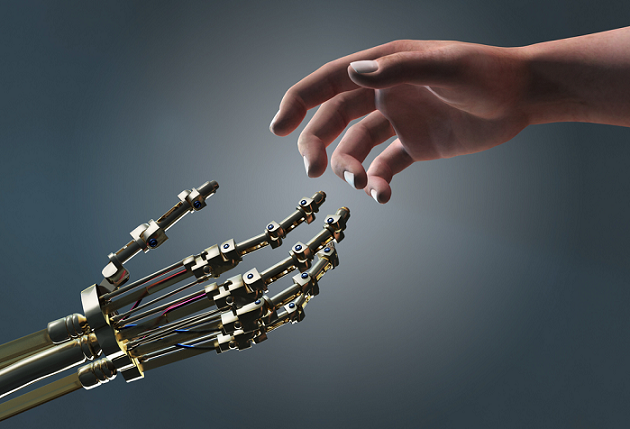
Cyborgs-vs-Humans

IQ is terribly hard to quantify, but there is speculation that some people have surpassed the 200 level already.  Might not the huge economic divide between the “haves” and “have nots” we see today already reflect the emergence of Human 2.0?  Science fiction always predicted Human 2.0 beings looking different, with bulging foreheads, and maybe six fingers.  And for some strange reason, more often than not, they predict Human 2.0 with ESP abilities.  What if people were just twice as smart, but looked no different.   Isn’t that difference enough to bring about a massive social transformation?  Isn’t that different enough to designate a new species?  Plus, if you implant a smartphone into these people, making them cyborgs, how could normal people compete?

While humans are evolving, so are robots.  Many scientists expect a point in our future where robots reach a state of intelligence equal to Human 1.0.  Let’s call that Robot 1.0.  But like Moore’s Law for computers, I expect robots to quickly evolve, so Robot 2.0 and then Robot 4.0 will quickly be upon us.  How will humans feel when their smartphones are twice as smart as they are?  I hope you’ve seen the movie Her.

There is speculation that many historical people had theoretically IQs as high as 180, or Human 1.8.  I assume our brains, although fixed in size by the shape of our heads, and limited by the birth canal, can still evolve to become smarter, but I doubt we’ll ever see Human 4.0.  We could go the Brave New World route and grow babies in artificial wombs, and use genetics to quicken our evolution, to produce big headed humans often imagined by older science fiction stories.  But for now, let’s assume that won’t happen soon.

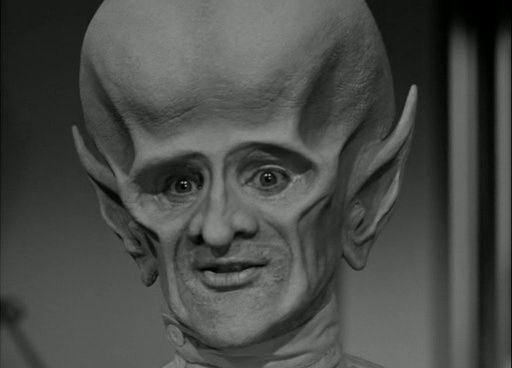
lthesixthfinger

Let’s forecast instead, that humanity as a whole is working towards becoming Human 2.0.  If the average future person is twice as smart as today’s people, will we become smart enough to be ethical stewards of the Earth?  It’s pretty obvious that collectively Humanity 1.0 is not smart enough, because we’re ruining this planet quickly and killing off species at an alarming rate.  By that standard we really don’t want robots staying at 1.0 levels long.  We want robots to reach 2.0 and 4.0 levels as fast as possible, because we know the destructive power of Human 1.0.

Maybe that’s why so many science fiction movies predict intelligent machines attacking humans, because they can’t imagine anything smarter than people, and that’s what people would do, attack any competitors.

If science fiction is any indication of how humanity will deal with smart machines, the future doesn’t look good – but I think science fiction is wrong.  What if robots are more ethical than humans?  Most of what makes humans evil are their animal impulses, and robots won’t have those.   I’ve read people say that without our animal drives machines won’t care to live and will want to shut themselves off.  But being alive, whether via biology or cybernetics, tends to inspire a desire to keep living.

I read a lot about the 19th century, both fiction and nonfiction, and the rise of the first machine age and industrialization caused a lot of human suffering and angst.  Jobs are important to the physical, mental and spiritual wellbeing of humans.  One problem with life on Earth in 2014 is we have way too many people compared to the number of fulfilling jobs.  People in the 19th century asked why build machines to do our work when so many people want those jobs.  Many are still asking the same question in the 21st century, but few people think progress will hit the brakes.

I’ve always been a science fictional dude, so I have a science fictional solution.  Let intelligent machines have all the solar system except the Earth and Mars, and we share the Moon.  Space really is a hostile place for people, either much too cold, or much too hot, and always way too radioactive and thin on something to breathe.  Instead of designing machines with Asimov’s Three Laws of Robotics, design them to live in space, and leave Earth to us.  Let robots have the spaceship building business and sell us rides to Mars.

I wouldn’t think even Humans 2.0 would want to compete with Robots 4.0, or Robots 32.0.  Let’s invent smart machines and then tell them to keep anything they learn a secret from us, so we can figure things out for ourselves.  Instead of programming them not to kill us, lets program them not to crush our spirits.  Let’s keep our jobs and ambitions, and let AI robots create their own societies away from us.

We need to preserve space on Earth for all the animals, as well as all the old fashioned humans, and the newly evolved humans, and maybe for some of the robots.  But do we want to coexist with machines that are smarter than us than we are to pug dogs?

pug-dog-wallpaper-free-download-i

Science fiction is constantly changing and evolving.  It represents our most ambitious fantasies, but in recent years I think we’re all becoming more realistic.  I don’t think humans will be colonizing the solar system and the galaxy.  Earth, and maybe Mars, might be our only homes.  We need to protect our environments because we need to live here for millions of years.  Maybe Human 3.0 or 4.0 will adapt to living in space.  I just don’t see Humans 2.0 going the Childhood’s End thing, and destroying Earth and leaving it for space.   I think the conservation of our planet is very important because we’re going to need it for a very long time.

There is no heaven or final frontier, just Earth.

Let the robots have the stars.

JWH – 3/4/14

A Copernican Revolution in Animal Rights

Just over four hundred years ago, humans confronted the idea that the Earth orbited the Sun.  Many didn’t like the idea.  Both the church and classical knowledge taught the Sun orbited the Earth.  It was a shock to our egos to think our home planet was not the spiritual center of everything.  Were we not the crown of creation, the apple of God’s eye?  That stung.  Some crazy folks back then, not many, but some, even suggested that there were planets around every star, with intelligent beings on each.  Ouch, now that really hurt, to think God might not be monogamous, going around having children everywhere.

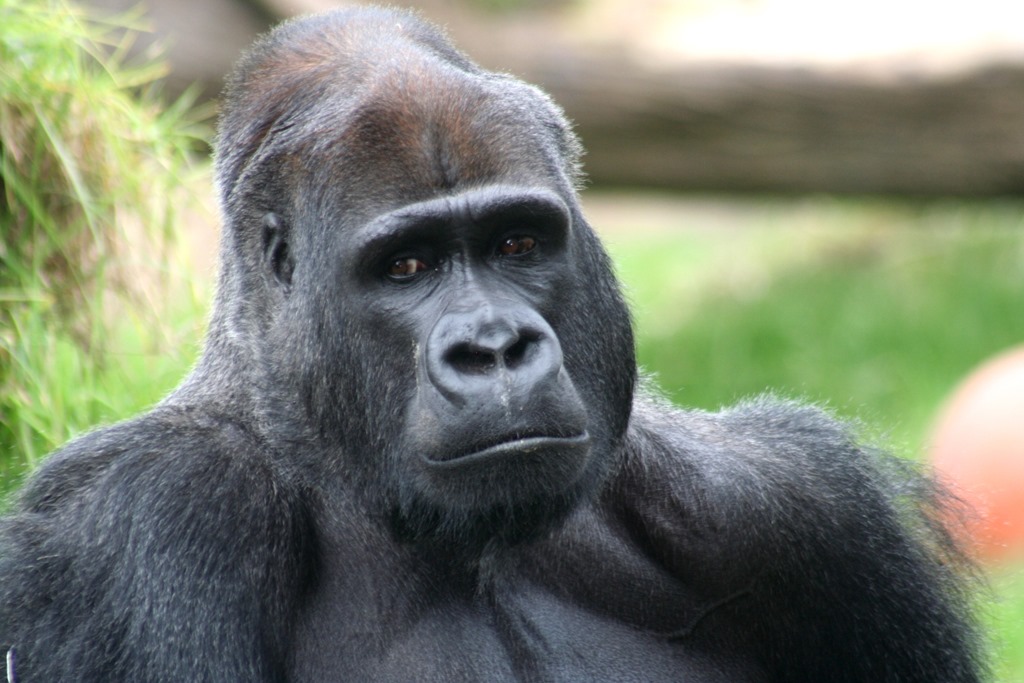
Eyes_of_gorilla

But at least humans were special, different from all other life on Earth.  The conceit that we had souls and animals didn’t gave us justification to enslave, torture and eat animals without guilt.  The concept of animal rights has been around for a very long time too, but in recent decades those pesky scientists have started proving animals had complex minds, at least some of them, and maybe, not that different from ours.  Damn, there goes our sense of special again.

Now, this is not new, except that more people than ever are becoming empathetic with the plight of animals.  The Copernican Revolution didn’t happen overnight either.  I became a vegetarian in 1969, and over the decades I watched the movement grow.  Just because I chose not to eat animals didn’t mean I understood their suffering.  I’m still constantly being educated to how I am insensitive I am to their point of view.  Two recent documentaries reminded me that just not eating the animals is being good enough.

I’ve been to SeaWorld and loved the orca and dolphin shows.  I knew scientists used chimpanzee for all kinds of experiments, including those with sign language, which I thought was a wonderful idea.  Even when we appear to love and cherish animals we often fail to see what we’re really doing to them.  I highly recommend watching these two movies.  Blackfish and Project NIM are available through a variety of sources.  And please don’t avoid them because you don’t like seeing animal suffering.  The more we avoid recognizing their suffering, the longer animals will suffer.

There is a number of issues we need to solve as a species before we can assume everything is hunky-dory and we can all go back to our selfish individual pursuits.  Should there be some kind of cognitive bar that if an animal can chin itself, free them from our cruelty?   

For some animals it’s important that we decide soon before we completely wipe them out.

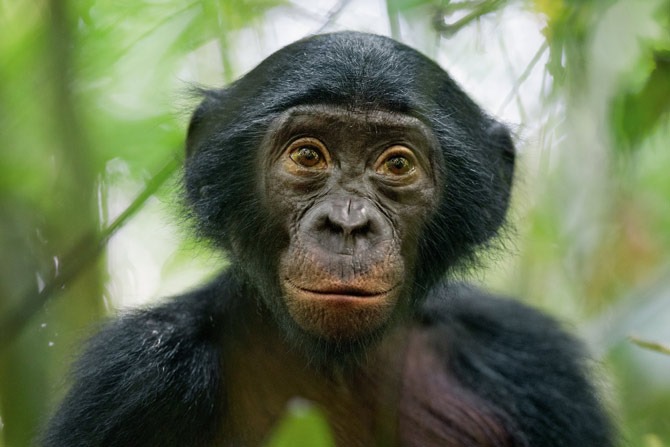
MM7994

Where Is the Dividing Line Between Compassion and Evil?

It wasn’t long ago, and in fact, for many people it’s still true, that the dividing line between compassion and evil was set at anything not human.  Some people extended the line to include their pet pug or kitty cat because they live closely with their pets and see their personalities first hand.  But they’d eat pigs and cows, assuming those creatures are just mindless biological machines.  Did you know, that some studies consider pigs smarter than dogs?

What traits must an animal possess before we feel compassion for them?  Creating a dividing line that defines what we can ethically kill and what we can’t, will be very difficult.  Most people will kill a cockroach or mosquito and think nothing of it, but there are some religions that find all life sacred and thus worthy of protection.  Animal rights are a very complex ethical issue.

Right now the public attention seems to be focusing on large animals that show some self-awareness, tool use, or language ability.  These include the great apes, whales, dolphins, elephants and a few others.  But what if farm animals like pigs and cows prove their ability to do a few cognitive chin-ups?  What about deer?  Or turkeys?  Most people think birds have bird brains, but if you’ve seen “My Life As A Turkey”  you might think different.

I believe science is showing that some large animals like the great apes, whales, dolphins and elephants have a whole lot more cognitive awareness than we thought, and that even zoos, circuses and water worlds are concentration camps to them.

Like I said, this issue has been around a very long time, but some social transformations take a long time to complete.  Pay attention to the newspaper and you’ll see signs of it everywhere.   Yesterday the New York Times ran “They’re Going to Wish They All Could Be California Hens” about how hens in California are getting bigger pens.  Or Nicholas Kristof’s “Is That Sausage Worth This?” about how pigs are fed pureed dead piglet intestines or pig diarrhea to build up their immunity to pig diseases.  Yummy, huh?  But diabolically evil if we practiced such procedures on a human.

Even Christians are exploring animal rights as a spiritual issue, see “Animal Rights and Christian Responsibility” from Wheaton College.  If you search Google or YouTube you’ll find almost endless approaches by religious people becoming aware of animal rights.  They’ve come a long way since the Old Testament and sacrificing tens of thousands of animals at one time.

What Are Animals Fair Share of the Earth?

If we plotted human’s consumption of the Earth’s landmass it will be easy to see that someday we will use it all.  If you plot the number of species made extinct by our development, the graph will show at some point there will be no more animals.  If we don’t want to be alone on this planet with nothing larger than a bacteria for our buddies, then we need to change our ways.

How Smart Do Animals Have To Be To Deserve Respect?

Scientific American recently published  “The Science is In:  Elephants Are Even Smarter Than We Realized.”  If you read this article and watch the videos, will you still feel we should imprison elephants in zoos, or enslave them for work?  And should not a massive international effort be made to stop all poaching and trafficking in ivory?  At what point is shooting poachers more ethical than letting elephants die?

But don’t even small dumb animals deserve rights too?  The other day I watched an episode of PBS Nature “The Animal House” that went around the world showing how animals built their houses.  In one segment it showed cave swiftlets building nests in underground caves, and then showed humans collecting the nests for bird’s nest soup.  Do we have no shame?  Must we eat everything?

Learning to Empathize

To change, every person must reach a state in their personal development where they empathize with animals and nature.  I think one of the best ways to do that is by watching Nature on PBS every week.  The show is not an animal right’s show, but a show about all the varied aspects of nature.  I find the show infinitely inspirational.

Animals don’t believe in animal rights – they practice red tooth and claw, so they are cruel to each other.  A case could be made that we’re no crueler to them, than they are to each other.  But here’s the thing.  God might not exist, but we do, and in his place, we are becoming beings that do know about every sparrow that falls from the tree.  This awareness doesn’t mean we need to convert all animals to vegetarians, but it does mean we can choose between being like the animals or becoming something new.

JWH – 3/4/14