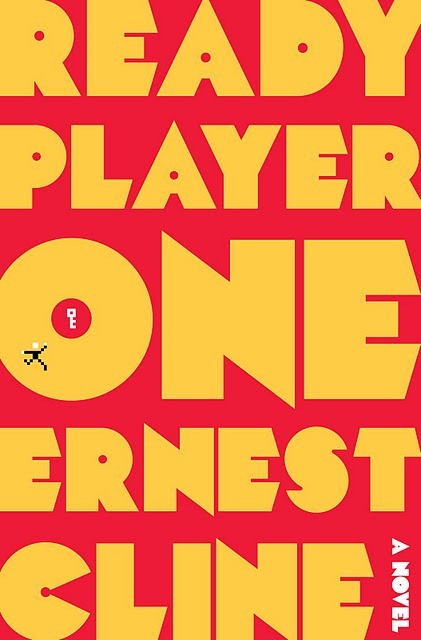
Ready Player One by Ernest Cline

If you were a teen in the 1980s, loving Sesame Street, the Muppets, Atari 2600 games, John Hughes movies, D&D, MTV music, Zork, and nerdy Commodore 64s, then I have a book for you:  Ready Player One by Ernest Cline.  I lived through the 80s too old to play D&D but I dug the music, films and computers.  Cline made me terribly envious I hadn’t grown up in his decade.

Ready_Player_One

I wish I could understand why this book was so much fun to read!  I’d use the formula to write bestsellers.  This story reminds me of a hip new version of Citizen Kane that doesn’t take itself so seriously.  Set in mid 21st century, aging billionaire James Halliday dies leaving a rather unique Last Will and Testament.  Halliday made his fortune developing a virtual reality universe called OASIS that most people use to attend school, work and play in because the real reality is rather bleak.  Halliday’s avatar tells the world he’s worth over $200 billion and that the first person to find his Easter Egg in the OASIS will win his fortune and company.

Now this gets the attention of the world’s foremost video gamers, as well as corporations hot to own the OASIS.  Our story begins with Wade Watts, a poor kid living in the trailer park from hell, whose only access to OASIS comes from his public school gear, but in his own 21st century Horatio Alger, Jr. way climbs out of poverty to compete with legendary gamers.

The contest designed by Halliday is hard, so hard that no one gets anywhere for five years.  It becomes obvious that the clues are hidden in Halliday’s childhood, just like Charles Foster Kane’s secrets, and only the most obsessed fans of 1980s trivia have any chance of solving the puzzles.  Ready Player One is perfect for people who grew up in the 1980s, but the story is so well told bookworms from any decade will love it.

I wonder how many people born forty years after the the 1980s will ever find our times so fascinating?  It would be like me devoting my whole life to the 1910s – but wait, I am madly in love with Downton Abbey.  And just look at the success of Steampunk!

This might be the clue to Cline’s success – creating great characters set in an fantastically detailed milieu, because if we had an OASIS system to visit, I think we all would find virtual worlds based on the past quite seductive.  Nostalgia is a powerful emotion.  At work the favorite topic of guys my age is music from the 1960s and 1970s.  I’m in a classic science fiction book club where we read and reread books from the 1940s-1970s.  Start paying attention to movies (Hugo, Sherlock Holmes, TinTin, War Horse) as more are set in the past.  Maybe it’s the bad economic times and we just need escapism.  Ready Player One sure made me forget about now.

Other Reviews and Sites – probably to read after reading the book

JWH – 1/12/12

What Do We Want From Science Fiction?

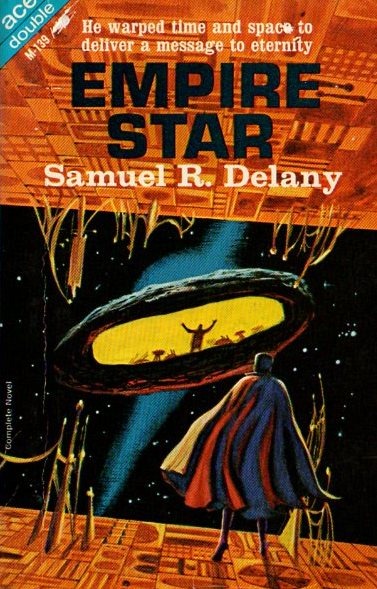
This month over at the Classic Science Fiction book club we’re reading and discussing Empire Star by Samuel R. Delany, and some of us are enjoying the story and others are finding it lacking.  We all take it for granted that people have different tastes, but do you ever wonder why?  One of the themes of Empire Star is about asking questions, and one of our members, Andreas, found this article by Theodore Sturgeon called “Ask the Next Question.”  Some of us even wondered if Delany had gotten the idea dealing with questions from reading Theodore Sturgeon.  In fact, we found many elements of Empire Star that had been used in other science fiction books – but more on that later.

Delany_Empire-Star

Discussing Empire Star got me thinking:  What do we want from science fiction?  Did some of the book club members enjoy Empire Star because it contains certain elements they seek out in science fiction?  And the reason other people disliked the story is because it lacks those elements they normally seek?  Jo Walton really loves Empire Star or so she says in her review at Tor.com.

I didn’t just like the book a lot, the way a sane grown-up might like a book, I fell head over heels obsessively in love with it. I made myself a t-shirt of it. I read it several hundred times. I was a one-Jo Empire Star fangirl. I had a sign on my bedroom door saying “Entry for J-O Type Persons Only” which is a quote from it.

Evidently Empire Star rubbed Jo Walton in just the right way if she’s read it hundreds of times.  Really?  I haven’t read it that many times, but I have read it four times since 1968.  I keep coming back to Empire Star.  Why?

I think most of us generally think we read books because we want to be caught up in a good story and characters – and beyond that we assume all books are different.  But what if there are specific fictional flavors we crave like our favorite ice creams?

My all-time favorite books are the twelve YA novels Robert A. Heinlein wrote for Charles Scribner’s Sons in the 1940s and 1950s, and while I was reading Empire Star for the fourth time I noticed many elements in the story that reminded me of Heinlein.  Did Delany include them in the his novel because they were elements he liked and thought they belonged in any novel he wrote too?  Empire Star came out in 1966, so he wrote it when he was 23-24, and still quite young.  Delany and Heinlein don’t seem like they have much in common as people or writers, but there are some common elements in their stories that attract me, and that maybe they do share some things common.

Circular Plots

Heinlein wrote two classic SF stories with circular plots, “—All You Zombies—“ and   “By His Bootstraps.”  In each story one character turns out to be several in the stories.  In Empire Star three characters turn out to be many.  In fact all three stories might be considered Mobius strips.  I love circular plot stories, and repeating loop stories, like Replay and Groundhog Day.  This is definitely a science fiction element that will always hook me.

Alien Pets

Heinlein’s young adult novels sometimes had alien creatures that appeared to be pets but were really something else, like Willis in Red Planet, Lummox in The Star Beast, and Chipsie the spider-puppy in Starman JonesEmpire Star gives us a devil-kitten D’ik, which eventually grows very large like Lummox.  Remember “The Trouble with Tribbles” from Star Trek?  Almost an exact copy of flat cats in Heinlein’s The Rolling Stones.  If puppies and kittens are cute, so are alien animal babies.  I guess I’m sucker for alien pets.  And that makes me think about how much fictional mileage J. K. Rowling gets our of her magical pets.

Running Away to the Stars

Now there’s one huge theme that appeals to a lot of science fiction readers, and that’s about a kid who gets to run away to the stars.  Isn’t that the core of science fiction?  My all-time favorite novel is Have Space Suit-Will TravelEmpire Star follows the classic template as Starman Jones about a farm boy who heads out to explore the galaxy.  What that’s you say, didn’t George Lucas invent that motif for Star Wars?  Sorry, but it’s been around a long long time in a galaxy far away – but it’s probably why Star Wars is so successful and so much better than the other five films.  (I hate referring to it as A New Hope.)

Galactic Empires

I’ve written about this before but galactic empires are probably the most loved of all science fiction elements.  Read, “Are Galactic Empires the New Middle Earth” I wrote last June.  I don’t think I’ve really scratched the surface of that theme yet – there’s something deep there, that really needs to be explored.  Empire Star is about a galactic empire that uses slaves, and Comet Jo is going to free them, but after a long epic struggle that will take years.  However, Empire Star is a slight wisp of a novel, really a short novella, and if Delany wrote it today it would be 800 pages, and probably the first in a long George R. R. Martin like series.

Intelligent Machines

Stories about intelligent computers like Heinlein’s The Moon is a Harsh Mistress, Gerrold’s When HARLIE Was One, Galatea 2.2 by Richard Powers and the current Wake, Watch and Wonder trilogy by Robert J. Sawyer really push my science fiction pleasure button.  So is it any wondered I loved Empire Star with Lump, a computer Comet Jo meets living on the Moon?  And I can’t help but believe Delany was inspired by Mike, a computer living on the Moon in The Moon is a Harsh Mistress.

Other Elements

Delany doesn’t stop with just these five classic science fiction elements.  The whole book seems inspired by the weird humor of Robert Sheckley.  But I also hear from other readers that they see elements in Empire Star that remind them of Theodore Sturgeon – such as the theme about asking questions.

I wrote in “My Kind of Story” that I knew there were certain kinds of stories that appealed to me, but when I wrote that I thought I was dealing with narrative style and writing techniques.  But now I’m thinking that like some people with very specific sexual desires, I might actually crave very specific kinds of science fiction stories, or more precisely, stories with specific elements.  Which makes me wonder why I don’t seek to write stories with those elements?  Did Heinlein and Delany uses the elements discussed above because they believed they would sell more books?  Or because the were pleasuring themselves?

I need to contemplate if I have a limited number of fictional buttons I liked pushed, or are there endless possibilities. I’m really enjoying Once Upon a Time, the new TV series on ABC, and one of the things that excited me most about the story is that it’s told out of sequence, that the narrative double backs over itself, somewhat like a circular plot.  And like PKD, it’s about a town that doesn’t know the real reality of things.  If I kept looking I’d probably find several other story elementals that are my kind of groovy.

Now back to Sturgeon’s idea about asking questions. I’ve only gone one layer deep by asking what do we want from science fiction. If the answer is we love stories with certain themes or ideas then I should go to the next question: Why do I like those ideas? The answers would be too long to put into a blog post, but if you think about it, the question is important. For example, why is running away to go into space so appealing? During my adolescence that was a huge button to push with me. I had alcoholic parents that dragged me and my sister all over the country, so the real answer there is I wanted to escape from my own life. And as I got older and learned what it meant to be a real astronaut and what the right stuff was, I realized I would hate living in space – at least under present conditions.

The point is to keep asking question. Go deeper. Because if I did, I’d learn a whole lot about myself, and maybe stuff I didn’t even want to know. Why do I love the idea of intelligent machines? Is it because I don’t like emotions? Where’s that going? See what I mean?

Well, this blog is over – I’ll have to write more about this in the future.

JWH – 12/8/11

Is Science Fiction a Modern Substitute for Religion?

Most people will think I’m nuts for suggesting that science fiction is a modern substitute for religion, but look at this comparison chart.


Religion Science Fiction
God Super advanced alien, AI
Greek gods, Hindu gods Superheroes, aliens
God knows what you are thinking Mind reading
God can be everywhere Teleportation
God’s touch Telekinesis
All knowing Super AI
God creates world L5 space colony
God destroys world Death Star, space opera spaceships, atomic war, etc.
God creates land, sea, animals Terraforming
Prayer ESP
Heaven Other planets, cyber worlds
Hell Other planets
Devine realms Multiverse, other dimensions
Immortal Soul Life extension, immortality
Flying Airplanes, rockets, anti-gravity, jetpacks, superheroes
Angels Aliens
Devils Aliens
God creates man Man creates robots, AI, artificial life
Noah’s ark Generation ship, space colonies
Virgin birth Cloning, genetic engineering
Healing powers ESP, Super science medicine
Prophets Precognition
Wine to water Atomic alchemy
Walking on water Levitation, anti-gravity
Resurrecting the dead, rebirth Brain downloading, cloning, Homo sapiens 2.0

Hubris knows know bounds.  If you study the history of religions and myths you will see people have always wanted God-like powers.  Science fiction appears to say:  If God won’t give us these powers we’ll get them ourselves, or from aliens.

How long have people wanted to be more than what they are?  How long have people wanted reality to be different?

On the other hand, how often do people find acceptance in what is?

JWH – 10/24/11

In Other Worlds by Margaret Atwood – Is Science Fiction Fantasy?

Is it time that we became atheists to the final frontier?

Tom Murphy at Do the Math has written “Why Not Space?”  His math is very convincing, because of the fantastic distances involved, the likelihood of space travel beyond the Moon is tiny.  We haven’t been beyond low Earth orbit since 1972 and there appears to be little public support or political will to do so again.

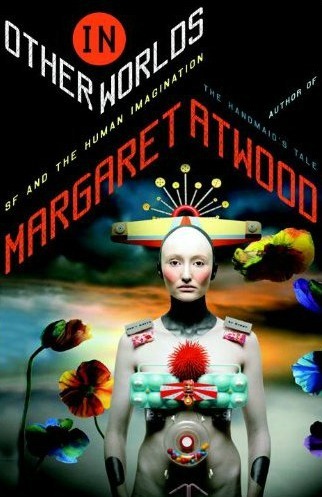
But it’s more than that.  I’ve just read In Other Worlds: SF and the Human Imagination by Margaret Atwood where she psychoanalyzes literature for the origins of science fiction.  The roots of literature are in the earliest of myths, but then so are the roots of science fiction.  The core of the book is about what is science fiction.  Atwood doesn’t like calling her science fiction like novels science fiction because she thinks they are realistic speculation about possible futures.  She feels science fiction is about far out stuff that can’t happen. Now hard core science fiction fans like me want to believe that science fiction is realistic speculation about possible futures, but I have to admit few other people think that way.  The public lumps any weird-ass story into the science fiction genre category and so it’s gotten the reputation for unbelievable stories.

atwood-in-other-worlds

Margaret Atwood says what she written is like what Jules Verne wrote, stuff that could happen, and that it was H. G. Wells who wrote stuff that couldn’t happen, citing The War of the Worlds as her prime example – and that’s what she calls science fiction.  Of course, there are those of us who believe Wells was speculating about something that could have happened, but his conjectures have been disproven by later science.

What Tom Murphy is saying, and there are many like him in recent years, is that human exploration of space might not happen, that it’s not practical, or even wise.  And wouldn’t that make Margaret Atwood right?  That science fiction is about stuff that can’t happen.  Which means science fiction is fantasy.

Normally, I would argue against that, because I still think we have a chance with space exploration.  Of course, I will admit that 99.999% of science fiction about space travel is patently bogus speculation and thus fantasy.  But I still hold out the possibility that humans will go into space, maybe even to the stars.  It just won’t be like what science fiction has predicted so far.

However, reading In Other Worlds made me think differently – not about space travel, but science fiction.  I’ve read other books linking science fiction to its origins in myths before, but this book is making me think about it in new ways.  Atwood links myths, religions, literature, comic books, science fiction and fantasy all into one human tendency to make up far out shit.  As a species one of our defining characteristics is we dream up fantastic concepts to think about, and its when you start studying this tendency as a whole, from the earliest times that we have records of human thought to the latest, that we see it’s all of one cloth.

I’m becoming an atheist to my own religion – science fiction.

Science fiction fans believe their stories are better than myths and fantasies because of the science and technology, and they believe their fantastic stories represented something new and different – and possible!  After reading In Other Worlds, I think we’re all smoking the same opium.  Science fiction, fantasy and comic books fuel the same need in modern minds that myths and religions feed to primitive minds.

What we need is a label that encompasses the whole kit and caboodle, that defines and explains our craving for the fantastic.  Until someone comes up with a definitive term, I’m going to call it all fantasy.  Evidently humans need air, water, food, friendship and fantasy to survive.

Now what’s fascinating about In Other Worlds, and why I encourage you to read it, is Atwood’s writing about her love of science fiction, especially the chapter on Ursula K. LeGuin.  Atwood loves both science fiction as she defines it and speculative fiction.  Her hunger for reading and fantasy as a child, adolescent and adult knows no bounds.  And as an academic, writer and savvy reader she traces our love of the fantastic back as far as history and anthropology can take us.

JWH – 10/23/11

Classic Science Fiction Anthologies Wanted for My Kindle and iPod

Ebook publishing offers a new lease on life for reprinting old novels but what about short stories and classic anthologies?  Successful novels tend to stay in print, but not anthologies.  I suppose editors buy rights for a limited time and when the anthology goes out of print they no longer have the rights to use the stories any more. But I’d sure love to have a lot of classic science fiction anthologies on my Kindle.

I like my Kindle best for reading short stories.  I’ve been getting the annual Dozois and Hartwell/Cramer collections for my Kindle for a couple years now and it really works out well.  The Dozois book is HUGE with small print, so its much easier to plow through the volume reading on an ebook.

I wished Dozois and the Hartwell/Cramer collections were available on audio, but alas they are not.  But I do get  The Year’s Top Ten Tales of Science Fiction series, edited by Allan Kastor, now in it’s third year.

So I’m well covered on current stories, but what about classic science fiction short stories?

What if it was possible to reprint classic anthologies, which ones would I want?

Adventures in Time and Space edited by Healy and McComas

Adventures_in_time_and_space

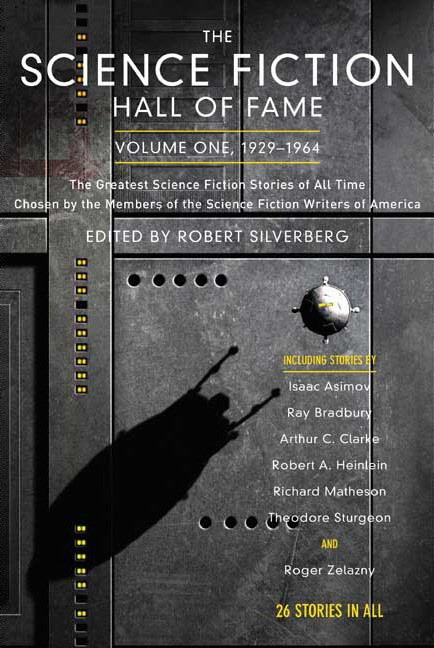
The Science Fiction Hall of Fame, Volume One, 1929-1964

sf-hall-1

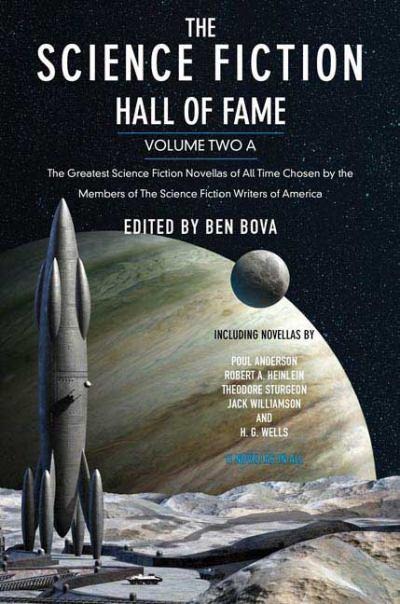
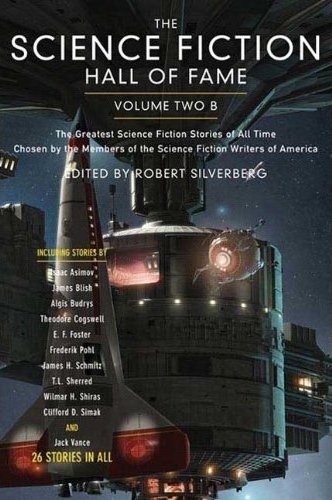
Science Fiction Hall of Fame, Volume 2

sf-hall-2a

sf-hall-2b

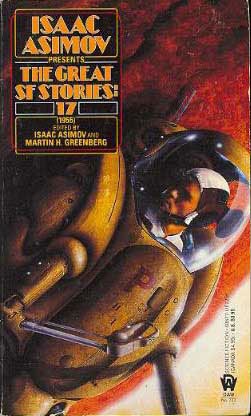
Asimov’s Great SF Stories (series 1-25, 1939-1963)

Asimov_Great_SF_stories17_Daw_1988

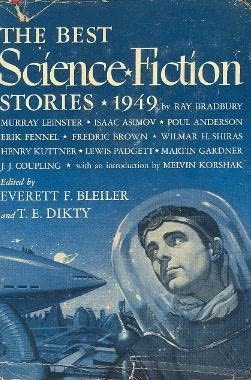
The Best Science Fiction Stories: 1949, 1950, 1951, 1952, 1953, 1954

Best_science_fiction_stories_1949

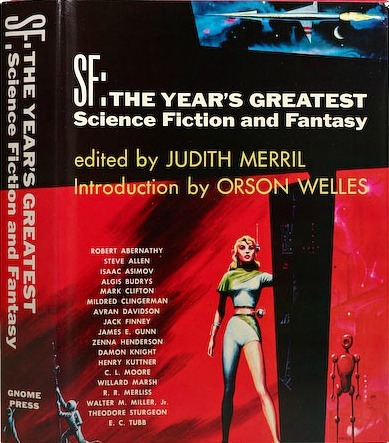
Judith Merril Year’s Greatest (1956-59) and Year’s Best S-F (1960-66)

SF-The Year's Greatest

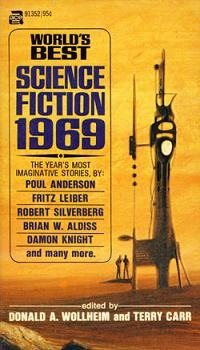
World’s Best Science Fiction (1965-1971) edited by Wollheim and Carr

Worlds_Best_Science_Fiction_1969_cover

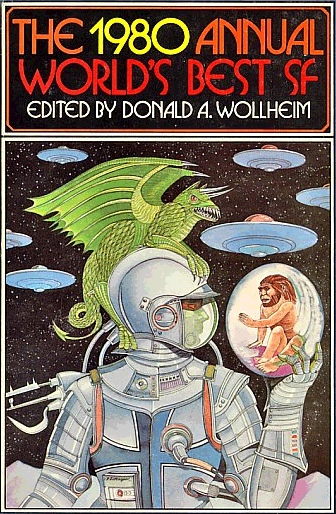
The 1972-1990 Annual World’s Best SF edited by Donald A. Wollheim

the_1980_annual_worlds_best_sf

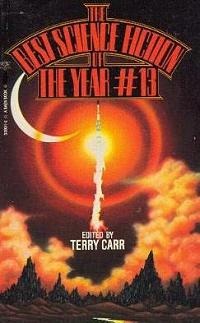
Best Science Fiction of the Year edited by Terry Carr (1-16)

Best_Science_Fiction_of_the_Year_13_cover

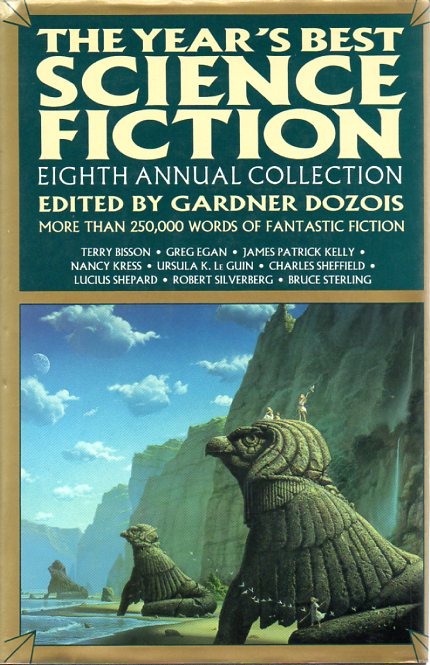
The Year’s Best Science Fiction edited by Gardner Dozois 1984-present

Year'sbestDozois


This hardly scratches the surface of great science fiction anthologies, but by using the annual bests it systematically covers all the years from 1939 to the present.  And we can capture the 1930s with these two collections.

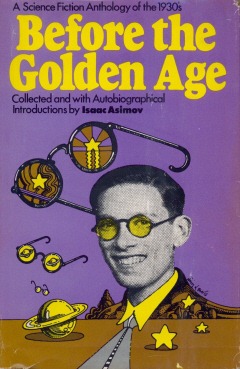
Before the Golden Age edited by Isaac Asimov

Before-the-Golden-Age

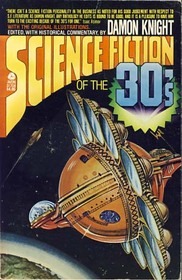
Science Fiction of the Thirties edited by Damon Knight

science-fiction-of-the-thirties

I could go back even further with the Sam Moskowitz collections like Under the Moons of Mars and Science Fiction by Gaslight.

If only all these fantastic collections could be reprinted as ebooks, or better yet, as audio books.  I suppose some enterprising publisher and editor could look at the stories in all these collections and seek to get reprint rights and create a new series of anthologies.  They could call it Classic Science Fiction for the Digital Age and publish it in a series of volumes for ebooks and audio.

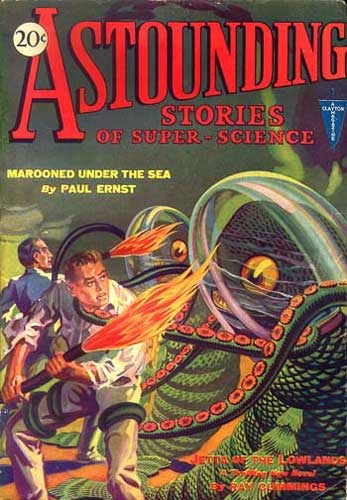
Would there be much of an audience for this old science fiction?  I don’t know.  Project Guttenberg is reprinting a lot of early science fiction in multiple ebook formats that often include the original art.  Take a look at this September 1930 issue of Astounding Magazine.  It’s beautifully laid out for html, but also offers many ebook formats here.

astound-1930-09

Copyrights will keep modern science fiction, like what’s in most of the best of the best-of anthologies above out of these public domain offerings, which is rather sad.  It means most of those stories will probably be never read again.  Of course, I don’t know if there are readers for these public domain reprints.  I do wish someone would make an easy to use app to add the Project Guttenberg issues of Astounding to my iPad.  I’ll have to experiment with this and write about it in a future blog.

JWH – 9/3/11