How the Top Ten Classic Science Fiction Books Have Changed Over the Years

I’m fascinated by how books get remembered.  Most writers hope their books will be good enough to pass through a series of milestones:

  • Good enough to sell to a publisher
  • Good enough to get printed and widely distributed
  • Good enough to get positive reviews
  • Good enough to become best sellers
  • Good enough to be remembered on best of the year lists
  • Good enough to win awards
  • Good enough to stay in print
  • Good enough to get on fan polls of all time favorite books
  • Good enough to be recognized as a classic
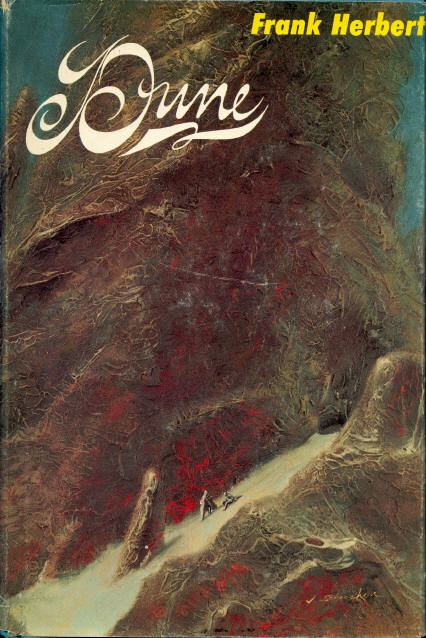
dune

Most novels that are written are never published.  Of those published, only a tiny percent, sell enough to earn royalties over the author’s advance, or get reprinted.  And then even a smaller number to go on to become even moderately successful.  The odds of writing a best seller is like those of winning a million dollar lottery.  Writing a classic is like the odds of winning one of those hundred million dollar lotto games.  Millions of books get published ever year, but few are remembered.

Eventually, most all books will be forgotten.  How many 19th century novels can you list from memory in ten minutes?  Every book has a lifetime, and I find it fascinating to think about why a book is remembered, and then why it is forgotten.  And it’s particularly interesting to think about the history of science fiction stories and novels, because they present ideas about the future that all too often become dated.

I thought it would be enlightening to see if I can find a series of fan polls that asked readers to vote for their favorite SF books, and see how those popular books change over time.  To save myself a lot of typing, I’m just going to use the Top Ten books from each list.

For the first five lists I’m grateful to The SF Book of Lists by Maxim Jakubowski and Malcolm Edwards.  I wish someone would update this wonderful 1983 book.  I will use bullets when there are ties – but I will type them in the order listed.  Votes, if available with be in parenthesis.  Ties might bring the list to more than 10.

1949 – August Derleth polled twelve writers, editors and critics

  • Seven Famous Novels – H. G. Wells (9)
  • Brave New World – Aldous Huxley (7)
  • Last and First Men – Olaf Stapledon (7)
  • Adventures in Time and Space – Healy and McComas (6)
  • Slan – A. E. Van Vogt (6)
  • Short Stories of H. G. Wells – H. G. Wells (6)
  • Strange Ports of Call – August Derleth (5)
  • The World Below – S. Fowler Wright (5)
  • The Lost World – A. Conan Doyle (4)
  • To Walk the Night – William F. Sloane (4)
  • Sirius – Olaf Stapledon (4)
  • Gladiator – Philip Wylie (4)

1952 – Reader Survey Astounding Science Fiction

  1. Adventures in Space and Time – Healy and McComas editors
  2. Slan – A. E. Van Vogt
  3. Seven Famous Novels – H. G. Wells
  4. The Man Who Sold the Moon – Robert A. Heinlein
  5. Who Goes There? – John W. Campbell
  6. The Best of Science Fiction – Groff Conklin editor
  7. The Martian Chronicles – Ray Bradbury
  8. The Green Hills of Earth – Robert A. Heinlein
  9. The Science Fiction Omnibus – Bleiler and Dikty editors
  10. The Illustrated Man – Ray Bradbury

Already we see a number of books and authors drop from the list.  Science fiction was seldom published in book form before the 1950s, and in the early 1950s, most science fiction, much of what we considered classics of the era were published by small specialty publishers.  It’s also interesting that by 1952 Heinlein and Bradbury have emerged as favorite writers.

1956 – Reader Survey Astounding Science Fiction

  • Adventures in Space and Time – Healy and McComas editors (51)
  • City – Clifford Simak (50)
  • The Martian Chronicles – Ray Bradbury (48)
  • More than Human – Theodore Sturgeon (48)
  • Slan – A. E. Van Vogt (44)
  • The Man Who Sold the Moon – Robert A. Heinlein (40)
  • The Demolished Man – Alfred Bester (39)
  • Astounding Science Fiction Anthology – John W. Campbell editor (37)
  • Childhood’s End – Arthur C. Clarke (35)
  • 1984 – George Orwell (35)
  • The World of Null A – A. E. Van Vogt (35)

Some of the books from the 1952 list stayed on the 1956 list, but fell lower, like Who Goes There? and The Green Hills of Earth.  It’s interesting that Slan and Adventures in Time and Space are on all three lists.  So did Seven Famous Novels, but it fell out of the top ten.

1966 – Reader Survey Analog Science Fiction & Fact

  1. The Foundation Trilogy – Isaac Asimov (67.4%)
  2. Seven Famous Novels – H. G. Wells (59.4%)
  3. Slan – A. E. Van Vogt (50.5%)
  4. The Rest of the Robots – Isaac Asimov (45.7%)
  5. The Demolished Man – Alfred Bester (44.2%)
  6. Childhood’s End – Arthur C. Clarke (42.2%)
  7. The City and the Stars – Arthur C. Clarke (40.6%)
  8. The Martian Chronicles – Ray Bradbury (38.9%)
  9. City – Clifford Simak (38.6%)
  10. A Canticle for Leibowitz – Walter M. Miller, Jr. (38.1%)

Slan is hanging in there.  It’s hard to compare overlap because new books are coming out after each list.  So where’s Heinlein?  If he was the most popular writer of the times why isn’t he on the list.  He had five books lower down on this list.  Heinlein always competed with himself in these polls, so often his books didn’t make it to the top of the list.  This 1966 list was the first that covers times I remember, and I probably read it in the magazine when it came out.  These are the great books of my childhood.

1975 – Locus Poll – full list here

  1. Dune – Frank Herbert (104)
  2. Childhood’s End – Arthur C. Clarke (97)
  3. The Left Hand of Darkness – Ursula K. Le Guin (90)
  4. Stranger in a Strange Land – Robert A. Heinlein (63)
  5. A Canticle for Leibowitz – Walter M. Miller, Jr. (57)
  6. The Foundation Trilogy – Isaac Asimov (53)
  7. The Stars My Destination – Alfred Bester (50)
  8. The Moon is a Harsh Mistress – Robert A. Heinlein (41)
  9. More Than Human – Theodore Sturgeon (40)
  10. Lord of Light – Roger Zelazny (35)

Already it’s possible to see how time affects the memory of books.  Newer books push out older books.  By 1975 Slan falls from memory after being so well remembered.  1976 also marks the first time a woman writer shows up, at all, not just for the top of the list.  1975 also represents an interesting switch.  Fans did pick The Demolished Man by Bester, but from now on they pick The Stars My Destination.

1987 – Locus Poll Best All-Time Novelfull list here

  1. Dune – Frank Herbert
  2. The Left Hand of Darkness – Ursula K. Le Guin
  3. Childhood’s End – Arthur C. Clarke
  4. The Moon is a Harsh Mistress – Robert A. Heinlein
  5. Stranger in a Strange Land – Robert A. Heinlein
  6. The Foundation Trilogy – Isaac Asimov
  7. A Canticle for Leibowitz – Walter M. Miller, Jr.
  8. Gateway – Frederik Pohl
  9. Ringworld – Larry Niven
  10. The Stars My Destination – Alfred Bester

It seems Dune is becoming the Citizen Kane of the science fiction book world.

1998 – Locus Best SF Novels of All-Time (before 1990)full list here

  1. Dune – Frank Herbert
  2. The Moon is a Harsh Mistress – Robert A. Heinlein
  3. The Left Hand of Darkness – Ursula K. Le Guin
  4. The Foundation Trilogy – Isaac Asimov
  5. Stranger in a Strange Land – Robert A. Heinlein
  6. The Stars My Destination – Alfred Bester
  7. A Canticle for Leibowitz – Walter M. Miller, Jr.
  8. Childhood’s End – Arthur C. Clarke
  9. Ender’s Game – Orson Scott Card
  10. Hyperion – Dan Simmons

Each list is now switching out a couple of new titles but is pretty much keeping the usual suspects.

2011 – NPR Top 100 Science Fiction/Fantasy Booksfull list here

  • The Hitchhiker’s Guide to the Galaxy – Douglas Adams
  • Ender’s Game – Orson Scott Card
  • The Dune Chronicles – Frank Herbert
  • 1984 – George Orwell
  • Fahrenheit 451 – Ray Bradbury
  • The Foundation Trilogy – Isaac Asimov
  • Brave New World – Aldous Huxley
  • Neuromancer – William Gibson
  • I, Robot – Isaac Asimov
  • Stranger in a Strange Land – Robert A. Heinlein

I filtered out the fantasy novels.  For example, The Lord of the Rings came in number one.  More than 5,000 books were nominated, and over 60,000 people voted.  This is a huge poll.  Many of the novels from the earlier lists are on it.  It’s a poll from outside of the genre, yet it remains consistent.

2012 – Locus All-Time Novel Resultssee full list

  1. Dune – Frank Herbert (256)
  2. Ender’s Game – Orson Scott Card (154)
  3. The Foundation Trilogy – Isaac Asimov (143)
  4. Hyperion – Dan Simmons (131)
  5. The Left Hand of Darkness – Ursula K. Le Guin (120)
  6. The Hitchhiker’s Guide to the Galaxy – Douglas Adams (113)
  7. Nineteen Eighty-Four – George Orwell (105)
  8. Neuromancer – William Gibson (100)
  9. The Stars My Destination – Alfred Bester (91)
  10. Fahrenheit 451 – Ray Bradbury (91)

2014 – Worlds Without End – Most Readsee full list

  1. Ender’s Game – Orson Scott Card
  2. Dune – Frank Herbert
  3. The Hitchhiker’s Guide to the Galaxy – Douglas Adams
  4. Neuromancer – William Gibson
  5. The Forever War – Joe Haldeman
  6. Nineteen Eighty-Four – George Orwell
  7. Rendezvous with Rama – Arthur C. Clarke
  8. Stranger in a Strange Land – Robert A. Heinlein
  9. Fahrenheit 451 – Ray Bradbury
  10. Do Androids Dream of Electric Sheep? – Philip K. Dick

Again, I filtered out the fantasy.  This was not a poll, but the books that were most read in the WWEnd database.  It’s interesting to see how commonly read books are consistent with books showing up on the fan polls.

2014 – Sci-Fi Lists Top 100 Sci-Fi Bookssee full list

  1. Dune – Frank Herbert
  2. Ender’s Game – Orson Scott Card
  3. The Foundation Trilogy – Isaac Asimov
  4. The Hitchhiker’s Guide to the Galaxy – Douglas Adams
  5. Nineteen Eighty-Four – George Orwell
  6. Stranger in a Strange Land – Robert A. Heinlein
  7. Fahrenheit 451 – Ray Bradbury
  8. Neuromancer – William Gibson
  9. 2001: A Space Odyssey – Arthur C. Clarke
  10. Do Androids Dream of Electric Sheep? – Philip K. Dick

Sci-Fi Lists is an online poll that is constantly updated.  These two lists overlap almost perfectly, with 8 books on both lists, and they share 6 books with the 2012 poll, and 7 with the 2011 poll.  Also, all of these books are fairly old, at least 30 years.  It finally seems certain long term favorites are emerging.

What’s sad is only one woman writer appears on all these lists, and for the same book, The Left Hand of Darkness by Ursula K. Le Guin.  Read the wonderful blog Mistressworks, or Ian Sales compilation list to see what these fans are missing.  Now, some of these books by women are making the polls and lists, but lower down from the top ten.

If you look at cross tabulated lists like Worlds Without End and The Classics of Science Fiction, you’ll see more women on the complete lists, but it’s so disappointing not to see more.  I think if SF fans would read more books like those reviewed on the Mistressworks site this would change.

There are dozens, if not hundreds of all-time great science fiction book lists, but they are often compiled by one person, or a group of editors.  I’ve picked popular polls that had the goal of finding the best all-time favorite SF books, and not just current ones.  I’ve also ignored some British lists because they only confuse the issue at hand.

Even though we’re seeing a good deal of consistent favorites in recent years, I believe if we could jump ahead 25 years, many of those books will be forgotten.  Dune really is entrenched, and I think we’ll see it in 25 years.  But I don’t know about Stranger in a Strange Land, that’s from the same era as Dune.  I doubt Do Androids Dream of Electric Sheep? would be remembered at all if it wasn’t for Blade Runner.  One good movie adaptation and a book’s memory is boosted for decades.  I’ve recently reread Nineteen Eighty-Four and it is a true masterpiece.

There are lots of sentimental favorites from my childhood that I wish would make a comeback, like City by Clifford Simak, and my all-time favorite science fiction novel, Have Space Suit-Will Travel by Robert A. Heinlein never makes these lists at all.  I guess some books die when all their fans die.

JWH – 5/1/14 – Table of Contents
How To Build The Classics of Science Fiction 4.0 List?

the classics of science fiction

About a quarter of a century ago I developed a concept to identify the classic books of science fiction.  The current version, the one I call 3.0, is here.  For a long time now I’ve wanted to update my site to a 4.0 version, but I’ve been put off by the amount of work involved, and intimidated by newer and fancier sites that attempted to do what I have done.  Worlds Without End is beautiful, also covers fantasy and horror, and allows users to track their reading.  SFFMeta took a completely different approach to the problem of finding great SF books to read, and I love different approaches, but their site appears not to have been updated for a year.  Top Science Fiction takes a poll approach, so it reflects change over time.  GoodReads has several lists that help identify popular science fiction by themes.

There is more than one way to skin a cat, as the gross old saying goes.  There’s two issues here.  Finding great books to read, and identify books as potential classics of the genre.

If I’m going to take the trouble to create The Classics of Science Fiction 4.0, then I want to produce a much better product.  I need to update my old system and offer new features.  This will be tricky, because essentially I’m just making another list of books.  I have no desire to get into building a fancy web site.  I want to update my list and make it better indicator of classic science fiction, that’s all.  But, better how?

Back in the 1980s I wrote what I now call, The Classics of Science Fiction 1.0, as an article for the fanzine, Lan’s Lantern, and it’s interesting how it came about.  My friend Mike asked me what were the best science fiction books to read knowing I had been a life-long science fiction bookworm.  I told him I could tell him the ones I loved, but I doubted that one person’s opinion counted for much because tastes vary so greatly.  We then began an ongoing discussion about how books are judged to be classics, and how to systematically identify them.  Over the years, this has remained a fascinating subject for me.

I have lived long enough to see books that were once very popular, and ones I loved, disappear from the pop culture consciousness.  My favorite writer growing up in the 1960s was Robert A. Heinlein.  In the 1950s and 1960s, the big three of science fiction writers were Robert A. Heinlein, Arthur C. Clarke and Isaac Asimov.  I doubt many young science fiction readers today would pick any of them as their favorite writer, and older readers like me are dying off, so the fan base for Heinlein/Clarke/Asimov is shrinking.  Will any of their books survive the test of time and be deemed classics?  I’ve already written about Heinlein’s declining status.

Of course, young people today are discovering books that came out in the 1990s and 2000s that they think will be the classics of the future.  Just because we love a book doesn’t mean it’s destined to be remembered.  The qualities of a contemporary page turner are obviously different from a timeless classic, although some of the qualities are shared by both.

Thus the term “classic novel” is quite slippery.  Many people feel when they read a book they absolutely adore that it must become a classic.  When I was young.  Books by E. E. “Doc” Smith were considered classic science fiction, but his work is almost unreadable today.  In the literary world at large, a classic novel is one that endures, is often taught in school, quite often is filmed or serialized on TV, like Masterpiece Theater, and has achieved a reputation of being great.  Think Pride and Prejudice or Anna Karenina.

Another quality of a classic is they tend to define an era – for example, The Great Gatsby defines America in the 1920s.  Because science fiction is usually about the future, it misses out on this specific quality, but classic science fiction novels do evoke a sense of time of when they were written.  Stranger in a Strange Land and Dune are science fiction novels that represents the 1960s science fiction.

No one person has thoroughly read everything making it hard to accept any individual as an authority on classic novels.  Popular culture changes over time, so no novel ever becomes a permanent classic.  The classic novel is a moving target, which is why I want to create The Classics of Science Fiction 4.0.   My system is based on The Wisdom of Crowds.  I collect fan polls, recommendation lists by book critics and academics, and other means for identifying popular books.  I call each a citation list.  I ignore, and the system inherently ignores, any recent book.  I compile all the citation lists into a database and create a cutoff of a minimum number of citations.  From this I create a resultant final list that I call The Classics of Science Fiction that contains all the books that got the minimum number  of citations or more.

For the Lan’s Lantern article, which I consider The Classics of Science Fiction version 1.0, I used 8 lists, with a cutoff of 3, producing 69 titles on the final list.  I no longer have a copy of that list.

When the web came out I created The Classics of Science Fiction 2.0, and it was based on 13 citation lists, with a cutoff of 3. and it produced 169 titles.  An old copy is here.

Version 3.0, which is live on the web now, and has been around for many years, has 193 titles, using 28 citation lists, and a cutoff of 7 citations.  The newest books it recognizes is from 1992.

What I’d like to do is rebuild the database with more citation lists, and hopefully identify books that came out through 2004.  I still want to use a 10 year DMZ so as not to let a wildly popular new book get on the list.  Often avid readers, especially young ones, think the book they are reading at the moment is the best book they’ve ever read.  I think we need time to identify classics.  Even 2008’s The Hunger Games is an obvious choice to many, but will it be in the future?  A few years ago His Dark Materials trilogy by Philip Pullman was being touted as second only to The Harry Potter books as a great contemporary fantasy series, but is it today?  All too often we are thrilled by new and novel stories only to quickly forget them.

What I need now is to assemble a large group of citation lists.  I used, with the help of Anthony Bernardo, 28 lists for the 3.0 list.  I think for 4.0, I need at least 40 citations, and the cutoff needs to be raised to 10.  Just think, any book that is on 10 or more fan polls, academic and critic lists, awards list, and other forms of recognition is at least well remembered and well regarded.  It doesn’t mean the book is an actual classic, but my system produces a list that’s not based on my opinion.

I use fan polls to get the idea what readers remember.  I use recommended reading lists from writers, critics and academics to balance the judgment of the readers.  I use a combine list of award winners to acknowledge another kind of recognition.  If a book was made into a movie or television series, I considered it another form of validation.  I’ve considered making citation lists based on being in print, having an audio edition, or having many print editions.  I wished I had the tools to see how many languages a book has been translated into as another indicator.  I could make a citation for any book that’s in the database that has a print, ebook and audio book currently for sale.

First, I need to find as many critic/academic lists as I can, and as many large fan polls as I can.  For example, last time I used Science Fiction: The 100 Best Novels 1949-1984 by David Pringle as one citation.  You can see a list of his picks here.  Luckily, Damien Broderick & Paul Di Filippo wrote a book updating Pringle’s book called, Science Fiction: The 101 Best Novels 1985-2010.  You can see their list here.  That will give me one extra citation.  In the subsequent years, many large fan polls have been created, so that will add the citation number.

I’ve been revving up my noggin all day trying to think of new ways to identify a science fiction book as a potential classic.  I’ve thought of two so far.  One is to make a list of all science fiction books that were on polls/lists of all time great books that didn’t focus on science fiction.  The world outside the genre seldom thinks of science fiction, but when it does, it’s notable.  The second idea is to search the web for syllabi for books taught in high schools and colleges and see which science fiction books stand out, if any.  I have an English teacher friend who likes to teach Ender’s Game.

Another idea is to use sets like American Science Fiction:  Nine Classic Novels of the 1950s as endorsed and published by The Library of America.  I compared their list to my list and it was quite different.

I am open to ideas about how to create new kinds of citation lists, so let me know if you have a good idea.

When I look at my current list, I see many books with 7, 8 or 9 citations, and they might not make it to the new list if it requires 10 citations if they aren’t on newer citation lists.  This happened when compiling earlier lists.  I’ve always considered 193 books to be too many to actually identify the real classics.  Many on my list were historical classics that only critics loved and were never on any fan poll.  I should also point out that 116 books made it to the 3.0 list with 10 citations, so they would automatically be guaranteed a spot on the new list if 10 was the cutoff.  I might need to make the cutoff 12 if the list gets to long.

Harry Harrison had two books on the 3.0 list, each with 7 citations each, the minimum required.  Will Deathworld or Make Room! Make Room! carry forward?  What about Nova by Samuel R. Delany?  We just read Nova at the Classic Science Fiction Book Club, with mixed results.  It only had 7 citations.  I loved that book when I read it in the 1960s, but I’m not sure if it’s a classic in the 2010s.  Will 3-5 more citations show up to support it?  But if I was to make a list of the best SF of the 1960s, Nova seems like one of the defining books of the era.  But here are the 1960s SF books I considered essential on my review of 1960s SF – is Nova up to their level?

  • A Canticle for Leibowitz by Walter M. Miller, Jr.
  • Stranger in a Strange Land by Robert A. Heinlein
  • The Man in the High Castle by Philip K. Dick
  • Dune by Frank Herbert
  • Flowers for Algernon by Daniel Keyes
  • The Moon is a Harsh Mistress by Robert A. Heinlein
  • Do Androids Dream of Electric Sheep? by Philip K. Dick
  • Stand on Zanzibar by John Brunner
  • Slaughterhouse Five by Kurt Vonnegut, Jr.
  • The Left Hand of Darkness by Ursula K. Le Guin

That short list already leaves off A Clockwork Orange, A Wrinkle in Time, Way Station, Babel-17, This ImmortalLord of Light, 2001: A Space Odyssey, Right of Passage, Bug Jack Barron and Ubik, among many other well remembered books.

Ultimately, the goal is the same as I had back in the 1980s, to help people find a list of essential science fiction books to read.  Any list of true classics should be short, and dependable.  Novice readers should be able to buy a book from the list, read it, and have a strong statistical chance of being suitably impressed.  The whole idea of a classic is to be impressive, even heavy.  Coming up with any kind of quantitative method to identify those books is hard, but I think my system is the best I can imagine at the moment.

If you look at the top 19 books on the 3.0 list, all of which were on 20 or more citation lists, these books I think have the best chance of any science fiction book at consistently evoking the sense of wonder that defines great science fiction.

20-citations

Yet, I’m worried that several of them are already fading classics.

I have a feeling that many people will consider this a pointless endeavor.  They will feel that chance will introduce them to the great SF books of the past, and time will kill off the unworthy books.  That’s true.  That’s how it’s always worked.  I just consider my project a way of guessing what might happen ahead of time.

JWH 4/30/14

Michael Bishop

Joachim Boaz over at Science Fiction and Other Suspect Ruminations has asked several of his blogging friends to review the books of Michael Bishop.  Joachim explores the 1960s and 1970s looking for intellectual and philosophical science fiction books to review.  He especially loves their covers – that’s how I got hooked on his site – and collects them into visual themes.

Joachim invited me to contribute to his Michael Bishop reviews and I reviewed Brittle Innings, a rather strange novel about a 1943 minor league baseball team playing in rural Georgia one very hot summer.  The story is a lovely historical novel set during WWII, that shows a love of baseball, a literary feel for the south, and a fondness for Mary Shelley’s Frankenstein.  In Bishop’s literary fantasy, the monster lives and ends up as a big ugly slugger playing for the Highbridge Hellbenders as Hank “Jumbo” Clerval, but the story is really about a seventeen-year-old boy from Oklahoma, Danny “Dumbo” Boles, that gets a chance to play semi-pro ball because he’s too young for the draft.  Hank plays first base, and Danny plays short stop, and together they achieve minor fame as Dumbo and Jumbo.

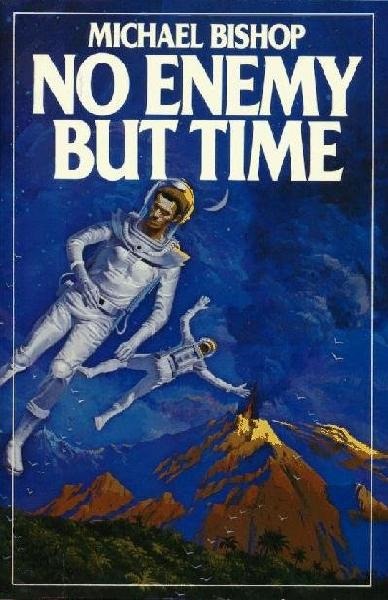
Michael Bishop wrote over a dozen novels from 1975-1994 that got a good deal of attention in the science fiction and fantasy genre, including winning a Nebula for No Enemy But Time (1982) and a Locus Award for Brittle Innings (1994).  No Enemy But Time was chosen for the book Science Fiction: The 100 Best Novels by David Pringle.  It also made my Classics of Science Fiction list.

Joachim feels younger readers need to be introduced to Bishop’s work, and thus the series of guest reviews.  I’m very glad I read and reviewed Brittle Innings because it makes me want to go read more Michael Bishop.

no enemy but time

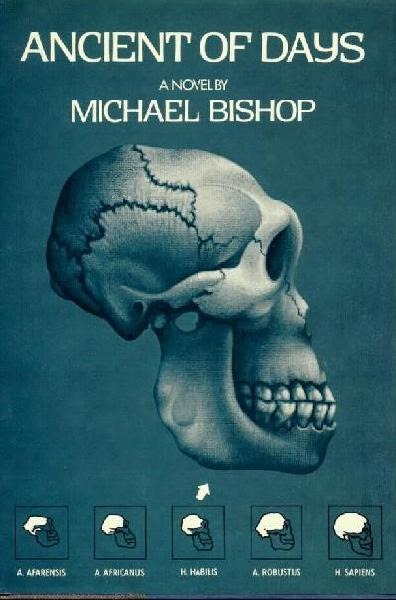
ancient

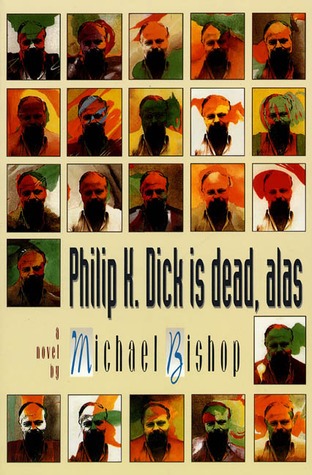
Philip K. Dick is Dead

transfig

brittle

JWH – 4/23/14

Transcendence–Why Is This Film Only Getting 19% at Rotten Tomatoes?

I went to Transcendence thinking I’d hate this film because of all the bad reviews it’s getting, but to my surprised I ended up enjoying it way more than I imagined.  I went with two friends – Laurie walked out, and Ann said she liked it so much she wanted to see it again.  I thought Transcendence had some big problems, but overall it was a nice exploration of the idea of brain uploading.  Coincidentally, I’m listening to Accelerando by Charles Stross this week, and the science fictional ideas in the book overlapped nicely with those of the film.  Maybe I enjoyed the film merely because it was more fuel for the ideas I’m entertaining at the moment.

If you read the reviews I do concur that the film is lackluster in action, that most of the acting was subdued, and the plotting is clunky, but it just didn’t seem that bad, not a 19% rating at Rotten Tomatoes.  If you compare Transcendence to the dazzling Her, another movie about evolving computer intelligence, yes, this film is slight, but is it that bad?   I’ve seen films I thought were much worse get much higher scores at RT.

I have a hypothesis to test.  Does the acceptance or rejection of science fictional ideas in movies prejudice critics and fans opinions of a science fiction movie?  So if a movie explores an idea you hate, you reject the whole movie?

I wondered, if Transcendence presents ideas that people don’t like?  To talk about those ideas, I’m probably going to reveal some plot points, but many of these are in the previews.  The movie is about three AI scientists, one of which, the husband of the couple played by Johnny Depp, is shot by anti-AI terrorists and his wife saves him by uploading his mind into a computer.  Uploading also happens in Accelerando, and like that book, they also cover super technology brought about by post-human minds.  The book covers vast stretches of time, but in the film, all the advance technology comes out in two years.  This scares the regular folk in the flick, who feel they must destroy the Frankenstein AI.

Are movie goers tired of films about sentient computers?  Do they find post-human life offensive?  Are the networked humans too much like zombies to them?  Is nanotechnology just too scary to think about?  Or, was the ideas in the story fine, and they just didn’t like the writing, presentation, acting or settings?

TRANSCENDENCE

Science fiction books and movies have a long heritage of tales about intelligent computers.  Sometimes they are evil (Colossus), and sometimes they are fun (Short Circuit).  In Transcendence, it’s ambiguous.  Is that the problem?  Uploading minds is not as common, but there’s plenty of precedent (The Matrix).

I’m a little tired of science fiction being about saving the world.  Why does science fiction always have to involve a big threat to all of humanity?  There was no need to involve guns or violence in this story.  Gattaca was the perfect science fiction movie to me.  It was a personal story.  Ditto for Her and Robot and Frank.  Can’t we have a story about a super intelligent being without involve armies and terrorists?  Or maybe critics and audiences didn’t like this movie because there wasn’t enough action and explosions.

Or was the film disliked because it suggests that ordinary people will be obsolete?  What’s weird is movie goers love mutants in superhero comic book stories, but they don’t seem to like post-humans.  A human that can fly is fine, but one that makes us look past our due date is not?

Audiences are more forgiving than the critics at Rotten Tomatoes, and the audience response at RT was 47% for Transcendence.   That’s pretty low for audiences.  Maybe I should just accept that this film was a dog, and maybe I liked it because it was about some of my pet topics.  That does fit in with my hypothesis – I liked it for its ideas, and others hated it for the same ideas.   I really hated Marvel’s The Avengers, which got a 92% critics/91% audience rating at RT, and I disliked the movie intensely because of its ideas.

I wonder if movie makers could save a lot of money on special effects if they merely created science fiction movies with extremely popular science fictional ideas?

JWH – 4/22/14

Memorable Science Fiction Missing From Audible.com

I’ve been a member of Audible.com since 2002, and over that time I’ve watched as Audible’s library of classic science fiction has grown.  It’s been very impressive, and yet, there are many great science fiction books and authors that haven’t made it into their catalog.  I’m inspired to write this because of reading “Great Unsung Science Fiction Authors That Everyone Should Read” by Charlie Jane Anders at io9.com.  Our Classics of Science Fiction Book Club has been discussing this article, thinking up our own list of SF authors who have gone missing in action, or who we think young people should track down and try.

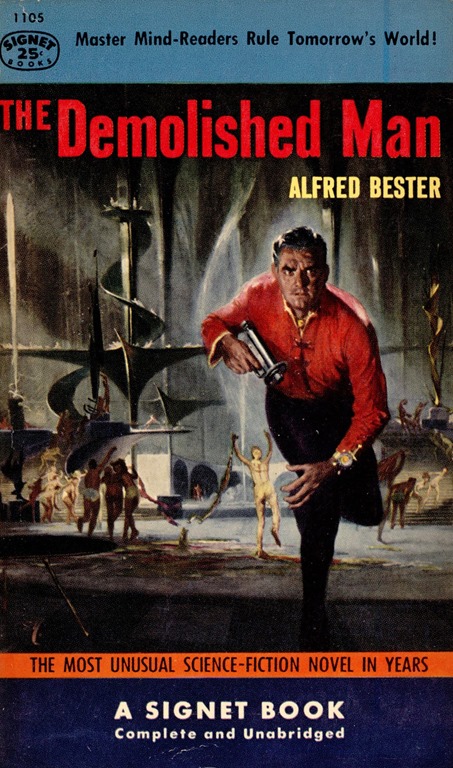
DemolishedMan1

I thought I’d look up on Audible to see if these authors are remembered, and list the number of audio books available.  You can click on the link to read about the author and their books at Wikipedia.  I only counted whole books in print at Audible, not single short stories.

These are authors we think deserve more attention.  Charlie Jane Anders was pretty good at picking writers that are mostly not in print at Audible.com.  That wasn’t her intention, but that’s how I used her list.  The book club picked a number of authors that Audible has done a bang-up job of remembering, like Edmond Hamilton.

First, Charlie Jane Anders lists these authors as deserving more attention:

Some of the authors we discussed at our book club.  I haven’t listed them all, because some were very obscure.

We had a few overlaps with Anders, but for the most part, our fond memories were for other writers.  Overall, Audible has lots of major science fiction novels it could still publish.  Especially, Alfred Bester or Samuel R. Delany, or even Michael Bishop?  However, I still give Audible.com an A+ for preserving classic science fiction.  Hell, they’ve published eight E. C. Tubb novels, and thirty A. Bertram Chandler books.  Some of these books haven’t seen the light of day since their original ACE Double publication.

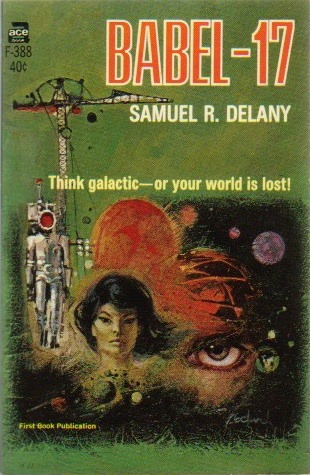
Babel-17

The book club consists mainly of older science fiction fans from around the world that have a nostalgia for the science fiction they grew up reading.  We’re worried that some of our favorite books and writers might be forgotten when we’re no longer here to remember.  These aren’t necessarily our favorite writers, but the ones our faulty memories retrieved when we tried to remembered books we had mostly forgotten, but still remembered fondly.

I have to say that Audible.com is a great resource for old science fiction fans.

JWH – 4/2/14