How Many Novels Can Be Our Best Friends?

By James Wallace Harris, Monday, November 10, 2014

Is it possible to know a book like a good friend? Does reading a book one time give us that best friend closeness? People often say a book changed their life, so we know some books can inspire great passion by what about lasting relationships? Does one reading let us experience the full intent of a book? I’ve read some of my favorite books many times, but I doubt I could analyze them with any depth, not like a professor of literature does with a classic. I’ve found entertainment rather than enlightenment in the books I’ve consumed. I want to change my ways. I want to pick some books and get to know them very well.

The old saying, “Too much of a good thing can be a bad thing” can be applied to almost anything. However, when I ask, “Can we read too many novels” I’m going beyond that. Most people read for pleasure. Reading is an escape, and it’s fun, so what’s the harm of reading as much as we want? Even that line of attack is not where I want to go. Sure, there’s more to life than reading books, but it’s up to all of us to decide if we read too much. When I ask, “How many novels can be our best friends” I’m asking if some books deserved to be more than just read quickly to find out what happens in the end.

Asking questions is a way to explore deeply into a subject. But I’m not questioning the value of reading for fun, I am wondering if always reading a new book isn’t hurting my ability to appreciate novels at a higher level. I’m wondering if reading too many books is like having too many friends. Are my relationships with books, even my most favorite, really just acquaintances and not close friendships? I’m not suggesting I find my perfect reading companion and become best friends forever, although that might lead to the deepest understanding possible for a novel. I am asking if reading too many books makes us miss out on the depth that novels can give us.

If you’ve ever read any great literary criticism, you’ll know that some people get a lot more out of a novel than the average reader. Just read an issue The New York Review of Books or The London Review of Books and tell me how sophisticated of a bookworm you feel afterwards.

I admit my fiction habit, is one where I consume mass quantities of words. I read in a hurry to finish, and then rush to the next story anxious to have another page turning narrative to follow. Lately, I’ve been researching the topic of effective thinking, and I realize that even though think about books more than your average bookworm, I’m far from being in the professional leagues of story masters.

This leads me to wonder if I shouldn’t have books that I get to know very well. And how many books should be on that list? Could I ever claim to be a true friend to one hundred books? I doubt seriously if I could even memorize the titles of one hundred books, so one hundred is probably too many. However many there should be, I should be able to recite their names as if they were my children. Yet, over a lifetime, I’m guessing we find between 25-100 books that resonate so well with our souls that list could be our reading fingerprint.

In Fahrenheit 451 the characters became one book they memorized. I don’t want to be monogamous to one book, but I wonder how many literary companions I could pick and still be faithful to them all? If all seven billion plus people on this planet made a list of favorite books, how many books would it take before we’d all have a unique list? Would any two people on planet Earth pick the same 15 books? Or does it take 20 or 25 before absolute uniqueness shows up? Wouldn’t it be strange if it was as small as 8? Tragically, there are millions, maybe billions of people that don’t read for fun at all.

Another way to approach this problem is to ask how many books would I’d be willing to study in 2015, including reading criticism for each novel, and to write an essay that explores the deeper knowledge I’ve discovered about story. As someone who daydreams about writing a novel, this could be very educational. Right off the bat, I’m thinking twelve, one for each month. But is that too ambitious? Are there even twelve books I’d devote extra time to in 2015?

How shall I pick? I could easily select twelve old favorites I’ve reread many times, but to be honest, they’d include a lot of books I learn to love as a kid, and they’d mostly be science fiction. Obviously I should pick old favorites that still have depths to explore, or pick new books I feel will expand my literary knowledge. But they also need to be books I’d be willing to read again and again. I can imagine picking twelve and breaking up with nine after I’m done. If I continue to pursue this quest I expect in several years to have a dozen books I’ll really feel are my best fictional friends.

I want to reread some books to get more out of them, and I want to read some new books that will push my reading skills. I wanted to pick mostly famous books so there will be plenty books about those books. I’m also thinking I’d like read books that have been made into movies, just see to how they are interpreted. I’m pretty sure I want books that have audio editions, so I can read and listen. Here’s a list of books I’m considering getting to know in 2015:

  1. Pride and Prejudice by Jane Austen (1813)
  2. Madame Bovary by Gustave Flaubert (1857)
  3. Out Mutual Friend by Charles Dickens (1861)
  4. Crime and Punishment by Fyordor Dostoyevsky (1866)
  5. The Way We Live Now by Anthony Trollope (1875)
  6. Sister Carrie by Theodore Dreiser (1900)
  7. The Age of Innocence by Edith Wharton (1920)
  8. Ulysses by James Joyce (1922)
  9. The Magic Mountain by Thomas Mann (1924)
  10. Journey to the End of The Night by Louis-Ferdinand Céline (1932)
  11. Their Eyes Were Watching God by Zora Neale Hurston (1937)
  12. Native Son by Richard Wright (1940)
  13. Under the Volcano by Malcolm Lowry (1948)
  14. Lolita by Vladimir Nabokov (1955)
  15. Things Fall Apart by Chinua Achebe (1958)
  16. The Golden Notebook by Doris Lessing (1962)
  17. One Hundred Years of Solitude by Gabriel Garcia Márquez  (1967)

Mostly these are new books I hope I’ll love to get to know, but a few are old books I want to reread because I think I missed a lot the first time around. In some ways I feel like I’m moving into a new phase of life, because none of these books are science fiction. I’m not giving up on science fiction, but I feel I’ve overdone the genre. I do think I’ve reached a stage where I could pick my 25-50 all-time favorite science fiction novels. For the last ten or twelve yeas I’ve been rereading the science fiction books I read when I was in my teens and twenties, and most didn’t hold up. My ultimate list will be those that do. Sadly, most novels don’t even deserve to be read once. Most of us are pretty slutty when it comes to going to bed with a book. There are a lot of faces and names we’ve quickly forgotten. Is it any wonder that I’m asking if we have too many one-night reads, and not enough serious literary relationships?

JWH
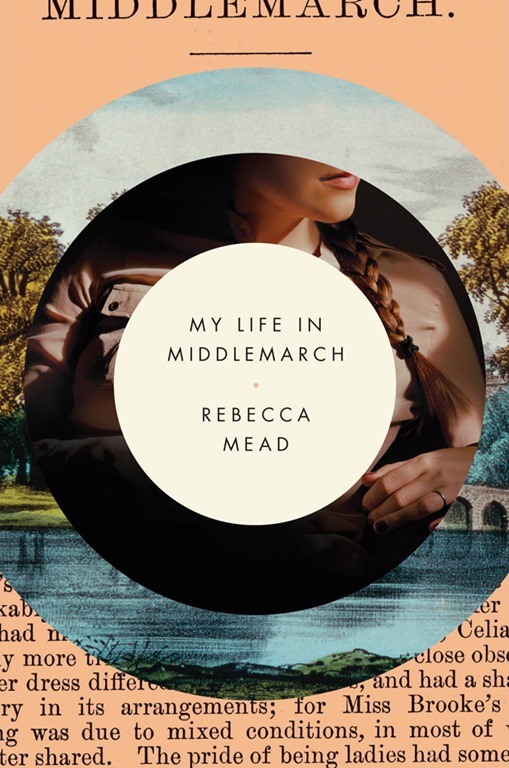
My Life in Middlemarch by Rebecca Mead

by James Wallace Harris, October 3, 2014

Is there one novel that defines your life?  Have you return to it decade after decade throughout your life?  Has the author spoken to you across time, space and the gulf between life and death?  Does the narrative commentary resonate with your heart and mind?  Do lines of dialog feel like they are speaking to events in your life like you’re listening to a Greek oracle, or studying hexagrams from the I Ching?  For Rebecca Mead, Middlemarch by George Elliot is one such book, and she’s written My Life in Middlemarch to explain her literary touchstone.

my-life-in-middlemarch

A year and a month ago I wrote “The Ghosts That Haunt Me” about such writers.  Most of us have many such books and writers that haunt us, but Mead focuses on one novel, and one writer, and writes a whole book about how that one story haunts her life.  If you read the reviews at Goodreads you’ll see that most readers give her four stars out of five, with few rating it a full five stars, and with some giving far fewer.  How much you like this book will depend on whether or not you’ve read Middlemarch, how much English lit professor you have in you, and how much more you’d want from Mead.

Mead does a fair amount of travel and research to give us background on George Elliot and her most famous novel, but not nearly as much as a definitive biography.  Nor is her tale of book-love a proper memoir.  Personally, I was quite taken with her story as is, and it makes me want to reread Middlemarch for closer study.  However, it doesn’t really live up to its promise either.  And I’d really like to see someone pull off such a memoir.  It would have to be far more personal, far more detailed, far more psychological.  Not detailed in biography or close reading of the text, which I’m satisfied with Mead’s work here, but in giving us intimate personal reading details that make us feel true reading obsession.

Two books that come closer to mind of what I’d like to read is Among Others by Jo Walton, a novel about a lonely girl growing up reading science fiction, and Zen and the Art of Motorcycle Maintenance by Robert Pirsig, a nonfiction novel that integrates Plato into a man’s life.  The passion I’d like to see is such biblio-memoirs is what I found in Possession by A. S. Byatt.

Even though I feel My Life in Middlemarch is a very worthy book, I longed to read Mead’s deep personal details about each time she read Middlemarch.  I ached to know how a 20th century woman could find so much love and understanding in a 19th century woman.  I wonder if I could do what I want with my favorite childhood novel, Have Space Suit-Will Travel by Robert A. Heinlein.

JWH

What To Read Before I Die

Most folks think growing up is the time to learn, and that the rest of life is for coasting on that education.  But as you age, you realize that every phase of life has its required coursework.  At sixty-two I’ve already forgotten most of what I learned in my K-12 years, and now that I’m retired, I’m quickly forgetting all the things I learned during my work years.  The knowledge I acquired in the first third of life prepared me for the second third, and what I learned in the second third, got me ready for the final third, but now that I’m living in the final third of life, I feel like I need to study hard for a next phase.  If I was a religious man, that would be a spiritual quest, but I’m not.  I’m studying for nonexistence, and that is changing my reading habits.

book tombstone

Most people talk about having a bucket list of activities they want to accomplish before leaving this planet, but I don’t think along those lines.  As a lifelong bookworm, all I want to do is read more books before I die.  I find reading in the final third of life has affected what books I want to read.  Strangely, I want read more nonfiction, as if facts are more comforting to dying, like fantasy was more inspiring to growing.  It appears that leaving reality makes you want to take more notice of what you’re leaving.  Most of us grow up hoping our childhood ambitions will come true as adults, but then settle for something more realistic.  Instead of becoming an astronaut I became a database programmer, and even then I continued to read science fiction all during my adult life.  Now that it’s pretty obvious that I’m never going to travel in space, Earth has become far more fascinating.

Even when I read novels now, I admire the details I can connect to reality.  This morning I started listening to Breakfast at Tiffany’s by Truman Capote, and his prose dazzles me with details, fictional facts that feel so authenticate, I’m sure Truman was acting as a recorder of reality.  Before that, I read Wide Sargasso Sea by Jean Rhys, a literary fantasy based on 19th century life in the Caribbean, long before Rhys was born, yet it felt real.  Rhys was born on Dominica, in 1890, and lived there for her first 16 years.  My hope is knowledge Rhys gained growing up in the West Indies distilled into her 1966 novel.  Before that was Factory Man by Beth Macy, a nonfiction book that was jam-packed with juicy realistic details, but told in a narrative form that was as exciting as any novel.

I crave details about reality, but I can’t just read Wikipedia all day long, even though that is very tempting.  And in the coming years, as I get closer to winking out of reality, it might come to that.   I still crave fiction, but it has to have a tight connection to reality.  Last night I watched The Crusades, an old Cecil B. DeMille epic, that made me hunger to read a nonfiction book on the subject the whole time I was watching.  At one time, all that mattered for a novel or movie to enchant me, was a great story and characters.  Now,  my critical and entertainment reaction needs to know how close the story, setting and characters models reality.  This age related transformation is changing my love of science fiction, making me crave more realistic science fiction, and that has philosophical implications too.  Driving into this world the future seemed full of fantastic possibilities, and now that I’m on the road leading out of town, the future seems far more restricted than the sense of wonder probabilities of youth.

And that’s another thing about how age is changing my reading habits.  In the 20th century I read mostly about the 21st century and beyond, but now that I’m living in the 21st century I mostly read about the 19th century and earlier.   I wonder if that’s true of other aging bookworms who grew up reading science fiction?

JWH – 8/27/14

Intergenerational Book Sharing

I got the idea for this essay after reading John Scalzi’s blog post “An Anecdotal Observation, Relating to Robert Heinlein and the Youth of Today.”  Scalzi is a successful young science fiction writer who gave his daughter a Heinlein novel to read that was a favorite from when he was her age.  The novel was Starman Jones, and it was a favorite of mine too.  His daughter didn’t care for the Heinlein book.  My wife and I don’t have kids, but over the decades I’ve known an lot of parents who have tried to get their kids to read books they enjoyed as a kid.  Sometimes it works, and sometimes it doesn’t.  What’s great about this article is the hundreds of responses Scalzi got that provides a wealth of examples.

There’s a lot going on here.  For example, many people claim books become dated.  Well, that’s true if the child has grown up enough to know the book is dated.  Many readers said they read their favorite books to their kids when they were quite little and their kids loved the stories.  If you are seven years-old, do you know the difference between Treasure Island and Starman Jones?  Do pirates and space explorers have any context to date?

Many other people pointed out that young readers have much better books to read today.  If I could time travel back to 1964 and give my younger self a set of Harry Potter books, which would I prefer:  Heinlein or Rowling?  I’m thinking the 1958 Have Space Suit-Will Travel was the perfect book for me to love at age 12 in 1964, but it probably won’t mean much to many 12 year-olds today.  Even the Harry Potter loving kids might have a hard time getting their kids to read the Rowling classics.

If you’re thirteen years-old and discover The Beatles, does it matter if it’s 1964 or 2014?  Teen love doesn’t seem much different today than it did then, and today’s pop music isn’t that much more sophisticated except for the four-letter words and explicit sexual references.  Sure a teen in 2014 can tell there’s a major pop-culture difference between The Dick Van Dyke Show and Breaking Bad.  So some books might be timeless like a Beatle song.

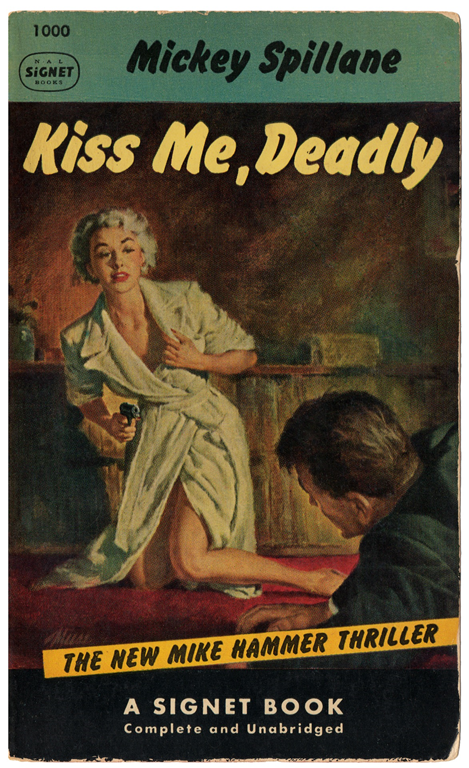
kiss me deadly

When I was twelve, my dad read westerns and Mickey Spillane type thrillers, and my mother loved mysteries.  They didn’t try to get me to read what they liked.  And of the books they read as a kid, they were pretty silent.  My dad once mentioned The Hobbit, which came out around the time he graduated high school, and my mother always talked about Little Women, but I’m not sure at what age either of them read these books, but I’d guess in the 1930s.  Neither meant much to me in the early late 1950s and early 1960s when I started reading, and when I read them both when I was older, they were good, but not defining.

Now my parents hated rock music, and tried to get me to like their favorites like Perry Como and Dean Martin, but I declined.  And my sister and I were always at war with my parents over what to watch on TV.  I’m afraid we were selfish little shits.  My dad loved Bonanza, but we’d throw teenage tantrums if we couldn’t watch The Smothers Brothers Comedy Hour.  We were probably too self-centered to take reading recommendations.

What’s weird is now that I’m 62 I’d be cool with listening to Frank Sinatra and reading Kiss Me, Deadly.  My dad died when he was 49 and I was 18, and like I said, we never had kids.  So I’m an island in the intergenerational pop-culture sea.  I’ve always loved the Heinlein juveniles, and wished they had become classics that all kids love—but that’s a silly sentimental desire on my part.  I’m not sure if they deserved to be read by all kids.  Of course, I’m not sure if all kids need to read the College Board Recommended Novels either.

Why do we want our kids to read the books we loved?  To make them like us?  To share what we liked?  To give them a leg up on finding the good stuff?  Most of the people who posted replies to the Scalzi blog listed books they discovered and loved as kids.  Are our literary first loves so important?  If you look at the College Board list of recommended novels below these are evidently what society thinks kids should read and know.  I’m skeptical.  I can’t believe these are the absolute best 100 novels everyone should experience as cultural literacy.  Maybe these are the ones easy to teach.  I’d do a lot of arguing over these titles.  I’m an atheist, but even I would expect The Bible to be on the list.

I’m not sure the College Board list is any more valid than Scalzi and I wanting kids to read Heinlein.  I’m fond of Heinlein for sappy nostalgic reasons.  What would be the real reason to make a kid read a book?  I’m a life long bookworm in my social security years and have only read 42 of the College Board books.  Let’s get real.  How many classic books should a kid read before he gets out of high school?  This is only a recommended list anyway, so few people actually expect kids to read them all.  But how many books should a well educated kid read that represents a well rounded cultural education?

I’d cut the list down to 24, and make sure those 24 are books everyone should know as adults and would speak from one generation to the next.  But that’s me playing king of the book world.  There’s only one book from the list below that I’d claim should definitely be on the list of 24 – Pride and Prejudice by Jane Austen. 

When I think about it, there’s damn few books I think we should make kids read, and what they would be would be hard to decide.  My second book for the list would be Great Expectations by Charles Dickens, and it’s not even on the College Board list.  My two would be it for 19th century English novels.  Picking two 19th century American novels would be very hard and inspire me to write a very verbose essay.

Is there a minimum number of books everyone should read?  That’s getting too much into common core thinking.  Are there books so good we should try to get everyone to read them?  Are there books we loved that define our childhood that we should expect our kids to read? 

I do find that I feel closer to people who have read and loved the books I loved.  My friend Charisse has read most of the books on the College Board list, so we have lots to talk about.   I feel Charisse and I have a stronger connection than I do with people I know that we share no books in common.

Maybe society is putting too much hope in specific books, and what’s important is we all read a lot of books and then try to find out the books we’ve each read that connect us.     

Beowulf
Achebe, Chinua Things Fall Apart
Agee, James A Death in the Family
Austen, Jane Pride and Prejudice
Baldwin, James Go Tell It on the Mountain
Beckett, Samuel Waiting for Godot
Bellow, Saul The Adventures of Augie March
Brontë, Charlotte Jane Eyre
Brontë, Emily Wuthering Heights
Camus, Albert The Stranger
Cather, Willa Death Comes for the Archbishop
Chaucer, Geoffrey The Canterbury Tales
Chekhov, Anton The Cherry Orchard
Chopin, Kate The Awakening
Conrad, Joseph Heart of Darkness
Cooper, James Fenimore The Last of the Mohicans
Crane, Stephen The Red Badge of Courage
Dante Inferno
de Cervantes, Miguel Don Quixote
Defoe, Daniel Robinson Crusoe
Dickens, Charles A Tale of Two Cities
Dostoyevsky, Fyodor Crime and Punishment
Douglass, Frederick Narrative of the Life of Frederick Douglass
Dreiser, Theodore An American Tragedy
Dumas, Alexandre The Three Musketeers
Eliot, George The Mill on the Floss
Ellison, Ralph Invisible Man
Emerson, Ralph Waldo Selected Essays
Faulkner, William As I Lay Dying
Faulkner, William The Sound and the Fury
Fielding, Henry Tom Jones
Fitzgerald, F. Scott The Great Gatsby
Flaubert, Gustave Madame Bovary
Ford, Ford Madox The Good Soldier
Goethe, Johann Wolfgang von Faust
Golding, William Lord of the Flies
Hardy, Thomas Tess of the d’Urbervilles
Hawthorne, Nathaniel The Scarlet Letter
Heller, Joseph Catch-22
Hemingway, Ernest A Farewell to Arms
Homer The Iliad
Homer The Odyssey
Hugo, Victor The Hunchback of Notre Dame
Hurston, Zora Neale Their Eyes Were Watching God
Huxley, Aldous Brave New World
Ibsen, Henrik A Doll’s House
James, Henry The Portrait of a Lady
James, Henry The Turn of the Screw
Joyce, James A Portrait of the Artist as a Young Man
Kafka, Franz The Metamorphosis
Kingston, Maxine Hong The Woman Warrior
Lee, Harper To Kill a Mockingbird
Lewis, Sinclair Babbitt
London, Jack The Call of the Wild
Mann, Thomas The Magic Mountain
Marquez, Gabriel García One Hundred Years of Solitude
Melville, Herman Bartleby the Scrivener
Melville, Herman Moby Dick
Miller, Arthur The Crucible
Morrison, Toni Beloved
O’Connor, Flannery A Good Man Is Hard to Find
O’Neill, Eugene Long Day’s Journey into Night
Orwell, George Animal Farm
Pasternak, Boris Doctor Zhivago
Plath, Sylvia The Bell Jar
Poe, Edgar Allan Selected Tales
Proust, Marcel Swann’s Way
Pynchon, Thomas The Crying of Lot 49
Remarque, Erich Maria All Quiet on the Western Front
Rostand, Edmond Cyrano de Bergerac
Roth, Henry Call It Sleep
Salinger, J.D. The Catcher in the Rye
Shakespeare, William Hamlet
Shakespeare, William Macbeth
Shakespeare, William A Midsummer Night’s Dream
Shakespeare, William Romeo and Juliet
Shaw, George Bernard Pygmalion
Shelley, Mary Frankenstein
Silko, Leslie Marmon Ceremony
Solzhenitsyn, Alexander One Day in the Life of Ivan Denisovich
Sophocles Antigone
Sophocles Oedipus Rex
Steinbeck, John The Grapes of Wrath
Stevenson, Robert Louis Treasure Island
Stowe, Harriet Beecher Uncle Tom’s Cabin
Swift, Jonathan Gulliver’s Travels
Thackeray, William Vanity Fair
Thoreau, Henry David Walden
Tolstoy, Leo War and Peace
Turgenev, Ivan Fathers and Sons
Twain, Mark The Adventures of Huckleberry Finn
Voltaire Candide
Vonnegut, Kurt Jr. Slaughterhouse-Five
Walker, Alice The Color Purple
Wharton, Edith The House of Mirth
Welty, Eudora Collected Stories
Whitman, Walt Leaves of Grass
Wilde, Oscar The Picture of Dorian Gray
Williams, Tennessee The Glass Menagerie
Woolf, Virginia To the Lighthouse
Wright, Richard Native Son

JWH – 7/21/14

Reading: A Compulsion, An Addiction, Or Obsession?

Is it possible to read too much?  Can words, like calories, be over consumed?

Like the little robot, Johnny Five, in the film Short Circuit, I constantly crave more input.  I’m not as bad as Teddy Roosevelt, who would grab a few words while waiting for a person to walk across the room to meet him, but I’m close.

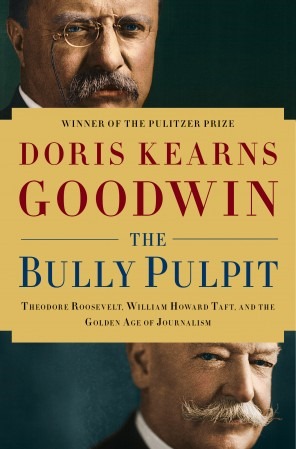
The Bully Pulpit 

That anecdote I got from reading The Bully Pulpit: Theodore Roosevelt, William Howard Taft, and the Golden Age of Journalism by Doris Kearns Goodwin, an epic volume where she profiles presidents Teddy Roosevelt and William Howard Taft, their parents and wives, and the famous muck raking reporters from McClure’s Magazine they knew during the Progressive Era.  It seems like in every case, for both men and women, they all credit books as the defining influence of their lives.  Roosevelt was a very compulsive reader and claimed he read a book before breakfast each day.

We educate ourselves by reading.  We evolve empathetically by reading.  We nourish our souls by reading.  So, can there be too much reading?  I ask this because here are the books and magazines I’m currently reading, or trying to read.

keep the aspidistra flying

Keep the Aspidistra Flying by George Orwell.  I got the Kindle and Audible edition on sale recently.  I first read this book back in the 1970s, it’s about a young man, Gordon Comstock, in 1934 England, struggling to be a poet and refusing to worship the God of money.  I’m at the six hour mark, out of nine, but switched over to The Bully Pulpit to get ready for the non-fiction book club discussion in February.  I’m now 12 hours into its 35 hours.  I keep meaning to jump back and finish those last three hours but The Bully Pulpit is absolutely captivating.

Our-Mathematical-Universe

I saw Our Mathematical Universe by Max Tegmark at the bookstore Sunday and just had to have it, so I ordered it from Amazon when I got home, and it was here Tuesday.  I’ve only just started it, but wished I could give up everything else to read it. I’m on a physics kick at the moment, so I crave it’s words and charts.

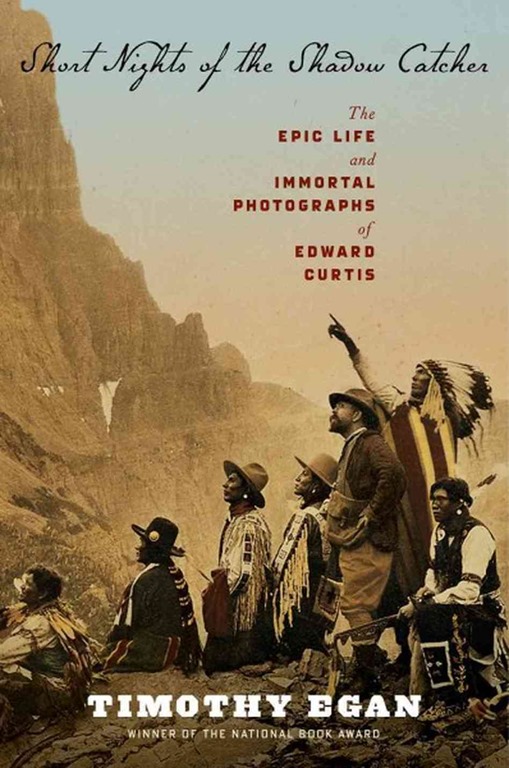
short night of the shadow catcher

I’m reading Short Nights of the Shadow Catcher by Timothy Egan for my local potluck supper book club.  I’m just up to chapter 3.

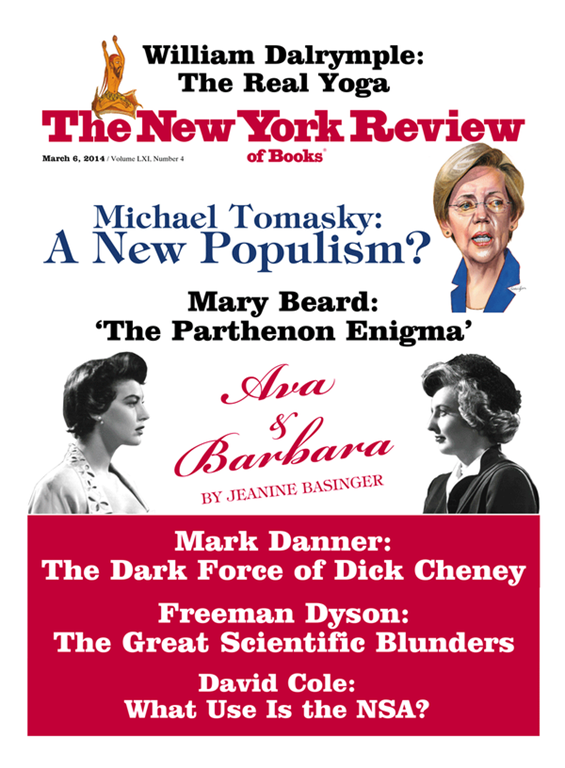
NYRofB 

Reading The New York Review of Books is like having a heroin pusher for a best friend.  I’m on the third article, “A New Populism?” which reviews Social Democratic America by Lane Kenworthy, which would be a wonderful book to read after The Bully Pulpit, because Bully mentions 19th century populists as well as reformers and progressives.  Instead I went to the library and got two books reviewed in the second article, “Beneath the Stars.”

ava gardnerBarbara-Stanwyck-cover

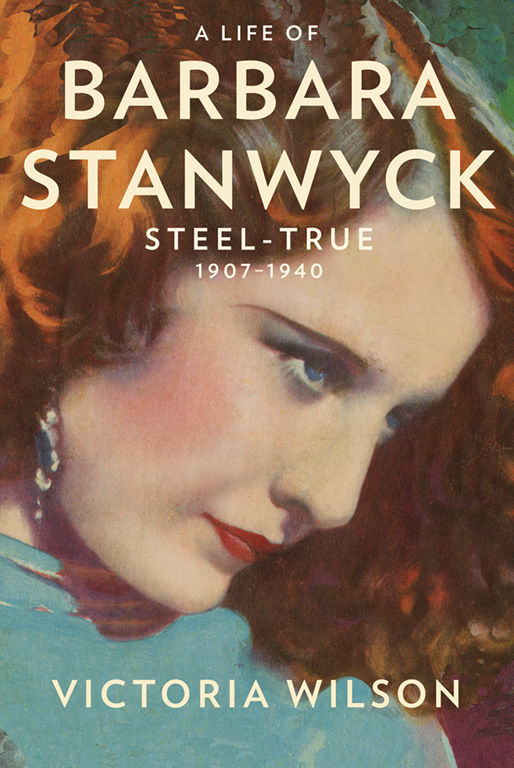
I haven’t started either, but I’ve been itching to take the time to jump into both because I’ve been watching Gardner and Stanwyck movies on Warner Archive Instant lately.  I have a thing for old movies, and even though it’s not as relevant as physics or history, it does obsess me.

charles-dickens-a-life-by-claire-tomalin

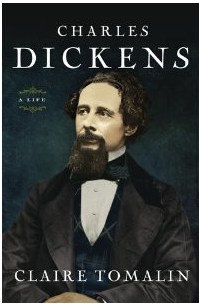
Everything makes me want to read books.  I saw the recent biofilm The Invisible Woman about Charles Dickens’ affair with actress Nelly Ternan, which made me go out and buy, Charles Dickens: A Life by Claire Tomalin.  Time and again I return to the 19th century.  Growing up I was crazy in love with science fiction and the future, but now that I’m living in the 21st century, I spend a lot of time exploring the 19th century.  But I still read a lot of science fiction.  This week, I’ve been reading short stories, hoping they will inspire me to write short stories.

img381img380

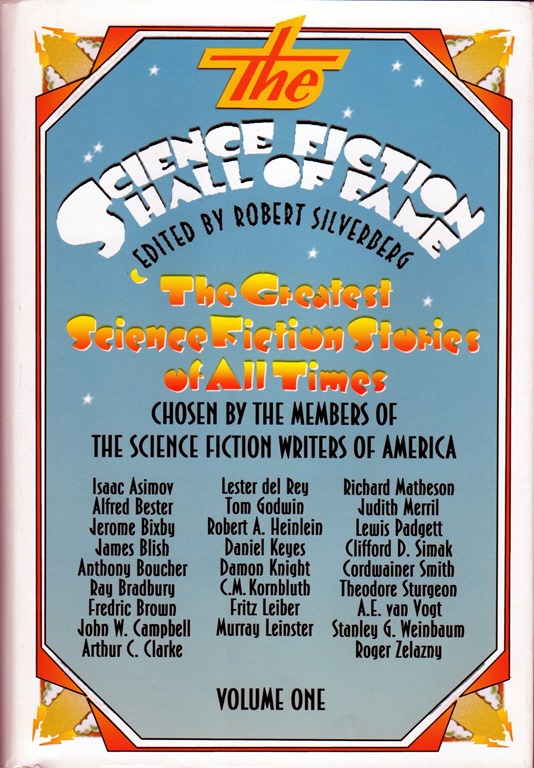
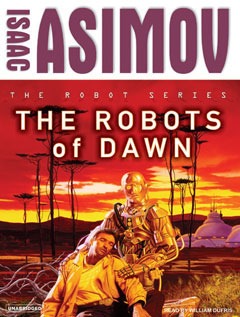
The Classic Science Fiction Book Club is reading one story a week from The Science Fiction Hall of Fame.  Of course, I also need to get started on the March book for them too, The Robots of Dawn by Isaac Asimov.  Science fiction has always been fun and addictive to me, but as I’ve gotten older, reading non-fiction has become more addictive.

the robots of dawn 

I’m also rereading and studying The Trouble with Physics by Lee Smolin to write a comprehensive review.  I just finished it a few days ago, but it was so exciting that it’s thrown me into a science reading jag.  I listened to it first, but now I’m reading the Kindle edition trying to outline all it’s points.

The_Trouble_with_Physics_by_Lee_Smolin_Book-Cover

I keep How To Read Like a Professor by Thomas C. Foster by my TV chair to read during commercials.  Each chapter makes me want to read another classic book.

How to Read Like a Professor

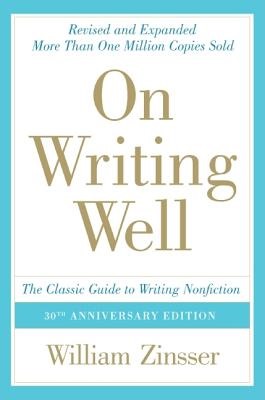
And this might be TMI, but I keep On Writing Well by William Zinsser on my oldest Kindle in the bathroom for study while I’m occupied.

On Writing Well

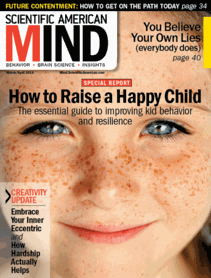
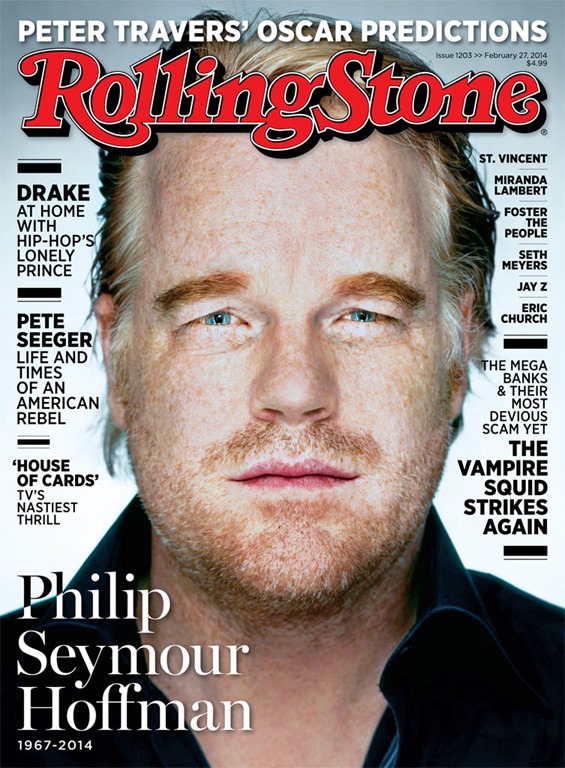
I also read a lot of magazines, and these have came in the mail in just this past week.  If halfway through the Scientific American, and read the short pieces in The Rolling Stone.  As soon as I finish this essay I’m going to read more from these magazines as I listen to music.  That’s become my late afternoon habit now that I’ve retired.

sci-am-2014-03sci-am-mind-2014-03

Harpers-1403-302x410Atlantic-March-2014-225x300

smithsonianMusic-Drake-Rolling Stones

And this doesn’t count the dozens of magazines I try to keep up with at Next Issue.  I pay $15 a month for 130 titles for tablet reading.  Nor does this count the many books I’ve started last week and haven’t gotten back to yet.  I try hard to get to The New Yorker, Wired, Entertainment Weekly, Popular Science, Consumer’s Reports, Shutterbug, Popular Photography and Vanity Fair – but I’d like to read even more.  I seldom finish any of them.  I find most magazines, even the ones that I’d never buy like Vogue and Field and Stream often have one great article.

Nor does this list of reading material cover the daily consumption of websites I visit.

Do you see why I’m wondering if I have a reading problem?  If brains could get fat on words, I’d have a head the size of Texas.

When I write these blogs, I partly write them for writing practice.  Each day I attempt to find a topic and make it interesting.  But I also write because it’s therapeutic, like talking with an analyst.  I’m thinking out loud, trying to put two and two together.  This essay is my way of asking myself:  Do I read too much.  And if I read too much, what’s a reasonable amount of daily reading?

On one hand I feel I’m retired and should read as much as I want, or as little as I want.  But on the other hand, I feel all this reading should go towards a purpose.  While struggling to review The Trouble With Physics I realize how little I retain.  It’s a damn shame that all this good information should go in one ear and out the other.

Doris Kearns Goodwin spent seven years writing The Bully Pulpit and it reflects a massive amount of reading for research.  I wonder if I should focus my reading addiction on a single subject and try to write a nonfiction book?  Before I retired I dreamed of writing a novel, but I just don’t have the daily urge to write fiction.  I do love to write blogs and nonfiction essays.  That’s why I’m experimenting with my review of The Trouble With Physics – I’m actually doing a lot of research to write a longer essay.

Right now my daily reading feels like I’m just gobbling down M&Ms – it’s a compulsive craving.  And although I feel any reading is good for me, because new ideas provides fertilizer for my neurons, I can’t help but want all my data input to be put to some constructive use.  I’d like to think of good reading as healthy food, and writing as healthy exercise, for my mind.  If I just read books and didn’t blog, I don’t think I’d be anywhere near as happy as I am now.  And I think I’d be happier if my reading was more focused.

JWH – 2/27/14