
What New Subjects and Tasks Am I Capable of Learning at Age 73 in 2025?

by James Wallace Harris, 9/16/24

I know I’m an old dog in a long slow mental and physical decline due to aging, but I wonder if I can still learn new tricks. I’m already having trouble recalling names and nouns, but if I work at it, I eventually fish those missing words out the darkness of my unconscious mind. I pursue the same daily activities I’ve always pursued, but I wonder if could learn to do something new. Maybe if I work hard at digging a new rut it would become a new daily activity.

My friend Mary Ann mentioned she must memorize the details for two hundred works of art for her M.A. in art history. I asked her for that list, and I’m trying to learn it too. I’m gathering digital images of all the works and putting their details into a spreadsheet. I’m trying to figure out how to systematically study the content and then test myself. I hope this might be an effective way of calculating how much I can still learn and retain.

I’ve been trying to use Linux as my regular computer system. I discovered Linux back in the early 1990s on Usenet News. Every so often I install it and see if I can do all my computer work on it. It’s always failed me. This past year I realized that Linux has gotten so good as a desktop replacement that I might be able to finally switch. However, yesterday I hit another wall and gave up. I realized that if I got deep into the way Linux worked at the command line level, I could probably solve my latest problems. I’m having trouble getting my scanner to work, but also, when I tried to move my Plex server from Windows to Jellyfin on Linux I hit a snag that annoyed me so much I packed away my Linux box.

A year ago, I tried to set up Plex on Linux, but Plex never could see my media files. That was probably a permission problem. I then tried Plex on Windows, and I was watching TV shows on my Roku streamer in about ten minutes. I can get things done on Windows in a snap, but it’s always hours of aggravation using Linux. I wondered if it’s a cognitive learning barrier, or laziness, or impatience? I just don’t have what it takes anymore. I decided not to waste time butting my head against a wall.

But that experience made me question myself: Am I capable of learning something new? I keep trying and I keep failing. Should I just accept that? Am I not trying hard enough? One thing about getting older is having less energy. It makes me throw in the towel quicker. That makes me wonder if the problem is being able to stick with something or is it an actual mental barrier that I can’t cross. I don’t know.

Right now, I’m still positive. I like to think if I stuck with a task, no matter how slowly, or for however many days it might take, I could eventually get the job done. Sure, it might take weeks longer because I might only be able to work at my goal twenty-minutes at day instead of hours a day. Or am I kidding myself?

Do we quit learning as we get older because we don’t have the brain cells, or the patience, or the energy, or the focus? (Or combination of all of them.) It’s getting hard to even write these essays. I run out of steam so quickly. Applying my brain at almost anything now makes me want to go take a nap. The trouble is coming back. Sometimes I can pick up where I left off and sometimes I can’t. My drafts folder currently has 152 unfinished attempts since I last deleted it.

The thing about getting old is we know it ends badly. We must triage our desires, and jettison more wants. I still have a lengthy list of things I want to do or learn, but I’m having to cross many of them off my list because I know I can no longer do them.

I keep thinking if I exercise more, eat better, sleep wisely, that I might squeeze a few more ergs of psychic energy into a project. Every day I get up and do the Wordle, The Mini, Connections, and the Sudoku in the New York Times game app on my iPhone. I’m thinking about adding Strands and The Spelling Bee. I have gotten better at all of these games. That encourages me. But they are little efforts. Playing these games is one way I test my mind each morning, like taking my blood pressure.

I need a bigger challenge to track and measure the remaining potential of my brain. I’ve thought about taking the GRE test and then study its subjects and taking the test again every few years to see what happens. But time might have run out on that plan.

I used to think of studying Python or C++ to see how far I get, but that might be too ambitious too. Studying Art History might be possible. I wish I could get into chess. Whenever I try, I immediately hit a wall. I figure it’s a matter of focus. I keep thinking I should try to increase the amount of time studying a chess move so eventually I could play a whole game. I’ve never been able to think about a move for longer than a minute before I get completely bored. I’ve wondered if I could increase that concentration up to two or three minutes if that would help me finish a game, and that skill would crossover in other things I want to do?

I watch YouTube videos by physical therapists, and they always talk about starting slow and doing a little bit more each day. That’s very inspirational. The trouble is even starting slow anymore.

But I haven’t given up.

This reminds me of an old Vaughn Bodē underground comic. It featured a little lizard-like creature. In my memory it showed the creature tied to a post, with its eyes poked out, its arms and legs cut off, whispering to a fellow prisoner, “I’ze gonna escape when it gets dark.” Am I that little creature? (I wish I had a copy of that cartoon strip. If you have it please send me a copy.)

JWH

Being Remembered vs. Doing the Remembering

by James Wallace Harris, 4/12/24

My father died at age 49, so I always thought I would die young too. I share a lot of his physical qualities, including heart problems. However, at age 72, I feel like I’ve been proven wrong. Dying before my wife is another lifelong assumption I’m starting to question. Both my grandfathers, and all seven of my uncles died before my grandmothers and aunts. What if my lifespan is more like my mother’s, who died at 91? Susan’s parents both died at 78.

I thought the reward for dying young is getting out of watching my loved ones die. Plus, I wouldn’t have to deal with getting rid of my possessions or figure out the legal aspects of what happens to my savings. I admit, one of my biggest faults is my mastery of avoiding stress. I’ve always worked on the principle that being remembered is the effortless way out.

However, what happens if Susan dies at 78 and I die at 91? I think a lifetime of deferred stress will come due all at once. Being the one to stay behind to remember all those that died must be depressingly hard. I remember my grandmother once telling me about a tontine her high school graduating class formed. It was a small group of around thirty-five, I think. My grandmother was about my age when she told me about this, and she talked about how she was one of an exceedingly small dwindling group. I never learned who was last, and I’ve forgotten what the prize was.

I’ve been feeling something like that lately because over half my cousins on both my father’s and mother’s side of the family have died. I am the oldest male cousin on my father’s side, and the youngest male cousin on my mother’s side. Of the total of twenty-six of us cousins, only two males are still here.

I often think about all the family and friends I know who have died. But up till now, the living has way outnumbered the dead. But that’s changing. I wonder about being one of those people who all their family and friends have died. To be the last of their generation. I imagine you spend a constantly growing amount of time remembering.

Susan and I don’t have children. Most of our friends don’t have children. Of my family and friends who do have kids, I can sense a stark difference in our lives as we grow old. People who have children are links in an extraordinarily long chain that continues in the future, while folks without children are the last links in an exceptionally long chain that doesn’t make it any further.

Being the end of the line must have its psychological costs, ones I can’t even begin to imagine fully. I think being that last link must come with a heavy weight of remembering. Because we don’t have children, I don’t imagine we’ll be remembered for long after we die. I’m starting to wonder about being the one who must remember.

I assume if I died first, Susan would remember me until she died, especially when she needed something done that I always did. That might be getting colanders off the top shelf or being a companion to watch Jeopardy. She will especially remember me when the cats wake her up at 5am begging to be fed. (Susan fixes their dinner.)

I want to die a natural death, and fulfill all my responsibilities, but I can’t help but think getting to leave early might be a blessing. Like I said, I’ve always believed the woman went second. Who knows, maybe they even prefer a few years without the burden of fixing dinner for a man. My mother found a kind of peace after my father died.

But another thought has occurred to me. I was always taught to let women go first. Which is the true gentlemanly thing to do at the end of time? Go first, or let her go first? I’m much better at taking care of things than Susan. She’ll be pissed off at me if I go first and leave her with all the work of closing out our lives.

And we both worry about what will happen if she and I die before our cats Ozzy and Lily. I bet anything if I died, and it was 5am and Ozzy couldn’t wake me up, he’d just start breakfasting on me. Some mornings I do wake up with Ozzy sniffing my face.

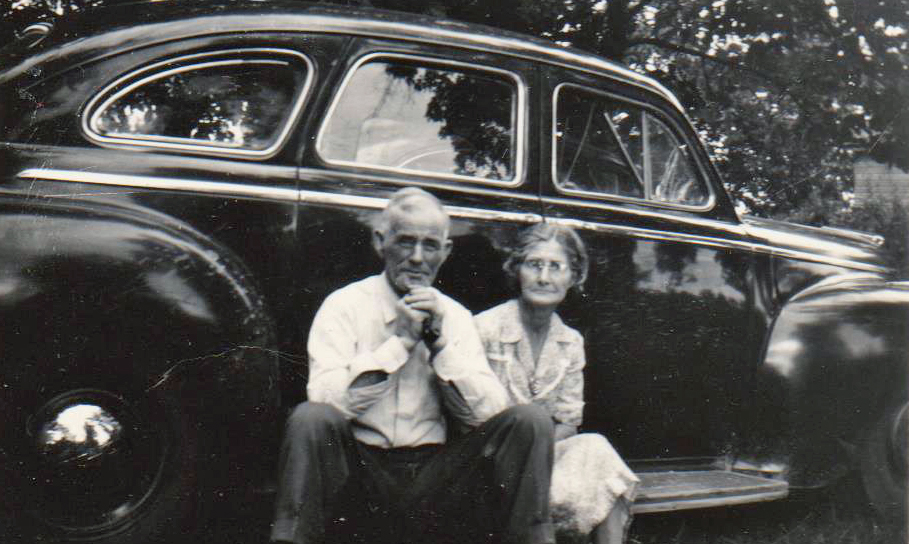
I can remember two generations that came before me, my parents and their kin, and my grandparents and their kin. But I also remember my parents and grandparents, each remembering people from two generations before them. When I’m gone, will anyone remember any of them? When my sister and I are gone, who will remember our parents? I know my sister and I are probably the only people left who think about my father. I know my cousins still think about my mother. My sister has a son, and he will remember my mother, but he never knew my father.

I don’t worry much about being remembered. Maybe that’s why I didn’t try hard to have kids. But I do like remembering.

JWH

46 Years of Marriage and Television

by James Wallace Harris, 4/8/24

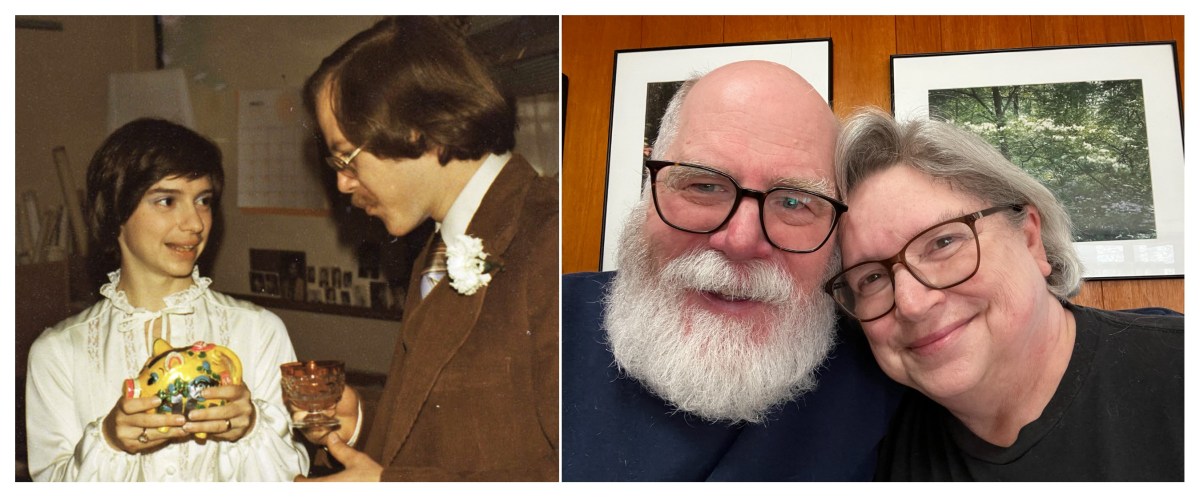
Susan and I celebrated our 46th wedding anniversary on March 26th. To commemorate the event, I’ve given myself the task of remembering all the TV shows we’ve watched together over the last 46 years. What’s been bugging me since 5:05 AM this morning has been trying to remember all the TV sets we watched all that TV on.

I can visualize the five apartments and two houses where we watched television. I can visualize the six cars we’ve owned over those forty-six years, but I can’t remember what the TV sets looked like from the early decades of our married life together. Obviously, we stared at them for hours a day so why can’t I remember what they looked like? I’ve checked my photos and can’t find any physical documentation. The first TV I can remember buying together was sometime after the year 2000 and it was a 36″ RCA monster of a CRT.

What’s funny is I can vaguely recall the TV stand we had when we first got married, a cheap aluminum affair on wheels. I assume we started off married life with a 19″ set I had owned as a bachelor. I just have no memory of it. I think we eventually bought a 25″ set, but it wasn’t a console. Just no memory whatsoever. I do remember that one of our first big purchases together was a VCR. We paid $800 around 1979. Susie used it to record soap operas to watch after work.

I believe we had cable TV at the beginning of our marriage because I just don’t remember using rabbit ears. And we had HBO before 1981 when MTV began, because I remember HBO playing music videos between movies and I loved them. That’s why I was so excited when MTV came out.

I enjoy challenging my memory with a specific task like this essay. And I’ve found that a fantastic way to trigger memories is to find an external anchor. I think the first show I can remember us watching together was I, Claudius on Masterpiece Theater. Wikipedia confirms that I, Claudius ran in Season 7 1977-1978. Since we met in July of 1977, that means my vague memory might be right.

My next memory is we watched the original All Creatures Great and Small Together. Wikipedia confirms it came out in 1978. However, I thought it came out on Masterpiece Theater, and Wikipedia nixes that idea. I also thought we were big fans of Masterpiece Theater, but Wikipedia reveals Susan, and I didn’t watch another series on that program until 1990 with Jeeves and Wooster. Looking over that Wikipedia page reveals we didn’t become big Masterpiece fans until Season 38 (2008) when they ran all the Jane Austen stories and have seen many of the shows since Masterpiece Theater was renamed Masterpience Classic. We really loved Downton Abbey starting in 2011. However, that might have been me, and not Susan. Thinking about it now, I think Susan was a latecomer to Downton Abby.

It’s funny how memories can be deceiving.

If we weren’t watching hi-brow shows, what else were we watching? I remember we both became addicted to MTV when it came out in 1981. Luckily, Wikipedia has pages for all the American TV seasons starting with 1945. I’ll use it as my memory crutch to recall our married life television viewing together. I’m only trying to remember what we watched together.

The first memory of the 1977-1978 schedule made me recall is Happy Days. Susan and I weren’t fans of that show, but I remember going over to her parents’ house and telling them we were getting married while they were watching Happy Days. (I was left alone with her dad to watch Happy Days while Susan’s mother took her in the back to ask if she had to get married.) The shows from that season that I remember Susan and I loving were Barney Miller and Soap.

For the 1978-1979 season we added Mork & Mindy, WKRP in Cincinnati, and Taxi to our watch list. This makes me remember that Susan and I loved sitcoms when we first got married. Normally, we went out a lot. We loved eating out at cheap places, or going to the mall, or the movies. I don’t think we watched a lot of TV in the early years.

In the 1982-1983 season we added Cheers on Thursday night on NBC. Taxi also moved to that night, and it became the early version of Must See TV on NBC on Thursday nights.

The 1984-1985 season added The Cosby Show to Must See TV night. Family Ties and Night Court also moved that time slot, so we had two hours of sitcoms.

Seinfeld started in the Summer of 1989. We loved that show.

Starting in the 1989-1990 season we added Roseanne to our list of sitcoms we tried to always catch. However, on Thursday nights in 1988, Must See TV was broken up and it got worse in 1989.

Looking over the schedules reveals something that conflicts with my memory. I thought we were TV addicts and watched all kinds of TV shows. But the schedules showed that for most nights there was nothing that we watched together, and I didn’t watch on my own. That makes me remember how often we went to the movies or rented videos.

I remember one time at Blockbusters they told us we had rented 794 movies. So, thinking about it, maybe Susan and I weren’t the TV fans I thought we were. But on the other hand, we loved buying the TV Guide every week. I’m thinking we might have watched more TV by ourselves, and I certainly don’t remember what Susan watched on her own. I think in the 1980s I vaguely remember Susan liking Murphy Brown and Designing Women. I watched Star Trek: The Next Generation without Susan.

In the Summer of 1990, we both fell in love with Northern Exposure, and I think we followed it faithfully until Joel left the series. I eventually watched all 110 episodes when it was syndicated on A&E, I think.

For the 1991-1992 season we added Home Improvement to our list of shows to watch. However, I believe Susan watched it more than me. Over the years, I think I started watching less TV.

We added Mad About You for the 1992-1993 season. We watched Seinfeld and Mad About You on Thursday together, and then Susan watched L.A. Law.

In the 1993-1994 season, Fraiser joined Must See TV and Wings moved to that night. We tried to always be at home for Mad About You, Wings, Seinfeld, and Frasier on Thursday nights.

The 1994-1995 season was big, because it added Friends and ER to Thursday nights. We now watched NBC from 7 until 10. I believe we stuck with Friends and ER for every episode. We both loved those shows.

We added 3rd Rock from the Sun for the 1995-1996 season. Obviously, by now my research is showing that Susan and I mostly watched sitcoms together. During these years I watched Nova on my own. But I don’t think I watched anything else by myself. I guess I wasn’t a broadcast TV addict like I’ve always thought I was. And I just don’t remember what we might have watched on cable channels.

During the next few years NBC kept monkeying around with Must See TV. I stuck for Friends, Seinfeld, and ER, but skipped on the other shows. I don’t remember if Susan watched the shows in between or not. Will & Grace and That ’70s Show came out in 1998 and we both loved them.

In the year 2000 Survivor premiered, and we followed that show together for over forty seasons. I stopped watching it this year because I didn’t like the new longer format.

In 2003, Susan got a job out of town, and lived in Birmingham, Alabama Sunday through Friday for ten years. She’d come home Friday night and go back Sunday afternoon. Those ten years completely threw us off watching TV together. When she finally transferred back to Memphis in 2013, we ended up each watching our own TVs, she in the living room, me in the den. We had completely adapted to diverse types of shows that each other didn’t like.

For those ten years I watched TV when friends came over. I got hooked on shows like Breaking Bad, The Americans, and Game of Thrones. Susan never did like this kind of television. On my own, I watched The Big Bang Theory. I believe that’s the last broadcast sitcom I’ve liked.

Nowadays, we get together twice a day to watch TV. Before supper, we watch Jeopardy and the NBC Nightly News together. Then from 9pm till 11pm we watch streaming TV series together. We’re currently watching Manhunt on AppleTV+, and We Were the Lucky Ones on Hulu. Before that we watched Feud: Capote and the Swans on Hulu and The New Look on AppleTV+. Sometimes we agree on a movie, but not that often. Before we liked sitcoms together, now we like shows that have a historical setting. Usually, they are limited series on streaming TV networks.

Lately, we’ve taken to one sitcom again, an old one. We watch Leave it to Beaver on Peacock on the nights when there are no new episodes of our other shows. Susan is still heavily addicted to sitcoms. She watches them all day long while she cross stitches.

JWH

Growing Old with Television

by James Wallace Harris

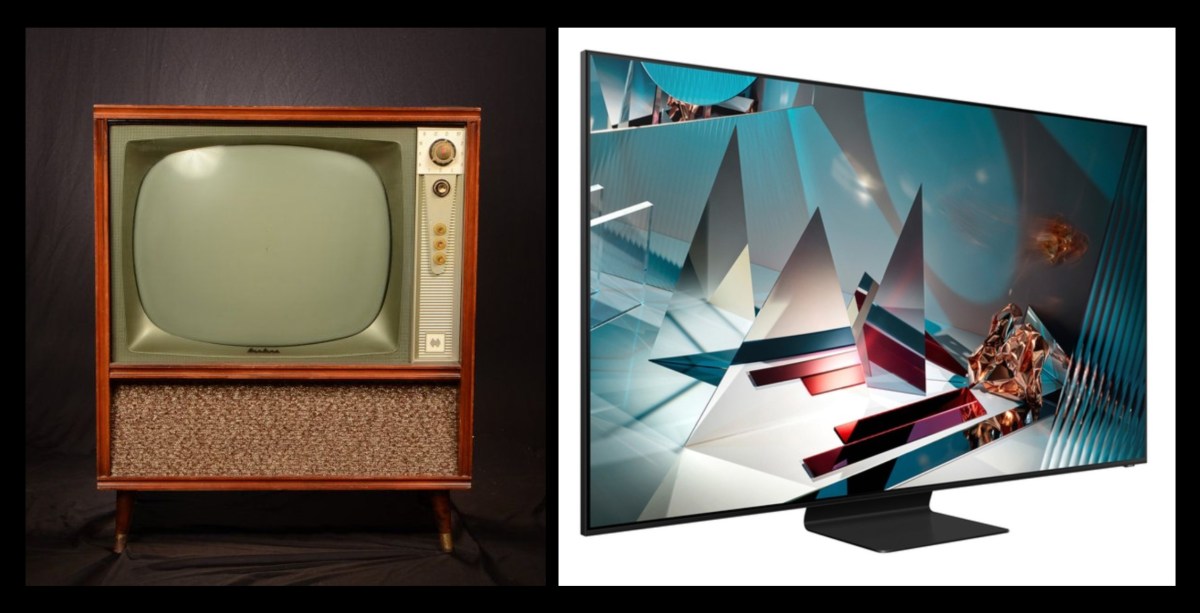
Don’t you think it rather absurd that we’re conscious beings who have emerged into this fantastic reality for no reason that we can confirm and yet spend so much of our lives watching television and computer screens, which are essentially fake realities? Or look at it another way. They say when you die your whole life flashes in front of you in an instant. How will we feel when we see that a large fraction of our life was staring at a screen?

I’m not saying we shouldn’t watch TV or play on a computer, but I’m just asking if it isn’t weird when the universe around us is so far out that we should? Or maybe television is the most far-out thing this reality has produced?

I belong to the first generation brought up on television, and now we’re the generation that will spend our waning years going out watching TV. I’m 72 and can remember 69 years of screen addiction. Was it worth it? Or was it a lifetime devoted to a false idol?

When I was young, television shows were probably the most common topic of discussion I had with other people, and now that I’m old, that’s become true again. Whenever I get together with people, or talk with them on the phone, we generally always compare what television shows we’ve been watching, and which ones we recommend. Is that true for you and your friends?

Over the years I have found several ways to mark, rule, and remember time. Who was I living with, where was I living (state, city, street, house), what grade or job was I in, who was president, what songs were popular, what books I read, where I went to school or work, and of course, what was popular on TV.

Television has become a time machine because we can now watch shows from any period of our lives. The same is true with music and books, but television has more details that connect us with our past. If I watch an old show from the 1950s it reminds me of what the clothes, cars, houses, furniture, and people looked like back then.

Television is also transgenerational. The other night on Survivor, a few of the young contestants talked about how they loved to watch The Andy Griffith Show. I must wonder if that’s where they get their mental conception of the 1960s. I know I’m getting a mental image of the Nazi occupation of Paris from The New Look on Apple+ TV.

This makes me realize that I have several modes for evaluating reality. I assume the best mode is direct experience. Just above my monitor is a picture window, and outside that window is a tree. Books and magazines give me another view of nature via words. I’ve learned a lot about trees from them. But then, I’ve seen the most variety of trees and landscapes with trees on television. I’ve lived in many states, north, south, east, and west. But I’ve seen more places on TV.

TV is like our sixth sense. However, it can be a sense that looks out on reality like we do with our eyes, or it looks at make believe fantasies, like we do with our inner vision and daydreams.

I probably spend 4-5 hours a day watching TV. During my working years, I believe that number was less. In my childhood I think it was more. I’ve always wondered what life would have been like if I never watched television. I think it would have been more real but duller. I try to imagine what life was like in the 19th century, say as a farmer or factory worker. News about the world at large would come through newspapers and magazines, and it would be much delayed in time.

Now that I’m getting old and wanting to do less, I thought I would be watching more television. We think of television as a babysitter for children, but isn’t that also true for us old folks? However, I’m losing my ability to watch TV for some reason. I can only watch TV series and movies if I’m watching them with other people. Watching them by myself makes me restless. I can watch short things like YouTube videos by myself, but I’m even getting restless watching that stuff too.

I had planned to catch up on a lot of television shows and movies in retirement, but that’s not working out. I’m wondering if this is happening to other people. Does the novelty of television ever wear off?

JWH

“At some point in your childhood, you and your friends went outside to play together for the last time, and nobody knew it.”

by James Wallace Harris, 3/4/24

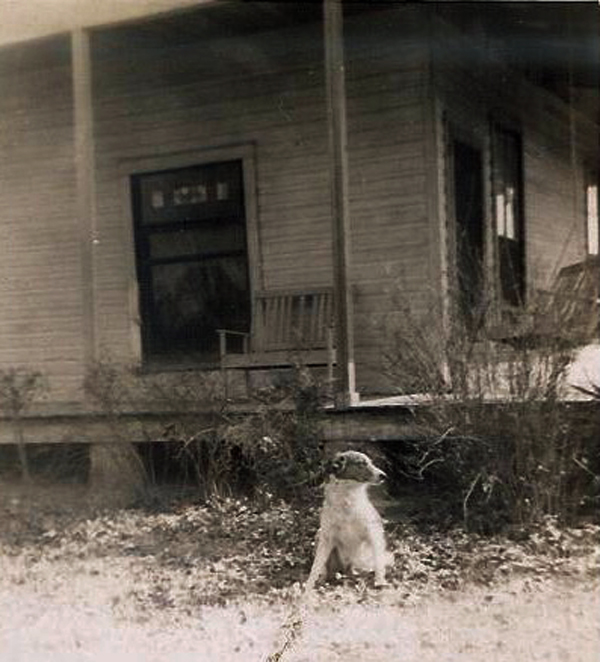
My cousins and I on my mother’s side of the family occasionally exchange emails. There were sixteen of us first cousins, from five sisters. There are only nine of us left, and all the sisters have passed on. Recently, we’ve been talking about our memories of my grandmother’s house. The house was out in the country, near the little town of Enid, Mississippi.

I only have one memory of that house. I think it was from 1968, but I’m not sure. I believe my mother, along with one or two of my aunts, I’m thinking it was Aunt Let, but maybe Aunt Sissy was with us too, and maybe even a couple of my cousins, all went to see the house. By then it was abandoned and run down.

I stole the title of this essay from a meme I saw on Facebook. I wish I knew before I visited the house what I’ve learned from my cousins’ memories in their emails. I wish I had been shown the photos of the house before that visit. I would have asked all the questions I had to my mother, her sisters, and my cousins. Some of my cousins were even born in the Enid house.

Why are memories more emotionally intense now in old age, than the original experience that created them? I wish I could save all my memories perfectly. I wish I could copy my cousins’ memories into my memory bank.

I recently reread Slaughterhouse Five by Kurt Vonnegut. His protagonist, Billy Pilgrim, became unstuck in time, so he randomly popped in and out of all the moments of his life. I wish I could do that. Billy was also abducted by aliens from Tralfamadore. They didn’t experience time like we do. They didn’t experience moments one after another, but all at once. I wish I could do that sometimes, to be shown the big picture. It might have helped me always understand the small moments better.

Lastly, I’m reminded of the film Blade Runner, and the “Tears in the Rain” speech given by Roy Batty just as he’s dying.

I’ve seen things you people wouldn’t believe… Attack ships on fire off the shoulder of Orion… I watched C-beams glitter in the dark near the Tannhäuser Gate. All those moments will be lost in time, like tears in rain… Time to die.

When I and all my cousins die, all our memories will be lost. Susan and I don’t have children to pass on our memories. And I’m not even sure my cousins’ children can tune into what my cousins felt about their lives. My father died when I was eighteen, and I never talked to him much about his past. My mother lived to be ninety-one, and I did talk to her, and she told me a lot, but I never felt it the way I feel my own memories.

In the decades since my parents died, I’ve tried to imagine their lives from the clues they’ve left. Too bad we weren’t a race of telepaths because I don’t believe words are ever enough.

I believe this photo is the last time all sixteen cousins were together. I wish I remember that day better too. (I’m on the far left.)

JWH