Homestead Air Force Base Library (1962-1963)–Aching for Photos

If you have photographs of the old library at Homestead Air Force Base before it was destroyed by Hurricane Andrew, please send them to me ( jameswallaceharris symbol outlook point com ).

My friend Linda and I had breakfast last Monday and somehow we got on the topic of the first books we remembered.  We were both born in 1951, but she grew up in Memphis, and I grew up in Miami.  Neither one of us could remember the first actual book we owned, but Linda remembered discovering libraries in the third grade, and I remember finding them in the fourth. 

We both figured we had children’s books when we were little, but we can’t remember them, but it was discovering libraries that turned us into bookworms.

I have vague memories of school libraries before discovering the Homestead AFB Library in 1962, when I was ten.  And I have fleeting memories of one other base library, but I can’t remember where it was.  Maybe New Jersey.  My father was stationed at Homestead Air Force Base in 1962 and 1963, and then after he retired, we returned to live near Homestead, so I got to use the base library again, while in the  8th grade. 

I still remember so many books I found at the Homestead AFB library.  I have many memories roving up and down the bookshelves, but what I would really love is photographs from inside and outside of that library.  My mind aches for some kind of validation to those memories.  I have no idea what the outside of the building looked like, and I’m guessing it was pretty small.  The check-out desk was in the middle of the building, just as you came in the door.  Going right led to a small wing holding the kids and young adult books.  Going left held the adult books and a small nonfiction section.  If memory serves, going left from the entrance, and then turning right just as you went into the room, was the science fiction section, which I didn’t know about in elementary school, but was a major discovery in junior high!

Straining my brain I’d guess that the science fiction section might have had no more than 6-8 shelves of books.  It wasn’t huge, but it was gigantic to my impressionable mind.  Going left, rather than right led to several sections of metal shelves in the middle of the room that held the nonfiction books.  I loved looking for books about space travel, fighter jets, astronomy, oceanography, maps, etc.  I loved this library.  It depresses me to think all of this was destroyed by a hurricane.

For a long time now I’ve had this fantasy that someone would create a database of all the photographs in the world so people could share them.  I envision going to the site and putting in a location and date, and seeing all the pictures taken that was closest to that date and location.

Did anyone ever take pictures of the library at Homestead Air Force Base?  They could be lying around in drawers, totally neglected, or even been thrown away, now decomposing in a dump.  How many photos were ever taken at the base in 1962 or 1963?  And how many people like me wish they could see them now?  Am I the only one?

Google and Bing found me a few photographs, but I’ve got to say their search capabilities stink to high heaven.  No matter how I phrased the search I’d always get photographs from other air bases, or even totally unrelated images.  But I was able to dredge up a few photos that validate some of my wispy memories.

104985820.AtFU1CAY.1963_Dec27_HAFB1_zoomout_425H

Homestead Air Force Base was a rather compact site.  The flight line was is the major feature of the bottom right quadrant.  My father worked on the eastern end.  I remember hearing there were twelve B-52s stationed at the base at the time, with almost a hundred fighter planes.  At the far eastern end of the flight line they had a couple each of F-102s, F-104s, and F-106s.  Most of the planes were F-100s.  I remember seeing one F-51 on the field, and heard Airmen saying it belong to a doctor.

I believe the library and the base theater were on a road that paralleled the flight line.  For all I know, I was riding my bike somewhere in that photo.  I road my bike all over the base during those years, going to the library, theater, base exchange, or along the road near the flight line.  Hearing the B-52s rev up to fly was powerful.

floridahome

Our base house on Maine Avenue didn’t look as fancy as this one, but it was the same design.  A duplex with a doubled shared carport in the middle.  Housing on the base was by rank, and my father was a NCO.  Kids of officers lived in nicer houses closer to the center of the base.  But I loved our house, and have many fond memories living there.

jfk2

kencar2

In October of 1962, President Kennedy came to visit the base, just after the Cuban missile crisis.  If my memory serves me, the Homestead Air Base Elementary let us kids off the the afternoon to go see the President, but me and my friends skipped JFK and went fishing at the rock pit, which I believe is the dark rectangle at the upper right quadrant of the aerial view above.  I’ve always regretted that I didn’t go see the President, but hell, I was ten, and waiting for some old guy to drive by in a big car didn’t sound like fun.  Going fish did.  I’m sure many of my classmates are in the photo above.

These four photos are a pretty skimpy haul for trying to recreate the past.  For all I know, the library might be in one of the two pictures of JFK, but the only landmark I really remember is the red and white checkered water tower.  How many people in these two photographs were holding cameras that day and snapping pictures?  How many people took family pictures in their base homes?  How many people took pictures at work with their friends?

Nowadays reality is so well recorded because everyone carries a camera built in their cell phones, but back in 1962 people only took photos on special occasions.  My family had a camera, but we could take a year or two to use up a 12 picture role of film.

If by chance, you’re an old Air Force brat and have some photos of Homestead AFB, please contact me at ( jameswallaceharris symbol outlook point com ).

JWH – 9/19/13  

What’s the Relationship Between Memory and Profession?

I’m wondering if how much we can remember is related to what we become in life.  Generally we think the careers we pursue are selected by interest, the ability to conceptualize the work, and talent.  But what role does memory play?  Does the ability to remember details accurately influence what we choose to do in life?  Could engineers, surgeons, mathematicians, composers, physicists, become who they are without good memories?  Could actors and singers work without the abilities to remember lines and songs?  Could salesmen and politicians succeed without remembering people’s names.  How well could people in law enforcement do their jobs without a knack for remembering faces and cases?  Isn’t becoming a lawyer all about memorizing precedents and laws?  Well, what about absent minded professors?  Maybe to remember all the important facts of their discipline it’s vital to forget all the piddling practical things?

I can remember all the things I wanted to be as a kid, and looking back I can see I never had the memory skills to do those things.  I became a programmer when I failed at being a scientist.  And I’m only a so-so programmer.  I have a certain knack for programming, but that’s because I can remember commands and algorithms to a degree.  If I could have mastered mathematics I would have liked to have been an astronomer, or robot designer.  My fantasy careers were to be another Robert A. Heinlein or Bob Dylan.  I have great difficulty holding plot ideas in memory, and the only song I can remember is Happy Birthday, and I usually flub the 4th line.

Our whole K-12 educational philosophy is to prepare individual children to know everything that an ideal adult should know – as if everyone should be the same.  We expect kids to memorize a body of knowledge we consider essential for a well rounded citizen, when in fact, everyone specializes, and everyone has varying levels of brain processing powers.  Some people are Intel i7s, while others are Motorola 6502s.

The hot topic in education right now is the Common Core State Standards.  The initiative’s mission statement says:

The Common Core State Standards provide a consistent, clear understanding of what students are expected to learn, so teachers and parents know what they need to do to help them. The standards are designed to be robust and relevant to the real world, reflecting the knowledge and skills that our young people need for success in college and careers. With American students fully prepared for the future, our communities will be best positioned to compete successfully in the global economy.

Currently, the Common Core standards focus on mathematics and English language arts, which is also what the national standardized tests cover.  In other words, this initiative is a massive effort in coordinated memorization.  By focusing on the Common Core standards we can evaluate students, teachers and schools through comparisons.  The assumption being if kids in school A rank higher than kids in school B, then teachers and administrators are doing a better job in school A.  But what if everyone learns the same standards equally well, but one school does better than another?  How much education comes from outside of the school?  Does growing up in a well-to-do family confer more opportunity to learn?  Or what if some kids have better parents or mentors that push practice and memorization?  Education isn’t just about the particularly facts we learn.

There are only so many facts we can stuff into our brains.  We grind through our school years cramming for tests, but how much of this essential knowledge is really essential later in life?  In last month’s Harper’s Magazine Nicholson Baker wrote “Wrong Answer: The case against Algebra II” – not available online, but nice summarized at Popular Science as “Should Math Really Be A Required Subject?”  Baker pleads for us to abolish the Common Core State Standards for Algebra II because few people use it later in life, and many students suffer from studying it.  But isn’t that true of most of what we studied in school?

What if pushing memory skills helps with careers?  Advance math requires remembering years of previous mathematical techniques.  Most of what you learn in school can be studied days before the test, but not advanced math.  Passing Algebra II reflects great memory skills.

How successful in life we become is determined by how much we can remember.  Kids who master Algebra II go on to become scientists, engineers, economists, doctors, lawyers – whether or not they actually need advance mathematics or not.  The ability to remember and process complex concepts correlates well with success in many fields – and I think it’s because it reflect memory skills.

Also in the news was the Bullitt County 1912 Eighth Grade exam, that made 2013 smart people feel stupid.  Not only could I not pass this 1912 test, but I doubt I could pass any 2013 Common Core tests.  I read lots of books and consider myself reasonably educated, but if I had to rate my intelligence by tests then I’m a dummy.  I love pop culture, but do miserably at trivia games.  Facts just don’t stay in my head, and I think that’s true of a lot of people.

bcschoolexam1912sm

I’ve read dozens of books on the history of physics and cosmology, yet I doubt I could talk about this topic in anything but the vaguest way. I often write blog posts stuffed with facts that I hope to retain by writing about them, but never do.  Some bits of information do stick, but I have no control over what facts get filed in permanent memory and what don’t, and whether or not I can recall the stored facts in a timely manner.

What I do is consume knowledge and shit out the solid facts, maybe digesting a bit of their nutriments, and I hope I become a bit wiser overall.  My opinions will change but I can’t substantiate my beliefs with regurgitated references.  My love of information is more akin to binging on sweets.

Knowing this makes me wonder why we spend so much money and effort forcing children to pass tests regarding knowledge they don’t retain.  Obviously, a good education leaves a lot of knowledge sticking to the ribs of their brains, but a surprising amount gets immediately discarded.  I do remember a fair amount of arithmetic but damn little algebra, geometry, trigonometry, statistics and calculus.  My guess is the old adage, “use it or loose it” applies.  So anything I learned fifty years ago that’s still in my head is there because I’ve had to use it.  So why not build an education system focused more on doing and less on testing?

Now that I’m retiring next month, I hope to study math again.  I’ve always regretted not working harder at learning math, and I’m wondering if I use it again, will some forgotten aspects magically come back, or will I have to memorize the old facts all over again?  My guess if I work at it for a year I’ll develop some skills I currently don’t have, but if I stop working at it, those same skills will quickly disappear.  Whether or not I’ll find some hobbies that actually need math skills is another matter.  I’ve always wanted to program some computer animation and that does take math.  If I apply the math, I might remember more, and for longer.

Sure, I might discover I hit a math barrier quickly.  I might not have the memory skills to go very far this second time around, but I am going to take a different approach.  It won’t be to pass tests.

Are our minds more like a hard drive where we store files, or like a computer program where we load information into memory to process?  We generally think of memory and mind as one, but what if that’s not true?  Is my personality reflected in how I react to experiences, or how I remember them?  Recently I fell in love with the song “What Becomes of the Brokenhearted” sung by Joan Osborne.  Do I love that song because of who I am, or because of the 1966 Jimmy Ruffin version of the song imprinted on my brain for life as a mood memory and listening to the new one stimulates that old memory?

Even after playing this song over a hundred times recently, I can’t remember the words, nor could I hum the melody.  However, something has been recorded in my brain that remembers the mood of the original song.  Hearing the Joan Osborne version pushes the same button in a deeply emotional satisfying way.

What’s weird, I’m obsessed with the song right now, but in a few weeks I’ll have completely forgotten it – until the next time I hear the music.  Even when I want to preserve a memory, to hang onto a cherish feeling, I can’t.  I supposed if I sang the song myself every day it would eventually become a part of me.  And that might explain why I forget so much – I’m constantly consuming new songs, new books, new movies, new television shows.

There are limits to memory I can’t overcome, but I could master more facts if I was willing to narrow my consumption of new data.  I’m a hummingbird flitting from one flower to the next, with no memories of the last.  Maybe if I tasted fewer flowers I’d remember more of them?

If humans were robots and we stored our memories in mechanical devices, we’d still have limitations, even if we could consciously control what we retained.  I’ve always read about people with eidetic memories in awe.  In my mind, they must be a superior species.  Obviously, we’re all different when it comes to how many facts we can maintain at our fingertips.  We’ll never be robots, and most of us will never have photographic memories, but who we are is defined by our limitations of memory, and not what we remember.

I believe my hobby is blogging now because of the limitations of my memory.  I can look up facts and quotes on the internet as needed.  If I could remember lyrics, chords, notes and melodies, I’d be playing music as my hobby.  If I could hold a lot of entangled concepts in my mind, I’d probably be writing novels.  If I was good with trivia I’d spend more time with my wife going to trivia games.  If I had a great memory, I’d probably be programming with languages that have large libraries of powerful functions.  I’m really amazed at the synergy between my poor memory and using Google with writing blog posts.  Even the length of the post is hitting the wall with how much I can conceptually handle at once.

I believe our memory abilities define what we choose to do.  But I also believe that the limitations of my memory confines me in explaining this.  I hope my memory power at least hints at what I want to say.

JWH – 9/17/13

Nick (1994-2013)

Nick-1

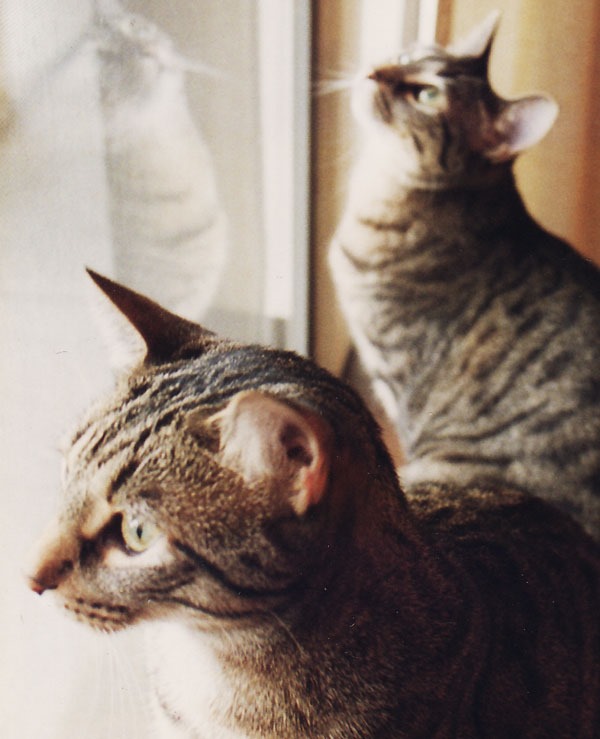
Today, September 3, 2013, I had to have Nick put to sleep.  He was almost 19.  His sister, Nora, died just two years ago, also in September.  Nick was a survivor.  When he was young Nick had cancer twice, having to have operations on his back both times.  For each operation they had to shave his back and turned him into ugly cat for months.  For years now Nick had mega-colon, an enlarge heart, a heart murmur, and arthritis in his hind legs.  Today they told me he also had severe anemia and needed a blood transfusion, plus his heart had a new fast arrhythmia, and his kidney function was worse than it was just a few months ago. 

Susan and I had a hard time letting him go, but we decided it was finally time.

I hate putting animals to sleep because they can’t make this decision for themselves.  I’d like to think Nick would have thought it the right time too – for all I know, he might have been ready to go months ago, but felt obligated to stay around to be our cat because he thought it was best for Susan and I.  The doctors and staff at the Greene Animal Hospital were wonderful as usual.  Nick died very peacefully, and I only wish when my time comes I could go like that.

NN041303 

Nick was my all time favorite pet – although I loved all my dogs and cats.  He will be my last pet.  I couldn’t watch another grow old and die, and I’m not sure I could outlive another pet myself, and I wouldn’t want leave an animal that was attached to me that way.  Back in 2002 I went to Seattle for six weeks and I felt really bad leaving Nick – he always favored me in picking laps.  I worried about how he felt not finding me for so long.  And when I returned I could never tell if he recognized me or just found another person to like.

We got Nick and Nora back in 1994.  Yes, they were named after the famous movie detective and his wife, Nick and Nora Charles.  Nick and Nora were our second set of cats, with Yin and Yang the first.  Susan and I have been married long enough to outlive two generations of cats.  Nick was so small when we first got him, I could hold him the palm of my hand.  That was so long ago, and just yesterday.

When they were kittens, Nick and Nora loved each other, and like Yin and Yang, would play fetch with paper balls.  Susan and I would sit in our chairs and the cats would get on our footstools and wait for us the throw paper balls over their heads.  They’d leap high up into the air, snatch the balls in their paws, and sometimes even do flips before landing on their feet.  Half the time they’d even bring the paper balls back for us to throw again.  We’d always know when they wanted to play this game because you’d look on the floor beside your chair and find a pile of paper balls and a cat staring up at you.  They’d also play soccer, batting the balls around while chasing after them, scattering them all over the house.  But the cats would bring them to back us when they wanted to play fetch.

Sadly, both sets of cats got tired of these games as they got older.  And it was also sad, as they got older they became less friendly with each other.  For many years Nick would sit in my lap and Nora would sit in Susan’s.  If there were only one of us in the den watching TV they’d both pile up in a single lap that we called a double-cat.  If Nora got to a lap first she’d get pissy if Nick tried snuggle a space next to her.  At one time Nick got up to 20 pounds and Nora peaked at 16, so we’d have 36 pounds of cat on our laps.  However, as you can see, I’m no lightweight either.

Cats 010 

Even though Nick and Nora stopped playing together, they stayed together most of the day.  It was hard to tell them apart at times.  After Nora died, Nick got the pick of our laps.  He loved sleeping on us – until we bought him a heating pad for his old age.  He loved that heating pad so much, but would always still spend a portion of the day sleeping on one of us.

Cats

Many of my friends have worried that I will be lonely without Nick.  Since Susan works out of town, I’m by myself all week.  Nick has kept me company for five years now, but I’m not sure if I will be lonely.  Loving an animal seems much different from loving a person.  Loneliness for me is not having someone to talk to, and I can call Susan on the phone.  And even though I often talked to Nick, he never replied back or started a conversation.  What I love about animals, and what I will miss, is their nonhuman qualities.  We mainly communicate with animals by touch, sight, body language – and smells.  I’m not going to miss the smells, but I will miss having a creature that chooses to curl up on me.

In his old age, Nick got very set in his ways.  But then so am I.  For the last two years we lived like old bachelors, following a clockwork routine.  My life will take a new daily course without Nick.  It will take me a while to get used to it.  It took me a long time before I stopped seeing Nora after she died.  Twice this evening already I’ve thought I saw Nick.  It’s funny how we get used people and animals being in our lives, and how hard it is to not see them when they are gone.

But for now on, I will have to make furry friends with those creatures owned by my friends.  I was very attached to Nick and Nora, and I just can’t go through that again.  This might sound hard hearted, but from now on I only want to attach myself to beings that will die after me.

JWH – 9/3/13

A Study in Fame–Bob Dylan

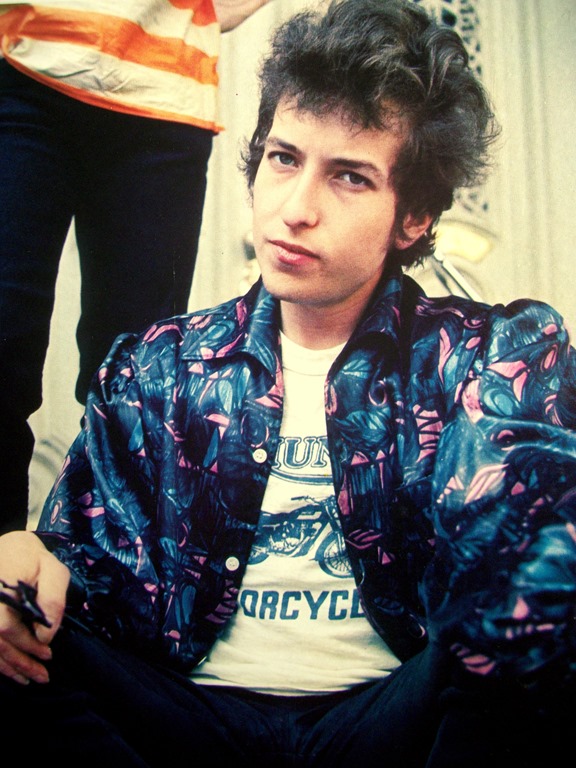
Our world is awash with famous people but how many are really worth the notice?  If you live long enough you’ll watch the famous coming and going, maybe not as fast as every fifteen minutes, but its amazing how many once famous faces I can no longer match a name in memory, or tell you if they are dead or alive. Think about it, how many people can you name that have stayed famous your whole lifetime?  One of the strangest of the famous that’s haunted me my whole life is Bob Dylan.

bob-dylan05

Dylan was born in 1941, and I was born in 1951, and he started recording in 1961, so he was in the generation just ahead of mine, who made an impression us boomers as we became aware of the world around us as teens.  Fifty years on, my demographic cohorts are in their sixties, and the generation that influenced us are in their seventies.  Many of the famous people that inspired my generation are forgotten or dead – or both.

Most folks are famous for a Warhol unit of time because they create only one noteworthy event on the world’s stage.  Bob Dylan has written hundreds of songs, an astounding output of artwork, but what makes many of them memorable is how they fit into history at large.  And if you didn’t like his singing, there have been hundreds of performers covering his tunes.  At one time I had a playlist on Rhapsody with over 100 cover versions of “All Along the Watchtower.”  Part of Dylan’s fame is due to influencing so many other people.

Not only is Dylan famous, but he’s legendary, infamous, and mythic.  Although most people won’t think of Bob Dylan when they think of the concept of fame, but if you read his biographies, and there are countless bios to read, you’ll see he’s a perfect example of someone suffering the fates of fame.

Plus Bob Dylan has toured the Earth like no other person in history.  Dylan played 2,000 concerts between 1988 and 2007, and he continues to tour at the rate of about 100 concerts a year.  His constant touring, which has gotten named the Never Ending Tour, will probably end when he dies.  Just look at his tour dates and locations.  Fans now follow Dylan from city to city like hippies used to follow The Grateful Dead.  Dylan tours like Sisyphus rolls rocks.

Has there been anyone in the history of the world that has traveled to more places than Bob Dylan?  Dylan has his own artistic empire of fame.

Yet, to the average person, how many people can name a Bob Dylan song?  He’s not that famous, not enough that all 7 billion people on Earth know of him.  Currently Dylan is only #65 on one of The Most Famous People of All Time lists.  But such lists are bogus, because there’s no real way to measure fame, other than maybe counting daily Google searches.

Of people who listen to rock and roll, Dylan is famous, to people that don’t, I can’t imagine his name coming up very often.

Fame is an odd concept.  Fame is both ephemeral and lasting.  If you look at the 2013 Time 100 list of most influential people of the moment, you won’t see Dylan, and you will see many names you’ve probably haven’t heard of before either.  How many people know of Elon Musk?  You’re famous if the media takes notice of you, whether its because you’re heroic, criminal, mad, inventive, creative, stupid, or whatever catches the public’s fancy at the moment.

Some people consider Bob Dylan a rock star, others a songwriter, and others a poet.  Fame for a poet really means how often are any of your carefully crafted lines quoted or memorized?  Fame for a songwriter is measured by how often do people sing and record your songs.  Fame for a rock star is measured by how many people swoon at your image holding an electric guitar.  Poetry is a dying art form, but poetry was never popularly consumed to begin with, but some poems have lasted a very long time.  A century from now, how many rock stars will actually be remembered?  How many figures from popular culture can you remember from 1913?  That’s after Mark Twain and before Charlie Chaplin.

The Independent gave “70 reasons why Bob Dylan is the most important figure in pop-culture history” on his 70th birthday.  Will any of those reasons be valid in 2113?

Go to this list of Dylan songs at his website, and see how many titles you know.  Then click on the song name and read the lyrics.  You’ll have to decide for yourself if the words will survive like the words of the great poets of the past.  Dylan has lead a legendary life.  I’m sure there will be novels and movies based on his adventures in the future.  Some have already come out.  But his real fame will come from his songs, and the seeds they plant in minds yet born.  Byron and Keats never imagined all the thoughts thought about their lines of poetry, and we can’t imagine what will happen to Dylan’s words in the future.  But my guess is they will be put to uses in ways we could never fathom even if time travelers came back and told us.

The-Ballad-of-Bob-Dylan

I just finished reading The Ballad of Bob Dylan by Daniel Mark Epstein.  It was a compelling read that kept me constantly wanting to find more time to read.  Among the many biographies of Dylan I’ve read, it’s among the best, although my favorites are still Positively 4th Street by David Hajdu and No Direction Home by Robert Shelton, now in a new edition.  Reading about Bob Dylan is like trying to study cosmology, it’s a subject of endless depth.

JWH – 7/14/13

What Makes You Cry?

I don’t cry, not the boo-hoo kind of weeping, I’m more of a Mr. Spock when it comes to emotions.  But I do get misty-eyed from time to time, and as I’ve gotten older, those wet eyed moments come more often.  What makes us cry?  And obviously, we all cry for different reasons.  Yesterday my friend Mike sent me a video, “Bittersweet Melodies” by Feist, that choked me up.  If I wore mascara it would have run.  It had gotten to Mike too.  I forwarded the link to some of my friends and to the online book clubs I’m in.  So far I’ve heard from about fifteen women and a handful of men.  Men get choked up.  Women think its nice, clever, but no tears.  I’m waiting for more responses, but so far it’s quite gender specific.

Like I said, it doesn’t take a rocket scientist to observe that everyone has different buttons to push to turn on the waterworks.  But of my  small sample, it seems the Feist video worked with men but not women.  So here’s an experiment, watch this video and let me know how you reacted.  Do you think it’s just clever, or does it choke you up?

[The original photographs used in the video can be found here and here.]

Before and after pictures of people getting older is a definite emotional button for me, but understanding why, is harder to explain.  The wistful Feist song does create an emotional mood, but it’s the photographs that poke me in the heart.  Why?  Well a couple of anecdotes might help.

When I was a little fella, I remember this time I had to get a shot.  I was in a full blown bawling meltdown and the doctor and my mom were trying to get me to cooperate and get punctured.  I remember the doctor patiently waiting for me to settle down. 

When I had calmed down a bit he said, “You don’t have to cry.”

I don’t think I said anything, but I was thinking, “Huh?”

He again said, “You don’t have to cry.”  He had gotten my attention.  Then he came closer and whispered, “You can choose not to cry.”

I thought about it for a moment, turned off the faucets in my eyeballs and let him give me the shot.  I was amazed I didn’t have to cry.  I remember consciously choosing not to cry the next time my mother switched me, and when my dad gave me the belt.  I then learned not crying enraged my parents who would switch and belt harder because of my lack of reaction.  Not crying had a kind of empowerment.  I went with it.

Babies cry, I believe, because they have no other outlets for communicating their needs.  I think as adults we cry when we have no other ways to express what we feel.  Most of the time we do, so we don’t cry.

The other anecdote from childhood that is useful for this topic is about separation.  To kinds of separate.  As a kid my family moved around a lot.  A whole lot.  I’d always make a best friend wherever we moved, but ultimately, that friendship would be torn apart, just something beyond my control.  Starting at an early age, looking back and thinking of lost friends always choked me up.  I think that’s why most people cling to the idea of heaven – they can’t bear that they will never see some people again.  That’s why death tears us up, we can’t communicate our feelings of loss and separation.

When I was very little, I woke up in the middle of the night and went out to the living room where my dad was watching all-night movies.  He let me stay up and I watched a film about two kids being separated when one family moved away, then they were reunited during WWII, in the Pacific.  I was too young to understand this, I just felt it.  That film burned into the core of mind, at the bottom of all my memories.  Years later I caught it again, when I was old enough to remember its name, High Barbaree, and the actors, Van Johnson and June Allyson.  Eventually I learned that it was based on a book by the same name, written by Charles Nordhoff and James Norman Hall, the writers of The Mutiny on the Bounty.  The story was about the last memories of a dying man, but of course, in the Hollywood version, he’s rescued from death.  His dying thoughts were about his childhood and teen years.  I think men feel separated from their young selves, in a way that women don’t.  I know there are no hard and fast gender generalities, but this one sort of works.

The key to my deepest emotional buttons are encrypted in that movie and book.  Events in that story resonate at the core of my being.  And that reveals probably my most powerful emotional button, the desire to return to childhood.  We can return home, to the physical location where we grew up, but we can’t return to the state of mind when we called it home.  I wonder if my lady friends didn’t respond to the Feist video because they don’t have that urge to return to childhood.  Women want to be young again in body, but guys want to be young again in mind.

I’ve read there are two kinds of people, those that would pay anything to relive their adolescence, and those who would pay anything to erase the memories of those same years.

“Bittersweet Melodies” is incredibly wistful to me.  When I really like a person I want to see photos of when they were kids.  I want to know what they did when they were kids, and where they lived.  Sometimes I think our true souls are the ones we had at age twelve.

JWH – 6/17/13