“Dr. Bloodmoney” by Philip K. Dick

by James Wallace Harris, 2/17/22

Do you ever wonder why your favorite authors are your favorite authors? Growing up, the writer I loved more than all the rest was Robert A. Heinlein. As I got older I also became obsessed with other writers, like Samuel R. Delany, Mark Twain, Jack Kerouac, Charles Dickens, Jane Austin, Louisa May Alcott, but never for long. I first discovered Philip K. Dick (PKD) in 1968 when I took Do Androids Dream of Electric Sheep? off the new 7-day bookshelf at the Coconut Grove Library in Miami, Florida. I was sixteen. Since 1968, I’ve read many of his novels and short stories. I’ve read several biographies. I’m even reading his collected letters. But I have to admit, Philip K. Dick was one strange human being. I doubt if I could have hung out with him as a person because of all his crazy ideas. Yet, I keep reading his books. Some many times.

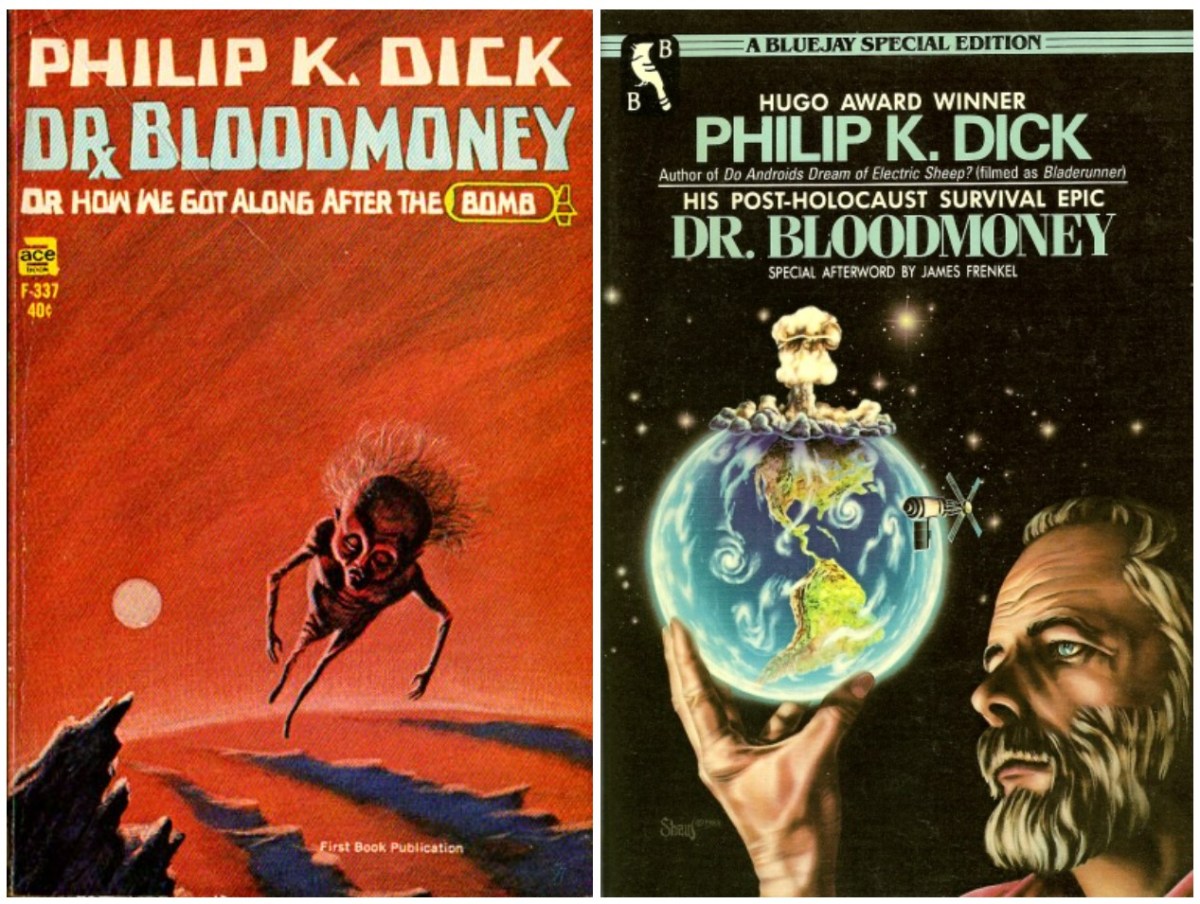
I didn’t plan that Dr. Bloodmoney would be my sixth book to read in 2022. I’m trying very hard to broaden the selection of books I read in 2022> I want to get away from reading so much science fiction. And it’s dangerous for me to start reading too much PKD because it can be like falling into a black hole. I read We Can Build You last week because I was trapped at home without power in an ice storm and I wanted to indulge myself with something purely fun. Researching that review led me down the PKD rabbit hole just a bit. That’s when I read that Dr. Bloodmoney, a novel I’ve never read, is considered one of PKD’s best. I always thought from the cover of the Ace original that it was one of his crappy paperback quickies. Boy was I wrong.

My new tips were right, Dr. Bloodmoney is great. Trigger Warning: Unless you’re a rabid fan of PKD, sometimes known as Dickheads, don’t run out and buy this novel. I know from experience from stories friends have begged me to read that the magic doesn’t always transfer. It’s that magic that I want to talk about. My buddy Mike loves PKD, but I don’t think the Philip K. Dick magic works with any of my other personal friends. I know that Richard Fahey loves PKD because of the comments he leaves on this blog. I also know that there are a fair number of Dickheads out there because the price of PKD’s used books keeps going up and up. But the truth is, I just haven’t met that many fellow fans.

Wikipedia has an excellent biography of PKD and an extensive article on Dr. Bloodmoney. I won’t reiterate what they’ve already done – it’s much better than I could do. No, what I want to describe is why the novel resonates so deeply with my soul. And feel free to leave comments on what writers ring your bell and why. Maybe would-be novelists could pick up some tips.

Dr. Bloodmoney, written in 1963-1964 and published in 1965, is set in San Francisco, Oakland, and Marin County just before the atomic bombs exploded and seven years later. 1965 is one of my favorite years. I consider 1965 the pinnacle year for popular music, and it was the year I read a pile of science fiction that influenced my reading for the rest of my life. I was 12 and 13 in 1964 and 1965. Folks, puberty, and pop culture really do a number on us.

I’ve never been to California, but Dr. Bloodmoney captures the feel I have remembering the 1950s and early 1960s. I was living in Miami at the time, but the people and settings of PKD’s novels written during those years have always reminded me of how people were when I grew up. This is a powerful attraction.

I lived at Homestead, AFB during the Cuban missile crisis, and grew up doing the duck and cover drills in grade school. 1964 was the year that Dr. Strangelove or: How I Learned to Stop Worrying and Love the Bomb and Fail Safe came out, two almost identically plotted stories about atomic bombs. Dick wanted to call his novel In Earth’s Diurnal Course or A Terran Odyssey but Donald Wollheim at Ace wanted to cash in on Dr. Strangelove and titled it, Dr. Bloodmoney, Or Have We Got Along After the Bomb. In years since it’s been shortened to just Dr. Bloodmoney. But the important thing is it captures the fear of WWIII people had back then. The atomic bomb hung over our future like climate change hangs over young people today. That made it a touchstone for me.

The fear of nuclear war inspired a huge number of post-apocalyptic novels. I’ve always loved those stories. Philip K. Dick does something very different than all of them in Dr. Bloodmoney, he imagines American civilization surviving and getting back to normal after WWIII. For all its weirdness, it’s a very positive tale. He imagines people using horses to pull cars and having wood-burning steam engines power trucks. The direction of the novel is to return to a 1950s normalcy – and isn’t that what everyone wants today? And Dick knew of the evils of those years. One of his main characters, Stuart McConchie, is a black man who was just starting to make it as a television salesman when the bombs fell, is among the characters who strived the hardest to bring back personal success. It’s the simple things we wanted out of life back then, that make this novel so appealing now. Then and now, people just want a decent life, a good job, and to be free to pursue their own happiness.

The characters in Dr. Bloodmoney are quite diverse, but their most appealing quality is how much we care about them, even the evil and the deranged. All of them have “I’m just a little person trying to survive” in a big world vibe. Because this is a PKD novel, most of the characters, if not all, suffer various forms of mental illness. Dick suffered from mental illness his whole life and saw it everywhere. Mental illness, delusional thinking, and other psychological struggles are the main themes of all of PKD’s works.

Stuart McConchie, who I’ve already mentioned, undergoes many transformations in this book but could be the sanest person in the story.

Hoppy Harrington was a Thalidomide baby, born without arms and legs. He has psychic powers that he uses at the beginning of the story to get a job as a TV repairman. He rides around in a little cart and has artificial arms. After the bomb, his skills as a handyman becomes vital to the Marin County community, making him a highly respected member of the community. Unfortunately, his need to be loved leads to tragedy. In the novel, he is called a phocomelus, which is a word I thought PKD made up, but Wikipedia says it’s a real condition of people with malformed limbs.

Walter Dangerfield was an astronaut heading to Mars when the bombs fell, leaving him stranded in orbit around Earth. Because his spacecraft had years of supplies, and a huge library of books and music, Dangerfield becomes a disk jockey in orbit, playing music and reading books. Communities around the world live without electricity but jury rig old radios with car batteries to listen to Walt when he passes over. His folky ways tie people together and give them hope. Walt is one of the saner characters too but mentally struggles with loneliness and health problems.

Bonny Keller is a pivotal character who is desired by most men and the lover of many. She is also a leader of the Marin County community, and the mother of two of Dr. Bloodmoney‘s most essential characters, seven-year-old Edie, and her twin brother Bill, who lives inside her as a telepathic homunculus. Bill is in contact with the dead. The other characters think Bill is just Edie’s imaginary friend, but he’s very real. Okay, I did tell you this is one of the strangest novels I’ve ever read? Maybe I didn’t. I have now.

Bruno Bluthgeld, hiding out as Jack Tree because the world knows him as the physicist that caused the 1972 radiation crisis resulting in many human and animal mutations. He’s also assumed to be the cause of the atomic war. Bruno is Dr. Bloodmoney – the rough translation of Bluthgeld. Bruno also has psychic powers and suffers from tremendous paranoia because he believes everyone hates him and wants to assassinate him. Of course, sometimes that is true.

Andrew Gill is a post-apocalyptic entrepreneur. He’s developed a recipe of available plants to replace tobacco and has perfected a much sought-after brandy. When the bombs fell he was riding around in a VW bus. Gill was probably a proto-hippie.

This isn’t half of the characters in Dr. Bloodmoney. They are all wonderfully strange and have their own agenda. Dick is great at presenting little people in science fiction. Science fiction often has big heroes that save the planet, galaxy, or universe. PKD loved little folks that save themselves. Dick even has empathy for his most evil characters. He doesn’t see them as being evil, but enduring forces that are evil.

Philip K. Dick’s stories might be the most filmed of any science fiction author, but quite often the movie characters are nothing like his book characters. PKD loves ordinary people leading ordinary lives encountering the strange. Dr. Bloodmoney is science fiction because of the atomic bombs and post-apocalyptic communities, but it also includes psychic powers, which were common in science fiction in the 1950s, and even the supernatural. Bill and Hoppy are aware of what happens to people after they die, and it’s not just delusions of their insanity. However, the atmosphere of the story feels like mundane characters leading mundane lives, even though they are weirdos in a weird land.

I listened to Dr. Bloodmoney, narrated by Phil Gigante, who does a fantastic job with these characters, giving them each a unique voice. I was totally mesmerized by the story, no matter how fucking strange it got. And it gets very out there indeed. Is the weirdness why we Dickheads love PKD? I don’t know. I tend to believe I love him for his ordinary folks struggling to find meaning in a crazy reality.

The audiobook is available at Audible.com and Scribd.com. If you haven’t read Philip K. Dick, I recommend starting with Dr. Bloodmoney and with listening to the audiobook version.

[I’m going to try very hard to avoid another PKD novel and finish two nonfiction books next, but I can’t promise that for sure. Sometimes another PKD novel is just too enticing.]

JWH
Why It’s So Important to Remember What I Read in 2021

by James Wallace Harris, 12/30/21

Reading is my sixth sense, how I explore the larger reality I can’t observe with my classic five senses. Every year I can only read so many books, making it important to wisely select the novels, nonfiction books, short stories, and articles I do read. Reading changes me. I shape myself by what I read. Each year I work to become more conscious by what I select to read. However, this self-improvement effort is very much like my efforts to eat healthily and avoid junk food. I’m never a saint.

At seventy, my mind is becoming like an old suit with moth holes. Words and thoughts leak out of my consciousness through little missing places eaten away by the moths of time. Remembering is something that’s become very important to me, as much as sex was on my adolescent mind.

The Reading List by Sara Nisha Adams is the 52nd and last book I read in 2021. It’s an accomplishment to read so many books in one year. And 52 is a good number. It means I averaged one book a week, and that’s a nice reading pace.

I’ve always wanted to be one of those superbookworms who could read 100 or 200 books a year, but my mind and memory can’t handle that much new content. I like to think one book a week is what my mind can handle, but I’m probably fooling myself.

52 is probably too many but I’d hate to read less. I feel I did a pretty good job of picking worthwhile reads, ones I still remember reading at the end of the year, but I have to admit, some of them were not necessarily the best books I could have picked. I will try harder next year. The problem is the conflict between reading books that expand my awareness, and books that soothe my soul.

One way to remember the books I read in 2021 is to remember my favorites, the ones I’d recommend. Links are to essays I wrote during the year.

New Fiction

New Nonfiction

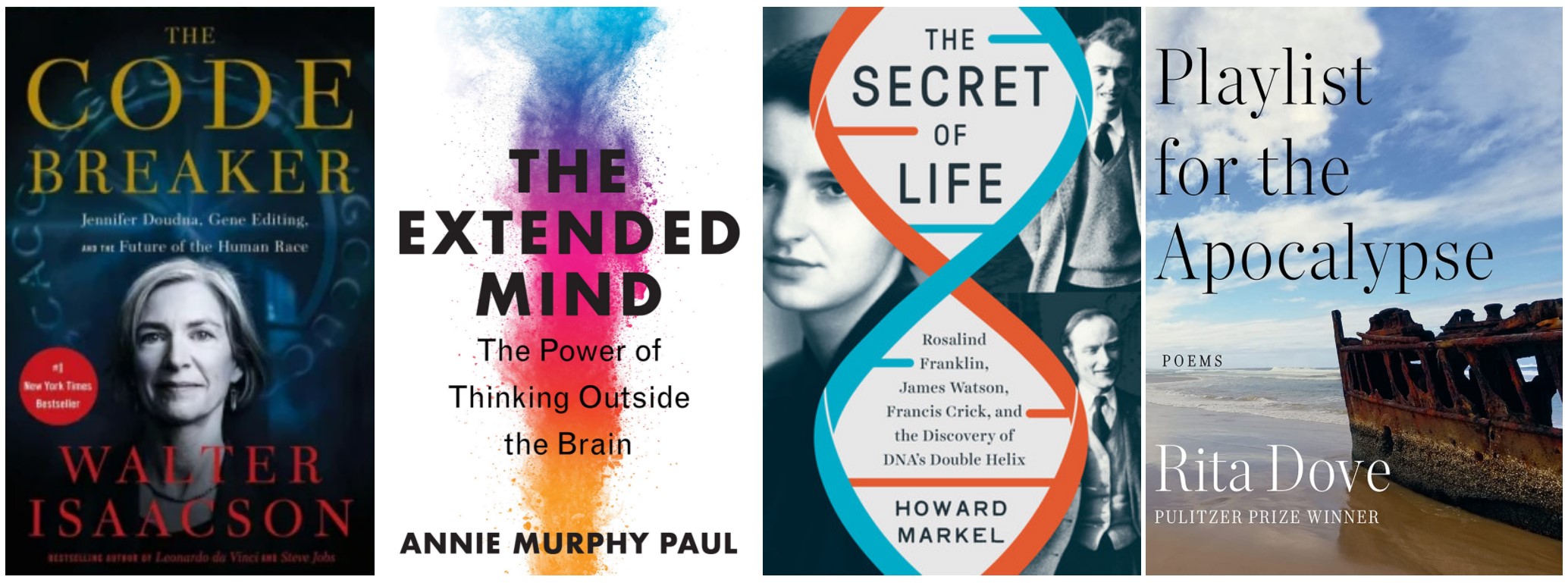
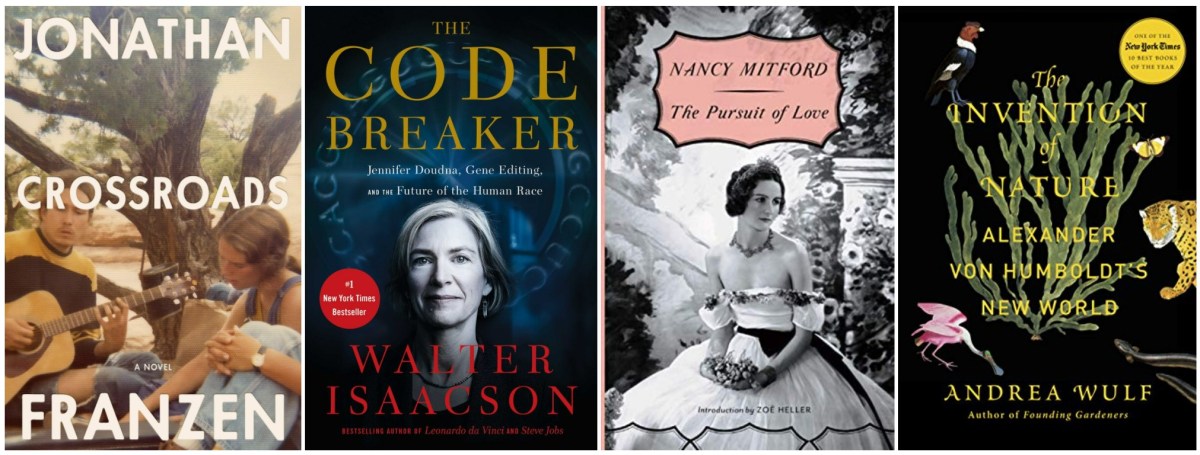
  • The Code Breaker – Walter Isaacson
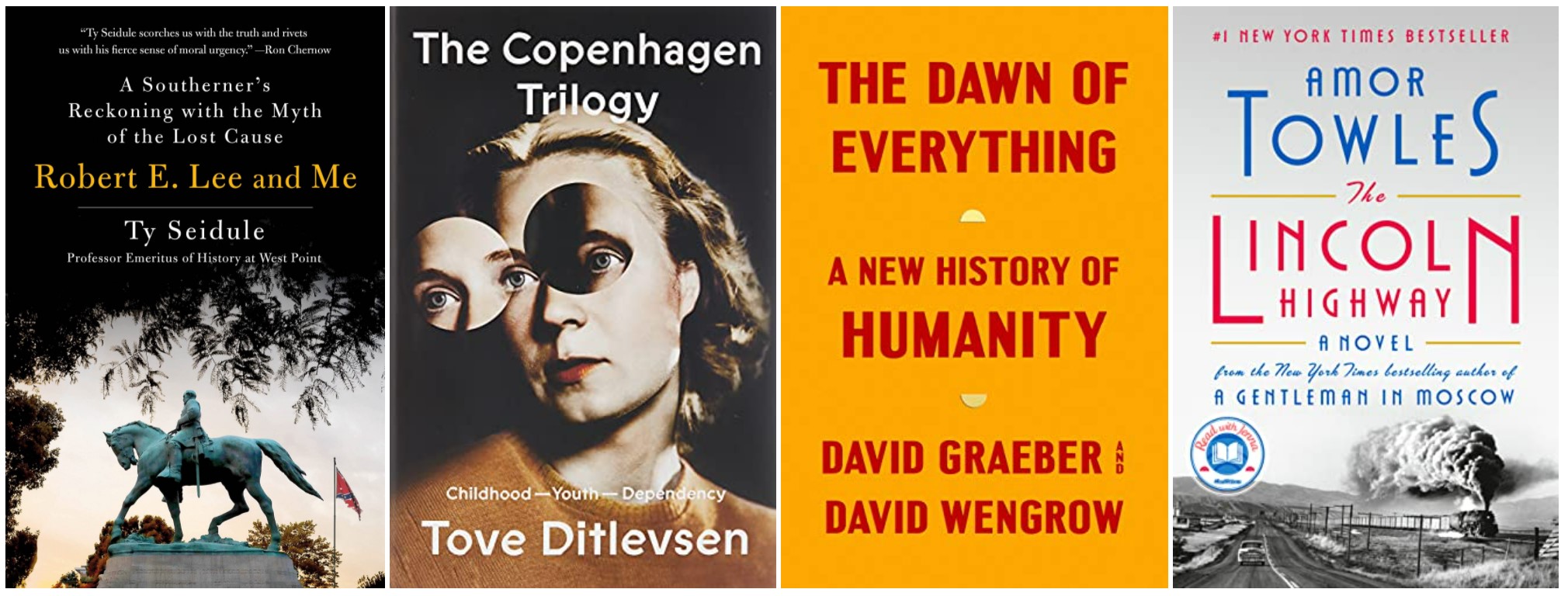
  • Robert E. Lee and Me: A Southerner’s Reckoning with the Myth of the Lost Cause – Ty Seidule
  • Last Best Hope: America in Crisis and Renewal – George Packer
  • The Premonition: A Pandemic Story – Michael Lewis
  • Under a White Sky – Elizabeth Kolbert

Old Fiction

Old Nonfiction

  • The Invention of Nature – Andrea Wulf
  • Evil Geniuses – Kurt Andersen
  • The Art of Dying Well – Katy Butler
  • Hackers – Steven Levy
  • The Sisters – Mary S. Lovell
  • LikeWar: The Weaponization of Social Media by P. W. Singer

Another way to remember is to recall why I read certain books. I’m in a two-person book club with my friend Linda, I’m also a member of an online nonfiction book club, I’m in a Facebook group that reads science fiction anthologies, I have a personal reading goal to read all 25 volumes of The Great SF Stories edited by Isaac Asimov and Martin H. Greenberg, I like to read science fiction novels, I love to read popular science books, and I enjoy reading some contemporary and classic fiction.

Two-Person Book Club With Linda

  • Evil Geniuses: The Unmaking of America – Kurt Andersen
  • Horseman, Pass By – Larry McMurtry
  • 21 Lessons for the 21st Century – Yuval Noah Harari
  • Leaving Cheyenne – Larry McMurtry
  • The Art of Dying Well – Katy Butler
  • Robert E. Lee and Me – Ty Seidule
  • The Code Breaker – Walter Isaacson
  • Elderhood – Louise Aronson
  • Last Best Hope: America in Crisis and Renewal – George Packer
  • Crossroads – Jonathan Franzen
  • The Premonition: A Pandemic Story – Michael Lewis

Linda went on to read several more Larry McMurtry books, but I just couldn’t keep up with her.

Online Nonfiction Book Club

  • Underland: A Deep Time Journey – Robert MacFarlane
  • The Sisters – Mary S. Lovell
  • Robert E. Lee and Me – Ty Seidule
  • The Invention of Nature – Andrea Wulf
  • Noise (didn’t finish) –
  • Uncanny Valley (read in 2020) – Anna Weiner
  • Ten Lessons for a Post-Pandemic World –  Fareed Zakariia (didn’t finish)
  • Fermat’s Enigma – Simon Singh (didn’t finish)

I had read The Sisters, Uncanny Valley, and The Invention of Nature on my own and nominated those books. I skipped four books this year: Entangled Life by Merlin Sheldrake, Forgetting by Scott A. Small, Kindred by Rebecca Waggs Sykes, A Promised Land by Barack Obama.

Nonfiction I Picked

  • Hackers – Steven Levy (reread)
  • Yesterday’s Tomorrows – Mike Ashley
  • LikeWar: The Weaponization of Social Media – P. W. Singer
  • A People’s History of Computing in the United States – Joy Lis Rankin
  • Fifth Avenue, 5 A.M. – Sam Wasson

I love reading about the history of computers, and the history of science fiction. Fifth Avenue, 5 A.M. is about the making of Breakfast at Tiffany’s. I also love reading about pop culture history.

Facebook Group – Best Science Fiction and Fantasy Short Fiction

  • Year’s Best SF 1 – ed. David Hartwell
  • Orbit 1 – ed. Damon Knight
  • The Very Best of the Best ed. Gardner Dozois
  • The Year’s Best S-F, 5th Annual Edition – Judith Merril
  • The Dark Side – ed. Damon Knight
  • World’s Best Science Fiction 1968 – ed. Donald Wollheim
  • The New Space Opera ed. Gardner Dozois
  • The Year’s Best Science Fiction 3rd Annual – ed. Gardner Dozois
  • The Big Book of Science Fiction – ed. Ann and Jeff VanderMeer (58% finished)

This group gets me to read a great deal of science fiction short stories. We discuss one short story a day, but I don’t read every day’s story. Still, probably over 200 stories. I really enjoy this group, and I’m learning a tremendous lot about the history of short science fiction. I’ve probably read over 400 short stories this year because of other SF anthologies and magazines I read on my own.

The Great SF Stories

  • The Great SF Stories 16 (1954) – ed. Asimov/Greenberg
  • The Great SF Stories 17 (1955) – ed. Asimov/Greenberg
  • The Great SF Stories 18 (1965) – ed. Asimov/Greenberg

I’ve been working through this 25-volume series since 2018. I’ve become immensely fond of this series. It’s a shame they are out of print. I own all twenty-five in paperback, but I read them on my iPad from pdf copies found on the internet. I keep hoping the Facebook group to vote to read the entire run. We do start volume 25 on the 29th of this month. I’d love to finish off the series in 2022, but that would be reading 7 more volumes in 2022 and that probably won’t happen.

Science Fiction

  • The Ministry of the Future – Kim Stanley Robinson
  • The Man Who Fell to Earth – Walter Tevis
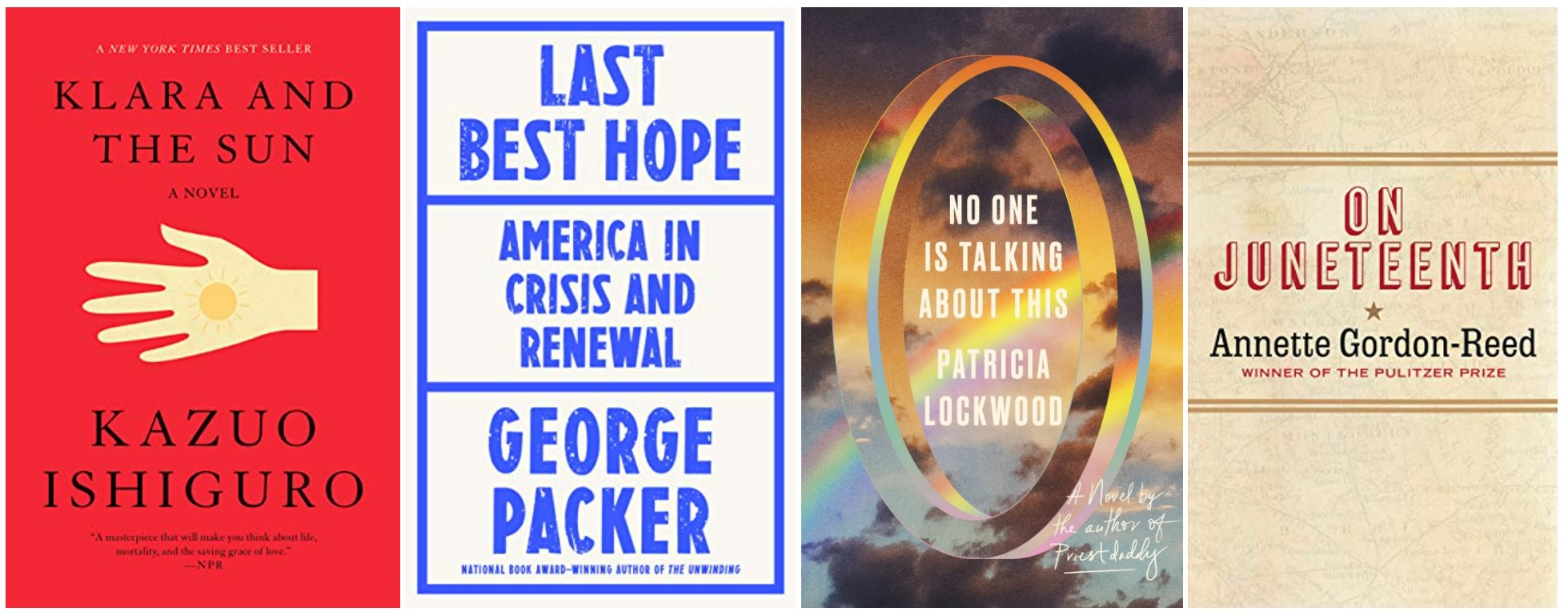
  • Klara and the Sun – Kazuo Ishiguro
  • Children of Ruin – Adrian Tchaikovsky
  • The Clockwork Man – E. V. Odle
  • Past Master – R. A. Lafferty
  • Of Men and Monsters – William Tenn
  • Lords of the Psychon – Daniel F. Galouye
  • The Dying Earth – Jack Vance
  • The War of the Worlds – H. G. Wells
  • Danny Dunn and the Anti-Gravity Paint – Abrashkin & Williams
  • A Gift of Time – Jerry Merritt
  • The Best of Walter M. Miller, Jr. – Walter M. Miller, Jr.
  • To Say Nothing of the Dog – Connie Willis

That’s a total of 26 science fiction books. Far more science fiction than I believe I should be reading. Each year I tell myself I should read less science fiction and more other kinds of books, but I can’t seem to break my life-long science fiction addiction.

General Fiction

  • Horseman, Pass By – Larry McMurtry
  • Leaving Cheyenne – Larry McMurtry
  • The Girl on the Boat – P. G. Wodehouse
  • The Pursuit of Love – Nancy Mitford
  • Love in a Cold Climate – Nancy Mitford
  • Don’t Tell Alfred – Nancy Mitford
  • Crossroads – Jonathan Franzen
  • The Corrections – Jonathan Franzen
  • The Reading List – Sara Nisha Adams

I’m disappointed that I didn’t read a new 19th-century classic. Last year I read War and Peace. I did read The War of the Worlds, but I’ve read it a couple of times before. I had planned to read Madame Bovery.

2021 Books

  • Klara and the Sun – Kazuo Ishiguro
  • Yesterday’s Tomorrows – Mike Ashley
  • Robert E. Lee and Me – Ty Seidule
  • The Code Breaker – Walter Isaacson
  • Last Best Hope – George Packer
  • Crossroads – Jonathan Franzen
  • The Premonition – Michael Lewis
  • Under a White Sky – Elizabeth Kolbert
  • The Reading List – Sara Nisha Adams

Each year I aim to read a certain number of books that come out during the year. Nine is pretty good for 2021, but I’m going to aim for 12 in 2022.

JWH

Identifying the Best Books from 2021 to Read in 2022

by James Wallace Harris, 12/18/21

December is the time when we get loads of best-books-of-the-year lists. I enjoy looking at all those lists because I love finding the books that are the most recommended. I can’t read everything. I can’t even read everything that’s great.

I’m lucky to read 4-6 new books as they come out during the year, and sometimes they are among the ones critics have loved. That’s satisfying. For any given year I probably read 10-12 of its best books, that’s including fiction and nonfiction. That’s out of thousands of books published each year, so I get a microscopic sampling of books published. That’s why I work to find the best books, and by best, I mean the most talked about, the most recommended, the most newsworthy books.

I read on average one book a week, or 52 books a year. Most of them are older books, usually from the 20th century, sometimes from the 19th, and on rare occasions even older. I don’t want my head stuck completely in the past, so I try to read 10-12 books each year from the most recent two years. I usually discover a handful of books as they appear during the year, and then identify several more to read in the following year from the end-of-the-year lists.

Over time I’m discovering the most useful best-of-the-year lists. Here are the lists I’m using this year:

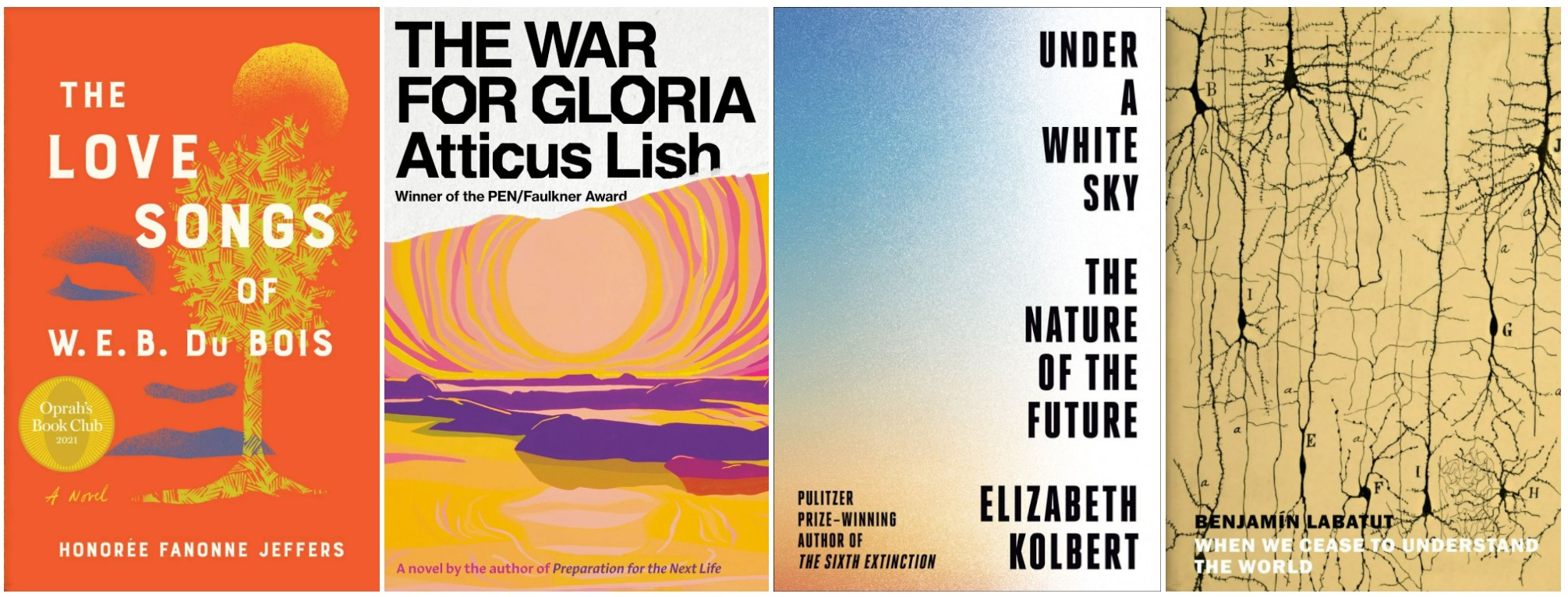
Books We Love – NPR. NPR lists over 2,800 books, but they provide a filtering system to help you zero in on the ones you might prefer. Their site has yearly lists back through 2013. Just the button for Staff Picks lists 179 books, that’s way too many. What I do is study the covers. And then go on to other best-of-the-year lists. It’s like the old TV quiz show Concentration, I try to spot covers again from memory. But instead of finding the pair, I try to find covers that are shown on the most lists.

Of their Staff Picks I’ve already discovered the following during 2021:

New York Times Critics’ Top Books of 2021. This is another very long list. But they also offer another shorter list, The 10 Best Books of 2021. Sadly, the long list doesn’t include cover photos, so it’s harder to play my Concentration cover game, so reading the short paragraphs about them is important. And The New York Times even offers an even longer list, 100 Notable Books of 2021, this time with covers. The critics at the Times picked many of the books the NPR critics picked, and many books I’ve already heard some word of mouth. These are the ones I want to try so far:

Vogue, Vulture, and Time have recommendations that are often similar to NPR and The New York Times. Time also recommends another book I’ve already read: The Code Breaker by Walter Isaacson. That makes me feel I did pretty good finding books coming out during 2021. And they recommend Empire of Pain: The Secret History of the Sackler Dynasty by Patrick Radden Keefe that’s been on most of these lists. I’m just not interested in that subject, but with so many recommendations I feel maybe I should try it. These lists also reinforce the books I list above that I already want to read.

Publishers Weekly has a website system like NPR that recommends way too many books to consider but has a filter system to narrow things down by genre and interest. Their database goes back to 2010, and their lists have links to the original reviews. Once again I’m seeing the same covers of books I’ve been wanting to read, but I’ve spotted two additional books to add to my list from their Top Ten List: All That She Carried: The Journey of Ashley’s Sack, A Black Family Keepsake by Tiya Miles and The War For Gloria by Atticus Lish. I’ve been remembering those two covers from the lists I’ve been seeing, and their descriptions are enticing.

I believe I’ve found a total of 23 books from 2021 that interested me most, and I’ve already read 7 of them. That leaves 16. I doubt I’ll get all 23 books read in the coming year. It depends on how many 2022 books attract my attention first, or how mired in the past I become. If I read all 23 that will double my normal current book consumption habit.

There is one last list to mention, Goodreads Choice Awards 2021. These are voted by members of Goodreads. Sometimes the bookworms pick the same books as the critics, and sometimes not. However, this list at Goodreads uncovers a lot more fun genre titles.

Lastly, I’ve discovered that if I keep these recommended novels in mind, sometimes they appear in sales at Bookbub, or in the Kindle Daily Deal, or on Audible. Also, many of them come to Scribd, a book subscription library. I think of Scridb as Netflix for books. Five of the sixteen books I want to read are already available at Scribd. It’s a bargain at $9.99 a month.

JWH

Which Came First – the Emotion or the Hormone?

by James Wallace Harris, 3/26/21

This essay began when I asked myself: Do emotional states stimulate hormone production or do hormones flowing first cause us to experience an emotional state? Does happiness increase energy, or does energy increase happiness? Our mental, emotional, and physical states are all interconnected. As I get older I’m trying to figure out how to increase all three even though aging seems to be reducing them equally. I’m wondering if working on any of the three will cause a corresponding increase in the others.

Eventually, we all go looking for the Fountain of Youth. Some want to look younger, others like myself, want to feel younger. I quit believing in magic when I was a kid, so whatever is the source of vitality it should be discoverable by scientific observation. My current amateur theory is youth and vitality come from chemistry, but I also assume aging affects the efficiency of the chemical processes in our bodies.

Most people want to believe in mind over matter, but is there any evidence to support that belief? Can positive thinking overcome entropy? Or do positive thoughts come from robust chemistry? We all know hyperactive oldsters, but does their energy come from force of will or thriving endocrinology? If we’re low energy beings because of our wimpy hormonal system, can we fertilize them with right thinking, positive emotions, or good eating?

I’m pushing myself to write this essay. The whole time while I’m writing part me is begging to be allowed to go eat and watch television. But I’m still writing. Is that because willpower has empowered by want, or is it because I stoked my chemical furnace with good food and a nap this afternoon?

Does our state of mind set hormones in action that create our feelings, or do hormones generate our feelings which dictate our state of minds? Lately, I’ve been trying to observe my feelings and mental states. I’ve even wondered if changes in my brain chemistry in the past year is making me more aware of my feelings and thoughts. Other reasons for increased contemplation is I’m feeling old, tired, and worn out, so I’m spending more time just relaxing, and that’s leading to increase cogitation and self awareness, but not productivity.

What I want is to be more active. I can’t tell if that’s wishful thinking since I’m turning seventy this year and decrease activity is natural with aging, or if I could be more active if I thought the right thoughts, or felt the right emotions.

Has the stress of living a year in pandemic isolation drained my vitality or is my diminished energy just coinciding with normal aging? Life is complicated. There are no quick and easy answers. However, I’m not ready to give up. I’ve been retired from work since 2013 and easy living might also be a factor in my decline. Of course, we do have to be logical. How many aging people gain youthful vitality as they progress in years? How many retired people start doing more?

I’ve never thought of myself as an emotional person. Whenever I’ve seen people getting wildly excited at parties, sporting events, and rock concerts I wondered why I wasn’t jumping up and down and yelling too. I’ve always considered myself a happy person because I don’t get depressed. But then I don’t get exuberant either. If I was more emotional would that give me more energy?

I can energize myself somewhat by artificial means. I gave up drugs a half century ago. I’m slightly tempted again because old age seems like the perfect time for uppers and cocaine, but I know that would only accelerate my decline. I also gave up caffeine decades ago for mental clarity. And in recent months I’ve given up refined sugar, which might explain my current low mental states. But I’m also feeling better physically since I gave up sugar, and I’m losing weight, so I hope in the long run eating healthier will translate into more mental energy.

When I said I could energize myself artificially, I meant with music, books, movies, and television shows. Sometimes a nap and some good music leads to gung-ho thinking that inspires actual activity. Or has my lunch digested while I slept stimulating hormone flow leading to roused thoughts and finally feeling inspired to get up and do something? It’s a subtle distinction.

Whatever refuels my tank doesn’t do it for long.

For example, when I play “Here Comes the Dawn Again” by Billy Vera and the Beaters real loud, I feel physically stimulated. That also turns up the flow of emotions.Then my thinking speeds up. After that I feel like getting up and doing something. Has music increased hormone activity? Or did music increase my thinking which increased hormone activity? Is this a bit of evidence for the power of positive thinking?

Writing this essay is energizing me – to a degree. I can’t quite call it a jolt of youthfulness. I also feel myself draining my battery as I write. I wish drugs weren’t so self-destructive because I feel like doing a Kerouac and chewing benzedrine cotton from a broken inhaler to write more.

Now that I’m older I feel more emotional, but still not highly exaggerated emotions like I see in other people. We all have different levels of energy and emotions. Are highly emotional people more active people? I have observed that some of the most emotional people I know are also the most active.

Instead of mind over matter, could it be emotions over matter? Or is there a direct relationship, more emotions means more mental activity? If that’s so I’ll have to find a way to increase both. However, I’m still trying to decide if more mental activity increases emotions, or if more emotions increase mental activity.

JWH

Finally Finished War and Peace – But Do I Recommend It?

by James Wallace Harris, Monday, December 28, 2020

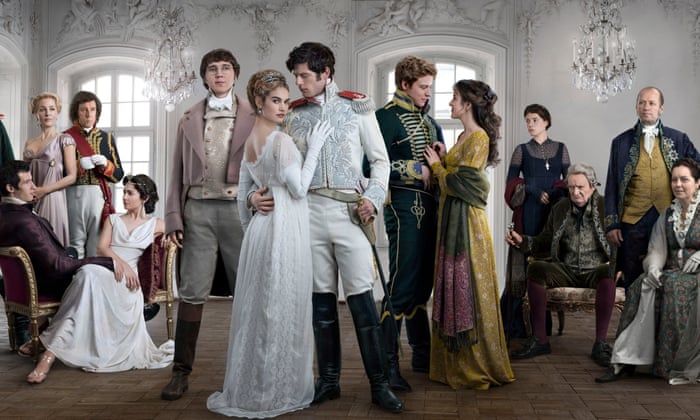
I began reading War and Peace (1869) by Leo Tolstoy back in April after watching and reviewing a recent 6-part BBC miniseries (2016) based on the book. I finished about forty percent of the novel and then stopped reading it in early summer. Then a couple weeks ago I decided I needed to finish it before the year was out. Every year I read one literary classic, and I had promised myself that War and Peace was going to be my 2020 read. War and Peace is currently #7 on The Greatest Books list. It did make an excellent companion to 2020, and illuminated the present with the past.

As I mentioned in my earlier review, War and Peace reminds me of Jane Austen because it’s set from 1805-1812 (plus epilogue 1813-1820), which was around the time Jane Austen was writing her famous novels. War and Peace has always been intimidating for his size – 55 hours and 30 minutes on audio, and 1,300+ pages in teeny tiny print. That’s almost like listening/reading all six of Jane Austen’s novels together. The plot and characterizations of War and Peace is about as complicated as reading all the Austen novels by round robin her novels chapter by chater.

That wouldn’t bother some readers, however, War and Peace mixes in countless pages of Tolstoy pontificating about war, power, military command, freedom, history, free will, leadership, etc., and I’m afraid that could turn them off. Thus it makes for a hard novel to recommend emphatically.

War and Peace wasn’t hard to read. Many people have asked me about that. Yes, the Russian names are problematic, but I think it helped that I watched the BBC series first, and watched the Russian language Mosfilm version that was released as four films over two years (1966-1967) while I was reading the book. Those four films of War and Peace are currently available on HBO Max.

My friends also ask me if War and Peace is worth all the trouble to read. When I’ve mentioned to folks that I was reading it, many reacted like I was doing something yucky. It’s actually a wonderful novel, quite philosophical, but mainly about romances within large aristocratic families during the Napoleonic Wars. If you’re a fan of Downton Abbey or Jane Austen, just imagine that kind of story on a much bigger scale with two epic battles, and the downfall of an emperor thrown in. I enjoyed the war parts, but I’m not sure if most readers will.

Again, I’m reminded of Jane Austen. Much of the book is about life and love among the aristocratic which is very similar to Austen. However, in Austen, the men go off to the Napoleonic wars but we’re never told of their experiences. In Tolstoy we are, and it’s important. The men are shaped by their experiences in battle, and two of them have intense spiritual conversions. War and Peace gives us the men’s view of the age, whereas Austen gave us the women’s.

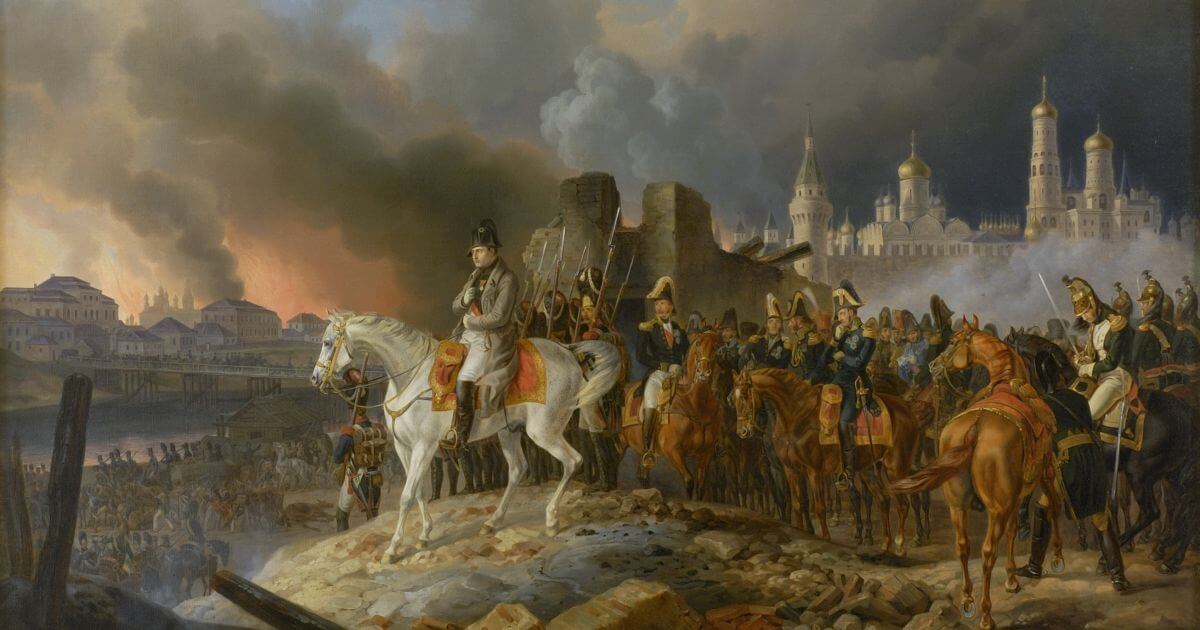
I’ve never really understood Napoleon before. While reading this novel I went and read the entry at Wikipedia about Napoleon, which was very informative. But I actually believe Tolstoy gives a much better picture of this historical figure, even though Tolstoy obviously wanted to write his novel to give a revisionist assessment of Napoleon. I still don’t know enough history to know if Tolstoy is accurate or not, or even if he’s doing hatchet job on the man.

I have to admit that I wished that Tolstoy had published his soapboxing as a separate nonfiction supplement to his novel. It’s quite fascinating to hear Tolstoy’s 1860s knowledge of the sciences, including the new ideas about evolution, applied to events and people. Tolstoy is impressive in his insights, even by 21st century standards. I even used some of them to see Donald Trump in a new light. By the way, I was completely surprised by how important the French language was to Russian aristocrats at the time. I’ve always imagined Russia being very isolated from the rest of Europe.

On the other hand, I was always anxious to get back to the story, and I always wanted to know more about the characters, of which there were too many to chronicle here. Pierre was my favorite, but then he is much like Levin from Anna Karenina, my favorite character in that novel. In both cases, I wondered if those characters were stand ins for Tolstoy himself?

Still, do I recommend this monster of a novel? I am very glad I read War and Peace, and I found it very compelling, but it requires a tremendous commitment. I’m not sure I will ever try to reread it, but I think I will dip into every now and then. Some scenes and chapters are exquisite.

I can recommend reading War and Peace to anyone who loves 19th literature, to anyone who dreams of becoming a writer, or to anyone to enjoys finding philosophy entwined with fiction.

By the way, it’s quite cheap to try War and Peace since it’s in the public domain. Get a free Kindle copy. If you get hooked keep reading. I enjoyed reading it and listening to it on audio. My Kindle edition let me switch back and forth instantly.

JWH