The Good Book by David Plotz

The full title of David Plotz’s 2009 book is:  Good Book: The Bizarre, Hilarious, Disturbing, Marvelous, and Inspiring Things I Learned when I Read Every Single Word of the Bible.  Now anyone who regularly reads my blog knows I’m an atheist, so you must be asking, why the hell is Jim reading a book about the Bible?  Well, for the last few years I’ve taken a little time now and then to either read the Bible or read about it, and it’s very rewarding, but just not in a religious way.  You might even say it adds to my spiritual development, and I do feel like I have a spiritual side, it’s just atheistic.
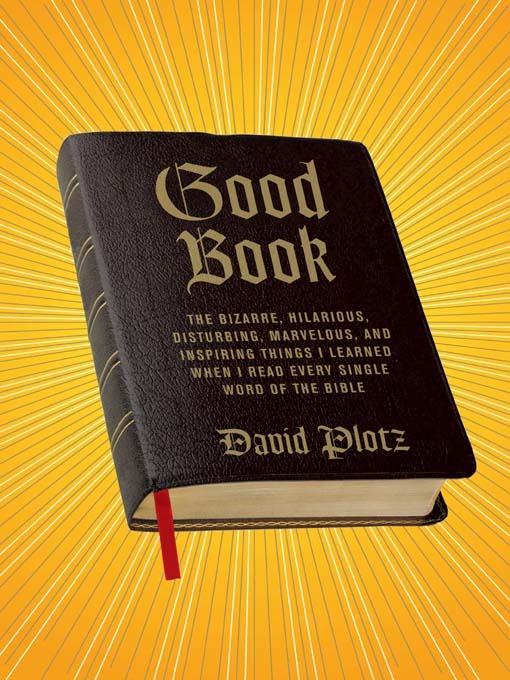
good-book-image

However, to be more down to Earth, I have to say unequivocally:  to understand western history and literature requires studying the Bible.  Not only that, to understand the psychology of the modern religious person requires a thorough knowledge of the Bible.  Moreover, I think knowledge of the Bible shines a light on contemporary politics.

The Good Book by David Plotz is a quick, informal, but skeptical overview of the Old Testament.  Plotz is Jewish, but not a religious man, but I think he still wants to believe in God, and has some religious affinities, at least far more than I do.  Plotz just wanted to read the Bible to understand his cultural heritage and ended up blogging about it over at Slate in a series called Blogging the Bible.  Read some of his posts to get a feel for his style, or even read the entire series online if you don’t feel like buying the book.  The blog isn’t the book, and I recommend the book if you’re willing to buy it.  I listened to an audio book edition read by Plotz.  Think of the Good Book as a hip Cliff Notes summary of the Bible from a Jewish guy that has a light, if not humorous touch.

Most people have never read the Bible from start to finish.  It’s long, and has lots of boring bits, and despite what fundamentalists believe, is full of inconsistencies, contradictions and surprising unspiritual stories.  Plotz gives a Reader’s Digest overview that’s surprisingly entertaining.  And like most people who try to read the Bible from cover to cover, Plotz is shocked by what he finds.  Not to give away the ending, but Plotz concludes that value of the Bible is in coming to grips with its messy parts, of which there are many.

Plotz’s Good Book is an entertaining flyover of the Bible that doesn’t take sides.  He doesn’t go very deep, but just summarizes what he’s read and gives his personal reactions.  I was hoping to learn more about Judaism but Plotz doesn’t digress too deep into that territory either.  He’s familiar enough with Christianity and the New Testament to point out passages that foreshadow things to come but he doesn’t really explore how the Bible is different for the two religions.  This is not a deep book, but a case for Bible literacy.

Everyone who reads the Bible has their own interpretations, but I like studying the Bible as history, and Bart D. Ehrman is my main guru for this approach.  Religious people like to read the Bible for messages, but I like to read it as a historical and literary puzzle.  Now that’s a black hole as big as trying to understand Shakespeare, but it’s still fun.  For example, here’s a textual problem.  There are two accounts of creation in the Book of Genesis, and they don’t match up.  Plotz points that out but doesn’t question it too deeply, but I want to know why.

Wanting to know why makes you want to read more, and that’s why I like Ehrman.  I wished that Ehrman wrote books about the Old Testament too, because his series of books on the New Testament goes deeper and deeper.  Ehrman grew up as an Evangelical and attended the Moody Bible Institute seeking more knowledge.  He kept seeking and got his Ph.D. at Princeton Theological Seminary.  He’s a guy that’s on a quest to know the truth.  What he’s ended up researching is who wrote the various books of the New Testament and why.  And reading David Plotz’s book makes me want to know the same about the Old Testament.

For example here’s my untrained guess about the two descriptions of creations in Genesis.  Long ago stories weren’t written down but memorized and spoken.  Eventually some people took up writing, and the creation tales were written down at different times by different people, and by then the stories had diverge.  For some reason when the editors of the Bible found both they included them both.  The really should have edited the two into one story though, but they probably hated throwing anything away.

The thing about the Old Testament is it’s a collection of short stories, mixed in with some history, genealogy, directions for building a temple, dietary rules and commandments from God.  It’s a real hodgepodge of ancient documents thrown together that could have used a lot of editing.  The best parts of the Bible are the stories, and as Plotz points out, they aren’t exactly political correct stories either.  There is very little in the Old Testament about being spiritually good, and often the good guys are rather bad.  So what do we make of all this?

I tend to think the Old Testament wasn’t really about God all that much, but about building the first Jewish nation, so instead of Paul Bunyan we have David and instead of Sacagawea we have Esther.  And the reason why there are so many inconsistencies in the Bible is because it was written over centuries by who knows how many different authors.  The Old Testament doesn’t promise everlasting life, salvation, or heaven.  Your soul isn’t on the line like it is in the New Testament.  God doesn’t ask much other than obedience and doesn’t promise much other than safety from being blasted by his wrath.

One thing Plotz points out time and again is how often the stories have been sanitized for retelling  to children in Bible schools.   And many of the stories have an ax to grind, like the spin Fox News puts on its stories.   Many stories are political stories trying to make a point, and often they are rather heavy handed.  If you don’t feel like reading the whole Bible, I recommend reading this book, or one like it.  The Bible is not as mysterious as it seems.  It’s less about up there and a whole lot more about down here.

JWH – 3/29/11 

Among Others by Jo Walton

My friend Carl first convinced me to read Among Others by Jo Walton with his blog review.  He loves Among Others so much that he’s immediately rereading it, this time aloud to his wife.  To further explain why the book is so important to him, he compares the story to the friends he’s made in the Classic Science Fiction Book Club in his post “A Karass.”  With that kind of personal impact how could I not immediately go buy a copy and read it – which is exactly what I did.

Jo Walton has written a creative fictionalized memoir about two troubled years in the life of Morweena Phelps, that may or may not be autobiographical with her own life.  Mori, as she wants to be known to her friends, loves libraries and reading, especially science fiction and fantasy, and uses books to stabilize her connection with reality, which strangely enough includes fairies and  magic.  Mori  is psychologically damaged by family tragedies and through making friends with other science fiction fans begins a healing process.  I can completely identify with Mori from my own teen years as a bookworm.  I had alcoholic parents that should have made me remember growing up as a miserable time, but I don’t.  I loved childhood because I used science fiction to create my own happiness and stability.

among-others-hc-final

I say it’s a fictionalized memoir because Among Others is written as a diary starting Wednesday 5th September 1979 and runs through Wednesday 20th February 1980, with a tantalizing glimpse from 1975 as an intro.  It feels like a real memoir except that in Mori’s world magic is real, or is it?  Morwenna Phelps, Walton’s alter ego, has the ability to use magic to influence people and talk to fairies.  Phelps, like Walton comes from Wales, but is forced to attend a boarding school in England.  The fictional story is about a young girl running away from her mother after her twin is killed and living with her estranged father.  Mori is a bookworm of the first order, and is pleasantly surprised to find that her father is a science fiction fan with a large library.  As an emotional outsider, Mori has trouble getting close to people until she meets a small group of science fiction fans that meet at a library near her posh boarding school.

Now, this is how I grew up, being an outcast until I met other SF fans, and how many science fiction fans also grew up.  Aren’t we all outcasts until we meet our others?  To make Among Others even more endearing to the science fiction and fantasy fan, Mori liberally references the books she and her friends are reading, and all too often I have read these books.  And I felt particularly close to her when refers to Empire Star by Samuel R. Delany several times as one of her favorites.  It’s a particular favorite of mine too.  Walton has a blog at Tor.com where she’s written over 500 posts, most of them reviewing SF/F books, including Empire Star.

I recommend reading Among Others if you are a science fiction fan, or are a hardcore bookworm, or if you grew up as an outsider.  And after you read Among Others, I recommend that you should follow Walton’s Live Journal blog where she talks about her writing, reactions to this book, and even gives sales information.  So far she’s sold 864 copies.   Walton also maintains a FAQ about Among Others, where visitors can post questions and comments.  This all makes for a wonderful meta-fiction quality to the story.  It’s sort of like the literary fun of finding the James Joyce in Stephen Dedalus.

Like Carl, I’m already ready to reread Among Others, but I’m hoping for an audio book edition.  Science fiction is often accused of being very unliterary, and Among Others is a literary look at science fiction and fantasy readers.  And for me the very best way to appreciate writing is by listening to it read by a great narrator.  I don’t know if Walton is successful enough yet to have her books to come out on audio, but the buzz this book is getting should help.  Audible, are you listening?

JWH – 2/13/11

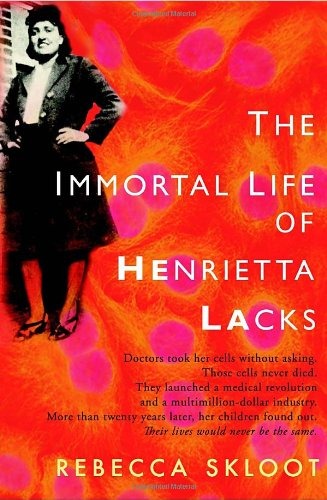
The Immortal Life of Henrietta Lacks by Rebecca Skloot

Rebecca Skloot has written a masterpiece with The Immortal Life of Henrietta Lacks, a nonfiction book that’s about, well, that’s another story, because it’s not a biography, but it is about Henrietta Lacks, it’s not a memoir, although Rebecca’s story is integral to the narrative, and it’s not a science book, even though The Immortal Life of Henrietta Lacks is about the impact of cell culture on our lives.  More than anything I think this book is about storytelling, and to understand why I say that means explaining the emerging genre of creative nonfiction.

the-immortal-life-of-henrietta-lacks-by-rebecca-skloot

Rebecca Skloot has a MFA in Creative Nonfiction Writing from the University of Pittsburgh, and has taught Creative Nonfiction at the University of Memphis.  Creative nonfiction uses techniques borrowed from fiction to tell a true, nonfictional story.  Creative nonfiction walks a delicate ethical line because in presenting the facts more engagingly and creatively writers sometimes step over the line into fiction.  To combat this, writers often put themselves into the story to explain how they acquires their facts, and thus they become part of the story themselves.  The first book I remember using these techniques was The Electric Kool-Aid Acid Test by Tom Wolfe that I read back in the 1960s.  Wolfe called it new journalism back then.

Now I’m going to be upfront here and state that my goal in writing this essay is to get you to read The Immortal Life of Henrietta Lacks.  And to be perfectly honest, I do have several obstacles to overcome before I convince you to go out and buy this book.  The Immortal Life of Henrietta Lacks is about so many different things, working at so many different levels that it’s hard to describe.  I could just tell you to go Google “Best Books of 2010” and you’ll find Skloot’s book on many people’s list of best books of 2010, and let you read their praises.  But I don’t think that’s good enough.  I think I need to offer some specific hooks.

Immortality

Most people want to be immortal, and like Woody Allen, most people would prefer the kind of immortality where we just didn’t die.  Religious folk have the promise of heaven, but us skeptical people must live with a kind of shadowy immortality, of just being remembered.  On the surface, The Immortal Life of Henrietta Lacks is about her cancer cells, called HeLa, that were cultured in 1951 and are still living today.  HeLa cells are the first line of immortal cells, and that’s one thrilling scientific aspect of this book.

However, the book deals with other kinds of immortality too, in different layers of this story, which is why I love this story so much.

  • In the process of writing this book Skloot shows what’s left of a person after they die.  For Henrietta Lacks, that wasn’t much, a hank of hair in an old Bible, a couple photos, an unmark grave, a handful family stories and, medical records.  Have you ever wondered how much of our lives are left in moldy files and computers digits?
  • The traditional down to Earth road to immortality is by having children, and Henrietta had five, and Skloot spends years getting to know them, which gives this book heart.
  • Some people seek immortality through creative work, but sadly Henrietta didn’t.  She never knew of her great accomplishments, which accidently turn out to be astounding.
  • A few people are remembered because people write about them, and Rebecca Skloot has written a book that should last a long time.  Most nonfiction books have short lifespans, but I think The Immortal Life of Henrietta Lacks should have the same kind of longevity as Rachel Carson’s Silent Spring.
  • Finally, Henrietta herself didn’t live forever, but one strain of her cancer cells did.  They went on to revolutionize science and medical research, and this is the science part of Rebecca’s book that should amaze readers.  I read a lot of science books and I didn’t know about HeLa cells.

Medical Misconduct

At another level The Immortal Life of Henrietta Lacks is a series of indictments against medical research, with some of the charges being historically horrifying, especially the stories about medical experiments done on institutionalize African Americans.  Henrietta Lacks died in 1951, the same year I was born, so in my lifetime the changes in patient rights have been dramatic.  Yet I wonder, are there research procedures used today that in another fifty years will horrify our descendants?

I don’t want to go into the specifics of what Skloot reports because it would spoil the reading of her story.  Let’s just say what happens to this one family is shocking.  HBO and Oprah Winfrey are working on a film version of this story and I’m curious how they are going to dramatize it.  I wonder if they follow the creative nonfiction structure Skloot has created, or if the film people will go linear and try to reenact the 1951 for the Lacks and follow her daughter Elsie, and her life at Crownville Hospital Center.

How the mentally ill are treated in America is a story our society has always kept hidden, and even in The Immortal Life of Henrietta Lacks, Skloot only touches the peripheral.   Today this nightmare is still hidden away.  We cleaned out the insane asylums, only to let the mentally ill fend for themselves on the street, and now they fill our jails.  At least I hope we’re no longer using the mentally ill for medical research.

Privacy and Informed Consent

In 1951 there was no informed consent laws, or HIPAA.  Henrietta’s doctor just took a sample of cancer without asking and gave them to George Gey at Johns Hopkins University, and Gey cultured them and gave them away to other researchers.  Skloot chronicles their scientific legacy in this book, and it was only by accident that we know the cells came from Henrietta Lacks, which provides half the human side of her story.  The other half is how her family reacted to learning decades later that their mother’s cells were still alive and that millions were being made selling them for research.  If Gey had preserved the patient’s privacy, Skloot’s book would have been far different.  It’s strictly a whim of fate that this scientific story is tied to the tragic human story of the Lacks.

Whose Story is Being Told?

In classes for fiction writing, when critiquing stories, we often ask, “Whose story is it?”  The Immortal Life of Henrietta Lacks is about five people, Henrietta, Elsie, Deborah, Zakariyya, and Rebecca.  Skloot spent over a decade researching and writing this story and she is also one of the main characters.  She tries to stay out of the way, but her bravery and determination shows through.  This is a great book for people who want to  learn how to write non-fiction books.  It takes tremendous dedication.

Why Is This Book So Good?

There’s lots of great books to be read, so why should you pick this one?  I’m in two book clubs that selected this book for their monthly discussion, and for the most part everyone has been tremendously moved by this story.  Partly this is due to the story and Skloot’s storytelling skills, but another part is due to reading about something very novel, and that makes it exciting.  There are many lessons to be learned from this story too, but the most important is about education.  Without an education we can’t assess our situation in society and culture.  Now this is obvious when we read about the Lacks, but it’s also true of the reader.  This book now makes all those consent forms I sign at the doctors and the hospital meaningful.  It also makes those privacy laws that I thought were stupid not stupid.

I think this book is great because it’s different in content, storytelling technique and what it reveals.

JWH

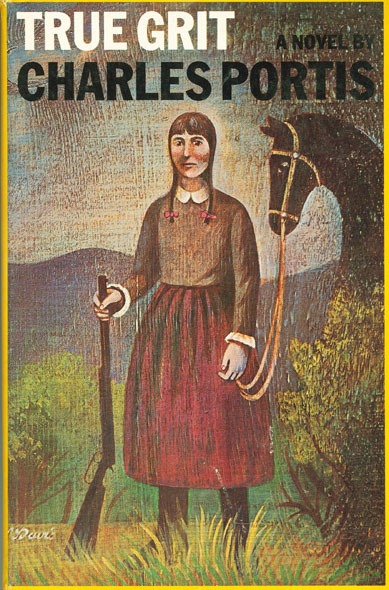
True Grit by Charles Portis–Book versus Movies

Word from the talk shows and on the web suggests that the new Coen Brothers’ film True Grit (2010) was not a remake of the classic John Wayne western True Grit (1969), but a new, more faithful interpretation of the original novel, True Grit (1968)  by Charles Portis.  As Mattie Ross might say, “That is a big story.”  This past week I read the original novel and then watched both movies.  In terms of following the book scene by scene I’d say the John Wayne film was more faithful to the book.  But the Jeff Bridges version follows the book’s ending much closer.  Both films used extensive amounts of dialog lifted directly from the novel.  But yes, the newer film was more grittier when it came to the violence and humor of the story.

true_grit_book

The motion picture stands at the pinnacle of all art forms in our culture – where millions will flock to see the latest blockbuster.  But what role does the novel play in creating this art form?  Movies are often created directly from screenplays, so it’s hard to measure their worth without the novel, but when one is made from a great novel, how do we judge its success?  As a standalone work of art, or as an interpretation of another work?  In my mind, neither the 1969 or 2010 film versions of True Grit came close to the power of the Charles Portis novel.  But as standalone works of art I think they are equally successful in their own ways.  The cinematic culture that made each film is very different, as well as the culture of their separate audiences.  They are like night and day, but then so is 1969 and 2010.

The 1969 film can be considered the clean version of the story, with all the actors wearing clean and colorful costumes, filmed in the gorgeous Colorado Rockies.  The 2010 film is far more realist and historically accurate, especially to the setting of the novel, Arkansas and the Oklahoma Indian territories – but filmed in Texas and closer to the look of the land in the book.  The 2010 film visually portrayed the wild west characters as if they had step through a time travel portal, looking dirty, hungry and uneducated.  But all modern film westerns do this, it’s the style of the time, so I don’t know if we can give credit to the Coen Brothers for being more faithful to the book.

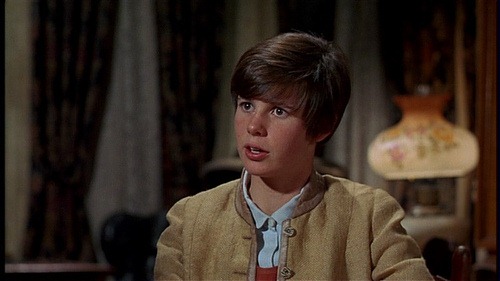
true_grit_kim_darby

I can’t recommend reading the novel highly enough – both films fail to capture much of the story, although because it’s a short book with vivid dialog, both do follow it faithfully far better than Hollywood usually follows an original novel.  The novel is dense with fictional details that just don’t come out in the movies.  Also, the novel is all about the voice of Mattie Ross, and neither movie captures that.  Movie makers consider voice over narration the kiss of death, but I wish they could have put more of book Mattie’s thinking into movie Mattie’s performance.   And strangely Portis sense of the dramatic appears superior to each set of movie makers because when each film diverts from his plotting and scene setup they suffer.  Portis had a keen sense of plotting and drama that both films wisely copy fairly thoroughly. 

The oddest departure from the story is the casting of actors for Rooster Cogburn.  Jeff Bridges was 61 and John Wayne was around 62, whereas in the book Rooster is described as being in his forties.  Kim Darby was around 21 when cast as the 14 year old Mattie Ross, which gives Hailee Steinfield an edge since she was 13.  Too me Kim Darby in her film often looked younger than Hailee Steinfield because they were trying to make her look younger to play the part, while the Coen Brothers seemed to be trying to make Hailee look more stern and mature to be believable.  Overall the acting is superior in the newer film, but there are some good performances in the older one.  I actually prefer John Wayne’s performance because he’s more charming and likable, but Portis goes a long way to make Rooster unlikable letting us know that he abandoned his family, robbed banks, road with Quantrill’s terrorists, and even though he works for the law is seldom legal in his actions. 

And the book provides the extremely realistic coda that Rooster never tried to contact Mattie after their adventure was over ,implying that Mattie meant little to him, but to Mattie, Rooster was someone she remembered her whole life.  Rooster had few warm and fuzzy qualities, even though the movies lead us to feel he did.  And book Mattie was a cold character who ended up only loving her religion and bank and never marrying.  In the end, I think both movies lean closer to being sentimental where the book tries to warn us against that.

true_grit_movie_image_jeff_bridges_hailee_steinfeld_hi-res-600x399

Bookworms always protest how their favorite novels are made into bad films, and I’d have to say neither version of True Grit has come close to capturing the true beauty of the book.  True Grit (2010) runs 110 minutes and if they had pushed that time to even 140 minutes I think they could have come damn close.  True Grit (1969) ran 128 minutes and filmed more scenes from the book but captured less of the true grit of the story.

What’s needed is 5 minutes of Mattie opening the story from 1928, the vantage point of her narration, and another few minutes closing it.  I’m not fond of framing novels and movies with action outside of the story, but that’s how Charles Portis wrote it, and I think it’s needed to capture the voice of Mattie.  The older Mattie even intrudes within the story from time to time.  Also, the 2010 version should have followed all the scenes Portis wrote set in the Indian territories, and fixed La Beouf’s plotline.  Twice Matt Damon left their little posse for no real reason – did he have other commitments?

Ultimately both movies work hard to follow the book, but I think the people of 2010 are naturally more willing to accept the horror and grotesque of the American gothic of the story.  Are citizens of 2010 closer psychologically to their 1877 cousins?  What doesn’t come across in either film are the threads of religion that run through the book.  True Grit isn’t Christian but deeply Old Testament.  The world of True Grit missed the Enlightenment.  It is why it’s a great western.  Jane Tompkins makes a great case that the western is anti-Christian and anti-woman in her book West of Everything, and I think True Grit fits her thesis.  Mattie Ross is a Christian woman who leaves civilization and for a few days explores the heart of darkness of the old west.

JWH – 1/3/11

2010 Year in Reading

It’s that time of year to look back over my reading log and analyze my bookworm habits for the year.  In my 2009 Year in Reading I declared I wanted to read twelve to fifteen books published in 2010 as they came out during the year.  Well, I failed to do that because I read only nine books, but I read ten from 2009, so that makes me feel somewhat better about keeping up with current books.  I also wanted to read less science fiction, and I failed miserably at that!

  1. The Rise and Fall of Alexandria (2006) by Justin Pollard & Howard Reid
  2. Prehistory (2007) by Colin Refrew
  3. The Bible: A Biography (2007) by Karen Armstrong
  4. Martian Time-Slip (1964) by Philip K. Dick  (3rd time)
  5. The Caves of Steel (1954) by Isaac Asimov  (2nd time)
  6. Endymion (1996) by Dan Simmons
  7. Lady Chatterley’s Lover (1928) by D. H. Lawrence
  8. We, Robots (2010) edited by Allan Kaster
  9. Darwin’s Origin of Species (2007) by Janet Browne
  10. Earth Abides (1949) by George R. Stewart (2nd time)
  11. The Edge of Physics (2010) by Anil Ananthaswamy
  12. Farewell, My Lovely (1940) by Raymond Chandler
  13. Wake (2009) by Robert J. Sawyer
  14. Needle (1950) by Hal Clement
  15. The Windup Girl (2009) by Paolo Bacigalupi
  16. The Lovers (1961) by  Philip José Farmer
  17. Watch (2010) by Robert J. Sawyer
  18. Jesus Interrupted (2009) by Bart D. Ehrman
  19. The City & The City (2009) by China Mieville
  20. The Last Picture Show (1966) by Larry McMurtry (2nd time)
  21. Julian Comstock (2009) by Robert Charles Wilson
  22. Classic Women’s Short Stories (2005)
  23. Food Rules (2009) by Michael Pollan
  24. The Dragon Masters (1963) by Jack Vance
  25. Riders of the Purple Sage (1912) by Zane Grey (2nd time)
  26. Out of the Silent Planet (1938) by C. S. Lewis (2nd time)
  27. Little Brother (2008) by Cory Doctorow
  28. Texasville (1987) by Larry McMurtry
  29. Boneshaker (2009) by Cherrie Priest
  30. A Practical Handbook for the Boyfriend (2007) by Felicity Hoffman & Patricia Wolfe
  31. Duane’s Depressed (1999) by Larry McMurtry
  32. When the Light Goes (2007) by Larry McMurtry
  33. Hunger Games (2008) by Suzanne Collins
  34. Rhino Ranch (2009) by Larry McMurtry
  35. Beatrice and Virgil (2010) by Yann Martel
  36. Bonk (2008) by Mary Roach
  37. Catching Fire (2009) by Suzanne Collins
  38. Mockingjay (2010) by Suzanne Collins
  39. Packing for Mars (2010) by Mary Roach
  40. Robert A. Heinlein v. 1 (2010) by William Patterson
  41. The Catcher in the Rye (1951) by J. D. Salinger (2nd time)
  42. The Visitors (1980) by Clifford Simak
  43. What the Dog Saw (2009) by Malcolm Gladwell
  44. Louisa May Alcott: The Woman Behind Little Women (2010) by Harriet Reisen
  45. Freedom (2010) Jonathan Franzen
  46. The Fountains of Paradise (1979) by Arthur C. Clarke
  47. Monument (1974) by Lloyd Biggle, Jr.
  48. A Great and Terrible Beauty (2003) by Libba Bray
  49. Starman Jones (1953) by Robert A. Heinlein (6th time)
  50. Rendezvous with Rama (1972) by Arthur C. Clarke (2nd time)
  51. Mindswap (1966) by Robert Sheckley (2nd time)
  52. Talent is Overrated (2008) by Geoff Colvin
  53. The Warrior’s Apprentice (1986) by Lois McMaster Bujold

Favorite Novel Read This YearDuane’s Depressed by Larry McMurtry.  This novel meant a lot to me because it was about a man my age coming to grips with getting older.  Duane’s Depressed is third of Larry McMurtry Thalia novels, with the first being the beautiful The Last Picture Show.

Favorite Non-Fiction Book Read This YearJesus Interrupted by Bart D. Ehrman.  Historical analysis of the New Testament brings up many theological questions but answers even more secular questions.  I felt it goes a long way to explaining the origins of conservatives and liberals, if you look at this book with the right slant.

Most Fun Fiction Read This YearThe Hunger Games trilogy by Suzanne Collins.  I don’t know why, but YA novels are often the most gripping page turners I read.  I was amazed by Suzanne Collins’ skill at developing characters and plotting.  She never took the expected route and always dazzled me.

Literary Read of the YearLady Chatterley’s Lover by D. H. Lawrence.  It’s famous for the sex and dirty words, but it has lasting power because of its deep insight into human nature.  The story also chronicles the divide between the pastoral past and the early days of technology in the 20th century.

Most Admired Science Fiction Novel Read This YearThe Windup Girl by Paolo Bacigalupi.  I wished they’d make a movie of this book because it’s so visually imaginative.  It would also show the world outside of written science fiction where it’s at.  Movie science fiction needs to get beyond 1930s space opera.

Science Book of the YearThe Edge of Physics by Anil Ananthaswamy.  This is the only science book from 2010 that I read this year, but it was an inspirational one.  Ananthaswamy took a tour of the world writing about the big physics experiments going on today that are exploring the edge of reality.

Inspirational Read for the YearTalent is Overrated by Geoff Colvin.  Like last year’s The Outliers by Malcolm Gladwell, this book is about how brilliant people become brilliant, not through innate talent, but hard work.  Last night I watched a documentary about Glen Gould, the pianist, and he fit Colvin’s pattern perfectly.  It really helps to have the right parents, not for their genes, but for their dedication to raising a successful child.   There are probably no genes for specific talents like music, chess playing, mathematics, physics, finance, etc.  But I wonder if brilliant people have genes for the ability to concentrate on one topic so intently.  Or, is even that. just a conditioning of hard work learned at an early age.  I recommend this book to anyone who is a parent and to anyone who wants to be a success at any task.

Goals for 2011

Again I want to push myself to read more contemporary books.  This year I returned to contemporary music and I feel very excited about music again.  I’m fighting a tendency of getting old of looking backwards and living in the past.  It’s quite delicious to cherish old favorite works of art but it’s also a kind of death trap.  Part of the vitality of youth is surfing the cutting edge of pop culture.  I don’t expect to rejuvenate by keeping current, but at least I hope to fight off brain rust.

JWH – 12/28/10