All Things SCRABBLE: Word Freak, Word Wars and Scrabylon

I’ve always been a piss-poor SCRABBLE player, so it’s strange that I picked up this book about SCRABBLE tournaments and got totally engrossed in reading about the fanatical world of SCRABBLE players.  Words With Friends has changed my attitude towards playing SCRABBLE, a game I’ve always thought as tedious.  Words With Friends is easier to play, and always handy.  I keep ten games going and make plays throughout the day.  When I saw Word Freak: Heartbreak, Triumph, Genius, and Obsession in the World of Competitive SCRABBLE Players by Stefan Fatsis I bought it thinking it might help my game.  Word Freak came out in 2001, but in 2011 it had a 10th anniversary edition, with a 30 page update.  Because the Word Freak was so fascinating I went searching for more information about SCRABBLE players, and their tiny world of word geeks.  I thought I’d collect what I found for a blog post, since I love reading about micro-subcultures.

Word Freak by Stefan Fatsis (2001)

wordfreak

For some reason Word Freak just grabbed me and I couldn’t put it down.  Stefan Fatsis, a reporter for the Wall Street Journal and NPR, started out doing a short article on SCRABBLE players, and their tournaments.  Then he got hooked on competing himself.  Word Freak is a memoir of Fatsis getting to know many of the major SCRABBLE competitors and his efforts to improve his own skills to get higher rankings in the tournaments.  SCRABBLE players have a rating system somewhat like chess players.  Fatsis started off playing in the 700s and by the end of the book was ranked 1697.  He’s currently ranked 1597.

Even if you hate playing SCRABBLE you might find Word Freak worthy of reading.  Fatsis takes a complex subject and explains it in very clear details.  Word Freak is really about three subjects that Fatsis weaves together.  At one level the book is about the history of a game and how the tournaments work.  At the next level its about lexicology and studying words.  Finally, the story is about obsessive people, and how far they will go to become great at playing a game, and how that changes their lives.

Reading the book does require some patience – it’s somewhat technical when it comes to words and wordplay.

Word Wars – Tiles and Tribulations on the Scrabble Circuit (2004)

After reading Word Freak I checked Netflix and found Word Wars, available on disc and streaming.  The documentary film by Eric Chaikin and Julian Petrillo credited Stefan Fatsis and Word Freak as their inspiration.  The film followed  four players Joe Edley, Matt Graham, Marlon Hill and Joel Sherman for nine months as they prepared for the 2002 National Scrabble Championship.  All four were profiled extensively in Word Freak, so it made me happy to meet them on film.

Scrabylon (2003)

Finally, I got to see Scrabylon, a film by Scott Petersen, which was made before Word Wars, but is pretty much about the same cast of characters.  By now I was beginning to burn out some on SCRABBLE documentaries, but I still want more.  I can’t help but wonder how things are ten years later?  Are the old players being pushed out by bright new word freaks?  In the book and films, all the players talked about SCRABBLE tournaments becoming more successful, to offer bigger prizes and get more public attention.  I’m not sure that’s happened.  Quite often I have seen short pieces in the news about SCRABBLE championships, but they don’t reflect the hoped for growth.

scrabylon

After reading the book and seeing these films I started thinking about my own skills.  In Words With Friends I’m averaging about 22 points per words, but there are players that average over 200 points per word.  I assume they are cheating, but maybe not.  I win a lot of Words With Friends games, but I don’t think I’m a particularly good player.  Reading Word Freak made me want to improve at Words With Friends, but maybe also play SCRABBLE itself, live with friends.

SCRABBLE v. Words With Friends

Many people think they are playing SCRABBLE when they are playing Words With Friends, but it’s really two very different games.  Which is why Words With Friends isn’t being sued out of existence.  The boards are different, the tile values are different, the number of tiles are different, but most importantly, you have to know how to spell to play SCRABBLE, whereas you can endlessly guess in Words With Friends.  In SCRABBLE you can intentionally play a phony word to bluff your opponent.  But if she challenges you and the agreed upon dictionary supports her, you lose your turn.  SCRABBLE is all about memorizing real words.  Words With Friends is all about finding real words that’s acceptable to the game.  You can try as many as you want.  With SCRABBLE you only get one try.

Words With Friends is also notorious for people cheating.  Playing real SCRABBLE, with real people, with a real board, not in cyberspace, but real space, means you’re on your own to come up with words out of you’re own little brain.  When I get together with someone to play SCRABBLE my average word values go way down, and it feels like I’m straining my brain to play.

Skill Versus Luck

Chess is a game that is all skill.  SCRABBLE is a game that involves a huge amount of luck with a lot of skill.  SCRABBLE appeals to more people because it is accessible, and easier to play than chess.  Words With Friends is even easier and more accessible than SCRABBLE, which explains its huge success.

Tournament SCRABBLE players often whine about the poor tile combinations they pulled from the bag, but the real experts can use their tremendous word knowledge to make a bad rack of letters into a high scoring word.  That’s why they memorize tens of thousands of obscure words.  Knowing words and how they can be played in novel combinations in a board arrangement can thwart an opponent’s “lucky” streak of drawing good letters.

SCRABBLE Dictionaries

Professional SCRABBLE tournaments use various standard dictionaries.  Players spend time every day learning the words in those dictionaries – often without learning their meanings.  Because English is a world-wide language, SCRABBLE is even played by people whose first language is not English, deciding on an official dictionary is difficult.  Basically it breaks down into three groups of English words.  Tournaments in the U.S., Canada and Thailand use the Official Tournament and Club Word List (TWL) (178,691 words).  For international play, SCRABBLE players use SOWPODS, which combines American and British words (267,751 words).  Players using SOWPODS have more words they can play, but it also means potentially memorizing almost a hundred thousand more words.  This also makes it difficult for world players to compete in America, because they need to know which words not to use, or for Americans to compete internationally, which means they need know all the additional words that can be used.  Plus players need to know when to challenge a phony.

For non-professional, home players of SCRABBLE, Hasbro recommends The Official Scrabble Players Dictionary (OSPD), now in the 4th edition.  The OSPD doesn’t have “offensive” words in it, which many professional and amateur players like to reply on.  Strangely, the internal dictionary for Words With Friends allows some offensive words and not others.

Because on July 1, 2013, Hasbro, the American maker of SCRABBLE, is dissolving the National Scrabble Association (NSA), which it has hosted for 25 years, things might change.  Since 2009, North American tournament SCRABBLE is organized by the North American Scrabble Players Association (NASPA).  Here is NASPA’s most recent statement on word lists.

Word Freak has an extensive discussion and history of SCRABBLE players struggling to come up with an official dictionary.  It’s a fascinating problem.  Words are constantly added to the language.  Words also go out of favor, but should they be removed from the official dictionaries?  Players want to use them.   As SOWPODS grows, the number of playable words grows, which makes it harder and easier for players.  It’s much easier to build elaborate tile combinations if they get to use all words, but at some point many of the words look like gibber-jabber.

Now, I’m not a tournament player, so my opinions don’t count.  But while reading Word Freak I was appalled by herculean efforts some professional players go to memorize words.  If all the top players have to become Rain Man to compete then it makes the idea of tournament play far less appealing.  It also bothers me that the players aren’t required to know the definitions of the words they play.

Learning Words

Professional SCRABBLE players spend hours a day learning words, usually from word lists.  2-letter, 3-letter, 4-letter lists, and so on.  Or from lists of special words, like all the Q Words, or  Q Words Without U.  Most non-tournament SCRABBLE players eventually get around to memorizing short lists, but few people have the stomach for the long lists.  That’s what separates the living room players from the rated players.

Tournament players often print out long lists of words, thousands and thousands of them, and cut them into flashcards, so they can study them a hundred at a time.  I would never do this.  I’m surprised by how much memorization Stefan Fatsis had to pursue to write his book and become a expert player.  I think it’s the willingness to study the long lists that separate merely great players from wannabe tournament champions.

Anagramming

Another astonishing feature of word power shown by professional SCRABBLE players is their ability to anagram verbally.  You know how parents often spell out words in front of young children so kids won’t know what the grownups are talking about, well, I’m 61 and if people verbally spell out words I don’t understand them.  So it blows me away that these SCRABBLE players can spell out 8, 9, 10, 11 or more letters and they can anagram them in their heads.  Fatsis reported that the tournament players often sat around playing anagrams after the tournament ended each night.  But Fatsis was also told that learning to anagram was a key tool to learning to compete in SCRABBLE competitions and raising his competitive rating.

Strategy and Bingos

Another big difference between living room players and tournament SCRABBLE players is their ability to plan ahead, and especially, plan their end games.  Competition level plays constantly seek to get Bingos – playing all seven letters from their rack at once.  Great players track the titles played and know which letters might be in the bag or on their opponents rack, and they often play short words one round in hopes of pulling the letters to make a bingo in the next round.

Average Words With Friends players love getting the Q and J because of their 10 point values, but competitive SCRABBLE players often consider these letters a burden.  They’d rather get letters, with lesser values, that help them make bingos.  They are always collecting prefixes and suffixes thinking about 7 letter words + 1, those words that can be made from 7 letters on the rack and hooked to one letter on the board.  They especially love making 8, 9, and 10 letter words by playing 7 titles across three lines of words.

You can follow the game where Mark Landsberg achieved the highest score ever to see how such strategy works.

Visit cross-tables.com to follow games, tournaments, strategy and tools.

If you really want to get caught up in SCRABBLE competition you can read The Last Word newsletter or join SCRABBLE Club or Internet Scrabble Club.

Word Freak chronicled Fatsis meeting many champion players and their own personal strategies they used to win.  Most of their strategies involved game play or word study, but sometimes it involved brain drugs, meditation, positive thinking, attitudes towards winning, and even methods to achieve Zen-like flow.

Postgame Analysis, Quackle and Zyzzyva

Fatsis spends a lot of time analyzing games in Word Freak, and he reports that most competitive players write down all their racks for every game they play and then analyze them later for possible better plays.  Often at the tournaments, players will gather together to tell each other better possible words to each play.  Many players use computer software to analyze their games.  Two such programs are Quackle and Zyzzyva.  There are many online programs and dictionaries to help players find more word combinations from any given set of letters.  Many Words With Friends players use these tools to cheat. but they can also be used to practice

Changing My Game

I still enjoy Words With Friends, but I think I need to switch to SCRABBLE.  I know I will never push my mind to be a SCRABBLE champion, but I do think I should push it to memorize words.  I have started paying more attention to word spellings as I read books.  Like I said earlier, I was disappointed that SCRABBLE masters don’t focus on word definitions.  Stefan Fatsis spent a lot of time in his book dealing with word play and it made me want to study words more, maybe even read some books on lexicology.  I think I’ll start with Word Buff.

I won’t be making lists of words to memorize, but I might start studying words in general, and their definitions.  Reading Word Freak and watching these documentaries made me aware of my wimpy vocabulary.  My wife Susan has always loved anagrams, crossword puzzles, and other word puzzle games, and she’s always been much better than me at SCRABBLE and Word With Friends.

JWH – 6/16/13 (Happy Birthday Susie)

Remembering Oz

I have written this essay many times over.  Starting out, I merely meant to review Oz Reimagined: New Tales from the Emerald City and Beyond, edited by John Joseph Adams & Douglas Cohen.  Oz Reimagined is a new collection of short stories inspired by the Oz books by L. Frank Baum.  That led to trying to explain what the Oz books were, and finally, trying to psychologically explore what reading those stories in childhood meant to me.  Cramming a full memoir and literary study into one blog post of a few thousand words is very difficult.

Fifty-one years ago, when I was ten, I discovered the magical world of libraries, and a set of moldy old books with Oz in each title. CBS began showing the 1939 film version of The Wizard of Oz every year around Christmas since I was eight and it had a huge impact on me.  So discovering two rows of Oz books at Homestead Air Force Base Library in 1962 was a major find.  I was just discovering the world of books, and I hadn’t understood that movies were often based on books.  Nor did I know about series books – what a fantastic idea, returning to the same fantasyland again and again.  When I first started reading for fun, all I read was series books, starting with the Oz books, then Danny Dunn, Tom Swift and on to the Hardy Boys.  The Oz books had started my lifelong addiction to fiction.

OzReimagined_V1_B

The Oz books were not as dazzling as the MGM movie, but they were incredibly far out.  I can’t recommend that you run out and read the Oz books, because you need to discover them when you are young to come under their spell.  The Oz books aren’t like the Harry Potter novels where both young and old can enjoy them.  Nor do I think they are well written.  So I thought it strange that Adams and Cohen would be trying to sell Oz stories to adults.  Is there a large enough market of people who discovered Oz books as kids who might want to return to Oz as adults?

The original Oz novels were seriously whacked – beyond bizarre, but not clever like Alice in Wonderland.  Oz was not a gentle children’s world like Winnie the Pooh, but more cracked like Dr. Seuss.  They were aimed at older children who could read a three hundred page book.     If you want to get an idea of what the Oz books were like, Mari Ness over at Tor.com has been rereading all 40 books in the Oz series.  Follow the link to see the covers of the books I found in the library 51 years ago.  If you click on the title beside each cover you can read Mari’s summary with critical comments.  This is about the best introduction to the Oz books for an adult that I can find.  You can also go to Gutenberg.com and read the original books.

Rereading them now brings back memories, but not the experiences I felt when I first read them.  This is embarrassing to admit, but when I was ten I wanted to believe that Oz existed.  I knew Oz was made up, but it was so charming I wanted it to exist.  It’s a kind of meta-magic.  Oz makes you want to believe in magic.  I think all kids want to believe in magic.  But when we get old we become skeptical.  However, with all the fantasy in our culture, I get the feeling many adults wish that magic existed for them too.  But how many adults really loved the recent Oz The Great and Powerful?  Why is Oz suddenly making a pop culture comeback?  Some people are trying to elevate L. Frank Baum’s stories into American fairytales.  Oz Reimagined attempts to build the classic Oz characters into archetypes, which makes me wonder just how deeply rooted Oz is in our subconscious minds?  How many Americans know of Oz outside of one great movie and Wicked?

oz_the_great_and_powerful 

There are other embarrassing things to confess.  Reading Oz books brainwashed me.  Even though the books aren’t particularly well written, and were childish even to my childish mind, they did a number of me.  And if you read far and wide, you’ll find a lot of people who grew up between 1900 and 1970 that also imprinted on Oz.  As a child, Oz books had a far greater impact on me than the more famous brainwashing Bible and going to church.  It’s funny, but fantasy books, science fiction and religion all have common themes that prey on young minds.

I have fond memories of reading those Oz books and daydreaming about magical worlds as a kid, but when I look now at the books I have to wonder what a goob I must have been as a kid.  But then all kids were once naïve goobers who will believe anything you tell them.

Okay, after that long introduction I need to get now to reviewing Oz Reimagined.  Why go back?  Why write new stories about Oz?  And it’s strange, I’ve returned to Oz twice in the last couple of months, because Oz The Great and Powerful also came out around the time the book did.  What’s with all these people returning to Oz?   

Within weeks we had a new Oz movie and a new Oz book.  Even if you have no interest in Oz, this is still rather interesting if you are fascinated by the concepts fiction and myths.  In the year 1900, L. Frank Baum published the original Oz story, The Wizard of Oz, and since then there have been hundreds of sequels and many movies based on this imaginary place called Oz.

From time to time, a writer will create characters and a story world that readers just won’t let die.  Think of Sherlock Holmes, Tarzan, Scrooge, Superman, Kirk and Spock, Elizabeth and Mr. Darcy, Harry Potter – maybe you’re surprised by the last one, but just gander at the list of Harry Potter fan fiction stories.  There’s over 645,652 of them.  One measure of obsessive popularity with fictional worlds is fan fiction, where young people write stories set in their favorite fictional worlds.   Just check this list sorted by popularity.   Harry Potter has 645,652 entries, Twilight has 210,560, Lord of the Rings has 49,016, and  Hunger Games has 32,298.  Way down the list, with 42 entries is Oz books.  The young just aren’t interested in Oz anymore, and I doubt the new movie will create many new fan writers.

Fan fiction is an amazing pop culture barometer.  If it existed in 1920, I’m pretty sure Oz books would have topped the list.  Fan fiction shows a deep level of love by some readers for their favorite story worlds and characters.  Most of these entries are just fragments, scenes or short stories, but many are fully developed novels.  For example, Watchers & Dancers is 108,631 word novel that takes The Little Women March sisters from the 19th and puts them in the 21st.  You have to admit that such dedication reveals the power of fiction to inspire the imaginations of young people.

There’s only 42 Oz stories at fanfiction.net.  If we could collect all these Oz inspired stories that’s ever been written, I’d bet there would be thousands.  Oz Reimagined adds 15 more.  But here’s the weird thing, some of the stories in Oz Reimagined are just stories set in Oz, but many stories are about being memed by Oz stories.  I think there are two kinds of grown-ups who read Oz books as a kid.  The first want to return to Oz, and the second want to deprogram themselves from the influence of Oz as a child.  You’re either an Oz believer, or an Oz atheist.  It all depends on your attitude towards magic.

Do you believe in magic?  Did you believe when you were a child?  Do you like reading stories and watching movies even now as a grownup that features magic?   The success of Harry Potter seems to indicate that many of you will answer yes.  Does that reflect a secret longing for magic to exist in our very scientific reality?  Or does it reflect that when were children we thought magic should be real?

Obviously the history of the human race has involved a lot of magic and myths.  I am a solid believer in science, an atheist, and know absolutely that magic does not exist.  Yet, I have this hang-up about Oz. I can’t remember a time when I didn’t know about Oz.  I can’t remember when I first saw the classic MGM film, but I think it was in those twilight years before the beginning of memories and self-awareness.

If you only know of Oz through the famous 1939 movie, then you really don’t know Oz.  The Land of Oz was a powerful fairyland first created in 1900 by L. Frank Baum with his book The Wonderful Wizard of Oz.  Baum didn’t intend for it to be a series, but fans wouldn’t let go.  Baum created thirteen more books about the citizens of Oz over the next twenty years, infecting millions of children with a deeply psychological desire for magic.  I read the fourteen Baum books as a child, before switching my reading addiction to science fiction.  I guess if I couldn’t find over the rainbow on Earth, I’d go much further to find it.

Right from the start people tried to ban the Oz books.  The faithful considered them spreading ungodly ideas and undermining gender roles.  Librarians banned them because they believed Oz books gave children unrealistic ideas about reality.

The funny thing is they were right.  Oz books do undermine religion, promote feminism and give kids unrealistic expectations about life.

Is you become addicted to Oz as a child, you’ll spend you’re whole life trying to get back to Oz.  Just read The Number of the Beast – Robert A. Heinlein was a major Oz addict.  For the most part, the Oz books are slowly becoming forgotten, but not their legacy, because stories with magic for children have come to dominate our culture.  Has there been an era that’s embraced fantasy so deeply as now?  Many mainline fantasy hours a day through their television, movie and ebook screens.

However, there must be plenty of readers still discovering the Oz books, because we have this new anthology of original stories set in Oz.

Oz Reimagined, is aimed at an audience I’m be curious to know.  How many kids growing up today read  the original Oz books by L. Frank Baum?   People have been writing new stories set in Oz since 1920 when Baum last title, Glenda of Oz, came out the year after he died.  Wikipedia has a great list of Oz Books.  Writers just can’t forget Oz.  But how many kids today grow up reading the Oz books?  It can’t be many.

And we also know the long checkered history of Oz movies, including the latest, Oz the Great and Powerful, which I thought was beautiful but had too many flaws – and by the way, there’s no sex in Oz, at least not the Oz I grew up with.  The Wizard might have been a humbug, but not a horndog, but that’s my interpretation.  Who brought adulthood to Oz?  Was it Gregory Maguire and his Wicked: The Life and Times of the Wicked Witch of the West, who writes an introduction to this collection?  I don’t know, but probably not.  I haven’t read or seen Wicked, so I don’t know how much current pop culture Oz is related to Maguire’s re-visioning of Oz.

See, that’s the thing about the new anthology, Oz Reimagined, depending on how you picture Oz, will determine how much you enjoy the many types of stories.  This collection isn’t for kids, but a few of the stories are aimed at us who try to remember being kids.  Some of the other stories show a bitterness, maybe from the realization of their Oz addiction is corrupting.  And even other stories show a cynical view, having Dorothy reliving her adventures inside a mental hospital (“One Flew Over the Rainbow” by Robin Wasserman).

There is a common theme in all Oz stories, a search for transcendence from the mundane.  There is a wistful recognition that magic doesn’t exist, but if we could become innocent again it might.  

My favorite of the collection, “Off to See the Emperor” by Orson Scott Card.  It’s the deepest story emotionally, when it comes to remembering being a kid.  I can’t help but wonder if Card’s personal belief in magic – Mormonism – allows him to write such a wonderful story about magic.  Most of the writers in the anthology aren’t true believers.  Magic is just a story gimmick.  It takes powerful writing to make readers believe in magic, or want to believe in magic.  The Harry Potter books are the best example today.

I bought both the Kindle and Audible editions of Oz Reimagined, and have to say the narrators, Nick Podehl and Tanya Eby do such a fantastic job, and I highly recommend getting the audio edition if you decide to try this book.

But in terms of creating a Oz like story for kids, I’d say “The Cobbler of Oz” by Jonathan Maberry came closest to how I remember the books.

The book contains 15 stories plus a forward, “Oz and Ourselves” by Gregory Maguire and an introduction Adams and Cohen.

  1. “The Great Zeppelin Heist of Oz” by Rae Carson & C.C. Finlay
  2. “Emeralds to Emeralds, Dust to Dust” by Seanan McGuire
  3. “Lost Girls of Oz” by Theodora Goss
  4. “The Boy Detective of Oz: An Otherland Story” by Tad Williams
  5. “Dorothy Dreams” by Simon R. Green
  6. “Dead Blue” by David Farland
  7. “One Flew Over the Rainbow” by Robin Wasserman
  8. “The Veiled Shanghai” by Ken Liu
  9. “Beyond the Naked Eye” by Rachel Swirsky
  10. “A Tornado of Dorothys” by Kat Howard
  11. “Blown Away” by Jane Yolen
  12. “City So Bright” by Dale Bailey
  13. “Off to See the Emperor” by Orson Scott Card
  14. “A Meeting in Oz” by Jeffrey Ford
  15. “The Cobbler of Oz” by Jonathan Maberry

Like Tarzan, or Sherlock Holmes, or even Star Trek, we have discovered that fans of the these original story worlds love them so much they want to return time and again, even after the original author has died.  Unlike these other stories, which are character driven, Oz is really place driven.  We see many new Dorothys, Scarecrows, Tin Woodsmen, Cowardly Lions and Wizards, but the real appeal of Oz, is it’s rich magical landscape.

You can read the original books at Gutenberg, and I recommend you try them, or a portion of them, to get a feel for what they were like.  Most everyone today knows Oz from reflections and reflections of reflections.  It very important to remember these were books written for kids, and they were written around a hundred years ago when times were much simpler.

magician

Here is  The Patchwork Girl of Oz with the beautiful John R. Neill illustrations from the 1915 edition.  This is how Oz looked when I was first introduced to the books when I was ten.  The story is about a magician who has a potion, The Powder of Life, that will make inanimate objects come to life.  One of his first experiments is on a glass cat, who is also one of the main characters in “The Boy Detective of Oz: An Otherland Story” by Tad Williams, from Oz Reimagined.

The cat was made of glass, so clear and transparent that you could see through it as easily as through a window. In the top of its head, however, was a mass of delicate pink balls which looked like jewels, and it had a heart made of a blood-red ruby. The eyes were two large emeralds, but aside from these colors all the rest of the animal was clear glass, and it had a spun-glass tail that was really beautiful.

"Well, Doc Pipt, do you mean to introduce us, or not?" demanded the cat, in a tone of annoyance. "Seems to me you are forgetting your manners."

"Excuse me," returned the Magician. "This is Unc Nunkie, the descendant of the former kings of the Munchkins, before this country became a part of the Land of Oz."

"He needs a haircut," observed the cat, washing its face.

"True," replied Unc, with a low chuckle of amusement.

"But he has lived alone in the heart of the forest for many years," the Magician explained; "and, although that is a barbarous country, there are no barbers there."

"Who is the dwarf?" asked the cat.

"That is not a dwarf, but a boy," answered the Magician. "You have never seen a boy before. He is now small because he is young. With more years he will grow big and become as tall as Unc Nunkie."

"Oh. Is that magic?" the glass animal inquired.

"Yes; but it is Nature’s magic, which is more wonderful than any art known to man. For instance, my magic made you, and made you live; and it was a poor job because you are useless and a bother to me; but I can’t make you grow. You will always be the same size—and the same saucy, inconsiderate Glass Cat, with pink brains and a hard ruby heart."

"No one can regret more than I the fact that you made me," asserted the cat, crouching upon the floor and slowly swaying its spun-glass tail from side to side. "Your world is a very uninteresting place. I’ve wandered through your gardens and in the forest until I’m tired of it all, and when I come into the house the conversation of your fat wife and of yourself bores me dreadfully."

"That is because I gave you different brains from those we ourselves possess—and much too good for a cat," returned Dr. Pipt.

"Can’t you take ’em out, then, and replace ’em with pebbles, so that I won’t feel above my station in life?" asked the cat, pleadingly.

"Perhaps so. I’ll try it, after I’ve brought the Patchwork Girl to life," he said.

The cat walked up to the bench on which the Patchwork Girl reclined and looked at her attentively.

"Are you going to make that dreadful thing live?" she asked.

The Magician nodded.

"It is intended to be my wife’s servant maid," he said. "When she is alive she will do all our work and mind the house. But you are not to order her around, Bungle, as you do us. You must treat the Patchwork Girl respectfully."

"I won’t. I couldn’t respect such a bundle of scraps under any circumstances."

"If you don’t, there will be more scraps than you will like," cried Margolotte, angrily.

"Why didn’t you make her pretty to look at?" asked the cat. "You made me pretty—very pretty, indeed—and I love to watch my pink brains roll around when they’re working, and to see my precious red heart beat." She went to a long mirror, as she said this, and stood before it, looking at herself with an air of much pride. "But that poor patched thing will hate herself, when she’s once alive," continued the cat. "If I were you I’d use her for a mop, and make another servant that is prettier."

"You have a perverted taste," snapped Margolotte, much annoyed at this frank criticism. "I think the Patchwork Girl is beautiful, considering what she’s made of. Even the rainbow hasn’t as many colors, and you must admit that the rainbow is a pretty thing."

The Glass Cat yawned and stretched herself upon the floor.

"Have your own way," she said. "I’m sorry for the Patchwork Girl, that’s all."

glass-cat

As you can see, the prose is not magical, but, if you have the right frame of mind, and can imagine Oz, and things like glass cats, phonographs, saw horses and patchwork dolls coming to life with a magic powder, then you might be a Oz person.   It helps to be a kid, or childlike, or maybe stoned, to get into the spirit.  I think the 1939 film did it best, whereas other films never quite caught the magic.  I gave you this average sample from an Oz book to show you how it compares to the new stories.

Tad Williams reimagines Oz as a computer simulation where he must solve a murder.  Many of the writers in Oz Reimagined try to come up with a rational reason for Oz, and in this story Orlando Gardiner, System Ranger, is debugging the kansas simworld.  Something must be terrible wrong with the simulation if a murder happens.   Here is Williams’ introduction to the Glass Cat.

But that still didn’t answer the main question: If everything was good in Kansas, why had he been summoned?

Whatever the reason, someone seemed to be waiting for him. She would have sparkled if the sun had been on her, but since the Glass Cat was sitting in the shade grooming, Orlando didn’t see her until he was almost on top of her. She looked up at Orlando but didn’t stop until she had finished licking her glass paw and smoothing down the fur on her glass face. The Glass Cat might be a sim of a cat— and a see-through cat at that— but she was every inch a feline. The only things that kept her from looking like a cheap glass paperweight were her beautiful ruby heart, her emerald eyes, and the pink, pearl-like spheres that were her brains (and also her own favorite attribute).

“I expected you to show up,” said the Glass Cat. “But not this quickly.”

“I was in the area.” Which was both true and nonsensical, since there really was no distance for Orlando to travel. He existed only as information on the massive network and could visit any world he wanted whenever he chose. But as far as the Glass Cat and the others were concerned, there was only one world— this one. The sims didn’t even realize they were no longer connected to the Oz part of the simulation, although they remembered it as if they were. “I hear there’s a problem,” he said. “Do you know what it is?”

She rose, swirling her tail in the air as gracefully as if it had not been solid glass, and sauntered off the path, heading down toward the stream. “Am I supposed to follow you?” he asked.

She tossed him an emerald glance of reproach. “You’re so very clever, man from Oz. What do you think?”

Following a snippy, transparent cat, he thought: Just another day in my new and unfailingly weird life. Orlando’s body had died from a wasting disease as he and others had struggled against the Grail Brotherhood, the network’s creators, a cartel of rich monsters and other greedy bastards all looking for eternal life in worlds they made for themselves. But now they were all gone, and this was Orlando’s forever instead.

“I hope this is important, Cat,” he said as he followed her down the embankment, into the rustle of the birch trees. “I’ve got plenty of other things to do.” And he did. Major glitches had looped Dodge City— the simulated outlaws had been robbing the same simulated train for days— and the gravity had unexpectedly reverted to Earth-normal in one of the flying worlds, leaving bodies all over the ground. He planned to fob at least one of the problems off on Kunohara, who, like most scientists, loved fiddling with that sort of programming problem.

“There,” the Cat said, stopping so suddenly he nearly tripped over her. “What do you think of that?”

This isn’t the same Oz as Baum’s, but it has the same spirit, just modernized.  Most of the stories are like this, all quite inventive.  Another story, “The Veiled Shanghai” by Ken Liu sets Oz inside of 1919 Shanghai like the dual cities in The City & The City, the Hugo winning novel by China Miéville.  Jeffrey Ford has an old Dorothy returning to Oz in “A Meeting in Oz” that has a rather chilling reimagined meaning to “There’s no place like home.”

snow-white-red-blood

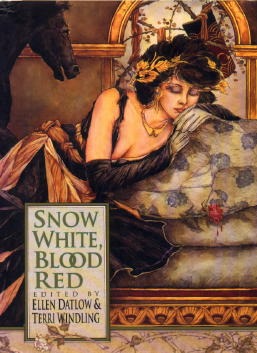
Like I keep asking, why do we keep going back to Oz?  But why do we keep going back and retelling classic Grimm tales?  Terri Windling and Ellen Datlow have  six volumes of retold fairy tales for adults.  I think it’s more than writers just wanting to modernize old folk tales.  I think it’s a kind of cultural psychoanalysis with each writer taking their turn at bat being Joseph Campbell.  Maybe they are like me, feeling they were bamboozled as kids by stories that were so much more exciting than reality.  Maybe it’s fun to dress up old fairytales in modern language.  Maybe it’s just more fan fiction.

Reading these fairy tales for adults, I wonder if they are either deprogramming tools, or remembering reprogramming tools, because we want to forget magic, or we want to return to believing in magic.  Writing stories for adults that retell children stories is a weird business.  They either try to make us think like kids again, or they make us think like kids again, but with brutal winks and nudges.

JWH – 6/11/13

The Defining Science Fiction Books of the 1990s

1950s 1960s 1970s 1980s 1990s
We've added a new feature that allows you to create your own lists from our database of recognized novels and short stories. You can set your own date ranges. Change the citation numbers to focus on more popular titles.

The 1990s was the last decade of the century and the millennium, and although science fiction has been around for centuries, it feels like the genre blossomed in the second half of the 20th century.  By the last decade it feels fantasy flavored SF had overtaken hard science fiction in popular appeal, but many of the most successful science fiction books of the 1990s were about space travel.  Vernor Vinge, Iain M. Banks, Dan Simmons, and Peter F. Hamilton began paving the way for the New Space Opera of the 2000s.  Ben Bova, Greg Bear and Kim Stanley Robinson used NASA’s recent knowledge of the solar system to build new visions of interplanetary colonization.  And more than ever, science fiction is concerned with the post-human future.

SF writers of 1990s represents the centennial descendants of H. G. Wells, and his genre originating novels The Time Machine (1895) and War of the Worlds (1898).  Where Wells explored the impact of Darwinism, 1990s science fiction writers were inspired by NASA interplanetary probes, the Hubble Space Telescope, and the many breakthroughs in contemporary cosmology.  It’s quite amazing, but in the 1990s, both the scientific universe and science fictional universes are tremendously bigger than the objective reality of the 1950s and its science fictional universes.  Heinlein, Asimov and Clarke loom large in our history, but modern science fiction writers stand on their shoulders and see much further than they ever imagined.

Yet, I would claim by the 1990s that it was obvious that science fiction had forked in its evolution.  On one hand, we still have a branch of science fiction inspired by science, but on the other hand, it’s all too obvious that the larger branch of science fiction is inspired by older science fiction.  New sub-genres like Military SF, seemed descended from 1959’s Starship Troopers by Heinlein, and isn’t the sub-genre of galactic empire romances descended from Asimov’s Foundation stories?  NASA will never be able to send a probe to either of these universes.  Whereas, Kim Stanley Robinson and Michael Flynn are practically begging NASA to use their books as blueprints for its future budgets.

A handful of writers dominated the decade with their series books.  Lois McMaster Bujold, Connie Willis, Kim Stanley Robinson and Vernor Vinge, all won multiple Hugo and Nebula awards as well as getting many nominations, and winning other genre awards.

Kim Stanley Robinson set the standard for hard science fiction with his decade spanning Mars trilogy.  He won two Hugos and one Nebula by writing about a realistic colonization of the Red planet.

mars-trilogy

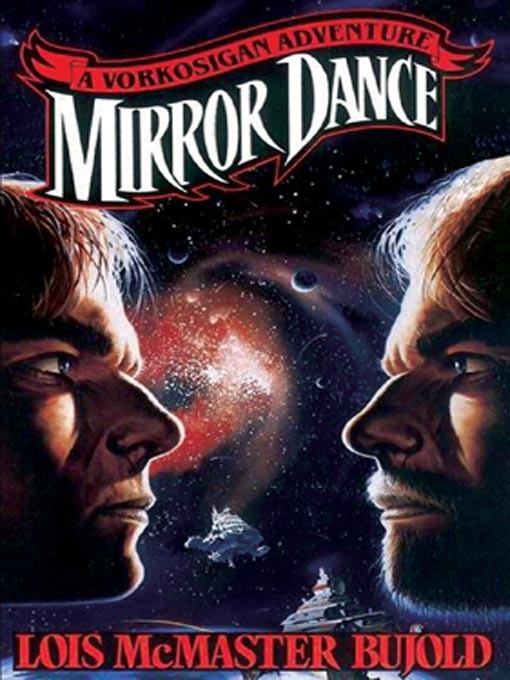
Lois McMaster Bujold had so many award winning books in the 1990s that picking the best is impossible.  The Vor Game, Barrayar, Mirror Dance, Cetaganda, Memory, Komarr and A Civil Campaign are probably getting even more readers today than in the 1990s.  The Vorkosigan Saga just keeps on growing.  And fans debate whether new readers should follow publication order or internal chronological order.

mirror-dance

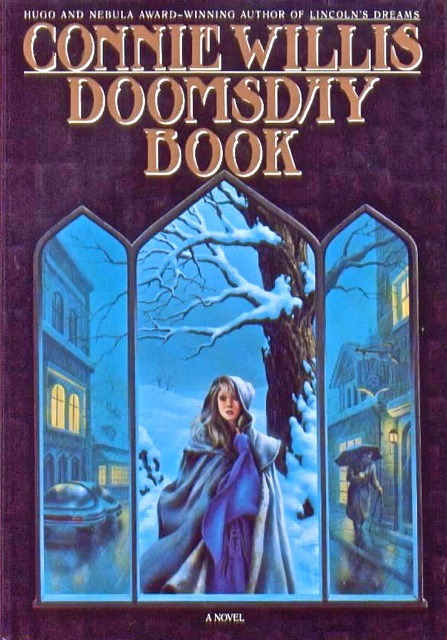
Connie Willis won five Hugos and three Nebulas in the 1990s, with The Doomsday Book winning both.  Willis has carved out a much loved series based on time travel and history, blending two genres together, and like Bujold, Willis keeps expanding her series today.

the-doomsday-book

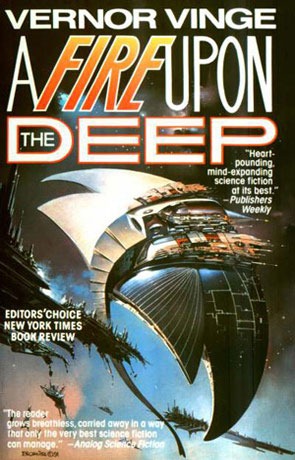
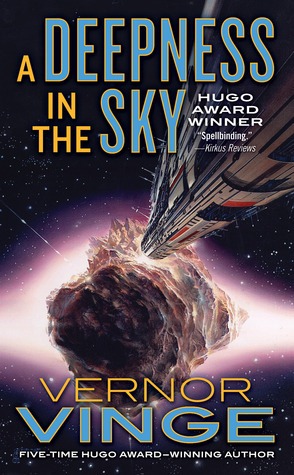
Vernor Vinge picked up two Hugos and two Nebula nominations for A Fire Upon the Deep and A Deepness in the Sky, proving that fans still love a good space opera.

a-fire-upon-the-deep

Some people have asked me how I make up these lists of memorable science fiction books.  The first one, about the 1950s, was more from personal memory, but eventually I discovered various resources I used for the later decades.  I start with Internet Speculative Fiction Database.  I use its advanced search and look up novels, language and type.   I only worry about books in English.  I go down their listings looking for books I remember reading or reading about.  I can right click on any title to bring up it’s bibliographic record which includes how often it was reprinted and whether or not it won any awards.  Most valuable is whether the book made the Locus Poll that year.  That’s the first indicator how popular a book was with the fans during the year it came out.

I also study various best of lists to discern long term popularity.  I look for books that get picked time and again.  This is how I create the short list called the Best Remembered books.  The longer Defining Books list are those books which got particular notice during the year they came out.  Most of these have been frequently reprinted and are often on some of the best SF of all time lists.  I avoided fantasy novels unless they won or were nominated for the Hugo, Nebula, or other SF award.

Best of Book Lists

The Best Remembered Science Fiction Books of the 1990s

The Defining Science Fiction Books of the 1990s

1990

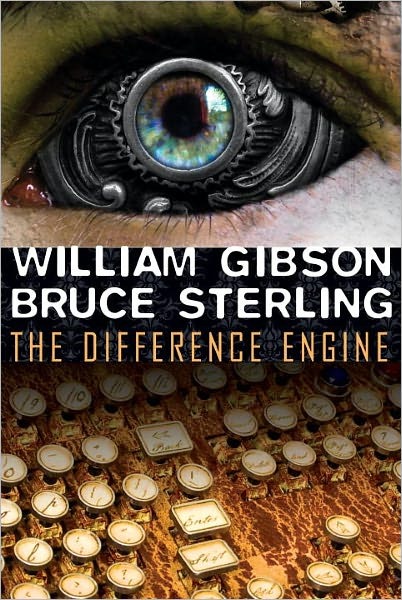
the-difference-engine
1991

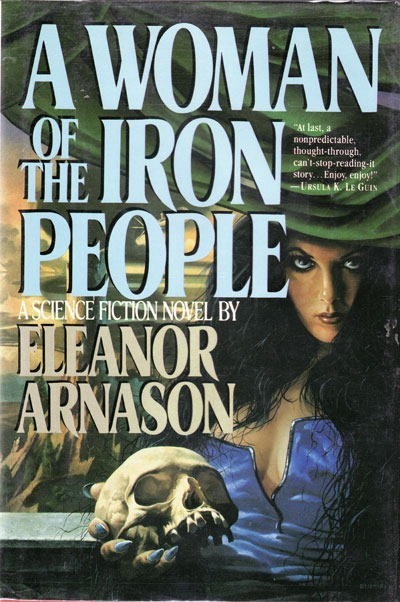
a-woman-of-the-iron-people
1992

snow-crash
1993

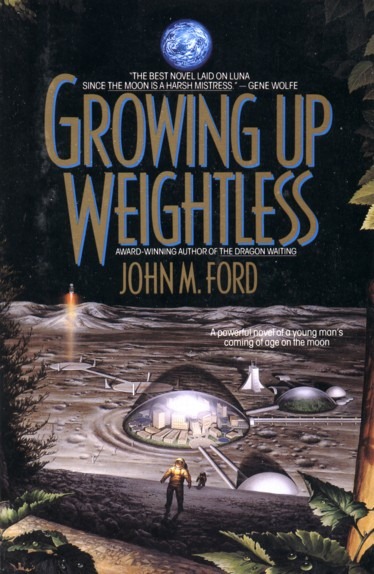
john-m-ford-growing-up-weightless
1994

permutation-city
1995

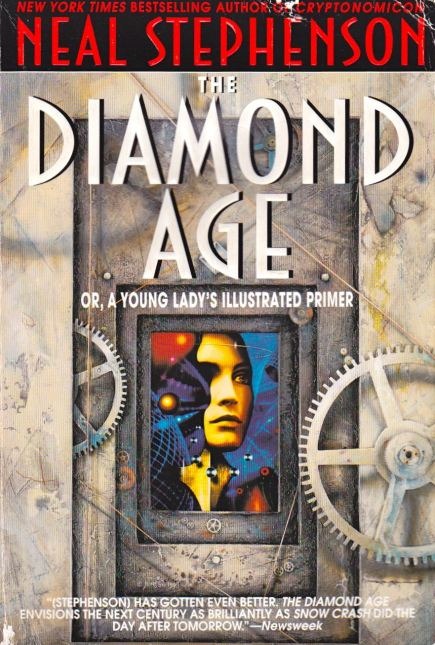
the-diamond-age
1996

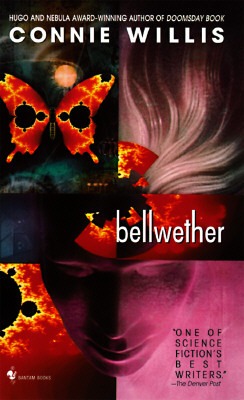
bellwether
1997
Fools War Zettel
1998

1999

a-deepness-in-the-sky
1950s 1960s 1970s 1980s 1990s

Table of Contents

The Defining Science Fiction Books of the 1980s

1950s 1960s 1970s 1980s 1990s
We've added a new feature that allows you to create your own lists from our database of recognized novels and short stories. You can set your own date ranges. Change the citation numbers to focus on more popular titles.

I’ve been reading science fiction for over fifty years, and I’m touring my SF memories decade by decade.  So far I’ve written about the 1950s, 1960s and 1970s.

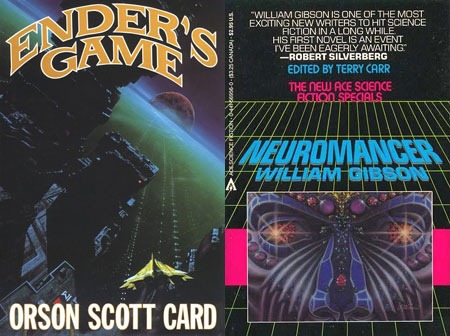
Something happened to the world of science fiction books in the 1980s.  The genre grew, gaining new writers, publishers and readers.  Star Trek and Star Wars got millions of media fans to try reading SF, often introduced by novelizations.  Science fiction became big business.  From my view of the genre, two SF books went nova in the eighties:  Neuromancer and Ender’s Game, making William Gibson and Orson Scott Card the breakout science fiction writers of the decade, like Delany and Zelazny had been for the 1960s.

endersgame-neuromancer

Computers and video games made the 1980s a happening decade for science fiction.  Personal computers became all the rage, with the IBM PC being introduced in 1981 and the Apple Macintosh in 1984.  Fandom shifted from fanzines to computer networks like CompuServe and GEnie, connecting readers to the cyber world – letting us all live in a science fictional reality.  Kids growing up with Atari 2600s from the 1970s, jumped to the Nintendo, accelerating the cyber addiction of the 1980s, so is it any wonder that in the mid-80s that teens totally resonated with Ender’s Game and Neuromancer?   They were what the Heinlein juveniles were to my generation.

Now this is a longshot, but I think it was the massive influx of female fans that made Ender’s Game a mega success.  Over the years I’ve been surprised by countless women telling me that Ender’s Game is one of their all-time favorite books.  This was particularly shocking because most of my lady bookworm friends didn’t read science fiction.  Ender’s Game got them started on the genre though, if only a book now and then.

Ender’s Game is often taught in schools, and I’ve met both students and teachers who have gushed over this story.  To me Ender’s Game was just another outstanding science fiction novel, but to new readers it was a mind blowing introduction to the world of written science fiction.  They grew up on science fiction comics, television shows, games, toys and movies, but it’s the books that are the real heroin of science fiction addiction.  Remember, the Golden Age of Science Fiction is 12, and to the 1980s generation, their time was just as exciting to them, as the 1960s were to us baby boomers.

These essays about remembering past decades of science fiction are about memory – my memory, our collective fan memory, and maybe the world at large memory of science fiction.  I’m not the only person looking backwards at science fiction.   Last year, Ernest Cline remembered the 1980s in his novel Ready Player One, and its over-the-top success is due to Cline speaking directly to the heart of the Nintendo generation.  The year before that, Jo Walton remembered growing up with science fiction in her novel Among Others.  Walton spoke to the heart of introverted science fiction bookworms, which won her the Hugo, Nebula and British Fantasy Awards.  Here is a list of novels she wrote about in Among Others.  Most of the science fiction books she mentions have been listed in my defining decades lists, but her novel goes further because Walton also remembers fantasy, classics and non-genre books.  Walton resonated with lonely book lovers everywhere.

With each succeeding decade, science fiction gets more sophisticated, and the overall quality of writing improves.  More people take science fiction seriously, and science fiction becomes more serious.  It’s still escapism, but the stories are getting longer and less simplistic.  It also obvious by the 1980s that the genre was shifting more towards fantasy, a trend that has been accelerating ever since.

Science fiction became big in the 1980s.  Bigger books, more books, more series, bigger series, wordier writing, and bigger sales.  In the 1980s writers took to writing trilogies and series like never before.  Lois McMaster Bujold is another standout writer of the 1980s, by developing a huge fan base for her Vorkosigan series.  Her 1980 books won awards back then, but they are still huge sellers today because the series keeps growing. Every new convert to her fictional universe wants to jump back to the 1980s to start the series from the beginning.

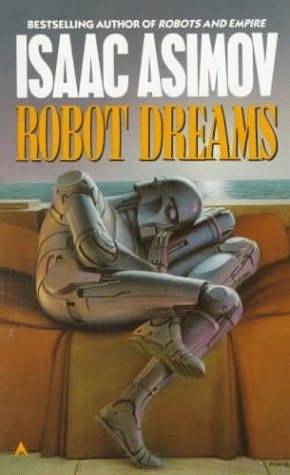
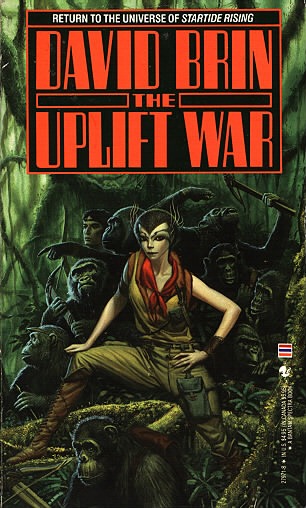
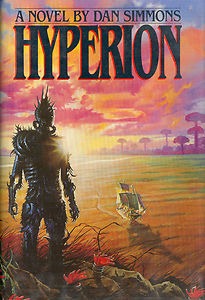
For the long list below, I only list the first book in a series unless a later title makes some kind of splash, wins an award, or was very popular for that year.  The 1980s was dominated by series, both new and renewed.  As you gander down the list, think of how many of these stories are part of a bigger whole?  Orson Scott Card, C. J. Cherryh, Iain M. Banks and Lois McMaster Bujold started series in the 1980s that continue to current times.  Isaac Asimov capitalized on his classic Foundation and Robot series in the 1980s in a tremendous way.  David Brin and Gene Wolfe wrote two standout series of the decade.  Dan Simmons started his Hyperion series at the end of the decade.  The most memorable books of the decade were seldom standalone novels.

Not only did we see more series books, but the books seem to be getting bigger, and some writers developed baroque writing styles, moving science fiction away from fast action pulp writing.  Gardner Dozois started his annual The Year’s Best Science Fiction series in 1984, by showcasing a massive amount of short fiction in a single volume.  The 1980s was a boom time for science fiction.

The 1980s will also be remembered for the Cyberpunk moment.  Neuromancer by William Gibson got a subgenre rolling that breathed new life into the old genre.  It was as revolutionary as the New Wave had been back in the 1960s, with Bruce Sterling leading the charge with his fanzine Cheap Truth.  The SF big three, Heinlein-Clarke-Asimov, the old guard of classic 1950s SF, were still selling lots of books, but their future visions were being eclipsed by new ones from Young Turks.

I divide the decade into two lists.  First, a short list for those books that are the most remembered today, and maybe most known by people who don’t normally read science fiction.  Then, a longer list of the books that hardcore science fiction fans should remember, and probably newer fans are slowly discovering.

The Best Remembered Science Fiction Books of the 1980s

The Defining Science Fiction Books of the 1980s

1980

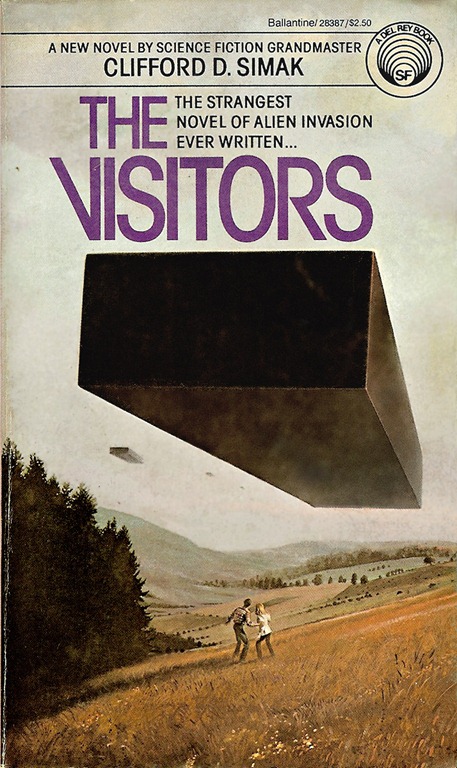
the-visitors
1981

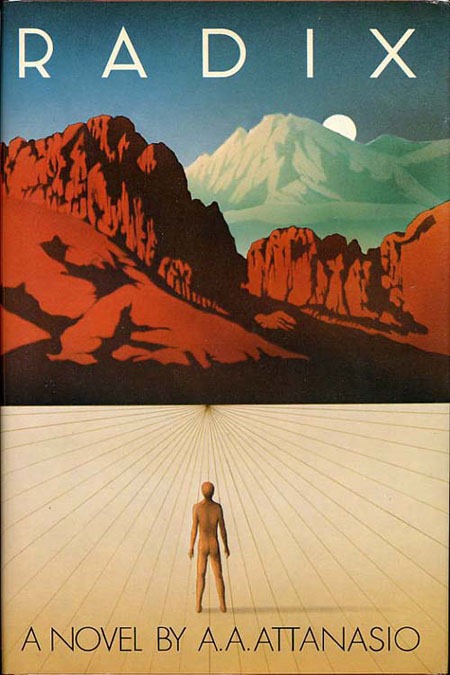
radix
1982

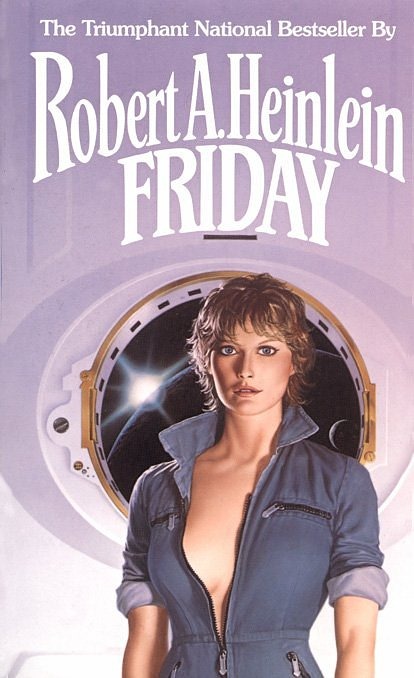
friday
1983

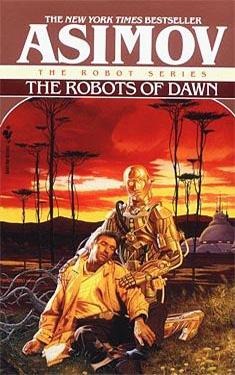
the-robots-of-dawn
1984

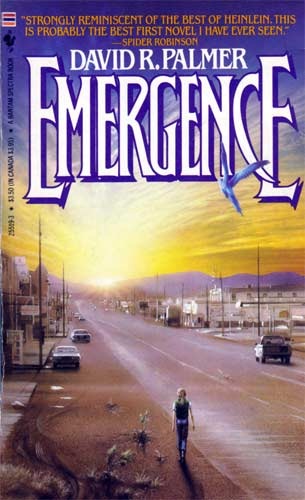
emergence
1985

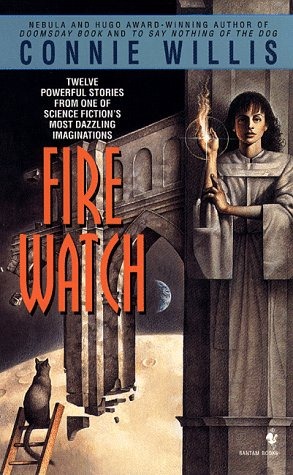
fire-watch
1986

robot-dreams
1987

uplift-war
1988

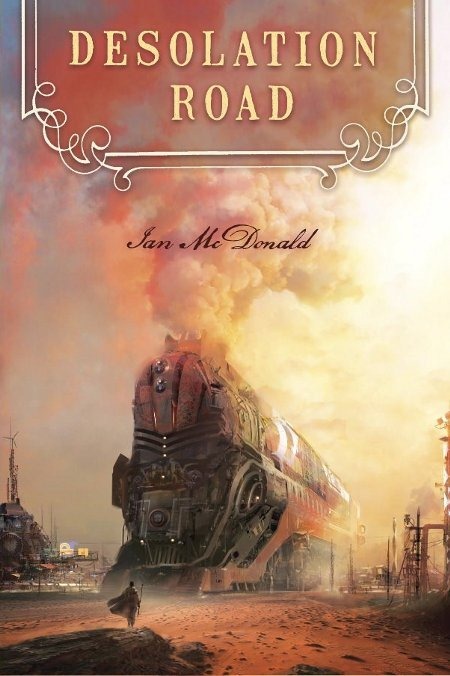
ian-mcdonald-desolation-road
1989

hyperion
1950s 1960s 1970s 1980s 1990s

JWH – 4/13/13 – Table of Contents

The Defining Science Fiction Books of the 1970s

1950s 1960s 1970s 1980s 1990s
We've added a new feature that allows you to create your own lists from our database of recognized novels and short stories. You can set your own date ranges. Change the citation numbers to focus on more popular titles.

What started as a review of American Science Fiction: The Nine Classic Novels of the 1950s, has put me on a quest to organize my memories of the great science fiction books, decade by decade, and year by year.  Back in the mid-90s I created The Classics of Science Fiction website.  Then I wrote The Greatest Science Fiction Novels of the 20th Century about the science fiction books that people who don’t read science fiction might know.  I’m preoccupied with how people remember science fiction, well at least the literary form.  Recently I wrote The Defining Science Fiction Books of the 1960s which is getting more hits than usual for my blog, so that makes me think other people are like me – looking back, trying to remember all their favorite science fiction books from childhood.

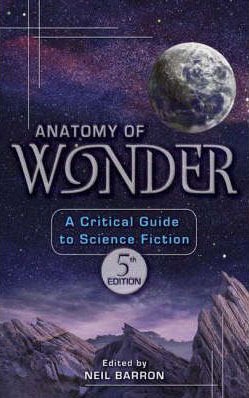
For those science fiction fans who really love reading about the great books of science fiction, I highly recommend reading Anatomy of Wonder edited by Neil Barron, now in it’s 5th edition.  It’s a very expensive book, designed for library reference, so it’s cheaper to get used copies of the older editions.  Go to the Amazon link I provided with the title and click on Look Inside to see what it’s like.  Neil Barron and his contributors are doing what I’m doing here, but exhaustively, scholarly, and providing a summary description for each book.  If you really love science fiction and want to read about the best books from the past, this book is for you.   You can get used copies of older editions for less than $5 at Abebooks.com.  Editions were 1976, 1981, 1987, 1995, 2004.  Aim for the latest edition you can afford.  I hope a 6th edition comes out soon.

anatomy-wonder-barron-neil-hardcover-cover-art

Doing the research for these essays has been great fun.  A test of my memory.  It’s also shown me how science fiction has aged, and changed over time.  The science fiction of the 1970s seems more grownup than the 1960s and 1950s, less about space adventure and more about people and their problems.  Part of that change came about because of Terry Carr and his Ace Science Fiction Specials (1968-1990), and the impact of The New Wave on science fiction.  Science fiction also seemed to be polarizing over politics of the 1970s – see “New Maps of Science Fiction” by William Sims Bainbridge and Murray M. Dalziel from the Analog Yearbook, 1977.  For the article they polled 130 readers to get a list of the popular SF writers of the 1970s.

popular-sf-authors-1970s

It you study this list and then look at my long list below you’ll notice that there are many new authors breaking out in the 1970s, especially women writers.  Of the 27 writers making their popularity poll, only two are women, Ursula K. Le Guin and Anne McCaffrey.  My 1970s long list adds Octavia Butler, Suzy McKee Charnas, C. J. Cherryh, Vonda N. McIntyre, Marge Piercy, Joanna Russ, Alice Sheldon (James Tiptree, Jr.), and Kate Wilhelm.

I create two lists for these remembrances of science fictional past.  The first is a short list of the most famous titles, the science fiction books probably most remembered today, especially by current fans, and maybe famous enough to be known by people outside of the genre.  The second, the long list, are the books that hardcore science fiction fans should fondly remember.

The Best Remembered Science Fiction Books of the 1970s

I believe these 1970s science fiction books are more often reprinted, more often talked about by young readers I meet, more often discussed in the book club, and more often written about, but I can’t prove it – just my intuition.  I expect every science fiction fan who lived through the 1970s will want to argue with me.  None of the books I picked for the short or long list are my top favorite SF books of all time.  I like them, but none of my all-time favorite science fiction books came out in the 1970s.  I’ve read many of the books from the long list, and most are entertaining, but none of them have stuck in my heart.  For some reason, since the turn of the century, I’ve been experiencing a reading renaissance, and I’ve been discovering new books again that I love like I did when I was a teen – but that’s another essay.  They do say getting old leads to a second childhood.

Like I said in the original essay about the 1950s, it’s the books we read starting at age 12, and following few years, that imprint on our souls.  The 1970s represents my twenties, and I was branching away from science fiction by then.  I’m quite sure there are fans who were teens in the the 1970s that found many of these books wonderful and are lifetime favorites for them.  But also remember, the 1970s was when Star Trek fans started swarming into the genre, and then Star Wars hit.  After that science fiction conventions were more about media science fiction than literary science fiction.

The Best Science Fiction Books of the 1970s for Hardcore Fans

1970

ringworld
1971

moderan
1972

beyond-apollo
1973

rendezvous-with-rama
1974

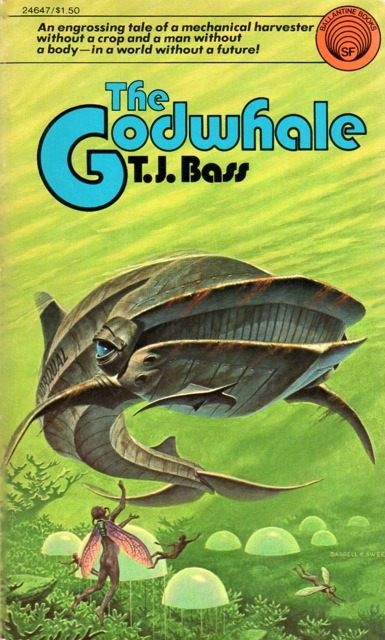
the-godwhale
1975

the-female-man
1976

the-word-for-the-world-is-forest

1977

inherit the stars
1978

the-persistence-of-vision
1979

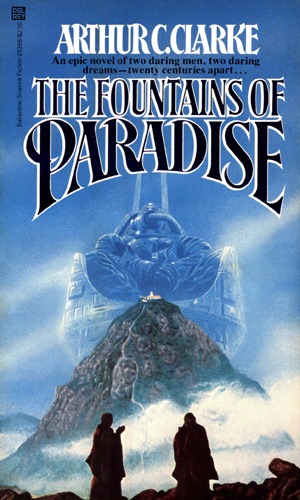
fountains_of_paradise
1950s 1960s 1970s 1980s 1990s

JWH – 4/9/13 –  Table of Contents