2013 Year in Reading

The older I get, the more I feel my reading life is fading away.  I was born to read.  Reading has shaped and defined my existence.  So it’s scary to think that I’m running out of reading time.  Even if I live another 20 years, that’s only 1,040 books at this year’s pace.  That seems like a lot, but it’s a finite number.  Picture an hour-glass, but instead of grains of sand, imagine tiny little books falling through the narrow waist of the time.
confessions-of-a-crap-artist-5

I retired this year on October 22nd, and assumed I’d start reading books like crazy.  When I worked, I read about one book a week.  I hoped after retiring, to read two books a week – instead it’s one book every two weeks.  Damn.  That’s not what I planned at all!  I’ve only been able to catch up to my yearly average by quickly finishing off several half-read books.

As 2013 closes out, I contemplate the power of less, both having less time, but also wanting and owning less, so I can focus clearly on my goals, and I realize I need to change my attitude toward reading.  More than ever, I want to make every book count.  This might sound contradictory, but I’m thinking I need to read less too.  Instead of consuming books in great numbers, I should savor and study them.  But what if that means I have 300 books left?

In 2012 I read 49 books and I wrote in my 2012 Year in Reading that I wanted to read 12 novels, 12 science books, 12 history/other non-fiction books in 2013, and hopefully 12 of those would be published during 2013.  Well, I didn’t do so good, especially with science books – I didn’t read any science books at all!   I did read one math book.  Plus, I only read just seven 2013 books (I did read eleven 2012 books, so I’m close).  I read 24 fiction books, twice what I wanted.

When I look at the list below I realize that some books were definitely worth my reading time, but others, even ones I really enjoyed, weren’t.  I’ll rate the books I felt added much to my life with up to 5 pluses (+), but any book I didn’t rate means I could have skipped without impact.  Some of these were lots of fun, but I need more than just fun.

Books Read in 2013

Favorite Fiction

  1. Nineteen Eighty-Four by George Orwell
  2. The Short Stories Volume 1 by Ernest Hemingway
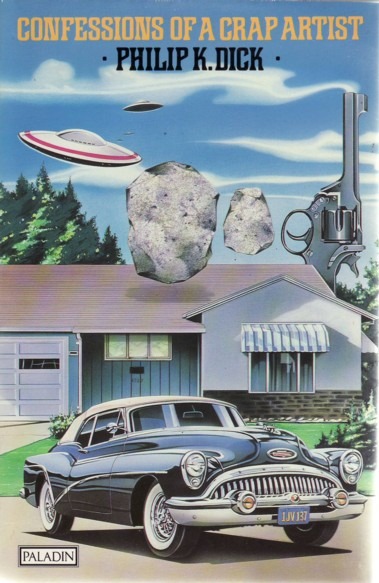
  3. Confessions of a Crap Artist by Philip K. Dick
  4. The Fault in Our Stars by John Green
  5. The Long Tomorrow  by Leigh Brackett

Favorite Nonfiction

  1. Half-the-Sky: Turning Oppression into Opportunity for Women Worldwide by Nicholas Kristof and Sheryl WuDunn
  2. The World Until Yesterday by Jared Diamond
  3. The Unwinding by George Packer
  4. The Voice is All by Joyce Johnson
  5. Other Powers: The Age of Suffrage, Spiritualism, and the Scandalous Victoria Woodhull by Barbara Goldsmith

Order of Reading

  1. Confessions of a Crap Artist (1959) – Philip K. Dick (+++++)
  2. Half-the-Sky: Turning Oppression into Opportunity for Women Worldwide (2009) – Nicholas Kristof and Sheryl WuDunn (+++++)
  3. Beautiful Ruins (2012) – Jess Walters (+++)
  4. The World Until Yesterday (2012) – Jared Diamond (+++++)
  5. At Home (2010) – Bill Bryson (+++)
  6. Redshirts (2012) – John Scalzi 
  7. The Wrecking Crew (2012) – Kent Hartman (+++)
  8. The Sheltering Sky  (1949) – Paul Bowles (+++)
  9. Hull Zero Three (2010) – Greg Bear
  10. Wishin’ and Hopin’(2009) – Wally Lamb
  11. Quiet: The Power of Introverts in a World That Can’t Stop Talking (2012) – Susan Cain (++++)
  12. Other Powers: The Age of Suffrage, Spiritualism, and the Scandalous Victoria Woodhull (1999) – Barbara Goldsmith (++++)
  13. The Searchers (2013) – Glenn Frankel (+++)
  14. Heaven is for Real (2010) – Todd Burpo
  15. Darwinia (1999) – Robert Charles Wilson
  16. Society’s Child (2008) – Janis Ian
  17. We Can Build You (1972) – Philip K. Dick
  18. Oz Reimagined (2013) – edited by John Joseph Adams
  19. Drive: The Surprising Truth About What Motivates Us (2009) – Daniel Pink (+)
  20. Word Freak: Heartbreak, Triump, Genius and Obsession in the World of Competitive SCRABBLE Players (2001) – Stefan Fatsis (++)
  21. The End of the Affair (1951) – Graham Greene (++)
  22. Mrs. Dalloway (1925) – Virginia Woolf (+)
  23. The Fault in Our Stars (2012) – John Green (++++)
  24. The Sense of an Ending (2011) – Julian Barnes (++)
  25. Why Are You Atheists So Angry: 99 Things That Piss Off the Godless (2012) – Greta Christina
  26. The Next 100 Years:  A Forecast for the 21st Century (2009) – George Friedman
  27. The Heart of Darkness (1899) – Joseph Conrad (+)
  28. Life As We Knew It (2006) – Susan Beth Pfeffer (+)
  29. The Ballad of Bob Dylan (2011) – Daniel Mark Epstein (+++)
  30. 2312 (2012) – Kim Stanley Robinson
  31. The Cuckoo’s Calling (2013) – Robert Galbraith (J. K. Rowling)
  32. Let’s Explore Diabetes with Owls (2013) – David Sedaris
  33. Door Wide Open (2001) – Joyce Johnson
  34. The Unwinding – (2013) George Packer (+++++)
  35. The Year’s Top-Ten Tales of Science Fiction 5 (2013) – edited by Allan Kaster
  36. Euclid’s Window (2001) – Leonard Mlodinow (++)
  37. The World Jones Made (1956) – Philip K.  Dick
  38. The Long Tomorrow (1955) – Leigh Brackett (++)
  39. Lightspeed Year One (2011) – edited by John Joseph Adams
  40. One and Only (2011) – Gerald Nicosia and Anne Marie Santos
  41. Po-boy Contraband (2012) – Patrice Melnick
  42. The Voice is All: The Lonely Victory of Jack Kerouac (2012) – by Joyce Johnson (++++)
  43. The Year of Magical Thinking (2005) – Joan Didion (++++)
  44. Boys Adrift (2005) – Dr. Leonard Sax (++++)
  45. One Summer: America 1927 (2013) – Bill Bryson (++++)
  46. The Power of Less (2008) – Leo Babauta (+)
  47. Wheat Belly (2011) – William Davis MD (+++)
  48. The Short Stories Volume 1 (2002) – Ernest Hemingway (+++++)
  49. Distrust That Particular Flavor (2012) – William Gibson (++)
  50. Pulphead (2011) – John Jeremiah Sullivan (+++)
  51. Leviathan Wakes (2011) – James S. A. Corey
  52. Nineteen Eighty-Four (1949) – George Orwell (+++++)

Reading Plans for 2014

Once again I want to read less science fiction and more science, fewer fiction titles and more nonfiction.  Of course I’d like to read all +++++ books, even if I only read half as many books total.  I find it tragic that I forget what I read so quickly.  What a crying shame it is to take in so many fascinating facts that flee my mind in just minutes and hours.  Shouldn’t I be doing more rereading than reading, studying, rather than rushing by all those scenic words?

Going through my bulging bookcases, here’s what I’m pulling down to pile beside my reading chair, hoping to read in 2014.

  • On Looking: Eleven Walks with Expert Eyes (2013) – Alexandra Horowitz
  • Grain Brain (2013) – David Perlmutter, MD
  • Time Reborn (2013) – Lee Smolin
  • The Goldfinch (2013) – Donna Tartt
  • Thinking, Fast and Slow (2011) – Daniel Kahneman
  • The Beginning of Infinity (2011) – David Deutsch
  • Darwin’s Armada (2009) – Iain McCalman
  • The Best Writing on Mathematics (2013) – Mircea Pitici, Editor
  • The Fallacy of Fine-Tuning: Why the Universe is Not Designed for Us (2011) – Victor J. Stenger
  • Waging Heavy Peace (2012) – Neil Young
  • Your Inner Fish by Neil Shubin
  • Mathematics: The Loss of Certainty by Morris Kline
  • Touching the Rock: An Experience of Blindness by John M. Hull
  • The Social Conquest of Earth by Edward O. Wilson
  • Darwin’s Dangerous Idea: Evolution and the Meaning of Life by Daniel C. Dennett
  • Euclid in the Rainforest: Discovering Universal Truth in Logic and Mathematics by Joseph Mazur

JWH – 12/27/13

You Don’t Know Jack (Kerouac)

Jack Kerouac was born March 12, 1922 and died October 21, 1969.  Nearly all people who knew him in the 1st degree of separation has died – not all, but most.  In recent years, books by the women he knew have been coming out, revising the fiction and the facts.  Kerouac wrote roman à clef novels.  Kerouac and his friends appeared in other roman à clef novels. The same crowd also wrote and talked endlessly about their lives.  Countless biographies have been written.  Then friends and lovers started publishing their stories.  Kerouac has always been ground zero for the Beat movement, and trying to understand why is a fascinating snark hunt that ultimately reveals a lot about universal psychology and philosophy.

Recently Carolyn Cassady died.  She was Camille Moriarty in Jack Kerouac’s On the Road, wife to real-life Neal Cassady, who was Dean Moriarty in the book.  Carolyn wrote her own books, Heart Beat and Off the Road.  Jack Kerouac haunts me, so it saddens me to hear about Carolyn, who now becomes another of the Beat Generation ghosts.

Jack-Carolyn-and-kids

In 2011 Lu Anne Henderson, who was Marylou in On the Road, and Neal Cassady’s first wife, had her side of the story told in One and Only.  Like Carolyn, Lu Anne was the oxygen atom to Kerouac’s and Cassady’s hydrogen atoms.  Camille and Marylou were the pivotal women of On the Road, so to get their stories is very revealing, even creating new mysteries.

lu-anne-henderson-1947

Finally, there’s Joyce Johnson.  In 1999 she came out with Minor Characters:  A Beat Memoir, and then in 2000, Door Wide Open, a collection of letters between her and Kerouac, and finally in 2012 The Voice is All: The Lonely Victory of Jack Kerouac, a major biography.  Joyce knew Kerouac just before and after the publication of On the Road.

joyce_johnson

I often ask people:  Which would you rather do, write a great novel, or be a model for a character in a great novel?  Jack Kerouac wrote many novels and was a character in many more, and he has been the subject of many biographies.  Carolyn and Lu Anne were  featured characters in both the novels and biographies.

Jack Kerouac is a person I like to keep up with, even though he died in 1969, the year I graduated high school.  About every half decade I check out what new discoveries have been unearthed about his legend.  That’s the thing about legendary figures, they always evolve and mutate.  There is much to be learned about oneself by careful studying of other people.  Pick a person and try it out.  I find ambitious writers with lots of personal flaws to be quite revealing about life.  Jack Kerouac makes a particularly painful role model.

Most of Jack Kerouac’s novels are semi-autobiographical.  Many people read On the Road and never read another Kerouac novel – their curiosity for Beat life was quickly quenched.  A few more might go on to read The Dharma Bums, or even Big Sur or Visions of Cody, but for most readers, a little Kerouac goes a long way.  But if you’re like me, you keep reading books by and about Kerouac and the story changes as it becomes deeper.

Part of the problem is most readers think Kerouac equals the Beat Generation, and once they think they understand the Beats and reject their philosophy, because most do, they are through with Kerouac.  That’s too bad.  But to really know Jack, you have to separate him from the Beats and read him as one man trying to make literary sense of his reality.  Kerouac was on the edge of several social and literary movements, but because he was crowned King of the Beats, that’s all most people judge him by.

Some people study genealogy because they want to know about their ancestors, about their genes and blood.  Not me.  I consider myself a creation of pop culture, and I want to know my pop culture ancestors.  Who we are is our cultural history.  We’re all descendants of Judaism, Christianity, Greek philosophy, the Enlightenment, Science and a whole host of 19th and 20th century influences.  Most Baby Boomers focus on the 1960s, but to really know yourself requires getting to know the 1950s, 1940s and 1930s.  And to understand those times means studying the 1920s, 1910s and 1900s.  America is constantly changing and mutating.

I was born in 1951 and remember the 1950s.  My father died when I was 19, and I never really knew him.  He was born in 1920, and Jack Kerouac was born in 1922.  They both died miserable drunks a few months apart, both in Florida no less.  I use Kerouac to understand my father.  And to understand them both I need to understand the 1940s.

By the time the Beats got famous, their movement was already over, and had mutated into many new movements around the country. Go (1951) by John Clellon Holmes and On the Road (1957) by Kerouac, were the real Beat novels, and were about events a decade before the public discovered the Beats.  Kerouac was a character in Go, as was Neal Cassady.  Carolyn Cassady knew Kerouac in both the late 1940s and later in the 1950s, and her books, clarify the story.

The trouble with studying the Beats, is most of the documentation on them is about when they all got famous in the late 1950s.  What defined the Beats were their reaction to America in the late 1940s, but how we remember the Beats is defined by their public personalities of the late 1950s.  To understand Jack Kerouac means understanding American from 1945-1955, and even dividing that time into two parts.

Most people are shaped by their teen years, early twenties and late twenties, from 13-30.  Jack turned 20 in 1942, and 30 in 1952.  It’s those ten years that we want to get to know.  Later on, Jack tried to understand his own personal development by writing about his childhood, the 1930s.  It took a long time to get On the Road published, and by 1957 when it hit the scene, and defined the Beat Generation, Jack was 35, a burnout, living most of the time with his mother in Orlando, Florida, and committing slow suicide with a bottle.  He died at 47.  My father died at 49.  I was 19.

A good contemporary view of Kerouac in 1957 and 1958 is Door Wide Open by Joyce Johnson, a collection of letters between Johnson and Kerouac.  This is not the Kerouac of the 1940s.

There are people who never stop reading about Kerouac and the Beats.  This is hard to explain.  In a way, it’s like studying cosmology – there’s always more to discover.   First you are drawn to the excitement of rushing back and forth across America in the 1940s, but soon realize all this rushing is madness, that there is no normal life to be found.  You accept that poor Jack was a loser, a drunk, and the dazzling Neal Cassady was a low life hustler, con man, thief, and a man who would always let his wife, children and friends down, but they all loved him.

You walk away from the Beats thinking they were Nowheresville.  That’s too bad.  The real mystery is beyond the Hudson rushing across the plains at a 100 mph, the kicks, the drugs, smoking gigantic reefers in Mexican brothels, or following the mad ones Kerouac was so enamored with, but instead, we have to look over Neal’s shoulder’s to the American he was speeding by, to the couples they shared rides with, to people who own the cars they boosted, to the sane folks who saw them in the jazz joints acting like madmen.

hudson

If you’re lucky, you’ll read one of the biographies  and discover Jack is more complicated.  Slowly this Charlie Parker generation starts coming alive, and you begin to realize that the Beats weren’t Beatniks.  America is the sum of all its hidden histories, and not the history they teach you in school.  Reading books by the Beats, and books about the Beats, leads to exploring a different 1940s America than what we remember from It’s a Wonderful Life (1946), The Best Years of Our Lives (1946), The Bishop’s Wife (1947), Miracle on 34th Street (1947) – the films by which most Americans remember America from 1946-1950, which is the time covered in On the Road.  It’s not that those great films are wrong, but they are only one facet of a multifaceted view.

All novels have a gestation period.  On the Road was published in 1957, but was about events from the late 1940s.  The Catcher in the Rye was published in 1951, the year I was born, but was about the earlier 1940s.  Also published in 1951 was From Here to Eternity by James Jones, which was about 1941.  Zeroing in on On the Road’s America, isn’t easy.  It comes before The Man in the Gray Flannel Suit (1955) about 1953, but I think many readers picture Kerouac’s adventures happening around the time of its publication in 1957, just after Sputnik went into orbit, and thus the term Beatnik.  We think of the Beats as the generation before the Hippies, but in reality, they were the 1945-1950 youth, and the famous 60s generation happened between 1965-1975.  1955-1965 included the folk generation, as well as the early rock and roll kids – think Grease and American Graffiti.

By 1957, Kerouac was well on his way to being a full time drunk.  His short moment of fame gave him enough money to reignite his life and go on a few more road adventures, that were mostly lonely and pathetic.  Kerouac in Paris is very sad.

If Kerouac had an artistic vision that chronicled his spiritual quest for transcendence in America, it wasn’t about the end of the 1950s when he was famous, it was about his life between 1940 to 1955, and even earlier when he tried to reconstruct his childhood of the 1930s.  Strangely enough, the late 1950s was Ginsberg’s time, because of the Six Gallery reading in 1955, and the beginning of the San Francisco Renaissance.  Kerouac was there, but his involvement was waning.  Kerouac had been a part of a reactionary movement a decade earlier at Columbia, with his anti-academic friends.  By the mid-1950s Kerouac wasn’t a leader but a follower, inspired by younger writers like Gary Snyder, who inspired his interest in Zen, Buddhism, hiking, mountain climbing, and spiritual practices.  By then, Beats, Beatniks and proto-Hippies were everywhere.  The counter culture was a good sized snowball rolling down the hill that would become an avalanche in the 1960s.

What I want to know about is the counter culture of the 1940s and 1930s.  The radicalization of America in the 1960s didn’t start then – it started much earlier.  I think we’re currently living through times getting ready for another big social change.  Whether the 2010s will be the 1960s, when all hell broke loose, or the 1950s or 1940s when the seeds were planted, is still to be seen.

JWH – 10/6/13

A Study in Fame–Bob Dylan

Our world is awash with famous people but how many are really worth the notice?  If you live long enough you’ll watch the famous coming and going, maybe not as fast as every fifteen minutes, but its amazing how many once famous faces I can no longer match a name in memory, or tell you if they are dead or alive. Think about it, how many people can you name that have stayed famous your whole lifetime?  One of the strangest of the famous that’s haunted me my whole life is Bob Dylan.

bob-dylan05

Dylan was born in 1941, and I was born in 1951, and he started recording in 1961, so he was in the generation just ahead of mine, who made an impression us boomers as we became aware of the world around us as teens.  Fifty years on, my demographic cohorts are in their sixties, and the generation that influenced us are in their seventies.  Many of the famous people that inspired my generation are forgotten or dead – or both.

Most folks are famous for a Warhol unit of time because they create only one noteworthy event on the world’s stage.  Bob Dylan has written hundreds of songs, an astounding output of artwork, but what makes many of them memorable is how they fit into history at large.  And if you didn’t like his singing, there have been hundreds of performers covering his tunes.  At one time I had a playlist on Rhapsody with over 100 cover versions of “All Along the Watchtower.”  Part of Dylan’s fame is due to influencing so many other people.

Not only is Dylan famous, but he’s legendary, infamous, and mythic.  Although most people won’t think of Bob Dylan when they think of the concept of fame, but if you read his biographies, and there are countless bios to read, you’ll see he’s a perfect example of someone suffering the fates of fame.

Plus Bob Dylan has toured the Earth like no other person in history.  Dylan played 2,000 concerts between 1988 and 2007, and he continues to tour at the rate of about 100 concerts a year.  His constant touring, which has gotten named the Never Ending Tour, will probably end when he dies.  Just look at his tour dates and locations.  Fans now follow Dylan from city to city like hippies used to follow The Grateful Dead.  Dylan tours like Sisyphus rolls rocks.

Has there been anyone in the history of the world that has traveled to more places than Bob Dylan?  Dylan has his own artistic empire of fame.

Yet, to the average person, how many people can name a Bob Dylan song?  He’s not that famous, not enough that all 7 billion people on Earth know of him.  Currently Dylan is only #65 on one of The Most Famous People of All Time lists.  But such lists are bogus, because there’s no real way to measure fame, other than maybe counting daily Google searches.

Of people who listen to rock and roll, Dylan is famous, to people that don’t, I can’t imagine his name coming up very often.

Fame is an odd concept.  Fame is both ephemeral and lasting.  If you look at the 2013 Time 100 list of most influential people of the moment, you won’t see Dylan, and you will see many names you’ve probably haven’t heard of before either.  How many people know of Elon Musk?  You’re famous if the media takes notice of you, whether its because you’re heroic, criminal, mad, inventive, creative, stupid, or whatever catches the public’s fancy at the moment.

Some people consider Bob Dylan a rock star, others a songwriter, and others a poet.  Fame for a poet really means how often are any of your carefully crafted lines quoted or memorized?  Fame for a songwriter is measured by how often do people sing and record your songs.  Fame for a rock star is measured by how many people swoon at your image holding an electric guitar.  Poetry is a dying art form, but poetry was never popularly consumed to begin with, but some poems have lasted a very long time.  A century from now, how many rock stars will actually be remembered?  How many figures from popular culture can you remember from 1913?  That’s after Mark Twain and before Charlie Chaplin.

The Independent gave “70 reasons why Bob Dylan is the most important figure in pop-culture history” on his 70th birthday.  Will any of those reasons be valid in 2113?

Go to this list of Dylan songs at his website, and see how many titles you know.  Then click on the song name and read the lyrics.  You’ll have to decide for yourself if the words will survive like the words of the great poets of the past.  Dylan has lead a legendary life.  I’m sure there will be novels and movies based on his adventures in the future.  Some have already come out.  But his real fame will come from his songs, and the seeds they plant in minds yet born.  Byron and Keats never imagined all the thoughts thought about their lines of poetry, and we can’t imagine what will happen to Dylan’s words in the future.  But my guess is they will be put to uses in ways we could never fathom even if time travelers came back and told us.

The-Ballad-of-Bob-Dylan

I just finished reading The Ballad of Bob Dylan by Daniel Mark Epstein.  It was a compelling read that kept me constantly wanting to find more time to read.  Among the many biographies of Dylan I’ve read, it’s among the best, although my favorites are still Positively 4th Street by David Hajdu and No Direction Home by Robert Shelton, now in a new edition.  Reading about Bob Dylan is like trying to study cosmology, it’s a subject of endless depth.

JWH – 7/14/13

A Feminine View of an Apocalypse

I hope I’m not being too sexist here, when I review Life as We Knew It by Susan Beth Pfeffer.  The books seems to be a feminine take on the end of the world.  But I have read many end of the world stories, and I think they’ve always have been written by males.  Books about the collapse of civilization are a special favorite of mine since I was a little kid, and now they are becoming very popular with young adult readers.  It’s rather fascinating to read a woman’s take on the genre.

First off, this isn’t going to be a regular review, because it’s going to contain spoilers to all the essential events in the story.  Let’s just say that I found Life as We Knew It to be extremely readable and likeable, but I want to dissect it because it was such a different view on the end of the world as I know it.  It was a rather nice and civilized view, and I’m essentially asking if that’s because the author was female.  Of course, this is a YA novel, so maybe it was pulling its punches, but then I’m not sure if YA readers want to be handled with care.  Kids loved The Hunger Games, which made them sort of like Romans at the Coliseum.

Surviving a brutal world at the collapse of civilization is the core appeal of reading end of the world stories.  Like I said, I really liked Life as We Knew It, and felt it was a compelling read.  I’d recommend it to any adult or kid who loves to read YA novels, but I’m now going to pick it apart for psychological reasons.  If you haven’t read it, don’t read beyond the cover photo.

lifeasweknewit

When civilization collapses all rules disappear.  Survival is the number one driving force.  And in most post-apocalyptic novels of this type, the key conflict is kill or be killed.  Susan Beth Pfeffer completely side steps this issue.  An asteroid hits the moon and brings about catastrophic changes to life on Earth.  The story takes place from May to March, beginning slowly, but ending with a brutal “nuclear winter” like winter.  The story is told by Miranda, a sixteen-year-old girl in diary form, and is about how her single mother Laura keeps Miranda, and brothers Matt and Jon alive when civilization falls apart.

One reason I love these after-the-collapse stories is they present a perfect fantasy puzzle of “What would you do?” in the same situation.  If you were sitting in your suburban home watching the news and knew that civilization was about to come to an end, what would you do?  Laura withdraws a lot of cash out of her bank and pulls her kids out of school.  She also gets an old lady neighbor and they all go on a frantic shopping spree for food and necessities.  Now this is practical, but Pfeffer presents this chaotic moment as too civilized.  Sure it’s a madhouse at the grocery story, but not crazier than Walmart at 4am on Black Friday.  And it’s a bargain, all shopping baskets can be stuffed with as much stuff as possible for just $100, so each person gets several loads.  That’s just unbelievable.

And here’s the thing, that one shopping spree lasts the family eleven months.  Even though they live near a pond, there is no mention of fishing.  Even though they live in the outskirts of town with lots of trees to cut down for firewood, there’s no mention of hunting squirrel, rabbits, raccoons, possums, groundhogs, frogs, turtles, dogs, cats, birds or anything else.  Everyone begins to starve, but they take dead bodies to the hospital.  If these people are that hungry and think they won’t make it through the winter, why aren’t they eating the dead?  I’ve been a vegetarian since 16, but hey, every real life story I’ve ever read about starving finally comes down to cannibalism.  By the time Mrs. Nesbitt died, Miranda and family should have been hungry enough to eat her.

Pfeffer evidently doesn’t believe in killing animals for food even though the family eats a lot of canned meats.  It’s strange that the boys chop wood seven days a week to get ready for winter, but never go hunting and fishing.  Nor do they go scavenging.  In Pfeffer’s world, the rule is people leave each other alone, and only plunder each other’s houses if the family dies or moves south.  But Matt, Jon and Miranda never routine scavenge homes on their own.  That’s way too civilized.  And dare I say too girly?  Life as We Knew It is way too civilized view of no civilization.  America is full of gun owners, but we don’t see guns in this story except for a couple tiny mentions.

Liberals often ask NRA members why do they need assault rifles.  Well, they are for the end of the world.  When civilization goes down the toilet, it’s a dog eat dog wild west world.  In Susan Beth Pfeffer’s apocalypse it’s a please-and-thank-you end of the world scenario.  Only nature kills, not people.

Like I said, Life as We Knew It is a gripping, well told story, even though it doesn’t fit the standard after-the-collapse model.  Is that because Pfeffer is a woman and expects the end of the world to be different?  Or does she believe young adult readers shouldn’t imagine such a brutal existence, even though they’ve been assigned Lord of the Flies for decades?   Or is her novel just a cozy story of how she thinks things should be if civilization should collapse?  Sort of a politically correct Mad Max?

Even the ending was too nice.  Miranda has decided to leave home to die in hopes of leaving more food for her younger brother who everyone thinks should be the ultimate survivor.  But at the last minute she finds a flyer from a newly set up government office that’s giving away food.  They are saved.  Civilization hasn’t completely collapse and its making a comeback.  Survival has merely been one of waiting, hoarding food, and rationing.  No one in this story fights to survive.  They struggle, they endure, they work hard, but they don’t fight.

The thing I’ve always loved about after the collapse stories is the pioneering spirit of starting over.  Of reinventing old ways of doing things to replace modern technology.  There is no invention in this story, no learning to make bows and arrows, no Gilligan’s Island professor inventing new tools out of old parts, no reading old books to figure out how to make animal traps and cure hides.  Most of all, these people don’t scavenge, steal or kill.  Nor are they preyed upon by armed hoards of starving survivalists.  Every family holes up in their own house and waits.  Ultimately, waits for the government to help them.

Hey, I’m about as liberal as they come, but I know better than wait on the government after civilization goes down the drain.   I don’t know if the collapse of civilization would be as brutal as The Road by Cormac McCarthy, but it should be as brutal as Survivors (BBC 1975-1977), a favorite TV show of mine.   My all-time favorite after the collapse story is Earth Abides by George R. Stewart.  That’s because it’s about the intellectual rebuilding of society.  Stewart shows that once civilization collapses it will be very hard to rebuild.  I’m afraid Susan Beth Pfeffer doesn’t really understand what a collapse of modern society means, or she didn’t want her story to be all about realistic brutality.  I have to give Suzanne Collins a lot of credit for having her sixteen-year-old Katniss facing realistic brutality in a honestly violent way.

Even if Pfeffer didn’t want Miranda and her family shooting guns at other people, she should have at least included a local militia protecting the neighborhoods and setting up the power behind the rule that you don’t loot your neighbor’s house unless they are dead or moved.  Pfeffer makes no suggestion that strangers would organize or work together.  Family is the only bond.  That’s odd, don’t you think?  After every natural disaster I see endless news stories about strangers helping each other.

Also I was disappointed that Miranda and her family totally depended on the phone, radio, TV and the Internet for their news, and once those systems died, they just did without.  Why didn’t they communicate more with other people?  Why wasn’t their some kind of gossip grapevine, or bulleting board news system?  Pfeffer’s characters aren’t inventors, but I think necessity really is the mother of invention, and they faced a whole lot of necessity.

I believe we all write end-of-the-world stories that reflect our own psychological make-up.  And this could be a little like taking your clothes off in public.

I’m calling Life as We Knew It a feminine apocalypse because her nonviolent view of the end of the world is so very different from all similar books I’ve read which have always been written by males.  Is that sexist or political incorrect of me?  Who says end of the world stories have to play by masculine rules?  But why didn’t Miranda try to catch fish at the pond, or the boys try to kill squirrels when they were chopping wood?

Now don’t get me wrong, I do believe most women would be fighters in real life, and probably if they wrote fictional accounts of surviving, their characters would be fighters too.  I’m just wondering why Pfeffer wrote such a polite story about a brutal time?  Is this her naked honesty of how she thinks people would behave?

In this story food only comes from the grocery store, and help only comes from the government, and desperate people never resort to using guns.  Where’s the 4th of July spirit?  I grew up watching westerns, so I guess I might be indoctrinated differently.

Maybe I shouldn’t write such a story as this, because my naked views might be loathsome.  But now that I’m old, and in declining health, it would be much different from one I would have written at 25.  I should write an after-the-collapse story about a gimpy old fart trying to survive the end of the world.  It would have a hilarious scene of a life long vegetarian killing and eating a squirrel.

JWH – 7/4/13

What Are The Best Sites For Reading Science Book Reviews?

Generally, when I discover a great science book, it’s through accident, rather than intent, and usually it’s a couple years after it originally appeared.  Popular science books seldom become beach reads that everyone talks about.  Maybe I should say never, because I can’t name one.  Even though our culture is massively tech driven, science isn’t popular like football or superhero movies.  It’s a darn shame that science books don’t get the press that Kim Kardashian does!  What I’d like is a handful of science book review sites to read weekly, and when a book gets praised on many of them, I’d know what to read right away.

Quite often I’ll visit one of my two favorite bookstores and check out the science book section and see many new science books that look appealing, but I’m afraid to buy them without knowing more.  Over the years I’ve bought several science or science history books that I later discovered were not very well received.  What I need to do is read reviews before I go shopping, so I’ll know something about the new science books.

Since Google is our best friend, I started with a search on: science book reviews.

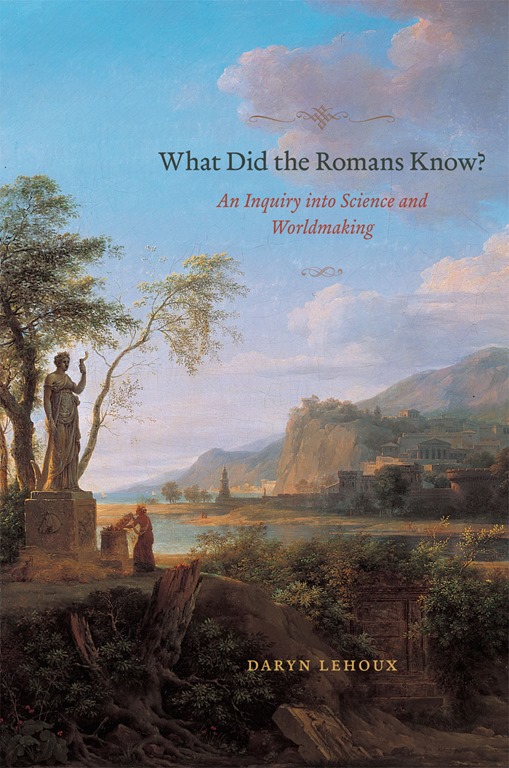
At the top of the search results is book reviews at Science Magazine.  Ah, an obvious choice!  But before I could get too excited, I was quickly reminded that Science is rather parsimonious with its words.  You have to be a subscriber to read the full text reviews.  However, they do give yearly listings of book reviews with links to Amazon, where I can read the customer reviews.  Here’s the list for 2013.  Overall, I’d stay it’s not worth the visit though, especially since many of the book are expensive academic books I’d never buy, like The World in the Model by Mary S. Morgan, which does sounds great though.  Although I did spot a couple books I’m going to keep my eye out to find.

what-did-the-romans-know

What Did The Romans Know? An Inquiry into Science and Worldmaking by Daryn Lehoux.

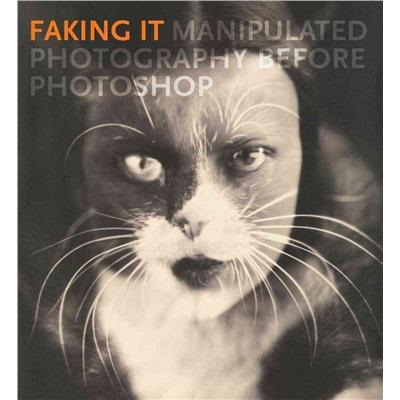
faking-it

Faking It – Manipulated Photography Before Photoshop by Mia Fineman

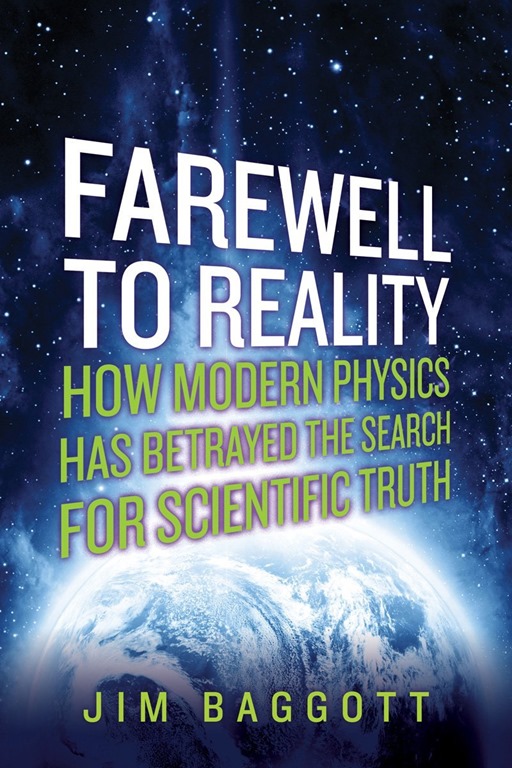
Second in the Google returns is The Guardian:  Science Book Reviews.  Now these popular science books are more my speed.  Right off the bat it reviews two books I want to read.  However, it’s not exactly what I’m looking for either.  The Guardian provides a rather hodgepodge look at science books.  What I’d really like is a site that covers each week’s new published science/math books, pretty much like Entertainment Weekly does for movies, television, music and books.  Here’s one book reviewed at The Guardian I’ll buy when it comes out in America 8/1/13.

farewell-to-reality

Farewell To Reality: How Modern Physics Has Betrayed the Search for Scientific Truth by Jim Baggot.

Over at American Scientist, they have a Book Review Links page that attempts to do what I’m doing here, find science book review sites.  There I found Download The Universe: The Science Ebook Review.  This is a very cool site about science ebooks, both free and priced.  I liked this site so much that I subscribed to their RSS feed in Outlook.

Another great site is Edge.org, and their Library page.  It’s not really a book review site.  Title links go to Amazon, but author links go to pages about the writers, and since Edge.org focuses on interviews, this often leads to book discussions.

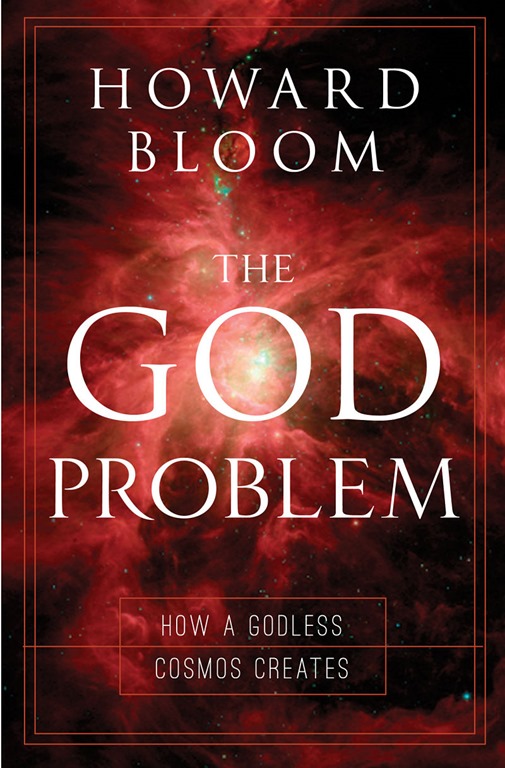
I did stumble upon ForeWord Reviews Science Section.  One book it reviewed that intrigued me was Software and Mind: The Mechanistic Myth and Its Consequences.  But it’s priced out of my reach, and is probably outside my intellectual grasp.  But it sure does sound fascinating.  I bought The God Problem: How A Godless Cosmos Creates by Howard Bloom because of their review.  I’ve always wondered why a universe ruled by the 2nd law of thermodynamics could create such complex systems.

the-god-problem

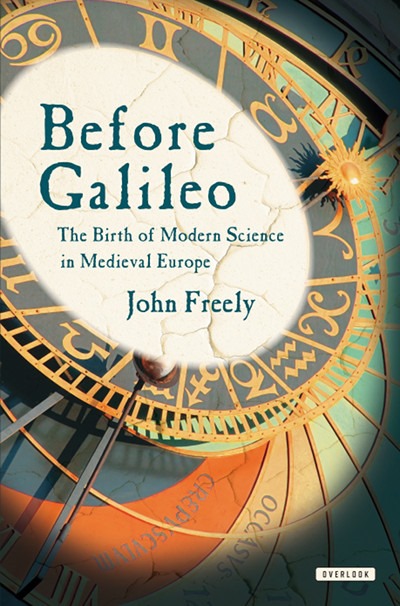
A book I spotted at my favorite bookstore, Before Galileo: The Birth of Modern Science In Medieval Europe by John Freely was very enticing, but I went home empty-handed to read the reviews first.  The reviews at Amazon were overall positive, but one made me worry.  It claimed the narrative was more like an annotated bibliography.  The review at Physics Today was a lot more encouraging.  However Nicole Archambeau, the reviewer, claimed she wouldn’t assign it as a textbook, but preferred The History of Science: From Augustine to Galileo.  But at Amazon, one of the two reviewers called that book mediocre.  But over at the the Wall Street Journal, Laura J. Synder didn’t fuss over Before Galileo much, but did mention a few subjects it covered that made it appealing again.  I always find books that make a case that the dark ages weren’t completely dark to be a reason to get on my To-Be-Read pile.  But if you follow my links and read the reviews, Before Galilio is a good example of why you don’t just grab an interesting title off the shelf and buy it.  I think I’ll wait to see how the Kindle edition will be priced.

before-galileo

Science News has a Bookshelf section on their web with reviews of many books I saw at the bookstore yesterday.  They are short reviews, and not good enough to effect a buying decision, but they do list a lot of books worthy of researching to see if they are worth buying.  You’d think just looking at Amazon’s New & Notable > Science and Math section would list all the good science and math books that are coming out, but often I see books at the bookstore that aren’t listed there.  And, Amazon annoyingly lists books I don’t think belong in the science and math section.  However, the Amazon list is one of the most inclusive of all the sources I’ve cited.  It makes me wish I could read and digest a science/math book a day, because they offer at least 365 of my-interest-worthy science and math books a year, out of the 1,031,471 that Amazon claim to have for sale.

On average I read about 52 books a year, or one a week.  At best, I read one science/math book a month.  So you see my problem?  If I’ve only got time for 12 books a year, I want to make sure they are the best ones to read.  Which brings me back to why I wrote this blog.  How do you find the best books on any topic published each year?  Normally, you have to wait until next year when all the reviewers pick their favorites.  But if you don’t want to wait, then you’ve got to find sites like I mentioned here to figure things out on your own.  I always get a kick out of picking books when they come out and then later discovered that many reviewers considered them the best of the year.

JWH – 7/3/13