The Best Nonfiction of 2014–Collected Lists

By James Wallace Harris, Tuesday, February 10, 2015

I’m in two nonfiction book clubs. One is online, and one is face-to-face. Between the two, I’m introduced to twenty-four books I would not normally read, and my reading life has become much more exciting over the last few years. Both book clubs have a nomination process where recommended titles must jockey for votes. Both clubs have about a dozen or so members, and it’s rather hard to find books that will appeal to so many people, and even more, get that many people to actually read. Every once in a while, we’ll pick a book everyone absolutely loves, like The Warmth of Other Suns by Isabel Wilkerson. On average, if we’re lucky, we’ll pick books that at least half the people like.

It’s easy to find books to nominate, but hard to find willing agreement. I generally try to nominate books that have least a 100 reviews at Amazon. The Warmth of Other Suns has 1,297 reviews, with an average rating of 4.7. It turned out to be the highest rated book at my online book club.

One technique I use to scout for possible nominations is to read all the best-of-the-year booklists. If I see a book that’s on many of the lists, I figure it’s a book that’s both good and appealing to wide range of readers. Here are the lists for 2014:

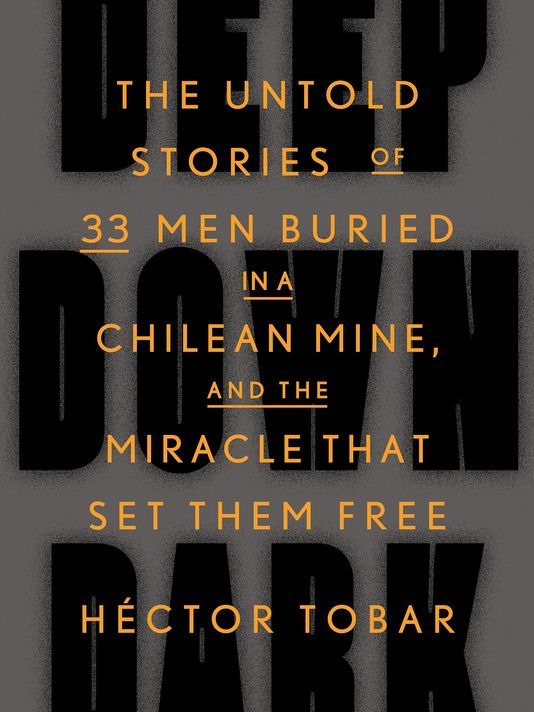
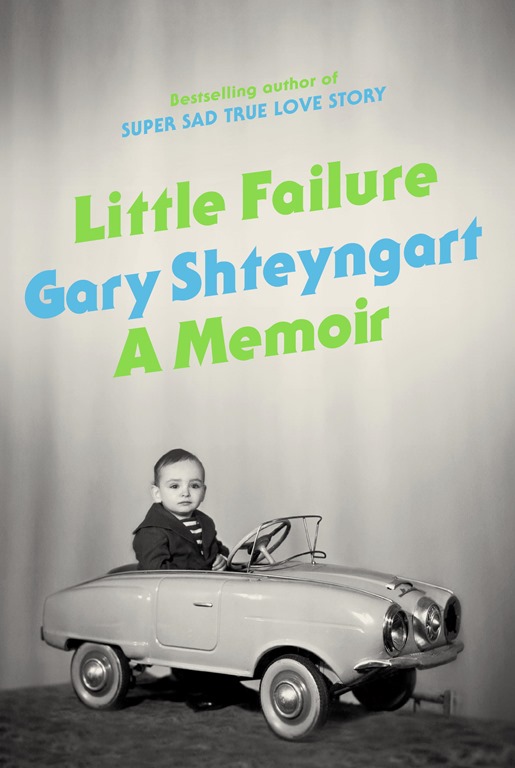
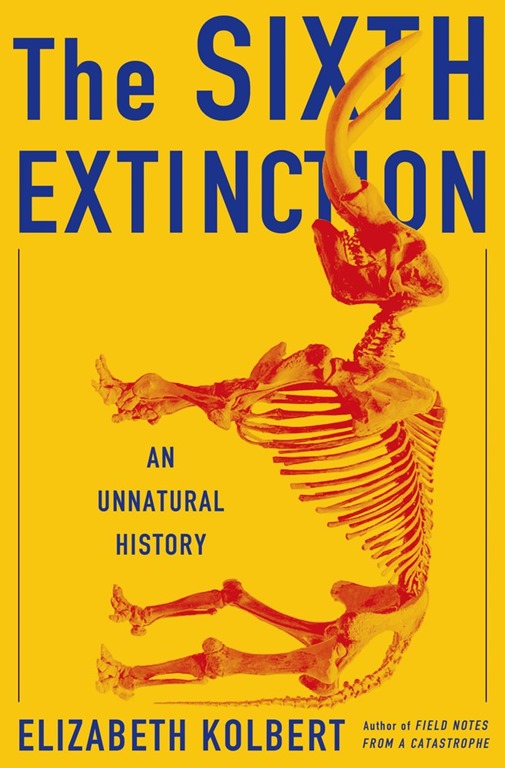
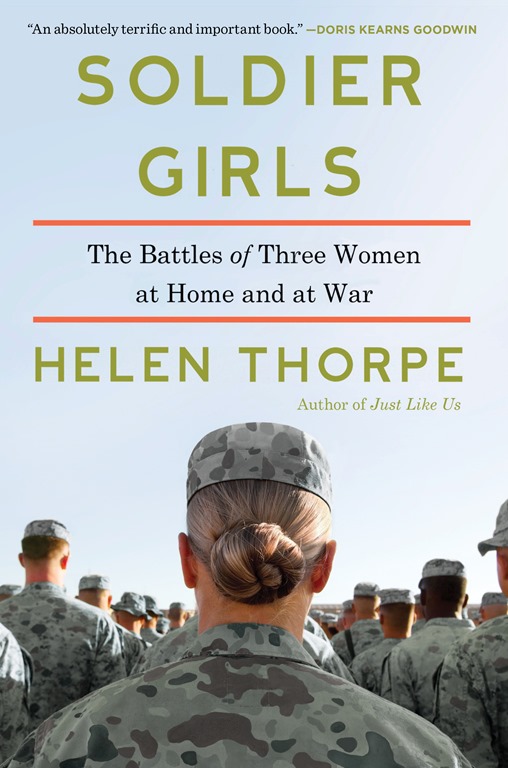
I wished these sites would make a nice printable version of their yearly recommendations so it would be easy to take to the book club and pass around. Even better, I wish some enterprising web site would collate all the lists and make a meta-list of the most recommended books. I could do that, but it’s just too much work. What I end up doing is eyeballing the lists and going from memory which books I see over and over again. These nineteen books were the ones I saw the most, and were on at least 5-10 lists.

Age of AmbitionsBook Review-Bad FeministBeing Mortal

Capital_in_the_Twenty-First_Century_(front_cover)Deep Down Dark - Hector TobarFactory Man - Beth Macy

How_We_Got_to_Nowin the kingdom of iceinnovators

Little FailureMan Alive McBeeOn Immunity.JPG

Sixth-extinction-nonfiction-book-kobertSoldier GirlsThe Empathy Exams

The Short and Tragic Life of Robert Peace - Jeff HobbsThe True AmericanThirteen Days in September

This-Changes-Everything-Capitalism-vs.-The-Climate

JWH

A Different Flavor of Science Fiction–The Signature of All Things by Elizabeth Gilbert

By James Wallace Harris, Tuesday, February 3, 2015

The Signature of All Things by Elizabeth Gilbert is fiction about the heart of science. Alma Whittaker, the protagonist represents the empirical ideal, while Ambrose Pike stands in for the mystical and metaphysical. The Signature of All Things is another kind of science fiction, a story about scientific thinking, set in the 19th century, the century where the scientist came into being, the century where we turned from reading the word of God to reading all things natural, the century where evolution was revealed as the driving force of creation.

I love The Signature of All Things by Elizabeth Gilbert so much that I hunger to know how it was written. This book is such a perfect mixture of historical detail, psychological realism and imagined characterization that it becomes deeply philosophical, going well beyond just a great story. I can’t help but believe it’s Gilbert’s personal statement about the nature of reality. I don’t know if Alma Whittaker is Elizabeth Gilbert, but she’s probably the woman Gilbert would want to be if she lived in the 19th century. Don’t let any prejudice about Gilbert’s earlier books keep you from reading this one.

If you love stories of the 19th century, especially ones about natural philosophers becoming scientists, then you should read The Signature of All Things. Gilbert’s sprawling tale covers two lifetimes beginning in the 18th century and ending in the 19th, and includes sea voyages, botany, biology, lithography, Tahiti, Captain Cook, Joseph Banks, Charles Darwin and Alfred Russell Wallace. This time around, we get to live an alternate history where there is a woman scientist, Alma Whittaker, who made some very great discoveries on her own. Alma Whittaker is the person you’d want to be if you could reincarnate backwards in time.

If you’ve ever fantasized about living in the 19th century and becoming an amateur scientist yourself, The Signature of All Things is among the more detailed of such fantasies. Science fiction has always looked to the future, but the future hasn’t turned out to be everything it was cracked up to be, so many science fiction fans have turned to fantasy, and many of them love steampunk, a retro look at the Victorian era. This book isn’t steampunk, but it wears the same appealing fashions. I think there are many deep rooted psychological reasons why us futurists have turned to look backwards to Darwin and Dickens. This book is historical, but not quite historical fiction. It has intense sense of wonder, but it’s not science fiction, not in the traditional sense, but it should appeal to the science minded person.

Science fiction itself evolved out of Victorian era sense of wonders, and we grew up believing in lone inventors who could master the magical incantations of science. We love all those butterfly collections, scientific sea voyages and dinosaur hunters.

Orchid lithograph

The Signature of All Things is a love letter to those who embrace the natural world over the metaphysical.

The entire time I read The Signature of All Things I kept wondering how Gilbert imagined her novel. I’d gladly buy The Making of The Signature of All Things if Gilbert would write it. The book is an amazing feat of imagination, research, inspiration and psychology. In one sense it’s a feminist fantasy, and on the other hand, it’s a fantasy for anyone who reveres the 19th century. I got on the Internet hoping to find clues as to how and why Gilbert wrote this novel, and I luckily discovered that Gilbert had a Pinterest page devoted to The Signature of All Things. The financial success of Eat, Pray, Love let Gilbert spend three years researching The Signature of All Things. Few writers get such an opportunity, and her hard work paid off in a big way.

The first fifty pages of the book is about Henry Whittaker, a fascinating character that could have easily overshadowed the main character, his daughter Alma. Alma Whittaker is the ultimate free-range child educated by her stern Dutch mother, Beatrix. Alma was born January 5, 1800, so she ages with the century. Alma grows up on a huge estate outside of Philadelphia, and her father invited the most interesting men in the world to visit. Even as a child, Alma was expected to carry on an adult conversation at the dinner table. She mastered many living and dead languages, read everything in her father’s large library, and taught herself to become a botanist, specializing in mosses.

I can’t begin to chronicle all the ideas in this novel. Gilbert distilled her three years research into five hundred pages of fiction, and on almost every page, I wondered about her choice of detail to reveal. The book is tightly plotted, with an abundance of vivid characters, and the reader travels around the world three times. And it’s not until the end, that everything finally comes together. It’s a very satisfying ending, yet I wanted to know more. I wanted to know how and why Gilbert made her writing decisions.  I found some of the answers I sought in this interview:

Victorian scientists were big on developing classification systems, mapping every scrap of land and sea, inventing coordinate grids and measurement systems, taxonomies, and most of all, collecting. Science in the time of Dickens was small enough in scope, that most intelligent individuals could be well-versed generalists. There is a special kind of appeal to science before relativity and quantum mechanics. A gentleman or gentlewoman with a microscope and telescope could confirm most of what they read, and it was still possible to keep up with the reading in most fields.

Alma Whittaker, is a woman that wants to understand, and through almost endless hardships, becomes enlightened.

JWH

My Life in Middlemarch by Rebecca Mead

by James Wallace Harris, October 3, 2014

Is there one novel that defines your life?  Have you return to it decade after decade throughout your life?  Has the author spoken to you across time, space and the gulf between life and death?  Does the narrative commentary resonate with your heart and mind?  Do lines of dialog feel like they are speaking to events in your life like you’re listening to a Greek oracle, or studying hexagrams from the I Ching?  For Rebecca Mead, Middlemarch by George Elliot is one such book, and she’s written My Life in Middlemarch to explain her literary touchstone.

my-life-in-middlemarch

A year and a month ago I wrote “The Ghosts That Haunt Me” about such writers.  Most of us have many such books and writers that haunt us, but Mead focuses on one novel, and one writer, and writes a whole book about how that one story haunts her life.  If you read the reviews at Goodreads you’ll see that most readers give her four stars out of five, with few rating it a full five stars, and with some giving far fewer.  How much you like this book will depend on whether or not you’ve read Middlemarch, how much English lit professor you have in you, and how much more you’d want from Mead.

Mead does a fair amount of travel and research to give us background on George Elliot and her most famous novel, but not nearly as much as a definitive biography.  Nor is her tale of book-love a proper memoir.  Personally, I was quite taken with her story as is, and it makes me want to reread Middlemarch for closer study.  However, it doesn’t really live up to its promise either.  And I’d really like to see someone pull off such a memoir.  It would have to be far more personal, far more detailed, far more psychological.  Not detailed in biography or close reading of the text, which I’m satisfied with Mead’s work here, but in giving us intimate personal reading details that make us feel true reading obsession.

Two books that come closer to mind of what I’d like to read is Among Others by Jo Walton, a novel about a lonely girl growing up reading science fiction, and Zen and the Art of Motorcycle Maintenance by Robert Pirsig, a nonfiction novel that integrates Plato into a man’s life.  The passion I’d like to see is such biblio-memoirs is what I found in Possession by A. S. Byatt.

Even though I feel My Life in Middlemarch is a very worthy book, I longed to read Mead’s deep personal details about each time she read Middlemarch.  I ached to know how a 20th century woman could find so much love and understanding in a 19th century woman.  I wonder if I could do what I want with my favorite childhood novel, Have Space Suit-Will Travel by Robert A. Heinlein.

JWH

Wide Sargasso Sea–Sex and Madness

Jean Rhys explored the depths of the feminine mind living in a masculine dominated society.  Rhys wrote many stories and novels before becoming famous late in life with Wide Sargasso Sea, a literary prequel to  Jane Eyre by Charlotte BrontëWide Sargasso Sea (1966) can be read without any knowledge of Jane Eyre (1847), and is a completely stand-alone novel.  Jean Rhys gives a 20th century explanation to a mystery in a 19th century novel, and I can’t help believe that is to a certain degree psychologically, and maybe sexually, autobiographical.  Both Rhys and her character started out life in the West Indies and ended up living in England, both dying there.

jean rhys

Although Jane Eyre and Wide Sargasso Sea are novels, I wonder if we can read the minds of their authors in their stories.  Both books closely follow their characters, with Brontë anticipating stream-of-conscious and Rhys using multiple first person stream-of-conscious.  Even though Rhys makes Wide Sargasso Sea completely self-contained as a story, it does cleverly use Bertha Antoinetta Mason from Jane Eyre as a starting point for her story.  Both authors use their story to express views on the role of women in society, and to show how they are oppressed on many levels.  In a way, Rhys attacks Brontë for copping out, because she uses the tragedy of Bertha Antoinetta Mason/Antoinette Cosway to undermine Brontë’s happy ending.

Wide-Sargasso-Sea

A good part of Wide Sargasso Sea is it’s setting, and the history of life in the West Indies just after slavery was abolished.  First we follow Antoinette as a child so we can see her mother, a woman who has lost her husband, and must care for two children with no income.  We see her descend into insanity.  Antoinette grows up with black servants whose charity saves these poor whites, who the ex-slaves refer to as white cockroaches.  The black people of the story vary greatly in personality, ethnicity and ethicality.   The novel explores many themes, the prominent one deals with sex and madness, but it also deals with the confrontation of the races in the 1830s West Indies, and the lush tropical life there.  Nature is oppressive in both weather and the emotional moods it inspires in the people.  All the characters suffer from a languid disposition because of the atmosphere and biosphere.  In this steamy jungle locale there is a lot of sex, repression and sexual oppression going on.

I have not read Rhys other novels and stories, but from the introduction to my edition of Wide Sargasso Sea, she had lot of affairs that ended badly, and often lived at the bottom of society depended on the generosity of men that weren’t always good to her.  That’s why I felt her novel is autobiographical to a degree.  Rhys wasn’t locked in a room for years, but she did live in isolated exile for years.

I also feel Brontë used Jane Eyre to express her gender repression and desires.  In both books, women lives are contrasted with those of slaves and servants.  And I can’t wonder if Rhys felt contempt for Brontë when she gave Jane a happy ending with Edward Rochester.  Rochester is unnamed in Wide Sargasso Sea, but he’s shown with varying levels of sympathy, but ultimately he’s seen as cruel and self-serving.  He’s a tragic hero in Jane Eyre, but a tragic villain in Wide Sargasso Sea.

Another theme in Wide Sargasso Sea is Voodoo.  Christophine is an old black woman that cares for Antoinette her whole life before she goes to England.  She sides with the whites, and the blacks fear her, because they believe she has special powers.  Christophine always tells people they are foolish to think such thoughts, but we are given one powerful scene to believe otherwise.  Sex is always at the periphery of this novel, but it comes to the forefront at a hallucinatory peak in the story, where passion, madness, and maybe Voodoo all come together.

The Rochester character often tells the island people, both white and black that they don’t know how to hide their feelings, but he’s often surprised when they apparently can read his mind or predict his future.  Even the black children boldly state the fate of the white people with sharp obviousness that the Englishman finds unnerving.  At first this man is patronizing to the black people, defending them to his wife, but slowly he realizes they know more than he does, at least about their world, where he is an invader.

I wish I knew how much Rhys remembered of her island upbringing when she wrote this book.  Her first sixteen years were lived in the West Indies before she moved to England and Europe.  How much research did she do about the island life for the novel?  And most important of all, are there any novels written by people living in the islands in the 1830s?  How can we know if this 1966 novel represents a true picture of the West Indies in the 1830s?

Wide Sargasso Sea is on many Best Books lists.


JWH – 8/29/14

Making Things in America Again

Good news on Wall Street does not equal good news on Main Street.  America is recovering from the recession, but not the middle class America.  There’s an old saying, “When the going gets tough, the tough get going.”  Factory Man by Beth Macy is a book about John D. Bassett III, the history of Bassett Furniture, and JBIII’s fight against globalization.  In one chapter, the tough old Bassett who fights tooth and claw to keep his factories and workers in America, says you don’t fight globalization with MBAs but with coaches who know how to compete.  His company Vaughan Bassett Furniture came out with the Cottage Collection line of furniture that was easy to manufacture, quick to ship, designed making it hard to import, competed on price and was stylistically more appealing than the competition coming in on container ships.  He had to use higher tech machines and fewer workers, but it was made in America and it sold like crazy.

Factory Man by Beth Macy

There are businessmen, historians and economists that teach for a country to thrive it must have a robust middle class and it must make things.  America has stopped making things, losing 5 million manufacturing jobs in a decade, and our middle class has been shrinking since the 1970s.  The relentless drive to increase the bottom line by selling cheap has forced corporations to chase low cost labor around the globe.  As Beth Macy reports, globalization means Americans can buy lower cost furniture that may even be better made, but overall more Americans can’t afford globalized bargains because their jobs at making things went overseas to make those bargains.  And we’re talking about people fighting to keep $13 an hour jobs, not union wages.  Now they are trying to find part-time work at minimal wage, or even catch-as-catch can work for $4 an hour.

Factory Man provides several pieces of the puzzle I’ve found lately that illustrates the current economic landscape.  Capital in the Twenty-First Century offers many more revealing pieces, and books like The Unwinding by George Packer offer other significant pieces.  Plus I’m reading hundreds of articles on the internet about business and economics that fill in holes too.  I’ve put together enough pieces that I think I can see a general outline, and it’s not good.

I am reminded of a lesson I learned from a SF book back in the 1960s, Empire Star by Samuel R. Delany.  A kid from a backward planet wants to run off and see the galaxy, and he is given advice by an old man.  The kid is told there are three kinds of thinking:

  • Simplex
  • Complex
  • Multiplex

People who grow up in a homogenous society are taught rules, mores, etiquette, customs, beliefs that are simple, easy to understand and are often black and white in their exactness.  Think of ISIS in Iraq.  If you don’t pray a certain way, off with your head.  If a simplex person then travels to another culture they will find many rules, mores, etiquette, customs and beliefs that conflict with their simplex beliefs.  To survive requires thinking in a complex way.  Living becomes hard, especially if you want to keep your old ways of thinking, yet let others live with their ways of thinking.  Multiplex thinking is when you can believe two things that on the surface appears to be polar opposites.  For example, being an atheist that supports freedom of religion in the separation of the church and state.  It is multiplex thinking to hold the belief that all religions and non religions are better supported if the government doesn’t endorse any one religion.

Factory Man is a very multiplex thinking book.  We never know if John Bassett III is a hero or asshole, but is shown in countless roles, often conflicting.  Macy doesn’t say if globalization is good or evil, but she provides many examples of pro and con impacts.  The book doesn’t tell us if exporting jobs was right or wrong, but Macy provides many personal stories about what happens when globalization changes peoples lives.  What Macy shows us is the impact of these people and ideas on other people, and as the reader, we must come up with our own multiplex view of the book.  But to understand a true multiplex view of Factory Man requires reading many other books.  It helps to have read The World is Flat by Thomas Friedman, the guru for globalism.  If you think simplex and only worry about what’s good for America you will fail just as fast as accepting globalism as a complex solution.

Macy’s multiplex take on globalism still tends to lend towards one side, since her sympathy is with millions of American workers who have lost their jobs.  Marc Levinson, who wrote another view of globalism in The Box:  How the Shipping Container Made the World Smaller and the World Economy Bigger reviews Factory Man at the Wall Street Journal.  He concludes:

Globalization takes the blame for many ills these days. But the implosion that Ms. Macy chronicles owes less to import competition than to executives in a sheltered industry who failed to keep up with a changing world. It is to his credit that John D. Bassett III thought differently. It is the country’s loss that so many of his counterparts did not.

I tend to agree Levinson and JBIII, and think “Made in America” must compete by competing—that to counter the negative side of globalism there must be some localism that fights back with a passion, and JBIII was one such person.  Most of JBIII peers, economists, business journalists, business school PhDs hated his protectionist stance, but like JBIII points out over and over again, the laws were in place, and he had no trouble proving wrong doing.

As wages rise overseas, some manufacturing has trickled back to America.  Globalism of the 2020s will be far different than the 2000s.  To actually achieve multiplex thinking with global economics will require getting beyond the philosophy that low cost is the only way to compete.  Consumers need to stop buying by the cheapest price.  There’s another book to read on that subject, Cheap: The High Cost of Discount Culture by Ellen Ruppel Shell.

We need to consider many factors in our buying decisions.  First and foremost, what does making this product do to the Earth?  Second is to ask how it will improve our life.  Third is to consider how the success of this product will improve the lives of others and the economy.  And finally, we need to consider the price.  Will paying 25% more help the Earth, get you a better product,  and put someone in the middle class?  Then paying more means getting a lot more.

We don’t need more rich people, we have plenty of them, what we need is more middle class people and fewer poor people.  Achieving that goal will actually create even more rich people.  That’s multiplex thinking.  It’s too bad our business leaders think so simplex and compete by price alone, never considering the impact to the Earth, the economy and their customers.

Factory Man is actually a very emotional book, that often made me laugh and cry.  It’s down right inspiring too.  Which is pretty weird when you think it’s about furniture manufacturing.  The New York Times even reviews it suggesting it would be a great movie.  Tom Hanks actually tweeted the author that he gave it 142 stars.

JWH – 8/20/14