Gave Away My Telescope

I haven’t used my telescope for about 3 years, so when a lady at work started talking about saving up for a telescope I gave her mine.  Now, it’s not that I’m losing my interest in astronomy, but it’s a recognition I’m not much of an observational kind of amateur astronomer.  The night before I bought Archives of the Universe:  A Treasure of Astronomy’s Historic Works of Discovery by Marcia Bartusiak.  What does it say about me that I find it far more exciting to read about the history of astronomy than look through a telescope?

I’m learning a lot about myself in my fifties.  Or maybe I’m learning the same things a second time.  My fifties, and I’m 58 now, have turned out to be a decade of returning to the interests and desires I loved in my teens.  I had a telescope in my teens and I gave it away too.  I even took astronomy and physics courses in my first two years of college, and dreamed of being a real astronomer, but I didn’t stick with it.

I’m a bookworm at heart and not a doer.  I’ve always dreamed of being a doer, but I just don’t have the personality for action.  I had a hard time adapting to the world of 9 to 5 work in my twenties, and for decades now my job has used up all my active energy.  I think about retirement all the time now.  Like in my teen years when I fantasized about what I would do when I grew up, I now fantasize about all the things I’d like to do when I retire, but I’m starting to think I won’t do that much.

It’s sad to say, but I’d rather spend time looking at a big picture book about astronomy than looking through a telescope.  Or I’d rather read biographies about astronomers than trying to recreate what they did.  My telescope was better anything Galileo, Copernicus or even Kepler had, and I did so little with it.

There are several pitfalls to owning a telescope.  The primary problem of small scopes is they never give views like the photographs you see in Sky and Telescope.  However, photographs are never as exciting as seeing Jupiter, Saturn or the Moon in real time with your own telescope.  After those three objects, how well a person will enjoy using a small telescope is determined by their temperament.  Most new scope owners will go hunting for the faint fuzzies, the term amateur astronomers use for all those gorgeous galaxies and nebula you see in Sky and Telescope, but when you find them they are more like tiny gray smudges than swirls of stars.  And they are damn hard to find.  

And it’s the skill in finding faint fuzzies that determines whether you’re going to really love owning a telescope.  I was never patient enough to develop a knack for star hopping, a technique of finding a naked eye star and looking at fainter stars through a low power lens to hop from one pattern to another until you find your target.  Through a telescope, you can aim it in the sky where you see one star, and through the eyepiece see twenty stars.  Learning those patterns within patterns is essential, and I never developed that skill.  Comet hunters learn the sky so well they can spot a new dot of light among old familiar patterns by memory. 

Amateur astronomers are a noble group, and some of them actually perform useful scientific research.   Another trait that separates me from real amateur astronomers is I don’t like  being outside or staying up late.  Oh, I love being out in the country, under dark skies looking up at the whole sky full of stars, but after about an hour, I’m satisfied.  Real amateur astronomers can stay out all night.  I’ve even discovered I prefer to stargaze without a scope under remote skies because I like the magnificent wide-field vistas to close-ups of tiny points of light .  Through a telescope you see way more stars, but a eyepiece full of tiny lights gets boring to me quickly.

The one skill I hoped to develop with my telescope was getting some kind of 3D sense of awareness of where I am in the universe.  Living on a big ball that’s spinning between day and night skies makes that difficult.  If the Earth wasn’t spinning on its axis or orbiting the Sun, most objects in the sky would remain fixed, and it would be easy to learn and remember their positions. 

I always wanted to master the constellations, so when a star or galaxy was mentioned, I could mentally picture in which direction of the sky to look.  Except for a handful of constellations, I never did this.  In urban skies, it’s very hard to make out constellations.  Ancient people saw far more stars than we do, and they spent way more time under the night sky, so memorizing the constellations was second nature to them.  Now, the night sky is a theoretical concept to most people.  That’s a shame.

I hope the lady at work can do more with my telescope than I did.  She has good vision and likes spending time outside, so I’m expecting to hear some great observing reports from her.

JWH – 6/20/10

Am I Becoming An Old Fogey?

I started taking programming classes in 1971, and in 1977 I got caught up in the microcomputer mania.  By 1981 I got swept away with the PC revolution and during the 1980s I was quite passionate about BBSes and online computer services like CompuServe and GENIE.  And I was wowed when my university got connected to the Internet years before the WWW.  I’ve always been an early adopter of any computer gadget, but somehow I’m letting the smartphone mania pass me by.  Is this a sign of aging?

At some computer news sites there are more stories about smartphones than computers,  and some digital pundits even predict smartphones replacing computers.  They sneer that the desktop is just a boring office device.  I guess I’m getting old because desktop computers are still as exciting to me as muscle cars were to me in my teens.

I’d love to have a smartphone, but I just can’t justify spending a $1,000 a year to use one.  The iPhone 4 is one seductive piece of hardware and if it was only $199 I’d get one in a snap.  I can’t stop thinking about getting an iPhone 4 or one of the new Android smartphones – but I keep remembering that I barely use my cell phone, and that I have both an iPod touch and netbook that both go weeks without being used.  And my GPS sits at the bottom of a desk drawer, and my three digital cameras seldom get snapped.

I add $50 to my T-Mobile pay-as-you-go phone and I can talk for 6-8 months.  Now I might justify paying for a smartphone if I could ditch my house phone, but cell phone service from my home is terrible, for both AT&T and T-Mobile.  My wife does have an iPhone.  She works and lives out of town and greatly benefits from her smartphone but she practically lives on the damn thing.  But Susan is a couple years younger than me and loves Farmville, Facebook and going to live rock concerts.  Her favorite band is The Foo Fighters while I enjoy people like Laura Bell Bundy who sings a tamer country rock.

I spend all day at work at my desktop, and all evening at home at my desktop, and my commute is 8 minutes.  So I don’t exactly need a powerful smartphone or laptop.  But the smartphone mania keeps gnawing at me.  They’re like a toy that every cool kid owns, and I don’t.

When I saw the video for the new iPhone 4 at the Apple site I thought the face time video calling was fantastic until I remembered Susan and I bought webcams two years ago for Valentine’s Day and only used them once.

Now I’m not trying to be the Grinch that steals Christmas but is all this smartphone mania some new kind of addiction?  I know some people who don’t have home phones, and who don’t have a computer at home, or Internet access, and the smartphone is a great, affordable solution for them.  These folks are the kind of people that a smartphone will be their computer, and the ones the pundits were talking about.

And if you’re an on-the-go person that’s already spending a pile of money for cell phone calling and texting, it’s not that much money to add a data plan.  I suppose kids and young people who stay constantly in touch with their friends via cell phones can’t imagine living any other way.  And that might be the reason why I question all of this.  Am I too old to see the necessity of such a wired lifestyle?

Will spending a $1,000 a year for smartphone use just become a necessity of life?  And what is that cost for a family with three teenagers?  On one hand, I know the smartphone mania is a great boost for the economy, so I shouldn’t complain, but on the other hand, it seems so wasteful.  But I guess I’m just an old fogey.

And now the 3D TV mania is starting.  HDTV was sexy to me, but 3D TV leaves me limp.  I wonder if I need a Viagra for my techno lust?  And did I give up cable TV and my two DVR boxes to save money, like I thought, or was it because I’m getting old and couldn’t stand all those channels, like I felt.  Now that I think of it, I did sell my Kindle, and I’m actually reading books.  Well, I’m not as bad as my friend Lee, he’s returned to listening to LPs.  I wonder if that will happen to me too?

JWH – 6/13/10 

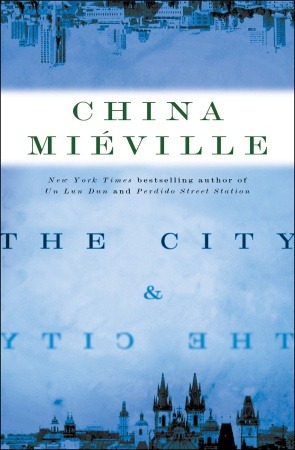
The City & The City by China Miéville

The City & The City by China Miéville is the third novel I’ve read that’s up for this year’s Hugo Award and my least favorite.  But don’t get me wrong, if I wasn’t comparing it against other stunning novels, The City & The City would stand out on its own as a major novel.  So far, I’ve read three of the six nominees and they’ve all been impressive. 

I really don’t want to say much about the story itself because the novel creates a rather unique fantasy world that readers should slowly assemble in their minds.  Please don’t read reviews or plot summaries of this story beforehand.

the-city-and-the-city  

The City & The City is a murder mystery, like the 2009 Hugo Winner, The Yiddish Policemen’s Union, by Michael Chabon, which was about another fantasy city, but one from an alternative history.  China Miéville’s cities might be considered from an alternative history, or just an extra invention for our own world we never learned to see.  I don’t know, but it’s extremely clever.

 Michael Moorcock at The Guardian sees the story as science fiction, trying to tie in string theory physics, but I don’t buy that.  Don’t read Moorcock’s review until after you’ve read the book, he gives away practically everything, but do read his review, it has a lot of good stuff to say.  A case could be made that The City & The City isn’t fantasy or science fiction.

The City & The City depends on believing something that’s pretty hard to believe, or imagine, although I think it would make a wonderful movie if it could be pulled off visually.  Miéville ask his reader to believe the mind is far more powerful than most people suspect.  I think the mind is capable of this kind of power.  I don’t know how psychological Miéville intends to be with his story, but I can read a lot into it.

How far can culture condition us?  We know suicide bombers commit horrendous acts because their beliefs have programmed their minds to see reality very different from the rest of us.  But how much do we perceive and not perceive from our training in childhood?

I am reminded of an experiment I read about decades ago.  Kittens were raised in two control environments.  One environment only had vertical lines, and the other only had horizontal.  After some months the cats were removed to live in a normal environment.  The kittens who grew up with only horizontal lines would walk into chair legs and other objects that were made up of vertical structures.   Kittens that were used to vertical lines wouldn’t jump up on shelves or chairs seats.  Whenever I think about this experiment I wonder what I don’t see now because I never learn to see it in childhood.

We follow Inspector Tyador Borlú, of the Extreme Crime Squad, as he searches for a murderer in a city of Besźel.  I had never heard of this city before.  Because I was reading a novel up for a science fiction award, I first thought it might be new pronunciation of one of our existing city’s name in the far future, but I was wrong. 

I’m not a mystery reader, but I have read several of the classics like The Maltese Falcon by Dashiell Hammett and Farewell, My Lovely by Raymond Chandler.  Cities are very important to the mystery genre.  In fact, I don’t care who commits the murder in mysteries, it’s the details of the setting and character that have to enchant me when I read one.  And it’s character and details I like in The City & The City

As an untrained mystery reader I can’t say how successful Miéville is at writing a murder mystery.  The City & The City is very readable and entertaining, but it’s not science fiction, what I am trained to read.  Nor do does it really feel like a fantasy novel.  It’s hard to categorize this tale, but I think it’s main appeal will be with mystery readers.  Oddly, it wasn’t nominated for the Edgar Award this year, so I don’t know if mystery readers are even giving it a chance.

This novel seems targeted to some unseen genre, like the cities in this story.  I think it was best summed up by Denise Hamilton at the LA Times, “If Philip K. Dick and Raymond Chandler’s love child were raised by Franz Kafka, the writing that emerged might resemble China Mieville’s new novel, The City & the City."

The City & The City is such an odd novel, that I’m having fun reading reviews of it after I finished it, to see what other readers made of this very different story.  That’s the strength of fantasy writing, writers can write about anything they can imagine, but all too often writers crank out the same old crap.  I make and rest my case with the current vampire craze.

JWH – 6/12/10

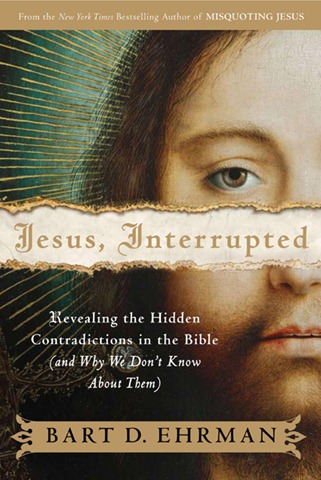
Jesus, Interrupted by Bart D. Ehrman

I believe The Bible can be a very dangerous book.  For most people The Bible is a book they read occasionally, and use it for inspiration to be a good person.  There are better books to teach ethics but we can overlook that like we can overlook casual drinking, a minor indulgence.  I use the drug metaphor very intentionally, because I believe The Bible alters people’s mind and how they see reality.  Because some people take The Bible too far, into cocaine, heroin and LSD levels of use, and they become addicted, deluded and cut themselves off from reality.

The Bible can be like a computer virus that infects the minds of those who read it.  This is true of any religious literature.  The Bible does not describe reality. The Bible can not predict the future.  And most important, The Bible does not describe God (if there is a creator), at best The Bible presents very ancient theories about God.  In terms of philosophical theology, it is very important to separate the concept of God from any description about God.  Holy books captures how people thought thousands of years ago and that’s a huge danger because people minds become paralyzed by seeking closure on mysteries that will never be solved.  It’s mental quicksand.

The reason why I call myself an atheist is because I’ve never heard a definition of God that I could accept.  If there is a God he is unknowable in the same way that a bacteria in our blood can never know who we are.  People want a personal God, and that’s understandable, because life is scary and we’d love to have a spiritual parent to protect us.  But that’s a dangerous desire because it causes people to avoid real sources of strength, other people and ourselves.

There are many reasons why people seek religion and embrace holy books:

  • They want answers about reality (knowledge)
  • They want to know how life began (ontology)
  • They want a history and genealogy
  • They want instructions on how to be a good person (ethics)
  • They want to worship and be thankful (appreciation of life)
  • They want rules for equal justice for all people (law and order)
  • They want to know the future (prophecy)
  • They want a promise of protection (security)
  • They want an afterlife 

The reason why holy books like The Bible are so dangerous and powerful is our minds are extremely powerful.  Holy books transmit powerful memes.  All books do, but holy books come with extra-strength memes.  The concept of God is a meme.  Once an idea is let lose in culture it’s very hard, if not impossible to erase.  What happens instead is people alter memes.  Think of a virus mutating.  If you study just The Bible you’ll actually come up with dozens, if not hundreds of meme variations for the original meme for God, which was created thousands of years before the Jews existed.  There is no one God in The Bible.  There is no one Jesus, which brings us to the book Jesus, Interrupted by Bart D. Ehrman.
Jesus-Interrupted

Many people divide the world into the secular and the divine.  Believers in divine knowledge think its more important than down to Earth knowledge.  That’s an illusion.  The divine is a meme too.  Beliefs are more powerful than reality.  In fact, all we have is beliefs.  What we want is to keep beliefs that validate reality and jettison fantasies, but religious beliefs can’t be validated, but how you got them can.  That’s what Bart D. Ehrman is doing in his writing.

For example, do you believe that Jesus is a divine being?  Who gave you that idea?  How old were you?  Why did you believe them?  Where did they get the idea?  What Ehrman is doing in Jesus, Interrupted is working on a cold case that goes back 1900 years.  Where did the origin of the meme that Jesus was divine come from?  He calls this research a historical approach to Bible study. 

Jesus, Interrupted is a significant book on many levels, but proving that will be difficult because what he says challenges people’s beliefs.  Bart D. Ehrman is most famous for his book Misquoting Jesus, but this newer book is even more exciting to read, that is, if you find history and academic research exciting.  Ehrman claims he is not trying to be sensational with his books on The Bible, and claims he is only relating what any mainstream seminary teaches.  Ehrman is the James A. Gray Distinguished Professor at the University of North Carolina at Chapel Hill.  He started out as an evangelical Christian but after many years of studying The Bible became an agnostic.  Since I’m an atheist, reviewing a book about The New Testament written by an agnostic will be hard to convince Christians the value of reading Jesus, Interrupted.

I don’t ever expect Christians to give up their faith.  I figure most will ignore this book, but I expect others will combine the knowledge that Ehrman provides with their faith and create a new synthesis.  Whether this leads to a new reformation is another issue, but in cruising around the net trying to find reactions to Ehrman I was surprise by some reactions of the faithful.  Some reviewers say Ehrman goes too far, others just dismiss him, but others have jumped in and started their own analysis using his historical approach to test and validate Ehrman’s ideas.

Ehrman says many times in his book that he has no wish to destroy anyone’s faith, but anyone with a deep faith in The Bible being the absolute word of God will be tested by Ehrman’s books.  Ehrman started out as a person believing God inspired The Bible and it had no errors, but his desire to study it deeply and thoroughly led him to believe that it is the work of men, chock full of errors, forgeries, and contradictions.  I think anyone examining the historical evidence will also conclude that men wrote The Bible without guidence from God.

The next logical step in theology is to ask how God might inspire men to write about the metaphysical.  I don’t believe in the divine, but most people do.  I expect them to keep looking for the doorway between the physical world and the spiritual world.  And that’s okay.  Religion is deeper than memes, and I expect humans to always invent new and better religions.  Some atheists want to throw off religion and God, but that’s like being a vegetarian wanting the rest of the world to give up eating meat.  Evolution is a nasty word to the righteous, but everything evolves.

So why should agnostics and atheists even concern themselves with this book?  Ehrman still believes The Bible is the greatest book ever written and still provides inspiration.  For me, I want to understand Christians and how they evolved in history.  Jesus, Interrupted is a quick survey of the first four hundred years of Christianity and how The New Testament was written.  I think it explains why we have hundreds of different Christian faiths, and it also explains part of the psychology of conservatives and liberals, something Ehrman wasn’t intending.

Ehrman says most people study The Bible devotionally, but for the last two hundred years scholars have applied a historical approach to understanding it.  Ehrman also says most people only read The Bible randomly, just studying a few lines here and there.  Even if you read it vertically, from top to bottom, Ehrman believes you will miss much of what’s in The Bible.  He recommends studying it horizontally, comparing one gospel against another, or how one incident is depicted by multiple writers.  Jesus, Interrupted focuses almost exclusively on The New Testament except where gospel writers claim events were foretold in The Old Testament.

When you study the gospels this way you quickly see they conflict.  And not in minor narrative details, but in great theological differences.  In fact, much of what Christians believe today does not come from The New Testament at all, but from later theologians.  What many Christians might be shocked at is the gospels were not written by the disciples that knew Jesus, but educated people writing decades later, living in another country, speaking a different language than what Jesus and his apostles spoke.

The reason why there are so many conflicting stories in The Bible is because it was written by many different people, each with their own agenda.  I cannot do justice to the vast research the Ehrman puts into his book, so don’t trust me, and read Jesus, Interrupted for yourself.  Then read reviews by people who oppose Ehrman, and there are plenty.  Interpreting The Bible is a academic black hole that I want to avoid, but I do think it’s possible to study The Bible without falling into its gravity well.

I think there will be many different audience reactions for this book.

  • Atheists will get a good overview of Christianity, but also find intellectual support that The Bible is not a divine communication to the human race.  If they have any residual guilt about religion from early Sunday School programming, this book will help deprogram those feelings.  I found the book a fascinating history, explaining much of Western culture in a surprising way.  It was a real page turner for me.
  • Liberal Christians will expand their theological foundation and maybe invent a new synthesis.  Ehrman explains how new theological concepts developed in the first few centuries of the common era shaped The New Testament, but Christian evolution did not stop there.  Christianity is always evolving and diverging, and modern Christianity has little resemblance to Jesus and his times.  I think Ehrman’s book should have been called The Evolution of Christ.  I think books like this, using historical studies to examine spiritual doctrine, will inspire some folks to invent new theological memes.
  • Conservative Christians can choose to ignore the book, or counter it.  I think Christians constantly redefine and reinvent God.  God is a mutating meme.  Creationism and Intelligent Design are fundamentalist adaptations to their philosophy from reacting to science.  I expect similar ideas generated from reacting to historical studies of The Bible.  Theological evolution does not have to be logical, for example, look at the doctrine of the Trinity.  Essentially, a monotheistic religion accidently reinventing polytheism while trying to rationalize how a human could be the one and only God.  And don’t get me wrong, I’m not making fun of this theology – it’s a deadly serious pursuit by some folk to grapple with reality, but my point is religion doesn’t stand still, it’s constantly being reinvented to jive with current knowledge.
  • Believers from other religions will find a concise overview of The New Testament that might quickly explain the diversity of Christian faiths and sects.

Everyone feels like they are an expert on The Bible, even if they’ve only read a few passages.  I think the historical studies of The Bible will up the ante for anyone getting into the game.  Ehrman claims that most mainline ministers know what’s in this book already, but they seldom preach this knowledge to their parishioners.  I don’t know if that matters. 

Most people only want simple answers.  They are happy with a very few concepts to embrace.  There is a God.  There is a heaven.  Believing in Jesus is the way to heaven.  Period.  No more study.  This covers all the bases for this life and the next.  As long as these believers stay out of politics I don’t want to challenge their beliefs.  Don’t read this book. 

No use confusing the simple faithful by trying to explain that heaven is a theological invention that came well after Jesus.  Nor should we cloud the water by proving the God of Moses is not the God of Paul, even though some modern apocalyptical Christians want to bring back an Old Testament genocidal God.

Ehrman proves The Bible can be a black hole of academic study, but it’s also an endless engine that justifies hatred and intolerance.  Ehrman illustrates this with a quick lesson in how Christianity created anti-Semitism.  And I certainly wanted to read more about the development of the Orthodox Church at the expense of heretical sects.

Jesus, Interrupted is an important book beyond Bible studies because it explains so much modern psychology.  Rush Limbaugh is not just a conservative Republican, but an apostle of orthodoxy attacking the heretical liberals.  What Ehrman shows is Swift Boating a technique well illustrated in The New TestamentJesus, Interrupted unintentionally shows a relationship between the Bible belt and conservative thinking and behavior.  If someone like Lee Atwater had lived in the first century he might have written a gospel to get his point across.

Liberals who want to understand why conservatives are the way they are should study Jesus, Interrupted carefully.  I always assumed Republicans got their rhetorical skills from the Greeks, but that is only half-right, and they might have studied classical Greeks, but they also learned rhetoric from the Greek speaking writers of  the New Testament.            

JWH – 6/8/10

Lightspeed – A new science fiction ezine

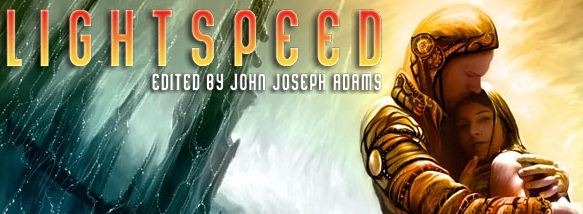
Lightspeed is a new online science fiction magazine edited by John Joseph Adams.  Adams was an editor for the print magazine F&SF for nine years, as well as ongoing editor of many exciting theme anthologies, so he has lots of experience looking for good SF stories.  It’s an exciting time for short story writers as they transition to online and ebook markets.  Lightspeed is a good looking site, offering a number of innovative options, including audio versions of stories, as well as the ability to purchase issues in a variety of ebook formats, including Kindle, iBook, ePub and Mobipocket.

Lightspeed

Reading Lightspeed online is apparently free, with “Our regular publication schedule each month includes two pieces of original fiction and two fiction reprints, along with four nonfiction articles. Fiction posts on Tuesdays, nonfiction on Thursdays,” but you can buy the entire monthly issue for reading immediately on your ebook reader for $2.99.

I tried to buy the first issue online, with the hope of using PayPal, but aborted my order when asked for my address and no payment method was stated.  Since they take donations via PayPal that might be an option.  It would be nice if that information was at the top of the checkout page.

I’m thinking about buying an iPad, so I’m looking forward to seeing Lightspeed on the beautiful iPad screen.  I also discovered I can buy Lightspeed as a Kindle edition through Amazon and read it on my Kindle Reader for my iPod touch, so I purchased it that way for now.  That took less than 30 seconds, and maybe less than 15.  I wish all ebook magazines were this easy to get, and $2.99 is a very fair price I think.

I’m glad I didn’t buy the first issue online now because I would have had the hassle of downloading it to my computer, importing it into Stanza Desktop, and then going to my iPod touch and copying it over by WiFi.  The Amazon method was much more direct. 

So if you’re an ebook reader, check your different ebook stores for Lightspeed.  It would be helpful if the Lightspeed site had a page about all the various ways to get it on your ebook reader program and device.  This magazine is perfect for the iPhone crowd, and it would be extremely cool to see them combine their print and audio editions into an iPhone App.

I hope Lightspeed plans to distribute with Fictionwise because they are great at selling editions for almost any kind of ebook reading device, and they are a great site for getting all the major science fiction magazines in ebook editions.

Ebook editions might be the future of science fiction magazines.

JWH – 6/6/10