
by James Wallace Harris, 7/9/24
Tsundoku is a Japanese term for buying books and magazines far faster than you can read them. Döstädning is a concept from Sweden that translates into death cleaning, advice for how to get rid of your stuff before making other people do it after you die.
At 72, I figure it’s my time to turn the tide of tsundoku into a wave of döstädning. Last year I took many shopping bags of books to give to the Friends of the Library so I could shelve every book in my house. I had finally reached the equilibrium of perfectly filled bookshelves with no books lying on desks, tables, nightstands, or floors. It felt so good.
Today I gathered all the books lying on desks, tables, nightstands, and floors and had to stack them on top of my bookshelves again. I’m losing the battle with tsundoku again.
I don’t get out much anymore. I take my turn going to the grocery store every other week, and I go to the Friends of the Library Bookstore once a week. I buy books I think I want to read before I die, but I’ve already own enough books to last me until the middle of the twenty-second century.
Instead of coming home with two or three books every week from the Friends of the Library Bookstore I need to take two or three books to donate. That would still give me an outing every week. I guess I could continue to buy books so long as I always donated more books than I purchase.
If I knew some Japanese and Swedish people, I’d ask them to produce a phrase that means “döstädning my tsundoku.”
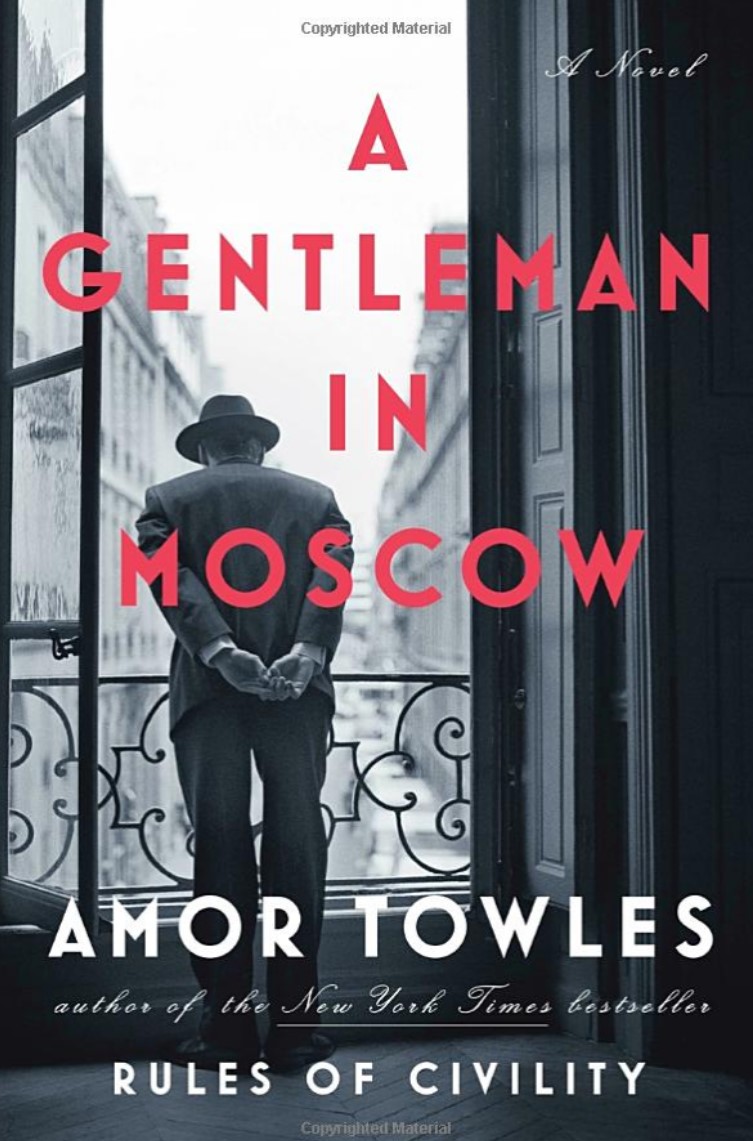
I need to develop a system for death cleansing my bookshelves. One idea came to me while reading A Gentleman in Moscow by Amor Towles. The story is about a Russian aristocrat, Count Alexander Rostov, who is sentenced to life imprisonment in the Metropol hotel after the Russian revolution. But instead of remaining in his luxury suite, Count Rostov is forced to live in a tiny garret once used by the servants of the aristocracy. He keeps one book with him to read, Michel de Montaigne’s Essays. What a wonderful book to read in that situation.
That reminded me I needed to finish my copy of Montaigne’s complete essays.
And it gave me another idea too. I need to read books that are most suited for an aging guy waiting for the guy with the scythe to show up. Books that make me feel philosophical positive about my life and help me understand the decline of civilization. I feel A Gentleman in Moscow is most suited. I would call it a fairytale for old folks, something Charles Dicken, Robert Louis Stevenson, and Tolstoy might have collaborated on if they were living in our century. It is a delightful yarn about a man growing old imprisoned in a hotel while the twentieth century changed outside his window.
I need to start thinning my book collection of books aimed at young people, unless they are books I read when I was young and want to remember them from an aged vantage point.
I need to read books that make me feel good about getting older. I need to jettison books that don’t deserve to be among the last books I read. Even if I live another couple of decades, I doubt I can squeeze in more than a thousand books, and that leaves me a couple thousand to abandon. If I live only another five years, I might finish 250 reading at my peak pace when I was younger, but more than likely, less than two hundred, since I’m now reading less every year.
Some days I don’t feel like I’ll make it to eighty, and on other days feel, gee, I might make it to ninety. I need to save those books suitable for someone in their 70s or 80s, and thin out the others.
It would be fun to see my library shrink over time, each year further distilled into a smaller collection of greater books, so in my last year I read only classics that fully reveal their depths to readers about to depart this planet.
Now, I think I have a system I can work with. It sounds logical and doable. I’ll have to report back in the future if it works. When I get in there pulling out books one by one, and asking myself if they are worthy of reading in my elder years, I might think every volume I already own is perfectly suited.
JWH
 Auxiliary Memory
I face the same problems with excess books that you do. And, like you, I have enough books to keep me reading into the 22nd Century. Since my retirement, I’ve tried to use my local Libraries more. But, I still buy books, both new and used. Life-time habits are hard to break. However, I have found homes for a couple thousand copies of my books over the past year. I don’t want to leave thousands of books for my kids to deal with so I’m chipping away at moving books out of my house. It’s a challenge…
George, the book buying habit is a hard one to shake.
A Gentleman in Moscow — one of the rare books still in my memories. That’s saying something, because in my entire life I have never been one to remember books, movies, tv shows etc once I’m done with them.
Here’s a silly question: have you considered switching to e-books and keeping a really good library of them on your phone or laptop? Here’s me answering for you: because handling an e-book is nothing like handling a real book, which even outside of what it contains, has a physical history of its own. Books are charming and they generally smell good. e-Readers are slick to the touch and they’re too thin and hard to rest comfortably in your hands or on your lap.
Ugh I’m sitting here thinking about your situation, with your bookshelves, and this other thought hit me. Another advantage with shelves full of books is that they vastly improve the “feel” of a room. It’s cozier and the acoustics are better.
Despite my love of them – I always have at least a dozen library books on hand – the number of books I own, or have ever owned, could easily fit into U’Haul’s smallest size box. So, thank you for letting me share my thoughts concerning a situation upon which I shouldn’t be speaking at all!
tl;dr Don’t listen to me, what do I know!
I have 1700 Kindle books, and 1600 audiobooks in my Amazon library.
My preferred way to read is to listen while I read on my phone. But I also like to have a hard copy if I’m just flipping around looking for stuff. For my very favorite books I get all three formats. Otherwise, I get the cheapest format first to read.
I don’t get library books anymore. But I go to the library bookstore every week and buy books cheaply. Quite often they are books that have been withdrawn from the library, so I have a lot of books with library tags on them.