
by James Wallace Harris, Saturday, September, 5, 2020
Visually, the world changes very slowly. If you’re young it will appear to have always looked roughly the same. It’s only when you get older that changes are noticeable, even disturbing. Over the decades, the look of homes, neighborhoods, shopping centers, and business districts begin to alter their appearance. The inside look of homes and stores change too. My mother, born 1916, grew up in rural Mississippi, so her childhood looked much different what the world looked like at the time of her death in 2007. My father, born 1920, saw much different world growing up in Miami in the 1920s and 1930s, than that much changed Miami looked when he died 1971.
The Miami I saw growing up in the 1950s and 1960s looked like another world from the photos I saw of my dad’s youth, even though it was just a couple decades later. I moved away from Miami in 1971, but returned periodically, each time to be disturbed by the visual change. I remember coming back one time to find tall Norfolk Island pines filling the sky, something that was empty in my childhood. Another time I was shocked by flocks of loud screeching parakeets careening in the air alienating old memories. The last time I returned, after Hurricane Andrew, all the Norfolk Island pines had been knocked down and the skyline was big and empty again, like I remembered from the 1960s.
I get the weirdest urges to see things that require research to sooth a kind of visual angst. I’ve been going further and further back in time looking for albums to play on Spotify. I know the LP first came out in the late 1940s, and before that music was sold on 78s. The trouble is I’ve seen very few 78 records, and they rarely had covers. Most were just in paper sleeves. I’ve seen a few 78 albums that had a cover with several pages of paper record sleeves, but I think those came out in the 1950s after LPs but before the demise of the 78. This has made me wonder, when did cover art come to albums?
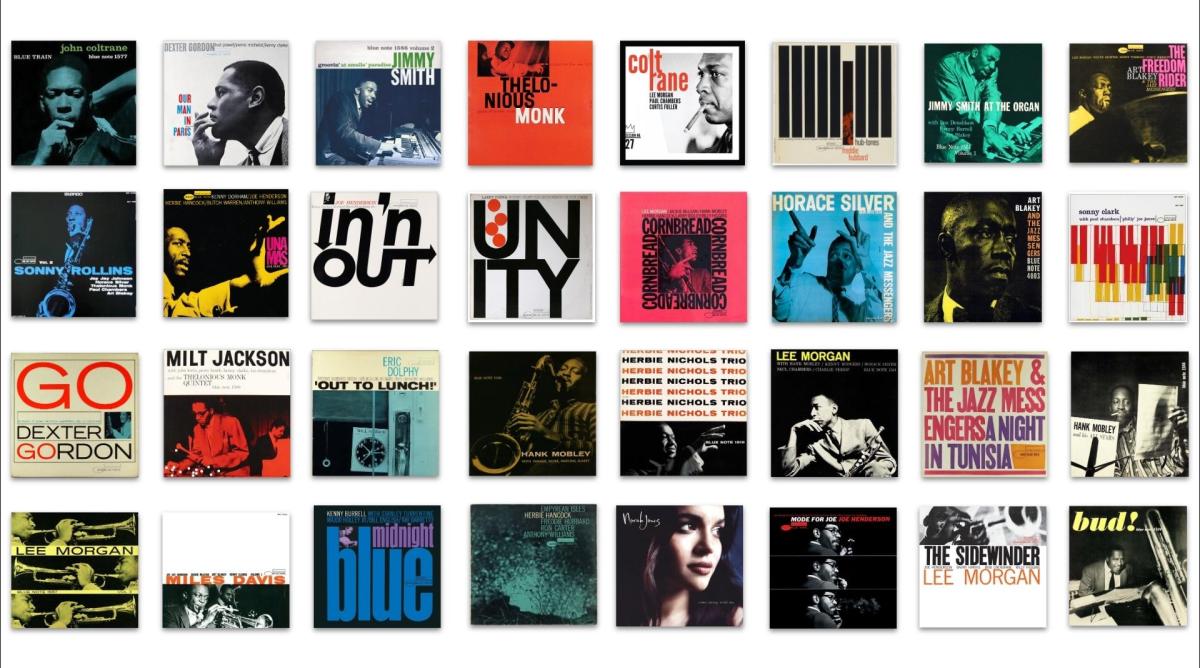
Record stores in the 1960s and 1970s had their look, as did the LP covers, then CDs came in and records stores and album covers morphed into a different look. Then record stores disappeared and I forgot about them for years, and now they are coming back, with LPs again, so now in my 60s record stories look like they did in the 60s. That’s a weird sensation that I don’t often get to feel.
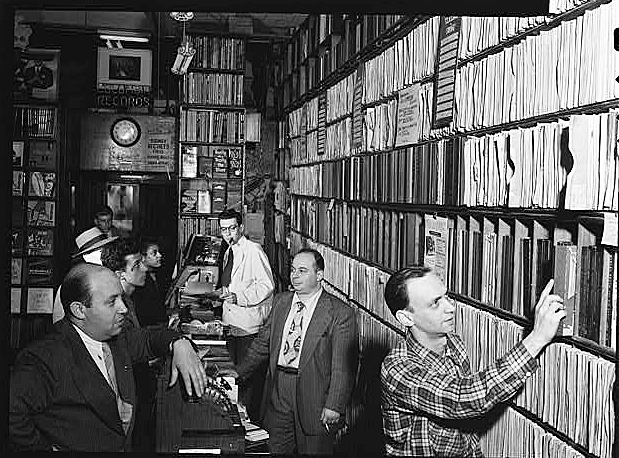
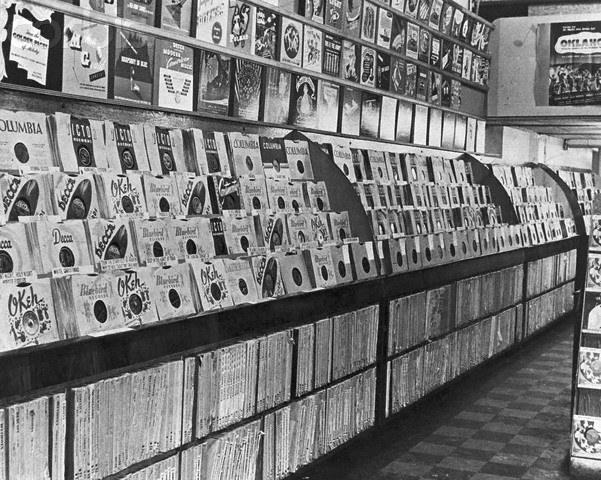
For some reason I ache to see what records stores looked like in the 1940s and early 1950s, and maybe the 1930s. I listen to music from that era on Spotify, but I have no idea what it would have looked like to shop for those songs and albums when they came out. I wish I had thought to ask my parents before they died.
If I collected old records, that might quinch some of my visual thirst, but not completely. I’ve reached an age where I want to downsize everything. I still love exploring old music, which I do with Spotify, but I don’t want to collect old records. Spotify does little to let me virtually visualize collecting records from the past, and I dislike that. It’s one thing to recreate the music digitally, but there was so much more to music than just the music.
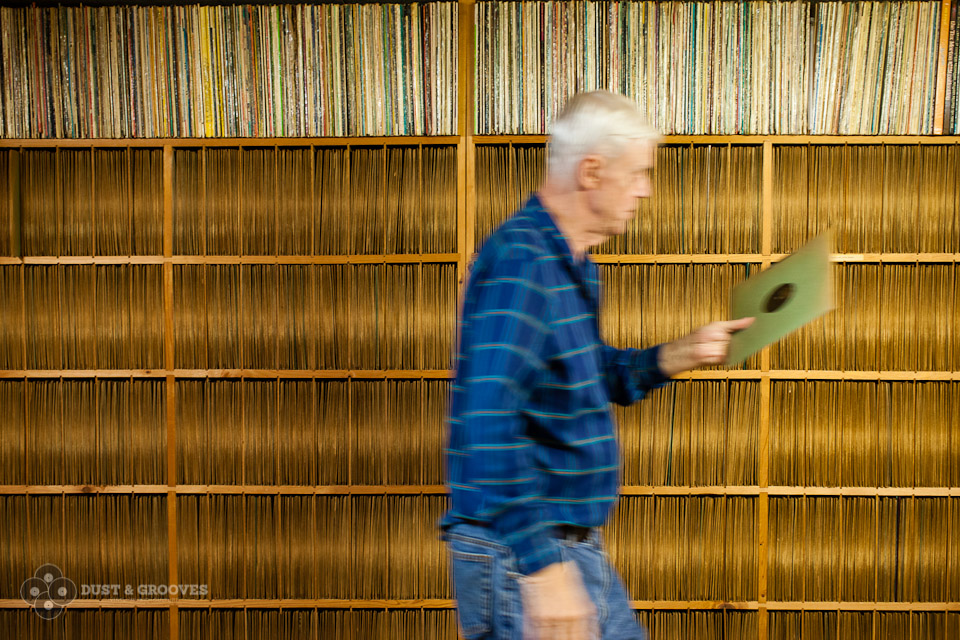
I’ve seen photographs of old guys with their 78 collections, with shelves and shelves of discs in boring brown paper covers. I suppose that’s why I generally only see the round record labels in histories of music before the LP. It must have been pretty dull shopping for music back when my parents were growing up in the 1920s and 1930s.
I’m not sure my parents were into music. We never had a radio or record player before Becky and I got one for Christmas in 1962. The only time I heard music before that was when I rode in the car. My father did all the driving and he hated when I’d messed with the radio, but I loved listening to rock n’ roll in the late 1950s. I didn’t even know what music was, but it intrigued me in big way. My parents did like crooners on TV. My father favored Frank Sinatra and Dean Martin, and my mother dug Nat King Cole and Perry Como, but they never bothered to buy their records.
Still, as I play the early albums of Sinatra, King Cole Trio, Doris Day, I wonder what it would have been like to shop for their music in the 1940s, in those years before I was born in 1951. My earliest memories of Miami 1955-1960 looked different from Miami of 1960-1965. Partly, because we moved around, partly because the cars and clothes changed enough to really notice, and partly because Miami began to grow — fast. I’ve seen old movies that were set in Miami. I don’t know if they were staged in Hollywood, or actually used exterior shots. But I never saw any films, and few photos of people in record shops. What I have seen suggests people didn’t flip through bins of albums. However, I expected 1945-1955 Miami to have looked very different. I hunger to see that too, like I hunger to see old record stores and albums.
Today and yesterday I’ve been playing Doris Day and King Cole Trio from the late 1940s and early 1950s. I know some of the songs were first published on 78s, but so far I don’t think Spotify presents 78-album collections. What I’m finding are early LPs repacking of 78 recordings. It’s like I’ve reached a geologic layer in music history. Spotify recreates the era of LPs but not the earlier era of 78-albums. As far as I know, Spotify doesn’t try to recreate 78 (or 45?) singles (A-side and B-side) either, but it does have some EP collections.
What Spotify presents is pretty much what’s been sold as CDs for the past several decades. For the most part, all those songs from earlier LPs and 78s have been reissued, remastered or repackaged over and over again.
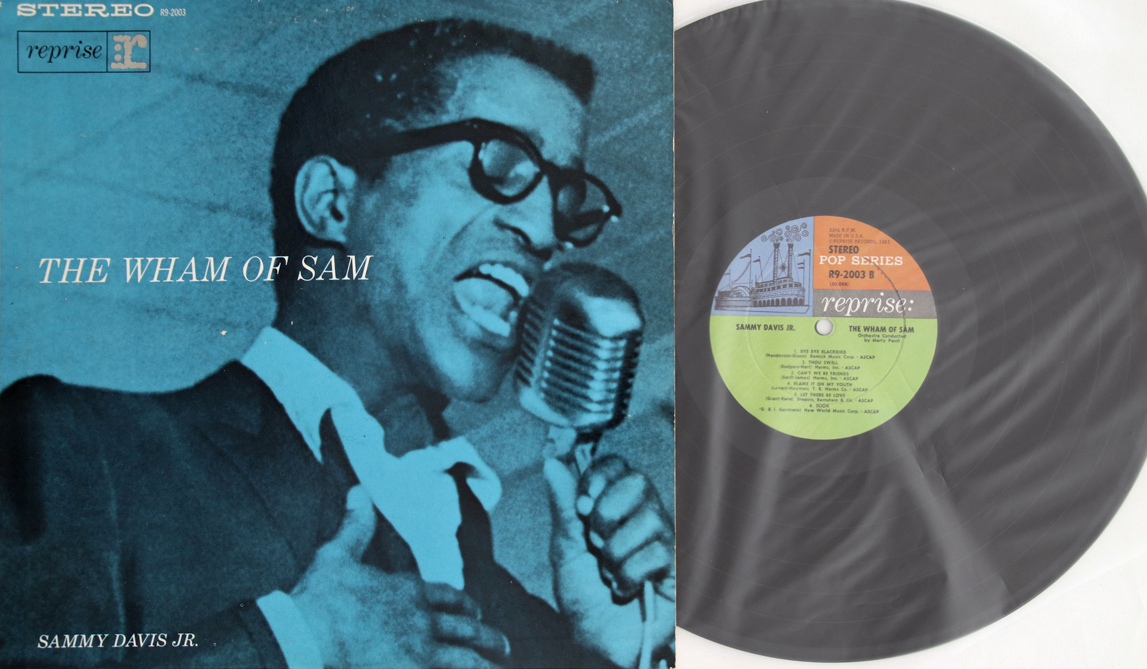
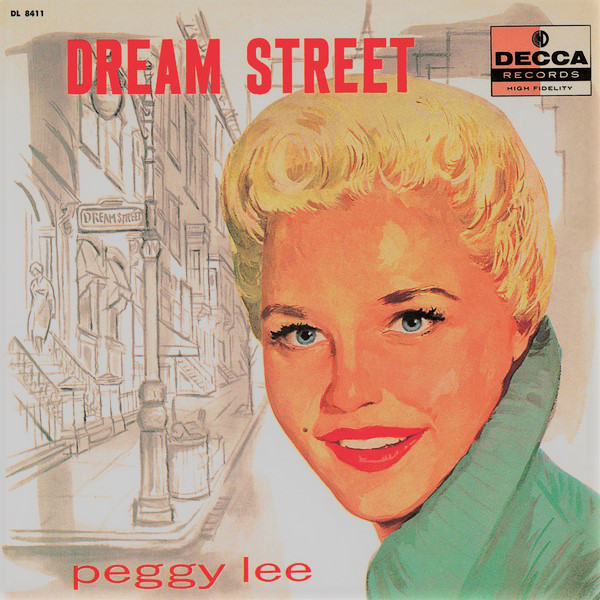
Sometime in the 1940s, I’m guessing, record companies started adding cover art to albums. This essay was my quest to find out. I assume single discs (singles?) still came in brown paper sleeves. Then in 1948 Columbia introduced the LP, and in 1949 RCA Victor released the 7″ 45 rpm single. Evidently, that was when cover art finally began to catch on in a big way. For some reissues on Spotify, I see the original LP art. Like I said, some 78 rpm albums had cover art, but evidently not many, and I haven’t encountered it on Spotify.
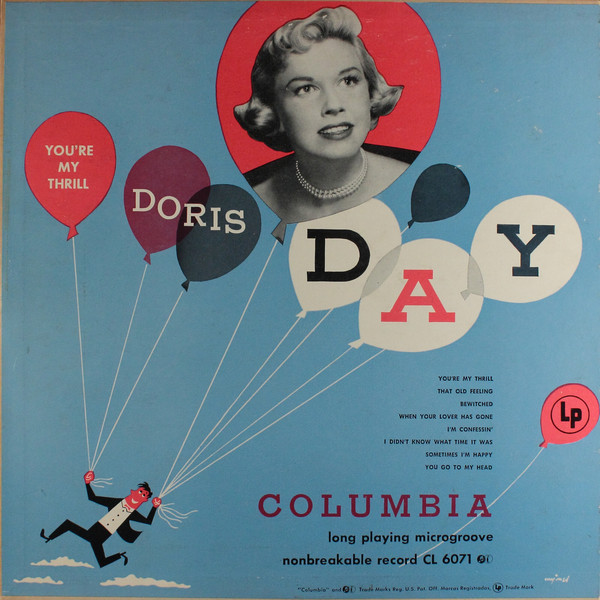
For example, this is Doris Day’s first LP album from 1949, but her discography shows she had many hits before then. Her 1945 breakthrough song was “Sentimental Journey” with Les Brown and His Band of Renown. The flip side was “Twilight Time” and it was on a 78. What did that record look like? All I can find is this:
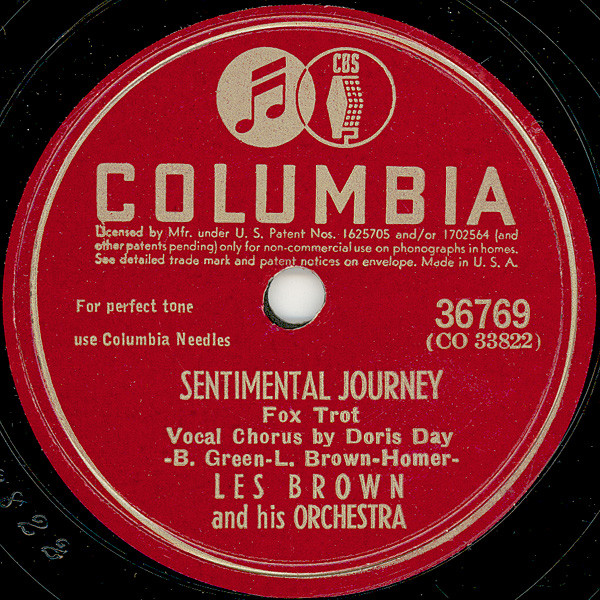
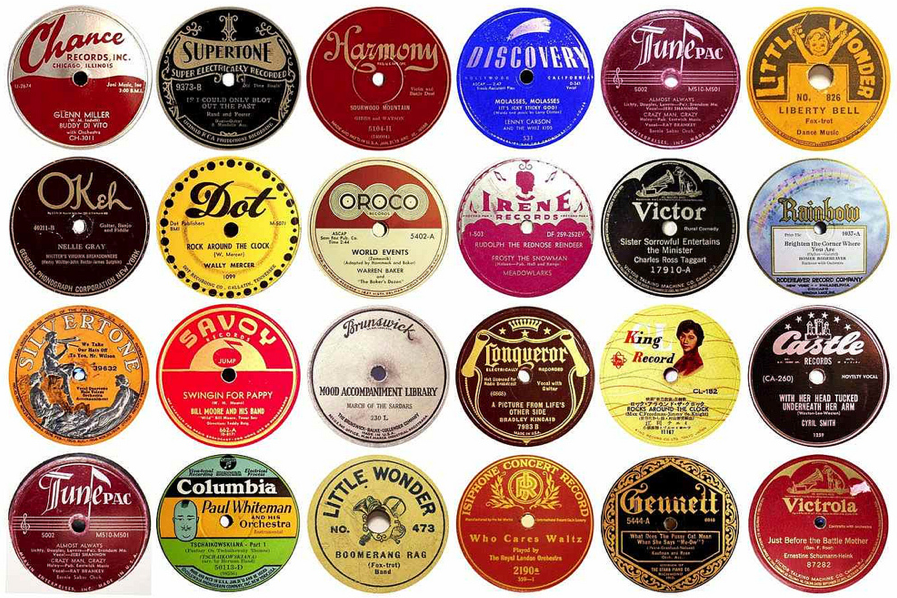
I’m sure 78 record collectors have a special fondness for labels and see great diversity and beauty in them, but they don’t visually thrill me like 12″ LP covers. I can’t imagine the act of record shopping in that era had the same visual impact I had during all those years of pawing through bins of LPs.
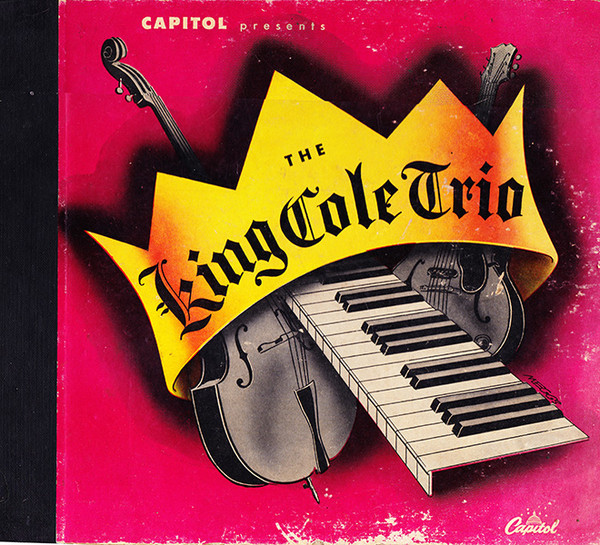
The King Cole Trio 78 album from 1944 had four 10″ discs and did have a cover with art. This proves some 78 records came with covers, but how many? When did the process start?
I’ve tried to find more examples, but it’s work. It’s disappointing that Spotify doesn’t recreate 78 records and albums, and show their original artwork, or a brown sleeve and disc label. I can simulate a 78 album by making a playlist, checking Discogs for the original track listing, and then assembling the songs. A lot of old songs are repackaged over and over again into various LPs collections. It would help if Spotify had a column for date released.
For example, Spotify doesn’t offer The King Cole Trio album above, which was the first Billboard #1 album. There were three followup albums #2-4. It appears Spotify offers some or all of their songs on The Nat King Cole Trio – Complete Capitol Transcription Sessions. So I can enjoy that music from the 1940s, but not in the order it appeared on the four album sets.
I did find The Great 78 Project at Archive.org. And it has The King Cole Trio albums, but with way too many tracks. Mostly different versions with different recording settings, but that confuses the feel of listening to how the album’s songs would have been originally arranged/ordered on the discs.
In my research to find covers from 78 albums I did find Guity Novin’s A History of Graphic Design: The Online Textbook with “Chapter 72: A History of Record Covers.” Novis claims Alex Steinweiss produced the first album cover in 1939 for Columbia Records. From that clue I found, “Alex Steinweiss and the World’s First Record Cover.” And that led me to this:

Persistence pays off. From that article there are numerous clues to pursue to continue my research. There’s even a whole art book devoted to Alex Steinweiss. But this essay is getting too long, so I shall continue it some other time in some other way.
JWH

 Auxiliary Memory