The Second Renaissance in Astronomy

If you are young, are you prepared for the next fifty years?

If you are old, have you digested the last fifty years?

The future will be everything you never imagined.  And it gets here far faster than you planned.

When I was a boy the solar system had 9 planets, 31 moons, and an asteroid belt.  This was before the discovery of the cosmic background radiation and Fred Hoyle was still making a good case for the steady state theory against the big bang theory.

Fifty years later the solar system has 8 planets, 5 dwarf planets,  178 moons, an asteroid belt, a Kuiper Belt, and an Oort Cloud.  The Big Bang won.

… and we’ve discovered thousands of exoplanets!

The world’s largest telescope from 1949 to 1992 was the 200 inch (5 meters) Hale Telescope on Mount Palomar.  In the 1960s we were told it would be extremely difficult to engineer a larger land based scope, so we’d need a telescope in space to surpass the physical limitations of ground based observatories.  Of course, the world of astronomy was knocked on its ass by the success of the Hubble Space Telescope in the 1990s.  Most astronomy photos I admired in the 1960s were black and white, which left the impression that the universe was little more than fifty shades of gray.  The Hubble Space Telescope revealed an immense Technicolor reality beyond our skies, liked Dorothy opening the door to Oz.

The futurists of the past were wrong.  For the past twenty years there’s been a building boom in giant Earth based telescopes.  Astronomers are now using 10 meter telescopes like the W. M. Keck Observatory, and the Gran Telescopio Cararias.

Last week  the Thirty Meter Telescope got permission to build at the summit of Mauna Kea, with an estimated completion in 2018.

thirty-meter-telescope

The European Extremely Large Telescope (E-ELT) has also gotten permission to build a 39 meter telescope in Chile with an estimated completion date of 2022.

E-ELT

Both images are artist’s conceptions.

The list of the largest telescopes now shows 18 telescopes larger than the Hale Telescope that was so mind blowing to me as a kid.  Plus technologies like astronomical interferometry and adaptive optics let astronomers get more bang for the buck per aperture meter than ever imagined by pre-digital age telescope designers.  Essentially, modern engineers have gone way beyond the laws of 1960s physics.

For most Earthlings, astronomy is a science best left to super-geeks, but that will change, just like society changed after Copernicus and Galileo made their orthodox shattering observations.  As the telescopes get larger, the closer they get to detecting life and even intelligent life on far off extrasolar planets.  With more powerful telescopes we’ll be able to image planets directly, and do spectrographic analysis of their atmospheres.  Scientists will be able to detect biomarkers that will prove whether we’re alone in the universe.

Now that’s big!  How will such news change us?  Will it cause a new renaissance?

Probably such discoveries won’t change human life at the rat-race eye view.  We do live in a world where most people still think pre-Enlightenment thoughts.

Ever since Copernicus there have been people writing about life on other worlds.  Even the classical Greeks theorized about other worlds inhabited by intelligent beings.  For over a hundred years now, since H. G. Wells, popular media has entertained us with stories of alien invaders.  So what will happen to the people of Earth when astronomers point to stars and tell us they have planets orbiting them with chemicals in their atmospheres that can’t be made naturally?

Astronomy describes the scope of reality beyond Earth, it’s size and how it works.  Copernicus shook up the world by telling us the Earth moves.  What will it mean when astronomers prove we’re not alone?

Engineers are designing 100 meter telescopes.  What if we built a 100 meter telescope in space, say on the Moon.  That could happen in fifty years.  There is no way to imagine what discoveries it could make.

If you are young, in fifty years you will be writing an essay like this one.  The details will be much different.

References

JWH – 4/20/13

p.s.  Back in 1964 my younger self sided with Fred Hoyle. I thought the steady state theory more elegant philosophically. Hey, I was only 13. But if the multiverse pans out, old Fred and I will be vindicated.  So, what comes around, goes around.
The Defining Science Fiction Books of the 1980s

1950s 1960s 1970s 1980s 1990s
We've added a new feature that allows you to create your own lists from our database of recognized novels and short stories. You can set your own date ranges. Change the citation numbers to focus on more popular titles.

I’ve been reading science fiction for over fifty years, and I’m touring my SF memories decade by decade.  So far I’ve written about the 1950s, 1960s and 1970s.

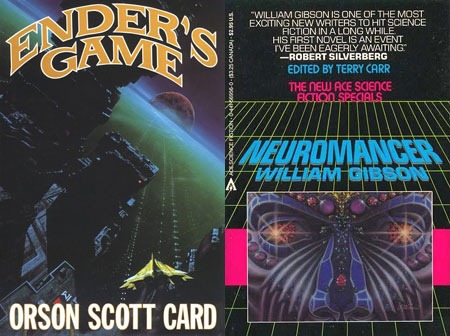
Something happened to the world of science fiction books in the 1980s.  The genre grew, gaining new writers, publishers and readers.  Star Trek and Star Wars got millions of media fans to try reading SF, often introduced by novelizations.  Science fiction became big business.  From my view of the genre, two SF books went nova in the eighties:  Neuromancer and Ender’s Game, making William Gibson and Orson Scott Card the breakout science fiction writers of the decade, like Delany and Zelazny had been for the 1960s.

endersgame-neuromancer

Computers and video games made the 1980s a happening decade for science fiction.  Personal computers became all the rage, with the IBM PC being introduced in 1981 and the Apple Macintosh in 1984.  Fandom shifted from fanzines to computer networks like CompuServe and GEnie, connecting readers to the cyber world – letting us all live in a science fictional reality.  Kids growing up with Atari 2600s from the 1970s, jumped to the Nintendo, accelerating the cyber addiction of the 1980s, so is it any wonder that in the mid-80s that teens totally resonated with Ender’s Game and Neuromancer?   They were what the Heinlein juveniles were to my generation.

Now this is a longshot, but I think it was the massive influx of female fans that made Ender’s Game a mega success.  Over the years I’ve been surprised by countless women telling me that Ender’s Game is one of their all-time favorite books.  This was particularly shocking because most of my lady bookworm friends didn’t read science fiction.  Ender’s Game got them started on the genre though, if only a book now and then.

Ender’s Game is often taught in schools, and I’ve met both students and teachers who have gushed over this story.  To me Ender’s Game was just another outstanding science fiction novel, but to new readers it was a mind blowing introduction to the world of written science fiction.  They grew up on science fiction comics, television shows, games, toys and movies, but it’s the books that are the real heroin of science fiction addiction.  Remember, the Golden Age of Science Fiction is 12, and to the 1980s generation, their time was just as exciting to them, as the 1960s were to us baby boomers.

These essays about remembering past decades of science fiction are about memory – my memory, our collective fan memory, and maybe the world at large memory of science fiction.  I’m not the only person looking backwards at science fiction.   Last year, Ernest Cline remembered the 1980s in his novel Ready Player One, and its over-the-top success is due to Cline speaking directly to the heart of the Nintendo generation.  The year before that, Jo Walton remembered growing up with science fiction in her novel Among Others.  Walton spoke to the heart of introverted science fiction bookworms, which won her the Hugo, Nebula and British Fantasy Awards.  Here is a list of novels she wrote about in Among Others.  Most of the science fiction books she mentions have been listed in my defining decades lists, but her novel goes further because Walton also remembers fantasy, classics and non-genre books.  Walton resonated with lonely book lovers everywhere.

With each succeeding decade, science fiction gets more sophisticated, and the overall quality of writing improves.  More people take science fiction seriously, and science fiction becomes more serious.  It’s still escapism, but the stories are getting longer and less simplistic.  It also obvious by the 1980s that the genre was shifting more towards fantasy, a trend that has been accelerating ever since.

Science fiction became big in the 1980s.  Bigger books, more books, more series, bigger series, wordier writing, and bigger sales.  In the 1980s writers took to writing trilogies and series like never before.  Lois McMaster Bujold is another standout writer of the 1980s, by developing a huge fan base for her Vorkosigan series.  Her 1980 books won awards back then, but they are still huge sellers today because the series keeps growing. Every new convert to her fictional universe wants to jump back to the 1980s to start the series from the beginning.

For the long list below, I only list the first book in a series unless a later title makes some kind of splash, wins an award, or was very popular for that year.  The 1980s was dominated by series, both new and renewed.  As you gander down the list, think of how many of these stories are part of a bigger whole?  Orson Scott Card, C. J. Cherryh, Iain M. Banks and Lois McMaster Bujold started series in the 1980s that continue to current times.  Isaac Asimov capitalized on his classic Foundation and Robot series in the 1980s in a tremendous way.  David Brin and Gene Wolfe wrote two standout series of the decade.  Dan Simmons started his Hyperion series at the end of the decade.  The most memorable books of the decade were seldom standalone novels.

Not only did we see more series books, but the books seem to be getting bigger, and some writers developed baroque writing styles, moving science fiction away from fast action pulp writing.  Gardner Dozois started his annual The Year’s Best Science Fiction series in 1984, by showcasing a massive amount of short fiction in a single volume.  The 1980s was a boom time for science fiction.

The 1980s will also be remembered for the Cyberpunk moment.  Neuromancer by William Gibson got a subgenre rolling that breathed new life into the old genre.  It was as revolutionary as the New Wave had been back in the 1960s, with Bruce Sterling leading the charge with his fanzine Cheap Truth.  The SF big three, Heinlein-Clarke-Asimov, the old guard of classic 1950s SF, were still selling lots of books, but their future visions were being eclipsed by new ones from Young Turks.

I divide the decade into two lists.  First, a short list for those books that are the most remembered today, and maybe most known by people who don’t normally read science fiction.  Then, a longer list of the books that hardcore science fiction fans should remember, and probably newer fans are slowly discovering.

The Best Remembered Science Fiction Books of the 1980s

The Defining Science Fiction Books of the 1980s

1980

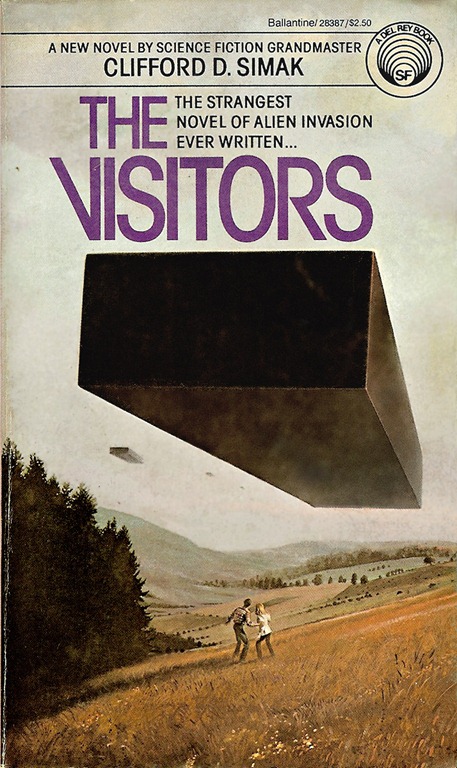
the-visitors
1981

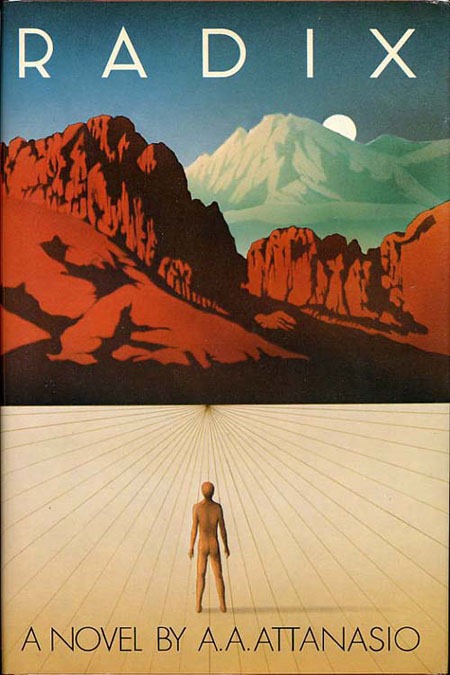
radix
1982

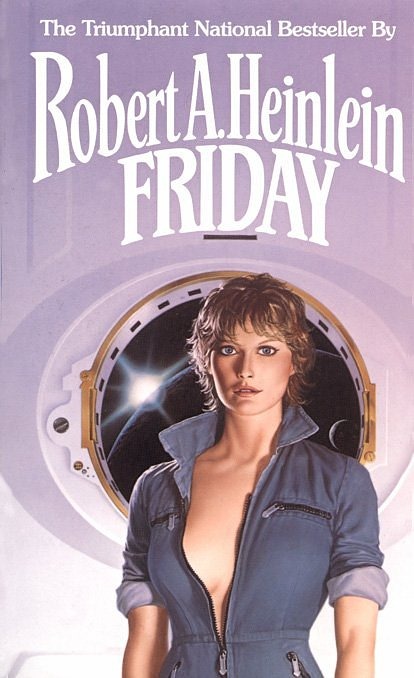
friday
1983

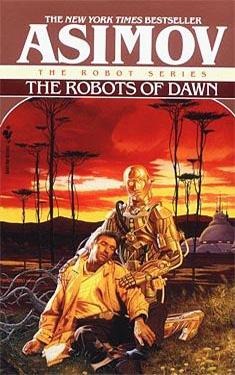
the-robots-of-dawn
1984

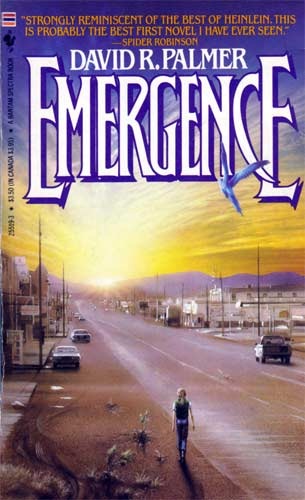
emergence
1985

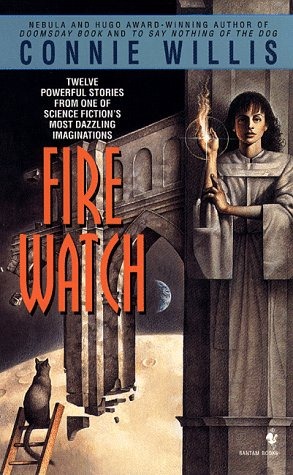
fire-watch
1986

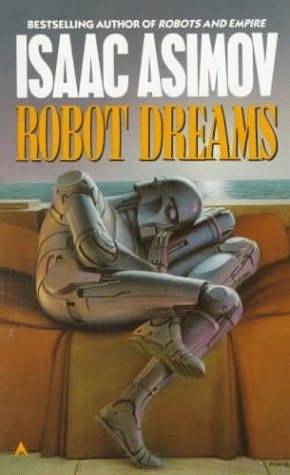
robot-dreams
1987

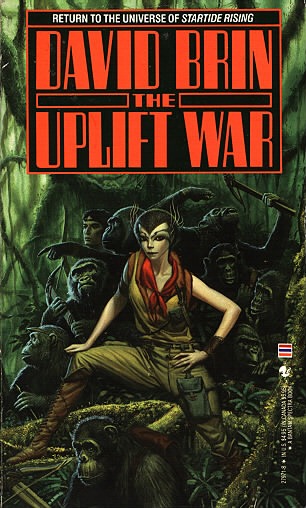
uplift-war
1988

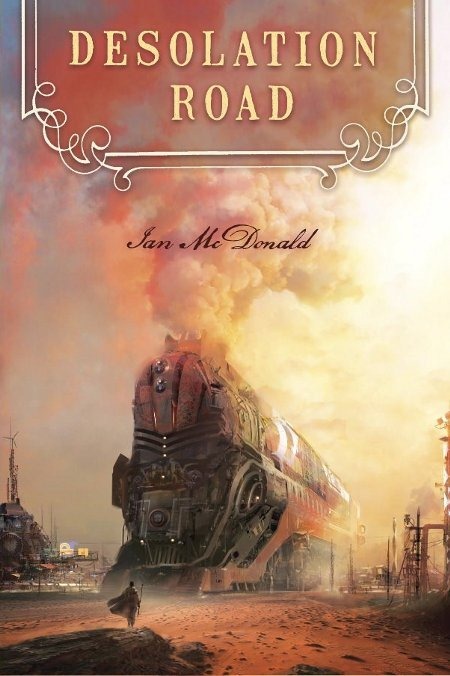
ian-mcdonald-desolation-road
1989

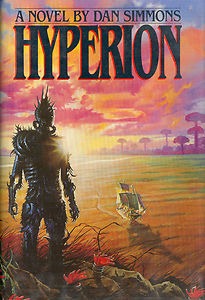
hyperion
1950s 1960s 1970s 1980s 1990s

JWH – 4/13/13 – Table of Contents

The Defining Science Fiction Books of the 1970s

1950s 1960s 1970s 1980s 1990s
We've added a new feature that allows you to create your own lists from our database of recognized novels and short stories. You can set your own date ranges. Change the citation numbers to focus on more popular titles.

What started as a review of American Science Fiction: The Nine Classic Novels of the 1950s, has put me on a quest to organize my memories of the great science fiction books, decade by decade, and year by year.  Back in the mid-90s I created The Classics of Science Fiction website.  Then I wrote The Greatest Science Fiction Novels of the 20th Century about the science fiction books that people who don’t read science fiction might know.  I’m preoccupied with how people remember science fiction, well at least the literary form.  Recently I wrote The Defining Science Fiction Books of the 1960s which is getting more hits than usual for my blog, so that makes me think other people are like me – looking back, trying to remember all their favorite science fiction books from childhood.

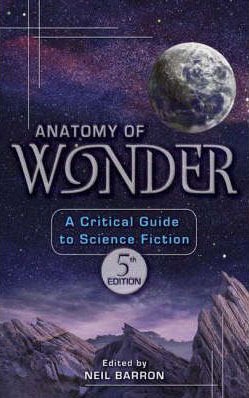
For those science fiction fans who really love reading about the great books of science fiction, I highly recommend reading Anatomy of Wonder edited by Neil Barron, now in it’s 5th edition.  It’s a very expensive book, designed for library reference, so it’s cheaper to get used copies of the older editions.  Go to the Amazon link I provided with the title and click on Look Inside to see what it’s like.  Neil Barron and his contributors are doing what I’m doing here, but exhaustively, scholarly, and providing a summary description for each book.  If you really love science fiction and want to read about the best books from the past, this book is for you.   You can get used copies of older editions for less than $5 at Abebooks.com.  Editions were 1976, 1981, 1987, 1995, 2004.  Aim for the latest edition you can afford.  I hope a 6th edition comes out soon.

anatomy-wonder-barron-neil-hardcover-cover-art

Doing the research for these essays has been great fun.  A test of my memory.  It’s also shown me how science fiction has aged, and changed over time.  The science fiction of the 1970s seems more grownup than the 1960s and 1950s, less about space adventure and more about people and their problems.  Part of that change came about because of Terry Carr and his Ace Science Fiction Specials (1968-1990), and the impact of The New Wave on science fiction.  Science fiction also seemed to be polarizing over politics of the 1970s – see “New Maps of Science Fiction” by William Sims Bainbridge and Murray M. Dalziel from the Analog Yearbook, 1977.  For the article they polled 130 readers to get a list of the popular SF writers of the 1970s.

popular-sf-authors-1970s

It you study this list and then look at my long list below you’ll notice that there are many new authors breaking out in the 1970s, especially women writers.  Of the 27 writers making their popularity poll, only two are women, Ursula K. Le Guin and Anne McCaffrey.  My 1970s long list adds Octavia Butler, Suzy McKee Charnas, C. J. Cherryh, Vonda N. McIntyre, Marge Piercy, Joanna Russ, Alice Sheldon (James Tiptree, Jr.), and Kate Wilhelm.

I create two lists for these remembrances of science fictional past.  The first is a short list of the most famous titles, the science fiction books probably most remembered today, especially by current fans, and maybe famous enough to be known by people outside of the genre.  The second, the long list, are the books that hardcore science fiction fans should fondly remember.

The Best Remembered Science Fiction Books of the 1970s

I believe these 1970s science fiction books are more often reprinted, more often talked about by young readers I meet, more often discussed in the book club, and more often written about, but I can’t prove it – just my intuition.  I expect every science fiction fan who lived through the 1970s will want to argue with me.  None of the books I picked for the short or long list are my top favorite SF books of all time.  I like them, but none of my all-time favorite science fiction books came out in the 1970s.  I’ve read many of the books from the long list, and most are entertaining, but none of them have stuck in my heart.  For some reason, since the turn of the century, I’ve been experiencing a reading renaissance, and I’ve been discovering new books again that I love like I did when I was a teen – but that’s another essay.  They do say getting old leads to a second childhood.

Like I said in the original essay about the 1950s, it’s the books we read starting at age 12, and following few years, that imprint on our souls.  The 1970s represents my twenties, and I was branching away from science fiction by then.  I’m quite sure there are fans who were teens in the the 1970s that found many of these books wonderful and are lifetime favorites for them.  But also remember, the 1970s was when Star Trek fans started swarming into the genre, and then Star Wars hit.  After that science fiction conventions were more about media science fiction than literary science fiction.

The Best Science Fiction Books of the 1970s for Hardcore Fans

1970

ringworld
1971

moderan
1972

beyond-apollo
1973

rendezvous-with-rama
1974

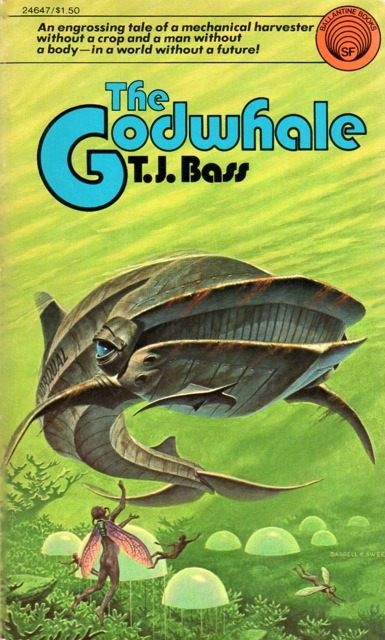
the-godwhale
1975

the-female-man
1976

the-word-for-the-world-is-forest

1977

inherit the stars
1978

the-persistence-of-vision
1979

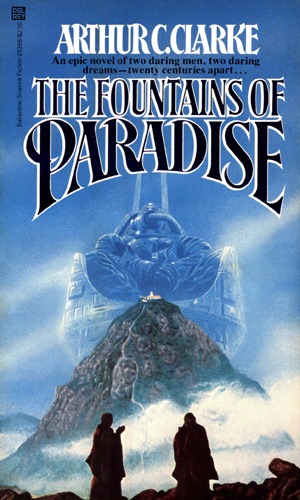
fountains_of_paradise
1950s 1960s 1970s 1980s 1990s

JWH – 4/9/13 –  Table of Contents

The Defining Science Fiction Books of the 1960s

1950s 1960s 1970s 1980s 1990s
We've added a new feature that allows you to create your own lists from our database of recognized novels and short stories. You can set your own date ranges. Change the citation numbers to focus on more popular titles.

After completing The Defining Science Fiction Books of the 1950s, I decided to push ahead into the 1960s.  Going through the databases and assembling the list was a shock to my memory.  I remember the 1960s being a tremendous decade for science fiction, and it was in volume, but I just don’t know how many of the books I found to list here are actual classics.  I’ve reread far fewer of these titles than I did for the books from the 1950s, so I’m going more from distant memory than recent.  And I padded the list with more books I remember reading about but haven’t read.  I included them because they still sound good enough to track down in 2013.  Many of these books listed below are ones I discovered researching the Classics of Science Fiction website, so they stick in my mind.

Also, I’m doubting the completeness of my databases.  I had to consult several sources to find many of the titles I “remembered.”  If I had to actually make up this list from cold memory it would be far shorter.  I needed tools like the Internet Science Fiction Database to trigger buried recollections.

In the 1960s I loved shopping for books so much that I would visit bookstores two or three times a week.  Towards the end of the decade I learned how to go to flea market and garage sales and offer to buy whole boxes of paperbacks cheap.  I’d then take them to 2 for 1 trade in stores.  I got to know the science fiction sections of several used bookshops in Miami.  So looking for cover art for this list was a trip down memory lane.

I’d often read a book a day back then.  Which is probably why I don’t remember these books so well – I read fast, and consumed science fiction in mass quantities.   Some do stand out, especially the titles I’ve reread over the years.  In terms of ideas, the 1960s were rich in original content.  Most of the 1950s was spent reprinting the classic stories of the 1930s and 1940s pulp area.  This still happened, but less often.  Heinlein’s great short novel Orphans in the Sky from 1963, is really two novellas from the early 1940s, “Universe” and “Common Sense.”  Thus it’s very hard to think of Orphans of the Sky as a classic 1960s novel.

Twelve 1960s SF Books That Might Be Remembered in the 22nd Century

The original essay I wrote about the 1950s was inspired by the Library of America’s collection of 1950s science fiction. I assume Library of America will published a collection for the 1960s, and then the 1970s. After collecting all the most memorable titles from the 1960s that I could find, favorites just don’t jump out at me like they did for the 1950s. However, I would say this short list of books are the standout science fiction books of the 1960s, the ones most remembered by people who don’t normally read science fiction. These are the titles I think will be remembered by literary scholars in the future, if they’re willing to read science fiction.

  1. Solaris by Stanislaw Lem (1961)
  2. Stranger in a Strange Land by Robert A. Heinlein (1961)
  3. A Clockwork Orange by Anthony Burgess (1962)
  4. The Man in the High Castle by Philip K. Dick (1962)
  5. A Wrinkle in Time by Madeleine L’Engle (1963)
  6. Dune by Frank Herbert (1965)
  7. Flowers for Algernon by Daniel Keyes (1966)
  8. The Moon is a Harsh Mistress by Robert A. Heinlein (1966)
  9. Do Androids Dream of Electric Sheep? by Philip K. Dick (1968)
  10. Stand on Zanzibar by John Brunner (1968)
  11. Slaughterhouse Five by Kurt Vonnegut, Jr. (1969)
  12. The Left Hand of Darkness by Ursula K. Le Guin (1969)

I personally think Stand on Zanzibar is one of the standout SF novels of the 1960s, but it’s quickly becoming forgotten.  When it comes down to the nitty-gritty I’d say Stranger in a Stranger Land and Dune are the quintessential novels of the 1960s.  They aren’t my favorites, but I think they are the ones remembered by the most people.

What’s fascinating to think about, is this list of books will be how the 1960s will be remembered by science fiction readers in the future. Even though science fiction is mostly set in the future, it’s really about the period in which it was written. Psychoanalyzing the 1960s through the lens of science fiction is going to be very weird, especially when our descendants look back on us through the eyes of Philip K. Dick.

Here’s the larger list I worked from, the titles that hard core science fiction fans should easily remember and love.  These are the books that I either read, read about, won awards, or are often talked about at the Classics of Science Fiction Book Club.  Compiling this list makes me want to reread a lot of books.

1960

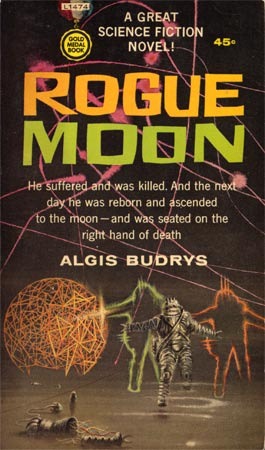
budrys_rogue_moon
1961

the-lovers-philip-jose-farmer
1962

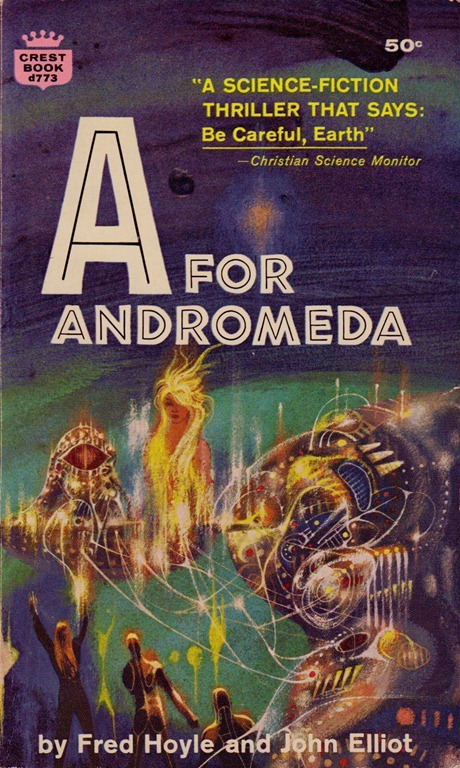
a-for-andromeda
1963

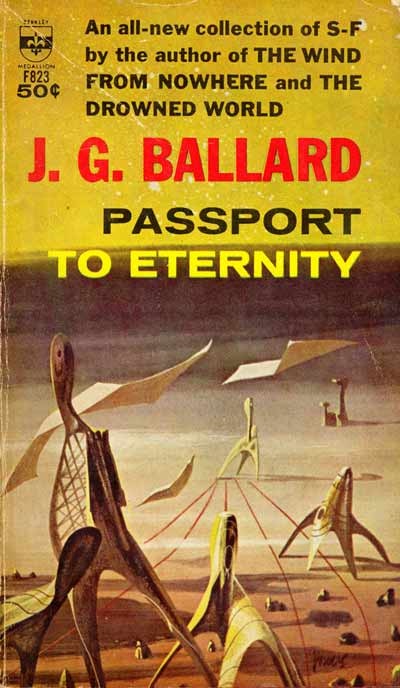
passport-to-eternity-j-g-ballard
1964

farnhams-freehold-heinlein
1965

dune
1966

mindswap
1967

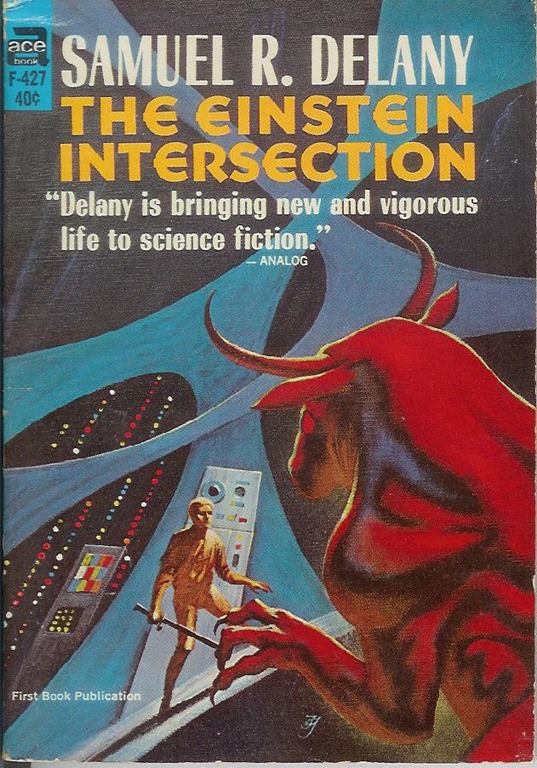
the-einstein-intersection
1968

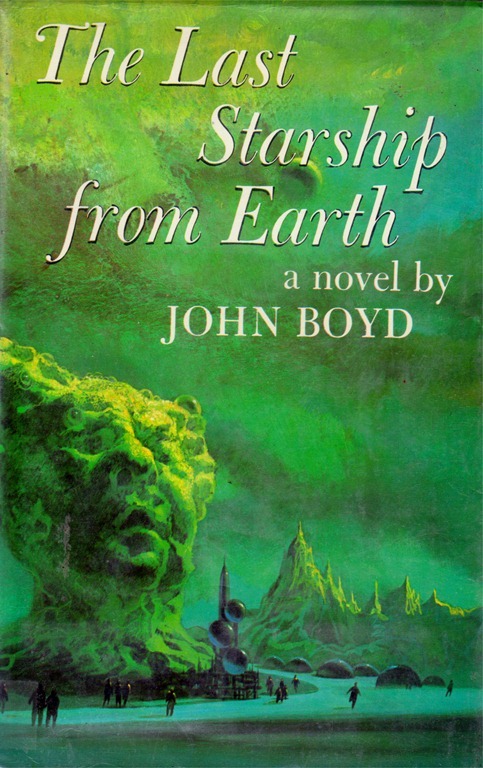
the-last-starship-from-earth-by-john-boyd
hawksbill-station-silverberg
1969

nightwings-silverberg

1960s SF: My Personal Favorites

  • Empire Star by Samuel R. Delany
  • Stand on Zanzibar by John Brunner
  • Flowers for Algernon by Daniel Keyes
  • Slaughterhouse-Five by Kurt Vonnegut, Jr.
  • Orphans of the Sky by Robert A. Heinlein
  • Do Androids Dream of Electric Sheep? by Philip K. Dick
  • Nova by Samuel R. Delany
  • Rite of Passage by Alexei Panshin
  • Podkayne of Mars by Robert A. Heinlein
  • Stranger in a Strange Land by Robert A. Heinlein
  • Dune by Frank Herbert
  • The Martian Time-Slip by Philip K. Dick
  • Way Station by Clifford D. Simak
  • The Man in the High Castle by Philip K. Dick
  • Babel-17 by Samuel R. Delany
  • The Left Hand of Darkness by Ursula K. Le Guin
  • The Einstein Intersection by Samuel R. Delany
  • Mindswap by Robert Sheckley
  • Four for Tomorrow by Roger Zelazny
  • This Immortal by Roger Zelazny
  • Behold the Man by Michael Moorcock
  • Omnivore by Piers Anthony
  • The Past Through Tomorrow by Robert A. Heinlein
  • The Moon is a Harsh Mistress by Robert A. Heinlein
  • The Three Stigmata of Palmer Eldritch by Philip K. Dick
  • Hothouse/The Long Afternoon of Earth by Brian Aldiss
  • Pilgrimage: The Book of the People by Zenna Henderson
  • A for Andromeda by Hoyle & Elliot
  • The Last Starship From Earth by John Boyd
  • The Dream Master by Roger Zelazny
  • Dimension of Miracles by Robert Sheckley
  • The Witches of Karres by James Schmitz
  • Make Room! Make Room! by Harry Harrison
  • The Eleventh Commandment by Lester del Rey
  • The Drowned World by J. G. Ballard
  • Lord of Light by Roger Zelazny
1950s 1960s 1970s 1980s 1990s

JWH – 4/7/13 – Table of Contents

On the Road (2012)–1920, 1922, 1947, 1951, 1957, 1969, 1970, 1971, 2013

The new 2012 film version of On the Road, based on the classic 1957 novel gets only 44% positive rating with critics on Rotten Tomatoes.  Fans like it even less, with just 40% approval.  And I know why and understand their reasons, but it’s not the movie.

I loved the movie, but I’m haunted by the Beats.

I think director Walter Salles and screenwriter Jose Rivera, did an excellent job capturing Jack Kerouac’s novel.  But see, that’s problematic, since the book itself is hard to like, even though it’s considered one of the best American novels of the 20th century by many literary historians, and yes, hated by just as many.  However, On the Road is more than a novel, it’s a legend.  The characters are based on real people.  These people were so fascinating they became characters in many other novels by various Beat writers.  Countless biographies have been written about their beat lives, and over the years films and documentaries have been made trying to capture this very tiny subculture.  We’re not reviewing a movie, we’re reviewing mythology.

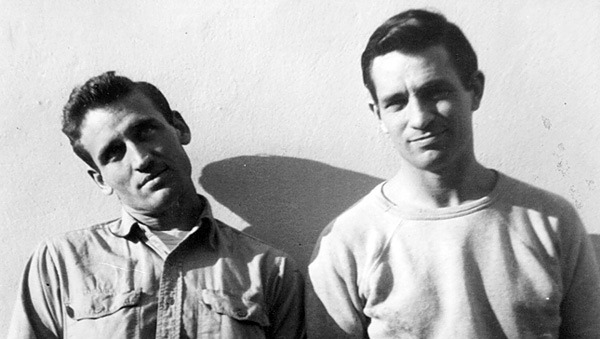
The encounter of two men, Neal Cassady and Jack Kerouac generated a whole literary movement, the Beat Generation.

jack-kerouac-and-neal-cassady

On the Road, came out in 1957, but was about Kerouac’s real life of 1947-1949.  It was essentially written by 1951, the year I was born, but tinkered with, and not published until 1957.  That’s a long time ago to most young movie goers today.  If Kerouac had lived he’d be over ninety.  So the 2012 film On the Road, is really a historical flick.  It’s about a bunch of unhappy crazy people who did a lot of drugs and rushed back and forth across the continent several times trying to find happiness, kicks, or just escape from their inner demons, obligations and boredom.

When I first read On the Road in 1969, it felt contemporary because the beats were a whole lot like the hippies, at least superficially.  It took me a while to realize that On the Road was about my father’s generation.  My dad was born in 1920, and Jack Kerouac was born in 1922.  Kerouac died at 47, in October of 1969, and my dad died at 49, in May of 1970.  They both died miserable drunks.  They both smoked a lot of unfiltered Camels.  They both travelled back and forth across America in a restless attempt to find themselves.  They both were failures at marriage and raising kids.  I use Kerouac to understand my uncommunicative father.

When you’re a kid and read On the Road for the first time it’s tremendously exciting.  It’s adventurous.  It’s about hitch-hiking.  It’s about sex and drugs.  It’s about jazz.  Yes, it’s that old, before rock and roll.  After doing a lot of drugs and hitch-hiking trips myself, I saw the book in a different light by 1971.  I reread On the Road every few years, and the older I get, the more I understand the suffering behind the story.

I wonder if the 60% of movie fans, and 56% of critics who watched On the Road are savvy enough to immediately realize that this story is about misery and not glamor?  To be on the road that much, to drink that much, to take that many drugs, to fuck that many people, requires a tortured soul driven by restless, existential pain.

Maybe I love this film because I read the pain in every character on the screen.  This is a great film when you realize it’s not a fun film.  Sure, they quote Kerouac’s famous lines twice in the film

The only people for me are the mad ones, the ones mad to live, mad to talk, mad to be saved, desirous of everything at the same time, the ones who never yawn or say a commonplace thing but burn, burn, burn like fabulous roman candles exploding like spiders across the stars and in the middle you see the blue centerlight pop and everybody goes ‘Awww!”

Kerouac rewrote his life to make it better, to romanticize it, to make it more meaningful, more exciting, but if you read the many biographies about Jack, you know he failed to fool himself.  He knew they were all beat characters.  When he discovered Zen, he hoped to put a spiritual spin on things, and hoped he could find enlightenment in his life, or at least write an enlightened view of it.  He failed.  Alcoholism consumed Kerouac, just like my dad, my dad’s brothers, and their father.  I come from two beat generations.

Everyone is initially seduced by Kerouac romantic spin on his life.  Everyone loves Neal Cassady/Dean Moriarty because he’s so wild and bangs all the chicks, but they forget that ole Dean will abandon you in a Mexico City flophouse when you’re out of your mind with dysentery and have no money, or run off and leave his wife and children to get his kicks making some other woman equally miserable.  Neal was a petty criminal, street hustler, con man and user of people, but all too often people loved him.  And Kerouac knew that.

Whether Sam Riley as Sal Paradise (Jack Kerouac) or Garrett Hedlund as Dean Moriarty (Neal Cassady) are convincing in their roles depends on your image of Jack and Neal.  I loved that the movie didn’t romanticize these two.  I don’t think Kerouac did either in his book if you read it closely, but too many would-be beats and hippies have.  I am reminded of the contrast between the 1968 book The Electric Kool-Aid Acid Test by Tom Wolfe, about Ken Kesey and his Merry Pranksters and their trip across 1964 American in an old bus named Further, and the recent documentary Magic Trip that used actual film the Pranksters took on the trip.  History and nonfiction don’t match up.   For On the Road, history and fiction don’t match either.  A good writer can make real life a whole lot more glamorous than it is.  I believe Kerouac wanted to chronicle his life without the glamor.

Which brings us back to modern American movie goers, they are incurable romantics.  They hate realism.  They embrace a comic book view of reality.  That’s why I think 60% of them turned their thumbs down for On the Road.  That’s why the film played only one week in my city, and why there was only one other person in the theater when I went.  That’s why they didn’t like a realistic story about a struggling young writer who loves a low-life hustler and makes him the center of his novel, his life, even though time and again, the bastard left him high and dry, and crushed his soul.  Kerouac wrote a lot of books, but only the ones that have Neal in them still matter.  Jack returned to Neal time and again, in life and in books, but without Neal, Jack never could get his life together.  Success didn’t help, and only made it worse.

Neal Cassady was the bus driver for Ken Kesey and the Merry Pranksters, and Cassady brought the King of the Hippies to meet the King of the Beats.  It was a disaster for the old friends.   Jack and Neal are now legendary mythic characters.  Trying to understand the realism of their friendship requires reading book and after book, and now watching movie after movie.

I think if you’re among the people trying to understand the story of Jack and Neal, you must see this film.  Everyone else should be warned.  If you didn’t like it, then you’re lucky, you don’t have a beat soul.  If you love it, you’re among the haunted by the myths of the Beats.

4/4/13